
Reviewed · CITROëN 2CV TOURS
2H Discovery Tour of Paris in 2CV CITROEN
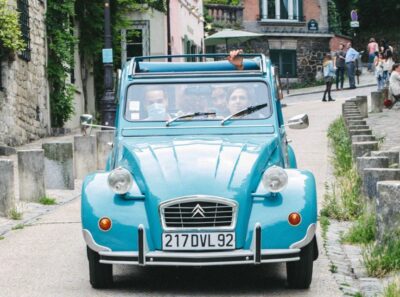
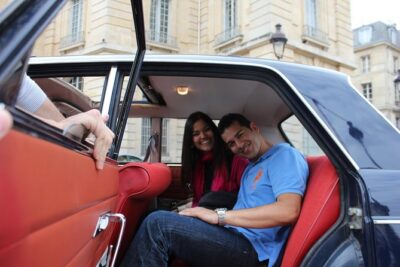
Paris looks different from a 2CV roof. I love the open-air views and classic car feel, plus the fact that your pickup and drop-off can be arranged from where you actually want to start. It is a smart way to see a lot in a short time without the stress of buses and walking miles.
My main caution is simple: this is a compact, old-school car on city streets, so if you are expecting a long guided walk with lots of time out of the vehicle at every stop, you might feel the pace is quick. The experience still runs smoothly overall, and it is clear the guides are aiming for fun and clear explanations.
In This Review
- Key things that make this 2CV Paris tour work
- Price and what you really get for $154.83
- Meeting point, pickup, and the first minutes that set the tone
- The Citroen 2CV ride: charming, practical, and very Paris
- How the 2-hour loop is paced: big landmarks, then quieter streets
- From Hôtel de Ville to the Louvre carousel: classic Paris in motion
- A quick reality check
- Opéra Garnier, Place Vendôme, and the formal streets of style
- Place de la Concorde to Assemblée Nationale: power, symmetry, and bridge crossings
- Grand Palais to the Eiffel corridor: the city turns cinematic
- Invalides and the calmer stop of Place Furstenberg and Saint-Sulpice
- Jardin du Luxembourg to Panthéon: a neighborhood pace with big-landmark meaning
- Rue Mouffetard and the Quartier Latin: the streets get real
- Crossing back toward Notre Dame: Pont de l’Archevêché to Île de la Cité
- Pont-Neuf and Place Dauphine: the tour’s last classic framing
- Champagne and picnic options: how to make the tour feel like a special moment
- What the guides do right, and why names keep showing up
- Is this tour worth your limited time in Paris?
- Should you book the 2CV Paris discovery tour?
- FAQ
- How long is the 2H Discovery Tour of Paris in a Citroen 2CV?
- What language is the live commentary in?
- Where does the tour start and end?
- Is pickup and drop-off included?
- What is included in the tour price?
- Are champagne or a French picnic available?
- Is this a private tour?
- Does the tour run in bad weather?
- What is the cancellation policy?
Key things that make this 2CV Paris tour work
- A vintage Citroen 2CV changes how Paris feels, especially with the roof down for sky and skyline views
- Door-to-door pickup inside Paris means you start relaxed, not hunting transit
- Live commentary in English helps you connect neighborhoods and landmarks as you pass them
- A tight route through both banks of the Seine, mixing major sights with calmer residential streets
- Guides with personality, including Florian, Noe, Thibaut, and Clemen based on past experiences
- Photo-friendly driving, since the route includes big sightlines like the Eiffel area and Notre Dame
Other rides in a vintage 2CV:
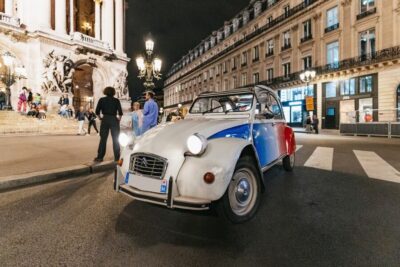
- Paris: Discover Paris by Night in a Vintage Car with a Local
★ 4.6 · 1,058 reviews - Paris Private Flexible Duration Guided Tour on a Vintage Sidecar
★ 5.0 · 776 reviews - Vintage 2CV Adventure: 2 -Hour Paris Secrets Tour
★ 4.5 · 488 reviews - Paris: Discover Paris 2CV
★ 4.9 · 472 reviews
Price and what you really get for $154.83

At about $154.83 per person for roughly 2 hours, you are paying for three things together: a private guided drive, a live English narration, and pickup plus drop-off across Paris. If you try to match that with taxis plus timed sightseeing plus a guide, it usually stops being cheaper fast.
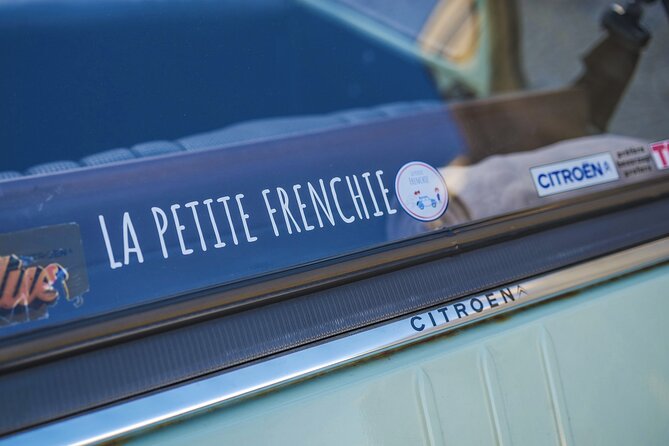
Also, this is offered through La Petite Frenchie, with confirmation at booking time and a format designed for your group only. Past experiences put a lot of weight on the guide-driver doing the storytelling, answering questions, and steering you toward good angles. In short, you are buying convenience and a more personal pace than big-group sightseeing.
You may also notice the schedule tends to fill earlier than you might think, with tours often booked around 2 months ahead. If your trip dates are fixed, that is a good reason to lock it in early.
Meeting point, pickup, and the first minutes that set the tone
The tour starts back at the Benedictine Abbey of Saint-Germain-des-Prés area, near Église de St Germain des Prés (3 Pl. Saint-Germain des Prés, 75006 Paris). The itinerary itself is built around pickup from your requested location in Paris, and drop-off is included as well. Practically, this means you can plan your day and then get on the car without navigating a strict meeting point across town.
That flexibility matters because Paris mornings and afternoons can go sideways. One museum line, one subway delay, and your whole sightseeing rhythm slips. Here, the service is designed to remove that problem. You get the car, you get the guide, you move.
You should also know this is built for good weather. If it gets canceled due to weather, you will be offered a different date or a full refund. That is worth keeping in mind if you are traveling in shoulder season.
The Citroen 2CV ride: charming, practical, and very Paris
The vehicle is the heart of the appeal. This is a vintage Citroen 2CV, used with live commentary on board. Several past experiences specifically call out how the car can handle rougher city surfaces, including areas with cobblestones, and how the compact size helps it pass where larger vehicles may struggle.
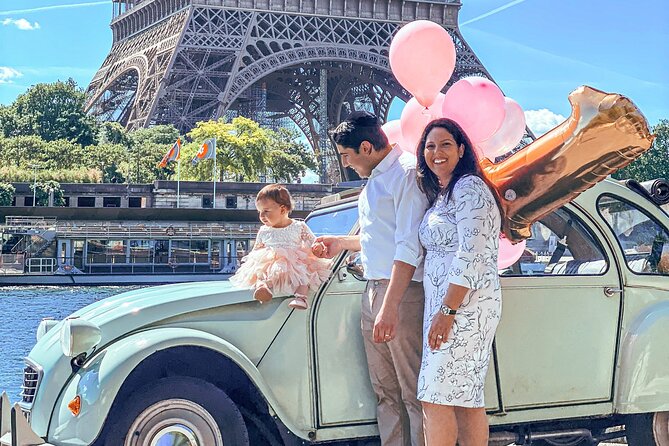
One detail that comes up often is the open roof and the attention it attracts. When the roof rolls back, your views widen instantly. You also feel the city more, especially when you are close enough to notice the texture of streets, façades, and bridges rather than just watching from behind glass.
If you are traveling with kids, this is also one of those rare tours where the vehicle itself becomes part of the fun. The car looks like a moving photo prop, and the ride feels less like transport and more like a short adventure.
How the 2-hour loop is paced: big landmarks, then quieter streets
Because the itinerary is dense, think of it as a drive-and-story tour rather than a “get out and explore deeply” tour. You will see the outline of Paris fast: classic monuments, government and cultural buildings, then a turn toward neighborhood streets where the city feels lived-in.
A good way to use this time is to decide what you want most:
- If you want iconic photos, lean into the major sights along the route.
- If you want Paris context, listen closely to the guide’s links between districts.
- If you want less obvious viewpoints, ask the driver-guide to suggest where the best angles are from the road.
A handful more Paris options to weigh up
- Paris: 2-Hour River Seine Lunch Cruise with 3-course-menu★ 4.7 · 4,887 reviews
- The Père Lachaise Cemetery: Guided 2-Hour Small-Group Tour★ 4.7 · 1,065 reviews
- Paris: 2-Hour Perfume Creation Workshop★ 4.8 · 731 reviews
- Paris Louvre: 2-Hour Private Tour for Groups or Families★ 4.6 · 639 reviews
From Hôtel de Ville to the Louvre carousel: classic Paris in motion
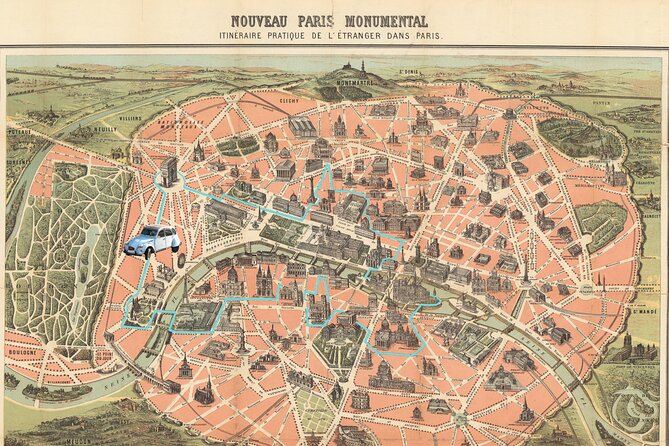
The tour’s run begins in the center with places like Hôtel de Ville and Place des Victoires. Hôtel de Ville is the city hall area, a good reminder that Paris has always been both political and theatrical. Place des Victoires and nearby streets are a nice early contrast: you go from official Paris into streets that feel more intimate and human scale.
From there you hit cultural and royal-era highlights in sequence, including Théâtre du Palais Royal and the Carrousel du Louvre. Even if you do not plan to go inside, these areas are useful for orientation. You start to understand where the grand museum zone fits into the broader city plan.
A quick reality check
If you are the type who likes lots of time standing still, this stretch may feel like you are watching more than walking. The value is that you connect the dots quickly, and then you can choose later what deserves your time on foot.
Opéra Garnier, Place Vendôme, and the formal streets of style
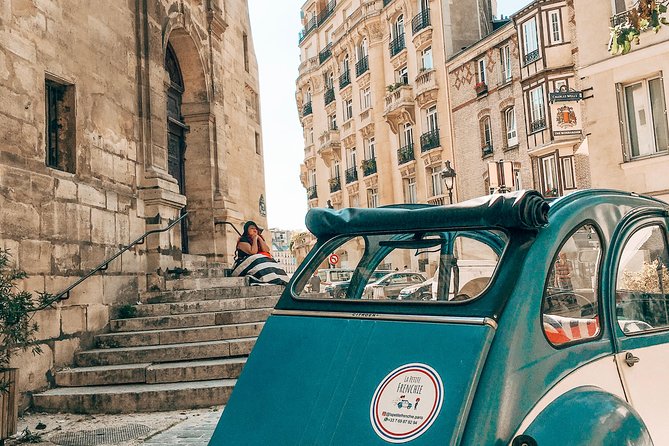
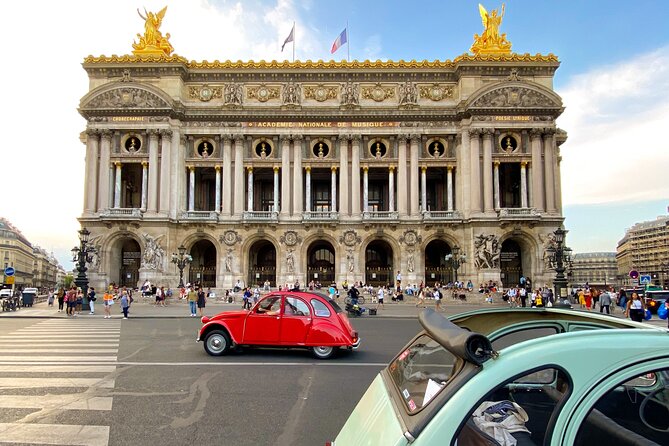
Next up are stops that scream Paris elegance: Opéra Garnier, Place Vendôme, and Théâtre de la Madeleine. These are great moments for two reasons.
First, visually they help you understand why Paris became a fashion and arts capital. Second, the spacing and alignment of the streets lets you see how designers planned the city for views and processions, not just traffic.
If you want to make this part really pay off, this is when you can ask questions. Past experiences highlight guides who do exactly that, sharing district insights and answering questions while also steering you toward photo moments.
Place de la Concorde to Assemblée Nationale: power, symmetry, and bridge crossings
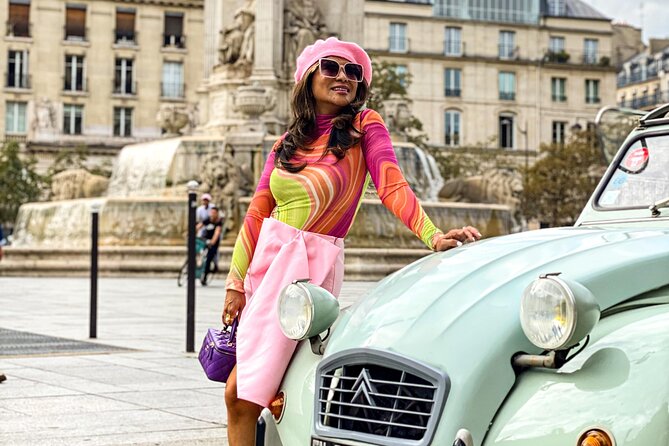
As you move toward Place de la Concorde, you are in a wide open space where the city’s scale becomes obvious. From there, the route includes Assemblée Nationale. Even from the car, it helps you frame Paris as a working capital, not just a postcard museum.
This part also sets up the crossing over the Seine. The itinerary includes Pont Alexandre-III and then the Grand Palais and Petit Palais area. Pont Alexandre-III is one of the most recognizable bridges for its grand look, and seeing it as part of the route helps you appreciate how “bridge views” are basically part of the sightseeing design in Paris.
Grand Palais to the Eiffel corridor: the city turns cinematic
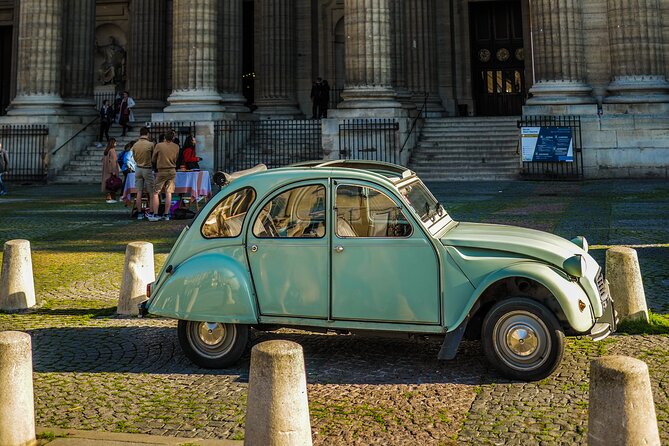
After Grand Palais and Petit Palais, the route continues toward Avenue des Champs-Élysées and Arc de Triomphe. These are the big-name stops, sure. But seeing them from a moving car is different than seeing them walking slowly. You get the overall rhythm: approach, reveal, and then the sudden scale.
Then you go toward Trocadéro and the Tour Eiffel. This is the moment when the open roof becomes extra fun. Whether you are seeing the Eiffel Tower at an angle from Trocadéro or catching more views as you circulate the area, it is a quick way to get your bearings before committing to a longer Eiffel visit.
If you are not sure where you want to go next, this stretch helps you decide. It gives you a sense for sightlines. You start to remember what direction you would want to approach the tower later.
Invalides and the calmer stop of Place Furstenberg and Saint-Sulpice
Next you reach Musée de l’Armée des Invalides, then continue toward Place Furstenberg and Eglise Saint-Sulpice. This shift matters. Paris does not just go from landmark to landmark. It also goes into spiritual, institutional, and neighborhood spaces that feel more grounded.
Invalides is especially helpful for orientation, since it sits in a major area that connects easily to other parts of the city. Place Furstenberg is also useful because it is a window into how some of Paris looks when you are not sprinting between the most famous names.
Eglise Saint-Sulpice then becomes a contrast stop: it feels more like a church setting and less like a photo-stage. If you enjoy noticing how different Paris landmarks “feel” in the street scene, you will like this transition.
Jardin du Luxembourg to Panthéon: a neighborhood pace with big-landmark meaning
The itinerary includes Jardin du Luxembourg, Théâtre de l’Europe, and then Panthéon. This sequence is a nice reminder that Paris gardens and civic buildings sit side-by-side with residential streets.
Jardin du Luxembourg is the kind of place where even a quick pass gives you a sense of local rhythm. It is not just famous for looks. It is famous because Paris residents actually treat it as a daily-life space.
Panthéon adds historical weight. Even without time inside, it is one of those landmarks that changes your sense of the city’s timeline. From the car, you can connect it to the Latin Quarter streets you will see next.
Rue Mouffetard and the Quartier Latin: the streets get real
Then the route pushes into Place de la Contrescarpe, Rue Mouffetard, and Quartier Latin. This is where Paris stops feeling like a series of stops and starts feeling like neighborhoods.
Rue Mouffetard is one of those streets people associate with student energy and everyday life. In a 2-hour tour, this is your chance to notice the building scale, street density, and the way people use the sidewalks. It is a practical orientation tool for your later walks.
If you want a strategy here, listen to the guide’s explanations and identify two or three streets you want to revisit on foot after the tour ends. That way, the drive becomes the kickoff for your deeper exploring.
Crossing back toward Notre Dame: Pont de l’Archevêché to Île de la Cité
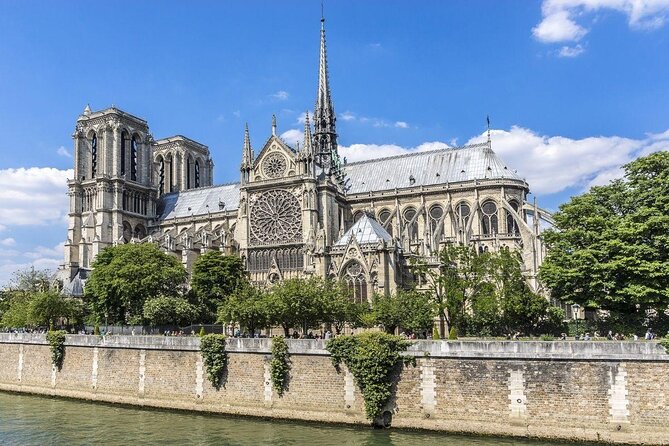
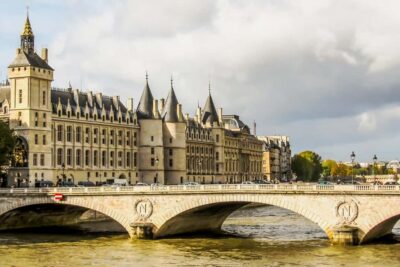
Next up is Pont de l’Archevêché, then Cathédrale Notre-Dame de Paris, Conciergerie, and Palais de Justice. This is one of the most meaningful parts of the whole route because it connects the city’s center and the legal and historic zones that shaped Paris for centuries.
Even if you have seen Notre-Dame from afar before, viewing it as part of a bridge approach is helpful. It gives you a sense for sightlines and what angles work best for photos, especially with the open roof.
Conciergerie and Palais de Justice help you see that this area is not just architecture. It is also institutions and history tied into the street plan around Île de la Cité and the Seine.
Pont-Neuf and Place Dauphine: the tour’s last classic framing
Finally, the route includes Pont-Neuf and Place Dauphine. These are great “wrap-up” points because they bring you back to classic Paris geometry, the kind of street layout that makes the city feel designed rather than random.
And then you end back at the meeting point. That makes planning easy. You can jump into dinner, a museum visit, or simply go back to your hotel without needing another transit puzzle.
Champagne and picnic options: how to make the tour feel like a special moment
Champagne or a classic French picnic is available on request for additional charges. This is not included, but it is a nice upgrade if you want this drive to feel like a celebration rather than just sightseeing.
A practical tip: if you add food or drink, I would treat it as a treat, not as a full meal replacement. With a 2-hour format, you still want energy for whatever you do after. Also, coordinate the timing with the driver-guide so the snack moment does not steal attention from the route.
What the guides do right, and why names keep showing up
Past experiences strongly credit the guide-driver role. Names mentioned include Florian, Noe, Thibaut, and Clemen, and the common theme is clear: they are not just driving. They narrate.
Noe is highlighted for giving a lot of insights about different districts and answering questions, plus helping find photo spots. Thibaut is praised for making it fun, including for kids, and for the sheer cool factor of driving around in the open-roof car. Clemen is noted for showing Paris corners in a fun, unique way, even with French music during the ride. Florian is described as both knowledgeable and good for laughs.
One review also notes a guide who still had room to grow in experience. That matters if you are the type who wants polished lectures. Still, the overall rating is extremely high, and the tour design itself supports a smooth ride even when the guide is still finding their rhythm.
Is this tour worth your limited time in Paris?
If you are asking, Will I get my money’s worth for 2 hours, my answer is yes, if your goal is orientation plus highlights in a way that feels personal.
This tour fits best if:
- You want a private experience and do not want to share the car with strangers
- You like the idea of seeing major landmarks plus neighborhood streets without planning a route
- You enjoy photo moments and views, especially with the open roof
- You want easy logistics, pickup and drop-off included
It might not be ideal if:
- You expect long stops at each location
- You are uncomfortable in a compact vintage car for city driving
- You want a heavily walking-based format
Should you book the 2CV Paris discovery tour?
I would book this if you want Paris as a moving story, not a checklist. The value is strongest when you treat it as day one or day two framing, then build your later walking routes around what the guide shows you from the road.
If you are on a tight schedule, this is one of the best ways to compress major sights into a short time while still feeling like you are riding through Paris, not just watching it from a bus window.
FAQ
How long is the 2H Discovery Tour of Paris in a Citroen 2CV?
It lasts about 2 hours.
What language is the live commentary in?
The tour is offered in English, with live commentary on board.
Where does the tour start and end?
The tour starts at the Benedictine Abbey of Saint-Germain-des-Prés (Église de St Germain des Prés, 3 Pl. Saint-Germain des Prés, 75006 Paris) and ends back at the same meeting point.
Is pickup and drop-off included?
Yes. Pickup and drop-off wherever in Paris are included.
What is included in the tour price?
Private transportation, a local guide or chauffeur, pickup and drop-off, and live commentary on board are included.
Are champagne or a French picnic available?
Champagne or a classic French picnic are available on request, but they cost extra and are not included in the base price.
Is this a private tour?
Yes. It is a private tour/activity, and only your group participates.
Does the tour run in bad weather?
This experience requires good weather. If it is canceled due to poor weather, you will be offered a different date or a full refund.
What is the cancellation policy?
Free cancellation is available. You can cancel up to 24 hours in advance for a full refund.
Newest write-ups from Paris

Citroën 2CV Tours, compared.
Discover Paris by Night in a Vintage Car with a Local
Read our review →
Paris Private Flexible Duration Guided Tour on a Vintage Sidecar
Read our review →
Vintage 2CV Adventure: 2 -Hour Paris Secrets Tour
Read our review →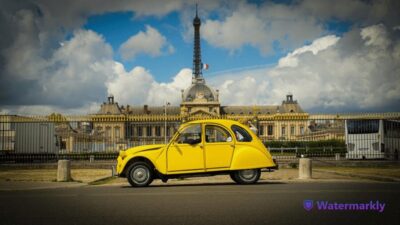

Paris Vintage Private City Tour on a Sidecar Motorcycle
Read our review →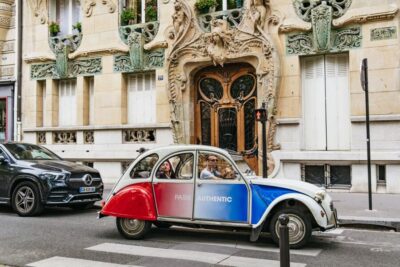
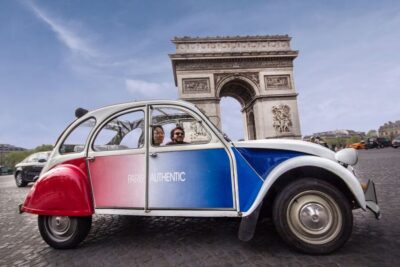
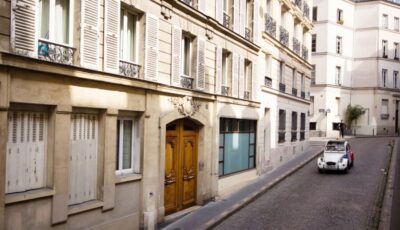
Off-the-Beaten Track in Paris: 2-Hour Vintage 2CV Tour
Read our review →Browse the lists this tour appears in