
Reviewed · CITROëN 2CV TOURS
4-Hour Private Tour in Paris in a Vintage Car
Paris in a vintage car feels like a shortcut. This 4-hour private sightseeing drive strings together top Paris landmarks with a flexible guide who can pause for quick photo moments and breaks. I especially liked the comfort of the small classic car and how the route still hits the big icons without locking you into long walks. One consideration: with so many stops packed into a half day, most are brief exterior looks, not deep museum time.
You meet at 24 Rue de Madrid in the 8th, and pickup is possible anywhere inside Paris. In the past, guides like Baptiste, Charles, and Romain stood out for fluent English and for adjusting the plan on the fly, including stepping you out when you have a moment to grab a snack or take a few photos.
In This Review
- Key highlights worth putting on your radar
- Why a 4-hour vintage car tour clicks for Paris
- Price and what you are actually paying for
- Pickup, meeting point, and how the ride is paced
- Concorde to the Eiffel Tower: classic Paris landmarks in one sweep
- Place de la Concorde
- Champs-Elysées
- Arc de Triomphe and its traffic reality
- Eiffel Tower photos and a small walk
- École Militaire to Grand Palais: bridges, palaces, and exhibition-era Paris
- École Militaire and Hôtel des Invalides
- Pont Alexandre III
- Grand Palais and Petit Palais
- Luxury corridors and Opera grandeur: Rue Saint-Honoré, Vendôme, and Palais Garnier
- Rue Saint-Honoré
- Place Vendôme
- Palais Garnier and Galeries Lafayette
- Montmartre, Sacré-Cœur, and painter squares
- Place Saint Georges
- Moulin Rouge (and what is included)
- Place du Tertre and Sacré-Cœur
- Rue Victor Massé and Chat Noir history
- Shopping streets, covered passages, and the Bibliothèque nationale stop
- Galerie Vivienne
- Bibliothèque nationale de France (BnF) | Richelieu
- Palais-Royal to Le Marais: old streets, royal squares, and food energy
- Palais-Royal and Place des Victoires
- Rue Montorgueil and Rue des Rosiers
- Place des Vosges and Hôtel de Sully
- Île Saint-Louis to Île de la Cité: the river backbone of old Paris
- Île Saint-Louis and Berthillon timing
- Île de la Cité, Notre-Dame, and Pont Neuf vibes
- Quartier Latin to Luxembourg Gardens: student streets and classic viewpoints
- Quartier Latin
- Pantheon and Place de la Contrescarpe
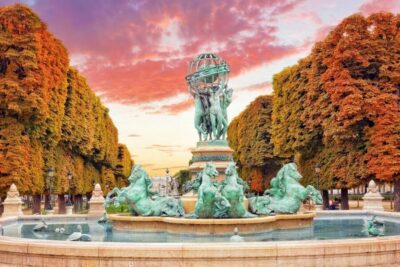
- Luxembourg Gardens
- Saint-Germain-des-Prés to the Louvre: cafés, churches, and final big payoff
- Saint-Germain-des-Prés
- Saint-Sulpice and St-Germain-des-Prés church
- Musée d’Orsay and the National Assembly area
- Louvre Museum time
- Who this tour suits best, and who should skip it
- Should you book this vintage car Paris tour?
- FAQ
- How many people are in a group?
- How long is the tour?
- Do you pick up from anywhere in Paris?
- Where is the meeting point?
- What language is the guide?
- Are tickets for places like Eiffel Tower, Notre-Dame, and the Louvre included?
Key highlights worth putting on your radar
- Private door-to-door feel: only your group rides, up to 3 people.
- Vintage car mobility: a smaller classic car can handle Paris traffic better than big tour buses.
- English-guided storytelling: guides like Baptiste (U.S. time in his background) bring the sites to life.
- Photo and break-friendly pacing: the guide can pull over so you are not stuck filming through a windshield.
- A “greatest hits” loop: Concorde, Eiffel Tower, Montmartre, Île de la Cité, and the Louvre area, all in one drive.
- Moulin Rouge is the one extra: cabaret admission is not included.
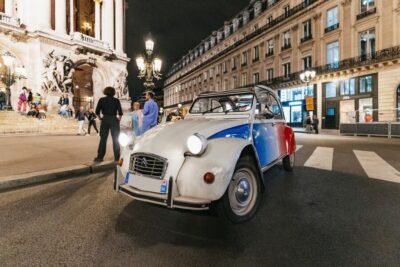
Other rides in a vintage 2CV:
- Paris: Discover Paris by Night in a Vintage Car with a Local
★ 4.6 · 1,058 reviews - Paris Private Flexible Duration Guided Tour on a Vintage Sidecar
★ 5.0 · 776 reviews - Vintage 2CV Adventure: 2 -Hour Paris Secrets Tour
★ 4.5 · 488 reviews - Paris: Discover Paris 2CV
★ 4.9 · 472 reviews
Why a 4-hour vintage car tour clicks for Paris
Paris has two travel modes. One is walking until your feet unionize. The other is trying to drive through traffic while holding your phone like it is a steering wheel. A vintage car tour lands in the middle, giving you the romance of the city without demanding all-day stamina.
In four hours, the tour is built for high impact. You get a full sweep across major neighborhoods, which is perfect when it is your first trip or you only have one half day to work with. And since it is private, you are not stuck matching the pace of a group that moves like a slow parade.
The big value here is not just seeing famous places. It is also getting the order right. By the time you hit the Eiffel Tower area and later Montmartre, you are already oriented, so the city starts to feel logical instead of random streets and one-way chaos.
Price and what you are actually paying for
The price is $531.13 per group for up to 3 people, for about 4 hours. That sounds high until you do the math and compare it to what you would spend on separate taxis plus the lost time of waiting and route planning.
Split three ways, it can work out to around $177 per person. At that level, you are really buying three things:
- Private time with an English guide, not a seat on a crowded bus.
- Door-to-door car access that helps you reach distant areas in a single afternoon.
- Guide-led stops that keep you from wasting energy figuring out what to prioritize.
If you are traveling solo or as a couple, it is still often worth it when you value comfort and want to avoid the friction that comes with moving between big sites on public transit in the middle of the day.
Pickup, meeting point, and how the ride is paced
You start at 24 Rue de Madrid, 75008 Paris, and the tour returns you back to that meeting point. Pickup is offered anywhere in Paris intramural, and the tour begins once you are in the car.
The most helpful thing to know is the pacing. This route is long on variety and short on lingering, so the guide uses the car to connect areas fast. You usually get quick photo windows, and in the feedback I saw, guides made it easy to step out briefly for pictures, snacks, or a bathroom break when needed. One group even noted the car worked beautifully on a cold, rainy day, which is when you really appreciate not hauling bags and umbrellas for every transfer.
Also, you get a mobile ticket, the tour is offered in English, and service animals are allowed. If you like the idea of moving through the city with the least fuss possible, this format fits.
Concorde to the Eiffel Tower: classic Paris landmarks in one sweep
This is the start of your Paris highlight loop, and it hits a strong sequence.
A handful more Paris options to weigh up
- Louvre Museum Paris Essential Guided Tour Semi-Private 6ppl Max★ 5.0 · 3,807 reviews
- SUV Private Transfer: Paris to Charles de Gaulle Airport (CDG)★ 4.0 · 3,091 reviews
- Paris: Private Photoshoot at the Eiffel Tower★ 4.7 · 2,636 reviews
- Top Private Cruises in Paris with French Champagne and surprises★ 5.0 · 1,553 reviews
Place de la Concorde
You begin at Place de la Concorde, the largest square in Paris. It is where the Obelisk of Luxor was brought from Egypt in the 19th century. The square is also tied to the French Revolution, including the guillotine that executed Marie-Antoinette and King Louis XVI. This is a good opener because it anchors you in the story of modern Paris, not just the postcard version.
Champs-Elysées
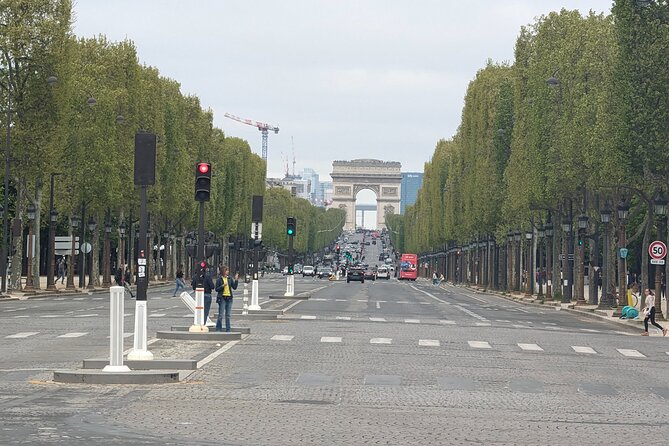
Next is Champs-Elysées, created in the 17th century by Versailles gardener Le Nôtre. You will see why it is famous: it hosts the July 14 military parade, and it is also known for major sporting events like the Tour de France final stage. Expect this to be more about the boulevard vibe than long stops, but it is exactly the kind of wide view you want early in the tour.
Arc de Triomphe and its traffic reality
At Arc de Triomphe, you get the monument and also the truth about Paris, the traffic around it. Built under Napoleon Bonaparte to celebrate the victories of the Grande Armée, the Arc is one of those places where even a short look makes you understand the city’s scale.
Eiffel Tower photos and a small walk
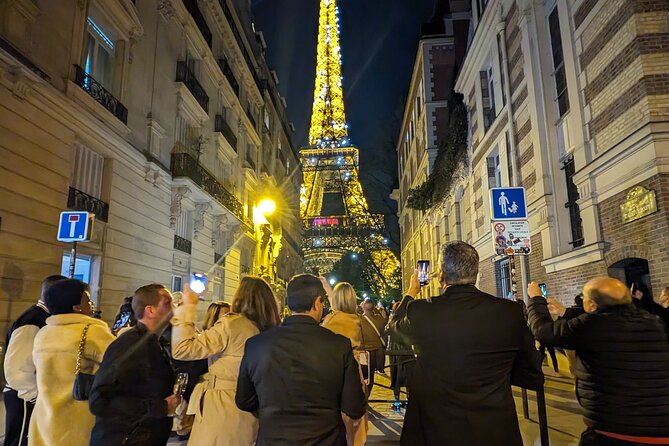
Finally, Eiffel Tower. You get time for photos and a little walk around. The guide will share anecdotes about Gustave Eiffel and the tower’s 1889 Universal Exhibition moment. This is where you should plan to slow down even for a few minutes, because the tower photography angles are worth it and not all angles are created equal.
École Militaire to Grand Palais: bridges, palaces, and exhibition-era Paris
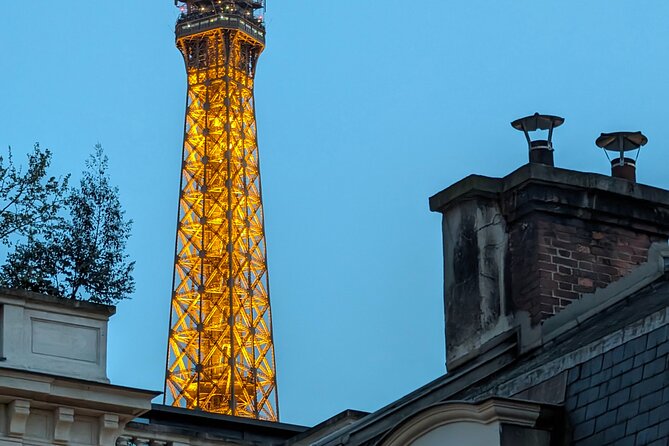
After the big icons, the tour shifts into “Paris as an architectural timeline.” Several stops here tie back to major exhibitions and royal power.
École Militaire and Hôtel des Invalides
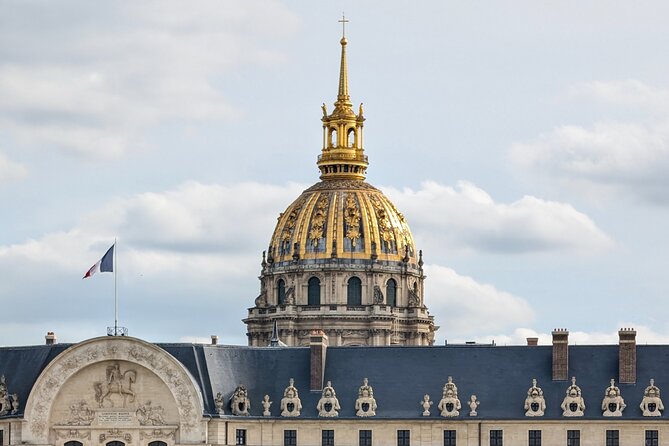
You pass the École Militaire, the military school still in operation since Louis XV, and known for prestigious students including Napoleon Bonaparte. Then you reach Hôtel des Invalides, built under Louis XIV. It is the home of Napoleon’s tomb and today it works as an Army museum.
The practical win for you is perspective. You see how power, war, and empire shaped where monuments ended up. The exterior looks are already striking, and it makes later neighborhoods feel less random.
Pont Alexandre III
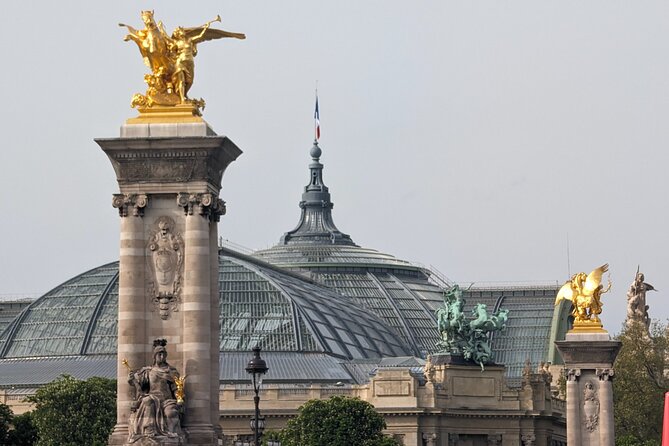
Then comes a standout bridge story. The tour includes a stop at Pont Alexandre III, described as Paris’s most beautiful bridge built for the 1900 Universal Exhibition, with the first stone laid by Tsar Nicholas II. Even if you only get a quick look, this is the kind of place where your phone camera behaves better than you expect.
Grand Palais and Petit Palais
You also get the Grand Palais and Petit Palais, both linked to the 1900 Universal Exhibition. Grand Palais has its glass roof and hosts major events, including sports competitions tied to the future Olympics. Petit Palais works as a museum area with remarkable 19th-century paintings.
This is one of those segments where you get value from having a guide. You are not just staring at buildings, you are learning what they were built to do.
Luxury corridors and Opera grandeur: Rue Saint-Honoré, Vendôme, and Palais Garnier
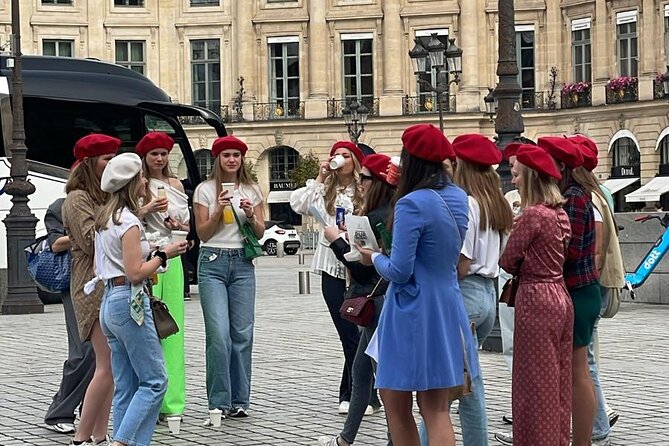
This portion is all about Paris style and money, without feeling like a shopping trip.
Rue Saint-Honoré
The tour rolls along Rue Saint-Honoré, an old Roman road that became chic thanks to luxury boutiques.
Place Vendôme
Next is Place-Vendome, described as the most luxurious square in Paris. You will see a column built under Napoleon Bonaparte, plus landmarks like the Ritz hotel and jewelers.
Palais Garnier and Galeries Lafayette
The tour also includes Palais Garnier, built during the Second Empire by Charles Garnier. It is an architectural masterpiece, and it is hard to beat the exterior wow factor. You then pass the Galeries Lafayette area, known for its famous glass dome built in 1893.
If you like Paris for its layers, this chunk gives you the “showy” side, just enough to get it out of your system without turning your afternoon into a retail detour.
Montmartre, Sacré-Cœur, and painter squares
This is the part that makes people fall for Paris again and again.
Place Saint Georges
You stop at Place Saint Georges, where you can admire older private mansions tied to the New Athens district era.
Moulin Rouge (and what is included)
You also pass by Moulin Rouge, the cabaret that opened during the 1889 Universal Exhibition and helped make the cancan world famous. The important detail: admission for Moulin Rouge is not included, so you can enjoy the area from the outside but you would need separate tickets if you want a show.
Place du Tertre and Sacré-Cœur
In Place du Tertre, you get Montmartre’s painter square atmosphere. Then you head to Basilique du Sacré-Cœur, with its white stone and the city views from above. Even with limited time, Sacré-Cœur is a must because it reshapes your mental map of Paris.
Rue Victor Massé and Chat Noir history
The tour includes Rue Victor Massé, tied to where the old Chat Noir cabaret once stood. This is a nice touch because it adds texture beyond the headline monuments.
Shopping streets, covered passages, and the Bibliothèque nationale stop
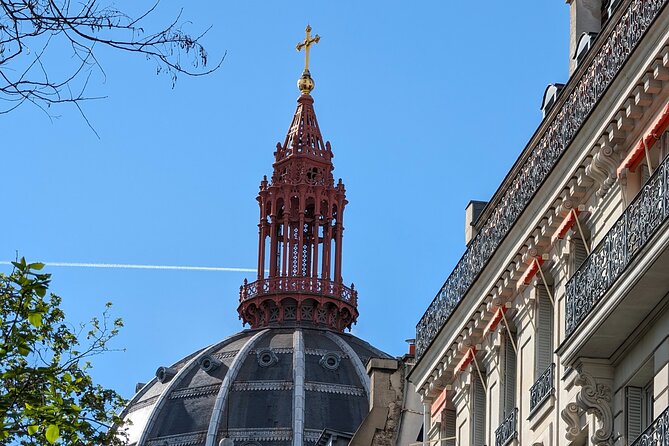
After Montmartre, the tour turns toward elegant pedestrian spaces and serious Paris institutions.
Galerie Vivienne
Galerie Vivienne is a covered pedestrian crossing with a glass roof and mosaic floor, dating to the 18th century. It is described as an ancestor of shopping centers, which is a fun way to think about why it feels special.
Bibliothèque nationale de France (BnF) | Richelieu
You also get time at the BnF Richelieu, including entry into a newly renovated 17th-century library and viewing its oval room with a dome. This is one of the few stops that feels like more than a street corner drive-by, and it can be a welcome break from only exterior sightseeing.
Palais-Royal to Le Marais: old streets, royal squares, and food energy
Now you get Paris that feels walked-on, not just driven by.
Palais-Royal and Place des Victoires
You visit Palais-Royal, founded in 1628 and once the residence of the young Louis XIV. Today it is a mix of shops, theaters, restaurants, cafes, and the State Council. Then you see Place des Victoires, commemorating the military victories of Louis XIV.
Rue Montorgueil and Rue des Rosiers
You move through Rue Montorgueil, a typical Parisian food street with small shops and restaurants. Then Le Marais, including the old Jewish quarter along rue des Rosiers.
Place des Vosges and Hôtel de Sully
You also reach Place des Vosges, the oldest royal square in Paris with work that began under Henri IV and finished after his death, honoring Louis XIII’s engagement to Anne of Austria. Then there is cour et jardin de l’Hotel de Sully, where you get gardens and the 17th-century mansion setting.
These stops are short, but they are exactly the places where you want to notice small details. If you look away, you miss it. If you look closely, you start understanding why Paris keeps pulling people back.
Île Saint-Louis to Île de la Cité: the river backbone of old Paris
Paris’s core starts here, and this part of the loop does a lot for your understanding of the city.
Île Saint-Louis and Berthillon timing
You reach Île Saint-Louis, including mention of the Hôtel de Lambert by Louis Le Vau and a suggestion to grab Berthillon ice cream, created on the island about 70 years ago. This is one of those “optional fun” moments. If you have room for a treat, do it, because it is one of the simplest pleasures in Paris and it makes the tour feel personal.
Île de la Cité, Notre-Dame, and Pont Neuf vibes
The tour then shifts to Île de la Cité, where Paris is said to have begun 2000 years ago. You see Notre-Dame area views, plus references to the Hôtel-Dieu, the Police Prefecture, the concierge, the flower market, Place Dauphine, and the 36 quai des orfèvres area.
You also visit Notre-Dame de Paris, described as a Gothic masterpiece about 861 years old, with treasures including the crown of Christ. Then there is a stop at the oldest bridge in Paris, which points to the Pont Neuf era vibe, followed by Place Dauphine (Place Royale built by Henri IV).
This segment is powerful because you are not just seeing big monuments. You are seeing the city’s origin point and the bridges that helped define movement and power.
Quartier Latin to Luxembourg Gardens: student streets and classic viewpoints
Next comes the “thinking Paris” zone.
Quartier Latin
In the Quartier Latin, you get the medieval street feeling, churches that survived the French Revolution, and nearby landmarks like the Pantheon and Place de la Contrescarpe. The tour also calls out filming locations from Emily in Paris, which can be fun as a pop-culture bookmark if you are into that.
There is also mention of the University of Paris created in 1257 by Robert de Sorbon, which helps you connect what you see on the ground to the deep timeline.
Pantheon and Place de la Contrescarpe
You stop at the Pantheon, and then at Place de la Contrescarpe, known for cafes where students meet. These are quick stops, but they work well when the tour rhythm is already set.
Luxembourg Gardens
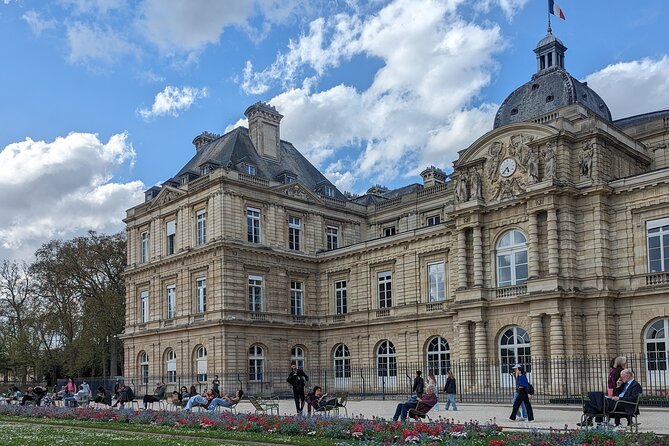
Then you hit Luxembourg Gardens, often described as the most beautiful park in Paris in this context, with the Luxembourg Palace nearby, hosting senators. Even a short walk here makes the tour feel less like a checklist and more like a day out.
Saint-Germain-des-Prés to the Louvre: cafés, churches, and final big payoff
The last section is where you collect the final “wow” and bring your afternoon to a museum doorstep.
Saint-Germain-des-Prés
You explore the Saint-Germain-des-Prés quarter, historically linked with writers, philosophers, artists, and intellectuals in the early 20th century. The tour mentions famous cafes like Flore and Deux Magots, plus classic Paris brasseries and churches, including Saint-Sulpice.
Saint-Sulpice and St-Germain-des-Prés church
You then stop at Eglise Saint-Sulpice, a large 17th-century church with paintings by Delacroix. After that, there is Eglise de St. Germain des Prés, described as the oldest church in Paris, about 1000 years old.
Musée d’Orsay and the National Assembly area
You pass or stop at the former station built for the 1900 Universal Exhibition, now a museum with impressionism masterpieces, commonly known as Musée d’Orsay. Then you reach the National Assembly, the chamber of deputies.
Louvre Museum time
Finally, you reach Louvre Museum, described as alternating between fortress and royal residence and then becoming a museum since the French Revolution, noted as the largest in the world today. You do not get a full museum deep dive in 4 hours, but you do get the satisfaction of ending near the centerpiece.
For your planning: if you want a true Louvre visit, I would treat this as a location reset. Use it to decide what to see on a separate day, then return when you have time to do it right.
Who this tour suits best, and who should skip it
This tour fits best if you:
- Want a first-time Paris sampler that touches many major neighborhoods.
- Prefer comfort and fewer walking transfers over a long transit day.
- Like a guide who can adjust the route pace for photos and breaks, including rainy-day practicality.
- Travel as a small group where sharing the per-group cost makes sense.
I would skip it if you:
- Want long, detailed museum time in one afternoon.
- Plan to rely on the tour for tickets to everything, since most stops are quick and ticket-free by design, and Moulin Rouge admission is not included.
Should you book this vintage car Paris tour?
If your main goal is to see Paris highlights without exhausting your legs, I think this is a smart book. The pricing works best for couples or small groups, and the private setup gives you the kind of flexibility big group tours rarely do. The best part is the mix: you get iconic landmarks like the Eiffel Tower and Arc de Triomphe, then you get real neighborhood flavor through Montmartre, Le Marais, and Saint-Germain-des-Prés.
Book it if you want an efficient, comfortable afternoon with an English guide and a route that helps you feel oriented fast. Skip it if you are already committed to spending hours inside museums and want a slower, deeper day.
FAQ
How many people are in a group?
It is a private tour, and the price is per group for up to 3 people.
How long is the tour?
The tour lasts about 4 hours.
Do you pick up from anywhere in Paris?
Pickup is offered anywhere in Paris intramural. The tour begins once you are in the car.
Where is the meeting point?
The tour starts at 24 Rue de Madrid, 75008 Paris, France, and it ends back at the meeting point.
What language is the guide?
The tour is offered in English, and it includes a mobile ticket.
Are tickets for places like Eiffel Tower, Notre-Dame, and the Louvre included?
The tour lists admission as free for most stops. Moulin Rouge admission is not included, so you would need separate tickets if you want a cabaret show.
Newest write-ups from Paris


Citroën 2CV Tours, compared.
Discover Paris by Night in a Vintage Car with a Local
Read our review →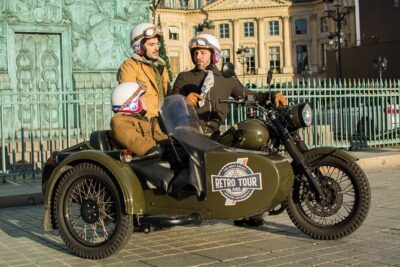
Paris Private Flexible Duration Guided Tour on a Vintage Sidecar
Read our review →
Vintage 2CV Adventure: 2 -Hour Paris Secrets Tour
Read our review →

Paris Vintage Private City Tour on a Sidecar Motorcycle
Read our review →
Off-the-Beaten Track in Paris: 2-Hour Vintage 2CV Tour
Read our review →Browse the lists this tour appears in