Reviewed · PARIS
Architectural Bourgeois Paris 19th Century
Nineteenth-century Paris hides in plain view. This historian-led walk brings bourgeois architecture to life, from elegant Parc Monceau corners to the big department-store finish at Galerie Lafayette. I love how the stops connect architecture, industry, and everyday life into one story, and I love the photo-friendly route that shows you Paris you usually skip.
The only real drawback is the format: you’re on foot for about 2 hours with a steady pace, so wear comfortable shoes and keep expectations realistic if you tire easily.
In This Review
- Key highlights at a glance
- Parc Monceau: colonnades, a pyramid, and a bourgeois pause
- Statue d’Haussmann and the geometry of Paris
- Saint-Augustin Church: 1860s design and a Proust aside
- Gare Saint-Lazare’s back side: industry meets money
- Printemps and Galerie Lafayette: the 19th-century department store finale
- Price, timing, and who this 19th-century walk is for
- Your guide: François and a historian’s way of explaining Paris
- Photo opportunities that actually make sense
- Should you book this Architectural Bourgeois Paris 19th Century tour?
- FAQ
- How long is the tour?
- What’s the meeting point and where does it end?
- Is a mobile ticket used?
- What is included in the tour price?
- What stops are covered on the route?
- Can the guide make a detour related to Marcel Proust?
- What group size should I expect?
- Is the walking pace suitable for everyone?
- What is the cancellation policy?
Key highlights at a glance
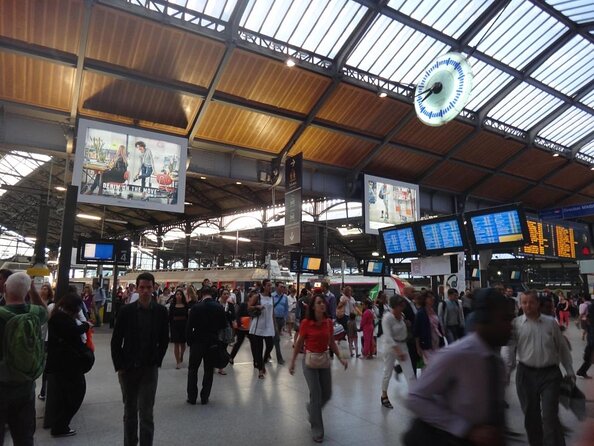
Parc Monceau, with colonnades, a bridge, a pyramid, and major Belle Epoque atmosphere
Haussmann’s influence, explained at the Statue d’Haussmann and along Haussmannian streets
Saint-Augustin Church entry in the 1860s style, plus an optional Proust-related detour by request
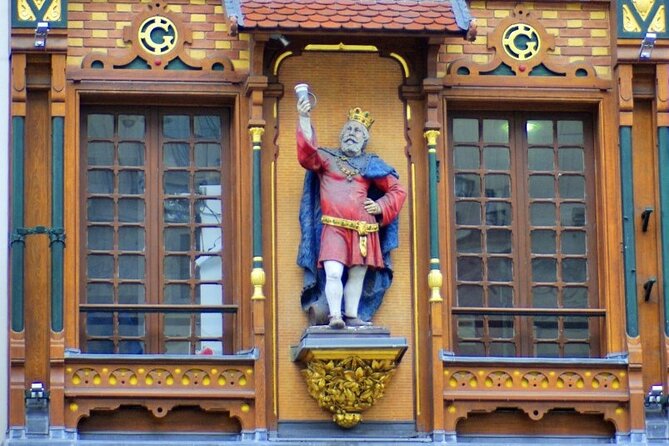
Gare Saint-Lazare’s industrial back side and the contrast of Le Roi de la Bière with a McDonald’s
End at Printemps and Galerie Lafayette, with entry included during opening hours
Worth a comparison before you book. Others in Paris covering the same ground:
- Paris: 1-Hour Seine Cruise departing from the Eiffel Tower
★ 4.4 · 77,472 reviews - Disneyland® Paris 1-Day Ticket
★ 4.6 · 49,412 reviews - Paris: Versailles Palace and Gardens Full Access Ticket
★ 4.6 · 41,579 reviews - Paris: Arc de Triomphe Rooftop Tickets
★ 4.6 · 34,264 reviews
Parc Monceau: colonnades, a pyramid, and a bourgeois pause
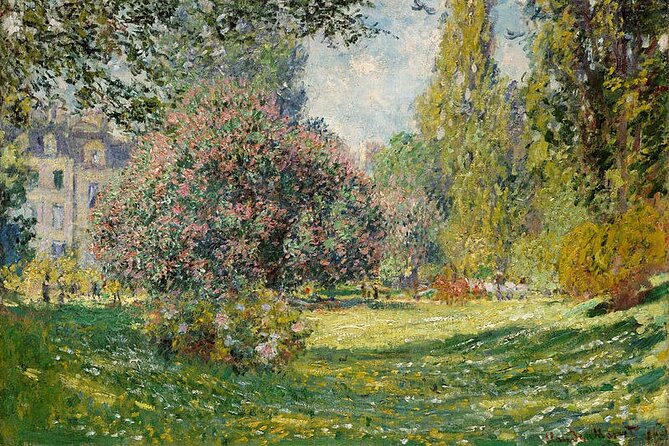
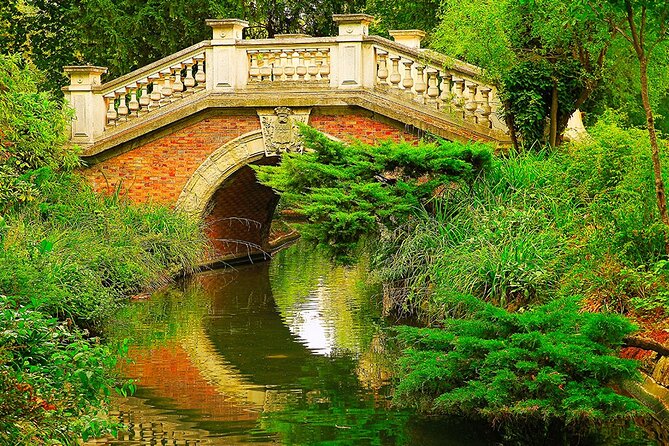
Parc Monceau is the kind of place that makes you look twice. You get a guided walk through the park, with time to spot the ancient colonnade, a bridge, a pyramid, and all those impressive trees that make the whole setting feel carefully composed.
This stop works because it’s not just “a park.” In 19th-century Paris, green spaces like this were part of how affluent Parisians shaped their leisure life, surrounded by architecture and spectacle. You’re learning to read the landscape as a design statement, not just scenery.
Practical tip: bring your camera ready at the start. The park has enough interesting angles that you’ll want to take breaks without falling behind the group.
Statue d’Haussmann and the geometry of Paris
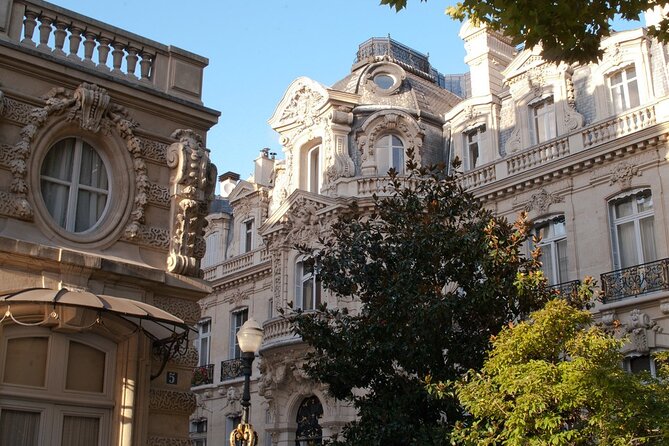
Next you pause at the Statue d’Haussmann, dedicated to the man who changed how Paris looks. This is one of those moments where a single name suddenly explains a whole city view: Haussmann’s planning reshaped streets, apartment blocks, and the feel of moving through town.
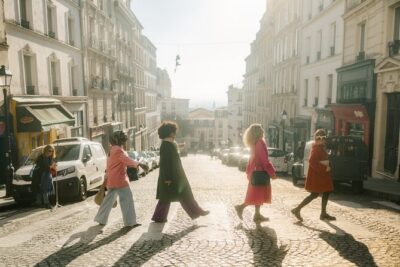
From there, you walk through the heart of Haussmannian Paris, seeing typical apartment buildings and wide boulevards. The tour makes you notice proportions, alignment, and how the architecture frames daily life. It’s especially useful if you’ve ever wandered Paris and thought, Why do these streets feel so structured?
You’ll also start linking the “big ideas” to real surfaces you can photograph. Facades become clues. Corners become story points.
Saint-Augustin Church: 1860s design and a Proust aside
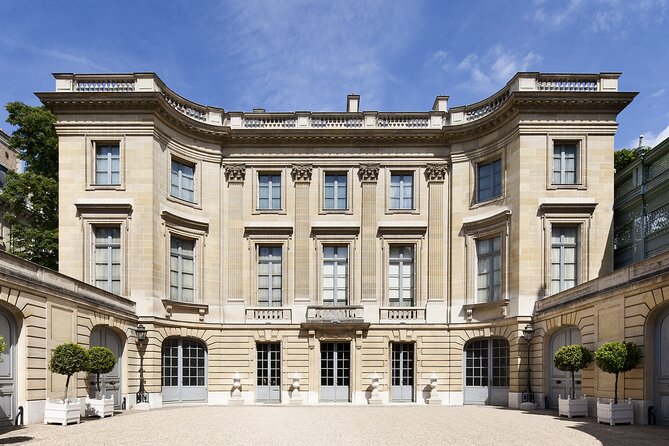
Saint-Augustin Church is the kind of stop that gives you a quick but meaningful reset. You enter the church, built in the era of the tour, around 1860, and you get time to experience the interior rather than just glance from outside.
This stop is valuable because it adds a different layer to the 19th-century theme. You’re not only looking at estates, boulevards, or rail power. You’re also seeing how religion and monumental design fit into the same bourgeois timeline.
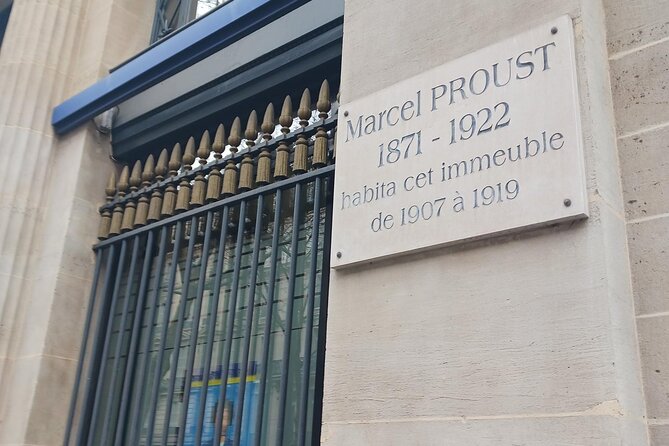
There’s also an optional detour that you can request. The guide can pass by the location where writer Marcel Proust lived and wrote A la Recherche du Temps Perdu. Even if you’re not a Proust person, it’s a fun way to connect literature to the streets you’re standing on.
Tip for your planning: if you care about the Proust aspect, mention it early. A by-request detour works best when you ask before the group has momentum.
Gare Saint-Lazare’s back side: industry meets money
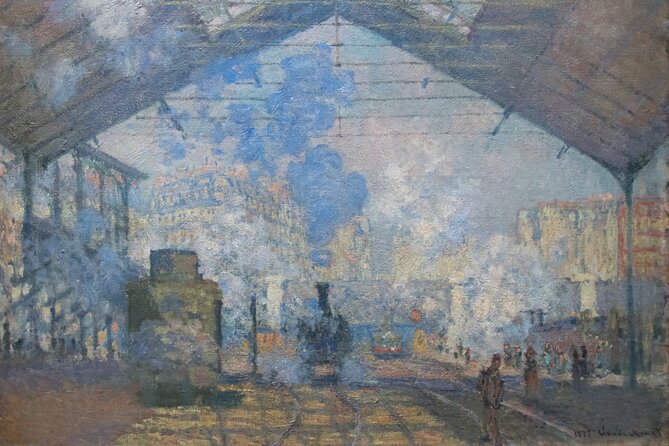
Then you shift to the rail world at Gare Saint-Lazare. The tour takes you past the back side of the station, which is a smart choice if you want more than postcard Paris. This is one of Paris’s key train stations, and the guide ties the rail story to the surrounding neighborhood.
What I like here is the way the tour frames industrialization as an engine for wealth. The neighborhood becomes a map of how entrepreneurs grew rich, then lived close by. That matters, because it changes how you interpret the station area. It’s not just transit. It’s economics in stone and iron.
In front of the station, you also see Le Roi de la Bière, including a restaurant of McDonald’s. That detail is a perfect reality check. The building is tied to older Paris, but modern life has moved right in. You get a “then and now” contrast that feels more honest than a museum-only approach.
Photography note: station-adjacent streets can be busy. Keep your camera ready, but also be ready to pause at safe, open spots the guide suggests.
If this one is booked out, Paris has these too:
- Paris: Orsay Museum Entry Ticket★ 4.7 · 25,647 reviews
- Paris: Evening River Cruise with Music★ 4.4 · 22,721 reviews
- Paris: Eiffel Tower Entry Ticket with Optional Summit Access★ 4.4 · 20,035 reviews
- Eiffel Tower Dedicated Reserved Access Summit or 2nd Floor★ 4.3 · 18,352 reviews
Printemps and Galerie Lafayette: the 19th-century department store finale
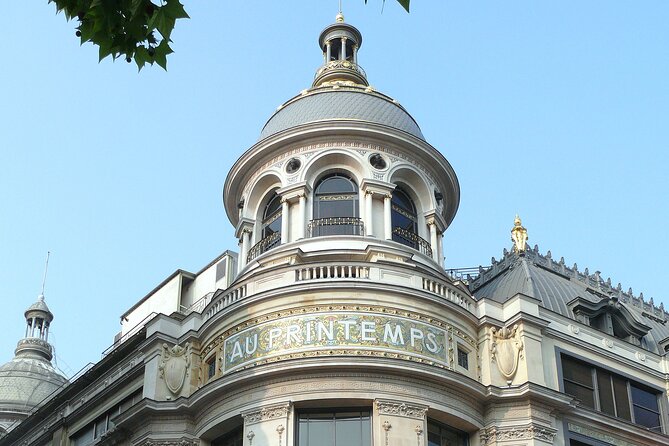
You end with the classic 19th-century urban phenomenon: les Grand Magasins, the great department stores. You pass Printemps, and then the guide invites you inside Galerie Lafayette for the finale.
This is where the tour’s bourgeois theme clicks into place. Department stores were about more than shopping. They were a public stage for fashion, architecture, and the social experience of wealth. Spending time inside Galerie Lafayette lets you see that 19th-century style wasn’t only for private mansions and parks.
Because entry is included during opening hours, you’re not stuck doing a quick exterior glance and hoping for the best. You get the real interior experience as part of the planned schedule.
My practical advice for the end: slow down at Galerie Lafayette. This is a place where you’ll want to take a few extra minutes to look up and frame photos properly. Save your energy for the final stretch so you can actually enjoy it.
Price, timing, and who this 19th-century walk is for
The price is $68.65 per person for about 2 hours, and the value is mostly in two things: guided interpretation plus built-in admission stops. Parc Monceau, Saint-Augustin Church, and the department-store finale at Galerie Lafayette are covered during the tour format, so you’re paying for access and context rather than just a walking playlist.
It’s also a small-group experience, capped at 10 travelers. That size matters because you can ask questions and keep the pacing human. If you enjoy a guide who explains why things look the way they do, this group size gives you a better chance to connect the dots.
Start time is 10:30am, and the tour meets at Parc Monceau (Monceau 75017 Paris) and finishes at Galerie Lafayette (40 Bd Haussmann, 75009 Paris). So you end in a lively area that’s easy to keep exploring afterward, especially if you already plan to spend time around Haussmann’s boulevards.
This tour fits best if you:
- like architecture and want the story behind what you see
- enjoy rail and industrial-era neighborhoods, not just grand landmarks
- want a compact 19th-century sampler that moves across parks, churches, stations, and stores
It may not be the best fit if you want a totally relaxed stroll. This is still a walking tour, and it asks for moderate physical fitness.
Your guide: François and a historian’s way of explaining Paris
One of the biggest strengths here is the guide. François is a historian focused on 19th-century Paris, and he’s comfortable switching between French and English while keeping the explanations clear. He also brings personal passion for the bourgeois side of Paris, and that shows in how he frames the route.
I like tours where the guide does more than point. François connects what you’re seeing to why it happened, and he links the architecture to real life, money, leisure, and power. That kind of storytelling makes each stop feel like part of a single line of thinking, not separate errands.
In a small group, this style works well. You get to ask quick questions, and the pace is easier to manage.
Photo opportunities that actually make sense
This tour is designed for photos, but in a practical way. You’re not just stopping for obvious monuments. You’re moving through:
- designed park geometry at Parc Monceau
- structured street views tied to Haussmann planning
- an interior entry at Saint-Augustin
- industrial back-street perspectives near Gare Saint-Lazare
- a department-store finish that’s visually dramatic at the end
If you like taking photos, this route gives you variety without feeling random. And because the guide explains what you’re looking at, your photos end up with meaning, not just pretty backgrounds.
Should you book this Architectural Bourgeois Paris 19th Century tour?
I’d book it if you want a 19th-century Paris walk that feels specific, not generic. The mix is smart: park and mansion-style architecture, Haussmann street logic, church entry from the 1860s, rail-era industrial context, and then the big department store finale at Galerie Lafayette.
Skip it only if you need a very slow, low-effort tour, or if you’re only interested in one type of site, like purely museums or purely outdoors. The value here is in seeing how multiple parts of Paris fit into one bourgeois, 19th-century story.
FAQ
How long is the tour?
The tour lasts about 2 hours.
What’s the meeting point and where does it end?
It starts at Parc Monceau, 75017 Paris, France and ends at 40 Bd Haussmann, 75009 Paris, France, which is the address for Galerie Lafayette.
Is a mobile ticket used?
Yes, the tour uses a mobile ticket.
What is included in the tour price?
Admission is included for stops along the way, and Galerie Lafayette is included during opening hours. Coffee or tea is not included.
What stops are covered on the route?
The tour includes Parc Monceau, the Statue d’Haussmann, entry into Saint-Augustin Church, a walk past the back side of Gare Saint-Lazare, and then Printemps followed by Galerie Lafayette.
Can the guide make a detour related to Marcel Proust?
By request, the guide can make a detour to pass the location where Marcel Proust has lived and written A la Recherche du Temps Perdu.
What group size should I expect?
The tour has a maximum of 10 travelers.
Is the walking pace suitable for everyone?
The tour calls for moderate physical fitness level, since it is a walking experience.
What is the cancellation policy?
Free cancellation is available. You can cancel up to 24 hours in advance of the experience for a full refund, and cut-off times are based on the local time of the experience.