
Reviewed · CYCLING TOURS
Best of Paris Private Rickshaw bike Tour with guide
Paris looks different from a rickshaw. In a private ride that skips long traffic jams, you can cover a lot of classic sights quickly, and you get an onboard audio guide to keep the stories coming. What I like most is the private rickshaw format and the onboard audio guide in multiple languages, so you are not stuck waiting for group pacing.
You also get smart photo-stop timing at big-name landmarks like Notre-Dame, the Pantheon, and the Eiffel Tower, with scenic stretches along the Seine. One real consideration is that Paris road closures can change the exact route on the day, so not every landmark stop is always reachable.
If you want a quick, guided overview of Le Tout Paris, this is a solid way to see the city’s ambition and charm without spending the whole day walking. You meet near the Louvre area at 99 Rue de Rivoli or the Carrousel du Louvre, then you return to the same starting point at the end.
In This Review
- Key Things to Know Before You Go
- A Private Rickshaw Bike Tour That Beats Paris Traffic
- Where You Meet Near the Louvre and How the Timing Works
- Hôtel de Ville, Notre-Dame, and the Latin Quarter in One Loop
- Luxembourg Gardens, Saint-Sulpice, and Saint-Germain-des-Prés
- Seine River to Eiffel Tower, Pont de Bir-Hakeim, and Statue of Liberty Moments
- Place du Trocadéro, Arc de Triomphe, and Champs-Élysées Photo Stops
- Grand Palais, Pont Alexandre III, Assemblée Nationale, and Place Vendôme
- Palais Garnier, Louvre Museum, and Sacré-Cœur Closing Energy
- Audio Guide Languages, Guide Talk, and What to Do If Sound Is an Issue
- Flexibility When Roads Change, and How to Make the Route Work for You
- Price, Pacing, and Who This Private Tour Fits Best
- Should You Book This Best of Paris Private Rickshaw Bike Tour?
Key Things to Know Before You Go
- Private pacing: This is a private group setup, so the ride tends to feel smoother and less crowded than standard hop-on routes.
- Onboard audio in many languages: Dutch, German, English, French, Italian, Spanish, Japanese, and Chinese are available.
- Photo-stop rhythm: Expect brief stops at major landmarks, plus some scenic time along the Seine.
- Route can adapt fast: If streets near the Louvre or along the Seine are blocked, your guide may reroute you through alternate streets to keep the tour moving.
- Strong guide support: Guides like Ama, Ibrahim, Ahmad, Vince, and Chayo have been praised for clarity and patience when plans change.
More of Paris covered between the bike lanes:
- Versailles Palace Bike Tour with Market & Marie-Antoinette hamlet
★ 5.0 · 2,680 reviews - Paris: Charming Nooks and Crannies Bike Tour
★ 4.8 · 2,585 reviews - Paris: City Highlights Bike Tour
★ 4.7 · 1,835 reviews - Electric Bike Tour of Paris’ Hidden Gems
★ 4.9 · 1,377 reviews
A Private Rickshaw Bike Tour That Beats Paris Traffic
Paris is famous for having postcard views, then promptly making you work for them on foot. This tour flips the script. Instead of spending your energy weaving through busy streets, you ride a rickshaw bike through key neighborhoods and monument zones, with stops built in for photos.
I like that the experience is designed for time efficiency. You still get the wow factor of major monuments, but the transportation part is handled for you. And because it is private, you can often move at a pace that matches your group rather than the slowest step in a crowd.
Another practical bonus is how the audio guide helps you keep context while you are moving. In a city as dense as Paris, it is easy to see great buildings but miss why they matter. The onboard audio is there to connect the dots while you are rolling past them.
Where You Meet Near the Louvre and How the Timing Works
You start at 99 Rue de Rivoli, 75001 Paris, with an option to start at Carrousel du Louvre. Your tour ends at the same general meeting area, so you are not left guessing how to get back.
Duration runs from 45 minutes to 3 hours depending on the starting time you select. The planned loop is described as a two-hour Best of Paris route, but you should think in terms of a flexible sightseeing loop that can be shorter or longer based on what you book.
What matters here is pacing. If you pick a shorter slot, expect faster photo stops and fewer walking moments between points. If you pick a longer slot, you are more likely to get breathing room at the more complex areas, like the Seine bridges and the big boulevards around the Arc de Triomphe.
Hôtel de Ville, Notre-Dame, and the Latin Quarter in One Loop
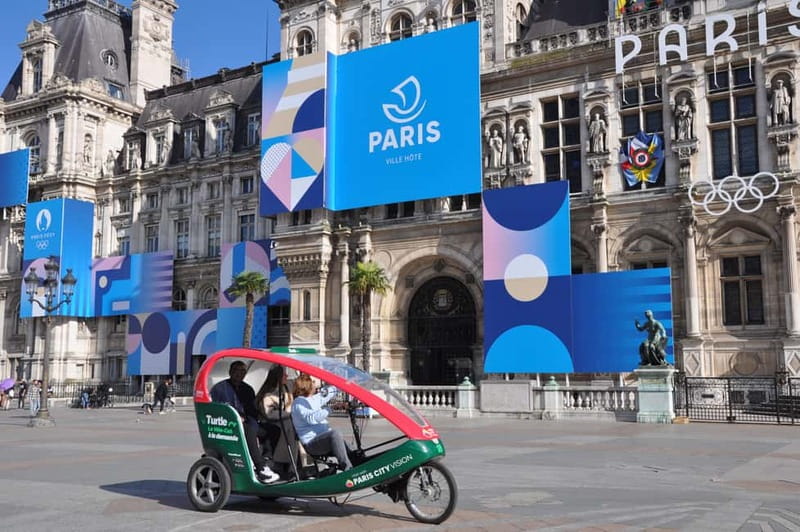
This is the part of Paris where you get the strongest mix of old stone and grand civic energy. The tour often begins with a photo stop at Hôtel de Ville, a good first anchor because it signals you are in the historic center.
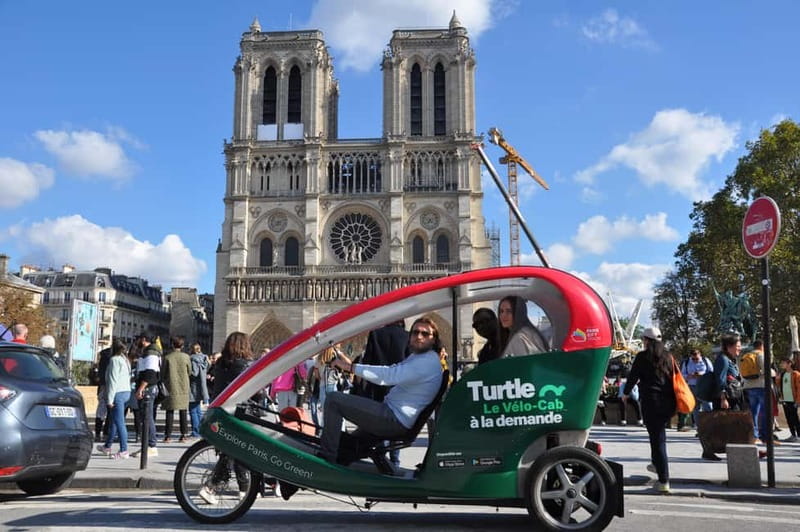
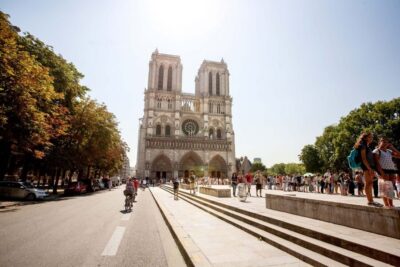
Next up, you head toward Notre-Dame Cathedral for a photo stop. Even if you have already seen it from the outside, this stop is usually about angles and context, not a slow exterior viewing session. The key is that you are positioned and timed so you can capture the cathedral without wasting time trying to find the perfect spot during peak congestion.
From there, you move into the academic Paris feel around La Sorbonne. This is a quick but meaningful change of mood. Where Notre-Dame gives you religious monument scale, the Sorbonne area brings you that centuries-long student and scholarship vibe. You are also in a part of town where street life and architecture often steal the show, so even a short stop can feel more lively than you expect.
Then comes the Pantheon for another photo stop. The Pantheon is one of those places that rewards a guided explanation because it has played multiple roles over time. Even with a brief stop, it helps to know what you are looking at.
Luxembourg Gardens, Saint-Sulpice, and Saint-Germain-des-Prés
After the monument heavy hitters, you get a slower-feeling, more lived-in stretch. The Luxembourg Gardens photo stop is often where this tour earns its value for people who want more than just landmarks. The gardens are a visual reset in the middle of the day, and the surrounding area is a classic Paris postcard zone.
Then you move to Church of Saint-Sulpice for a photo stop. This stop can be a highlight if you enjoy architecture details and the sense of Parisian religious art and urban planning. It is also a good reminder that Paris is not only about one skyline view, it is also about buildings that shape whole streets.
Next is Saint-Germain-des-Prés, which is where the tour brings in neighborhood flavor. Think cafes, bookish Paris energy, and the feeling of walking through a district that has been around forever. You are not doing a long wander here, but the photo stop can still give you a sense of what makes Saint-Germain different from the government-and-monument corridors.
One practical point: these Paris central stops can be constrained by traffic and pedestrian zones, especially near famous sites. If access is tight, your guide may shorten or shift the sequence to keep the ride flowing.
A handful more Paris options to weigh up
- Louvre Museum Paris Essential Guided Tour Semi-Private 6ppl Max★ 5.0 · 3,807 reviews
- SUV Private Transfer: Paris to Charles de Gaulle Airport (CDG)★ 4.0 · 3,091 reviews
- Paris: Private Photoshoot at the Eiffel Tower★ 4.7 · 2,636 reviews
- Top Private Cruises in Paris with French Champagne and surprises★ 5.0 · 1,553 reviews
Seine River to Eiffel Tower, Pont de Bir-Hakeim, and Statue of Liberty Moments
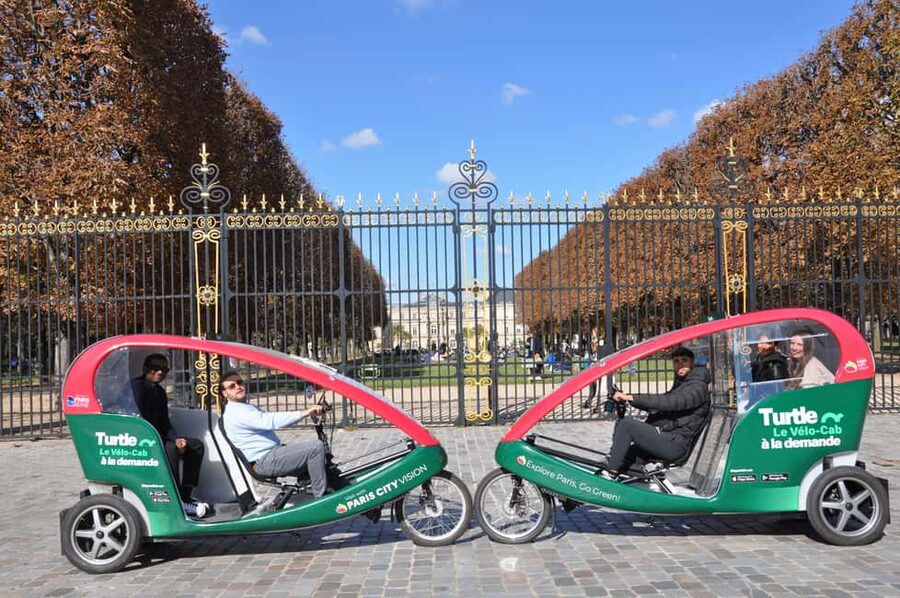
The tour’s signature scenic segment is the Seine River stretch. You get the water views without doing the marathon walking that many self-guided routes demand. This is also where the audio guide tends to shine, because the Seine makes a perfect timeline corridor, connecting neighborhoods and eras.
From the Seine, you visit Pont de l’Alma for a photo stop. Bridge stops might sound basic until you realize they are where you can frame multiple monuments in a single view, often with cleaner sightlines than the areas right next to the buildings.
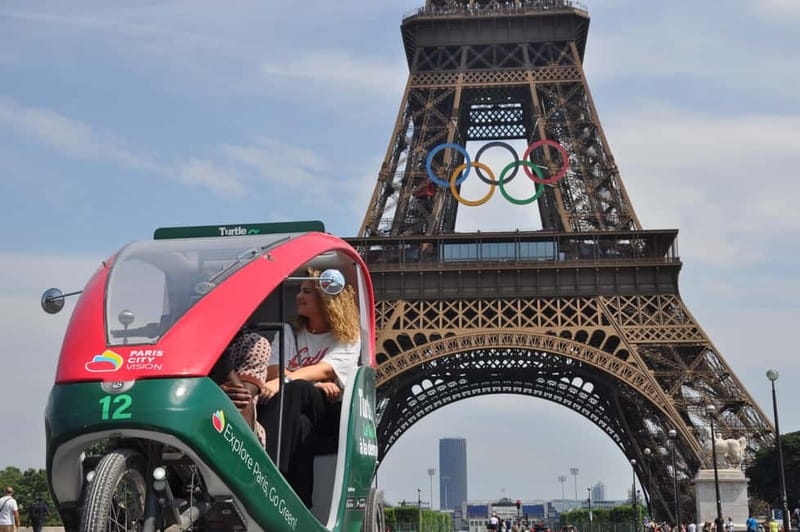
Then you reach the big one: the Eiffel Tower for a photo stop. The value here is that you get set up for the Eiffel without losing time fighting traffic, crowds, or trying to guess where the best angle is.
After that, you ride toward Pont de Bir-Hakeim and then take a photo stop at the Statue of Liberty, Paris. That pairing is fun because it gives you a break from the Eiffel-only story. You get a different symbol, a different mood, and a reminder that Paris loves borrowing iconic ideas and making them its own.
If you like your photos to have variety, this stretch is a smart inclusion.
Place du Trocadéro, Arc de Triomphe, and Champs-Élysées Photo Stops
Next comes Place du Trocadéro, one of the most famous viewpoint zones for Eiffel Tower photos. This is a classic stop for a reason. The location helps you get that iconic Eiffel framing that people travel for.
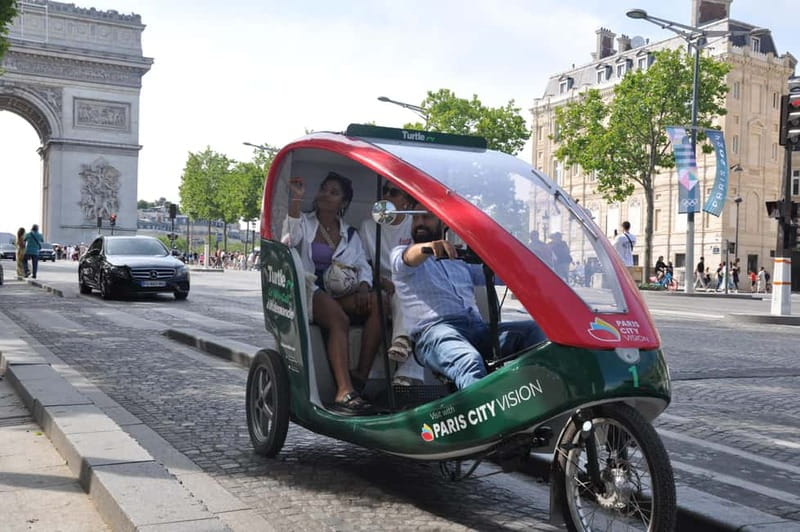
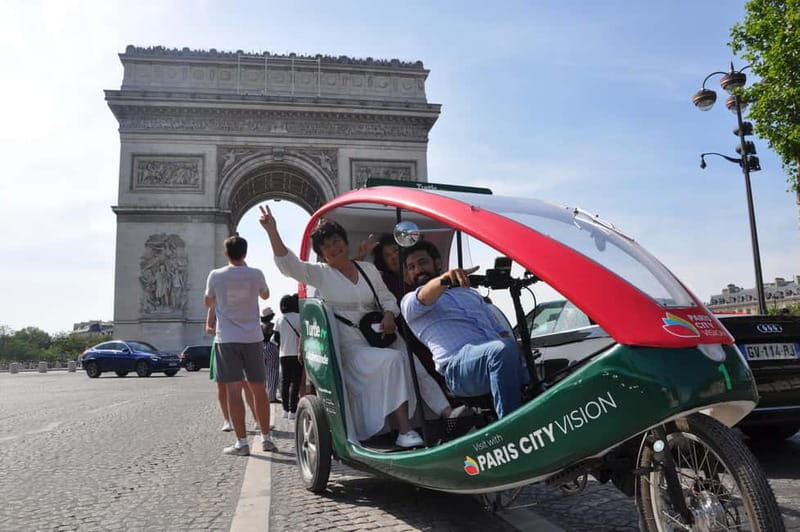
Then you head to the Arc de Triomphe for a photo stop. This is less about lingering and more about scale. Seeing the arch from the right streets gives you a feel for Paris boulevard geometry, the way the city channels movement toward big focal points.
From there, you ride along Champs-Élysées for another photo stop. This boulevard can feel chaotic on foot, so the ride helps you stay comfortable while still getting the spectacle. You also pass the sense of Paris as a city of performances and ceremonies, not just quiet corners.
If you care about photos that look like movies, this part of the route is doing a lot of heavy lifting in a short time.
Grand Palais, Pont Alexandre III, Assemblée Nationale, and Place Vendôme
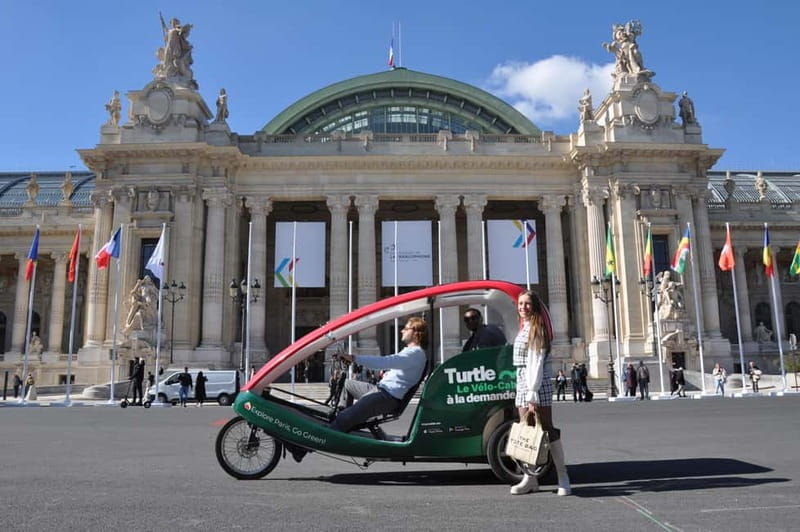
The tour continues with major “wow” architecture and state symbolism. You stop at Grand Palais for a photo stop, which is a strong pick if you like Beaux-Arts drama and glass-and-stone grandeur.
Then it is Pont Alexandre III, a bridge that is practically built to be photographed. It is one of those places where even a short stop helps you understand why people describe Paris as a city of deliberate sightlines.
You also get l’Assemblée Nationale for a photo stop, bringing the tour back to civic Paris. It changes the tone from boulevard glamour to government scale, which helps your overall mental map of the city.
After that, you visit Place Vendôme for a photo stop. This square is compact, stylish, and easy to read visually. It is also a nice transition toward the theatre and museum zones later in the route.
Palais Garnier, Louvre Museum, and Sacré-Cœur Closing Energy
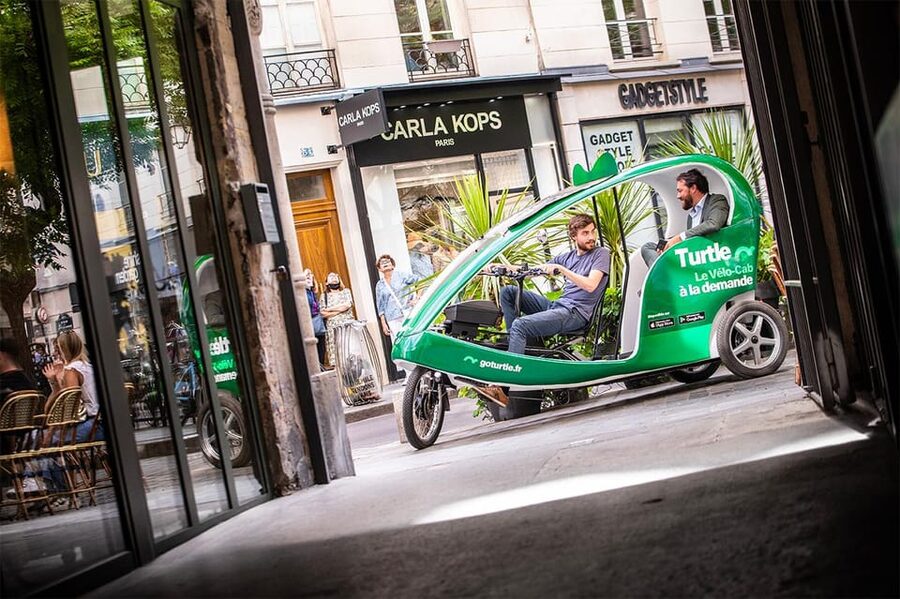
Next comes Palais Garnier for a photo stop. This is the opera-house section of the tour, and it is meant for that “wait, Paris really is like this” reaction. Even if you have no interest in opera, the building itself is a spectacle.
Then you reach Louvre Museum for a photo stop. You are not necessarily doing a full museum visit here, but you still get the famous exterior context and that key Paris reference point that helps you plan your next day.
Finally, you end at Sacré-Cœur Basilica for a photo stop. This is a smart closing move because it gives you a different kind of Paris atmosphere, more hilltop and more romantic. It also pairs well with the idea of a quick overview, because you finish the loop with a landmark people associate with Paris nights and skyline mood.
The tour returns to the 99 Rue de Rivoli / Carrousel du Louvre area, so you have a built-in way to finish near where you started.
Audio Guide Languages, Guide Talk, and What to Do If Sound Is an Issue
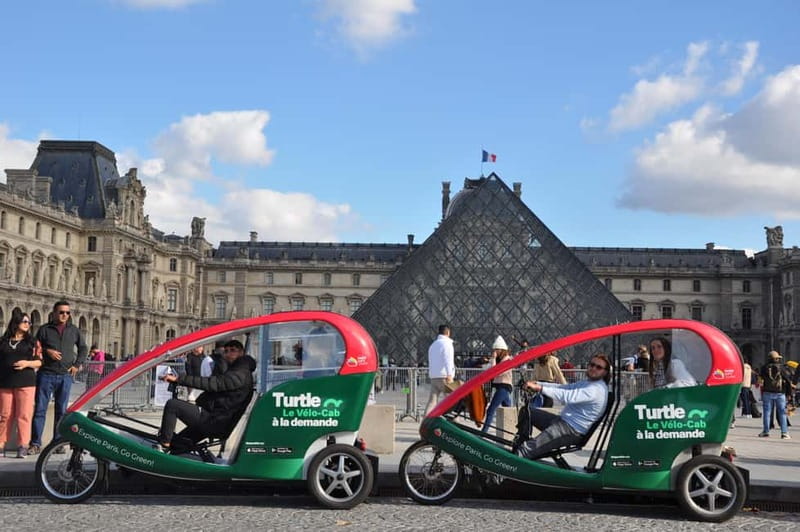
This tour includes an onboard audio guide with languages including Dutch, German, English, French, Italian, Spanish, Japanese, and Chinese. That is useful because Paris monuments come with lots of proper nouns and timelines. The audio does the heavy lifting so you are not relying only on memory or guesswork.
The host or greeter works in English and French, and guides have been praised for patience and clear explanations. Names that have shown up in bookings include Ama, Ibrahim, Ahmad, Vince, and Chayo, and the common thread is that they work to keep you informed and moving.
One important consideration: sound can matter. At least one booking note indicates that it can be hard to hear the tour guide. If you are booking with a group where hearing the spoken explanation matters, it is smart to choose seats or positioning that keeps you closest to the audio source. If something feels off, speak up early so the guide can adjust.
Flexibility When Roads Change, and How to Make the Route Work for You
Paris rarely runs perfectly. Street closures happen, especially around major events and high-profile marches. In one real scenario, the start area near the Louvre and the Rue de Rivoli was affected, and the Seine-side route on the Eiffel Tower side had detours. The guide still kept the experience going by switching to smaller streets and showing more local-feeling pockets along the way.
That is exactly the kind of benefit you want from a private guided tour. Even if you do not reach every planned landmark stop, you can still come away with a coherent Paris overview, plus some detours that feel unexpectedly good.
This also lines up with another practical theme from bookings: the tour can be tailored. If your group wants more time at a specific stop, it is worth asking your guide early and staying flexible on the rest of the sequence.
Price, Pacing, and Who This Private Tour Fits Best
I cannot quote a specific price here because none is provided, but you can evaluate the value by what is included. You are paying for a private rickshaw format, a guide, and an onboard audio system. For some travelers, that bundle can be a better use of time than building your own route with multiple taxis or spending hours in pedestrian queues.
This is also a good deal for people who want the big monument hits without doing museum tickets or full-day walking. It fits best if you are on a tight schedule, like a first visit where you want orientation fast, or a shorter trip where you still want the Eiffel, the Notre-Dame area, and the grand boulevards.
Who might love it most:
- First-timers who want a top-sites overview with a guide
- Couples or small groups who want privacy and quick photos
- Travelers who get tired walking long distances in central Paris
Who should think twice:
- People who want deep, time-consuming visits inside major sites. This tour is built for photo stops and overview pacing, not long museum immersion.
- Anyone who is extremely sensitive about audio clarity, since at least one booking note points to hearing issues.
Rules are simple: alcohol and drugs are not allowed, so keep the ride family-friendly and straightforward.
Should You Book This Best of Paris Private Rickshaw Bike Tour?
I think this is a smart booking if your goal is classic Paris highlights with guide context, delivered in a time-efficient private format. The inclusion of an onboard audio guide in many languages is especially useful, and the route covers the big names plus key neighborhoods like Saint-Germain-des-Prés.
Book it if you want:
- A fast overview with photo stops at iconic monuments
- A guided ride that helps you avoid sitting in traffic
- The option to get guidance when the city forces route changes
Skip it or consider alternatives if:
- You want long indoor time at the Louvre or other major sites
- You expect every stop to be reached with zero route adjustments on every day
If you are deciding between a walking day and a guided ride, this one is a practical middle path: you get the city’s biggest sights without spending your entire trip in the tightest streets on foot.
Newest write-ups from Paris
Cycling Tours, compared.
Versailles Palace Bike Tour with Market & Marie-Antoinette hamlet
Read our review →
Versailles Full Day Bike Tour with Palace, Gardens, & Picnic
Read our review →
Paris Local Districts and Stories Off the Beaten Track Guided Bike Tour
Read our review →
Highlights of Paris Bike Tour w/ a Local Guide (English or Dutch)
Read our review →Browse the lists this tour appears in