
Reviewed · D-DAY LANDING BEACH DAY TRIPS
Canadians in Normandy D-Day beaches Juno Beach and Pegasus Bridge (3/7 pax)
Normandy in one long day can feel like a sprint. I love the small-group size, and I also love how the day stays sharply focused on Canada at key D-Day sites. One real drawback to plan for is the pace, you only get short time blocks at each location.
The payoff is how well the tour connects the dots, from the first airborne moments at Pegasus Bridge to what Canadians experienced on the coast. You get transportation plus a guide, and Juno Beach Centre admission is included, so you’re not trying to squeeze museum tickets into a tight schedule.
This is a 6:30 am departure with about 13 to 14 hours total on the go. If you don’t want a long day in a vehicle, or you’re hoping for unhurried stops and lunch built in, you’ll want to weigh that.
In This Review
- Key highlights you will actually feel during the day
- A Canada-focused Normandy day from Paris
- Getting there, and why the early start changes everything
- Pegasus Bridge: the opening minutes of Operation Deadstick
- Bény-sur-Mer Canadian War Cemetery: quiet scale and thoughtful design
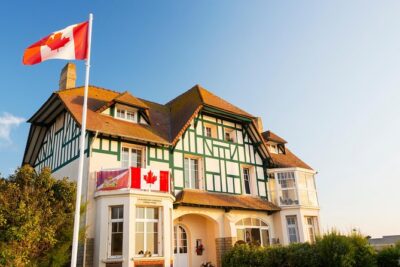
- La Maison des Canadiens (Canada House): the D-Day story in one timber-framed house
- Juno Beach Centre: the best 2 hours for understanding Canadian D-Day
- Croix de Lorraine, and the Churchill AVRE Tank memorial
- Guide and group size: why small matters on WWII tours
- Price and value: is $288.99 fair for this one-day push?
- Practical tips so you do not feel rushed or unprepared
- Should you book the Canadians in Normandy D-Day tour?
- FAQ
- Where does the tour start and end?
- What time does the tour begin?
- How long is the full-day tour?
- How large is the group?
- Is the tour offered in English?
- What is included in the price?
- Is lunch included?
- Do I have to pay for admission at each stop?
- What happens if the tour is cancelled due to weather or minimum travelers?
- Can I cancel and get a refund?
Key highlights you will actually feel during the day
- Up to 7 people, which makes questions easy and answers fit your interests
- Pegasus Bridge and Operation Deadstick, including the bridge-taking mission and why it mattered
- Bény-sur-Mer Canadian War Cemetery, a beautifully kept site with 2,049 headstones and designed viewpoints
- La Maison des Canadiens (Canada House), where the inscription ties the first minutes of landings to real place
- Juno Beach Centre for 2 hours, with a full permanent exhibit circuit and the They Walk With You film
- Croix de Lorraine and the Churchill AVRE tank memorial, plus the story behind the monument facing the sea
Other long days to the Normandy beaches:
- Normandy D-Day Sites & Cemetery Day Trip from Paris with Lunch
★ 5.0 · 6,877 reviews - Normandy D-Day Small-Group Day Trip with Omaha Beach, Cemetery & Cider Tasting
★ 5.0 · 2,786 reviews - Normandy D-Day Beaches and American Cemetery Day Trip from Paris
★ 4.5 · 2,673 reviews - Paris: Normandy D-Day Sites Guided Day Trip with Lunch
★ 4.7 · 1,082 reviews
A Canada-focused Normandy day from Paris
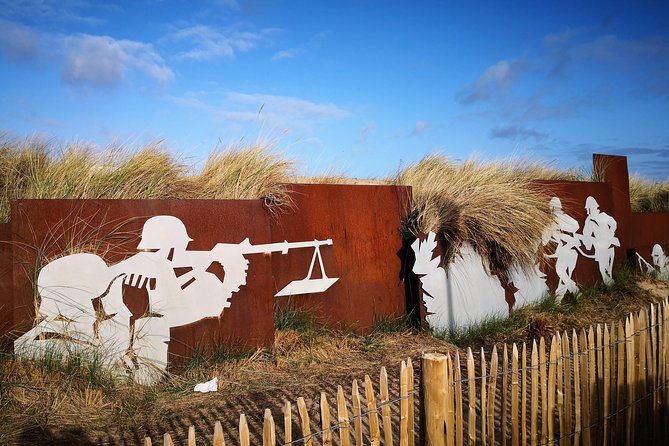
This tour is built for people who want the Normandy story through Canadian eyes, not as a generic D-Day sampler. You’ll see the famous sites most visitors come for, but the framing is consistently about Canada’s fighting, losses, and the way that history shaped modern Canada.
From Paris, you start early and then spend the day working your way across the D-Day ground. The schedule is tight, but it is also logical. Each stop reinforces a specific part of the Canadian experience, from airborne operations near Caen to the beachhead battles at Juno, and then to commemoration.
The group size is small, capped at 7 travelers. That matters more than you might think on WWII tours, because you can ask questions when something clicks, rather than waiting until the end for a quick answer.
Getting there, and why the early start changes everything
You meet at Théâtre du Lido on Avenue des Champs-Élysées at 6:30 am. The whole experience runs about 13 to 14 hours and ends back at the meeting point, so you are basically committing to a full day away from central Paris.
Because you’re leaving so early, your experience depends on two things: comfort and stamina. The tour uses an air-conditioned vehicle, which helps once you get rolling, but you should still plan for a long day. Also, lunch is not included, so your rhythm matters. If you arrive hungry and assume food will be easy, the pace can start to feel stressful.
One more practical point: this experience is weather dependent. If conditions are poor, the operator may reschedule or offer a full refund. That is fair, but it does mean you should think about how flexible your trip dates really are.
Pegasus Bridge: the opening minutes of Operation Deadstick
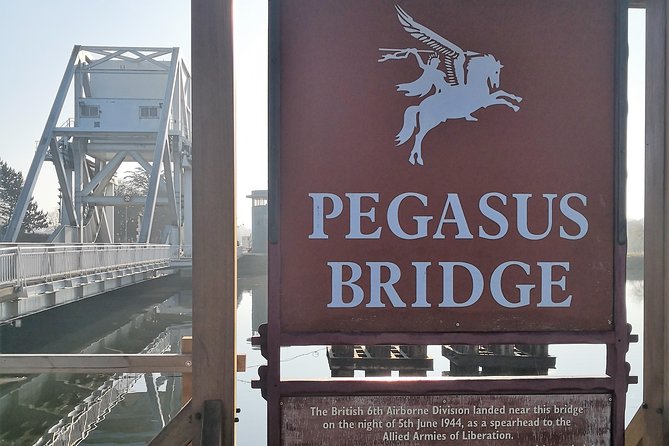
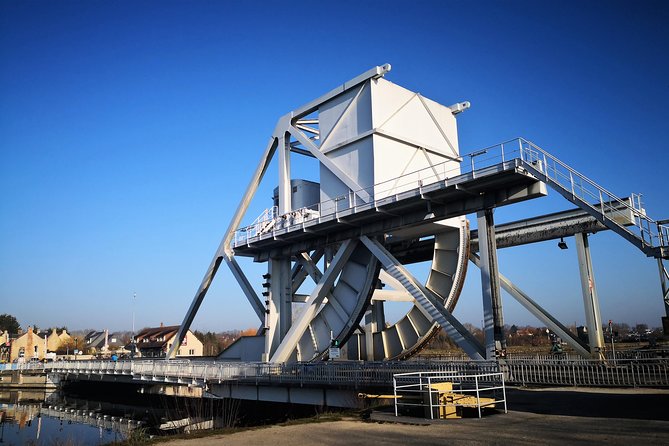
You start with Pegasus Bridge, a bascule bridge built in 1934 across the Caen Canal between Caen and Ouistreham. It is also known as the Bénouville Bridge because of its nearby village, and it became a major objective for British airborne troops during the opening moments of the invasion on June 6, 1944.
This is not just a bridge sightseeing stop. The story here is about speed and control. A glider infantry unit of the 2nd Battalion, the Oxfordshire and Buckinghamshire Light Infantry, part of the British 6th Airborne Division, was tasked to land, take the bridges intact, and hold until relieved. Major John Howard led the mission.
The tour’s focus at this stop is how the bridge seizing worked as a counter to German reactions in the days and weeks after the invasion. You will get about 20 minutes here, so it is short by design. That means you should arrive ready to absorb the key sequence and then use your guide for the finer details, like why holding the bridges limited a counter-attack.
Quick consideration: with only around 20 minutes, you won’t have time to wander far or linger for photos from many angles. If you care about pictures, stand where you can capture the setting fast, then shift back to learning.
Bény-sur-Mer Canadian War Cemetery: quiet scale and thoughtful design
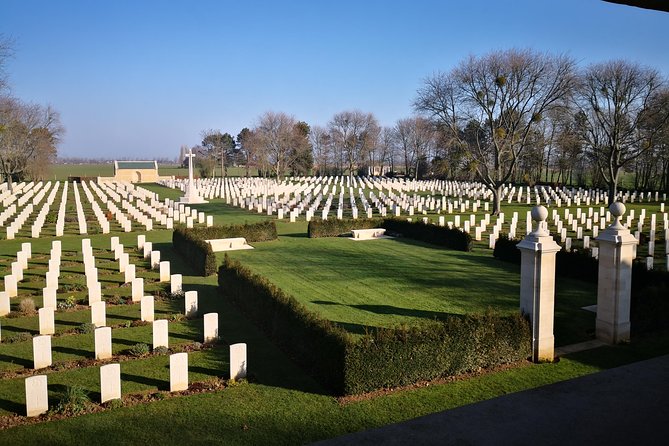
Next is the Bény-sur-Mer Canadian War Cemetery near Caen in lower Normandy. Even the name is a bit of a reminder that history does not always match the labels we use. The cemetery is near the village of Reviers, and it is known for predominantly Canadian soldiers killed in the early stages of the Battle of Normandy.
What I like about this stop is how it is both personal and structured. The grounds are beautifully landscaped and kept impeccably. Inside you’ll find a Cross of Sacrifice, a Commonwealth War Graves Commission memorial feature you will recognize from other Commonwealth cemeteries.
The headcount is sobering: 2,049 headstones enclosed by pines and maples. It marks the dead of the 3rd Division and includes graves of 15 airmen. The tour gives you about 30 minutes, which is enough time to walk slowly, read a few markers, and still feel like you respected the place instead of treating it like a photo stop.
One detail you can look for while you’re there: the flanking registry buildings have platforms that let you see the whole area. It’s a built-in way to shift from individual names to the overall scale of the sacrifice.
If you’re sensitive to war memorials, plan your pace here. You can take a few minutes, pause, and then let your guide’s explanations help you connect what you’re seeing to what happened on the ground.
If this one is booked out, Paris has these too:
- Paris: 1-Hour Seine Cruise departing from the Eiffel Tower★ 4.4 · 77,472 reviews
- Disneyland® Paris 1-Day Ticket★ 4.6 · 49,412 reviews
- Paris: Versailles Palace and Gardens Full Access Ticket★ 4.6 · 41,579 reviews
- Paris: Arc de Triomphe Rooftop Tickets★ 4.6 · 34,264 reviews
La Maison des Canadiens (Canada House): the D-Day story in one timber-framed house
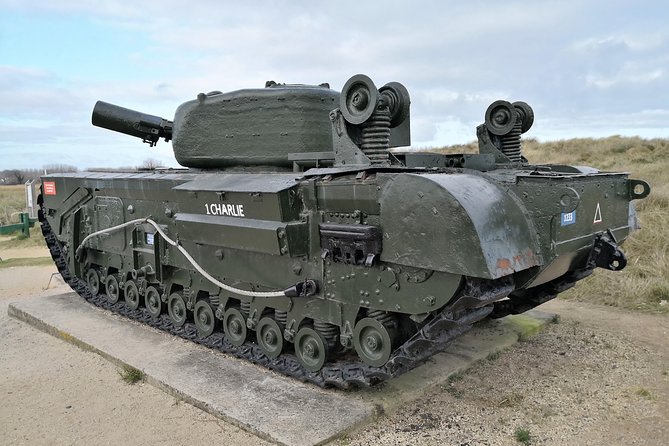
Then you head to La Maison des Canadiens, also known as Canada House, overlooking Juno Beach in the village of Bernières-sur-Mer. The inscription at the entrance is blunt: within sight of this house, over 100 men of the Queen’s Own Rifles were killed or wounded in the first minutes of the landings.
This stop hits hard because it makes the beach feel close. You are not only picturing men landing. You are seeing a structure that was part of the same small slice of time.
The house is iconic because it was one of the first houses liberated by Canadian soldiers on D-Day, and it is also one of the few that survived intact. The reason offered is that it may have been the favored home of an occupying German officer.
There’s a personal thread here too, tied to the family story of Hervé Hoffer. His grandfather owned the home during the war, then was evicted by the Germans. Years later, in 1984 for the 40th anniversary of D-Day, Hoffer met Canadians who had actually liberated the house.
You get about 20 minutes here, so you’ll want to do two things fast: read the inscription, and then look for the elements the guide points out that explain why this building became such a key symbol. Short stop, strong emotion.
Juno Beach Centre: the best 2 hours for understanding Canadian D-Day
Now for the big ticket item, Juno Beach Centre. Admission is included, and you’ll spend about 2 hours inside, which is exactly what this site deserves. If you care about context, this is the stop that turns coastlines into a story you can actually follow.
The permanent exhibit uses photographs, documents, multimedia, maps, and artifacts to explain how Canadians volunteered or mobilized at home, and how Canadian units moved from Sicily to Italy, then from Normandy to the Netherlands. It also memorializes the scale of loss: 45,000 Canadians died in the war, with 5,500 killed during the Battle of Normandy and 359 killed on D-Day.
The exhibit is organized room by room, and the guide will likely help you pick what to focus on, but here’s what you can expect:
- Room A: Courseulles, June 06th 1944
You stand in a simulated landing craft and watch a film that puts you into the mindset of Canadians during WWII. Projected images cover training, war, and the home front.
- Room B: Canada in the 1930’s
You get reference points for Canada on the eve of war, including geography, demographics, the economy, military state, politics, and social climate. There is also a young public circuit introduced through Peter and Madeleine.
- Room C: Canada goes to War
The exhibit follows transformation as Canada enters the conflict. You can hear speeches on period radios, with voices of Hitler, Daladier, Chamberlain, and Mackenzie King. A corridor area focuses on civilians and soldiers, showing how the country mobilized in many ways.
- Room D: Road to Victory
Campaigns Canadians fought in are presented, including Italy, Normandy, the Scheldt, Rhineland, and Victory. You also see the roles beyond the front line, such as medical corps, war correspondents, and engineers. Names of the fallen scroll across the ceiling to keep the losses present even as the story moves forward.
- Room E: Some Came Back, Others Did Not
This room anchors the human toll. Letters and essays written by Canadians can be listened to in English or French. You’ll also encounter the young public virtual guides Peter and Madeleine for the last time.
- Room F: They Walk With You
You watch the film They Walk With You, built with powerful video and emotionally engaging audio, using WWII newsreel footage and dramatic recreations. It includes voices of war correspondents Marcel Ouimet and Matthew Halton. Viewer discretion is advised, because it focuses on the infantry soldier’s experience, where the bigger picture is out of reach.
If you have limited time elsewhere on the coast, prioritize Juno Beach Centre. This is where you go from seeing locations to understanding what those locations meant.
Croix de Lorraine, and the Churchill AVRE Tank memorial
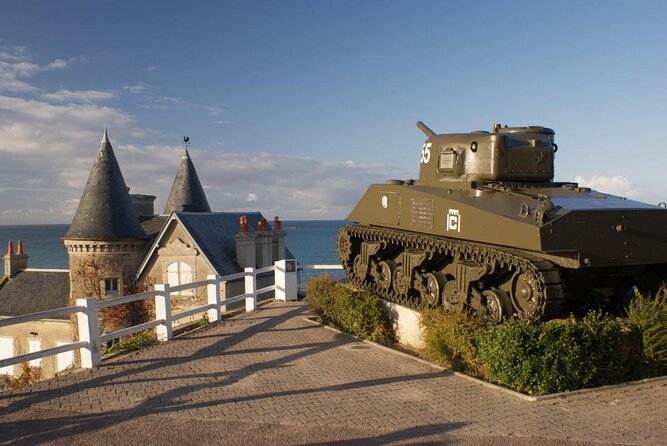
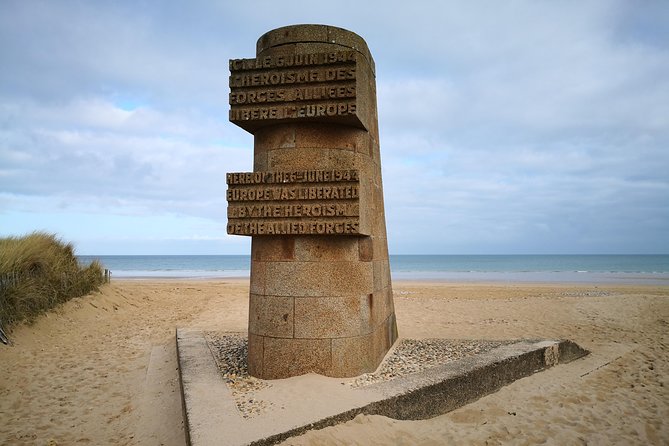
Your final stop is Croix de Lorraine, a monument on the coast facing the sea. The cross is more than 18 meters high and commemorates General de Gaulle’s return to French soil on June 14, 1944 after crossing the English Channel on board the French destroyer La combattante.
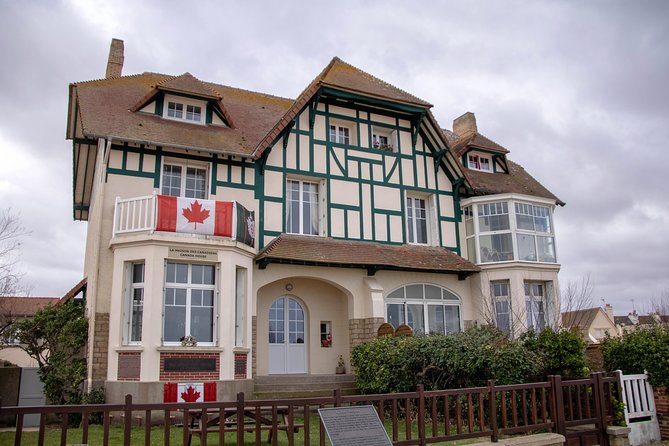
This stop is also where you get a strong piece of landing operations context through hardware. A Churchill AVRE Tank, known as One Charlie, stands as a memorial of the landing operations on June 6, 1944. It failed to bridge a deep culvert about 100 yards south of the site, and the crew had to escape under enemy fire, with very heavy casualties.
You get about 30 minutes here. That is enough time to absorb both the symbolic French commemoration and the more gritty, mechanical truth of D-Day ground operations.
Guide and group size: why small matters on WWII tours
The most praised element of this experience is the guide. What you want in a guide on a topic like WWII is not just facts, but the ability to connect facts to place without turning it into a lecture.
This is where the small-group limit pays off. With a max of 7 people, the tone stays personal. Questions can come up right when something hits you, like why Pegasus Bridge mattered, or what makes the cemetery design feel so intentional.
Also, guides named Adrian and Régis are called out for their depth, sensitivity, and the way they answer questions. If your group gets either of those, you’ll likely find the day feels less like memorizing and more like understanding.
Price and value: is $288.99 fair for this one-day push?
At $288.99 per person, this tour is not the cheapest way to do Normandy. You should expect that price to feel high compared with DIY-style transport or budget day trips.
Where the value comes from is the mix of costs you are not managing yourself: air-conditioned transportation, a guide for the full day, and admission to Juno Beach Centre. You also hit multiple major sites, and the itinerary lists admission tickets as free for Pegasus Bridge, Bény-sur-Mer Canadian War Cemetery, La Maison des Canadiens, and Croix de Lorraine.
So the math becomes less about paying for every site and more about paying for the logistics plus interpretation. If you plan to do the same route on your own, you’d spend time figuring out transport, timing, and museum ticket entry. Here, the plan is already made.
One more value factor: the tour is often booked about 126 days in advance on average. That suggests demand is real. If you wait until late, you may lose the small-group slot or the dates that fit your schedule.
Practical tips so you do not feel rushed or unprepared
Because this day is long, your best move is planning for comfort and nutrition.
- Start with what you can control: wear layers. Early morning and coastal Normandy can shift quickly.
- Bring water. There is no lunch included unless specified, so you will want something in your bag for energy.
- Use the bathroom breaks when they happen, not later. With short timed stops, delays can stack up.
- At each site, pick one focus question. For Pegasus Bridge: why take it intact? For the cemetery: what does the design encourage you to notice? For Canada House: why did that house survive?
- At Juno Beach Centre, give yourself the full 2 hours. That’s built for a reason, and the film They Walk With You is usually the part that lands after the exhibit rooms.
If bad weather cancels the tour, you either get a different date or a full refund. That flexibility is useful, but it still means you should keep some slack in your Normandy plans.
Should you book the Canadians in Normandy D-Day tour?
Book it if you want a focused, Canada-centered D-Day day with a guide doing the connecting work for you. The small-group limit makes it easier to ask questions, and Juno Beach Centre is included with enough time to matter. If you care about understanding as much as seeing, this is a strong fit.
Skip it or reconsider if you hate long days in a vehicle, or if you want lunch included and more breathing room at each stop. The time at individual locations is short by necessity, and the emotional weight of these sites can feel more intense when you do not have time to pause.
If your dates and energy match, this tour is a solid way to get the highlights with meaning, and to leave with a clearer sense of Canada’s role on June 6, 1944 and beyond.
FAQ
Where does the tour start and end?
The tour starts at Théâtre du Lido, 116 bis Av. des Champs-Élysées, 75008 Paris, France. It ends back at the same meeting point.
What time does the tour begin?
The start time is 6:30 am.
How long is the full-day tour?
It runs about 13 to 14 hours.
How large is the group?
The maximum group size is 7 travelers.
Is the tour offered in English?
Yes, it is offered in English.
What is included in the price?
The price includes an air-conditioned vehicle, a guide, and entry or admission to Juno Beach Centre.
Is lunch included?
No, lunch, food, and drinks are not included unless specified.
Do I have to pay for admission at each stop?
Juno Beach Centre admission is included. The other stops listed in the schedule show admission ticket free.
What happens if the tour is cancelled due to weather or minimum travelers?
If cancelled due to poor weather, you are offered a different date or a full refund. If cancelled because the minimum number of travelers is not met, you are also offered a different experience or a full refund.
Can I cancel and get a refund?
Free cancellation is available up to 24 hours in advance for a full refund. If you cancel less than 24 hours before the start time, the amount paid is not refunded.
Newest write-ups from Paris






D-Day Landing Beach Day Trips, compared.

Normandy D-Day Sites & Cemetery Day Trip from Paris with Lunch
Read our review →
Normandy D-Day Small-Group Day Trip with Omaha Beach, Cemetery & Cider Tasting
Read our review →
Normandy D-Day Beaches and American Cemetery Day Trip from Paris
Read our review →
Normandy D-Day Sites Guided Day Trip with Lunch
Read our review →
Normandy D-Day Beaches with Juno Beach, bunkers & Canadian Cemetery from Paris
Read our review →
Normandy D-Day Landing Beaches Small-Group Day Trip from Paris
Read our review →
Normandy 2Days Trip Landing Beaches and Mont St Michel from Paris
Read our review →Browse the lists this tour appears in