
Reviewed · WALKING TOURS
Drawing workshop/creative notebook & cultural walk in the Tuileries
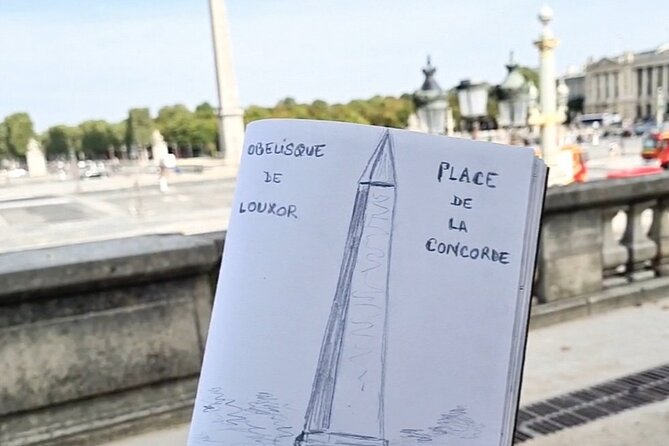
Make art while walking through Paris. This drawing workshop pairs a guided cultural stroll with hands-on sketching across the Tuileries, with quick creative stops near the Louvre Pyramid and the Arc du Carrousel.
I like that the pace is built around short, clear drawing moments, so you always know what to do next. The main thing to consider is that you’ll spend most of the time outdoors in the garden, so wear comfy shoes and plan for weather.
I love two specific parts. First, you get the chance to slow down at multiple spots in the Tuileries, then translate what you see into lines and shapes through guided drawing tasks. Second, the instruction feels patient and encouraging, including for people who say they are rusty and for kids.
You’ll meet at 9 Pl. de la Concorde for a 2:00 pm start, then finish near the Arc du Carrousel. It’s offered in English, capped at a maximum of 10 people, and you’ll use a mobile ticket.
In This Review
- Key highlights if you want a Paris sketching class with history
- Why the Tuileries-to-Louvre area is such a smart setting for sketching
- Your 2-hour drawing walk in the Tuileries garden
- Louvre Pyramid sketching: a fast, targeted creative moment
- Arc du Carrousel: history context plus a closing drawing prompt
- How the teaching style supports beginners and kids
- Price and value: why this can be worth it even if you think you are not an artist
- Best fit for your travel style, and who should think twice
- Practical logistics that matter on the day
- Should you book the Tuileries drawing workshop?
- FAQ
- Where does the drawing workshop start and end?
- What is the start time and how long is the tour?
- Is the tour offered in English?
- How big is the group?
- Does it include admission tickets?
- Do I need a mobile ticket?
- What is the cancellation window?
Key highlights if you want a Paris sketching class with history
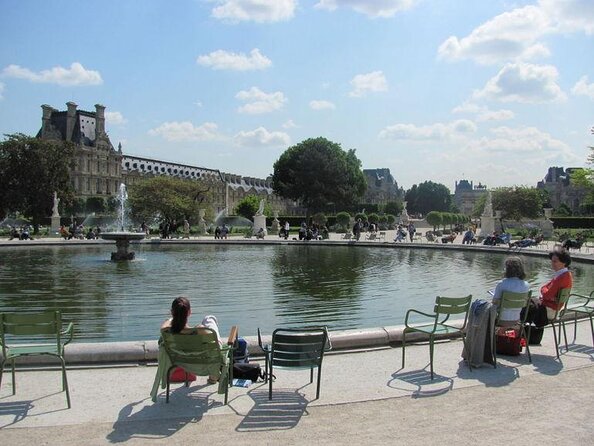
- Tuileries garden focus: most of the time is spent drawing right where the views and details change.
- Small group, max 10: you should get attention without feeling lost in a crowd.
- Instruction that works for beginners: the vibe is encouraging, even if you think you have no talent.
- Quick creative stops: a short activity at the Louvre Pyramid and another at the Arc du Carrousel keep the day moving.
- Two instructors involved: Evelyne leads with history and guidance, and Romain is described as especially patient and supportive.
- No extra museum ticket pressure: the stops listed come with free admission tickets.
Other arrondissements taken at walking pace:
- Paris Top Sights Half Day Walking Tour with a Fun Guide
★ 5.0 · 2,893 reviews - Montmartre Hidden Gems and Scenic Highlights Walking Tour
★ 5.0 · 2,684 reviews - Montmartre Hill French Gourmet Food and Wine Tasting Walking Tour
★ 5.0 · 2,588 reviews - Paris: Montmartre Highlights Walking Tour with a Local Guide
★ 4.9 · 2,318 reviews
Why the Tuileries-to-Louvre area is such a smart setting for sketching
Paris is full of big monuments, but the Tuileries garden gives you something more useful for drawing: variety at walking speed. In a few minutes, your eye shifts from wide views to closer details, from open space to framed corners, and that makes it easier to practice seeing like an artist.
This experience leans into that idea. You’re not just looking at landmarks, you’re learning how to draw what you’re actually seeing while the guide provides context along the way. In plain terms, it helps you stop treating the scene like a postcard and start treating it like a set of shapes, angles, and proportions you can work with.
I also like that it’s structured. The session runs about 3 hours, with the longest stretch in the garden, then shorter creative moments right by iconic spots. That mix is great when you want art time without turning it into a half-day commitment that eats your entire sightseeing plan.
And since it’s offered in English and capped at 10 people, you’re less likely to feel rushed or ignored. If you’ve ever taken a class where the instructor can only help the fast students, this one is designed to keep you in the flow.
Your 2-hour drawing walk in the Tuileries garden
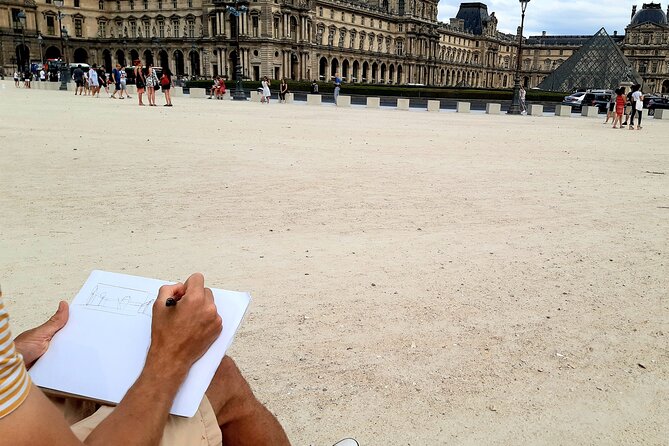
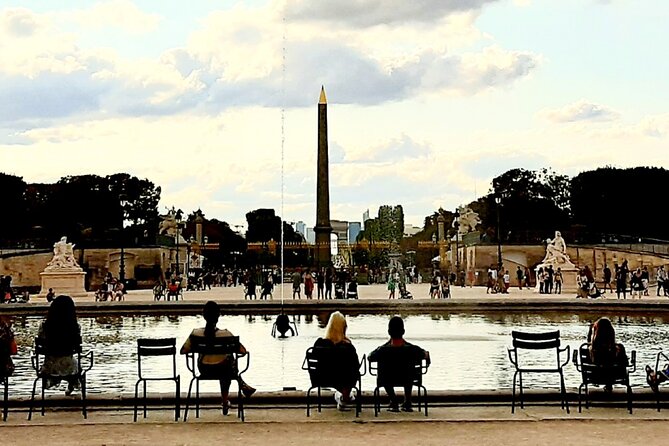
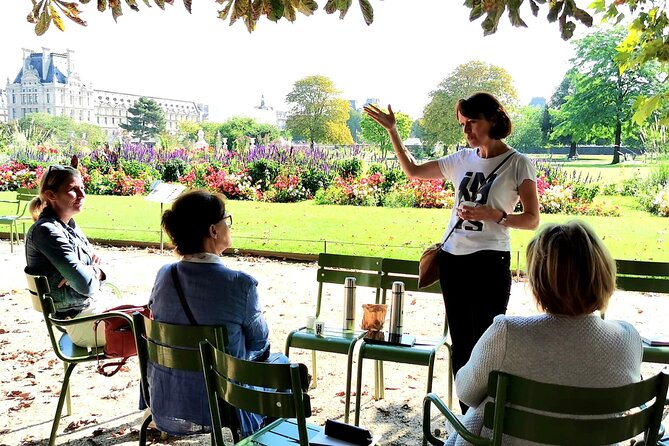
Most of the experience is spent in the Jardin des Tuileries, starting from the Place de la Concorde side. The guide talks about the place as you go, then you stop at different points in the garden to draw.
What makes this work well is the rhythm: history and context first, then a drawing task. That combination is more effective than pure sightseeing because you’re constantly translating. You hear what makes the setting meaningful, then you practice turning it into something you can put on paper.
If you are nervous about drawing, you’ll probably relax once you realize the goal is not perfection. In feedback from others, Evelyne is described as wonderful and focused on history plus drawing guidance, and people specifically called out that the instruction helps even a rusty artist get started. Another positive theme is that you do end up producing recognizable renditions, which is the best outcome for most people. You need proof that your hand can keep up with your eye.
You’ll also have flexibility in how you approach the final result. Some participants mention drawing or painting with different techniques and tasks, which suggests the workshop isn’t locked into one single method. That matters because it lets you choose what fits your comfort level in the moment.
One practical tip: plan to arrive with a mindset of short exercises. If you try to treat this like a single long drawing session, you might feel frustrated. But if you treat each stop as a practice prompt, you’re more likely to have fun and learn.
Louvre Pyramid sketching: a fast, targeted creative moment
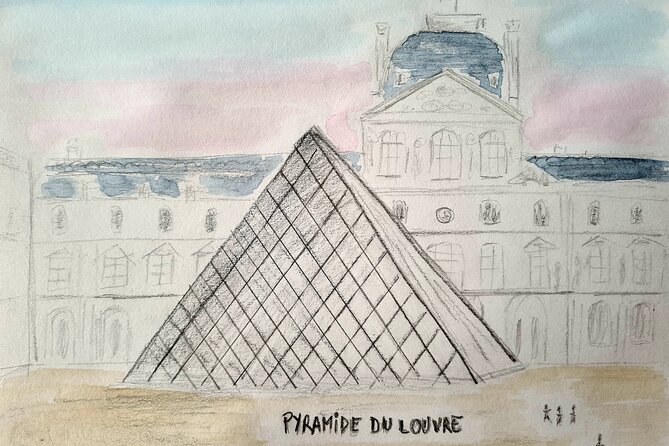
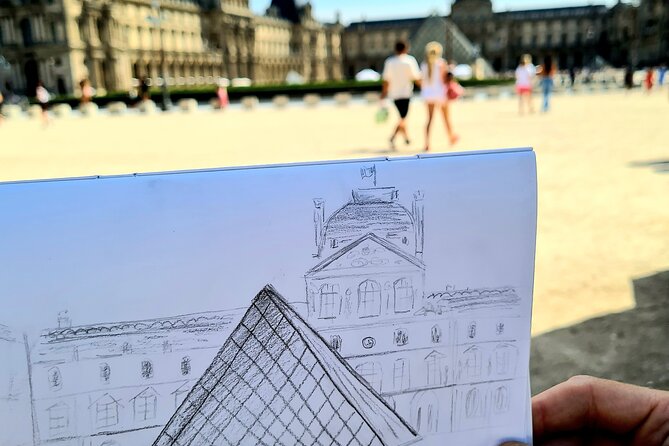
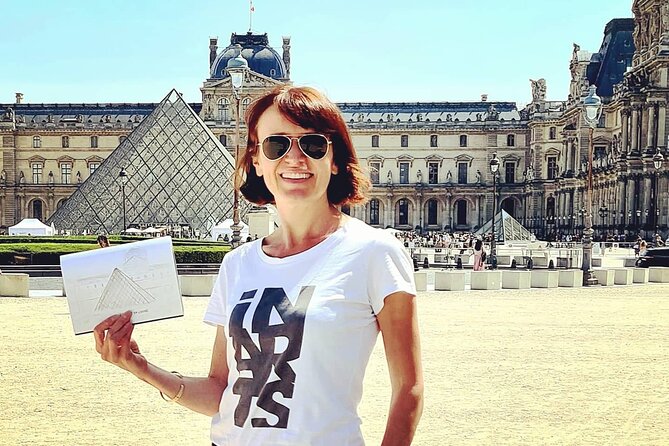
After the garden segment, you’ll head to a brief activity in front of the Louvre Pyramid. This part is short, about 15 minutes, but it’s designed with purpose: you take the skills you practiced in the garden and apply them to a bold, clean shape you can break down.
Why this stop is valuable is the contrast. The Tuileries gives you lots of softer scene information. The Louvre Pyramid gives you a clear geometry problem. That kind of change is useful for learning because it forces you to adapt quickly.
You also get a bit of cultural framing here. The guide helps connect what you’re looking at to the broader story of the area, then you apply that understanding through a drawing task linked to the pyramid. Even with a limited time window, this can make the pyramid feel less intimidating and more like something you can actually analyze.
If you worry that short stops mean less learning, don’t. The point is focused practice. You’re not trying to cover everything, you’re training your eye and hand to work together.
Arc du Carrousel: history context plus a closing drawing prompt
Next, you pass by the Arc de Triomphe du Carrousel and get another brief history explanation, then a final drawing moment tied to what you’re seeing. This segment is about 10 minutes, and it’s a classic “finish strong” move.
That brevity is a benefit. By the time you reach this stop, you’ve already warmed up in the garden. You know how the session works, so you can focus on producing a clean sketch rather than figuring out the process.
This is also where the walk-to-draw format really shines. You are moving through the city, but you’re not rushing past everything. Instead, you’re using movement as part of the lesson, like changing stations at a workshop.
Ending near Pl. du Carrousel also helps you keep your day flexible. You can roll right into nearby sightseeing without needing to retrace steps.
Other Paris ateliers to spend an afternoon in:
- Fragonard Paris: Mini Perfume Workshop★ 4.5 · 1,924 reviews
- Paris: Macaron Class at Galeries Lafayette★ 4.2 · 1,196 reviews
- Paris Cooking Class and Lunch with Wine plus Market Visit Option★ 5.0 · 1,024 reviews
- Paris Croissant Small-Group Baking Class with a Chef★ 5.0 · 910 reviews
How the teaching style supports beginners and kids
A big reason this class earns a top rating is how the instruction feels in real life. Names like Evelyne come up with praise for being wonderful, informative, and encouraging. Another instructor, Romain, is specifically mentioned as patient and supportive, even for someone who admits they don’t have much drawing talent.
That kind of feedback matters because drawing instruction is about small wins. You need someone to help you translate a scene into manageable marks. You also need reassurance that you’re allowed to start imperfectly.
The experience is also described as working well for children. One participant mentioned the tour was enjoyed even by an 11-year-old, and the niece left inspired to buy art supplies and practice. If you’re traveling with kids, this is a good sign. You want an environment where the guide can keep things fun and understandable, not one where the child feels like they are falling behind.
If you’re an adult who hasn’t drawn in years, you’ll likely appreciate the structure and the patience. It’s not about artistic talent, it’s about giving you the right prompts at the right time.
Price and value: why this can be worth it even if you think you are not an artist
At $94.82 per person for about 3 hours, you’re paying for three things: guided walking, hands-on instruction, and a small group setting. The garden portion is 2 hours, followed by two shorter landmark-focused drawing moments.
On the value side, two details stand out. First, the listed activities include free admission tickets at the stops, so you aren’t forced to add museum entry costs to the budget. Second, the group size is capped at 10, which is a sweet spot for getting attention while still feeling social.
The price also makes sense for the learning outcome most people want from a sketching workshop. You’re not just taking photos. You’re leaving with a creative notebook type of souvenir you made yourself, plus a renewed desire to keep practicing. Several comments point to participants going out to buy art supplies afterward, which tells me the workshop is effective at sparking momentum.
That said, it’s not a private, long-form art lesson. If you want detailed, step-by-step instruction for one subject for hours, you may find the format a bit fast. But if you want a guided way to start drawing in Paris, with history and landmarks working as your lessons, the value is strong.
Best fit for your travel style, and who should think twice
This experience is a great fit if you want:
- a creative break from the usual museum route
- a practical way to learn to see cities differently
- a guided walk that includes drawing tasks rather than just commentary
- an activity that works for both adults and kids
It’s also a smart option if you think you are bad at drawing. The feedback is clear that rusty artists and non-artists still feel comfortable and leave with recognizable results.
Who should think twice? If you dislike outdoors time, you might find the garden portion challenging. Also, if you’re the type who needs a totally silent, solitary art session, the guided cultural element could feel like too much talking for your taste.
For everyone else, the small group size and encouragement are usually exactly what makes the difference.
Practical logistics that matter on the day
Plan to start at 9 Pl. de la Concorde at 2:00 pm, and finish near Arc de Triomphe du Carrousel, Pl. du Carrousel. The walk is near public transportation, so you can likely reach the meeting point without too much hassle.
You’ll receive a mobile ticket, and the experience is offered in English. It also notes that most people can participate and that service animals are allowed, which is helpful if that matters for your planning.
Group size is capped at 10, so aim to be on time. With a creative workshop, being late can cut into your warm-up time and the early instruction.
Also, if you’re bringing a child, keep expectations simple. The best way to get value is to treat each stop as a short art exercise, not a race to finish a masterpiece.
Should you book the Tuileries drawing workshop?
Yes, if you want a Paris experience that mixes art instruction with landmark context, this is a strong choice. The biggest reasons to book are the teaching style and the format: patient guidance from Evelyne, supportive help mentioned from Romain, and a structure that gives you drawing tasks at multiple scenic points.
It’s also a good value for the time you get. You get about 3 hours of guided, hands-on creativity, and the stops are designed with free admission tickets so you can plan your budget without surprise adds.
I’d skip it only if you really do not like outdoor walking, or if you need a long, private lesson format. Otherwise, it’s the kind of workshop that can change how you look at the city after you’ve gone home.
FAQ
Where does the drawing workshop start and end?
It starts at 9 Pl. de la Concorde, 75001 Paris and ends at Arc de Triomphe du Carrousel, Pl. du Carrousel, 75001 Paris.
What is the start time and how long is the tour?
The start time is 2:00 pm, and the duration is about 3 hours.
Is the tour offered in English?
Yes. The experience is offered in English.
How big is the group?
The tour has a maximum of 10 travelers.
Does it include admission tickets?
The listed stops include free admission tickets.
Do I need a mobile ticket?
Yes, the experience uses a mobile ticket.
What is the cancellation window?
You can cancel for a full refund up to 24 hours before the experience’s start time.
Newest write-ups from Paris



Walking Tours, compared.

Paris Top Sights Half Day Walking Tour with a Fun Guide
Read our review →
Montmartre Hidden Gems and Scenic Highlights Walking Tour
Read our review →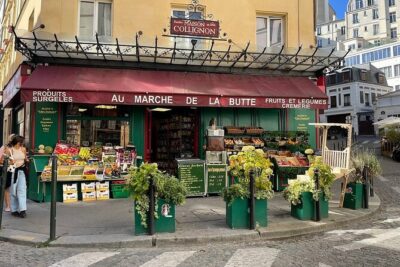
Montmartre Hill French Gourmet Food and Wine Tasting Walking Tour
Read our review →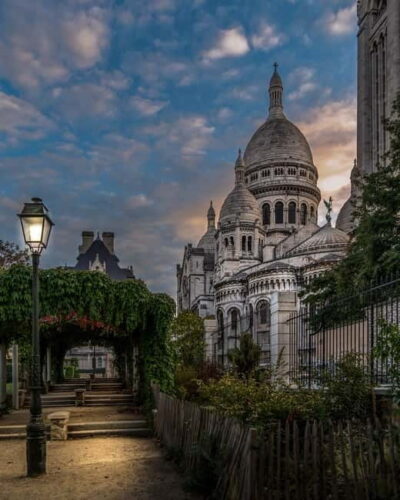
Montmartre Highlights Walking Tour with a Local Guide
Read our review →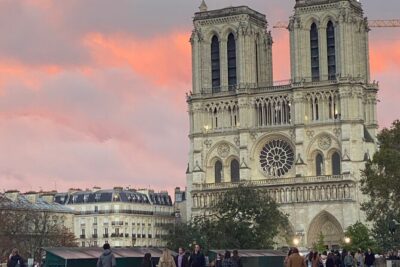
Paris Île de la Cité and Notre-Dame Walking Tour With Crypt
Read our review →
Montmartre Cheese, Wine & Pastry Guided Walking Tour
Read our review →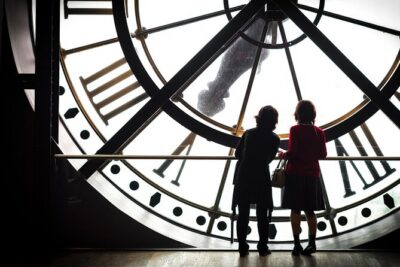
Paris in a Day: Louvre or Orsay, Eiffel Tower, City Walk & Cruise
Read our review →
Paris City Center Free Walking Tour (Tip-Based)
Read our review →Browse the lists this tour appears in