Reviewed · WALKING TOURS
Exclusive Walking Tour of Central Paris With Local Guide
Paris shows its story fast. This walk connects landmarks into one clear picture, from the Latin Quarter to the Louvre area, with an English-speaking local guide who makes the city make sense. I especially like how the route ties everyday locations to big ideas, like why Paris looks the way it does today, and I like the stop-by-stop focus on iconic places you can later recognize on your own.
One possible drawback: it is a short timeline for a lot of stops. Even though the walking is fairly flat, you will be outside most of the time, so plan for comfortable shoes and weather.
In This Review
- Key things to know before you start
- Getting your bearings: why this route works
- Starting at Fontaine Saint-Michel: the quick lesson on Paris shape
- Notre-Dame de Paris: origins, power, and the people behind the stone
- Sainte-Chapelle: the royal side, the relic story, and why it survived
- Palais-Royal and its 650-year clock: politics in the shade
- Pont Neuf: enduring bridge, arches, and a strange lesson
- Pont des Arts to the Louvre Cour Carée: love locks and reinvention
- Carrousel du Louvre to Tuileries: finishing with the Eiffel view
- Price and value: is $240.32 worth it?
- What the guide style adds (and why names like Ezrah matter)
- Small-group privacy: the practical benefits you feel
- Who should book this tour?
- Should you book this central Paris walking tour?
- FAQ
- How long is the central Paris walking tour?
- Is the tour private or shared with strangers?
- What language is the tour offered in?
- Does the tour include entry into the Louvre Museum?
- Where does the tour start and where does it end?
- Do I get a mobile ticket?
- Is the walk difficult?
- What happens if the weather is poor or I need to cancel?
Key things to know before you start
- Local English guide, private group (up to 15 people), so you get a more personal pace than big bus tours
- A direct walk from Fontaine Saint-Michel toward the Louvre, built for first-timers who want orientation fast
- You see major stops without going inside the Louvre museum, which keeps the tour moving and ticket-light
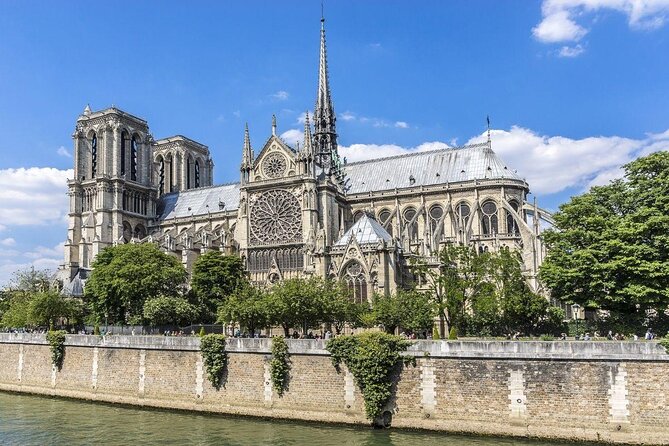
- Royal and religious stories at Notre-Dame and Sainte-Chapelle, including the crown of thorns connection
- Classic bridges and “Paris love” culture at Pont des Arts, then a lead-in to the Louvre Cour Carée
- End near the Tuileries gardens with an Eiffel Tower view, which is a nice way to close the day
Other arrondissements taken at walking pace:
- Paris Top Sights Half Day Walking Tour with a Fun Guide
★ 5.0 · 2,893 reviews - Montmartre Hidden Gems and Scenic Highlights Walking Tour
★ 5.0 · 2,684 reviews - Montmartre Hill French Gourmet Food and Wine Tasting Walking Tour
★ 5.0 · 2,588 reviews - Paris: Montmartre Highlights Walking Tour with a Local Guide
★ 4.9 · 2,318 reviews
Getting your bearings: why this route works
If you are new to Paris, the hardest part is not taking photos. It is understanding how the city pieces fit together. This tour is built like a guided map, with a logical westward drift from the Latin Quarter into the core around Notre-Dame and then toward the Louvre and Tuileries.
You get a practical advantage right away. After this walk, a lot of Paris stops making you guess. You can look at the Seine, recognize the big landmarks, and understand what you are seeing beyond the postcard level. That matters because Paris is a patchwork of eras. This route helps you spot that patchwork in motion.
Also, it stays manageable. The total time is about two hours, and the terrain is described as fairly flat, with a reminder to wear comfortable shoes. Translation: plan on walking, not sprinting.
Starting at Fontaine Saint-Michel: the quick lesson on Paris shape
You kick things off at Fontaine Saint-Michel, in Pl. Saint-Michel (75005). This is a smart start because it is a central “explain it first” location. Your guide sets context for what you are about to see and offers a sense of why Paris looks the way it does today.
I like this approach because it prevents that common first-timer trap. You arrive at Notre-Dame and Sainte-Chapelle knowing you should care, but you do not yet understand why the architecture matters in the story of Paris. Starting at the fountain solves that.
Expect a short introduction, then you are off for the heavier landmarks. There is no long waiting. Admission here is listed as free, so you can focus on listening instead of digging for tickets.
Notre-Dame de Paris: origins, power, and the people behind the stone
Next is Cathedrale Notre-Dame de Paris. The time is short, so you will not get a full museum-style rundown. Instead, you get the essentials: historic origins of Paris and historical figures tied to the cathedral’s creation.
This is where a good guide earns their fee. Notre-Dame is famous, but it is easy to treat it like a single moment in time. With the right framing, you start to see it as a project shaped by the politics, the faith, and the ambitions of the eras that built it.
It is also a good stop if you are traveling with kids or older relatives. People tend to recognize Notre-Dame instantly, and the guide’s job is to give you context that you can actually carry with you. In feedback from families, the guide’s style is called personable and fun, and that fits this kind of stop well.
Admission is free for this stop. That means you can spend the time on interpretation instead of logistics.
Sainte-Chapelle: the royal side, the relic story, and why it survived
After Notre-Dame comes Sainte-Chapelle, often described as Notre-Dame’s “little sister.” The tour uses that idea for a reason: it helps you understand how royal authority and religious symbolism show up differently in each building.
This stop gets specific. You will hear about its royal significance, the crown of thorns connection, and why it miraculously survived. Those are the kinds of details that turn a beautiful church into a story you will remember.
I also like the pacing here. You spend about ten minutes, which is enough to learn the meaning, without turning it into a rushed lecture. Since this is a walking tour, you are absorbing Paris as you go, not sitting for long stretches.
Again, admission is listed as free. That keeps the experience fluid and helps maintain the “walk, learn, look” rhythm.
A handful more Paris options to weigh up
- Paris: Louvre Guided Tour with Reserved Access & Boat Cruise★ 4.3 · 16,353 reviews
- Louvre Museum Masterpieces Guided Tour with Access★ 4.5 · 12,023 reviews
- Louvre Museum – Exclusive Guided Tour (Entry Included)★ 5.0 · 6,296 reviews
- Versailles: Skip-the-Line Guided Palace Tour and Full Access★ 4.6 · 5,214 reviews
Palais-Royal and its 650-year clock: politics in the shade
Next up is Palais-Royal. This stop is a contrast stop. You move from the religious world into the royal and political one.
Here you learn about the former royal palace, the former jail connection linked to Marie Antoinette, and the gorgeous clock that has kept Paris time for over 650 years. That combination is useful because it shows how a single address can shift roles across centuries, from palace to prison to public space.
The clock detail is a great moment for first-timers. It gives you a tangible anchor, something you can point to and think, this has been here, watching time pass, long before today’s tourist crowds arrived.
This stop is brief, around five minutes. That can feel quick if you want to linger, but it is also part of what makes the overall tour work. You are not supposed to get every answer here. You are meant to connect dots.
Pont Neuf: enduring bridge, arches, and a strange lesson
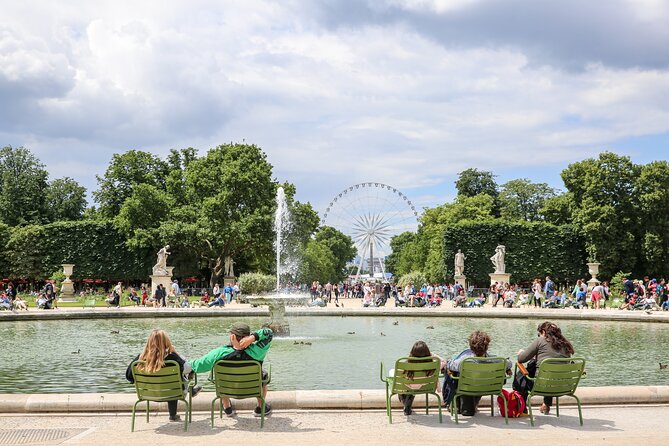
Then you hit Pont Neuf, one of the most enduring bridges in Paris. The tour uses the bridge’s physical features, like its charming arches, and it adds a visual twist with the beautiful garden below.
But it does not stay only in “pretty.” You also get a story about the fate of one criminal on Pont Neuf. That kind of anecdote is exactly why I like guided street-level history. It reminds you the city has always had drama, even on places that look serene today.
If you like history that feels human, this is the stop. You are seeing stone and water, but the guide is putting a person into the scene.
Admission is free for this stop as well, so the learning stays the main event.
Pont des Arts to the Louvre Cour Carée: love locks and reinvention
Next is Pont des Arts, a place you will recognize instantly for the love-lock tradition. The tour talks about the bridge’s iconic status and how that idea has influenced the city’s image.
This is a smart placement because it is a cultural bridge in two senses. You are crossing the Seine, and you are also moving from the older monuments into the zone where the city transforms itself through art, power, and institutions.
From there, the tour leads you into the Louvre area, specifically toward the Cour Carree, described here as quieter. The key point: you do not enter the full Louvre museum galleries. Instead, you learn the different incarnations of what you now call the Louvre and you get a story thread that includes a theft, a revolution, and lovers.
That theft and revolution combination is especially useful. It helps you see the Louvre not just as a building full of paintings, but as a political and cultural machine that kept changing its purpose. Lovers, meanwhile, adds the emotional human side, so the place feels lived-in rather than sealed behind velvet ropes.
If you do want classic highlights like the Mona Lisa, you will need a separate museum visit. This tour is designed to get you oriented and literate, not to do a full gallery marathon.
Carrousel du Louvre to Tuileries: finishing with the Eiffel view
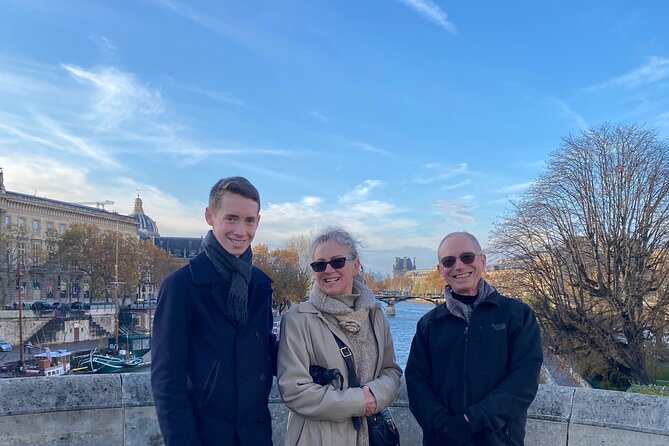
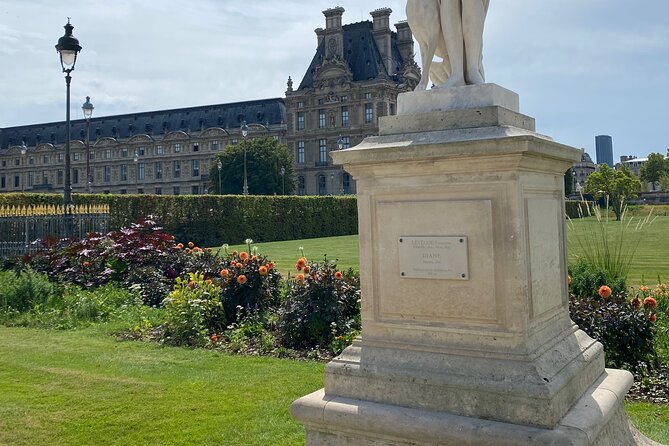
The last segment is Carrousel du Louvre, and it wraps the tour with stories about the people connected to creating the gardens of the Tuileries and the Eiffel Tower.
I like the way this ending works because it changes the vibe. By then, you have seen churches, bridges, and royal settings. Ending with gardens and the Eiffel Tower background pulls the day back into “Paris now,” while still keeping a historical thread.
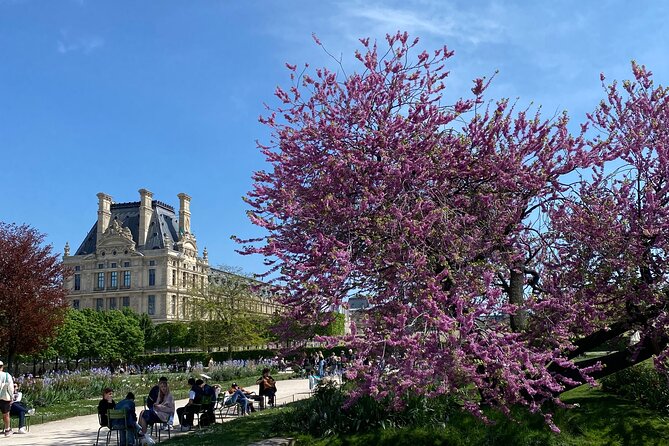
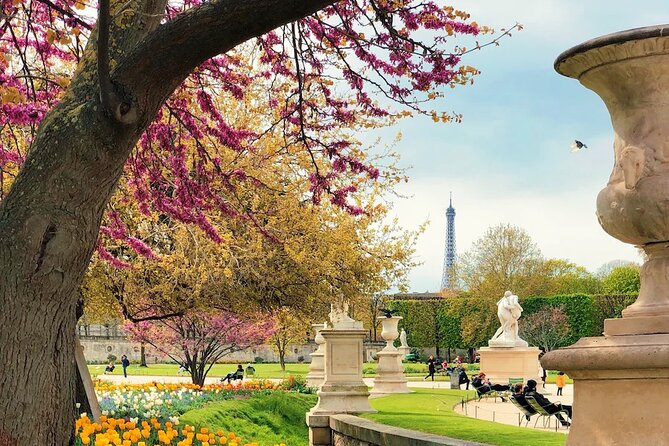
The tour ends at 6 Av. du Général Lemonnier (75001) with a view of the Eiffel Tower and the Tuileries garden. That is a satisfying close. You get one last big landmark moment and an easy visual transition into whatever you do next.
Price and value: is $240.32 worth it?
The price is listed as $240.32 per person for a walk of about two hours, with an English-speaking local guide and a group capped at 15 people. That sounds steep until you compare what you are actually buying.
You are paying for two things that are hard to DIY in a foreign language:
1) A guided narrative that connects monuments into a clean sequence
2) Time savings, because you get context on the street rather than stopping to research every stop
You also avoid some of the typical museum complexity. Since you are not entering the Louvre museum itself, you spend your time on the best “orientation” parts of the complex, like the Cour Carée, instead of waiting for entry or getting swallowed by crowd logistics.
Is it the cheapest way to see a handful of famous sights? No. But it is strong value if you want a first-timer-friendly structure, especially if you are traveling with kids or anyone who learns better with a human guide holding the thread. The feedback also highlights a guide who is personable and good at making history feel fun, which is exactly what you need at these stops.
If you are traveling solo and you are comfortable reading on your own, you might feel you can do parts independently. If you want guided context in a tight window, this price is more believable.
What the guide style adds (and why names like Ezrah matter)
In feedback, the guide Ezrah is specifically praised for insight into the various eras of Paris and for being personable and fun. That matters more than people think.
A good walking guide does two jobs at once. They teach you what matters, and they keep the energy up so you stay attentive. When guides can do both, the tour feels less like homework and more like a guided walk with a smart local friend who knows where to point and when to pause.
The same feedback also notes that even people who had been to Paris several times still discovered new things. That is a real test for any tour: first-timers need context, repeat visitors need angles.
Small-group privacy: the practical benefits you feel
This is a private tour/activity with only your group participating and a maximum group size of 15. Even if you end up with a fairly mixed group, that cap usually means the guide can keep things moving without losing people.
It also makes Q and A easier. You can ask why a building looks the way it does, or what a symbol means, without feeling like you are fighting for attention in a crowd.
And because you are moving from point to point, a private format reduces the stress of gathering. You start at Fontaine Saint-Michel and end near the Tuileries and Eiffel view. That flow helps you plan the rest of the day.
Who should book this tour?
I think this one is a great fit if:
- You are in Paris for the first time and want a fast, coherent orientation
- You love architecture and symbolism, especially the religious and royal layers at Notre-Dame and Sainte-Chapelle
- You want street-level stories that turn bridges and squares into scenes
- You are traveling with grandkids, teens, or family, and you want history to feel like something you can enjoy together
- You want a guided experience without doing a full Louvre museum visit
If you are the type who wants a long museum deep dive with plenty of time at masterpieces, you will likely want to pair this with a separate Louvre ticket later. This walk is about getting the “why” and the “where,” not about completing every gallery.
Should you book this central Paris walking tour?
If your goal is to understand the city in two hours, I would book it. The route makes sense, the major stops are strong for first-timers, and the guide’s role, especially as reflected in feedback with Ezrah, seems built for making history feel lively rather than heavy.
The biggest reason to skip would be if you hate short tours packed with stops, or if you want the Louvre interior experience as part of the main plan. This one keeps the Louvre outside the museum galleries, focusing on the Cour Carree area and the story behind the institution instead.
For most people who want value, context, and a satisfying “I get Paris now” feeling, this tour earns its spot.
FAQ
How long is the central Paris walking tour?
It runs for about 2 hours.
Is the tour private or shared with strangers?
It is a private tour/activity, and only your group participates. The group size is up to 15 people.
What language is the tour offered in?
The tour is offered in English.
Does the tour include entry into the Louvre Museum?
No. The tour does not include entry into the Louvre Museum. You will visit the quieter Cour Carree area, but you are not entering the museum galleries.
Where does the tour start and where does it end?
It starts at Fontaine Saint-Michel, Pl. Saint-Michel, 75005 Paris. It ends at 6 Av. du Général Lemonnier, 75001 Paris, with a view of the Eiffel Tower and the Tuileries garden.
Do I get a mobile ticket?
Yes. A mobile ticket is included.
Is the walk difficult?
The terrain is described as fairly flat, but you are strongly advised to wear comfortable shoes.
What happens if the weather is poor or I need to cancel?
The experience requires good weather. If it is canceled due to poor weather, you are offered a different date or a full refund. You can cancel for a full refund up to 24 hours in advance.
Newest write-ups from Paris




Walking Tours, compared.
Paris Top Sights Half Day Walking Tour with a Fun Guide
Read our review →
Montmartre Hidden Gems and Scenic Highlights Walking Tour
Read our review →
Montmartre Hill French Gourmet Food and Wine Tasting Walking Tour
Read our review →
Montmartre Highlights Walking Tour with a Local Guide
Read our review →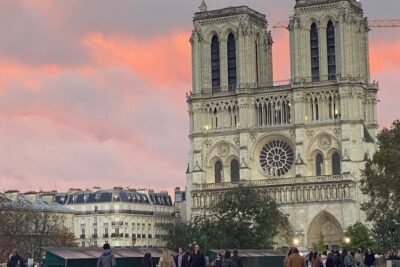
Paris Île de la Cité and Notre-Dame Walking Tour With Crypt
Read our review →
Montmartre Cheese, Wine & Pastry Guided Walking Tour
Read our review →
Paris in a Day: Louvre or Orsay, Eiffel Tower, City Walk & Cruise
Read our review →