
Reviewed · WALKING TOURS
Haussmannian Paris 2-Hour Private Walking Tour
Paris changes shape before your eyes. This Haussmannian Paris 2-hour private walk turns the city into a readable map, showing how a 19th-century redesign created today’s grand boulevards and set-piece buildings. I especially love the drama of Opéra Garnier and the calm elegance of Park Monceau, both seen with clear, street-level context. One drawback to consider: it is only 2 hours, so it moves briskly and you will not linger inside buildings.
What makes it work is the human side of the planning story. You get the big urban idea, but you also hear the smaller details, like the local world that fed artistic life, including the areas tied to Picasso’s drinking dens. In the guide feedback I saw, Tina was praised as very friendly, and Hanna was highlighted for explaining city planning and architecture clearly, with practical tips for getting around Paris.
You start at Métro Opéra, right in front of Café de la Paix, and the guide carries a red canvas tote bag. From there, you walk a tight route packed with Haussmann landmarks, plus a few surprise turns that make the whole neighborhood make more sense.
In This Review
- Key things I think you will notice right away
- Why Haussmann still matters when you walk Paris
- Starting at Métro Opéra, finding the tour fast
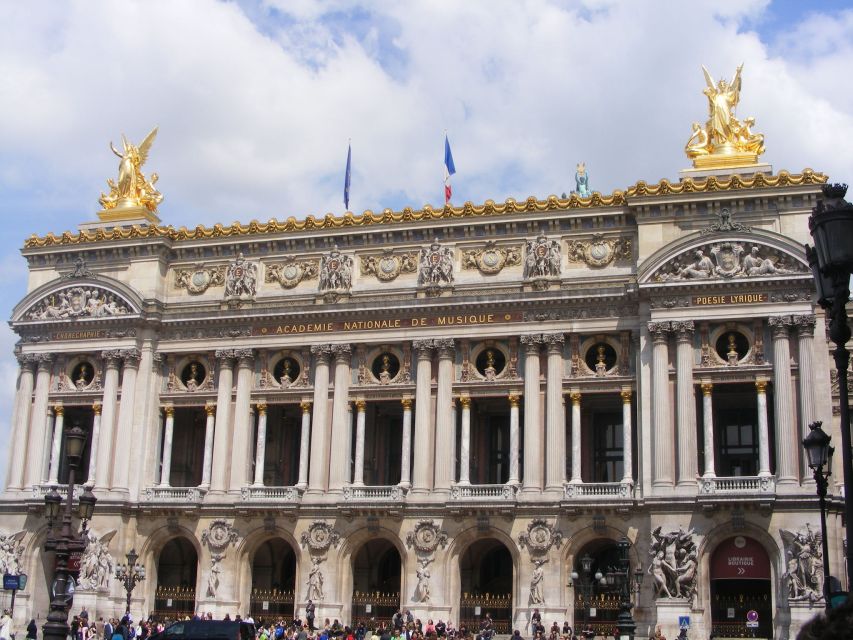
- Opéra Garnier: more than a pretty facade
- Boulevard Haussmann: where the Haussmann style becomes obvious
- Museum of Jacquemart-André and the “lavish villa” effect
- Church of Saint Augustin: architecture that answers the boulevard
- Galeries Lafayette: elegance you can step into
- Park Monceau: the elegant park break
- Picasso’s drinking dens: making the city feel lived in
- Price and value: is $176 for 2 hours worth it?
- Who this tour fits best
- Should you book this Haussmannian Paris tour?
- FAQ
- Where is the meeting point for the Haussmannian Paris 2-hour tour?
- How long is the tour?
- Is the tour guided?
- What languages are available for the guide?
- Is the tour private?
- Does the tour run in bad weather?
- Is the tour wheelchair accessible?
- What is included in the price?
- What is not included?
Key things I think you will notice right away
- Haussmann planning, explained in real street scenes, not textbook talk
- Opéra Garnier as a design clue, why this building matters beyond looks
- Boulevard Haussmann’s “one style, many layers” feeling, the uniform plan you can actually see
- Galeries Lafayette as a living monument, where luxury shopping meets city design
- Park Monceau’s refined pause, a contrast to the big boulevards
- Picasso’s local haunts woven into the walk, so the streets feel inhabited, not frozen
Other arrondissements taken at walking pace:
- Paris Top Sights Half Day Walking Tour with a Fun Guide
★ 5.0 · 2,893 reviews - Montmartre Hidden Gems and Scenic Highlights Walking Tour
★ 5.0 · 2,684 reviews - Montmartre Hill French Gourmet Food and Wine Tasting Walking Tour
★ 5.0 · 2,588 reviews - Paris: Montmartre Highlights Walking Tour with a Local Guide
★ 4.9 · 2,318 reviews
Why Haussmann still matters when you walk Paris
The Haussmann project was an urban reset on a massive scale. In the 19th century, with only two neighborhoods spared, whole areas were flattened and rebuilt. The goal was practical, functional city planning, but also something more ambitious: a city that looks beautiful and works smoothly as a system.
What I like about this tour is that it helps you notice that system. You start seeing Paris not as random streets, but as planned corridors, consistent building rhythms, and views that are shaped on purpose. That change in perspective is the point. After a walk like this, the city feels like it has rules, and you start spotting them even when you are not on the tour route.
And yes, the story has a hard edge. When cities rebuild, something gets lost. This walk does not pretend otherwise. It makes room for both the grandeur and the cost, so you get a more honest read on what you are looking at.
Starting at Métro Opéra, finding the tour fast
Meeting at Métro Opéra in front of Café de la Paix is convenient, and it keeps you near the heart of the tour’s big sights. You also get a simple way to find your guide: they carry a red canvas tote bag.
Because this is a private walking tour with a live guide in English or French, the pace can feel tailored to your questions. If you like to stop, look up, and ask why something was built a certain way, this format tends to suit you. The tradeoff is time. With only 2 hours, you still want to stay aware of the schedule so you do not miss the later stops.
Also, plan for weather. Tours operate rain or shine, so bring something light you can wear in drizzle, and wear shoes that handle wet sidewalks.
Opéra Garnier: more than a pretty facade
Opéra Garnier is the kind of building that grabs you even if you are not a classical-music person. It is considered one of the most beautiful buildings in Europe, and on this walk you see why the reputation sticks. You are not only looking at ornaments. You are seeing a statement about power, style, and the idea that a city should present itself with confidence.
Here is what you should pay attention to. Look at the building as a design machine. Haussmann’s rebuild was about creating a city that felt unified, and Opéra Garnier is part of that message. It also works as a landmark that organizes the street grid around it, giving you a sense of direction and scale as you move.
What I like most is the way the guide ties the building to the broader urban plan. You start understanding it as part of a coordinated look, not just a single showpiece. That is when it stops being sightseeing and starts being city-reading.
If you want a drawback to plan around, it is that this tour is not built for long interior visits. Your focus stays on the exterior experience and the street context, so if you want to spend lots of time inside, you may want a separate stop later.
Boulevard Haussmann: where the Haussmann style becomes obvious
After Opéra Garnier, the walk leans into what makes Paris feel like Paris. Boulevard Haussmann is a classic example of Haussmannian urban style. The key word here is unity. You notice consistent lines, a grand boulevard rhythm, and a sense that the city was meant to look orderly while still feeling glamorous.
This is where your eyes learn new habits. Instead of only watching pedestrians and storefronts, you start tracking the patterns: building facades that create continuity, the way streets open up, and how the boulevard’s scale changes your sense of distance.
Also, this area is ideal for photo moments because the boulevard perspective does some of the work for you. You get long sightlines and structured street views without needing to search for a perfect angle.
A small consideration: boulevards like this can be lively, and if you are sensitive to crowds or loud streets, you might want to keep your headphones off so you can hear the guide. The guide’s stories matter most when you can follow them in real time.
A handful more Paris options to weigh up
- Louvre Museum Paris Essential Guided Tour Semi-Private 6ppl Max★ 5.0 · 3,807 reviews
- SUV Private Transfer: Paris to Charles de Gaulle Airport (CDG)★ 4.0 · 3,091 reviews
- Paris: Private Photoshoot at the Eiffel Tower★ 4.7 · 2,636 reviews
- Top Private Cruises in Paris with French Champagne and surprises★ 5.0 · 1,553 reviews
Museum of Jacquemart-André and the “lavish villa” effect
One of the stops on the route is the Museum of Jacquemart-André, described as a lavish, opulent villa from the period. Even if you do not go in during this walk, you can still take in what the name promises: the sense of wealth, taste, and careful design.
Why does it fit a Haussmann tour? Because it helps you connect urban planning to personal status. Haussmann rebuilt not just streets but social visibility. Grand boulevards and impressive buildings made it easier for people and institutions to display themselves in the cityscape.
I find these spots are where the tour becomes more human. The grand redesign is one story, but the effects show up in how buildings looked, who they served, and how they signaled importance on a street you could walk every day.
Church of Saint Augustin: architecture that answers the boulevard
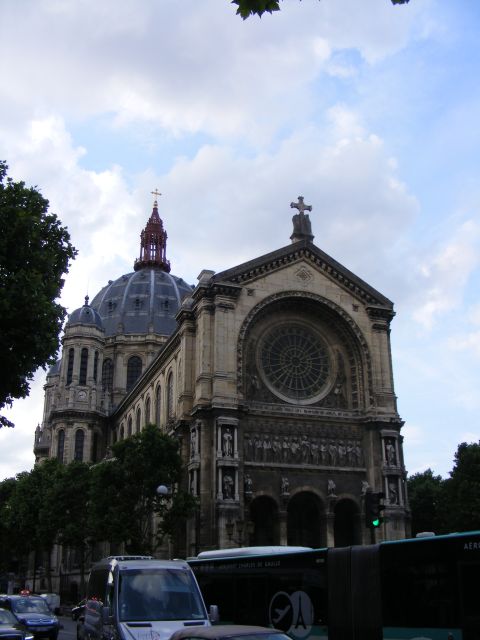
Next comes the Church of Saint Augustin, an architectural marvel that adds spiritual and visual contrast to the hard geometry of the boulevard world. Churches in big cities often do two things: they serve communities, and they act as visual anchors. Here, the anchor feeling is strong enough that you can use it like a compass during your walk.
What I like about this stop on an urban-planning tour is that it reminds you the rebuild was not only about commerce and spectacle. It also shaped how faith and public identity appeared in the city.
If you are the type who likes to compare styles, this church gives you a chance to do that quickly. You can compare its presence to what you saw earlier at Opéra Garnier. Different purpose, same era energy. That contrast helps the Haussmann story feel real.
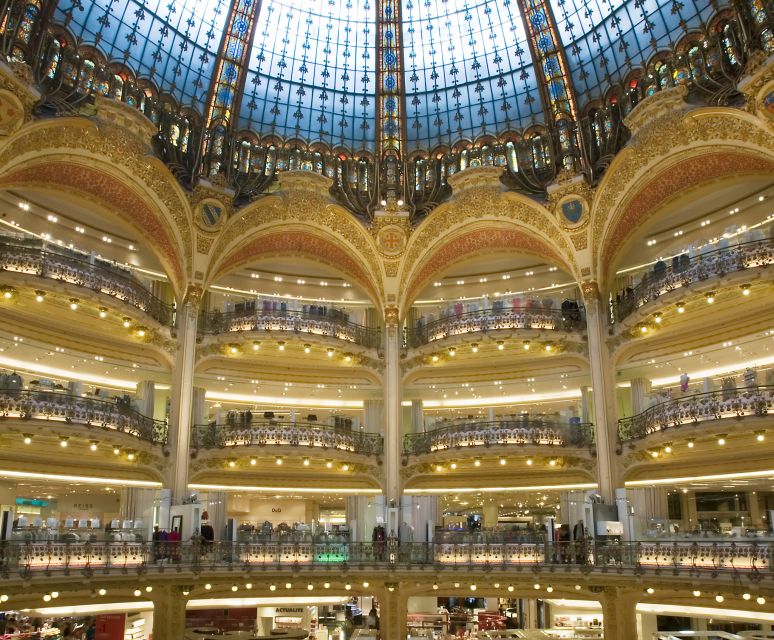
Galeries Lafayette: elegance you can step into
Galeries Lafayette is an easy highlight for obvious reasons: it is one of the most elegant shopping malls in Paris. But the smart way to approach this stop is not as a place to shop. Approach it as a piece of city design that survived and adapted.
This mall is tied to the area’s refined feel. In a short walk, you get to see how Haussmann-era grandeur carries into later uses. Streets and buildings designed for a certain kind of city life ended up supporting modern patterns too, including retail and public gathering.
If you like practical moments, this is a good stop to reset your bearings. You are surrounded by landmark scale, but inside you can regroup, check your route, and decide where you want to go next.
One consideration: since it is a shopping mall, it may feel more crowded than the park portion of your day. If you prefer quieter stops, you might enjoy spending more time looking from the edges and saving deep wandering for later.
Park Monceau: the elegant park break
Park Monceau is where the walk slows down in mood, even if you keep moving through the same time window. It is described as the city’s most elegant park, and on this tour it functions like an emotional reset. After grand buildings and wide boulevards, green space gives you different kinds of lines to follow, calmer sightlines, and softer attention.
This stop matters because it shows the Haussmann legacy is not only stone and iron. Urban redesign also shaped how Parisians could access leisure and daily restoration. A park like this feels like another kind of infrastructure, just less obvious than a boulevard.
Practical tip: if it is rainy, parks can get muddy near paths. Stick to the cleaner walkways and watch where you place your feet. Your shoes will thank you.
Picasso’s drinking dens: making the city feel lived in
One of the more intriguing elements is the guide’s connection to the favorite drinking dens of Picasso and more. The tour does not treat art history as a distant museum topic. It uses the street environment to suggest where creative energy gathered in the city’s everyday life.
This is a valuable kind of context. You get to imagine the city as a network of hangouts and conversations, not just postcards. Even if you are not hunting for a specific name, the point is that Paris is both designed and inhabited, and culture leaves traces in how neighborhoods evolved.
Since the exact dens are not listed in the basic outline you provided, the best approach is to listen closely when your guide connects the dots on your route. That is where the value shows up, because you cannot fully predict it from a simple landmark list.
Price and value: is $176 for 2 hours worth it?
At $176 per person for a 2-hour private walking tour, you are paying for more than movement. You are paying for a guide who can connect the Haussmann plan to the buildings you see, while also pacing the experience at private-group speed.
Here is how I think about value:
- If you are the kind of traveler who reads walls and street layouts, a guided walk saves you time. You get the why behind what you see, and you stop guessing.
- If you are traveling with someone who shares your curiosity, private format can feel efficient. You are not waiting for the slowest pace or the fastest photo person.
- If you prefer self-guided sightseeing, this price might feel steep. A map plus a couple of guidebooks can cover the basics, but it will not give you the same real-time explanations.
This tour is also not tied to meals, snacks, or drinks. That is fine, but it means you should think about when you will eat. Build a lunch or coffee plan around it so you are not hungry and distracted on the second half.
One more value point: ratings are very high, with an average of 4.9 from 11 reviews. Guides like Tina and Hanna were singled out in feedback, including Tina for being very nice and Hanna for city planning and architecture explanations plus helpful tips for the rest of your Paris time. Those are the ingredients that make a paid guide feel worthwhile.
Who this tour fits best
This tour is a strong match if you want to understand Paris at street level. If you like architecture, city planning, and the way redesign affects daily life, you will get a lot out of it. It is also ideal for first-timers who want a fast way to learn how the city is structured, and for repeat visitors who want a new lens.
It is also suitable if you travel with mobility needs since it is wheelchair accessible. Being a walking tour still means you will be moving through sidewalks and crossings, but the listing indicates accessibility is considered.
If you dislike walking for 2 hours, or you prefer ultra-slow museum time, you might find this tour a bit too “see it, then move on.” For that style, look for a longer guided option or combine this with a separate, slower stop later.
Should you book this Haussmannian Paris tour?
If your goal is to see Paris and understand what you are seeing, I think it is an easy yes. The route hits major Haussmann-era icons like Opéra Garnier, shows the Haussmann style on Boulevard Haussmann, includes Galeries Lafayette, and rounds it out with Park Monceau and the creative-world angle through Picasso’s drinking dens.
Book it if you want:
- clear explanations that connect buildings to urban planning
- a short, focused walk that changes how you read the city
- private pacing with a live guide in English or French
Skip or rethink it if:
- you want lots of interior time
- you hate brisk pacing
- you would rather wander without a guide shaping the story
If you are on the fence, my practical advice is simple. Paris is easy to photograph but hard to truly understand. This walk gives you the framework in just 2 hours, and it will keep paying off long after you finish the route.
FAQ
Where is the meeting point for the Haussmannian Paris 2-hour tour?
The meeting point is at Métro Opéra, in front of Café de la Paix. Your guide will be carrying a red canvas tote bag.
How long is the tour?
The tour duration is 2 hours.
Is the tour guided?
Yes. It is a live guided walking tour.
What languages are available for the guide?
The tour is available in English and French.
Is the tour private?
Yes. It is listed as a private group.
Does the tour run in bad weather?
Yes. Tours operate rain or shine.
Is the tour wheelchair accessible?
Yes, the tour is listed as wheelchair accessible.
What is included in the price?
The guided walking tour is included.
What is not included?
Food, snacks, and drinks are not included.
Newest write-ups from Paris


Walking Tours, compared.
Paris Top Sights Half Day Walking Tour with a Fun Guide
Read our review →
Montmartre Hidden Gems and Scenic Highlights Walking Tour
Read our review →
Montmartre Hill French Gourmet Food and Wine Tasting Walking Tour
Read our review →
Montmartre Highlights Walking Tour with a Local Guide
Read our review →
Paris Île de la Cité and Notre-Dame Walking Tour With Crypt
Read our review →
Montmartre Cheese, Wine & Pastry Guided Walking Tour
Read our review →
Paris in a Day: Louvre or Orsay, Eiffel Tower, City Walk & Cruise
Read our review →
Paris City Center Free Walking Tour (Tip-Based)
Read our review →Browse the lists this tour appears in