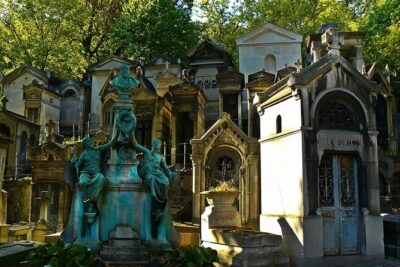
Reviewed · GUIDED
Hidden Paris: Secrets, Mysteries, and Lost Stories with a Historian Guide
Paris has a secret side. This Hidden Paris walk, led by historian Tales Araujo, turns the old center into a living page, with verified stories about symbols, conspiracies, and the city’s darker chapters.
I love the small-group feel, because it stays interactive instead of turning into a line-walk. One practical consideration: it is a walking tour with no monument or museum entrances included, so you should plan for streets and squares, not indoor big-ticket sights.
In This Review
- Key Things to Know Before You Go
- Entering Hidden Paris: A Walk That Teaches You How to Read the City
- Starting at Square du Vert-Galant, With the Fire Already Lit
- Saint-Germain-l’Auxerrois: Where Power Leaves Traces
- Pont Neuf and the Photo Stop: A Bridge With Memory
- Place Dauphine: Neat Streets, Old Secrets
- Conciergerie and Ile de la Cite: Conspiracies, Silence, and Built Memory
- Notre Dame Cathedral Area: More Than a Photo Frame
- Le Marais: The Neighborhood Where Stories Keep Walking
- Place des Vosges and the Final Stroll to Praça da Bastilha
- What the 150 Minutes Actually Feels Like
- Price and Value: What You’re Really Paying For
- Included, Not Included: Plan Like a Pro
- Who Should Book Hidden Paris, and Who Might Want Another Option
- Should You Book This Hidden Paris Tour?
- FAQ
- How long is the Hidden Paris tour?
- How much does it cost?
- Where does the tour start?
- What languages are available during the tour?
- Is the tour wheelchair accessible?
- Is the tour led by a historian?
- Does the tour include tickets for monuments or museum entrances?
- Is food or drink included?
- What is the cancellation policy?
Key Things to Know Before You Go
- Historian Tales Araujo guides you with research-based narratives, not hand-wavy claims.
- You get verified, context-heavy stories about Paris symbols, revolutions, and forgotten episodes.
- The route focuses on off-the-beaten-track spots and medieval leftovers you can easily miss on your own.
- You’ll see major “book-cover” Paris areas like Ile de la Cite and Le Marais, but through a different lens.
- There’s a photo stop at Pont Neuf, plus stops where marks and inscriptions matter more than views.
A handful more Paris options to weigh up
- Paris: Louvre Guided Tour with Reserved Access & Boat Cruise
★ 4.3 · 16,353 reviews - Louvre Museum Masterpieces Guided Tour with Access
★ 4.5 · 12,023 reviews - Louvre Museum – Exclusive Guided Tour (Entry Included)
★ 5.0 · 6,296 reviews - Versailles: Skip-the-Line Guided Palace Tour and Full Access
★ 4.6 · 5,214 reviews
Entering Hidden Paris: A Walk That Teaches You How to Read the City
This tour is for when you are tired of Paris-as-postcard. You still get to move through classic neighborhoods and iconic areas, but the experience is built around one skill: noticing what most people steam past.
Paris is full of clues that survived everything, including revolutions and decades of redevelopment. On this walk, you learn what to look for, like surviving symbols in plain sight, old architectural details, and the kind of marks that hint at major events without spelling them out for you. It feels like the city becomes a document you can actually interpret, street by street.
The guide, Tales Araujo, is a professional historian. That matters. The tour leans into verified stories and context on architecture, art, and urbanism, so you are not just collecting spooky bits. You are learning why certain corners matter, how streets evolved, and what changed when power changed hands.
Also, the tone is light enough to keep you engaged. Based on what I’ve seen described in the guide’s approach, the storytelling lands as curious and easy to follow, with the right mix of detail and humor. If you like history that feels human, not museum-dry, this is a good match.
Starting at Square du Vert-Galant, With the Fire Already Lit
You meet at Square du Vert-Galant, and the vibe from the start is very much, Paris is not all romance. The square is presented as a place tied to major people in history who were burned there, and the walk grows outward from that idea.
That opening does two useful things for you. First, it sets expectations. You are going to hear about conspiracies, executions, and episodes that shaped the city’s soul. Second, it trains your attention early. You start noticing details instead of just looking around.
If you arrive early, take a moment to look at the space like a historian would, not like a tourist. Where are the lines of sight? What feels central? That mindset makes the rest of the route click faster.
Saint-Germain-l’Auxerrois: Where Power Leaves Traces
Next is Saint-Germain-l’Auxerrois for a guided stop. Even when a building is visually impressive, the real value here is what you learn around it: how architecture, symbols, and urban change work together across centuries.
This is the kind of stop where the tour explanation matters more than the facade. You are not just hearing a storyline. You’re getting context for why the area developed the way it did and how the city’s layout reflects shifting eras and institutions.
Possible drawback at this stage: if you want only famous landmarks explained in straightforward ways, this stop might feel more interpretive than checklist-y. But if you enjoy the “why does this look like this” approach, you’ll be in your element.
Pont Neuf and the Photo Stop: A Bridge With Memory
The itinerary includes a guided segment at Pont Neuf, followed by a separate photo stop. That timing is smart. It gives you a first pass for meaning, then a second pass to turn the knowledge into visuals.
Pont Neuf is your cue that Paris’ most ordinary-seeming spaces can hold big stories. The tour frames bridges and river connections as part of how the city moved, and how events unfolded where people gathered and traveled.
During the photo stop, you can treat it like a mini field lesson. Look at the angles. Consider what you learned about the area. If you’re the type who usually takes a picture and moves on, this stop is where you slow down just enough to get a better result.
If this one is booked out, Paris has these too:
- Paris: 1-Hour Seine Cruise departing from the Eiffel Tower★ 4.4 · 77,472 reviews
- Disneyland® Paris 1-Day Ticket★ 4.6 · 49,412 reviews
- Paris: Versailles Palace and Gardens Full Access Ticket★ 4.6 · 41,579 reviews
- Paris: Arc de Triomphe Rooftop Tickets★ 4.6 · 34,264 reviews
Place Dauphine: Neat Streets, Old Secrets
At Place Dauphine, you get another guided stop. The emphasis here is on how Paris squares and streets changed over time, and how you can spot the city’s long timeline by studying structure and layout.
If you like Paris as a puzzle, Place Dauphine is an easy win. The tour encourages you to read urban design as history. That means you are looking beyond the aesthetic and into how the space supported different eras.
Because this stop is only scheduled for about 20 minutes, you should expect a focused, story-driven explanation, not an extended wandering session. If you want extra time here on your own, plan a quick return later.
Conciergerie and Ile de la Cite: Conspiracies, Silence, and Built Memory
One of the biggest theme pivots happens around the Conciergerie and Ile de la Cite. The tour time for Conciergerie is longer than most earlier stops, which usually signals a deeper set of stories tied to place.
This section is where the tour’s promise really lands: tales of conspiracies, real characters, episodes that felt invisible in their moment, and places where forbidden stories survived in silence. The guide also explains hidden symbols and marks, and connects those clues to broader shifts in architecture and urbanism.
What makes this stretch valuable is how it stitches the city together. You are not hearing isolated legends. You’re seeing how the same themes show up across adjacent neighborhoods: power, punishment, secrecy, and the physical traces left behind.
At Ile de la Cite, you also get a sense of why the island is such a focal point for understanding Paris. The tour uses the location to talk about the city as a set of overlapping layers, where newer life sits on top of older meanings.
Notre Dame Cathedral Area: More Than a Photo Frame
The itinerary includes Notre Dame Cathedral with a longer guided segment. This is not just about viewing the building. The tour frames the area as part of a wider historic center where symbols, architecture, and political tension all overlap.
You can expect the guide to connect what you see to how Paris tells its stories. The tour’s recurring thread is that the city preserved evidence in plain sight, even through upheavals and time.
A practical note: this is a popular area. Even without explicit ticket stops, you may still have crowds in the space around you. That is one reason the guide’s focus on interpretation helps. You are learning what to prioritize, so you do not get swallowed by general sightseeing noise.
Le Marais: The Neighborhood Where Stories Keep Walking
Then you shift into Le Marais, with about an hour of guided exploration. This is a major payoff area for people who love authentic street-level Paris.
On this part of the tour, the value is in walking medieval alleys and picking out marks and architectural details that many visitors miss. The guide’s approach makes Le Marais feel less like a shopping district and more like a living archive.
You’ll also hear more about hidden symbols and discreet societies. The stories lean into the idea that some information did not disappear, it just changed how it was expressed.
If you are the kind of person who likes to linger and people-watch, Le Marais will reward you. It can feel easy to keep walking here, but the schedule is still tight enough to keep you from getting lost in a side street spiral.
Place des Vosges and the Final Stroll to Praça da Bastilha
The route finishes with Place des Vosges and then continues to Praça da Bastilha.
Place des Vosges is a logical “breathing” point after Le Marais. It helps you reset your brain, which is exactly what you want right before the final landing. The guide’s job here is to connect the stories you heard earlier to the way Paris evolved toward later phases of conflict and change.
Ending at Praça da Bastilha gives the tour a strong thematic closure. The Bastille area is presented as a finishing point for the overall narrative arc, bringing together the idea of power shifts, public consequences, and the city’s ongoing relationship with secrecy.
If you like knowing what you just experienced, ending here helps. You leave with a mental map that connects streets and meanings, not just street names.
What the 150 Minutes Actually Feels Like
This tour runs about 150 minutes, roughly two and a half hours. In that time, you cover a solid chunk of central Paris while still getting guided time at each stop.
The schedule also reflects what the tour does well: it does not waste time on empty wandering. Each segment is a guided interpretation of a place, then you move on. There is also a photo stop at Pont Neuf, which is a nice touch if you want photos that actually match the story you heard.
Comfort-wise, this is still a walking tour. You should wear shoes you trust, because you are moving through uneven old streets and standing for explanations.
Price and Value: What You’re Really Paying For
At $47 per person, you are paying for a historian-led, story-driven walk that focuses on verified information and context. The value is not in buying access to monuments or museums, because those are not included. Instead, the value is in how the guide connects architecture, symbols, and urban change into a clear narrative.
That also means you do not get distracted by ticket lines or waiting for entrances. You spend your time reading the city in motion. If you like practical sightseeing, that’s a win.
You also get small-group intimacy. In tours where the group is huge, the guide’s ability to answer questions drops fast. Here, the setup is designed to keep you engaged.
Included, Not Included: Plan Like a Pro
Included highlights:
- A professional historian guide specialized in Parisian history
- Walking tour in the historic center with medieval streets and hidden alleys
- Off-the-beaten-track spots and exclusive historical narratives
- Context on architecture, art, and urbanism
- Explanations of hidden symbols and marks
- A photo stop at Pont Neuf
- Small groups for a more interactive experience
Not included:
- Monument tickets or museum entrances
- Food and drinks
- Public transportation
- Entrance to museums or closed buildings
So if you were hoping for a ticketed top-drawer museum day, this is not that. Think of it as a high-quality history walk that makes your later Paris visits make more sense.
Who Should Book Hidden Paris, and Who Might Want Another Option
This tour is a strong fit if you:
- Want authentic Paris beyond the clichés
- Like mysteries and symbols, but want them framed with verified context
- Enjoy walking, not rushing, and you like questions
- Appreciate a guide who speaks like a historian, with patience and detail
This might be less ideal if you:
- Only want museum interiors and monument tickets
- Prefer a totally casual sightseeing stroll with no historical interpretation
- Don’t like standing for guided segments in busy public areas
One more quick note: languages are offered in Portuguese and English, and some content may be shown in its original language. If you’re comfortable in either Portuguese or English, you’ll be fine.
Should You Book This Hidden Paris Tour?
Yes, if you want a smarter kind of sightseeing. The core reason is simple: Tales Araujo’s historian approach and the tour’s focus on verified, research-based stories turn familiar central Paris into something you actually think about after you leave.
Book it if you value walking through real neighborhoods and learning how symbols, streets, and buildings can carry forgotten meanings. Skip it only if you are looking for monument ticket access or a mostly free-form wander day.
FAQ
How long is the Hidden Paris tour?
The tour lasts 150 minutes.
How much does it cost?
The price is $47 per person.
Where does the tour start?
The meeting point is Square du Vert-Galant.
What languages are available during the tour?
The guide provides the tour in Portuguese and English. Some content may be shown in its original language.
Is the tour wheelchair accessible?
Yes, the tour is wheelchair accessible.
Is the tour led by a historian?
Yes. It is led by a professional historian specialized in Parisian history.
Does the tour include tickets for monuments or museum entrances?
No. Tickets for monuments are not required on this tour, and museum entrances to closed buildings are not included.
Is food or drink included?
No. Food and drinks are not included.
What is the cancellation policy?
You can cancel up to 24 hours in advance for a full refund.
Newest write-ups from Paris





Guided, compared.

Louvre Guided Tour with Reserved Access & Boat Cruise
Read our review →
Louvre Museum Masterpieces Guided Tour with Access
Read our review →
Louvre Museum – Exclusive Guided Tour (Entry Included)
Read our review →
Skip-the-Line Guided Palace Tour and Full Access
Read our review →
Louvre Access with Mona Lisa Escort or Guided Option
Read our review →
Louvre Museum: Skip-the-Line Small Group Guided Tour
Read our review →
Louvre Museum Paris Essential Guided Tour Semi-Private 6ppl Max
Read our review →