Reviewed · PARIS
Investigation game – Montmarte
A timed mystery makes Montmartre feel like a movie set. This is a walking investigation game that mixes treasure-hunt clues with a route through famous and lesser-known streets. You play in teams, race an infernal chrono, and follow the evidence to key spots like Sacré-Cœur and Place des Abbesses.
Two things I really like are the way it turns sightseeing into problem-solving, and how the hosts bring the energy. In the reviews, guides such as Clément and Manon get special praise for humor and clear explanations, and I love that the game is designed to work for different group vibes.
One drawback to consider is that the public competition and the private format can shape how long each group plays. If you’re in the competitive option, some teams may end up with a different pacing and finish feel than others.
In This Review
- Key Highlights to Know Before You Go
- A Timed Urban Investigation Through Montmartre Streets
- Price and Value for a 2.5-Hour Montmartre Adventure
- Where You Start, How You’ll Move, and What to Bring
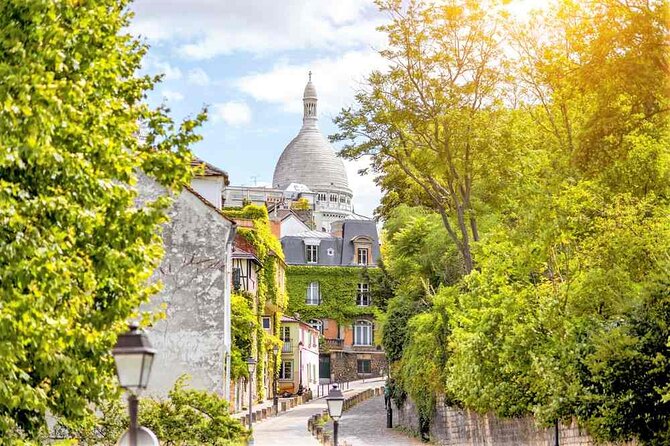
- Stop 1: Basilique du Sacré-Cœur, Your First Clue in Montmartre
- Stop 2: Vigne du Clos Montmartre, The Grape Plot Twist
- Stop 3: Rue de l’Abreuvoir, Where Clues Feel More Local
- Stop 4: Place des Abbesses, Finishing the Puzzle in a Busy Hub
- How the Clues, Riddles, and Rewards Work
- Who This Game Fits Best (and Who Should Skip It)
- Practical Tips to Make Your Investigation Smoother
- Should You Book This Montmartre Investigation Game?
- FAQ
- Where does the investigation game start and end?
- How long is the Montmartre investigation game?
- Is the game offered in English?
- What stops are included in the route?
- What should I wear or bring?
- Can I get a refund if my plans change?
Key Highlights to Know Before You Go

- Team-based investigation through Montmartre streets, with a timed challenge
- Two formats: public session with other teams, or private treasure hunt for your group
- Historic stops plus local lanes, including Sacré-Cœur area, Clos Montmartre, and Rue de l’Abreuvoir
- Game props and equipment are provided, so you only need to show up ready to walk
- Encouraging hosts and humor, with Clément, Manon, and Marcus called out in reviews
- A small reward and classification-based gift tied to your results
Worth a comparison before you book. Others in Paris covering the same ground:
- Paris: 1-Hour Seine Cruise departing from the Eiffel Tower
★ 4.4 · 77,472 reviews - Disneyland® Paris 1-Day Ticket
★ 4.6 · 49,412 reviews - Paris: Versailles Palace and Gardens Full Access Ticket
★ 4.6 · 41,579 reviews - Paris: Arc de Triomphe Rooftop Tickets
★ 4.6 · 34,264 reviews
A Timed Urban Investigation Through Montmartre Streets
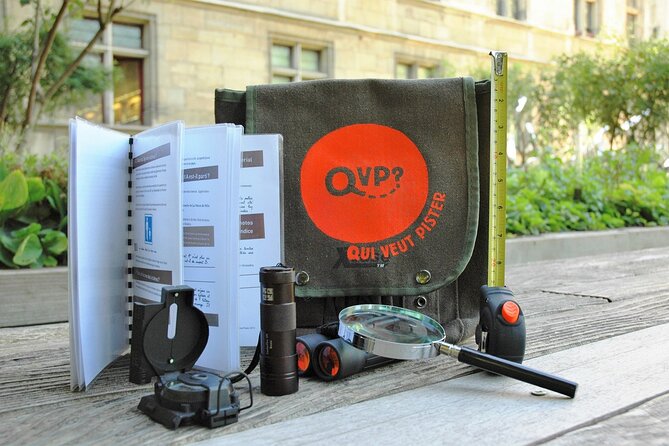
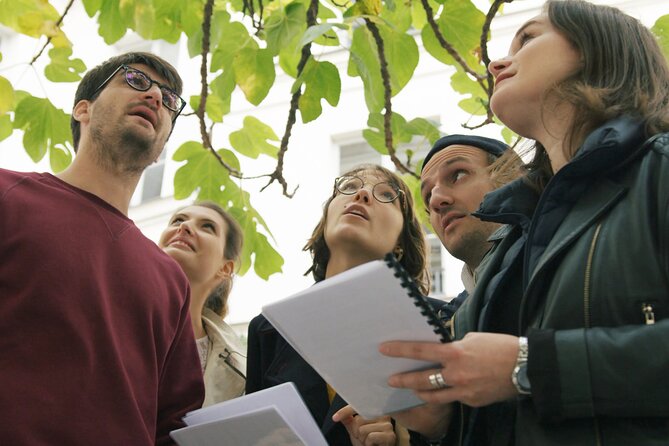
This isn’t a museum tour where you stand and listen. You move like you would on a neighborhood stroll, but every few steps you’re asked to think like a detective. The game blends an outdoor escape feel with a treasure hunt, then layers in Montmartre storytelling as you follow clues from one point to the next.
You’ll be split into teams, handed a set of tasks, and sent out to locate information in the streets. The theme is built around solving strange affairs, with an infernal chrono pushing you along. That time pressure changes the mood. Instead of just looking around, you’re scanning, comparing, and making quick calls as a group.
There are also two ways to play. In a public session, you compete against other participants outside your team, which adds a light competitive edge. In a privatized treasure hunt, your group plays alone, so you can focus on the experience without the pressure of other teams.
Price and Value for a 2.5-Hour Montmartre Adventure
The price is listed at $60.21 per person, and the big value point is what’s included. You get all fees and taxes, plus the equipment needed for the game at the departure point. That matters because it reduces the chance you’ll show up and realize you needed gear or forgotten add-ons.
There’s also mention of group discounts, which can make the per-person cost feel much more reasonable if you’re coming with friends. And because this is timed and route-based, you’re paying for more than “entertainment.” You’re paying for a structured walk that takes you through Montmartre in a purposeful way, not just a random wander.
Duration is approximately 2 hours 30 minutes, but real-world pacing can vary. One review notes finishing a course in about 1 hour 30 minutes while still playing competitively, so you might complete it faster depending on how smoothly your team solves the riddles.
Where You Start, How You’ll Move, and What to Bring
You meet at Place Marcel Aymé (75018 Paris), and the game ends back at that same meeting point. That round-trip setup is great when you’re tired at the end of Montmartre, because you’re not hunting for your exit plan while carrying a phone, a map, and snacks.
The experience is in English. If your group includes mixed-language players, you might still like it, but you’ll want at least one person who can follow instructions and read clues confidently in English.
You should have a moderate physical fitness level. Montmartre has slopes, and even a “game route” can mean some uphill walking. Comfortable footwear is the common sense answer, and while the activity does not include walking shoes, reviews specifically suggest sneakers or comfortable shoes.
The group size is capped at 40 travelers, which helps keep the briefing and handoff from feeling chaotic. And yes, you’ll get a mobile ticket, which is usually the easiest way to handle entry at the start.
Stop 1: Basilique du Sacré-Cœur, Your First Clue in Montmartre

You begin at the Sacré-Cœur area, with the basilica nearby as the iconic anchor for the route. This matters because Montmartre can feel like a puzzle even without the game. Starting with a landmark that people recognize helps you orient fast and gives your team a sense of direction.
In a typical stroll, Sacré-Cœur is a “look up and take a photo” moment. In this format, it becomes a launch point. You’re not only seeing the area, you’re also starting your investigation, so the first minutes feel more active.
A practical consideration: Sacré-Cœur area crowds can be real, especially around peak times. The upside is that you get your bearings quickly, and once you move away from the busiest pockets, the game route often shifts into the more street-level, clue-hunting vibe.
If this one is booked out, Paris has these too:
- Paris: Orsay Museum Entry Ticket★ 4.7 · 25,647 reviews
- Paris: Evening River Cruise with Music★ 4.4 · 22,721 reviews
- Paris: Eiffel Tower Entry Ticket with Optional Summit Access★ 4.4 · 20,035 reviews
- Eiffel Tower Dedicated Reserved Access Summit or 2nd Floor★ 4.3 · 18,352 reviews
Stop 2: Vigne du Clos Montmartre, The Grape Plot Twist
One of the most fun surprises in this itinerary is the Vigne du Clos Montmartre stop. It’s not the first thing most people picture when they think of Montmartre, which makes it a satisfying “wait, what is that?” moment during the game.
As a detective clue stop, it does more than add variety. It breaks the pattern of only seeing stairways, viewpoints, and postcard corners. You’re likely to slow down, look for information, and notice details you would normally walk past.
The drawback here is also practical. If weather is poor, outdoor walking near this kind of spot can feel longer than expected, since you’re stopping often for clue-solving. Bring layers, and don’t assume you can do this comfortably in just one light piece of clothing.
Stop 3: Rue de l’Abreuvoir, Where Clues Feel More Local
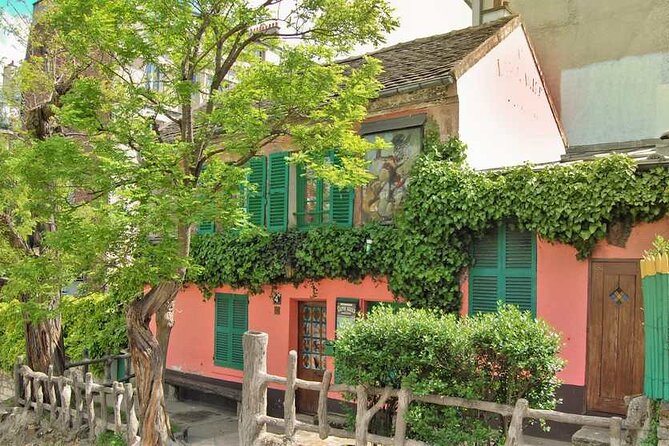
Next up is Rue de l’Abreuvoir, which is the kind of street you might stroll right by on a normal day. In the game, though, you’re prompted to engage with what’s around you and figure out what the clues are pointing toward.
This is one of the better parts of a Montmartre investigation, because it trades “big view” energy for neighborhood texture. Streets like this help your team notice patterns, read signs or small details, and stay focused on the problem rather than chasing scenery.
If your group likes stories, this is where your walk tends to feel more personal. Montmartre isn’t just one hill, it’s a mosaic of tiny scenes. Rue de l’Abreuvoir gives you a slower, more grounded view of the district while the game keeps you moving.
Stop 4: Place des Abbesses, Finishing the Puzzle in a Busy Hub
You finish at Place des Abbesses, a central Montmartre point that feels lively and easy to reach. It’s a smart end location because you’re not trying to end in the middle of nowhere. Once the investigation wraps up, you can step back into the neighborhood without needing a second plan.
As a final stop, this kind of place helps the game land emotionally. You’re ending your walk feeling like you solved something, not like you just “came by.” And because Place des Abbesses is visually distinctive, it’s often a satisfying location to wrap clues and confirm your final answer as a group.
One note for expectations: a review about pacing frustration highlights that different groups can experience different run styles or competition timing. So if you care deeply about matching exact finish moments to other teams, know that public sessions can feel uneven at the very end.
How the Clues, Riddles, and Rewards Work
The core mechanic is simple: find clues, solve the investigation, and follow a route. But the details are what make it engaging. Reviews mention a two-stage structure, where you first find clues and then piece together what is happening. That step-by-step design helps keep the game from feeling like a single giant riddle.
You also get help from the hosts during the start. The reviews are full of praise for guides like Clément and Manon, with one person calling out patience and a good sense of humor. Another review thanks Marcus for making the experience funny. That kind of hosting matters because clue games can get frustrating if players don’t feel supported.
A nice bonus is that you might leave with a small gift. One review specifically notes a gift adapted to your classification. That’s not why you should book, but it adds a satisfying finish, especially if you’re playing as a family or with younger detectives.
And yes, there’s a reward element. The description points to a reward for the best investigators, which adds some friendly stakes. If you’re competitive, it feels motivating. If you’re not, it still keeps the energy up because everyone wants their team to do well.
Who This Game Fits Best (and Who Should Skip It)
This works best when you like doing something with your feet and your brain. It’s a great fit for friends, bachelor party groups, and team challenges, because you’re naturally split into roles and working together. It’s also a strong choice if your group wants an alternative to the standard “walk and listen” Paris style.
Families can do well too. One review says the difficulty level worked even with young children. That tells me the puzzles aren’t just for adults who love logic games all day. Still, you’ll want kids to be able to read and follow clues in English, or have a parent who can translate the important parts during the briefing and clue checks.
If you hate timed activities, you may want the privateized treasure hunt option instead. The game’s chrono adds pressure, and in a private group you can often manage the pace with less outside competition.
If anyone in your group has trouble with sustained uphill walking, consider this a caution. The experience only says moderate fitness, but Montmartre is Montmartre. Go into it with realistic expectations, and don’t gamble on doing it in dress shoes or sandals.
Practical Tips to Make Your Investigation Smoother
First, treat this as a group activity, not a solo phone game. You’ll make better progress when someone reads clues out loud and someone else watches for visual details on the street. Teams that split tasks tend to keep moving instead of stalling.
Second, wear comfortable shoes. Reviews give this advice directly, and I’d agree. You’re likely to stop and start often while scanning the environment, so cushioning matters.
Third, if you’re choosing between public and private, match it to your personality. Public sessions add competition and energy, private treasure hunts keep things calmer and more controlled. Either can be fun, it just depends on whether your group likes the race element.
Finally, go in ready to laugh at yourself. Some clues are tricky, and that’s part of the fun. A good host, like the ones praised in reviews, helps when your team gets stuck and needs a nudge in the right direction.
Should You Book This Montmartre Investigation Game?
Book it if you want Montmartre with a purpose. This is ideal for travelers who enjoy puzzles, walking in a structured route, and learning the neighborhood in a way that doesn’t feel like homework. The fact that you get all equipment provided and play in small-team format makes it feel lower stress than many DIY alternatives.
Skip it if your idea of fun is quiet sightseeing only. The timed chrono, team competition in public sessions, and frequent clue stops can be a lot if you want uninterrupted views and slow wandering. Also, if your group can’t handle slopes, you might find the logistics less comfortable than a classic flat neighborhood walk.
If you decide to go, plan for sneakers, bring a positive attitude, and lean into the team problem-solving. Done well, this game turns Montmartre from a postcard hill into a place you can actually navigate and remember.
FAQ
Where does the investigation game start and end?
It starts at Place Marcel Aymé in Paris and ends back at the same meeting point.
How long is the Montmartre investigation game?
The experience lasts about 2 hours 30 minutes, though some groups may finish sooner depending on how the game plays.
Is the game offered in English?
Yes, it is offered in English.
What stops are included in the route?
The game route includes Basilique du Sacre-Coeur de Montmartre, Vigne du Clos Montmartre, Rue de l’Abreuvoir, and Place des Abbesses.
What should I wear or bring?
Walking shoes are not included. The activity suggests you come with comfortable shoes for the walking.
Can I get a refund if my plans change?
You can cancel for a full refund up to 24 hours before the experience starts. If you cancel less than 24 hours before, the amount you paid is not refunded.