
Reviewed · LATIN QUARTER WALKING TOURS
Latin Quarter Private Walking Tour
The Latin Quarter is best seen on foot. This private walking tour takes you past the big-name landmarks and the quieter, older layers of Paris with a local guide who keeps the pace easy and the stories focused. I love how much you cover in about two hours, and I especially like the way the route mixes famous monuments with smaller stops that help you understand how this neighborhood became what it is today. One consideration: it is a walking tour, so you will want moderate fitness and comfortable shoes.
Two things I really like about this experience are the local guidance and the smart stop sequence. You start in the heart of the Quartier Latin, then move to Roman-era history at the Arènes de Lutèce, and finish with time in the Luxembourg Gardens area. The only real drawback is that Pantheon admission is not included, so if you want to go in, you’ll need to plan for that cost separately.
In This Review
- Key highlights to know before you go
- A 2-hour Latin Quarter walk that stays readable, not rushed
- Where you start and how the walk ends near Saint-Michel
- Quartier Latin first: the neighborhood that explains itself
- Arènes de Lutèce: Roman walls with real scale
- Collège des Bernardins and education as a medieval mission
- Saint-Étienne-du-Mont: Geneviève’s shrine inside the church
- The Panthéon: big landmark energy, with admission to plan
- Place de la Contrescarpe and the café square moment
- Fontaine Saint-Michel: a 19th-century landmark you can actually linger with
- Luxembourg Gardens: where your feet finally slow down
- La fontaine Médicis: a place for inspiration, not just photos
- Montagne Sainte-Geneviève and Place de la Sorbonne: scholar Paris
- Ending back in the Latin Quarter: a smart wrap-up section
- What to expect on the ground: pacing, shoes, and snack reality
- Price and value: what you are paying for at $305.54 per person
- Who should book this Latin Quarter private tour
- Should you book this private walking tour?
- FAQ
- How long is the Latin Quarter Private Walking Tour?
- What is the price per person?
- Is this a private tour, and what group size is it for?
- Where do you meet, and where does the tour end?
- What language is the tour offered in, and do you get a ticket on your phone?
- Can I cancel for a full refund?
Key highlights to know before you go
- Private, up-to-seven-person group keeps the walk personal and the questions practical
- Local guide helps you connect stops, not just collect photos
- Roman to medieval to 19th century in one route, from Arènes de Lutèce to fountains
- Luxembourg Gardens time gives you a calmer pace with major garden landmarks
- Many free stops, with only the Pantheon listed as not included
- English tour and a mobile ticket, so you can focus on walking instead of logistics
Other walks through the Latin Quarter:
- Paris Bike Tour Hidden Secrets in the Latin Quarter & Le Marais neighborhoods
★ 5.0 · 766 reviews - Paris: Latin Quarter Guided Pub Crawl to Bars and Clubs
★ 4.3 · 532 reviews - Paris: Old Town & Latin Quarter Guided Walking Tour
★ 5.0 · 404 reviews - Paris Latin Quarter Pub Crawl Bars and Clubs
★ 4.5 · 394 reviews
A 2-hour Latin Quarter walk that stays readable, not rushed
This is a private Latin Quarter tour designed for small groups, up to seven people. That matters because the Latin Quarter can feel like one long maze, and a group that stays small means your guide can slow down at the places that actually need explanation.
You are not going for a full-day museum plan here. Instead, you get a tight, well-paced look at how the neighborhood layers time: medieval learning, religious sites tied to Parisian identity, Roman ruins, and outdoor Parisian life.
And if you care about value, this one is built that way. Many of the stops listed are admission-free, so you pay for the guide and the route rather than a parade of ticket lines.
Where you start and how the walk ends near Saint-Michel
You begin at 7 Rue de Poissy, 75005 Paris. It is an easy point to reference on a map, and you are also near public transportation, which helps if you are catching a metro between neighborhoods.
The tour ends next to metro station Saint-Michel at Place Saint-Michel (Fontaine Saint-Michel). This is a great finish because it keeps you close to more food options and more transit, instead of forcing you to backtrack.
Plan for a classic Paris walking day: even though the tour is only about two hours, you will be on sidewalks and stairs in small bursts. You do not need to be an athlete, but moderate physical fitness will make the whole experience feel easy.
Quartier Latin first: the neighborhood that explains itself

A big chunk of your walk is centered on the Quartier Latin, which is the part of Paris most people picture when they think of student streets and historic alleyways. Here, the value is not just seeing streets and façades. It is learning how to read the neighborhood.
Your guide’s approach is practical: you are guided through the main landmarks, then you get pointed toward smaller context points so the area stops feeling like random scenery. This is especially helpful if you are seeing Paris for the first time, because the Latin Quarter is where Paris “feels like a city” rather than just a collection of monuments.
If you like getting your bearings fast, this opening section does that job. You also get a sense for what to notice later on your own, such as street patterns near key landmarks and how the neighborhood’s big institutions shaped daily life.
Arènes de Lutèce: Roman walls with real scale
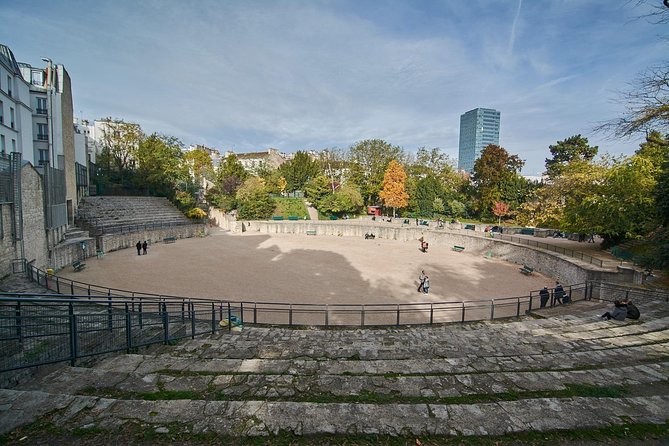
Next up is the Arènes de Lutèce. This amphitheater is the oldest monument built in Paris and still partly standing, with construction dating back to the 1st century AD.
You learn what it was used for, too. It was used as a theatre and also as an amphitheatre for gladiatorial fights. One detail I find useful as a traveler: it could seat around 17,000 people. That number helps you understand scale, even if you already know it was “Roman.”
The stop is short, but it is a strong pivot in the tour. One minute you are in medieval Paris energy, and the next you are staring at structures that predate the modern city by a long stretch. It helps you feel why Paris keeps reusing its own geography.
Other arrondissements taken at walking pace:
- Paris Top Sights Half Day Walking Tour with a Fun Guide★ 5.0 · 2,893 reviews
- Montmartre Hidden Gems and Scenic Highlights Walking Tour★ 5.0 · 2,684 reviews
- Montmartre Hill French Gourmet Food and Wine Tasting Walking Tour★ 5.0 · 2,588 reviews
- Paris: Montmartre Highlights Walking Tour with a Local Guide★ 4.9 · 2,318 reviews
Collège des Bernardins and education as a medieval mission
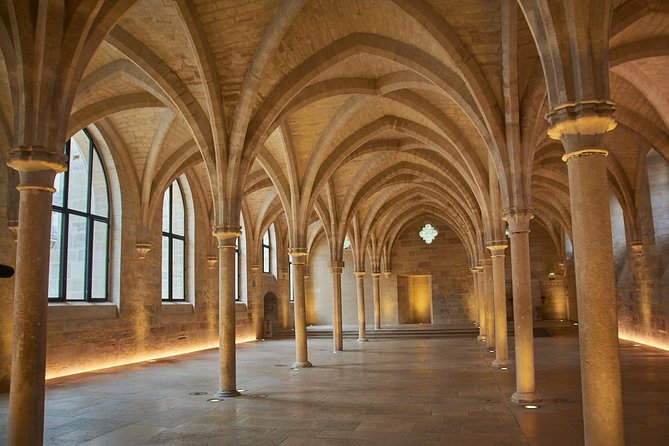
Then you head to College des Bernardins, a former Cistercian college of the University of Paris. It is described as one of the largest and oldest medieval buildings in Paris, and your guide connects it to what it was actually for: welcoming and training young monks.
This is one of those stops where you might not know what to look for until someone explains the purpose. You learn it was created in the 13th century, and the vocation was education at scale over time, training thousands of monks from all over Europe between the 13th and 15th centuries.
The stop is brief, so go in expecting orientation rather than a full museum-style visit. Even then, it sticks, because “college” here is not modern. It is a medieval institution with a distinct rhythm, rules, and mission.
Saint-Étienne-du-Mont: Geneviève’s shrine inside the church
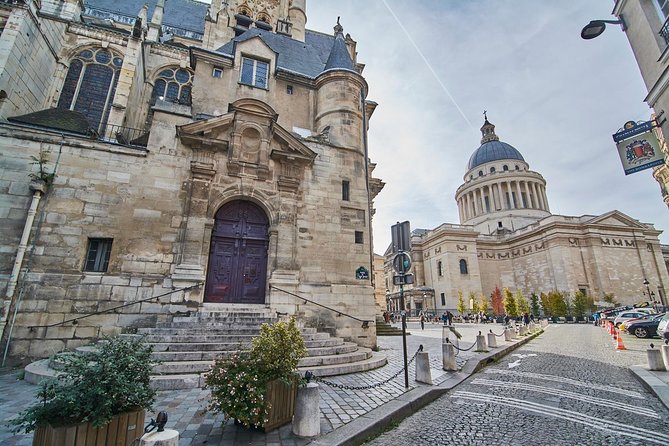
Your next stop is St. Etienne du Mont on the Montagne Sainte-Geneviève. This church is tied to Saint Geneviève, the patron saint of Paris, and the shrine of Geneviève is inside.
Even if you are not a religious architecture person, I like this stop because it anchors the idea of Paris as a city of belief and identity. You are in a church that functioned as more than a building, it became a reference point for a whole community.
It is another short stop, but that is fine here. The goal is to understand what the site represents, then keep moving so the tour stays light and easy to follow.
The Panthéon: big landmark energy, with admission to plan
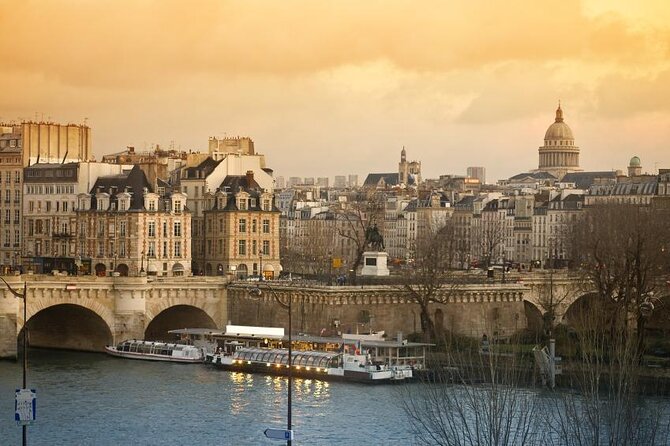
The Pantheon is one of the biggest landmarks in the Latin Quarter. You’ll hear the key transformation story: it was built as a church, then converted into a mausoleum for the remains of distinguished French people.
You likely know it by name, but having it explained as a shift from worship to memorial changes how you look at it from the outside. That is the kind of perspective a guide adds fast.
One practical note: the Pantheon stop lists admission not included. So if you want to go inside, budget for that separately. If you are fine focusing on the exterior and nearby perspective, you can still enjoy this as a landmark break.
Place de la Contrescarpe and the café square moment
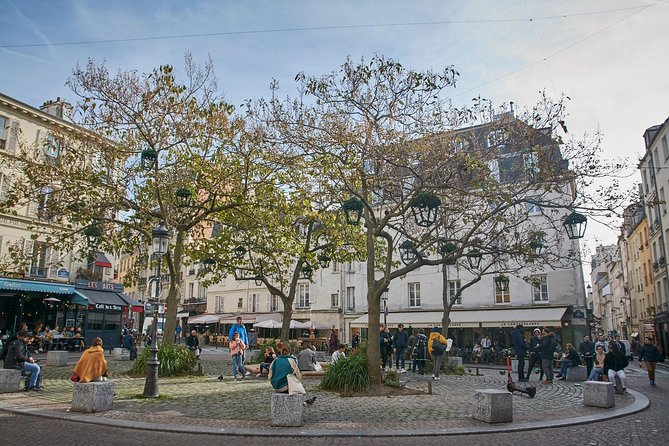
At Place de la Contrescarpe, you get a classic French square surrounded by cafés. This is a real-life Paris pause, the kind of place where you can feel daily routines without turning it into a scheduled event.
A small square like this can be a letdown if you were hoping for another major monument. But I like it for the opposite reason: it gives you a sense of where the neighborhood breathes.
This stop is short, but it helps break up the heavier history stops. Think of it as your reset button before moving on to fountains and gardens.
Fontaine Saint-Michel: a 19th-century landmark you can actually linger with
Next is Fontaine Saint-Michel, built in 1860. It is one of those places where the monument itself is simple to understand, but it helps you connect the neighborhood’s energy with the street that surrounds it.
The stop is brief, yet it is a good point to take a few photos and orient yourself. When your tour finishes later near Saint-Michel, you will recognize the area much faster because you already spent a moment here.
If you like street-level Paris, this is a worthwhile stop even if you do not plan to spend time reading every plaque.
Luxembourg Gardens: where your feet finally slow down
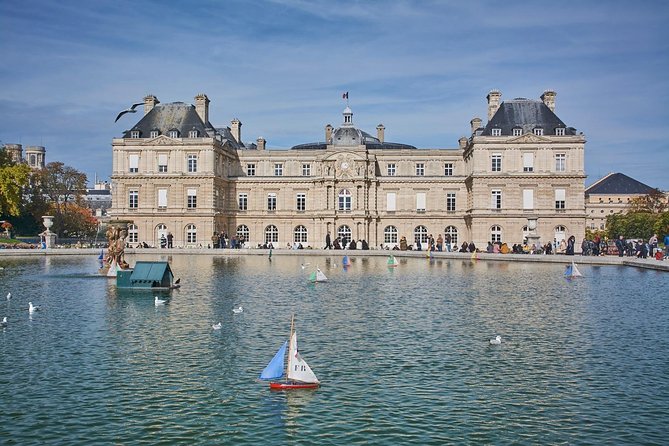
Then comes Luxembourg Gardens, the Jardin du Luxembourg. If you like Paris with breathing room, this is the section you will appreciate most. The gardens were created in 1612 by Marie de Medicis, widow of King Henry IV.
Today, the garden is owned by the French Senate, which is a big “only in Paris” detail. You are walking through a space that looks like classic leisure, but it exists inside a real government ecosystem.
Your time here is listed as about 30 minutes, which is long enough to take in the atmosphere without feeling like you are stuck in one spot for an hour. This is also a practical part of the tour because it gives you a softer walking surface compared with tighter streets.
La fontaine Médicis: a place for inspiration, not just photos
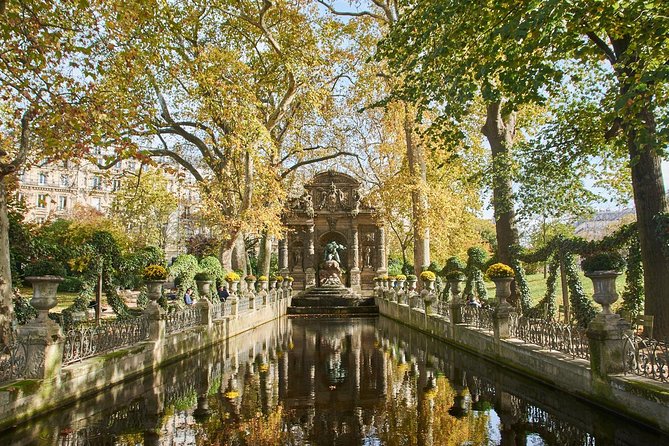
In the gardens you visit the La fontaine Medicis. It was built in 1630 by Marie de Medicis, then renovated and rebuilt in 1866. Another detail I like here is that Victor Hugo used it as inspiration.
That does two things for you as a traveler. First, it gives the fountain a human story beyond date and stone. Second, it gives you a reason to pause without treating it like a random photo stop.
This is exactly the kind of stop where a guide’s timing matters. You are not rushed, and you get a chance to slow down mentally, not just physically.
Montagne Sainte-Geneviève and Place de la Sorbonne: scholar Paris
After the fountains, you head to Montagne Sainte-Genevieve, a small hill with several old Parisian monuments. A hill is an underrated feature in Paris. It changes sight lines and explains why certain buildings feel “important” from street level.
From there you reach Place de la Sorbonne, a small square in front of the Sorbonne. Even in a short stop, this area feels like academic Paris because it sits in the shadow of one of the symbols people associate with learning and study.
These are quick moments, but they connect back to the earlier Bernardins stop. You end up with a clear thread: education and religious institutions shaped where you walked and what you saw.
Ending back in the Latin Quarter: a smart wrap-up section
The tour returns to the Quartier Latin for a final look at main landmarks in this historic neighborhood. I like wrap-ups like this because they help your brain sort what you just saw into a simple map.
By the end, you are not only familiar with individual sites. You understand relationships. Roman era structures sit inside a street pattern that later served medieval learning. Religious identity threads connect church stops. Gardens and fountains add the calmer, everyday Paris side.
It is the kind of finish that helps you plan the rest of your day without feeling lost.
What to expect on the ground: pacing, shoes, and snack reality
This tour is a walking experience with a moderate fitness expectation. That means you should bring comfortable walking shoes and dress for changeable weather. Paris can switch from bright to breezy fast, especially when you are outside in open garden areas.
Snacks are not included, so I suggest you plan a small break before or after. If you tend to get hungry mid-walk, consider grabbing something nearby in advance and keeping it simple.
Because it is private, the guide can typically pace with your group. Still, expect to be moving. This is a route designed to cover key points, not a sit-down lecture.
Price and value: what you are paying for at $305.54 per person
At $305.54 per person, this is not the cheapest way to do Paris. But you are also paying for a lot of the stuff that is hard to buy separately: a local guide who can connect stops, a route focused on free and iconic outdoor sites, and a private setting limited to your group.
Here is where the value comes from:
- Many stops are listed with free admission, so you are not constantly paying entry fees
- The route mixes big monuments with shorter context stops, which can save you time later trying to figure things out on your own
- The tour language is English, and the experience is structured so you can follow it without guesswork
- The tour includes a mobile ticket, which usually means fewer on-the-day hassles
The main “cost consideration” is the Pantheon, since its admission is not included. If you want to go inside, you will likely pay extra there. If you are happy to view it from outside, your extra costs might be minimal.
For groups of up to seven, privacy can also make the price feel more reasonable because you are sharing the guide experience.
Who should book this Latin Quarter private tour
This tour fits best if you want:
- A guide to help you understand what you are seeing, especially in the Latin Quarter
- A two-hour plan that does not require a long commitment
- A mix of Roman, medieval, and outdoor Paris landmarks
- A private experience where small questions do not get lost
It is also a good pick if you are traveling with a group that would rather walk with someone explaining than sit through a museum day. The gardens and fountains provide that softer pacing that balances the more historical stops.
If you are someone who hates any walking at all, you might find this less comfortable. It is designed for movement, not for minimizing steps.
Should you book this private walking tour?
I think you should book it if you want the Latin Quarter experience with real context and a route that makes sense for a short stay in Paris. It is also a solid choice if you value small-group privacy, because you get the kind of attention that helps you understand details you would otherwise miss.
One final decision trick: if you are excited about the idea of walking through Quartier Latin, pausing at the Arènes de Lutèce, and then relaxing in the Luxembourg Gardens area, this tour matches that day dream pretty closely. If you only care about one or two monuments and hate walking, you may be better off picking a lighter self-guided plan.
FAQ
How long is the Latin Quarter Private Walking Tour?
The tour is listed as about 2 hours.
What is the price per person?
The price is $305.54 per person.
Is this a private tour, and what group size is it for?
Yes, it is a private tour/activity. Only your group participates, and it is ideal for groups of up to seven people.
Where do you meet, and where does the tour end?
You start at 7 Rue de Poissy, 75005 Paris, France. The tour ends next to metro station Saint Michel at Fontaine Saint-Michel, Pl. Saint-Michel, 75005 Paris, France.
What language is the tour offered in, and do you get a ticket on your phone?
The tour is offered in English, and it uses a mobile ticket.
Can I cancel for a full refund?
Yes. Free cancellation is available, and you can cancel up to 24 hours in advance of the experience for a full refund.
Newest write-ups from Paris




Latin Quarter Walking Tours, compared.
Paris Bike Tour Hidden Secrets in the Latin Quarter & Le Marais neighborhoods
Read our review →
Latin Quarter Guided Pub Crawl to Bars and Clubs
Read our review →
Paris Latin Quarter Pub Crawl Bars and Clubs
Read our review →
Latin Quarter Free Tour in English (Tip-Based)
Read our review →
Latin Quarter Paris Guided Walking Tour Semi-Private 12ppl Max
Read our review →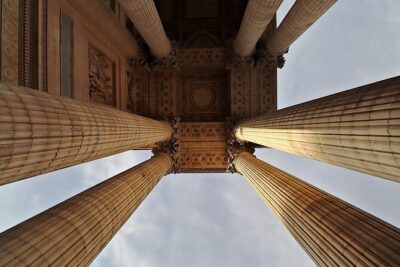
Paris Latin Quarter Walking Tour plus Seine River Cruise Option
Read our review →
Paris Latin Quarter Food Tour – Full French Meal by Do Eat Better
Read our review →Browse the lists this tour appears in