
Reviewed · WALKING TOURS
Medieval Paris Private 2h Walking Tour
Medieval Paris feels close in two hours. A private guide takes you through the parts of Paris that still hold Medieval symbols, then connects the dots between the Middle Ages and today. It is a compact plan, but it covers the city’s most important medieval stops.
I especially love the Hotel de Cluny stop, because it gives you a real sense of how people lived and worked before the city was all glass and scooters. I also like how Notre-Dame is treated as the focal point of Medieval Paris, not just a photo spot.
One thing to factor in: it runs rain or shine, and food and drinks are not included. That means you should plan for comfort, water, and a snack if you get peckish during the walk.
In This Review
- Key highlights worth your time
- Meeting at Cluny-La Sorbonne, and how the tour actually moves
- Hotel de Cluny: a medieval anchor you can stand inside
- Notre-Dame de Paris: why this cathedral matters beyond photos
- The Latin Quarter: oldest streets, living memory in plain view
- Sorbonne: how Europe’s old university still shapes the area
- Saint-Jacques Tower: one survivor after the Church of Saint-Jacques-de-la-Boucherie
- Les Halles and Fontaine des Innocents: the market and the oldest intact fountain
- The Pompidou connection: medieval roots under ultra-modern Paris
- Price and value: is $176 per person worth it?
- Should you book this Medieval Paris 2-hour private tour?
- FAQ
- How long is the Medieval Paris private walking tour?
- What is the meeting point for the tour?
- Is this tour private?
- What languages are available?
- What is included in the price?
- Are food and drinks included?
- Does the tour run in bad weather?
- Which medieval sites are part of the walk?
- Can I get a refund if my plans change?
- Can I reserve without paying right away?
Key highlights worth your time
- Hotel de Cluny viewpoint into medieval power, from abbots to a museum setting
- Notre-Dame de Paris explained as the center of Medieval Paris life and imagination
- Latin Quarter streets where older layers of the city still shape your walk today
- Sorbonne and learning as one of Europe’s oldest university traditions
- Fontaine des Innocents plus Les Halles for the everyday, not just the grand monuments
- Pompidou Centre connection that ties ultra-modern Paris back to medieval themes
Other arrondissements taken at walking pace:
- Paris Top Sights Half Day Walking Tour with a Fun Guide
★ 5.0 · 2,893 reviews - Montmartre Hidden Gems and Scenic Highlights Walking Tour
★ 5.0 · 2,684 reviews - Montmartre Hill French Gourmet Food and Wine Tasting Walking Tour
★ 5.0 · 2,588 reviews - Paris: Montmartre Highlights Walking Tour with a Local Guide
★ 4.9 · 2,318 reviews
Meeting at Cluny-La Sorbonne, and how the tour actually moves
You meet your guide in front of McDonald’s at Cluny la Sorbonne Metro Station (Line 10). Look for the guide with a red canvas tote bag. It is a very normal, easy meeting point, which I appreciate, because nobody wants to start a 2-hour tour hunting for a guide in a maze.
This is a private group tour, so you are not stuck in a herd. Your guide keeps the pace brisk enough that you cover major sites, but they can still slow down to point out the details that most people walk right past. Since it is 2 hours, think of it like a focused field trip, not a full-day museum marathon.
One more practical note: it operates rain or shine. If the sky looks iffy, bring a compact umbrella or a light rain jacket. In Paris weather, dry footwear beats optimism.
Hotel de Cluny: a medieval anchor you can stand inside
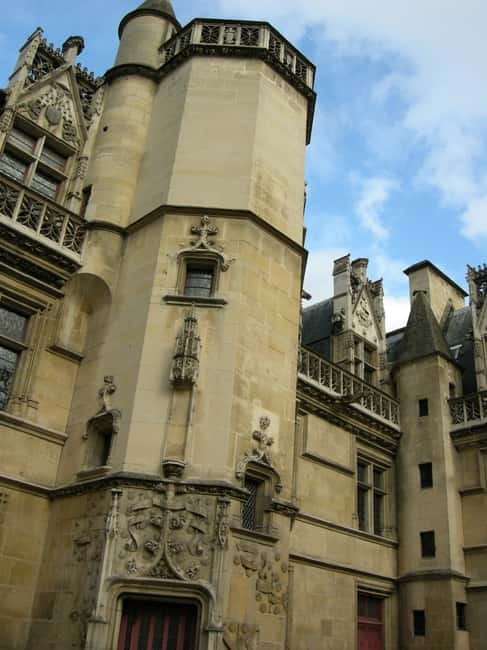
If you like architecture that tells a story, Hotel de Cluny is where your guide starts making the Middle Ages feel real. This was once the mansion of the Cluny abbots. In practical terms, that means you are looking at the physical footprint of religious authority, money, and taste from centuries ago, not just a vague idea of medieval Paris.
From here, your guide typically turns your attention to the smaller cues along the way. That includes façades with Medieval symbols that can still be seen on the street. This is one of the best ways to understand medieval Paris because it trains your eye. You begin noticing patterns, coats of arms, and the visual language that gave identity to buildings long before modern signage.
A drawback? The area can be busy when you step out onto nearby streets, so your photos might not be perfectly staged. The trade-off is worth it. You get to watch the medieval world sit inside an active Paris neighborhood.
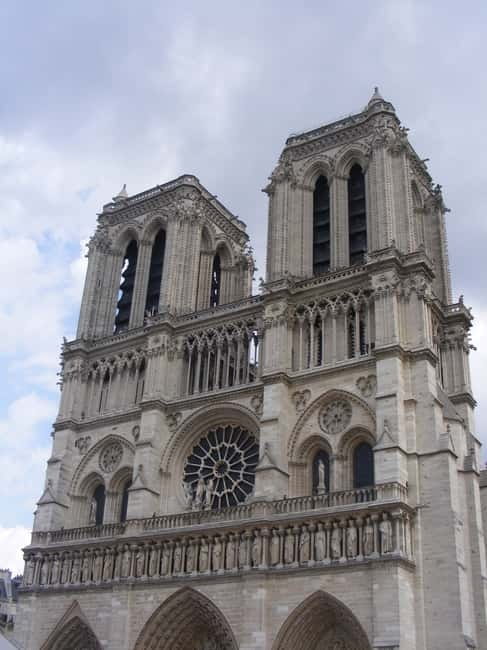
Notre-Dame de Paris: why this cathedral matters beyond photos
When you reach Notre-Dame de Paris, your guide frames it as the focal point of Medieval Paris. That is a big claim, but it is a helpful one because it changes how you look. You stop thinking only about the building as an object and start thinking about it as a gravity well for medieval life.
You will hear about culture, art, and architecture of the Middle Ages in a way that helps you connect details to context. For example, instead of listing features like a brochure, your guide connects the cathedral to how people organized belief, power, and public space. Even if you have seen Notre-Dame from a distance before, this approach tends to make it click.
Keep your expectations realistic. In a short 2-hour walk, you are not doing a full, in-depth cathedral visit with hours of sitting and reading. But you are doing something more useful for many people: building a mental map of where medieval Paris pulsed, then using Notre-Dame as your anchor.
The Latin Quarter: oldest streets, living memory in plain view
After the cathedral area, you head toward the Latin Quarter, one of the oldest parts of the city. This is where the tour shifts from monuments to daily fabric, the streets and corners where medieval life lingers in the urban layout.
Your guide helps you spot what survives, and why. You are not hunting for one single relic. Instead, you are walking through layers. That is what makes the Latin Quarter so effective for a 2-hour format. The neighborhood itself does part of the work: older streets, older rhythms, and a setting that feels like Paris still has a past you can touch.
This section also tends to be where the guide’s personality really shows. In past outings led by guides like Mila, Milla, Isabella, and Caroline, the common thread was engagement, with explanations that kept the walk moving and made the details feel connected instead of random.
Practical tip: wear shoes you trust. The best moments here come when you slow down to look, and that means you need comfortable footing.
A handful more Paris options to weigh up
- Louvre Museum Paris Essential Guided Tour Semi-Private 6ppl Max★ 5.0 · 3,807 reviews
- SUV Private Transfer: Paris to Charles de Gaulle Airport (CDG)★ 4.0 · 3,091 reviews
- Paris: Private Photoshoot at the Eiffel Tower★ 4.7 · 2,636 reviews
- Top Private Cruises in Paris with French Champagne and surprises★ 5.0 · 1,553 reviews
Sorbonne: how Europe’s old university still shapes the area
Next stop is the Sorbonne, highlighted as one of Europe’s oldest universities. This matters because it adds a different kind of medieval influence to the tour. Medieval Paris was not only cathedrals and kings. It was also study, debate, and institutions that kept knowledge alive.
Your guide uses the Sorbonne to connect medieval life to the present. You get to see how an old academic tradition can still shape a neighborhood’s feel. Even if you do not go inside any buildings on this particular walk, the point is the same: education has been a force in Paris for a very long time.
This is also a great area for thinking about time. The Middle Ages are usually treated as a distant chapter in textbooks. Here, you get a reminder that medieval institutions have long afterlives.
If you are short on patience for academic talking, give it a chance anyway. The stories are meant to be understandable and tied to places you can see.
Saint-Jacques Tower: one survivor after the Church of Saint-Jacques-de-la-Boucherie
The tour also includes the flamboyant Gothic Saint-Jacques Tower, described as the last remnant of the 16th-century Church of Saint-Jacques-de-la-Boucherie. That detail is gold because it makes the tower feel like a survivor, not just a decorative stop.
This is the kind of place your guide can turn into a teachable moment. In a short walk, you learn to notice why some medieval structures disappear while others remain. You also see how later centuries changed Paris, and yet medieval style still leaves fingerprints.
One possible drawback: if you are expecting a full exterior-view only photo session, plan for more explanation than you might get on a pure sightseeing walk. The value here is in the context, not just the image.
Les Halles and Fontaine des Innocents: the market and the oldest intact fountain
Now you get to the places where medieval Paris looked a lot like Paris today: trade, crowds, and practical life.
You learn about the mercantile history of Les Halles, which is presented as part of how the city functioned. This helps balance the cathedral-and-university emphasis earlier. The Middle Ages were not only about grand monuments. They were also about markets, supply chains, and people moving goods through public spaces.
Then you visit the Fontaine des Innocents, described as the oldest intact fountain in Paris. Even the name points toward a human story behind a public feature. Your guide uses this stop to ground the tour in everyday Paris rather than only high symbolism.
This is also one of the best places to pause and let the ideas land. By now, you have learned how medieval institutions, architecture, and public space connect. The fountain and market area tie it together with a very simple message: people lived their lives in these settings, day after day.
The Pompidou connection: medieval roots under ultra-modern Paris
Here is the fun part of this tour: the connection between the Middle Ages and the modern Centre Pompidou. It is easy to assume Pompidou exists in a different universe, but your guide explains how medieval thinking and structures relate to modern cultural identity.
This segment works especially well in a 2-hour tour because it gives you a payoff. You finish the walk with a new way to see modern landmarks, not just a list of places you walked past.
I like when a walking tour does this, because it turns the city into a system. You stop treating each building as an isolated postcard and start seeing themes across centuries, like how public spaces and cultural institutions shape what a city becomes.
Price and value: is $176 per person worth it?
At $176 per person for a 2-hour private walking tour, the price is not the budget end of Paris sightseeing. So you should ask a simple question: what are you buying?
You are buying:
- A live guide (English and French)
- A tight, organized route across major medieval sites
- The benefit of a private group pace, so you can ask questions and slow down for details
- Interpretation that connects architecture, institutions, markets, and even modern Pompidou to medieval themes
If you are the type of traveler who wants context, not just steps, this can feel fair. You are essentially paying for expert storytelling in a short time window, which matters in Paris when every hour costs money.
Where it might feel expensive is if you prefer reading guidebooks on your own and only want quick photo stops. Also, because food and drinks are not included, you may want to budget a snack so the tour does not turn into a hangry sprint later.
Who gets the best value:
- Couples or small groups who want a private guide
- First-time visitors who need a medieval map fast
- Anyone who loves architecture and wants symbolism explained in plain language
Should you book this Medieval Paris 2-hour private tour?
I think you should book it if you want medieval Paris in a concentrated, story-driven format. Hotel de Cluny, Notre-Dame, the Latin Quarter, Sorbonne, and the stops tied to everyday life like Les Halles and Fontaine des Innocents give you a balanced picture of the Middle Ages, not just the loudest monuments.
You might skip it if your priority is a long, slow tour with lots of time to wander independently, or if you dislike walking in the rain and cannot dress for it. Also, if you already know medieval Paris deeply, you may want something more specialized.
One last tip: choose this tour early in your trip. The way it builds your understanding makes it easier to enjoy the rest of the city afterward, because you will start noticing medieval symbols and institutional echoes everywhere.
FAQ
How long is the Medieval Paris private walking tour?
It lasts 2 hours.
What is the meeting point for the tour?
Meet your guide in front of McDonald’s at Cluny la Sorbonne Metro Station (Line 10). Look for the guide with the red canvas tote bag.
Is this tour private?
Yes, it is a private group tour.
What languages are available?
The live guide is available in English and French.
What is included in the price?
The guide is included.
Are food and drinks included?
No, food and drinks are not included.
Does the tour run in bad weather?
Yes, it operates rain or shine.
Which medieval sites are part of the walk?
The tour includes stops such as Hotel de Cluny, Notre-Dame Cathedral, Latin Quarter, the Sorbonne, Saint-Jacques Tower, Les Halles, and the Fontaine des Innocents.
Can I get a refund if my plans change?
You can cancel up to 24 hours in advance for a full refund.
Can I reserve without paying right away?
Yes, you can reserve now and pay later.
Newest write-ups from Paris


Walking Tours, compared.
Paris Top Sights Half Day Walking Tour with a Fun Guide
Read our review →
Montmartre Hidden Gems and Scenic Highlights Walking Tour
Read our review →
Montmartre Hill French Gourmet Food and Wine Tasting Walking Tour
Read our review →
Montmartre Highlights Walking Tour with a Local Guide
Read our review →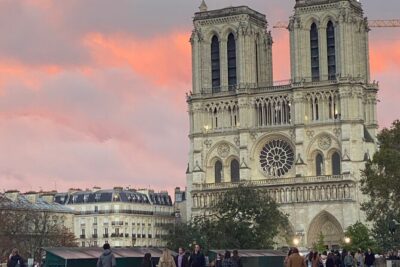
Paris Île de la Cité and Notre-Dame Walking Tour With Crypt
Read our review →
Montmartre Cheese, Wine & Pastry Guided Walking Tour
Read our review →
Paris in a Day: Louvre or Orsay, Eiffel Tower, City Walk & Cruise
Read our review →
Paris City Center Free Walking Tour (Tip-Based)
Read our review →Browse the lists this tour appears in