Reviewed · PRIVATE
Medieval Paris Private Tour
Medieval Paris makes more sense on foot. This private, 2-hour walking tour stitches famous landmarks like Notre-Dame and the Fountain of the Innocents to the medieval city map on Île de la Cité and through the Latin Quarter. I especially like the art historian guide style and the way you learn to spot medieval architectural details in places you thought were just postcard sights.
One thing to plan around, though: the pacing is mostly looking and listening, not ticketed entries. You may see Notre-Dame and the Musée de Cluny building from the outside rather than stepping inside.
If you love history that explains why things look the way they do, you’ll find this route surprisingly useful. It also connects old Paris to newer icons like the Centre Pompidou, so the Middle Ages feel less like a museum topic and more like the foundation of today’s city.
In This Review
- Key things I’d make sure you notice
- Price and what you really get for $360.48
- The route you’ll walk: central Paris, from Île de la Cité to the modern core
- Musée de Cluny exterior focus, and why you do not miss it
- Notre-Dame de Paris, explained from afar during a disruption
- Sorbonne and the medieval university story behind the present-day campus
- Tour Saint-Jacques: pilgrims, astrologers, and flamboyant Gothic detail
- Fountain of the Innocents: where beauty and cruelty meet
- Centre Pompidou: modern design, medieval influences
- Hôtel de Ville: Renaissance façade, but the core is medieval
- The guide factor: art historians who make the city readable
- Timing, what to bring, and how to get more out of 2 hours
- Is it worth booking if you cannot enter museums or Notre-Dame?
- Who this medieval Paris private tour is best for
- Should you book this Medieval Paris Private Tour?
- FAQ
- How long is the Medieval Paris Private Tour?
- How much does it cost?
- What group size is it designed for?
- Is the tour private?
- What language is offered?
- Do I get a ticket on my phone?
- Where do I meet the guide?
- Where does the tour end?
- Is food included in the price?
- Is hotel pickup and drop-off included?
- What if I need to cancel?
Key things I’d make sure you notice
- Art historian leadership that focuses on architecture and meaning, not trivia
- Outside-only viewpoints at major stops, including Notre-Dame and the Musée de Cluny area
- A walk that links eras, from medieval Paris to the Centre Pompidou’s design ideas
- Stops chosen for symbolism, from Tour Saint-Jacques to the Fountain of the Innocents
- Small private-group feel, built for questions and a slower, personal pace
A handful more Paris options to weigh up
- Louvre Museum Paris Essential Guided Tour Semi-Private 6ppl Max
★ 5.0 · 3,807 reviews - SUV Private Transfer: Paris to Charles de Gaulle Airport (CDG)
★ 4.0 · 3,091 reviews - Paris: Private Photoshoot at the Eiffel Tower
★ 4.7 · 2,636 reviews - Top Private Cruises in Paris with French Champagne and surprises
★ 5.0 · 1,553 reviews
Price and what you really get for $360.48
This is priced at $360.48 per group for up to 6 people, for an approx. 2-hour private walk. That can sound steep until you translate it into what you actually receive: a dedicated art historian guide, a route built around specific medieval sites, and the ability to ask questions without competing with other groups.
Because it is private, your experience becomes less about rushing from stop to stop and more about understanding what you’re seeing. If you have a group of friends or family who want the same story, this can be good value compared with paying per person for a more crowded tour.
One quick note: the info you have states a maximum size of 10 people per booking, while the pricing is described per group up to 6. Practically, that means you should confirm headcount at booking so expectations match what you actually book.
The route you’ll walk: central Paris, from Île de la Cité to the modern core
The tour starts at 98 Bd Saint-Germain, 75005, and ends at 26 Rue Saint-Merri, 75004. The meeting point is given as the side of the Pompidou museum near the Stravinsky fountain. From there, the walk threads through the areas that shaped medieval Paris: Île de la Cité, the Latin Quarter, and the core that eventually became connected to places like Les Halles.
Expect a moderate pace, with a moderate physical fitness level recommended. It’s a walking tour, so comfortable shoes matter. Also, plan to keep your phone charged, because the guide will often point out small architectural cues you’ll want to photograph while you still remember what to look for.
Musée de Cluny exterior focus, and why you do not miss it
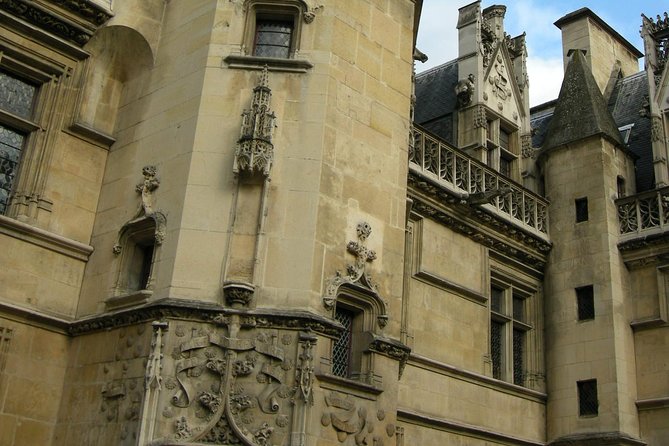
Your first stop is the Musée de Cluny area. The key detail here is what you do not do: you get commentary on the medieval character of the building rather than a museum visit. That matters, because many people think they’re signing up for an inside museum tour, but this experience uses the building as a “how to read medieval Paris” lesson.
What you’ll get instead is a way to see the medieval vibe in the structure itself: how the place reflects the period and how the surrounding area fits into the city’s medieval story. For this tour, the exterior framing works well, because it sets your eyes up for later stops where you’ll be recognizing details rather than consuming exhibits.
Potential drawback: if you want to spend time inside the museum galleries, this isn’t that tour. You’ll have to add museum time separately.
Notre-Dame de Paris, explained from afar during a disruption
Notre-Dame is the headline, but the experience is built around a practical reality: the cathedral suffered a fire and won’t be accessible for a while, so you won’t enter. You’ll still get guided commentary from afar, which keeps the lesson focused on context: why the Gothic landmark matters and what it sits on, namely the site of the city’s original founding on the Île de la Cité.
This approach can be surprisingly effective. From the outside, you can still learn how the cathedral fits into the medieval city’s “why,” not just its “wow.” And if you’ve ever walked past a famous building without truly understanding its relationship to the surrounding streets, this is where the guide helps.
What to do with your time: stand where the guide directs you, then follow the explanations instead of just looking at the biggest façade. The value is in learning what to notice next.
If this one is booked out, Paris has these too:
- Paris: 1-Hour Seine Cruise departing from the Eiffel Tower★ 4.4 · 77,472 reviews
- Disneyland® Paris 1-Day Ticket★ 4.6 · 49,412 reviews
- Paris: Versailles Palace and Gardens Full Access Ticket★ 4.6 · 41,579 reviews
- Paris: Arc de Triomphe Rooftop Tickets★ 4.6 · 34,264 reviews
Sorbonne and the medieval university story behind the present-day campus
Next comes the Sorbonne, the medieval University of Paris. Even with a short time window, the tour’s intent is clear: explain how a medieval university worked as an institution, and why Paris mattered in that period.
Why this stop is worth your attention is simple. Today, you might think of Sorbonne as a name on a building. In this walk, it becomes a clue to the medieval city’s intellectual engine: how learning, religion, and civic identity overlapped.
Pro tip for your questions: ask the guide how medieval universities differed from modern ones, or how the student and teaching community affected the neighborhoods around them. That kind of question fits perfectly with a private format.
Tour Saint-Jacques: pilgrims, astrologers, and flamboyant Gothic detail
The Tour Saint-Jacques is one of those stops that sounds niche until the guide makes it click. It’s described as important for pilgrims, astrologists, and alchemists, and it’s also highlighted as a pinnacle of flamboyant Gothic style.
That combination is the magic: you’re not just looking at a tower. You’re learning how people in the Middle Ages used the built environment, including beliefs, trades, and rituals that shaped what visitors came to see.
You’ll likely spend enough time here to really inspect the tower’s form. When the guide points out architectural elements, you’ll start to see the Middle Ages as a living language, not a set of old dates.
Fountain of the Innocents: where beauty and cruelty meet
Then you reach the Fontaine des Innocents, described as the city’s oldest monumental fountain. This is one of the stops where the tour’s tone becomes memorable. You learn to understand medieval daily life as something both beautiful and incredibly cruel.
That is not random mood. Medieval Paris was a place where art and hardship coexisted in the same view. The guide’s job here is to connect the fountain’s public presence to what people actually faced around it, so it stops being a pretty backdrop and becomes a window into social reality.
If you love storytelling through architecture, you’ll probably rank this stop among your favorites.
Centre Pompidou: modern design, medieval influences
The tour doesn’t end with medieval Paris frozen in time. It takes a sharp turn to the Centre Pompidou, the contemporary building made to look like modernity, while still being influenced by the medieval period.
This is one of the smartest choices in the route. It helps you avoid the common mistake of treating medieval monuments as isolated artifacts. Instead, you see how ideas travel across centuries, including how designers borrow structures and visual logic.
Spend your time here by listening for the comparison points the guide makes. If you know what to look for, Pompidou stops being just a landmark you pose in front of, and becomes an example of how historical forms keep reappearing.
Hôtel de Ville: Renaissance façade, but the core is medieval
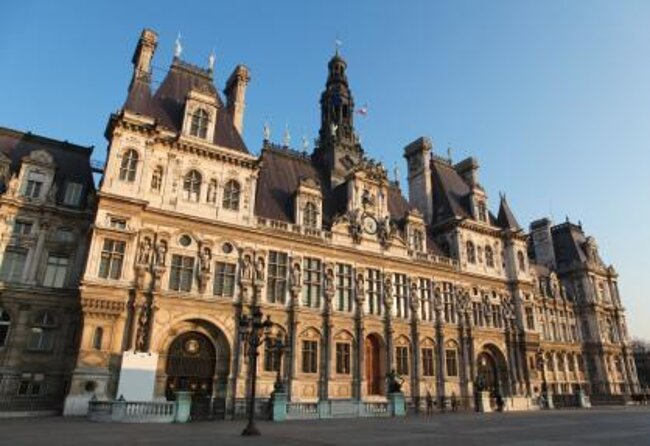
The final stretch includes Hotel de Ville. The key idea is that the building’s façade is Renaissance, but the site itself is described as 100% medieval in its importance for medieval Paris.
This is a great example of how the guide will correct what your eyes might assume. If you only glance at the façade style, you might miss the longer timeline underneath. The tour teaches you to separate surface appearance from underlying layers of civic power.
When the guide finishes, you’ll have that new habit of thinking in layers. That’s also a skill you can use after the tour while wandering on your own.
The guide factor: art historians who make the city readable
The experience is led by an art historian guide, and the past guides named in the feedback include Amy and Caroline. The consistent praise is not just that they know facts. It’s that they explain architecture in plain terms, and they help correct misconceptions about what people think medieval Paris was like.
You can feel the difference in a private setting. You’re not limited to a scripted path. If a detail catches your curiosity, you can ask follow-ups and get answers tailored to what you’re seeing.
That is especially valuable on this tour because many stops are short and mainly observational. When the guide explains what matters, the short stops turn into real learning instead of quick photo stops.
Timing, what to bring, and how to get more out of 2 hours
The tour is about 2 hours, so it stays efficient. You’ll likely cover multiple neighborhoods without long breaks, which is why comfortable shoes and a light plan for snacks help.
Food and drinks are not included, and there’s no hotel pickup or drop-off. That means you should:
- Arrive a few minutes early so you start calmly.
- Bring water if you’ll be walking in warm or sunny weather.
- Have a plan for a post-walk meal, since the tour itself does not build in a food stop.
One practical thing I love about this kind of private format is that a good guide can point you to a nearby square or a good lunch spot that matches your vibe. The tour description and the feedback suggest guides often do just that, including recommending a pleasant place near Île de la Cité for lunch and an easy way to keep enjoying the area after the walking part.
Is it worth booking if you cannot enter museums or Notre-Dame?
This is the key question, and the honest answer is: it depends on what you want from Paris.
If your goal is to do a museum checklist, this may feel like a partial experience because some major entries are not part of the plan. You get commentary at the Musée de Cluny building without visiting the museum interior, and you view Notre-Dame from afar without entry due to accessibility issues.
But if your goal is to understand the medieval city behind the landmarks, the structure works well. The tour is designed to teach you how to read what’s in front of you, even when you cannot cross the threshold.
It also covers both big iconic sites and supporting monuments that often get ignored, like Tour Saint-Jacques and the Fountain of the Innocents. That mix gives you a stronger sense of the medieval streetscape than a more general overview tour.
Who this medieval Paris private tour is best for
I’d point you to this tour if you:
- Love architecture explanations and want a clear framework for what you see
- Enjoy question-and-answer time in a private setting
- Want medieval Paris connected to modern Paris, not treated as a separate theme
- Are traveling with friends or family who share your interest level
It might be less ideal if you strongly prefer lots of indoor museum time, or if you want long stops at a single site. The format is efficient by design, so it’s more about interpretation than extended entry tickets.
Should you book this Medieval Paris Private Tour?
Book it if you want a guided, art historian-style walkthrough of medieval Paris that helps you recognize the stories built into the city’s monuments and layout. The best reason to book is the emphasis on meaning: you’re not just seeing Notre-Dame, Sorbonne, Tour Saint-Jacques, the Fountain of the Innocents, Centre Pompidou, and Hôtel de Ville, you’re learning why medieval life left visible traces.
Skip it or pair it with other stops if your top priority is museum interiors and long indoor visits. Since key stops are described as outside viewing with commentary, you’ll get the most value if you’re happy walking, listening, and looking closely.
If you’re deciding last minute, aim for dates when you have enough energy after the tour to wander. This one is the kind that makes you see Paris differently for the rest of your trip.
FAQ
How long is the Medieval Paris Private Tour?
The tour lasts about 2 hours.
How much does it cost?
It costs $360.48 per group.
What group size is it designed for?
The price is listed per group up to 6, and the maximum size per booking is stated as 10.
Is the tour private?
Yes. It’s a private tour, with only your group participating.
What language is offered?
The tour is offered in English.
Do I get a ticket on my phone?
Yes, the tour uses a mobile ticket.
Where do I meet the guide?
The meeting point is at the side of the Pompidou museum, by the Stravinsky fountain, with the start address listed as 98 Bd Saint-Germain, 75005 Paris.
Where does the tour end?
The tour ends at 26 Rue Saint-Merri, 75004 Paris.
Is food included in the price?
No. Food and drinks are not included.
Is hotel pickup and drop-off included?
No. Hotel pickup and drop-off are not included.
What if I need to cancel?
You can cancel for free up to 24 hours in advance for a full refund.
Newest write-ups from Paris





Private, compared.
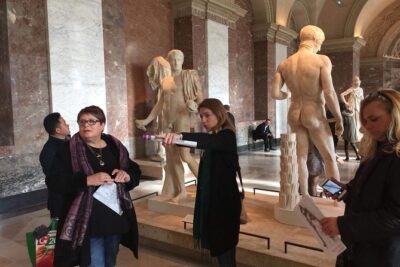
Louvre Museum Paris Essential Guided Tour Semi-Private 6ppl Max
Read our review →
SUV Private Transfer: Paris to Charles de Gaulle Airport (CDG)
Read our review →

Top Private Cruises in Paris with French Champagne and surprises
Read our review →
Golf Cart in Paris – Private Guided City Tour – Pickup Included
Read our review →
Private Paris Airport Arrival Transfer – CDG & ORLY Airports
Read our review →
Paris Private Arrival Transfer from Charles de Gaulle (CDG) or Orly (ORY)
Read our review →