
Reviewed · LES INVALIDES AND NAPOLEON TOURS
Mille Feuille Napoléon Pastry Class in Paris
Butter, puff pastry, and patience. That is the heart of a Paris mille-feuille class that turns an iconic dessert into a hands-on skill you can actually repeat. I especially like the small group size (max 6), because you get real attention while you work the dough and fill the layers. I also love how the teaching focuses on texture, not just shortcuts, so your finished Napoleon tastes like what it should. One possible drawback to note, it is a dessert class, so if you want savory food or a big sit-down meal, this is not that kind of experience.
This is also a very likable setup if you travel at a slower pace. You start at 7 Rue de Béarn in the 3rd, you spend about 2 hours 30 minutes in the baking school, and you end back near where you began. It runs in English, and people in the classes have specifically praised instructors like Julie and Chef Minel for being warm, clear, and easy to follow.
In This Review
- Key things that make this class worth your time
- Why Mille-Feuille Feels Like Real Paris Baking
- The 2.5 Hour Class Flow at Maison Fleuret (From Start to Finish)
- Enter the Recipe Mindset: What Mille-Feuille Is Really About
- Making the Flaky Puff Pastry Base (Caramelized Layers)
- Crème Anglaise and Piping: Where Texture Comes From
- Assembling the 1000 Leaves Napoleon Like a Chef
- Coffee and Tasting: Turning Skills into Satisfaction
- Price and Value: Is 132.45 a Good Deal?
- Who Should Book This Paris Mille-Feuille Class
- Should You Book This Mille-Feuille Class in Paris?
- FAQ
- How long is the Mille Feuille Napoléon pastry class?
- Is the class offered in English?
- What is included in the class?
- Where do I meet for the class?
- How many people are in the class?
- What is the cancellation policy?
Key things that make this class worth your time
- Max 6 people, so questions do not get lost in the crowd
- English instruction, which helps you focus on technique instead of translation
- Crème anglaise piping and layered assembly, the real skills behind a true Napoleon
- Coffee and/or tea included, a simple comfort while you learn
- Hands-on result, you create the dessert you are tasting
- Maison Fleuret setting, a dedicated baking school atmosphere
More time at Les Invalides:
- Les Invalides: Napoleon’s Tomb & Army Museum Entry
★ 4.6 · 9,185 reviews - Paris: Aura Invalides Immersive Experience Entry Ticket
★ 4.7 · 3,360 reviews - Paris Entrance Ticket to the Aura Invalides Immersive Show
★ 4.0 · 174 reviews - Skip-the-line Invalides Dome Louis XIV & Napoleon Tour – Exclusive Guided Tour
★ 5.0 · 70 reviews
Why Mille-Feuille Feels Like Real Paris Baking
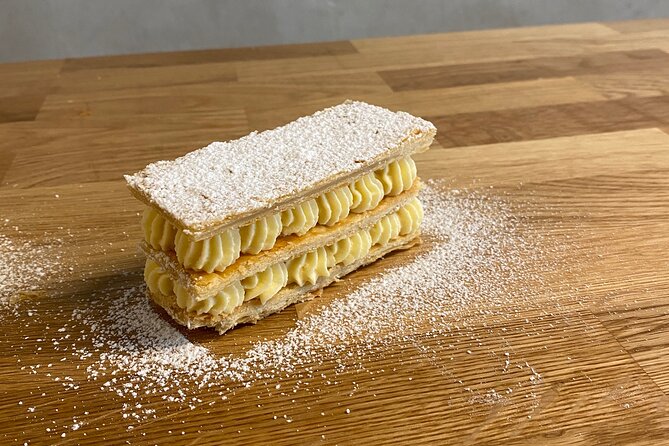
Mille-feuille, also called Napoleon in the United States, is one of those desserts that sounds fancy but is built from straightforward, learnable technique. The payoff is huge: crisp, flaky pastry layers stacked with light vanilla cream. The name literally points to the layered look, and once you see how the layers go together, it makes total sense.
One reason I think this class works so well is that it is not just about eating something sweet. You get taught why each step matters. A caramelized puff pastry surface is not there for looks only. It affects how the layers crack, how the cream softens them, and how the whole dessert feels in your mouth. And the vanilla custard, often done as a crème anglaise style filling, is all about balance, smoothness, and control during piping.
Also, the class helps you understand the famous 19th-century French origin story in practical terms. Instead of treating the dessert like a museum piece, you learn how the process creates the classic combination of crisp and creamy. That shift, from eating to understanding, is the value.
Finally, the tone sounds friendly, not stuffy. People have described instructors like Julie as down to earth and easy to work with, which matters when you are trying something that looks harder than it actually is.
The 2.5 Hour Class Flow at Maison Fleuret (From Start to Finish)
You meet at 7 Rue de Béarn, 75003 Paris, at Maison Fleuret, the baking school. The experience runs about 2 hours 30 minutes and ends back at the meeting point, so you are not hunting for a second location after the class.
Inside, the pace is set for learning. You start with an introduction to the dessert, then move into the working stages: pastry, custard, piping, assembly, and tasting. The class is designed so you are not just watching a chef do everything. You are participating enough to leave with technique you can use later.
Because the group is capped at 6, it is usually easier to get immediate help when something does not go as planned. One review even mentioned a class with only one student at the time, which led to extra attention. That same principle applies even when there are more people, your instructor can spot issues quickly, like pastry that is browning too fast or filling that is too warm.
At the end, you enjoy the dessert as part of the session. Coffee and/or tea is included, which is a nice touch. You are working with butter and vanilla for hours, so having a warm drink helps reset your palate.
The main “consideration” is timing. This is a focused chunk of your day, not a quick tasting stop. If you plan other big activities right after, build in a little buffer, so you are not rushing while you are still thinking about what you learned.
Enter the Recipe Mindset: What Mille-Feuille Is Really About
If you have only tried Napoleon in a shop, you might think it is mainly about sugar and cream. After you learn the process, you see it differently. Mille-feuille is a structure dessert.
The pastry layers create crispness and shape. The custard creates softness and flavor depth. Then assembly decides the final result. If the pastry is not prepared with the right caramelized surface, you lose that signature snap. If the cream is not piped with consistency, the dessert will taste lumpy or feel uneven.
A good class also makes you think about the balance between crisp and creamy. In real life, cream will soften pastry over time. So the best Napoleon moments depend on timing and texture control. In class, you learn how the steps connect, so you can better judge when the dessert is ready to eat.
The flavor focus is vanilla and butter. That comes through in the way the custard is taught and in the way puff pastry is handled. In the reviews, people repeatedly point to the butter-forward pleasure of the final pastries. If you love rich French pastry flavors, you are in the right place.
Making the Flaky Puff Pastry Base (Caramelized Layers)
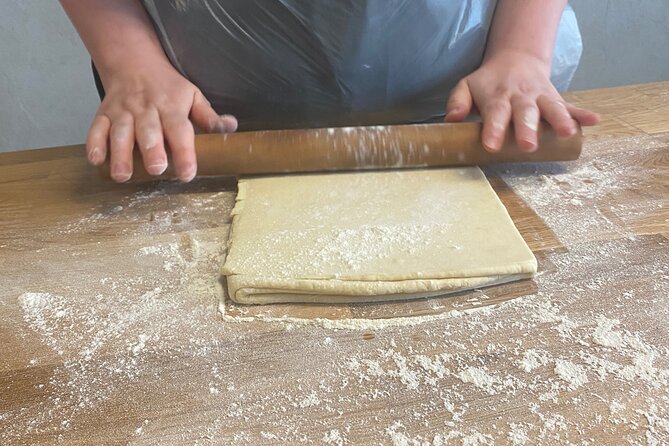
The pastry is the foundation, and it is where most people get nervous, because puff pastry sounds like a whole job by itself. In a class setting, the goal is practical. You learn how to work with puff pastry so you get the right crispness instead of a soft, disappointing crust.
From the class description, you are working on caramelized puff pastry. That caramelization is not random browning. It is part of the dessert design. A properly caramelized surface adds flavor, color, and a slight crack when you bite. It also helps the layers hold their identity once cream is added.
You also get the chance to understand the idea of delicate layers. Puff pastry is made of repeated thin layers, and mille-feuille turns that concept into something visible on the plate. When you prepare and handle it, you start to see why chefs care about thinness and evenness.
In the best classes, you also get tips for avoiding common setbacks, like pastry that puffs unevenly or edges that brown too quickly. Reviews describe instructors as confident and warm, with clear step-by-step explanations. Chef Minel, for example, was praised for being a great teacher who offered helpful hints, and Julie was described as instructive and relaxed.
One practical consideration: you are working with butter and dough. If you keep your hands cool and work efficiently, you will usually have an easier time. If you are the type who likes to pause a lot for photos, keep the process moving so the pastry stays in a workable temperature range.
Other kitchens for macarons and pastry:
- Paris: Montmartre Cheese, Wine & Pastry Guided Walking Tour★ 4.8 · 2,255 reviews
- Paris: Macaron Class at Galeries Lafayette★ 4.2 · 1,196 reviews
- Award-Winning Paris French Bakery Experience — Le Marais, 4th Arr★ 4.5 · 1,186 reviews
- Private Montmartre Food Tour with Wine, Cheese & Pastries★ 5.0 · 1,027 reviews
Crème Anglaise and Piping: Where Texture Comes From
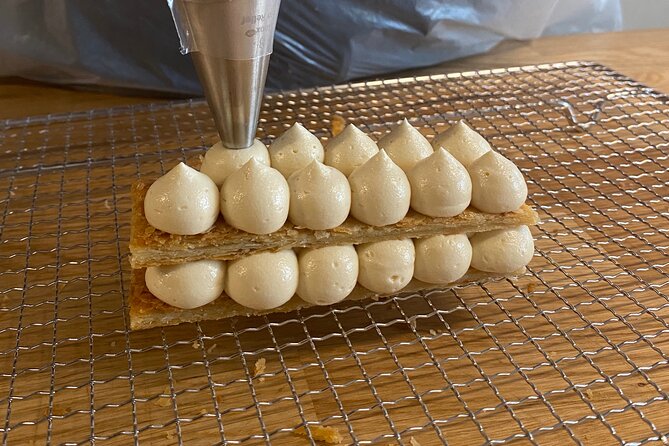
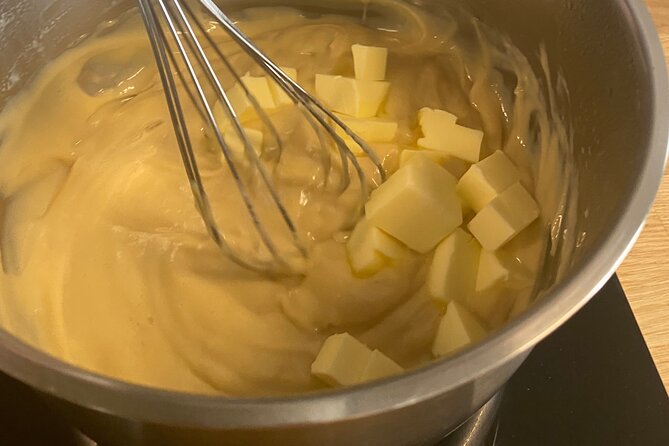
Crème anglaise style vanilla custard is the second half of the story. In mille-feuille, the custard is light and smooth, and it is piped into layers so you get an even distribution. The moment you learn to pipe well, you learn why “looks” matter.
From the class description, you learn the secrets of the preparation, including delicate layers of vanilla custard and the technique used to get that harmonious blend. In the reviews, a solo student specifically mentioned mastering crème anglaise piping, which is exactly the skill you want if you care about getting a classic result at home.
Piping is where control shows. Too much pressure and you push out uneven ridges. Too little and you get gaps that ruin the structure. The class format helps because you can try, get feedback, and adjust without feeling like you have to figure it out alone.
Also, crème anglaise is not just about taste. It affects the dessert’s “feel.” A custard that is too heavy can make the dessert feel dense. A custard that is too loose can blur the layers. Learning how the consistency should look helps you understand what your senses should expect.
If you are not a baker, do not worry. One review explicitly said the chef shared plenty of tips even though it was the person’s first time. That is what makes this class valuable: you can go from curious beginner to confident participant.
Assembling the 1000 Leaves Napoleon Like a Chef
Assembly sounds simple until you try it. Mille-feuille is a stack. It is also a timing decision.
You build the dessert so the pastry stays crisp enough to deliver that classic bite. The cream filling needs to be evenly placed so each forkful has pastry and vanilla in the right proportions. If your layers are uneven, the taste becomes uneven too.
The class focuses on appreciating layers of flavors and subtle textures. That might sound poetic, but it is practical instruction. When you assemble carefully, you learn how the caramelized puff pastry and the vanilla cream behave together, and you can taste the differences across layers.
It is also where you learn that the best result depends on precision, not just effort. You might work hard and still have a messy stack. The fix is usually technique: spacing, pressure, and patience with how you handle the pastry sheets.
In the reviews, people consistently mention that the chefs were warm and confident, and that explanations were thorough. That matters here because assembly often feels like the hardest part on camera, but with real guidance, it becomes methodical.
And because you work in a small group, you can compare what you are doing to what the instructor is watching for. You pick up tiny corrections quickly, which is hard to do in a class with bigger numbers.
Coffee and Tasting: Turning Skills into Satisfaction
You do not just make the dessert and leave. Coffee and/or tea is included, and you finish with the dessert you made, listed as 1000 Leaves / Napoleon.
That tasting portion is important for two reasons. First, it closes the loop. You learn technique, then you taste the outcome right away, so it becomes a memory you can connect to the steps. Second, it helps you calibrate your expectations for what crisp should feel like and what vanilla cream should taste like.
If you are a person who loves food, you will probably enjoy the way you start noticing details. Even if you have eaten mille-feuille before, you might not have noticed how the caramelization changes flavor, or how the custard changes texture from bite to bite. In class, you learn to pay attention.
The social side also helps. One review described a family outing with Julie as phenomenal and very down to earth, and another mentioned a chef recommending a favorite restaurant afterward. That kind of informal Paris advice is a bonus, and it usually comes naturally when the instructor is personable and relaxed.
Keep in mind that this is a dessert moment, not a full meal. If you are hungry before you arrive, eat lightly beforehand. You are about to work hard, then you will enjoy something sweet that is rich and buttery.
Price and Value: Is 132.45 a Good Deal?
At $132.45 per person, this is not a budget activity. But the value makes sense if you look at what you get.
You pay for a small class capped at 6 people, in English, inside a dedicated baking school. You are not watching from the sidelines. You are getting hands-on instruction while making an iconic French dessert. The inclusion of coffee and/or tea also adds a small but real comfort.
Two and a half hours is a sweet spot. It is long enough to learn actual technique, but short enough that you are not giving up your whole day. Plus, the class delivers a tangible outcome: you are working toward the dessert itself, mille-feuille, also called Napoleon.
If you compare this to pastry classes that are crowded or that mostly involve tasting, this one seems aimed at skill-building. The reviews strongly emphasize instruction quality, warmth, and clarity. People also highlight that even beginners got tips they could use.
The main reason it might not feel like good value for you is if you mainly want a quick snack while touring. This is time on purpose. If you want an immersive food adventure with structure and feedback, it is a solid price.
Who Should Book This Paris Mille-Feuille Class
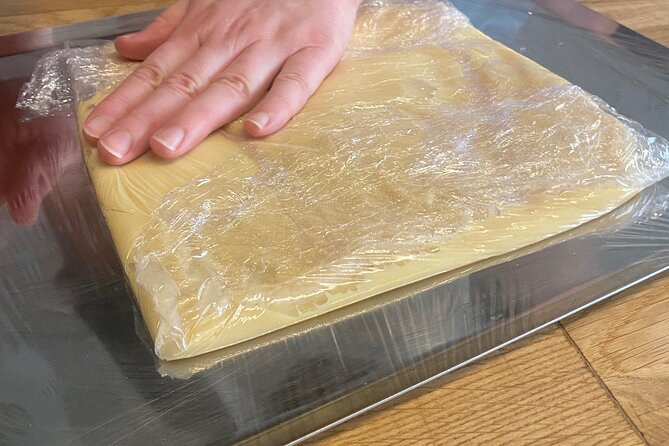
This class is ideal if you:
- Want a focused hands-on food activity in central Paris
- Like butter-forward French pastry flavors
- Enjoy learning technique, not just eating the finished product
- Want a smaller group experience with English support
It can also work well for couples. One review described a husband and wife having a blast making napoleons. And it appears family-friendly in spirit, since one review mentioned girls having fun during the class with Julie. If you are traveling with kids, you will want to consider whether they enjoy hands-on cooking rather than waiting.
Solo travelers can also do well here. One review mentioned arriving to find only one other student, and the person received undivided attention from the teacher. Even if you are not that lucky, a max group size helps solo visitors avoid feeling like an observer.
If you are short on time or you prefer sightseeing over hands-on work, you might find this less appealing. This is a baking class first, and a food moment second.
Should You Book This Mille-Feuille Class in Paris?
If you care about real technique and you want a pastry class that stays intimate, I think you should seriously consider booking. The class hits the right notes: a classic French dessert with visible layers, dedicated instruction in English, a small max group size, and coffee or tea to keep you comfortable through the session.
Book it sooner rather than later if you want prime scheduling. It is often booked about 27 days in advance on average, and classes with limited spots tend to fill.
Skip it only if you are looking for a big sightseeing day, a savory-heavy menu, or a quick tasting stop. This is about learning how mille-feuille becomes mille-feuille, through puff pastry, vanilla custard, and careful assembly.
FAQ
How long is the Mille Feuille Napoléon pastry class?
The class lasts about 2 hours 30 minutes.
Is the class offered in English?
Yes, the experience is offered in English.
What is included in the class?
Coffee and/or tea is included, and the dessert is listed as 1000 Leaves / Napoleon.
Where do I meet for the class?
You meet at 7 Rue de Béarn, 75003 Paris, France, and the activity ends back at the meeting point.
How many people are in the class?
The class has a maximum of 6 travelers.
What is the cancellation policy?
Free cancellation is available up to 24 hours in advance for a full refund. If you cancel less than 24 hours before the start time, the amount paid is not refunded.
Ateliers for an Afternoon
- Fragonard Paris: Mini Perfume Workshop
★ 4.5 · 1,924 reviews - Paris Cooking Class and Lunch with Wine plus Market Visit Option
★ 5.0 · 1,024 reviews - Paris Croissant Small-Group Baking Class with a Chef
★ 5.0 · 910 reviews - Paris: 2-Hour Perfume Creation Workshop
★ 4.8 · 731 reviews
Newest write-ups from Paris



Les Invalides and Napoleon Tours, compared.
Les Invalides: Napoleon’s Tomb & Army Museum Entry
Read our review →
Aura Invalides Immersive Experience Entry Ticket
Read our review →
Paris Entrance Ticket to the Aura Invalides Immersive Show
Read our review →Skip-the-line Invalides Dome Louis XIV & Napoleon Tour – Exclusive Guided Tour
Read our review →
Napoleon’s Tomb & Invalides Small Group Guided Tour
Read our review →
Skip-the-line Invalides Dome Louis XIV & Napoleon Tour – Semi-Private 8ppl Max
Read our review →
Invalides Museum – WWI & WWII – Guided Tour up to 8 guests
Read our review →
Napoleon’s Tomb and the Invalides Small-Group Guided Tour
Read our review →Browse the lists this tour appears in