

Reviewed · WALKING TOURS
Neoclassical Paris Architecture 2-Hour Private Walking Tour
Paris looks smarter when you know why. This private neoclassical architecture walk connects big landmarks like Palais Brongniart, Place des Victoires, and the Tuileries to the ideas that shaped them. I love that you get an art historian guide who can explain the why behind the stone, not just point at facades.
I also like the format: it is private (up to 6 people) and you can tailor the route to your interests, so you are not stuck with a one-size-fits-all script. One consideration: it is a tight 2 hours, so if you want long sits and museum time, plan a separate stop afterward.
In This Review
- Key things that make this tour worth your time
- Neoclassical Paris is all about rules you can see
- Private 2 hours, up to 6 people, and why it matters
- The price, broken down by group size
- Start at Bourse75002, end near Arc de Triomphe du Carrousel
- Stop 1, Palais Brongniart: the former stock exchange as a style statement
- Stop 2, Place des Victoires: where classical ideas were practiced
- Stop 3, Galerie Vivienne: the neoclassical arcade story inside
- Stop 4, Jardin des Tuileries: royal garden viewpoints through a neoclassical lens
- Stop 5, Palais-Royal complex: neoclassical space reworked for commerce
- Guides who make the style click: Milica, Melissa, and Dunya
- Customizable route: how to use that power
- What you should bring and how to prepare
- Who should book this tour
- Should you book it?
- FAQ
- How long is the Neoclassical Paris walking tour?
- What does the tour cost?
- Is the tour private?
- Where does the tour start and end?
- What language is the tour offered in?
- What is included in the price?
- Is food or drinks included?
- Do I need to pay admission at the stops?
- What is the cancellation policy?
Key things that make this tour worth your time
- Art historian explanations that connect architecture to the era’s values and design rules
- A smart route that links neoclassical buildings, squares, and interiors (arcades, gardens)
- Private group size (up to 6), which keeps questions from getting lost
- Free site time at each stop, so you are not juggling paid entrances for the walkthrough parts
- Customizable pacing, so you can slow down for details or move on quickly
Other arrondissements taken at walking pace:
- Paris Top Sights Half Day Walking Tour with a Fun Guide
★ 5.0 · 2,893 reviews - Montmartre Hidden Gems and Scenic Highlights Walking Tour
★ 5.0 · 2,684 reviews - Montmartre Hill French Gourmet Food and Wine Tasting Walking Tour
★ 5.0 · 2,588 reviews - Paris: Montmartre Highlights Walking Tour with a Local Guide
★ 4.9 · 2,318 reviews
Neoclassical Paris is all about rules you can see
Neoclassical Paris can feel like a lot of repeating themes until someone points out the patterns. That is the whole point of doing it with an art historian: you start noticing the “grammar” of the style. Think symmetry, classical proportions, and building choices that reflect how people wanted society to look and operate at the time.
What I like most is how the guide turns architecture into an easier story to follow. You end up seeing the city as an argument, not just a postcard set. The neoclassical vibe is often described as formal, but on this walk you learn it is also political, cultural, and practical.
Private 2 hours, up to 6 people, and why it matters
With a private tour, you get something that group tours rarely manage: real back-and-forth. You can ask follow-up questions, and the guide can adjust examples to match what you actually care about, like the visual language of columns or why a particular square mattered.
This also helps if you are traveling with someone who learns at a different pace. One person might want to focus on the building materials and shape, while you might want to understand the broader cultural context. The private format keeps that from turning into a tug-of-war.
The price, broken down by group size
The tour is priced at $360.48 per group (up to 6) for about 2 hours. That is the key value lever: if you have a small group, your cost per person drops fast compared with per-person pricing.
- Up to 6 people is ideal for families or a small friend group.
- If you are traveling solo or as a couple, it can still be worth it if you really want the guide attention and a tighter, more personal route.
- Since this tour is commonly booked around 41 days in advance, it is smart to reserve early if your dates are fixed.
Start at Bourse75002, end near Arc de Triomphe du Carrousel
The walk begins at Bourse75002 Paris and finishes near Arc de Triomphe du Carrousel (Pl. du Carrousel, 75001 Paris). That means you are not just strolling circles. You are moving through central Paris in a way that makes sense for how neoclassical design developed and how it was used in different kinds of spaces.
It is also described as near public transportation, so if you get tired, you will likely have an easier way to hop back into the metro or bus system on your own. The tour calls for a moderate physical fitness level, so wear comfortable shoes and expect an uninterrupted walking flow.
A handful more Paris options to weigh up
- Louvre Museum Paris Essential Guided Tour Semi-Private 6ppl Max★ 5.0 · 3,807 reviews
- SUV Private Transfer: Paris to Charles de Gaulle Airport (CDG)★ 4.0 · 3,091 reviews
- Paris: Private Photoshoot at the Eiffel Tower★ 4.7 · 2,636 reviews
- Top Private Cruises in Paris with French Champagne and surprises★ 5.0 · 1,553 reviews
Stop 1, Palais Brongniart: the former stock exchange as a style statement
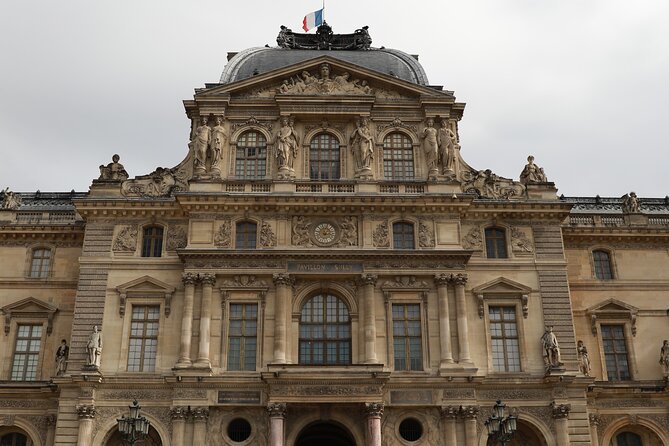
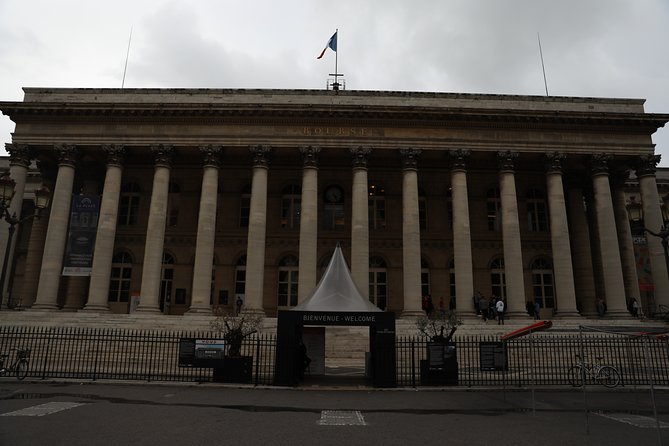
You kick things off at the Palais Brongniart, the former stock exchange. This is a standout starting point because it is not just a pretty facade. It is a landmark of neoclassical style, tied to the values of the era.
In plain terms, the guide helps you read the building like a message. Neoclassical architecture often signals order and authority, and the stock exchange is a good place to see that concept in real life. The architecture supports the idea of trust, stability, and “serious business,” which is exactly the kind of vibe institutions wanted.
Plan for about 30 minutes here, and note that admission is listed as free for this stop. That gives you breathing room for photos and for the guide to connect design elements to the broader story.
Stop 2, Place des Victoires: where classical ideas were practiced
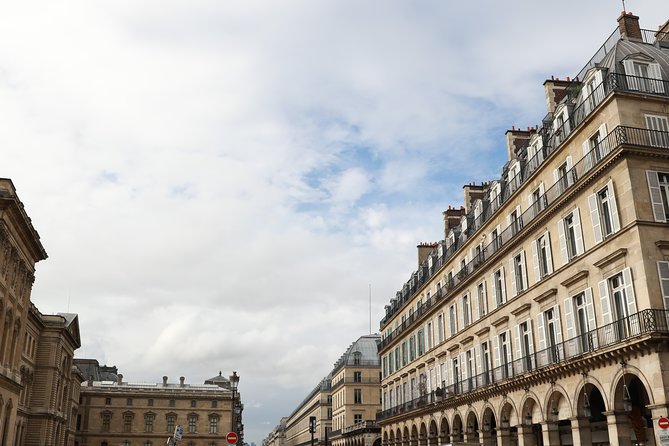
Next comes Place des Victoires, one of four royal squares of Paris. What makes this stop interesting is the role it played as a “classical predecessor” and model for neoclassical thought and style.
Squares sound simple until you learn how they function. The guide helps you see how proportions, alignment, and the surrounding architectural rhythm reinforce the feeling of order. This is where neoclassicism becomes more than a look. It becomes a way of organizing public life.
You get roughly 15 minutes at this stop, and admission is listed as free. This is a good pace check too. After Palais Brongniart, you can reset your eyes for how neoclassical style behaves in open space.
Stop 3, Galerie Vivienne: the neoclassical arcade story inside
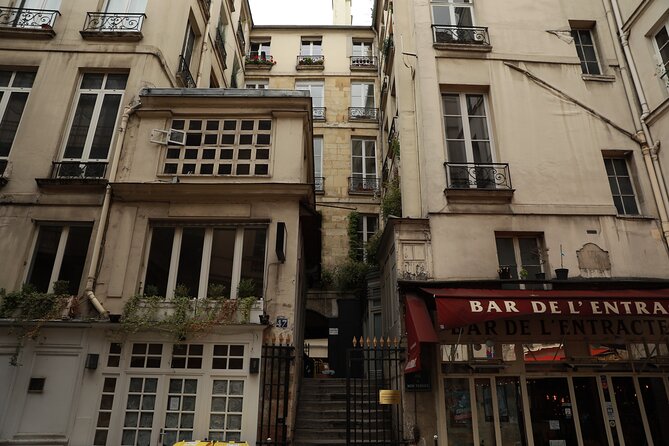
Then you shift from squares and monuments into a covered space with a different purpose: Galerie Vivienne. The highlight here is the arcade itself, described as a phenomenon marking the first half of the 19th century, and treated as an ancestor of the modern shopping mall.
This is where I think many people get a pleasant surprise. Neoclassical architecture is often associated with public buildings and formal spaces, but here you see it working in everyday commercial life. The guide explains the significance of arcades as social and economic spaces, not just passageways.
You spend about 20 minutes here, with admission also listed as free. If you like architecture that shows up in daily routines, this stop is a strong reason to choose this tour over a pure monument-hopping route.
Stop 4, Jardin des Tuileries: royal garden viewpoints through a neoclassical lens
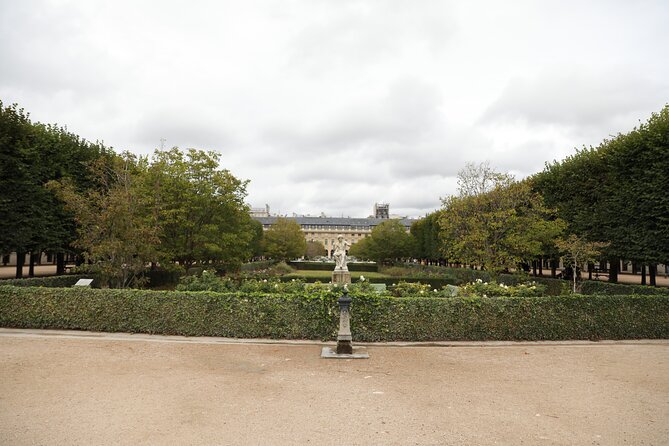
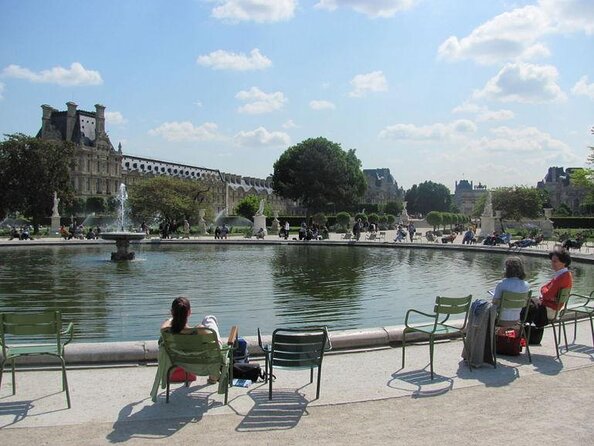
After the arcade, you move to Jardin des Tuileries, the former royal garden of the Tuileries. The tour frames it through neoclassical style and thought, which is a useful twist because gardens are often treated as background.
On this stop, you are looking at structure and perspective, not just greenery. The guide focuses on how gardens can reflect design priorities like symmetry, sightlines, and planned space. That is how neoclassical thinking shows up without needing to shout.
You have around 20 minutes here, again with admission listed as free. Even if you are not a garden person, this stop helps you understand how the style extended beyond stone buildings into the ways people moved and viewed the world.
Stop 5, Palais-Royal complex: neoclassical space reworked for commerce
The walk ends at the Domaine National du Palais-Royal, better known as the Palais Royal complex. This is where the tour’s theme comes full circle: the classic complex converted into a commercial center, seen through the lens of neoclassical style.
This stop is especially valuable if you are curious about how architecture changes over time but still keeps an identity. The guide helps you connect the original “designed for power and culture” feel to what happens when the same kinds of spaces become places for shopping and strolling.
You get about 20 minutes here, and admission is listed as free. The area also gives you a practical landing point for continuing your day, since you are not far from major central sights after the tour ends near the Arc de Triomphe du Carrousel area.
Guides who make the style click: Milica, Melissa, and Dunya
A big reason this tour earns such strong marks is the teaching. In the experiences described, guides like Milica, Melissa, and Dunya were praised for making the architecture easy to follow while still keeping it intellectually solid.
What you should expect from an art historian in this setting is clarity. You will get explanations that connect visual choices to context, like why a building or square looks the way it does and what that design likely tried to communicate. One guide approach even focused on asking questions that got people thinking, which is a great match if you like participating rather than just listening.
This is also a good sign if you are traveling with kids or teens. The tour is framed as educational but not dry, and the tone described is friendly and understandable.
Customizable route: how to use that power
Since this is private and customizable, you should use it. If you care most about public squares, ask to put extra attention on Place des Victoires. If you want the “architecture in daily life” angle, prioritize the arcade and the commercial conversion at Palais Royal.
If you prefer fewer photo stops and more explanation, tell the guide to keep the pace tighter. If you want more time at a specific place, ask. The tour is only about 2 hours, so small adjustments make a big difference.
What you should bring and how to prepare
Because it is a walking tour with a moderate physical fitness level, keep it simple:
- Comfortable walking shoes (you will be on your feet for most of the 2 hours)
- A weather-ready layer (Paris can shift quickly)
- Your curiosity (you will get the most out of the guide if you ask questions)
You will get a mobile ticket, and service animals are allowed. The tour is also described as offered in English, with a note that it may be operated by a multi-lingual guide depending on the schedule.
Who should book this tour
This is a great choice if you:
- Want architecture explained by an art historian, not just a facts-only guide
- Love the visual ideas behind Paris, especially neoclassicism
- Prefer a private experience with room to ask questions
- Are traveling with a small group up to 6 and want value per person
You might choose something else if you want a long, museum-heavy day. This tour is built for walking and interpretation, with free access listed for each stop, but it is not designed as a half-day ticket marathon.
Should you book it?
I would book this if you want Paris neoclassical design made understandable fast. The route covers the main kinds of spaces where the style shows up, from institutional architecture to squares, arcades, gardens, and palace-adjacent commercial life. And because the format is private with art historian guidance, you are not just seeing buildings, you are learning how to read them.
FAQ
How long is the Neoclassical Paris walking tour?
It runs for about 2 hours.
What does the tour cost?
The price is $360.48 per group, up to 6 people.
Is the tour private?
Yes. It is a private tour, and only your group participates.
Where does the tour start and end?
It starts at Bourse75002 Paris, France and ends at Arc de Triomphe du Carrousel, Pl. du Carrousel, 75001 Paris, France.
What language is the tour offered in?
The tour is offered in English. It may also be operated by a multi-lingual guide.
What is included in the price?
You get a professional art historian guide and the private tour itself.
Is food or drinks included?
No, food and drinks are not included.
Do I need to pay admission at the stops?
Admission is listed as free for each of the stops described.
What is the cancellation policy?
You can cancel for free up to 24 hours in advance for a full refund. If you cancel less than 24 hours before, the amount you paid will not be refunded.
Newest write-ups from Paris




Walking Tours, compared.

Paris Top Sights Half Day Walking Tour with a Fun Guide
Read our review →
Montmartre Hidden Gems and Scenic Highlights Walking Tour
Read our review →
Montmartre Hill French Gourmet Food and Wine Tasting Walking Tour
Read our review →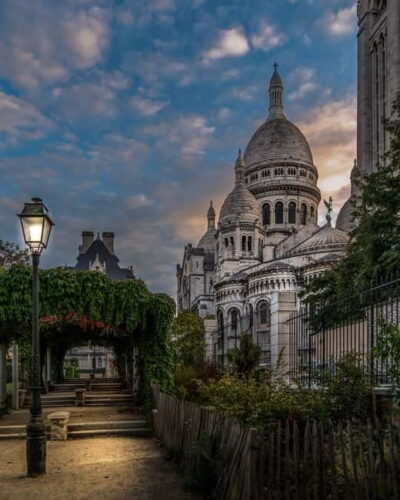
Montmartre Highlights Walking Tour with a Local Guide
Read our review →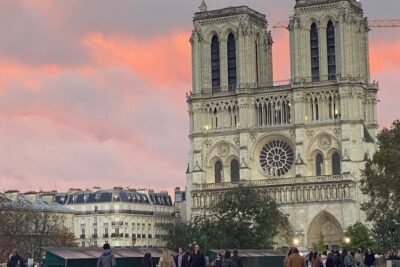
Paris Île de la Cité and Notre-Dame Walking Tour With Crypt
Read our review →
Montmartre Cheese, Wine & Pastry Guided Walking Tour
Read our review →
Paris in a Day: Louvre or Orsay, Eiffel Tower, City Walk & Cruise
Read our review →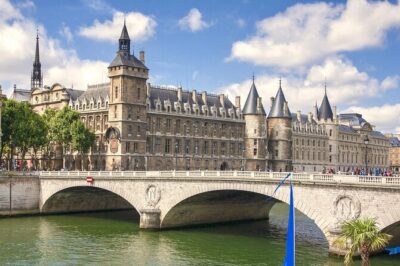
Paris City Center Free Walking Tour (Tip-Based)
Read our review →Browse the lists this tour appears in