
Reviewed · SAINT-GERMAIN-DES-PRéS WALKS
Old Paris Walking Tour: Explore Saint-Germain and Saint-Michel
Two Left Bank neighborhoods, one smart walk. This Old Paris Walking Tour moves from Saint-Germain-des-Prés roots to the Latin Quarter vibe around Saint-Michel, with a 2-hour guided pace that stays human. I like the small-group feel (up to 15 people), and I like how the route mixes iconic names with the street corners that make Paris feel like Paris.
Second, this is built for real context, not just checklists. You’ll get commentary tied to what you’re seeing, from the 6th-century abbey area to revolutionary-era references like Jean-Paul Marat and the longtime café/restaurant culture nearby. One consideration: stop times are short, so if you want long church time or museum-level detail, this is a walking overview, not a deep dive.
In This Review
- Key things that make this walk worth your time
- Why Saint-Germain to Saint-Michel is a perfect 2-hour Paris route
- Small group size and guides you can actually talk to
- Step 1: Place Saint Germain des Pres, where Paris ideas started
- Streets named for power: Rue Bonaparte, Rue Jacob, Rue de Seine, Rue de Buci
- Cour du Commerce Saint Andre: Marat, printing, and Le Procope’s old-school charm
- Haussmann-era scale: Boulevard Saint-Germain and Rue Danton
- Place Saint Andre des Arts: standing near where Paris once guarded itself
- Fontaine Saint-Michel: 19th-century sculpture with a story
- Rue de la Huchette and Saint-Severin: medieval streets plus a church that survived
- What you actually get for $39, and why it can be good value
- Timing, comfort, and how to enjoy it without rushing
- Should you book this Saint-Germain and Saint-Michel walking tour?
- FAQ
- How long is the Old Paris Walking Tour in Saint-Germain and Saint-Michel?
- How much does the tour cost?
- Does the tour require admission tickets?
- Is the tour offered in English?
- How many people are in each group?
- Is there a choice of departure times?
- What kind of ticket do I need?
- Where does the tour start and end?
- Is it near public transportation?
- What if my plans change and I need to cancel?
Key things that make this walk worth your time
- Up to 15 people means your guide can actually answer questions
- Morning or afternoon departures so you can match your day plan
- Free entry sights at every listed stop, with guide context doing the heavy lifting
- French Revolution and publishing references, including a Marat printing press site
- A mix of eras, from 6th-century roots to 19th-century Haussmann boulevards
- Mobile ticket and an experience that runs near public transit
Other walks through Saint-Germain:
- Saint-Germain: Gourmet Chocolate & Pastry Walking Food Tour
★ 4.8 · 495 reviews - Paris St Germain Food Tour with Cheeses, Foie Gras, Wines & More
★ 5.0 · 401 reviews - Saint-Germain The Original Chocolate Tasting Tour with Pastries and Macaron
★ 4.5 · 215 reviews - Paris Saint Germain Des Pres Walking Tour with Cruise Option
★ 5.0 · 177 reviews
Why Saint-Germain to Saint-Michel is a perfect 2-hour Paris route
If you’re trying to get your bearings fast, this route is a smart choice. Saint-Germain-des-Prés gives you that literary, old-stone Left Bank atmosphere, while Saint-Michel nudges you into a more medieval-feeling stretch of the Latin Quarter.
What I like is that you’re not stuck in one “Paris mood.” You’ll move through streets named for Napoleonic power, Jacobins, and parliamentary leaders, then swing toward Haussmann-era boulevards and finally reach a church with Gothic architecture plus stained glass. In two hours, that’s a lot of variety without the stress of hopping all over the map.
Also, because the tour runs about 2 hours, you can fit it early in your trip. Use it as a framework, so the next day’s wandering makes more sense.
Small group size and guides you can actually talk to
Tours capped at 15 travelers matter more than people think. When you can hear your guide and ask a follow-up, the walk feels more like a friendly street lesson than a rushed slideshow.
The guide style comes through in how people describe the experience: a good pace, lots of practical explanation, and room for questions. One guide name that pops up is Sylvia, with feedback that she was pleasant, funny, and able to point out small details you might miss on your own. You’ll also pick up what to do next, including restaurant suggestions at the end of some departures.
If you hate feeling herded, this group size is a big win. If you love wide group energy and lots of strangers around you, you may prefer something bigger, but for most first-timers, smaller feels better.
Step 1: Place Saint Germain des Pres, where Paris ideas started
Your walk begins at Place Saint Germain des Pres, in an area tied to one of Paris’ oldest roots. The key idea here is the 6th-century abbey, which later became a hub for intellectual and literary life in the 20th century.
Even though this stop is brief, it sets the theme of the whole tour. Paris isn’t only about royal palaces and grand monuments. It’s also about institutions, thinkers, and the way neighborhoods become part of the city’s identity.
Practical tip: treat this as your “orientation moment.” Look around, picture how the area evolved from religious center to intellectual Left Bank. Then the later street names and literary references start clicking.
Streets named for power: Rue Bonaparte, Rue Jacob, Rue de Seine, Rue de Buci
From there, you’ll walk through a sequence of Left Bank streets where names are basically mini history lessons.
- Rue Bonaparte runs along the Left Bank toward the Jardin du Luxembourg direction, named for Napoleon Bonaparte. It’s a quick way to connect everyday Paris streets to 19th-century political force.
- Rue Jacob is a 17th-century street in the 6th arrondissement, connecting Rue des Saints-Pères to Rue de Seine, and linked to a former Jacobin convent nearby. Even if you never studied the French Revolution, the name alone gives you a clue about the political currents that shaped the city.
- Rue de Seine connects Boulevard Saint-Germain to the Seine and has hosted art galleries since the 19th century. This is where “culture street” becomes more than a phrase.
- Rue de Buci dates to the 12th century and honors Simon de Buci, a former president of the Paris Parliament. That’s a reminder that Paris street history often reaches back far earlier than most people expect.
Each of these stops is listed at about 10 minutes, so you’re not meant to marathon one street. Instead, you’ll collect a series of “Paris name clues” and then understand how your guide ties them into the bigger story of the Left Bank.
Small drawback: these are mostly street-level looks, not big photo pauses. If your camera battery is always dying, bring a backup or be strategic with your shots.
Other arrondissements taken at walking pace:
- Paris Top Sights Half Day Walking Tour with a Fun Guide★ 5.0 · 2,893 reviews
- Montmartre Hidden Gems and Scenic Highlights Walking Tour★ 5.0 · 2,684 reviews
- Montmartre Hill French Gourmet Food and Wine Tasting Walking Tour★ 5.0 · 2,588 reviews
- Paris: Montmartre Highlights Walking Tour with a Local Guide★ 4.9 · 2,318 reviews
Cour du Commerce Saint Andre: Marat, printing, and Le Procope’s old-school charm
Stop 6 is the kind of place you’d be glad you followed your guide to. At Cour du Commerce Saint Andre, you enter a passage opened in 1735 where the printing press of Jean-Paul Marat once stood.
This is a useful reality check about how revolutionary ideas traveled. Publishing was not just abstract politics. It was practical. Paper, presses, and places to distribute information helped ideas become movements.
And right next to that historical thread is the restaurant Le Procope, which has operated since 1686. That combination is powerful: revolutionary-era publishing references alongside a long-running dining institution.
If you enjoy that “Paris layers” feeling, don’t rush. Give yourself a moment to absorb the passage. Passages like this can feel like you’ve walked into a smaller, older Paris, even while you’re still close to major streets.
Haussmann-era scale: Boulevard Saint-Germain and Rue Danton
Next you get the wide-open Left Bank rhythm at Boulevard Saint-Germain. This is a major boulevard opened in the 19th century under Georges-Eugène Haussmann, stretching about 3.5 kilometers across the Left Bank.
Why this matters: Haussmann’s redesigns changed movement, sightlines, and the “feel” of Paris streets. You’re not just learning dates. You’re learning why Paris looks the way it looks.
Then comes Rue Danton, created during Haussmann’s renovations and named after Georges Danton, a major French Revolution figure. It’s another of those “name equals context” stops, and it helps connect street geography to political history.
A quick way to get more out of this section: watch how the boulevard changes the vibe compared to the narrower streets earlier. The city feels more formal here, more architectural, more staged.
Place Saint Andre des Arts: standing near where Paris once guarded itself
At Place Saint Andre des Arts, you’ll stand in a square laid out in the 19th century near the former site of the medieval city wall.
That’s a subtle stop, but it’s valuable because it gives you a mental map of older Paris. Walls influence neighborhoods. They decide where people build, where trade flows, and where the city expands next.
So even though the stop is short, it helps you “zoom out” after all the street-level name trivia. You can start imagining the older boundaries and how the Left Bank developed beyond them.
If you like walking with a clear line of sight, this is a good moment to stop, orient, and breathe before you head toward Saint-Michel.
Fontaine Saint-Michel: 19th-century sculpture with a story
Then the tour heads to Fontaine Saint-Michel, located at the southern end of Boulevard Saint-Michel. The fountain was built in 1860 to 1861 and features a statue of Archangel Michael defeating the devil.
It’s not just decoration. This kind of iconography turns an ordinary street corner into a moral and cultural marker. It also helps explain why Paris loves turning religious symbolism into public art you can see every day.
Practical note: fountains are easy photo subjects. Still, remember this is a walking tour with short stop durations, so you’ll get just enough time to look closely, grab a photo, and keep moving.
Rue de la Huchette and Saint-Severin: medieval streets plus a church that survived
Finally, you move into the Latin Quarter atmosphere with Rue de la Huchette. This is described as a medieval street connecting Place Saint-Michel to Rue Saint-Séverin, and it’s hosted theaters since the 19th century.
That mix is why this stop feels like a transition. The street gives you that tighter, older-feeling grid, and the theater connection adds an arts layer that fits perfectly with what you’ve been learning about the Left Bank.
Then comes Eglise Saint-Severin. This church was built between the 13th and 16th centuries, survived the French Revolution, and features Gothic architecture along with 15th-century stained glass windows.
This stop is the closest thing on the walk to a “wow, pause and look” moment. Even with limited time, the survival through revolution gives the church extra meaning. It’s one thing to see old buildings. It’s another to see the ones that still made it.
If you’re visiting in a church off hour, you might find it more quiet and easier to focus. Still, since the tour visit time is short, bring your curiosity, not your expectations of a long interior tour.
What you actually get for $39, and why it can be good value
At $39 per person for a roughly 2-hour guided walk, the value is in the guide and the structure. You get a professional guide, a route that stays efficient, and multiple free stops lined up back-to-back.
If you planned to self-walk the Left Bank, you’d probably hit some of the big names. But you’d miss the connections: why a street is named after someone, what a passage signaled in the publishing world, and why the church’s survival matters to the city’s story.
The “hidden” value here is that the tour is capped at 15, so the guide’s attention is less scattered. That’s a real cost saver, because you spend less energy figuring things out and more time walking with understanding.
One more plus: it’s offered in English, with a mobile ticket. That reduces friction when you’re juggling phones, maps, and the rest of your Paris day.
Timing, comfort, and how to enjoy it without rushing
You can choose between morning and afternoon departures, which helps if you want to avoid the busiest parts of the day or if you’re pairing the walk with another plan.
For comfort, treat it like a proper city-walk. The itinerary is a chain of street-level stops, mostly outdoors, with short visits. Plan on comfortable shoes and a layer you can adjust because Paris weather can shift.
Also, book early when you can. On average, this tour is booked about 51 days in advance, so popular departure times can fill.
If you want the best experience, use the tour as your first Left Bank “anchor.” Then later, when you pass a street name or a fountain you learned, you’ll notice it more. That’s how walking tours pay off, even when you move on quickly.
Should you book this Saint-Germain and Saint-Michel walking tour?
Yes, if you want a compact, guided way to understand two of Paris’ most distinct Left Bank areas. This works especially well for first-timers, history-curious travelers, and anyone who likes street-level context rather than long museum detours.
I’d skip it if your priority is deep interior time or long, slow sightseeing at fewer stops. The tour is designed for breadth in about two hours, not for lingering.
If you’re the type who loves learning what street names actually refer to, and you enjoy seeing how centuries layer together, you’ll probably find this one satisfying. You’ll come away with a clearer mental map of Saint-Germain, Saint-Michel, and the Latin Quarter, plus a better sense of why Paris feels like one big, connected story.
FAQ
How long is the Old Paris Walking Tour in Saint-Germain and Saint-Michel?
It runs for about 2 hours.
How much does the tour cost?
The price is $39.00 per person.
Does the tour require admission tickets?
The listed stops are marked free, and there is no admission ticket cost mentioned for the stops.
Is the tour offered in English?
Yes, it is offered in English.
How many people are in each group?
The tour has a maximum of 15 travelers.
Is there a choice of departure times?
Yes, you can choose between morning and afternoon departures.
What kind of ticket do I need?
You receive a mobile ticket.
Where does the tour start and end?
It starts at V83M+M99, Paris, France, and ends back at the meeting point.
Is it near public transportation?
Yes, the meeting area is near public transportation.
What if my plans change and I need to cancel?
You can cancel for a full refund if you cancel at least 24 hours before the experience starts. If you cancel less than 24 hours before, the amount paid is not refunded.
Newest write-ups from Paris





Saint-Germain-des-Prés Walks, compared.


Paris St Germain Food Tour with Cheeses, Foie Gras, Wines & More
Read our review →
Saint-Germain The Original Chocolate Tasting Tour with Pastries and Macaron
Read our review →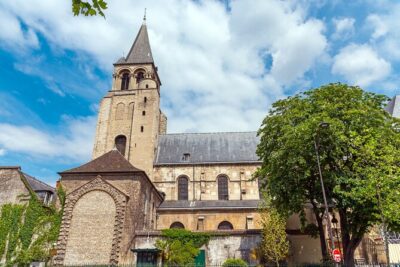
Paris Saint Germain Des Pres Walking Tour with Cruise Option
Read our review →
Eating Paris: Saint Germain Food & Wine Tour
Read our review →
Saint Germain des Prés Guided Foodie Walking Tour
Read our review →
PRIVATE Paris Food Tour in Saint Germain District: 10 Tastings
Read our review →
Paris Saint-Germain French Gastronomy Tasting Food Tour
Read our review →Browse the lists this tour appears in