
Reviewed · 2-HOUR EXPERIENCES
Paris: 2-Hour Passages Private City Tour in German
Paris hides passages you can walk into. In the center of the city, these covered lanes are hard to find on your own, and a German guide helps you see what they were for and why they mattered in early 19th-century Paris.
I like seeing Passage Verdeau and Passage Jouffroy up close, because it turns a quick photo stop into a proper walkthrough of the place. I also like the way the tour frames the passages as practical solutions from a dirtier, less modern Paris, not just pretty architecture. One drawback to consider: if you’re hunting for modern shopping arcades with big brands, this tour is more about history, city form, and atmosphere than spending time in stores.
In This Review
- Key Passages, Real Explanations (What Makes This Tour Worth It)
- Why Parisian Passages Feel Like Time Travel
- Le Peletier to Palais-Royal, A Simple Route That Still Feels Complete
- Passage Verdeau: The Moment You Realize It’s Not Like Other Streets
- Passage Jouffroy: When Covered Shopping Became a City Answer
- Passage des Panoramas: Covered Lanes and Big-City Energy
- Grands Boulevards to Palais-Royal: How the Hidden Fits the Famous
- The Best Part: A German Guide Who Explains the Why
- How Long Is Enough, and What the Pace Really Means
- Price and Value: Why $94 Can Make Sense Here
- Practical Tips Before You Go (So You Enjoy the Passages)
- Who Should Book This Tour?
- Should You Book This Paris Passages Private City Tour in German?
- FAQ
- What is the duration of the tour?
- What language is the tour guide?
- Is this a private tour?
- Where do I meet the guide?
- What is included in the price?
- Is pickup from my hotel included?
- What days does the tour run?
- What is the cancellation policy?
Key Passages, Real Explanations (What Makes This Tour Worth It)
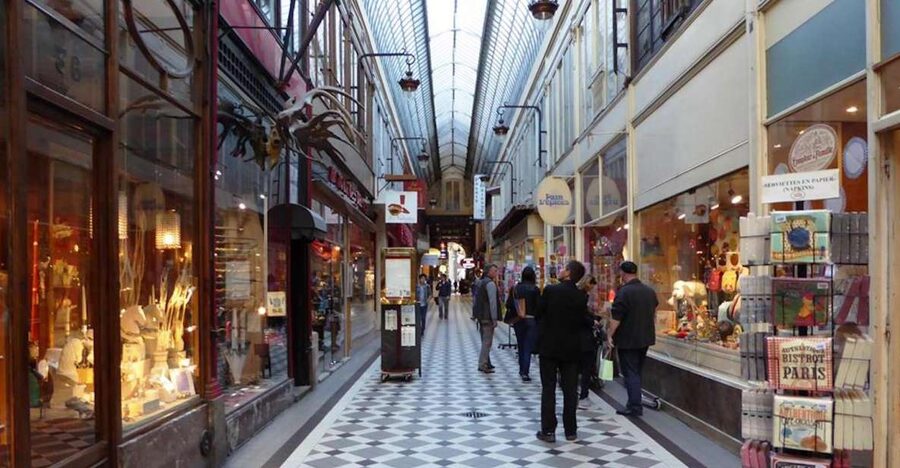
- Private group in German, led by sympathetic guides who explain the connections between streets and buildings
- Two-hour pace that feels right, long enough for context, short enough to keep your energy
- Passage Verdeau, Passage Jouffroy, and Passage des Panoramas, three standout corridors that show different flavors of the same idea
- Grands Boulevards to Palais-Royal, so you see how these hidden passages fit into the wider city
- Solene is listed by name in past tours, and she’s been praised for friendly detail and clear explanations
A handful more Paris options to weigh up
- Louvre Museum Paris Essential Guided Tour Semi-Private 6ppl Max
★ 5.0 · 3,807 reviews - SUV Private Transfer: Paris to Charles de Gaulle Airport (CDG)
★ 4.0 · 3,091 reviews - Paris: Private Photoshoot at the Eiffel Tower
★ 4.7 · 2,636 reviews - Top Private Cruises in Paris with French Champagne and surprises
★ 5.0 · 1,553 reviews
Why Parisian Passages Feel Like Time Travel
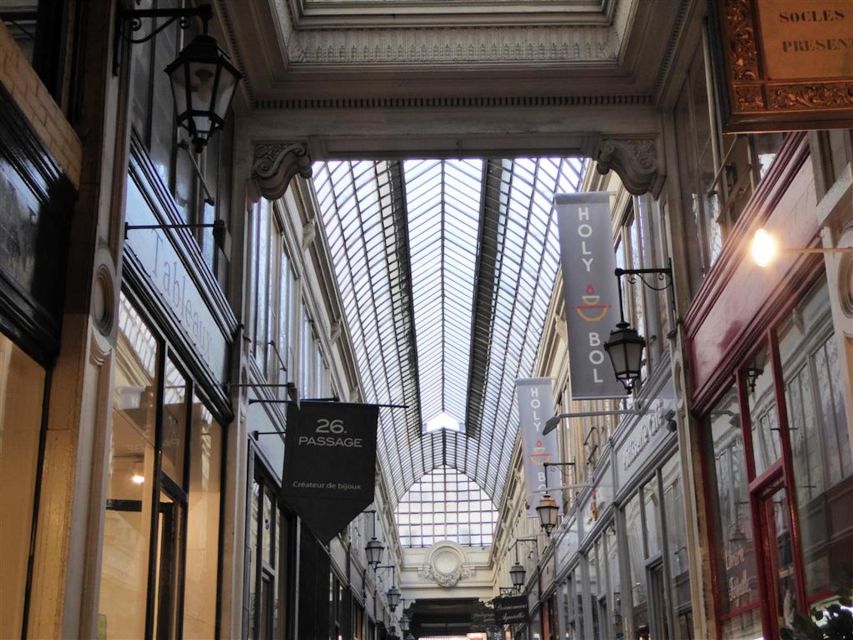
Paris passages are one of those things you can walk past without realizing what you’re missing. They’re tucked into the fabric of central streets, so the experience works best when someone guides you to them and gives you a reason to look up, not just straight ahead.
What I like about this tour is the framing. Instead of treating the passages like decorative backdrops, you learn to read them as practical responses to their time. The early 19th century was not the polished Paris you see on postcards. The city had a reputation for being dirty, and these covered passageways helped create a more protected, more walkable in-between space.
You’ll also get a clear mental model for what these places became. The tour positions them as forerunners of the later grand department store idea, which helps you connect old pedestrian corridors to the shopping culture that followed. That historical link makes the streets feel less random and more intentional.
Le Peletier to Palais-Royal, A Simple Route That Still Feels Complete
This tour is short on paper, but it’s tight on purpose. You meet at Metro station Le Peletier (Line 7) and look for your guide with a HelpTourists bag. From there, the route builds like a story: three famous passage stops, a walk through Grands Boulevards, and a finish in the Palais-Royal quarter at Palais-Royal.
Starting at Le Peletier makes sense if you want to ride the Metro easily and arrive without wasting time. It also keeps the tour anchored in central Paris, where you can drop the experience into the middle of a day.
You should expect a guided walk through a concentrated area. Because it’s private, the pace can be more comfortable than you’d get on a big group tour, and your guide can adjust to questions. That matters on a tour like this, because the best moments often come from details you would not notice without context.
Passage Verdeau: The Moment You Realize It’s Not Like Other Streets
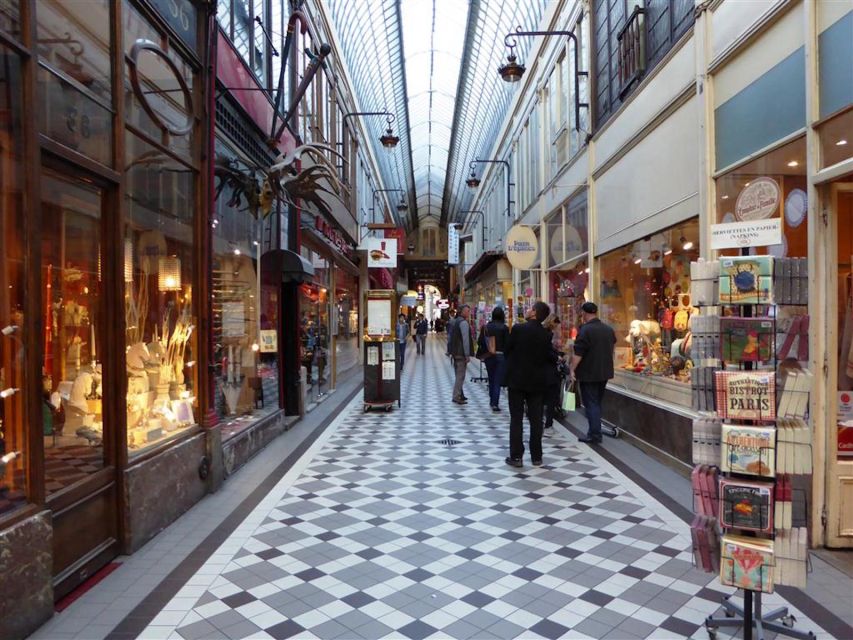
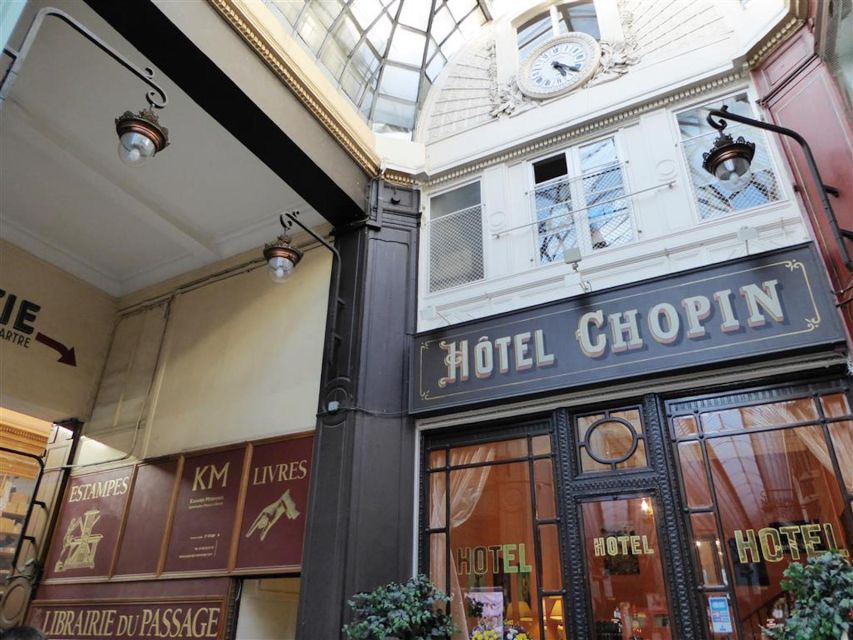
Passage Verdeau is where the magic starts to click. The whole idea of passages is that they are not “obvious.” They’re tucked away, and the tour helps you find them and understand why that tucked-away layout mattered.
In practical terms, you’ll get the physical sense of what a passage does. It creates a covered corridor that connects streets, while keeping you away from the open-air mess of its era. When you learn this, the passage stops being a pretty shortcut and becomes a solution.
You’ll also likely catch the visual language guides look for in this kind of architecture: the way the passage channels movement, the way light behaves under a roof, and the way storefronts and walkways coordinate. Even if you’re not the type to study buildings, you’ll feel the difference. It’s the kind of place that makes you slow down just to see where your eyes should go.
Passage Jouffroy: When Covered Shopping Became a City Answer
Passage Jouffroy is another key stop, and it’s especially rewarding if you like understanding “why” more than just “what.” The tour explains that these weren’t the shopping arcades you might picture today. They were part of a response to conditions on the street and a way to create controlled, sheltered pedestrian space.
This is where the tour’s broader theme becomes personal. You start thinking about how people moved through Paris before today’s modern shopping streets existed in the same way. If you’ve ever wondered how Paris became the Paris of department stores and covered shopping streets, this is the missing middle.
One thing I value here is that the guide doesn’t treat the passage like a sealed museum piece. Instead, the explanation helps you understand how these corridors fit into everyday city life. It’s not just “look at the old building,” it’s “imagine the city working differently.”
If this one is booked out, Paris has these too:
- Paris: 1-Hour Seine Cruise departing from the Eiffel Tower★ 4.4 · 77,472 reviews
- Disneyland® Paris 1-Day Ticket★ 4.6 · 49,412 reviews
- Paris: Versailles Palace and Gardens Full Access Ticket★ 4.6 · 41,579 reviews
- Paris: Arc de Triomphe Rooftop Tickets★ 4.6 · 34,264 reviews
Passage des Panoramas: Covered Lanes and Big-City Energy
After two passages, Passage des Panoramas brings variety. Even without getting overly technical, it feels like a passage that leans into the idea of public walkways and spectacle. That shift matters, because it shows how the concept evolved and why the format had appeal.
This stop also helps you connect the hidden and the public. Passage corridors are intimate, almost like secret routes, but you’re not actually leaving the city. You’re moving within it, and the tour makes that connection visible.
From here, the next steps bring you out toward Grands Boulevards. That transition is useful for your mental map. You see how the passage world links back into major streets and urban rhythms, instead of feeling like an isolated detour.
Grands Boulevards to Palais-Royal: How the Hidden Fits the Famous
The walk to Grands Boulevards is more than a route change. It’s your reminder that the passages weren’t built to be cut off from everything. They were built to serve the flow of pedestrians and the needs of a city.
When you then move into the Palais-Royal quarter, you end with a logical payoff. Palais-Royal is a recognizable name, but the tour gives you a different way to experience the area, because you’ve just come from places that were not easy to find and not simple shopping streets.
By finishing at Palais-Royal, you also end with flexibility. You’re not locked into a single spot for the rest of the day. You can keep exploring the quarter on your own with a better sense of how passages, streets, and city blocks interconnect.
If you like “guided wayfinding,” this is a strong finish. The day ends where you can easily extend it, rather than dumping you back far from where you want to go next.
The Best Part: A German Guide Who Explains the Why
The most praised strength of this experience is the guidance. The tour is run by German-speaking guides who know Paris well and who show Paris from an insider angle. That’s not a throwaway line. It changes what you get from the streets.
Having a German guide matters because the passages reward curiosity. You’ll want context about why they were created, how they functioned in their era, and how that connects to what you see in Paris now. The tour positions the passages as forerunners, and the guide helps you make sense of that idea.
The past tour info highlights Solene by name, and the feedback credits friendliness plus clear, interesting details and connections. Even if you get a different guide, the point you should take with you is consistent: you’re not paying for someone to point at buildings, you’re paying for someone to interpret them.
And that’s the real value on a tour like this. These passages are hard to find and easy to misunderstand if you show up alone. The guide turns “I found a corridor” into “I understand why it exists.”
How Long Is Enough, and What the Pace Really Means
The tour is 2 hours. That duration is ideal for passages for a simple reason. You want time to slow down, look up, and ask questions, but passages are compact. You’re not covering an entire neighborhood of landmarks in the same way you would on a big sightseeing day.
Past feedback also points to the duration as optimal, and I agree with the logic. Two hours gives you a tight sequence: passage, passage, passage, then the urban connection toward Grands Boulevards and Palais-Royal.
Because it’s private, it’s also easier to keep the pace comfortable. You can ask follow-ups without worrying that the group behind you will lose time. If you’re someone who gets more out of fewer stops, this length will suit you.
If you prefer long days and lots of major monuments, this is not the type of tour that replaces a first-time highlights loop. Think of it as a focused, smart add-on that makes Paris feel more real.
Price and Value: Why $94 Can Make Sense Here
At $94 per person, this isn’t a bargain-basement walking tour. It’s a private experience in German, and you’re paying for the guide time plus the focused route that includes specific passages many visitors never notice.
The good news is that value here comes from concentration. You’re not paying for a generic walking lecture across dozens of blocks. You’re paying to access places that are difficult to find and easy to misread. If you’ve ever tried to “self-guide” Paris passages from memory, you know how quickly that turns into confusion and backtracking.
Also, for anyone traveling with a language preference, the German format reduces friction. You get explanations in your language rather than translating in real time on your phone. That alone can turn a second-tier experience into a memorable one.
The main value question for you comes down to expectations. If you want modern shopping and big-store browsing, this won’t be your best use of money. If you want Paris texture, hidden space, and historical city logic, the price starts to feel fair.
Practical Tips Before You Go (So You Enjoy the Passages)
Here are a few things that make this type of tour smoother:
- Wear comfortable walking shoes, because you’re doing a guided stroll between compact but distinct stops.
- Plan your clothing for city weather. The passages are covered, but you still spend time outside when moving between areas.
- Arrive a few minutes early at Le Peletier (Line 7) so you can find the guide with the HelpTourists bag without stress.
- Bring a small amount of cash for tipping, since tips are not included. Even if you don’t tip often, it’s good to be ready for it.
If you like taking photos, you’ll want to do it during natural pauses. The passages are atmospheric, but you’ll get more value by listening first and then snapping what fits your new understanding.
Who Should Book This Tour?
This tour is a great fit if you:
- enjoy architectural details and the story behind city layouts
- want the “not every Paris visitor does this” experience, meaning you like finding Paris the hard way, then getting the payoff
- prefer a German-speaking guide for clear explanation rather than translation
- like private tours where questions stay in the conversation
It might not be the best fit if you:
- want a broad, first-time highlights route across the Eiffel Tower, Louvre, and major monuments
- are only interested in modern shopping arcades and brand-name stores
Should You Book This Paris Passages Private City Tour in German?
I think you should book it if your ideal day includes quiet discoveries and smart context. The route is compact, the idea is very Paris-specific, and the guide support is the difference between accidentally finding a corridor and genuinely understanding what you’re looking at.
If you’re on the fence, here’s your decision rule: if you’d rather learn how a city solved a problem in the past, go for it. If you want nonstop famous monuments and modern shopping, skip this and build a different plan.
The experience has a 4.9 rating from 30 reviews, and that usually points to the same strengths: the guides, the information, and the right length. For a 2-hour detour into hidden Paris, that’s exactly the kind of payoff you want.
FAQ
What is the duration of the tour?
The tour lasts 2 hours.
What language is the tour guide?
The tour is in German.
Is this a private tour?
Yes, it is a private group tour.
Where do I meet the guide?
Meet at Metro station Le Peletier (Line 7). Look for your guide with a HelpTourists bag.
What is included in the price?
A 2-hour private city tour in German, with a German-speaking guide.
Is pickup from my hotel included?
No, hotel pickup is not included.
What days does the tour run?
The city tour takes place from Monday to Saturday.
What is the cancellation policy?
You can cancel up to 24 hours in advance for a full refund.
Newest write-ups from Paris


2-Hour Experiences, compared.
2-Hour River Seine Lunch Cruise with 3-course-menu
Read our review →
The Père Lachaise Cemetery: Guided 2-Hour Small-Group Tour
Read our review →
Paris Louvre: 2-Hour Private Tour for Groups or Families
Read our review →
The only Paris Wine Tasting experience you need to do – 2 hours
Read our review →
Off-the-Beaten Track in Paris: 2-Hour Vintage 2CV Tour
Read our review →
Vintage 2CV Adventure: 2-Hour Paris Highlights Tour
Read our review →Browse the lists this tour appears in