
Reviewed · CITROëN 2CV TOURS
Paris by Night Tour in a Vintage Open-Top French Car Citroën DS
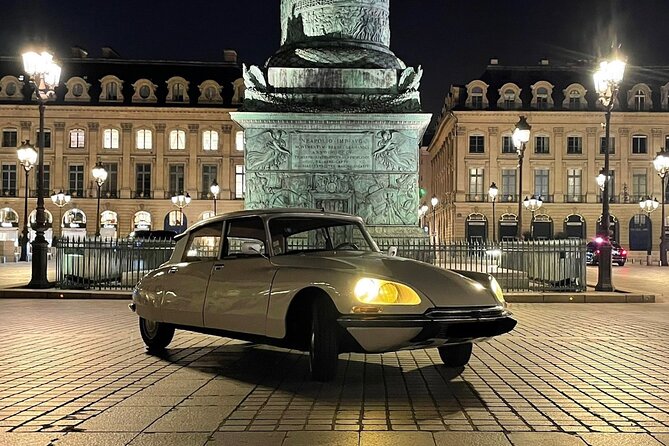
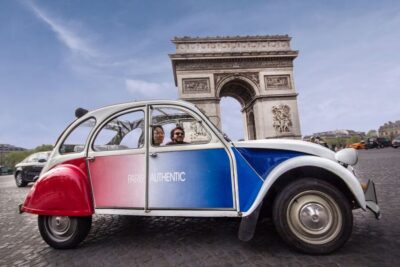
Paris at night looks different from a DS. A private ride in a vintage open-top Citroën DS with guide Benjamin turns a fast loop of Paris landmarks into a personal, easy-seeing experience, from the Arc de Triomphe area to the Louvre zone. You pay one group price (up to four), pick your timing, and enjoy the city lights from an old-school street-level vantage.
What I like most is the combo of private pacing and Benjamin’s storytelling that connects what you’re seeing with how the places fit into France today. Second, the route hits the big postcards plus smart photo moments, and you get bottled water to keep things comfortable during the darker, cooler stretches.
One thing to consider is comfort. This is a vintage 1972 car with no AC, and on hot or stuffy evenings it can get loud and warm in the cabin area.
In This Review
- Key highlights worth your attention
- Why the Citroën DS night ride feels more like Paris, less like a checklist
- Price and what you get for $298.37 per group
- Meeting at 10 Pl. de la Concorde, and how to reduce stress
- Timing: when Paris actually looks like night
- Arc de Triomphe to Champs-Elysées: classic Paris, told in plain English
- Eiffel Tower, Pont Alexandre III, and the Grand Palais glow
- Place de la Concorde to Opéra Garnier: the route gets stylish fast
- Louvre and Musée d’Orsay: how the car handles art stops without the crowds
- Seine views and the National Assembly area: Paris at walking speed, without the walking
- Ecole Militaire and the value of ending with perspective
- Comfort, safety, and the reality of a vintage open-top car
- Who should book this DS tour, and who might not
- Should you book Paris by Night in the Citroën DS?
- FAQ
- How many people can ride per booking?
- How long is the Paris by Night tour?
- Where do we meet for the tour?
- Is this a private tour?
- What language is the tour offered in?
- Are bottled water and alcoholic drinks included?
- Are children allowed?
- What is the cancellation and weather policy?
Key highlights worth your attention
- Citroën DS, open-top style: You can actually see taller monuments clearly while you roll through the streets at night.
- Private group of up to 4: One price for your whole party makes the $298.37 cost feel more like a shared splurge than a solo tour surcharge.
- Benjamin guides and drives: You get a single host who handles both the driving and the narration.
- Route flexibility: During major road disruptions, the route can adjust so you still get the main sights.
- Best-picture timing at key landmarks: The guide aims you at good viewing spots during peak night ambience.
- Bottled water included: Small detail, big difference on a 90-minute loop.
Other rides in a vintage 2CV:
- Paris: Discover Paris by Night in a Vintage Car with a Local
★ 4.6 · 1,058 reviews - Paris Private Flexible Duration Guided Tour on a Vintage Sidecar
★ 5.0 · 776 reviews - Vintage 2CV Adventure: 2 -Hour Paris Secrets Tour
★ 4.5 · 488 reviews - Paris: Discover Paris 2CV
★ 4.9 · 472 reviews
Why the Citroën DS night ride feels more like Paris, less like a checklist
This tour works because it changes your viewpoint. In a normal bus or even a standard taxi, you sit lower and faster, and you mostly read landmarks from afar. From the DS, you’re closer to the streetscape, and the open-top feel makes night lighting look more dramatic without you having to stand in lines or fight for a perfect angle.
I also love that it’s genuinely private. Up to four people means you can ask a quick question, ask for a photo pause, or simply move at the pace your group wants. It’s also easier on your feet. You get a set length of sightseeing, about 1 hour 30 minutes, without spending that time constantly walking between neighborhoods.
Benjamin is the real engine here. He’s not just rattling dates. He tends to explain what you’re seeing, then adds perspective on how people think about those symbols and monuments. That blend is why the tour doesn’t feel like background noise. It feels like you’re riding with someone who actually enjoys Paris.
One small note you’ll want to remember: the DS experience is part style, part practicality. It’s comfortable for most people, but it’s not a modern climate-controlled bubble. If you’re the kind of traveler who hates heat or noise, plan your expectations and dress for the conditions.
Price and what you get for $298.37 per group
The price, $298.37 per group (up to 4), is the main reason this tour makes sense. If you were paying solo, it could feel steep. Shared across four people, it shifts into a more reasonable category for a premium, private evening experience.
Here’s the value equation as I’d see it:
- You’re paying for private transportation plus a private guide.
- You also get a specific “night loop” time window where lighting is at its best.
- You’re not buying separate museum tickets or scrambling for timed entries, since the listed stops show free admission for each sight point.
If you’re traveling as a couple, it still can be a good deal because you’re not competing with a big group or waiting for a schedule. If you’re a family or group of friends of four, this is one of the rare sightseeing options where the cost scales well.
Meeting at 10 Pl. de la Concorde, and how to reduce stress
You start at 10 Pl. de la Concorde, 75008 Paris, and the tour ends back at the same meeting point. That round-trip setup is underrated. After 90 minutes in the open air and city glow, you do not have to think about how to get home.
Plan to arrive a bit early. Even if you’re great with navigation, the real-life issue in Paris is traffic flow and pedestrian detours, especially during big events. One practical lesson from the experience is that some written address instructions can be vague. The DS is distinctive, so if you see the car, that usually solves the mystery fast. If not, call the provider for a precise location.
Also note the tour does not offer personalized pick-up. You come to the meeting point only. If you’re staying somewhere remote or your hotel is on a complicated street, give yourself extra time to reach the square.
Timing: when Paris actually looks like night
This is a night-focused tour, and the “night” timing shifts by season. From November to March, night arrives around 5:00 or 6:00 PM. From March to November, it comes more like 7:00 or 8:00 PM.
So you should book with the light in mind. If you’re visiting in summer, you’ll likely want the later seating so the Eiffel Tower area and the bridges look at their best. If you’re visiting in winter, earlier might still feel truly magical, since the lighting kicks in sooner.
The tour runs about 1 hour 30 minutes, so the goal is intensity, not lingering for hours. For many people, that’s exactly right. You get a fast orientation and a night view in one hit.
More of Paris after the streetlights come on:
- Paris: Evening River Cruise with Music★ 4.4 · 22,721 reviews
- Paris: Day or Sunset Cruise with Drink, Ice Cream or Dessert★ 4.4 · 4,225 reviews
- Paris: Big Bus Panoramic Night Tour by Open-Top Bus★ 4.4 · 4,168 reviews
- Paris: Illuminated Evening River Cruise & Waffle Tasting★ 4.1 · 2,697 reviews
Arc de Triomphe to Champs-Elysées: classic Paris, told in plain English
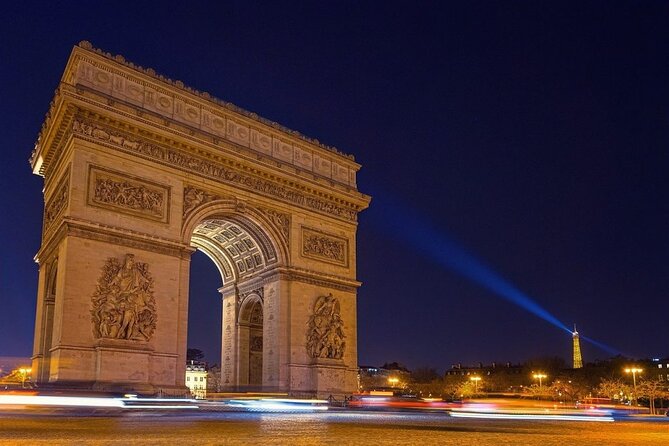
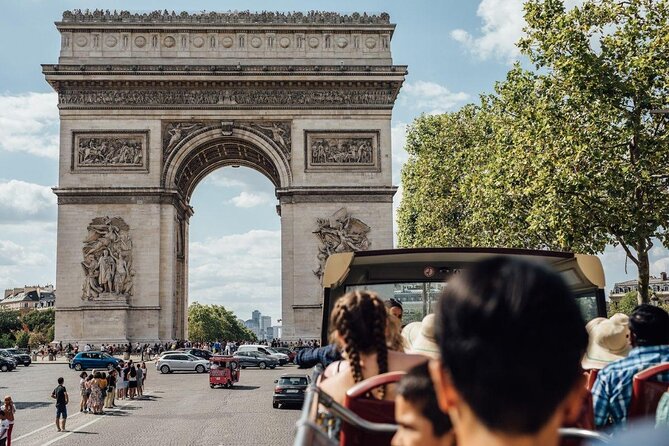
The first stop is the Arc de Triomphe area. The tour frames it as a monument for France’s heroes, sitting at the center of the city’s symbolic grid. Even if you’ve seen it in photos, night makes the whole structure feel bigger, because the illumination adds depth to the sculpted archways.
From there you head toward Les Invalides, a major military-history landmark known for its golden dome and as the tomb of Napoleon Bonaparte. The value of hitting this early is simple: it sets the tone. You’re not just riding past buildings. You’re seeing symbols that shaped modern France.
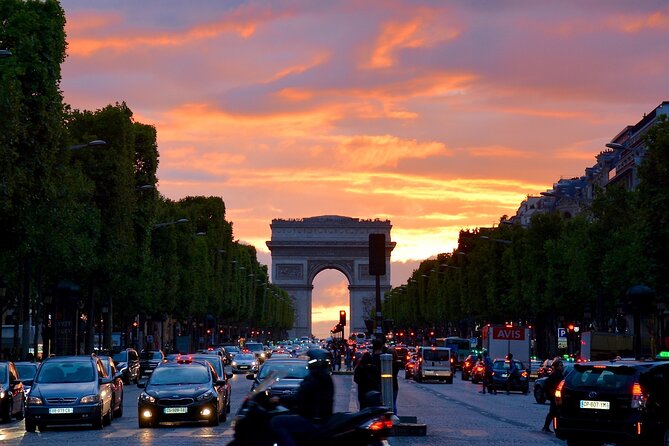
Then comes the Champs-Élysées. This avenue is Paris’s famous showpiece where luxury, history, and elegance blend under city lighting. The tour typically uses this area to transition into political and cultural landmarks, including the Élysée Palace, the official residence of the French President, with gardens nearby.
If you love people-watching, this stretch is a good moment to soak it in. It’s also the part where you start to notice how Paris traffic and street design change as you move from big monuments to more concentrated city blocks.
Drawback here is minor but real: your total stop time is limited. Arc de Triomphe and Champs-Élysées are each listed with around 15 minutes, so don’t expect a slow, museum-style experience. This is a “see it, understand it, photograph it, move on” format.
Eiffel Tower, Pont Alexandre III, and the Grand Palais glow
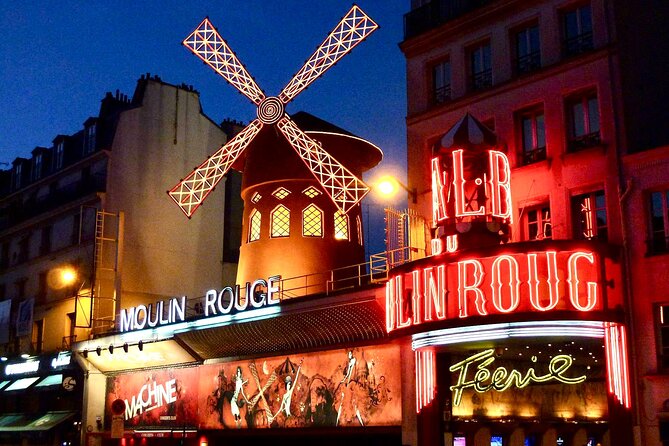
Next up is the Eiffel Tower area, with a stop at Rue de l’Université just steps away from the tower. That matters because you are not stuck at one single viewing platform. You get to look around and pick angles while the car and guide position you close.
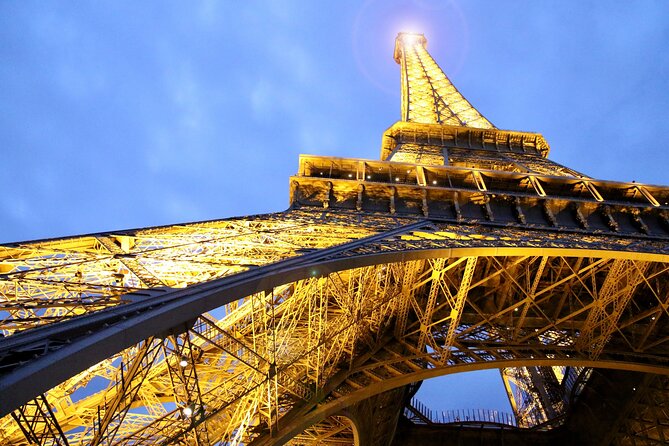
The Eiffel Tower is described as a timeless symbol of romance, innovation, and the magic of the City of Light, and at night that wording makes sense. Street-level sightlines make it feel less like a distant postcard and more like part of the skyline you’re moving through.
Then you roll toward Pont Alexandre III. It’s highlighted for its opulence and sweeping views, plus the golden sculptures that frame the crossing. This is one of those “the city looks staged, but it’s real” bridges. It’s a great place for photos because the bridge itself adds structure to the image, not just the background.
After that, the route includes stops tied to both art and architecture, including the Grand Palais and the Petit Palais. The Grand Palais is noted for its glass-domed splendor and its role where art, history, and innovation intersect. The Petit Palais is positioned as a calmer break with elegant architecture and a peaceful garden setting.
Here’s my practical take. If your plan is to do a lot of daytime walking later, this nighttime segment gives you the monumental snapshots without draining your legs. It also pairs big and small energy: huge bridge, then quieter palace-garden vibes.
Place de la Concorde to Opéra Garnier: the route gets stylish fast
Place de la Concorde is next, and the Luxor Obelisk is the star in the square. The tour frames it as an ancient Egyptian monument that links millennia right in the center of Paris. Night lighting turns the obelisk into a focal point that feels almost theatrical.
From there, you move through the classic grand boulevard-to-theatre rhythm. The route includes Opéra Garnier, famous for its ornate architecture and artistic heritage. It’s the kind of building where the outside alone already tells a story.
Then you pass Place Vendôme, described as Paris at its most luxe, lined with prestigious boutiques and anchored by the Vendôme Column. This is a good section if you want to feel the different faces of Paris, from revolutionary squares to luxury branding to grand civic design.
Between Place de la Concorde and Opéra Garnier, the tour also mentions a building with a specific transformation story. It was designed by Napoleon I as a Greek temple dedicated to his Grande Armée’s glory in 1806, nearly became a railway station in 1837 (the first in Paris), and then became a church in 1845. Even without the name being emphasized, the point is you’re seeing how Paris ideas evolved, step by step, over time.
Louvre and Musée d’Orsay: how the car handles art stops without the crowds
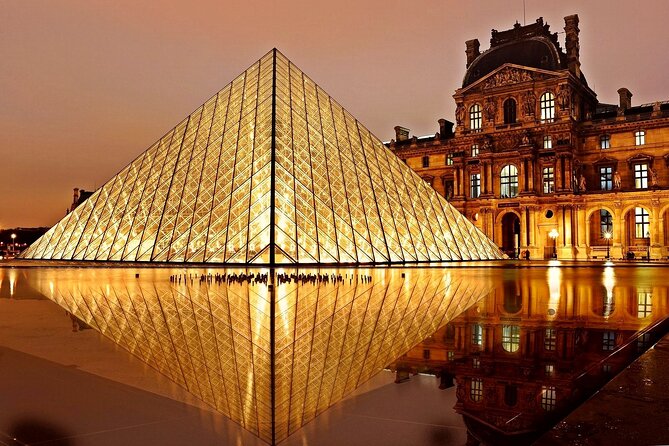
The Louvre is one of the late stops, and it’s presented as the world’s largest art museum, with the iconic glass pyramid in the center of the grounds. In a shorter tour, the “win” is orientation. You don’t try to conquer the entire museum. You get context, see the outside setting, and understand why it’s such a gravitational pull for artists and visitors.
From there, you head toward Musée d’Orsay. It’s described as a place focused on Impressionist and Post-Impressionist masterpieces, housed in a restored former railway station. That description matters because it explains the mood. Even before you step inside, the building’s origin as a railway space shapes how people experience it.
If you’re thinking you’ll do museums later, this portion helps you decide what to prioritize. You’ll likely remember the big visual features and feel more confident about where things are when you return on your own.
Seine views and the National Assembly area: Paris at walking speed, without the walking
The route also includes the French National Assembly, housed in the historic Palais Bourbon along the Seine. It’s presented as the heart of France’s legislative power, and it gives a different kind of landmark perspective. This is not just romance and architecture. It’s the machine of the country, right on the water.
Then you get time to drift along the Seine or stroll across its iconic bridges from different angles. Since the tour is only about 90 minutes, the benefit is that you see the Seine from multiple directions without spending your evening hunting for viewpoints.
One of the reasons this fits well for first-time visitors is that the Seine is the city’s connector. Once you’ve seen it from more than one angle at night, your later walking routes feel less confusing.
Ecole Militaire and the value of ending with perspective
The last major stop is the École Militaire, described as a grand 18th-century landmark just steps from the Eiffel Tower. This works as a strong closer because it reinforces what you’ve already been seeing. It’s a transition from pure spectacle back to a historical Paris timeline.
The tour ends back at Place de la Concorde, so you finish where you started. That’s a comfort factor when your evening is already done and you just want a simple exit plan.
Comfort, safety, and the reality of a vintage open-top car
Included comfort items are simple but effective: bottled water is provided. And you’re in a private ride with a professional, licensed driver, plus passenger insurance.
What’s not modern:
- The car is a vintage 1972 Citroën DS and is open-top.
- There is no AC, so hot-weather comfort can be an issue.
- The car can be loud depending on the wind and how the open-top design feels at your seating position.
There’s also a seating rule that matters for families. Children under 10 are not allowed because the back seats do not have seat belts. If you’re traveling with kids, this is a key filter.
Good news: service animals are allowed, and the meeting point is near public transportation. So even if you’re arriving via metro, you can still make the start without a complicated cab hunt.
If you get an evening that’s slightly rough weather-wise, the provider notes that the experience requires good weather. That means you should watch your forecast and accept that the tour might be shifted if conditions are poor.
Who should book this DS tour, and who might not
This is best for you if:
- You want a night-focused Paris orientation without museum crowds.
- You’re traveling with up to three companions and want a private experience.
- You care about storytelling, not just sightseeing pins on a map.
- You like photo moments and a guide who helps you time them.
It’s less ideal if:
- You need quiet, climate-controlled comfort.
- Your top priority is a long museum visit or a lot of indoor time.
- You’re traveling with children under 10 due to the back-seat seat belt restriction.
If you like flexible routes, you’ll probably enjoy how Benjamin handles real-world street changes. One practical theme in the experience is adapting to road modifications for major city events, including Olympic preparations. The goal stays the same, you still see the big targets, but the path can adjust.
Should you book Paris by Night in the Citroën DS?
Book it if you want a memorable Paris evening that feels personal, not rushed, and not like a crowded bus tour. The DS vehicle is genuinely part of the charm, and Benjamin’s mix of monument context and current perspective makes the ride more meaningful than just looking out a window.
Skip it or compare alternatives if AC and quiet matter a lot to you, because this is a vintage open-top car. Also double-check timing around the season so you get real night lighting, not just “late daylight with street lamps.”
If your group is sized up to four people and you’re starting or restarting your trip, this is a smart first-night or early-evening move. You’ll come away with better orientation, better photo angles, and a clearer sense of what you want to see again the next day.
FAQ
How many people can ride per booking?
This tour is priced per group, with room for up to four passengers.
How long is the Paris by Night tour?
It runs for about 1 hour 30 minutes.
Where do we meet for the tour?
You meet at 10 Pl. de la Concorde, 75008 Paris, France. The tour also ends back at this meeting point.
Is this a private tour?
Yes. It’s a private tour, and only your group participates.
What language is the tour offered in?
The tour is offered in English.
Are bottled water and alcoholic drinks included?
Bottled water is included. Alcoholic beverages are not included.
Are children allowed?
Children under 10 years old are unfortunately not allowed because there is no seat belt on the back seats.
What is the cancellation and weather policy?
You can cancel for a full refund up to 24 hours in advance. This experience requires good weather, and if it is canceled due to poor weather, you are offered a different date or a full refund.
Newest write-ups from Paris

Citroën 2CV Tours, compared.
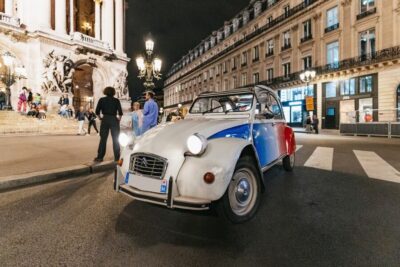
Discover Paris by Night in a Vintage Car with a Local
Read our review →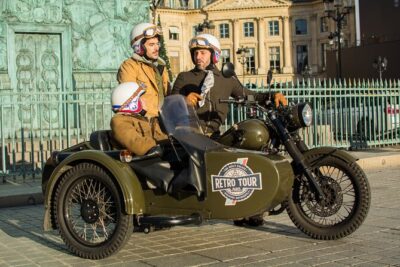
Paris Private Flexible Duration Guided Tour on a Vintage Sidecar
Read our review →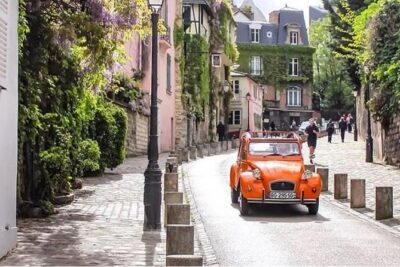
Vintage 2CV Adventure: 2 -Hour Paris Secrets Tour
Read our review →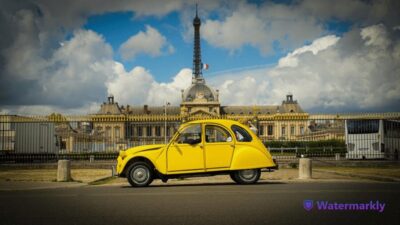
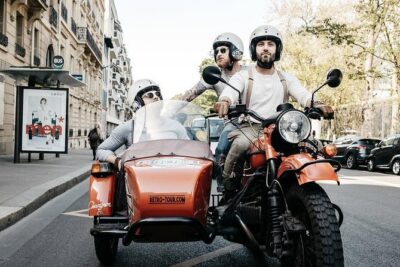
Paris Vintage Private City Tour on a Sidecar Motorcycle
Read our review →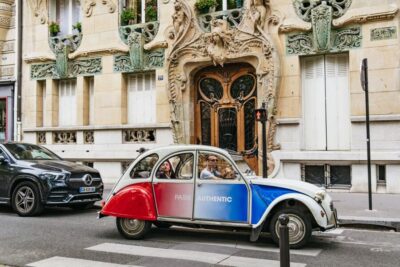
Off-the-Beaten Track in Paris: 2-Hour Vintage 2CV Tour
Read our review →Browse the lists this tour appears in