Reviewed · TICKETS
Paris: Conciergerie Ticket with Histopad
Guillotine history, set in stone. The Conciergerie is one of those places where the building itself explains the French Revolution, and I love that you can pair the prison layout with the HistoPad 3D recreation of Marie Antoinette’s cell. The one drawback to plan around is that this is a self-guided visit, so navigation and getting the most from the audio can take a little effort.
You’ll spend 1 day at the site, starting at 2 Boulevard du Palais in the 1st arrondissement, and you can use an included audio guide in many languages. It’s a focused visit, and that helps the experience feel sharp instead of rushed. If you’re expecting a guided walk-through, you might find the self-guided approach less satisfying.
In This Review
- Key highlights worth centering your visit on
- Why the Conciergerie feels different than most Paris history stops
- Price, what’s included, and how it stacks up for value
- Start at 2 Boulevard du Palais, then plan your flow
- From royal palace to “antechamber to the guillotine”
- Cells and tombs: the emotional range of the Revolution
- Marie Antoinette’s cell, explained through the HistoPad
- Salle des Gens d’Armes: the medieval hall that still hits
- Self-guided audio and wayfinding tips that actually help
- When free entry applies, and who should plan for tickets
- Closures and timing: the small rules that affect your day
- Who this Conciergerie ticket suits best
- Should you book the Conciergerie ticket with HistoPad?
- FAQ
- Where is the meeting point for this experience?
- How long is the visit?
- How much does the ticket cost?
- Is the visit self-guided?
- What is included with the ticket besides entry?
- What languages are available for the audio guide and HistoPad?
- Is Sainte-Chapelle included in this ticket?
- What time limits should I know about?
- What should I bring and what is not allowed?
- Are there any free entry options?
Key highlights worth centering your visit on
- Revolutionary prison rooms in an old royal palace: A space that literally changes purpose over centuries
- HistoPad 3D cell recreation of Marie Antoinette: Augmented visuals for a hard-to-picture setting
- Cells plus tombs of Revolution heroes: Personal and political history in the same footprint
- Marie Antoinette’s chapel prison setting: The place connected to her confinement
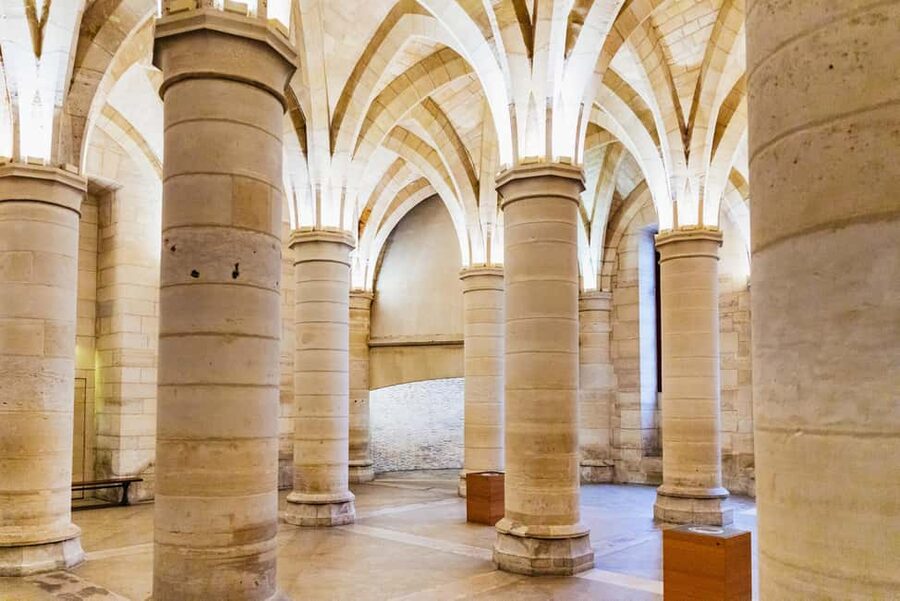
- Salle des Gens d’Armes: The largest remaining medieval hall in Europe
- Audio guide in multiple languages: Built for self-paced touring
A handful more Paris options to weigh up
- Disneyland® Paris 1-Day Ticket
★ 4.6 · 49,412 reviews - Paris: Versailles Palace and Gardens Full Access Ticket
★ 4.6 · 41,579 reviews - Paris: Arc de Triomphe Rooftop Tickets
★ 4.6 · 34,264 reviews - Paris: Orsay Museum Entry Ticket
★ 4.7 · 25,647 reviews
Why the Conciergerie feels different than most Paris history stops

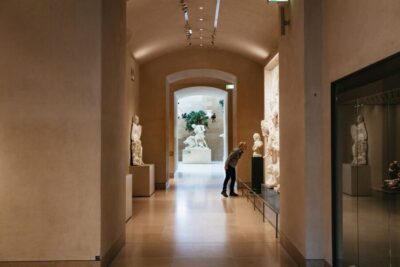
This is not a museum you wander through for pretty rooms. The Conciergerie started as a royal palace in the 14th century, then shifted into a prison when the royal family moved residence. That change matters, because you feel the architecture turning into confinement instead of being “repurposed” on paper only.
What I like most is the way the site compresses a messy story into real spaces: the late stage of the monarchy, the revolution’s justice machine, and the chilling sense that people were processed quickly. Add the HistoPad recreation and it helps your brain connect what you’re seeing with what the space used to be.
Price, what’s included, and how it stacks up for value
This ticket runs about $15 per person and is valid for 1 day. For that price, you’re not just buying entry. You get a self-guided visit, an audio guide, and access to the HistoPad experience tied to Marie Antoinette’s cell.
That combination is the value play. Self-guided works well here because the Conciergerie is designed to be understood room by room. The HistoPad part is especially helpful if you like your history with a visual “before and after,” since parts of the original spaces have disappeared.
One planning note: the Conciergerie visit does not include entrance to Sainte-Chapelle. If you want both, you’ll need to book the sites separately and manage your time.
Start at 2 Boulevard du Palais, then plan your flow

Your meeting point is the Conciergerie itself, at 2 Boulevard du Palais, 75001 Paris. I suggest showing up ready to move, because the last entrance is 30 minutes before closing time, and the HistoPad is distributed only until 4:15 PM.
Also note the site can be closed on May 1 and December 25. If your dates fall near those days, it’s worth checking availability early so you don’t lose your slot.
If you travel with a big bag, don’t. Luggage or large bags are not allowed, so pack light and bring only what you need for a day walk through stone corridors.
From royal palace to “antechamber to the guillotine”
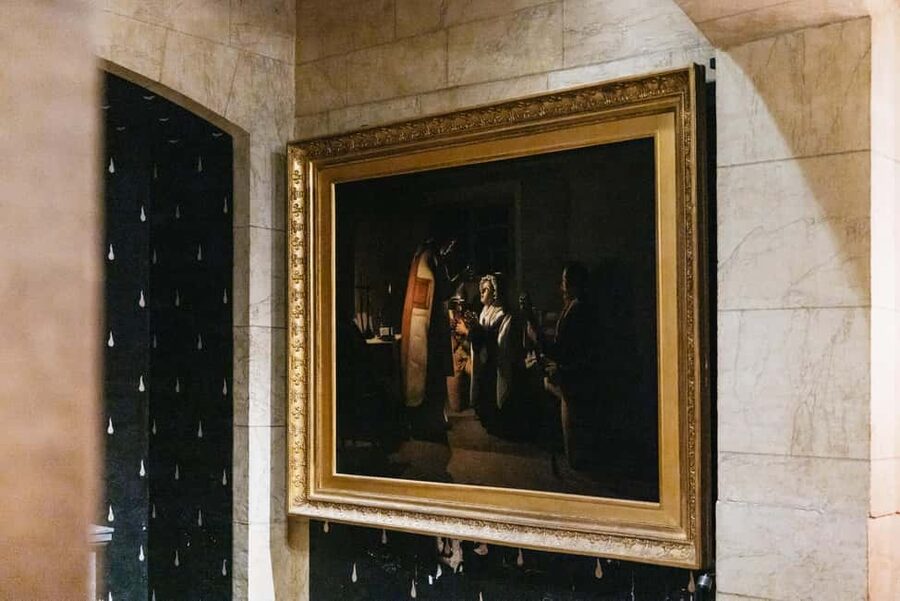
Once you’re inside, the main theme is transformation. The building began as a royal palace in the 14th century. When the royal family relocated, the space shifted roles and became a prison, and during the French Revolution it earned the grim nickname the antechamber to the guillotine.
I like approaching this story visually. When you look around, keep asking yourself what the room was built to do, then how that purpose flips. That mental game helps history feel less like dates and names and more like how power operates in physical space.
If this one is booked out, Paris has these too:
- Paris: 1-Hour Seine Cruise departing from the Eiffel Tower★ 4.4 · 77,472 reviews
- Paris: Evening River Cruise with Music★ 4.4 · 22,721 reviews
- Paris: Eiffel Tower Entry Ticket with Optional Summit Access★ 4.4 · 20,035 reviews
- Eiffel Tower Dedicated Reserved Access Summit or 2nd Floor★ 4.3 · 18,352 reviews
Cells and tombs: the emotional range of the Revolution
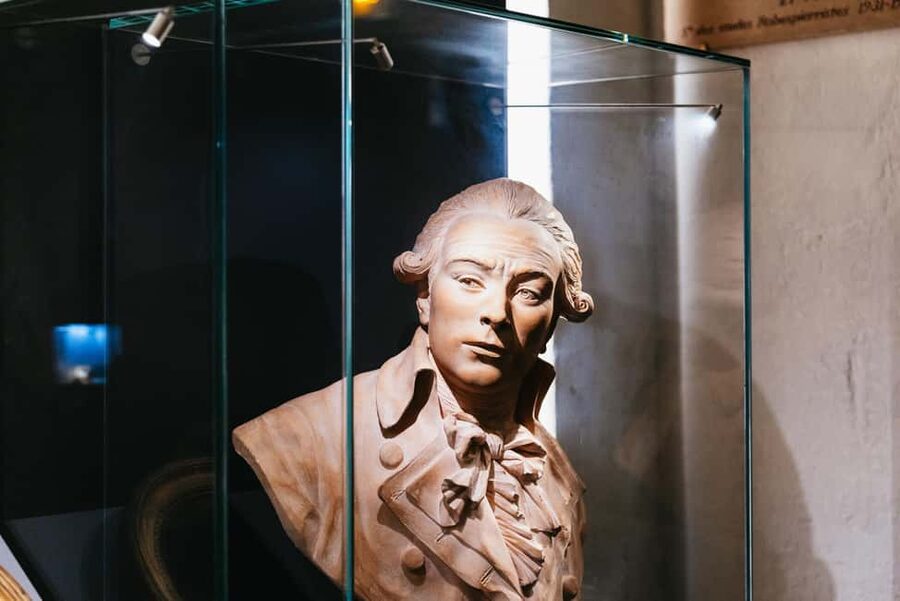
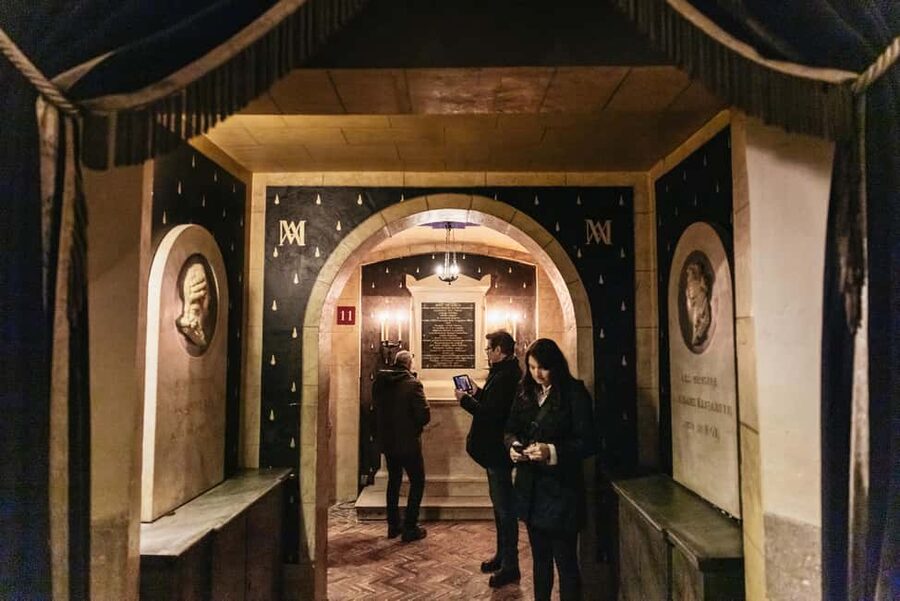
You’ll explore cells of criminals and then see the tombs of heroes of the French Revolution. That mix can feel jarring, but it’s also honest. Revolutions often recycle the same spaces for opposite meanings, and the Conciergerie is exactly that kind of place.
Here’s a practical way to make it land. Spend a little extra time in the cell areas, then slow down again at the tombs. If you rush, you’ll miss the contrast between confinement and commemoration. If you pace it, the building becomes a timeline you can read.
The site also includes the chapel that served as the prison cell where Marie Antoinette was held. Even if you already know the broad story, the location connection makes it feel more immediate.
Marie Antoinette’s cell, explained through the HistoPad
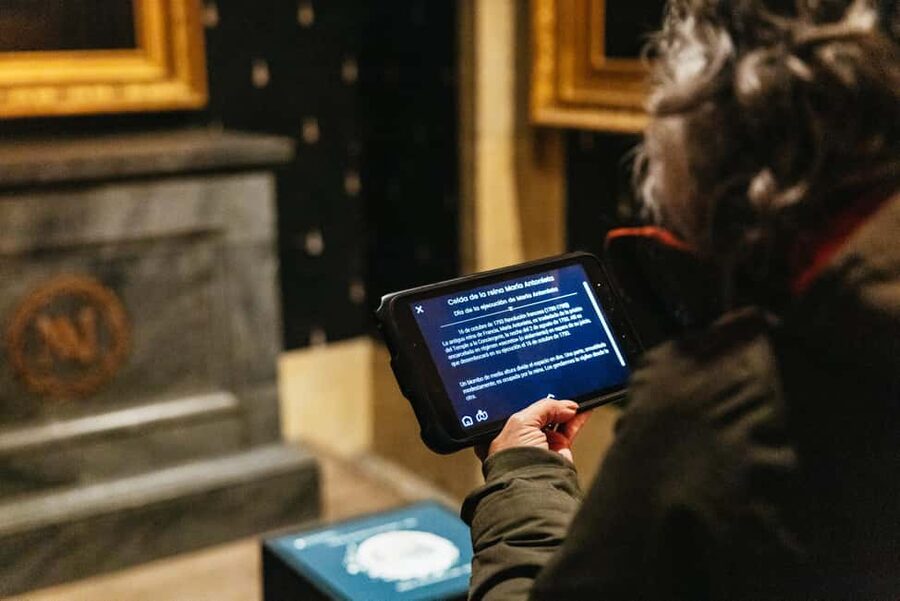
The HistoPad is the standout feature for people who want their history with a visual assist. You’re getting a HistoPad 3D reproduction of Marie Antoinette’s cell, available in multiple languages including French, English, German, Spanish, Italian, Japanese, and Chinese.
What this does for you: it tackles the biggest problem with ruins and transformed spaces, you can’t always tell what used to be there. The HistoPad helps you mentally rebuild the missing parts, so the chapel and cell setting clicks into place instead of staying abstract.
Timing matters for the HistoPad. The device is distributed to visitors until 4:15 PM, so if you’re a late-day starter, you risk missing this element. I’d rather you build your schedule around it, not bolt it on at the end.
Language is solid for international visitors too. The listed audio guide languages include Chinese, English, French, German, Italian, Spanish, Japanese, Korean, and Portuguese, so you’re not stuck with one option.
Salle des Gens d’Armes: the medieval hall that still hits
Near the later part of the visit, you’ll encounter the Salle des Gens d’Armes, described as the largest remaining medieval hall in Europe. This is where the experience shifts from “prison story” to “big medieval architecture moment.”
I find it useful to look up here. A hall like this is about scale, not detail, and that scale changes how you interpret everything around it. If you understand how enormous the space was meant to be, you can better grasp what it means to repurpose a grand setting into something brutal and controlled.
Even if you only take a minute to stand and orient yourself, do it. The room is your pause point, and that helps the earlier cell sections settle into your memory.
Self-guided audio and wayfinding tips that actually help
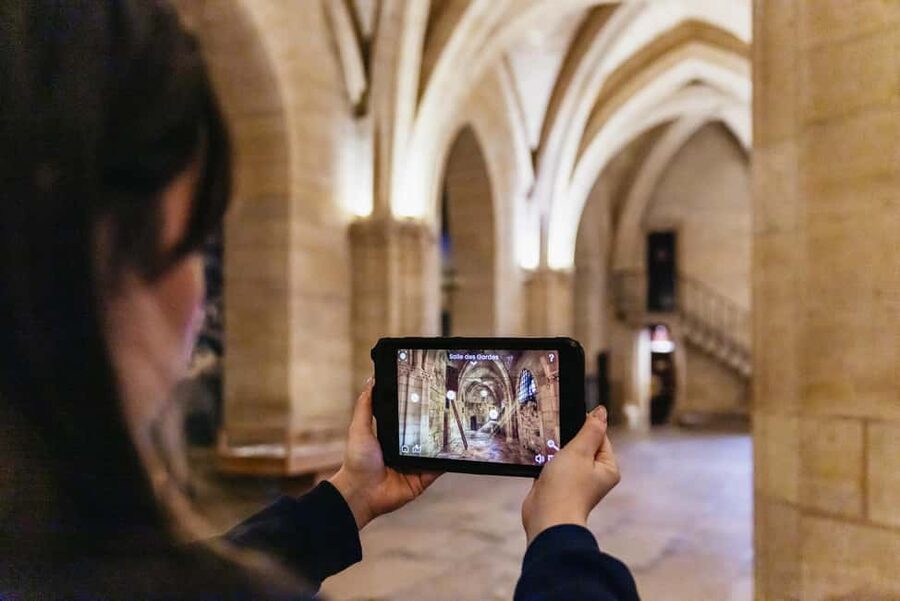
This is a self-guided visit. That’s great for flexibility, but it means you carry the responsibility for your own pacing and navigation. One reason people sometimes feel frustrated with audio at historic sites is that they expect the route to be obvious.
Here’s what I recommend so you don’t waste time:
- Start early enough that you can find your first key section calmly.
- Keep an eye on the audio guide prompts and align them with what you’re standing in front of.
- If you get turned around, pause. Don’t keep walking hoping the audio will eventually catch up. Slow down and reset your bearings.
A small but important travel habit: keep your ID and passport ready. You’ll need passport or ID card, and there are free entry categories tied to age and EU status that require onsite ticketing.
When free entry applies, and who should plan for tickets
You can get free entrance in a few specific cases. The site is free for visitors under 18, and for EU citizens under 26 with photo ID. That EU under-26 category still requires a ticket, and that ticket is issued directly onsite.
There are also free entrance days. The first Sunday of January, February, March, November, and December is listed as free entry. European Heritage Days also provide free entrance, during the third weekend of September each year.
If you qualify, treat free entry as a ticket, not a casual walk-in. Arrive prepared with photo ID, and allow extra time for onsite handling.
Closures and timing: the small rules that affect your day
Two closures are noted: May 1 and December 25. Build around those dates if you’re traveling around holidays.
For timing, remember the last entrance is 30 minutes before closing time. Also remember the HistoPad distribution ends at 4:15 PM. Those two rules can completely change your experience if you plan loosely, so I’d map your visit around them rather than hoping you can take it easy.
One more practical note: the tour is valid for 1 day, but starting times require availability checks. If you’re booking last minute, you might find fewer options.
Who this Conciergerie ticket suits best
This is best for you if you want a compact, high-impact history visit. The Conciergerie covers a specific slice of revolutionary Paris, and it does it through the actual spaces where events unfolded.
You’ll likely enjoy it more if you:
- Like history that is tied to architecture and physical layout.
- Want a self-paced experience with an audio guide rather than a scripted group tour.
- Care about Marie Antoinette’s setting and want the HistoPad 3D recreation to clarify what’s missing.
If you’re easily overwhelmed by grim subject matter, take that into account. This is a prison site, including cells and the revolutionary processing vibe. You can still enjoy it, just plan your emotional pace like you would at any intense memorial or historic crime scene.
Should you book the Conciergerie ticket with HistoPad?
Book it if you want a single-ticket experience that combines prison cells, Revolution tombs, and a visual 3D cell recreation. The HistoPad makes the hardest-to-imagine part of the story more understandable, and the Salle des Gens d’Armes gives you a powerful architectural “reset.”
Skip it or rethink your expectations if you need a fully guided, step-by-step experience. Since it’s self-guided, you’ll get the most by staying attentive to the audio guide and allowing time for the HistoPad handout.
If you’re flexible and show up with light luggage, a photo ID ready, and enough time before the HistoPad distribution deadline, this is a good value way to see the Conciergerie in a format that helps you actually understand what you’re looking at.
FAQ
Where is the meeting point for this experience?
The meeting point is the Conciergerie, 2 Boulevard du Palais, 75001 Paris.
How long is the visit?
The experience is listed as valid for 1 day.
How much does the ticket cost?
The price is listed as $15 per person.
Is the visit self-guided?
Yes. The ticket includes a self-guided visit.
What is included with the ticket besides entry?
Included are the entrance ticket, the self-guided visit, and the HistoPad 3D reproduction of Marie Antoinette’s cell.
What languages are available for the audio guide and HistoPad?
The audio guide is available in Chinese, English, French, German, Italian, Spanish, Japanese, Korean, and Portuguese. The HistoPad 3D reproduction is available in French, English, German, Spanish, Italian, Japanese, and Chinese.
Is Sainte-Chapelle included in this ticket?
No. Entrance to Sainte-Chapelle is not included.
What time limits should I know about?
The last entrance is 30 minutes before closing time. The HistoPad is distributed to visitors until 4:15 PM.
What should I bring and what is not allowed?
Bring a passport or ID card. Luggage or large bags are not allowed.
Are there any free entry options?
Yes. Entry is free for visitors under 18 and for EU citizens under 26 with photo ID, with a ticket issued onsite. Free entry days include the first Sunday of January, February, March, November, and December, and European Heritage Days (third weekend of September).
Newest write-ups from Paris





Tickets, compared.


Versailles Palace and Gardens Full Access Ticket
Read our review →


Eiffel Tower Entry Ticket with Optional Summit Access
Read our review →
Moulin Rouge Cabaret Show Ticket with Champagne
Read our review →
Montparnasse Tower Observation Deck Entry Ticket
Read our review →