
Reviewed · WORKSHOPS
Paris: Couture workshop, upcycle your own jacket
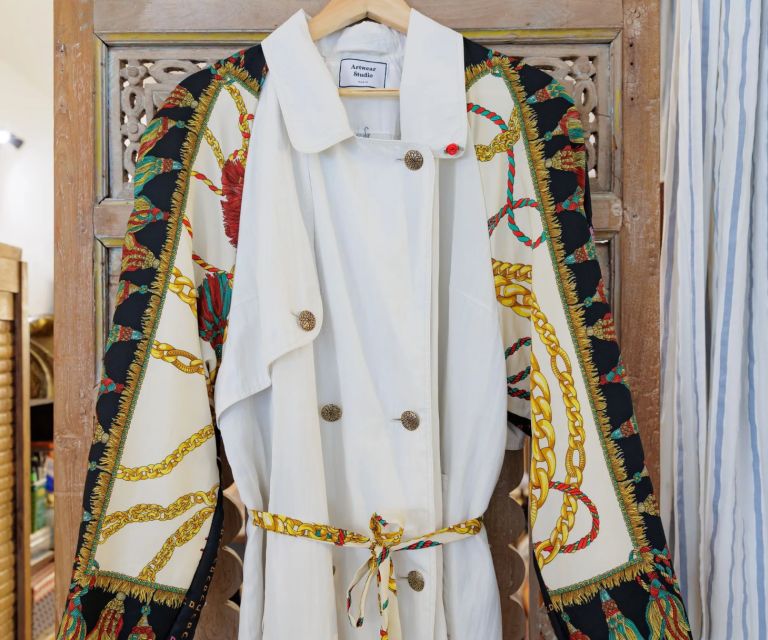
Old jackets, new life, in couture style. Paris upcycling sounds trendy, but this workshop turns it into real hands-on making, with an experienced designer (Tara) and a clear goal: leave with a jacket you helped create. I like the idea of starting from actual thrift and offcuts, then learning structured techniques that you can reuse again later.
What I really love is the chance to get personal couture instruction while you build a custom piece, not just follow a demo. I’m also drawn to the mix of patchwork, cut out, and embroidery, because it gives you options instead of forcing one look. The only potential drawback is time and expectation, this is a 3-hour class, so you will get guided steps, not a long fashion-school project.
In This Review
- Key points to know before you go
- Finding Artwear Studio, black door code included
- Choosing your jacket: thrift finds and luxury cutoffs
- The couture lesson plan: patchwork, cut out, embroidery
- 3 hours of hands-on upcycling, with real guidance
- What makes the finished jacket feel truly yours
- Price and value: why $170 can make sense
- Language, pacing, and who this fits best
- How to plan your day around this workshop
- Should you book this couture upcycle workshop?
- FAQ
- Where is the workshop located?
- How long is the workshop?
- How much does it cost?
- Where do I meet the instructor?
- What group size should I expect?
- What languages are spoken during the workshop?
- Can I bring my own jacket to upcycle?
- What techniques will I learn?
- Who is the workshop not suitable for?
Key points to know before you go
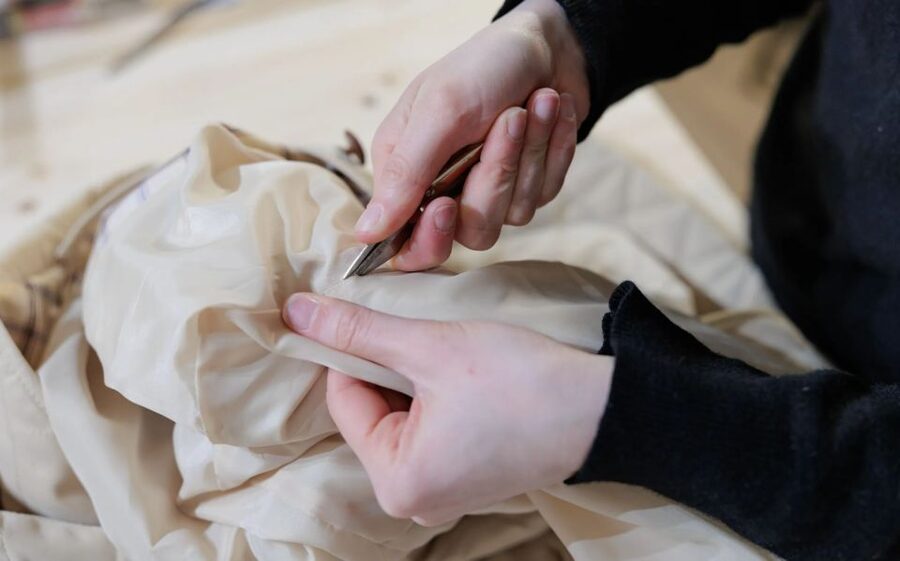
- Small group (up to 5) means you actually get attention while cutting, sewing, and problem-solving
- Designer-led workflow with Tara helps you translate your taste into wearable design choices
- Patchwork, cut out, and embroidery let you pick one technique or combine several
- Thrift-store jackets and fabric cutoffs give you variety, including luxury-brand scraps
- Eco-responsible upcycling materials keep the focus on reuse, not waste
Other Paris ateliers to spend an afternoon in:
- Fragonard Paris: Mini Perfume Workshop
★ 4.5 · 1,924 reviews - Paris: Macaron Class at Galeries Lafayette
★ 4.2 · 1,196 reviews - Paris Cooking Class and Lunch with Wine plus Market Visit Option
★ 5.0 · 1,024 reviews - Paris Croissant Small-Group Baking Class with a Chef
★ 5.0 · 910 reviews
Finding Artwear Studio, black door code included
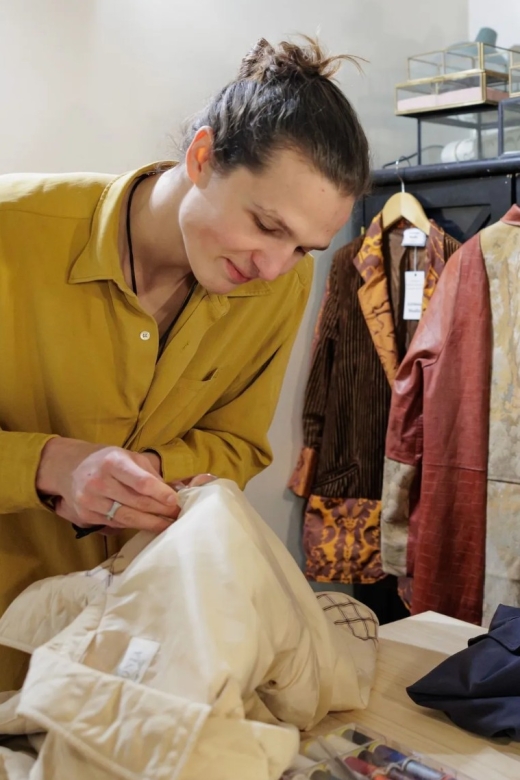
This is a studio workshop, not a classroom with fold-up tables. You’ll meet at a black door with code A5961, building A, 2nd floor. If you’re the type who likes to arrive early and breathe, plan a little buffer time, because finding a door code in a dense neighborhood can take longer than you expect.
The workshop is set in the Ile-de-France area, a short ride away from Montmartre. Expect the vibe you want for this kind of class, creative and practical, with enough calm that you can focus on fabric, not foot traffic.
Also, keep your expectations adult-friendly. The workshop isn’t suitable for children under 10, which tells you it’s designed for people who can handle careful cutting and sewing.
Choosing your jacket: thrift finds and luxury cutoffs
The heart of this experience is your starting point. When you arrive, Tara introduces upcycling, then shows her own creations. It’s the best kind of inspiration, practical examples that connect technique to a finished jacket.
Then you get to choose what you’ll transform. You can expect:
- jackets selected from thrift stores in different sizes
- fabric cutoffs from luxury design houses
That detail matters more than it sounds. When you’re upcycling, fabric choice changes everything: drape, weight, and how a seam behaves later. Giving you a selection across sizes means you’re more likely to find something that fits your body and your taste, rather than forcing a jacket to work when it just won’t.
If you want to bring your own jacket, that’s optional. In real life, this is a great lever for personalization. But only bring it if you’re okay with the possibility that it won’t end up being a perfect match for the techniques you choose in the workshop. The studio’s options are curated for making, so they start you in a better place.
The couture lesson plan: patchwork, cut out, embroidery
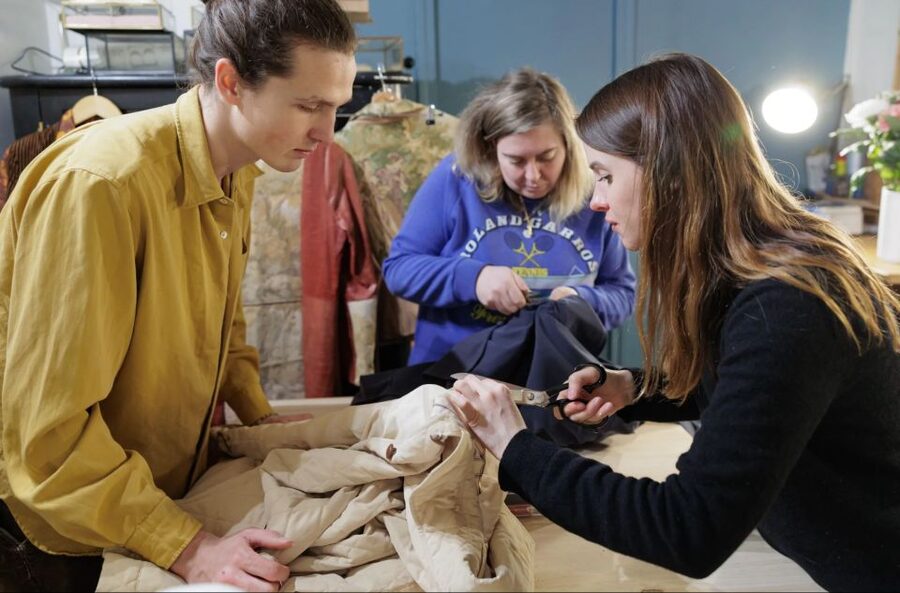
Once you pick your base jacket, Tara guides you through three techniques. You can focus on one, or combine all three. That flexibility is a big deal, because it turns the workshop into a design experience, not a rigid craft program.
Here’s what each technique practically gives you:
Patchwork
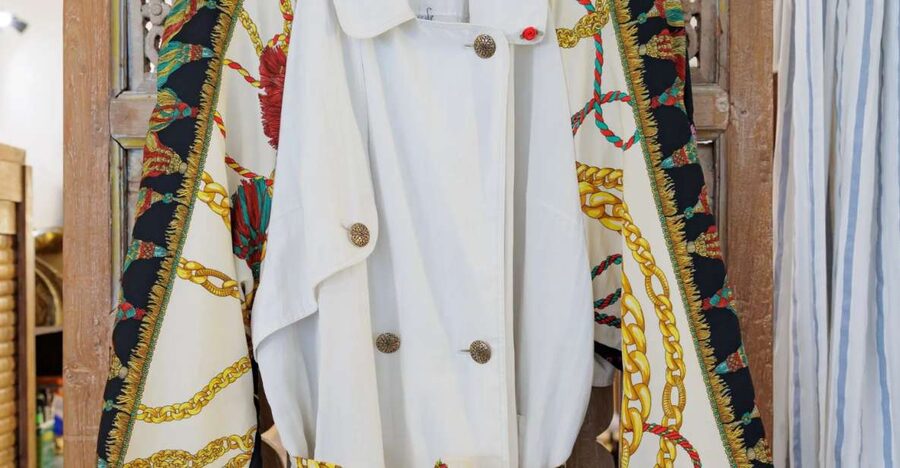
Patchwork is the easiest way to add character fast. It helps you cover wear, use offcuts strategically, and build a design that looks intentional instead of patchy. You’ll see how to place pieces so they look like part of a garment, not random additions.
Cut out
Cut out work is where your jacket starts to look more fashion-forward. It can also help you refine shape or create a visual line. This technique typically demands patience, because you’re removing fabric, not just adding it. If you like bold, this is the one to try.
Embroidery
Embroidery is the finishing touch that makes something feel designed. It’s also a great way to create detail without changing the entire structure of the jacket. Even if you feel nervous about cutting, embroidery can help you contribute a signature look.
The big win is that Tara doesn’t treat these as separate crafts. She treats them like tools. You decide how much of each tool you want, and you leave with a jacket that reflects your choices.
3 hours of hands-on upcycling, with real guidance
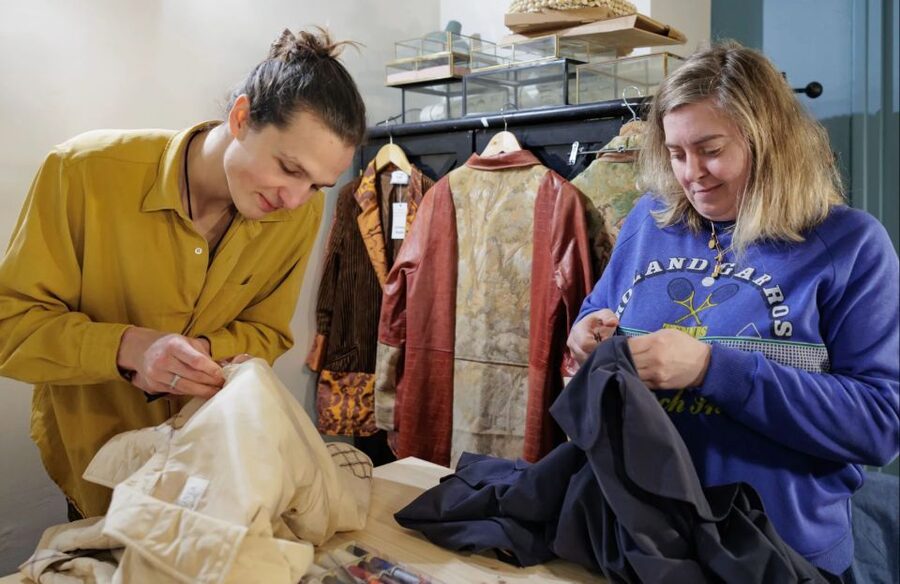
This is a small group workshop, limited to 5 participants. That size is not a throwaway detail. In sewing and cutting, your questions need answers quickly. A bigger class can turn into waiting time. Here, the setup supports close coaching, and that shows in the tone of the experience.
What you’ll do during the making phase:
- Reinvent your wardrobe by turning the jacket into your design
- Transform the old piece into something unique and stylish
- Learn why giving a second life matters, both creatively and practically
From the feedback you can infer a pattern: Tara is patient and skilled, and that combination is what makes beginners comfortable. People consistently highlight the same point, careful instruction that doesn’t rush you.
Also, there’s a momentum effect. At first you’re staring at fabric and thinking, Can I really do this? Then your jacket starts changing in front of you, and suddenly you’re moving from technique to design decisions. That shift is one reason this feels fun, not stressful.
A useful tip for you, come with a clear idea of what you want the jacket to feel like. Maybe you want more texture, more contrast, or more decoration. Even a simple goal helps, like I want it to look more modern, or I want a romantic detail, or I want it to feel sharper. Without an idea, it’s easy to spend your energy overthinking placement.
If this one is booked out, Paris has these too:
- Paris: 1-Hour Seine Cruise departing from the Eiffel Tower★ 4.4 · 77,472 reviews
- Disneyland® Paris 1-Day Ticket★ 4.6 · 49,412 reviews
- Paris: Versailles Palace and Gardens Full Access Ticket★ 4.6 · 41,579 reviews
- Paris: Arc de Triomphe Rooftop Tickets★ 4.6 · 34,264 reviews
What makes the finished jacket feel truly yours
You don’t just walk away with a jacket that’s altered. You leave with a jacket that has your decisions baked into it. Because you choose the starting jacket, then choose the technique combination, your result is naturally one-of-a-kind.
Durability and construction matter too. The workshop emphasizes creating pieces that last, not just pieces that look cute today. In other words, you’re learning to treat the jacket like a real garment, not a craft project.
And the sustainability angle is practical, not preachy. Upcycling here is about reusing fabric that already exists and reducing the impulse to discard. The class makes that lesson tangible because you can see the transformation, and you can wear what you made.
If you’re worried you’ll end up with something too experimental, don’t be. Tara’s approach appears to balance creativity with wearable design, and the techniques offered are flexible enough to keep things grounded.
Price and value: why $170 can make sense
The price is $170 per person for a 3-hour workshop. On paper, that might sound like a lot compared to buying a jacket. But you’re not paying for an off-the-rack item. You’re paying for:
- time with an experienced designer
- structured couture techniques
- a curated vintage jacket to upcycle
- upcycling materials
- a small group setting, limited to 5
The value logic is pretty simple. Sewing instruction from a professional costs money, and you’re also getting the materials and base garment included. If you’ve ever tried to learn couture-style skills from videos, you know the missing ingredient is feedback. Here, you get feedback while you’re working.
It also helps that the studio uses a mix of materials that can include cutoffs from luxury design houses. Even if you never see a pricing breakdown, that kind of fabric access is part of what you’re paying for.
If you want a cautious way to judge value, think like this: would you pay for a hands-on class plus the jacket components? If yes, this is an efficient way to get both skills and a finished product.
Language, pacing, and who this fits best
The instructor offers English and French, which is great if you speak one of those languages comfortably. In a workshop setting, language matters because sewing is full of tiny steps, terms, and quick adjustments. Having bilingual instruction reduces the frustration factor.
The pacing is guided but hands-on. You’re in a 3-hour session, so you’ll be working through key steps and technique choices without dragging into a long day. That makes it a good fit even if you have limited time in Paris.
Who it suits well:
- Adults who enjoy crafts and want real instruction
- Anyone curious about upcycling but wants a structured starting point
- People who like fashion design, even if they are beginners
Who should be more cautious:
- If you dislike hands-on cutting or sewing entirely, you might find it frustrating
- If you’re bringing a heavily damaged jacket and expect a perfect outcome, you may want to consider starting from the studio’s curated options instead
- Families with kids under 10 should skip, since it is not suitable for younger children
How to plan your day around this workshop
This is the kind of activity that works best when you don’t schedule yourself too tightly. You’ll be doing fine work, so build in time before and after to reset.
A few practical planning ideas:
- Eat beforehand or plan a nearby meal, so you don’t have to think about food while you concentrate
- Wear clothes you can move in, and that you won’t worry about if you get a little fabric dust
- Bring a positive mindset. You’re creating something new, and early stages can look messy before they look finished
If you’re thinking about what to bring, remember that you may bring your own jacket optionally. If you decide not to, you don’t need to overpack. The studio provides a vintage jacket to upcycle and the upcycling materials for your piece.
Should you book this couture upcycle workshop?
Book it if you want a creative Paris workshop that gives you more than a souvenir. This is a skill-building experience with a strong focus on wearable outcomes. I’d especially recommend it if you like the idea of learning couture techniques but also want a sustainability payoff that you can hold in your hands.
Skip it if you only want something laid-back and low-effort. Even with careful guidance, this is real making, with cutting, sewing, and technique choices. Also skip if you’re traveling with a child under 10.
If you’re on the fence, here’s the deciding question. Do you want to leave with a jacket you helped design, using techniques you can try again later? If the answer is yes, this workshop is a smart use of your time in Paris.
FAQ
Where is the workshop located?
The workshop is in the Ile-de-France area of France, in a Parisian atelier near Montmartre.
How long is the workshop?
It lasts 3 hours.
How much does it cost?
The price is $170 per person.
Where do I meet the instructor?
Meet at the black door with code A5961, building A, 2nd floor.
What group size should I expect?
The workshop is a small group, limited to 5 participants.
What languages are spoken during the workshop?
The instructor speaks English and French.
Can I bring my own jacket to upcycle?
Yes, bringing your own jacket is optional.
What techniques will I learn?
You’ll be guided through patchwork, cut out, and embroidery, and you can focus on one or combine several.
Who is the workshop not suitable for?
It is not suitable for children under 10.
Newest write-ups from Paris






Workshops, compared.



Paris Cooking Class and Lunch with Wine plus Market Visit Option
Read our review →
Paris Croissant Small-Group Baking Class with a Chef
Read our review →

Paris Cooking Class: Learn How to Make Macarons
Read our review →
Browse the lists this tour appears in