
Reviewed · WORKSHOPS
Paris: Crêpe and Galette Making Workshop with Cider
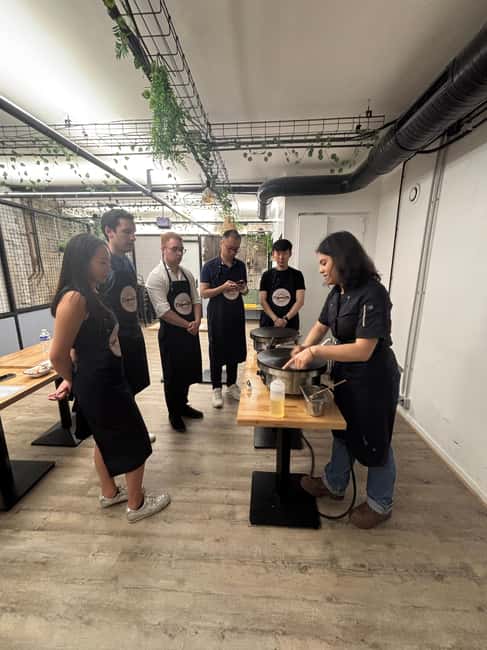
Crêpes get serious the moment you pour batter. In a Paris workshop at Crêperie Elo, I love the hands-on coaching and the cultural stories that go with it, and you finish by making one sweet crêpe and one savory buckwheat galette. One possible drawback is that the class is only 2 hours, so you will not linger, even if you are having a great time.
This is designed for real practice, not just watching. You’ll work with a real crêpe maker, use organic, high-quality ingredients to build your batter from scratch, and get instruction with enough time to make it right.
Language is friendly. Led by pastry chef Fatima in English, the class supports basic French cues, and the group stays small (max 8), which makes it easier to ask questions when your first flip is… imperfect.
In This Review
- Key things to look forward to
- Finding Crêperie Elo on Boulevard Saint-Michel (and getting into the classroom)
- Chef Fatima’s approach: technique plus stories you can use
- From organic ingredients to batter: what you’re really learning
- Two cooking stations: sweet crêpe and savory galette in one session
- The tasting and cider pairing: a small meal with context
- Equipment and organization: why the included tools matter
- Price and value: is $93 per person worth it?
- Who should book this workshop (and who should skip it)
- Should you book the crêpe and galette workshop in Paris?
- FAQ
- How long is the crêpe and galette workshop?
- Where is the meeting point?
- What dishes will I make?
- Do I get to taste what I cook?
- What is included in the drink?
- Is the class taught in English?
- How big is the group?
- Is this workshop suitable for young children?
- Is the workshop price $93 per person?
- Can I cancel or pay later?
Key things to look forward to
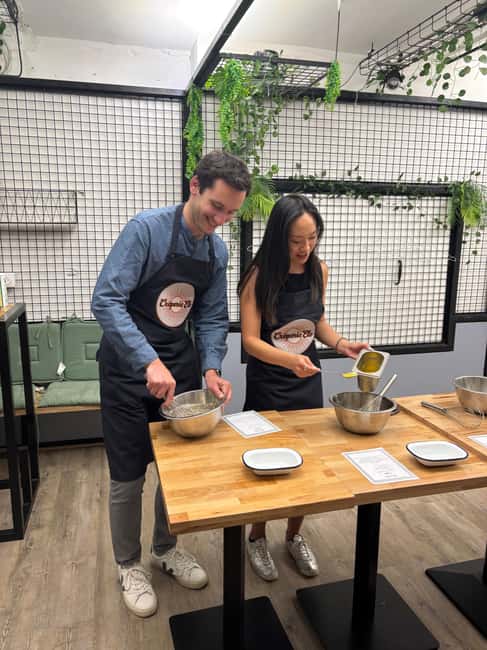
- A small group (max 8), so the chef can actually correct your technique
- Batter from scratch using organic, high-quality ingredients, not shortcuts
- You cook both a sweet crêpe and a savory buckwheat galette, so you leave with range
- Hands-on use of a real crêpe maker, with step-by-step guidance
- Cider pairing with your food, plus a non-alcoholic option
- Chef storytelling about legends and history, so you understand what you’re making
Other Paris ateliers to spend an afternoon in:
- Fragonard Paris: Mini Perfume Workshop
★ 4.5 · 1,924 reviews - Paris: Macaron Class at Galeries Lafayette
★ 4.2 · 1,196 reviews - Paris Cooking Class and Lunch with Wine plus Market Visit Option
★ 5.0 · 1,024 reviews - Paris Croissant Small-Group Baking Class with a Chef
★ 5.0 · 910 reviews
Finding Crêperie Elo on Boulevard Saint-Michel (and getting into the classroom)
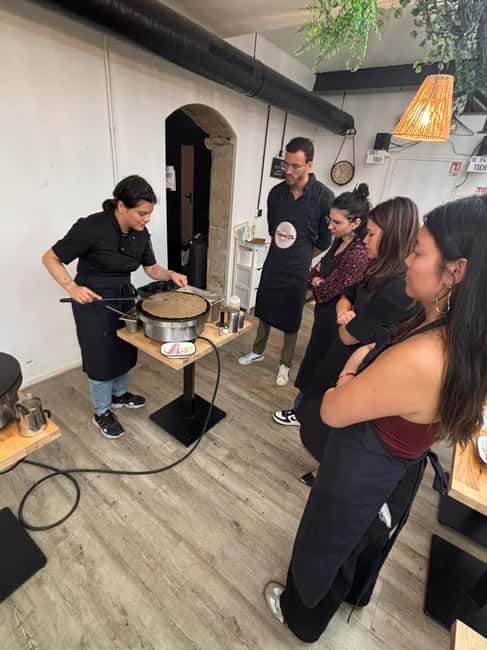
The experience starts at 49 Boulevard Saint-Michel, 75005 Paris, at Crêperie Elo and a nearby coffee shop area. You’ll need to enter the crêperie first, then the staff lead you to the class room. It’s a simple setup, but it also means you should arrive on time so you can start with the group instead of hovering near the doorway.
Because this workshop runs with a max group size of 8, the pace matters. The teaching flows better when everyone is present from the start, especially once batter and cooking start. If you are the type who likes to arrive late and snack your way through, you may find this format a little strict.
This location is also a practical advantage. Saint-Michel is a convenient Paris anchor point, and a short culinary class is easy to slot into a busy day. You get a full activity without losing half your evening to transport and waiting.
Chef Fatima’s approach: technique plus stories you can use
What makes this workshop feel more like a real class, not a food show, is how it balances technique and storytelling. Before you cook, you hear about the history and legends behind crêpes and galettes. That matters, because these dishes are not random street snacks, they are part of French food culture, and the background helps your brain remember the steps.
The chef-led instruction is also the main value driver. In the reviews, the guidance stands out for patience and humor, and that usually translates into practical teaching: you learn how to handle the batter, how to manage the pan, and what to look for visually while cooking.
Chef Fatima is also specifically noted as an excellent communicator in English. Even if your French is basic, you can still follow along. The class supports basic French cues, which is a nice touch in Paris, but the real focus stays on clear instruction.
One small consideration: this is not a private cooking show where every second is customized. Small groups are intimate, but you still follow a shared workflow. If you want total personalization on flavors and timing, you might feel the structure a bit more than you would in a fully private lesson.
From organic ingredients to batter: what you’re really learning
The core of the workshop is batter making from scratch. You work with organic, high-quality ingredients, and the chef teaches you how the batter should come together so you can pour and cook it confidently. For many people, this is the surprise. Crêpes look simple, but getting the batter right changes everything about the final texture.
Expect to learn a rhythm: mixing to the right consistency, then portioning and pouring at the right moment. The class includes ingredients, equipment, and instruction, so you are not left hunting down tools or translating recipes. You also avoid the common beginner problem of using the wrong pan heat and then blaming yourself for the outcome.
This is where the workshop earns its keep versus a casual tasting. You don’t just eat a crêpe, you understand the process enough to recreate it later. And because you make both a sweet crêpe and a savory buckwheat galette, you practice two different textures and cooking expectations.
In a hands-on format, you also get a better feel for what can go wrong. If your first attempt needs adjusting, that’s part of the learning arc. The relaxed, supportive environment matters because cooking skills take repetition, even with good instruction.
Two cooking stations: sweet crêpe and savory galette in one session
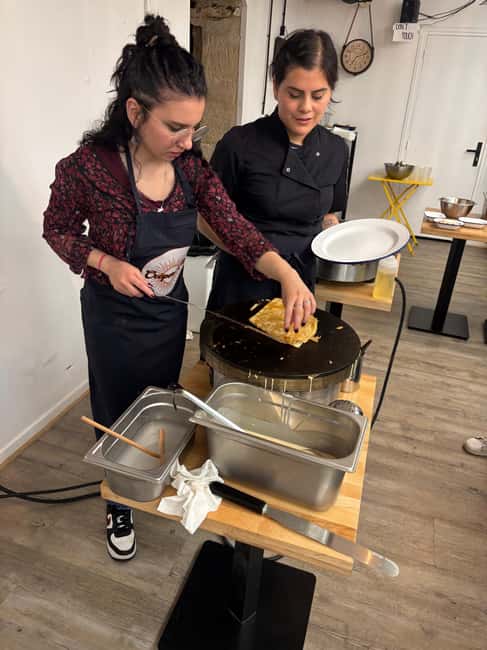
A smart part of the class flow is how it handles the two dish types. You may work in two groups at different stations, with one group focusing on galettes (savory buckwheat) and the other on crêpes (sweet). Then you come together around the shared experience so everyone still gets the full lesson.
That setup is useful because it speeds up practice. Instead of waiting while one group watches, you’re actively making, cooking, and learning from quick feedback. With a max of 8 participants, you still get attention from the chef, but the stations help keep the session moving.
For the sweet crêpe part, you’ll be guided through the steps of making and cooking the crêpe on the real crêpe maker. The goal is to learn how to spread the batter thinly and cook it to the right stage. For beginners, the main challenge is consistency and timing, not flair.
For the savory buckwheat galette part, the focus shifts. Buckwheat has its own character, and you’ll practice cooking and assembling with that in mind. You come away with a concrete understanding that a galette is not just a crêpe with a different name. It’s a different ingredient approach, which changes texture and how it cooks.
By the time you finish, you’ve produced both items included in the class: 1 sweet crêpe and 1 savory galette. That is a clear outcome, and it makes the value feel tangible.
If this one is booked out, Paris has these too:
- Paris: 1-Hour Seine Cruise departing from the Eiffel Tower★ 4.4 · 77,472 reviews
- Disneyland® Paris 1-Day Ticket★ 4.6 · 49,412 reviews
- Paris: Versailles Palace and Gardens Full Access Ticket★ 4.6 · 41,579 reviews
- Paris: Arc de Triomphe Rooftop Tickets★ 4.6 · 34,264 reviews
The tasting and cider pairing: a small meal with context
After you cook, you eat what you made. The included tasting gives you that nice payoff moment: you can finally compare the results from your own hands. And because the chef has just explained the history and legends, the food tastes better, not just because it’s fresh, but because you understand what you’re tasting.
You also get a glass of French apple cider, specifically Breton apple cider. There is also a non-alcoholic option, which makes the pairing feel flexible. This is a smart inclusion for a short workshop because it turns the class into a complete mini-experience, not just cooking practice.
Cider also pairs naturally with both sweet and savory elements, so you’re not stuck with a one-direction drink choice. If you are watching alcohol intake, the non-alcoholic option is the easiest win. If you do drink, this cider helps balance the richness that can come from working with batter and pan cooking.
If you are the type who wants a meal after, plan a light dinner. You’ll leave full enough to feel satisfied, but this is still a 2-hour class with limited portions included.
Equipment and organization: why the included tools matter
Everything you need is included: ingredients, equipment, instruction, and tasting. That sounds basic, but it’s actually the hidden advantage.
When cooking classes require you to bring or buy gear, you lose time and sometimes get stuck with the wrong tools. Here, you use the appropriate equipment in the right format, so your practice matches what you will try at home later.
Also, the workshop language is English. That means you can focus on technique without spending energy translating. Basic French cues are supported, so if you pick up a couple of extra words, it feels like a bonus rather than a barrier.
The class is private or small groups available, and the size cap of max 8 matters most if you like direct feedback. In larger classes, you often get a “good job” and a shrug. Here, the set-up makes it easier for the chef to see what you’re doing and respond.
Price and value: is $93 per person worth it?
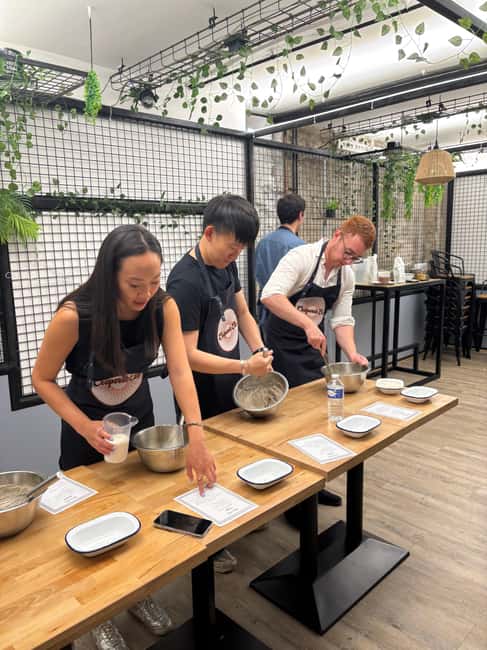
At $93 per person for 2 hours, the workshop can feel pricey if you compare it to buying a crêpe from a counter. But that comparison misses the point.
You are paying for (1) guided instruction, (2) ingredients and equipment included, (3) hands-on practice that ends with two cooked items, plus (4) cider and cultural storytelling. When you add those together, you’re basically buying a short culinary class, not a snack.
There’s also the practical value. Once you know how batter should look and how the pan behaves, you can make these dishes at home. That skill transfer is what turns the price into a longer-term payoff, especially if you like cooking or you want a fun souvenir that is actually usable.
The only price-related caution is time. Because it is only 2 hours, you need to be comfortable with a focused session. If you want a slow, multi-course meal, you might prefer a dinner experience instead.
Who should book this workshop (and who should skip it)
This is a great fit for people who want action. If you enjoy learning by doing and you like structured, friendly instruction, you’ll likely love it. It also works well for couples and solo travelers, since the class design is hands-on but still social.
Families can enjoy it too, with one real caveat: it is not suitable for children under 6. In the feedback, the experience has worked well even with kids in the group, but the age limit matters because cooking involves heat and tools.
If you are a strict beginner with no cooking experience, you should still be fine. The class starts from scratch and includes instruction, plus you make one sweet crêpe and one savory buckwheat galette. You leave with a result you can be proud of, not just a memory of watching someone else work.
If you hate mess, this might not be your ideal activity. Batter mixing and pan work can get a little hands-on. The good news is the chef instruction keeps it under control.
Should you book the crêpe and galette workshop in Paris?
If you want a memorable Paris food experience that is more than tasting, I think you should book this. The strongest reasons are simple: hands-on instruction, making both a sweet crêpe and a savory buckwheat galette, and getting Breton apple cider with your finished food.
Book it if you love practical skills and you want the story behind what you eat. It’s also a smart choice when you want a “one afternoon” activity in central Paris that doesn’t require planning a full meal plan.
Skip it if you want a long, leisurely dinner, or if you are uncomfortable with cooking in a short, energetic workshop format. Also keep the age rule in mind if you are traveling with young kids.
FAQ
How long is the crêpe and galette workshop?
The workshop lasts 2 hours.
Where is the meeting point?
The class meets at Crêperie Elo on 49 Boulevard Saint-Michel, 75005 Paris. You enter the crêperie first, then staff lead you to the class room.
What dishes will I make?
You will make 1 sweet crêpe and 1 savory buckwheat galette.
Do I get to taste what I cook?
Yes. Tasting is included, and you enjoy your handmade crêpe and galette.
What is included in the drink?
You get a glass of French apple cider. A non-alcoholic option is available.
Is the class taught in English?
Yes. The instructor teaches in English, with basic French cues supported.
How big is the group?
The class is limited to a maximum of 8 participants.
Is this workshop suitable for young children?
It is not suitable for children under 6 years old.
Is the workshop price $93 per person?
Yes, the price is $93 per person and it includes instruction, ingredients, equipment, and the food and cider described above. Personal expense is not included.
Can I cancel or pay later?
Free cancellation is available up to 24 hours in advance for a full refund. There is also an option to reserve now and pay later, so you can book without paying immediately.
Newest write-ups from Paris


Workshops, compared.

Paris Cooking Class and Lunch with Wine plus Market Visit Option
Read our review →
Paris Croissant Small-Group Baking Class with a Chef
Read our review →

Paris Cooking Class: Learn How to Make Macarons
Read our review →
Browse the lists this tour appears in