

Reviewed · WALKING TOURS
Paris: French Revolution Walking Tour
Revolution happened here, on real streets. This 2-hour French Revolution walking tour turns central Paris into a crime scene of ideas, rumors, and street power, moving through the places tied to conspiracy, intrigue, and the guillotine. You’re not stuck in a classroom. You’re walking among the stones where the Revolution reshaped the city.
I love the way the guide keeps it human and story-driven, with details that connect Louis XVI and Marie Antoinette to the Revolution’s breaking points. I also like the pacing, it stays energetic without rushing, and the stops feel varied enough to keep attention (especially if you ask questions, as several guides like François and Louis clearly did).
One thing to consider: finding your guide at the start can be slightly tricky since the meeting area is public space, and the route may follow a story arc rather than strictly chronological streets. If you hate last-second searching, arrive a few minutes early and confirm you’re in the right spot.
In This Review
- Key Points Before You Go
- Where You Start: Fontaine au Sphinx on Place du Châtelet
- What You Really Learn in 2 Hours
- The Walking Route: Châtelet to the Marais and Beyond
- Stop-by-Stop: A Story Arc, Not a Timeline Robot
- The early tension and the city’s temperature
- The crowd moment and a major summer turning point
- The guillotine endgame and the symbolic “justice”
- The city changes, even when the street view looks the same
- The Biggest Strength: Guides Who Can Handle Nuance
- Why the $46 Price Can Make Sense for a 2-Hour Walk
- Meeting the Tour Like a Pro: Timing, Shoes, and Expectations
- Who Should Book This Tour (and Who Might Skip)
- Should You Book the Paris French Revolution Walking Tour?
- FAQ
- Where does the tour start?
- How long is the tour?
- What language is the tour in?
- What is included?
- Is hotel pickup included?
- How much does it cost?
- Can I cancel and get a refund?
- Is the tour wheelchair accessible?
- Does the tour follow a strict timeline?
Key Points Before You Go
- Meet at Fontaine au Sphinx, Place du Châtelet for an easy start point in central Paris.
- A 2-hour story hunt that uses clues and built-in “finds” to keep the history moving.
- Louis XVI and Marie Antoinette via the guillotine, explained as part of a bigger political shift.
- A day-by-day lead up to major moments like 14 July, even when you’re not walking in perfect date order.
- Churches and neighborhood streets are used as stage sets for what changed in everyday Paris.
- English live guide with enough flexibility for Q and A, including guides such as François, Louis, Fran, and Guillaume.
Other arrondissements taken at walking pace:
- Paris Top Sights Half Day Walking Tour with a Fun Guide
★ 5.0 · 2,893 reviews - Montmartre Hidden Gems and Scenic Highlights Walking Tour
★ 5.0 · 2,684 reviews - Montmartre Hill French Gourmet Food and Wine Tasting Walking Tour
★ 5.0 · 2,588 reviews - Paris: Montmartre Highlights Walking Tour with a Local Guide
★ 4.9 · 2,318 reviews
Where You Start: Fontaine au Sphinx on Place du Châtelet
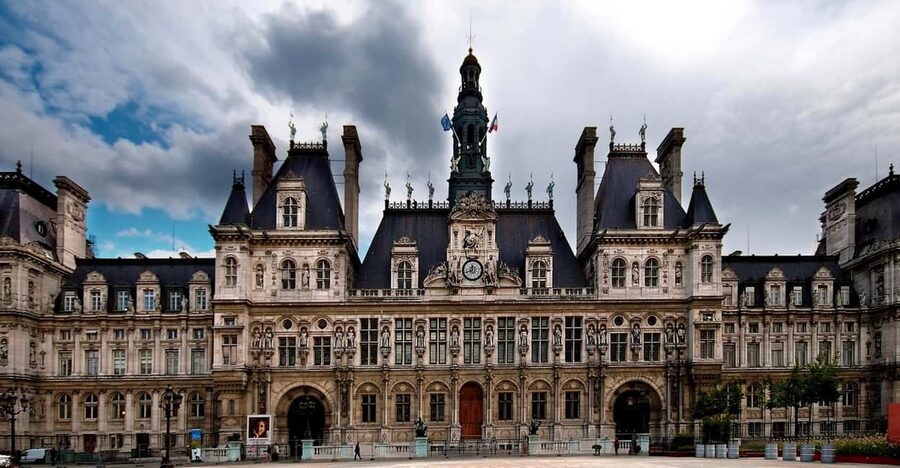
You’ll meet your guide in front of the Fontaine au Sphinx on Place du Châtelet. This matters more than you think, because the tour starts fast and it’s a walking route through busy streets.
From this spot, you get a strong “center of gravity” view of Paris. Place du Châtelet sits where lots of routes cross, so it’s a smart starting point for a Revolution story that involves crowds, messaging, and movement through the city. Also, since there’s no hotel pickup, you’ll want to be comfortable with short, efficient transit on your own before the walk begins.
Practical tip: if you’re prone to wandering when you arrive, stand still, pick a landmark, and check the group before you start moving. Some people found signage minimal, so patience helps.
What You Really Learn in 2 Hours
This is not a slow, year-by-year lecture. It’s closer to a guided investigation that compresses the Revolution into the moments that changed everything. The theme is how a political crisis became street-level force, and how that force reshaped Paris itself.
You’ll hear about the Revolution’s turning points that led to mass violence, including the famous endgame of the guillotine and the execution of Louis XVI and Marie Antoinette. You’ll also get the “how did we get here so fast” explanations, including the role of conspiracy and a darker chain of events tied to a key revolutionary.
Even if your French Revolution knowledge is basic, the structure works. The guide aims to fit the story into two hours, so you don’t leave with 200 dates in your head. You leave with a clear sense of cause and consequence, and a better feel for why Paris looked different once the Revolution’s logic took hold.
The Walking Route: Châtelet to the Marais and Beyond
I like that the route goes beyond the most obvious postcard angles. Starting near Châtelet and working into older Paris neighborhoods gives you a sense of what “revolution in the street” really means. You’re watching the city while learning how the city was watched, feared, and used.
One review mentioned La Marais specifically, and that matches the feel of a tour that wants you to notice architecture and street layouts as part of the story. The Marais has lots of layers, and that helps for a Revolution tale where different groups, ideas, and power struggles overlap.
You’ll also spend time around churches and other major stone landmarks. That’s a smart choice because churches were not just religious buildings in 1789 Paris. They were symbols, gathering points, and big public structures that could amplify crowds and messages. When the Revolution changes how people see authority, the physical city becomes part of the argument.
What you might miss on your own: the small cues. That’s where the tour’s “treasure hunt” feel comes in, with hidden objects and long-forgotten details that help you read the streets like evidence.
Stop-by-Stop: A Story Arc, Not a Timeline Robot
You should expect a route that tells the story in the order that makes sense dramatically. That’s why some people noted the walk isn’t strictly chronological. In practice, this is often better: it keeps you from getting lost in dates and helps you connect events to the locations and symbols that mattered.
Here’s how the tour experience tends to play out, conceptually:
If this one is booked out, Paris has these too:
- Paris: 1-Hour Seine Cruise departing from the Eiffel Tower★ 4.4 · 77,472 reviews
- Disneyland® Paris 1-Day Ticket★ 4.6 · 49,412 reviews
- Paris: Versailles Palace and Gardens Full Access Ticket★ 4.6 · 41,579 reviews
- Paris: Arc de Triomphe Rooftop Tickets★ 4.6 · 34,264 reviews
The early tension and the city’s temperature
You start with the build-up: how conspiracy, political maneuvering, and public anxiety create the conditions for violence. The guide uses the streets as a memory tool, so you start noticing how people moved through Paris and why certain places became magnets.
The crowd moment and a major summer turning point
The tour includes the Revolution’s big crowd energy, including a lead up to the storming of the Bastille. It’s described as a day-by-day walk in the lead-in, so even though your feet aren’t following a strict calendar, your brain gets the sequence.
The guillotine endgame and the symbolic “justice”
You’ll hear the grim details around the Revolution’s punishment system, including what happened to Louis XVI and Marie Antoinette. The tour treats the guillotine not just as spectacle, but as a political statement, which helps you understand why it became a turning point in public emotion.
The city changes, even when the street view looks the same
Late in the walk, the guide typically ties past to presence, which is where the tour feels most useful. You start noticing how modern Paris carries the imprint of that break with the old order.
A realistic drawback: if you came craving a perfectly dated map, the story-first route may feel slightly loose. But if you care more about cause and impact, the approach helps a lot.
The Biggest Strength: Guides Who Can Handle Nuance
The reviews are loud about one thing: the guides do serious work to make the Revolution understandable without turning it into a caricature. Names you’ll see associated with strong guiding include François, Louis, Fran, Guillaume, Sam, Amber, and Ilan, and they all show up in the same theme: clear narration, comfortable pacing, and room for questions.
One thing I especially like about this style is how it handles nuance. The French Revolution is messy. There are competing interpretations, and the guide tries to explain that without sounding like a debate club. Even when the topic turns dark, the story stays organized.
You’ll also feel a consistent effort to match the tour to the group. One person mentioned the guide answering questions even outside the strict Revolution thread, which tells me the experience isn’t locked into a script where your curiosity gets ignored.
Why the $46 Price Can Make Sense for a 2-Hour Walk
At $46 per person for two hours, this isn’t “free walking tour” pricing. But you’re paying for something real: a live English guide who can compress a complicated period into a coherent walk, plus the value of seeing central Paris with context.
Here’s how I judge value for this kind of tour:
- If you want facts but also want them tied to the street setting, the guide is doing the hard part for you.
- If you plan to bounce between museum stops and landmarks all day, a two-hour focus route can save you time and make your later self-guided exploring make more sense.
- If your goal is to understand why the Revolution mattered to Paris, not just memorize names, then the storytelling approach is exactly what you’re buying.
If you’re already a Revolution expert with a strong self-guided plan and you love reading on your own, you might not get as much value from a guided compression. But for most first-time or casual-history visitors, this price sits in a reasonable zone for a guided, English-language, city-based experience.
Meeting the Tour Like a Pro: Timing, Shoes, and Expectations
This is a walking tour, so your biggest input is simple: wear shoes you trust. Central Paris sidewalks can be uneven, and you’ll be on your feet for about two hours.
Because the meeting point is a public square, plan to arrive a few minutes early and look for your guide before you commit to joining a random group. One review mentioned difficulty locating the guide and a lack of clear introduction at the start, which is the kind of situation that improves when you take control early.
Also, expect noise. Streets will be busy, so choose a spot where you can hear. If you struggle with hearing on street tours, stand closer at the start and near any pauses.
Who Should Book This Tour (and Who Might Skip)
This is a strong match if:
- You want a practical, narrative way to understand the French Revolution without a textbook.
- You like city walking tours that use landmark settings as part of the explanation.
- You’re traveling as a mixed group, since the guide’s approach seems to work for teens and adults alike.
It may be less ideal if:
- You want a strictly chronological “date by date” route with museum-style object detail.
- You expect hotel pickup and a very low-stress logistics bubble. The tour is built for you to get yourself to the start.
For many people, it pairs well with later self-guided exploration. After you hear how major moments connect to the city, you tend to notice more when you walk around on your own.
Should You Book the Paris French Revolution Walking Tour?
If your goal is to understand the French Revolution in Paris using real locations, I think you should book it. The main reason is the format: a tight, two-hour street story that covers big events like the guillotine and the lead-up to the storming of the Bastille, without drowning you in dates. And the consistent praise for guides like François, Louis, and Fran points to a core strength, you get clarity, not just chaos.
Book it now if you’ll enjoy walking with a guide, asking questions, and thinking about how politics becomes action on specific streets. Skip it if you only want a museum-style approach or you need a perfectly chronological route.
FAQ
Where does the tour start?
You meet your guide in front of the Fontaine au Sphinx on Place du Châtelet.
How long is the tour?
The tour lasts 2 hours.
What language is the tour in?
The live tour guide speaks English.
What is included?
It includes a walking tour and a guide.
Is hotel pickup included?
No, hotel pickup and drop-off are not included.
How much does it cost?
The price is $46 per person.
Can I cancel and get a refund?
Free cancellation is available up to 24 hours in advance for a full refund.
Is the tour wheelchair accessible?
Yes, the tour is wheelchair accessible.
Does the tour follow a strict timeline?
Some people noted the route may not be strictly chronological, but the story still follows a clear narrative, including major lead-ups like the storming of the Bastille.
Newest write-ups from Paris






Walking Tours, compared.
Paris Top Sights Half Day Walking Tour with a Fun Guide
Read our review →
Montmartre Hidden Gems and Scenic Highlights Walking Tour
Read our review →
Montmartre Hill French Gourmet Food and Wine Tasting Walking Tour
Read our review →
Montmartre Highlights Walking Tour with a Local Guide
Read our review →
Paris Île de la Cité and Notre-Dame Walking Tour With Crypt
Read our review →
Montmartre Cheese, Wine & Pastry Guided Walking Tour
Read our review →
Paris in a Day: Louvre or Orsay, Eiffel Tower, City Walk & Cruise
Read our review →
Paris City Center Free Walking Tour (Tip-Based)
Read our review →Browse the lists this tour appears in