
Reviewed · COOKING CLASSES
Paris: Hands-On Small Group Cooking Class
Cooking French food in a city-sized kitchen feels real fast. This class takes place in a loft-style atelier in Batignolles, and you work with Chef Noémie, a true Parisian who teaches with clarity and warmth. I love that it’s hands-on (not just watching), and I love the focus on fresh, local market ingredients that make French cooking click.
One thing to consider: at 210 minutes with a full 3-course meal, this is not a quick tasting. If you want only a light snack, or you’re hoping to stand back and observe, this hands-on format may feel like more work than you expected.
In This Review
- Key Things That Make This Paris Cooking Class Worth Your Time
- Batignolles Loft Kitchen, Built for Real Cooking
- Meet Chef Noémie: Clear Teaching, Friendly Energy
- The Class Timeline: 10:30 to 14:00, Starter to Dessert
- Starter Work: Fresh Market Ingredients That Teach Technique
- Main Course: Sauce and Sides, Where French Cooking Gets Serious
- Dessert Time: Finish Strong With a Sweet Plate
- Lunch Included With Wine, Coffee, and a Proper Parisian Break
- What You Take Home: More Than Recipes on Paper
- Price and Value in Paris: Is $182 Fair for 3.5 Hours?
- Who This Cooking Class Suits Best
- Should You Book This Paris Cooking Class?
- FAQ
- Where is the meeting point for the Paris cooking class?
- How long is the cooking class and when does it run?
- How many people are in the small group?
- What languages are used, and are recipes provided in English?
- What is included with the lunch?
- Is there free cancellation?
- Are there any restrictions for the class?
Key Things That Make This Paris Cooking Class Worth Your Time
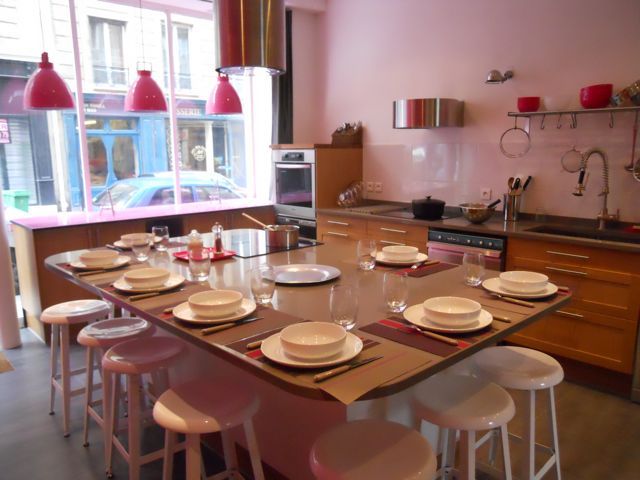
- Loft-style Batignolles kitchen setup that feels relaxed and practical, not museum-like
- Chef Noémie adapts to your level, whether you are a confident home cook or brand new
- 3-course lunch rhythm built for real cooking, from starter through dessert
- Small group of up to 8 people, so you get personal attention while you cook
- Photo and video notes are welcome, so you can recreate the meal later at home
Other Paris ateliers to spend an afternoon in:
- Fragonard Paris: Mini Perfume Workshop
★ 4.5 · 1,924 reviews - Paris: Macaron Class at Galeries Lafayette
★ 4.2 · 1,196 reviews - Paris Cooking Class and Lunch with Wine plus Market Visit Option
★ 5.0 · 1,024 reviews - Paris Croissant Small-Group Baking Class with a Chef
★ 5.0 · 910 reviews
Batignolles Loft Kitchen, Built for Real Cooking
The address is 92 rue Nollet, 75017 Paris, and the vibe is exactly what you want for a cooking class. Instead of a crowded restaurant kitchen where you are squeezed in for a demo, you’re in a loft-style atelier in the Batignolles area. That matters because French cooking is technique-heavy. When your prep area is set up for you, you can actually practice chopping, mixing, and timing, instead of rushing to keep up.
Getting there is pretty straightforward. If you are using the metro, take Line 13 to Brochant or La Fourche. By bus, you can use 66, 54, or 74 to Legendre, or bus 31 to Parc Martin Luther King. If you are taking the Navette Péreire Pont Cardinet, get off at Pont Cardinet. For a class like this, you do not want to arrive frazzled, because once you start cooking, you will want your focus.
Inside, you get the basics covered: cooking utensils and an apron are included. That’s a small detail, but it changes the whole experience. You can walk in thinking about food, not about what you forgot. Also, this class is structured around a full meal, so it tends to feel like a true half-day experience, not a rushed stop.
One more note that keeps things comfortable: pets are not allowed, and smoking is not allowed. In a cooking environment, it helps everyone stay focused on the food.
Meet Chef Noémie: Clear Teaching, Friendly Energy
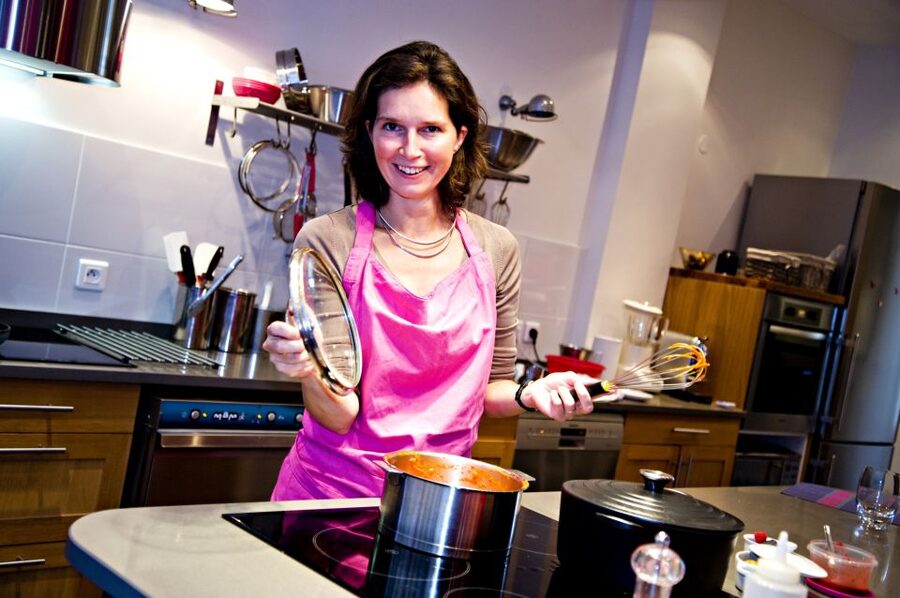
Chef Noémie runs the class, and the tone is one of calm confidence. You get the sense that she is used to hosting people with very different cooking backgrounds. The key point for you is that she adjusts as needed. If you’re a novice, you will still be able to participate without feeling lost. If you cook at home, you’ll notice the class gives purpose to the steps, not just instructions.
You’ll also see that English is part of the plan. The host or greeter communicates in English and French, and the recipe materials you receive are an English-language copy. That is a big deal. French cooking has a lot of terms, and having the recipes in English helps you translate what you did while you are still fresh from the prep.
One detail I really value: the class experience supports note-taking. In at least one instance, the chef was comfortable with a participant taking photo and video notes for later reference. That’s smart teaching. Technique sticks better when you can go back and verify what you did step by step.
Chef Noémie is also the kind of person who makes the room feel human. One example from a past class was a celebratory touch for an anniversary, with candles added during dessert. You don’t need to be celebrating to enjoy the warmth, but it’s a good sign that she pays attention to the people at the table, not just the recipe cards.
The Class Timeline: 10:30 to 14:00, Starter to Dessert
This is a 3.5-hour cooking class, scheduled from 10:30 to 14:00. That timing is ideal if you want a lunch that feels earned. You start cooking, you build a 3-course meal, and you sit down to enjoy it while the day is still young.
The overall structure is straightforward:
You’ll make a starter, then a main course with sides and sauce, and finish with a dessert. Even without getting into specific dish names, the flow matters. It mirrors how French home cooking is built: you learn the foundation, apply technique to the main, then end with something sweet that looks more impressive than it usually is.
Because it’s a small group limited to 8 participants, you do not get that awkward gap where someone is waiting forever for the next step. Everyone is working, tasting, or preparing something at the right time. In practice, that keeps energy up and helps you learn faster.
If you are wondering about food pacing, the class meal is served with mineral water, a glass of French wine, and coffee or tea afterward. That makes the timeline feel complete, like you didn’t just “do an activity.” You cooked, you ate, and you ended with a traditional finish.
Starter Work: Fresh Market Ingredients That Teach Technique
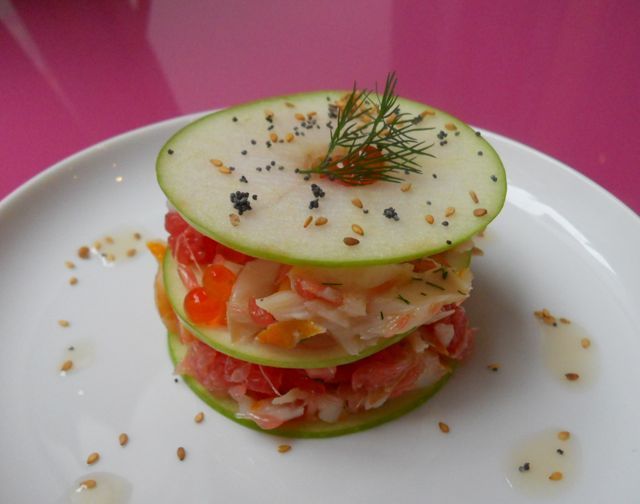
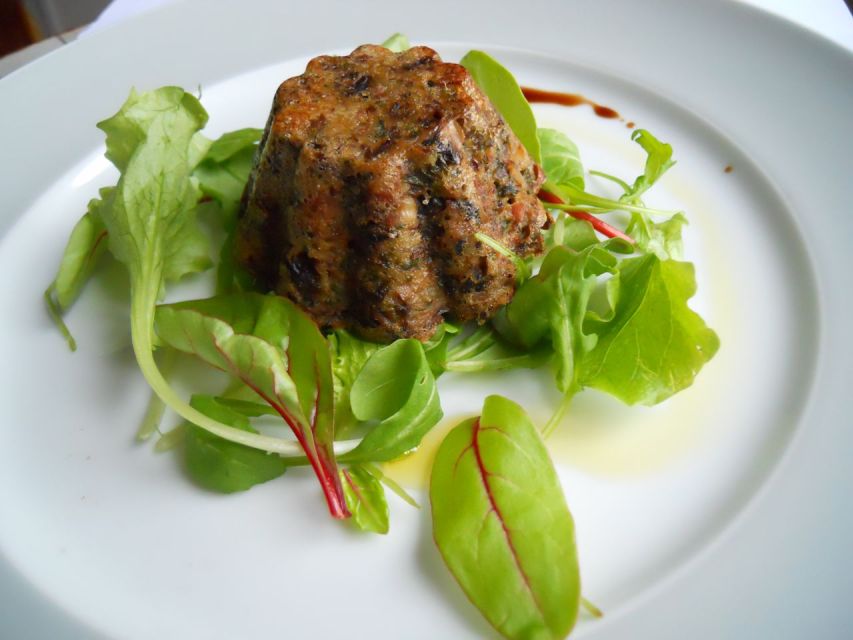
The class starts with the starter course, and this is where the philosophy shows. French cooking is not just about fancy flavors. It’s about handling ingredients well and building taste through technique. You’ll focus on fresh, local market products, and that shows up in how the ingredients behave.
Expect to practice:
- prepping and chopping with purpose
- balancing seasoning early, so later flavors don’t get stuck
- working through steps in a clear order, so nothing gets lost
A past participant described a starter that included a soup, which gives you a good sense of the type of dishes that show up in this class. Soup-like starters are perfect for teaching, because they force you to understand base flavors and how to season as you go.
For you as a reader, the real value here is that you learn what matters before it reaches the plate. When you understand the starter process, you start cooking the main course with better timing instincts.
Also, the explanations are set up for beginners. You don’t need to already know kitchen terms. The chef guides you through the why, not just the what, so you can connect the technique to the result.
More French kitchens to cook in:
- Paris: French Croissant Baking Class with a Chef★ 4.9 · 712 reviews
- Paris Cooking Class: Learn How to Make Macarons★ 5.0 · 634 reviews
- Paris Culinary Tour: 11 Tastings & 2 Wines in Le Marais★ 4.8 · 625 reviews
- Paris: French Macaron Culinary Class with a Chef★ 4.9 · 591 reviews
Main Course: Sauce and Sides, Where French Cooking Gets Serious
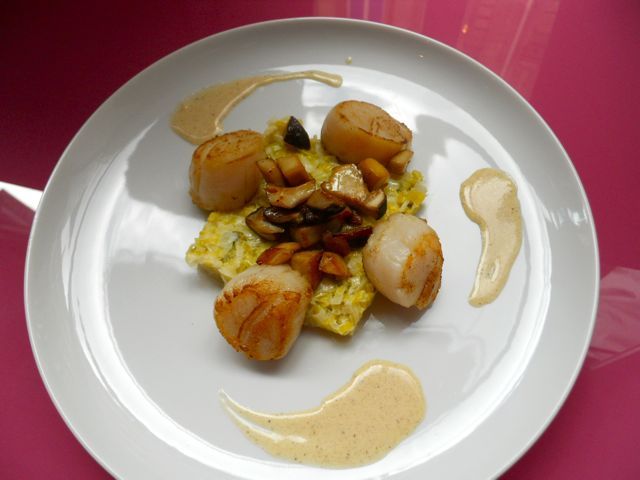
The main course is the part that most people remember, and for good reason. It’s usually where you practice sauce and balance, not just cooking ingredients. One past class experience described a main dish with sides and sauce, and that fits the class theme perfectly.
In a well-run French cooking class, sauce is where your skills grow fast:
- You learn how texture changes as heat and time do their work
- You learn how to adjust seasoning so the flavor stays even
- You learn how to coordinate components without scrambling
Because this class is hands-on, you’re not only mixing or stirring. You’re working through steps that show how French cooking builds from foundations. The chef’s role here is to keep you moving, but also to explain what you’re doing and why it matters.
If you’re the type of traveler who likes to come home and actually cook, pay attention during the sauce portion. That’s the element most home cooks struggle with, because it’s both delicate and practical. Learn it here, and you’ll feel more confident making French-style meals later.
Dessert Time: Finish Strong With a Sweet Plate
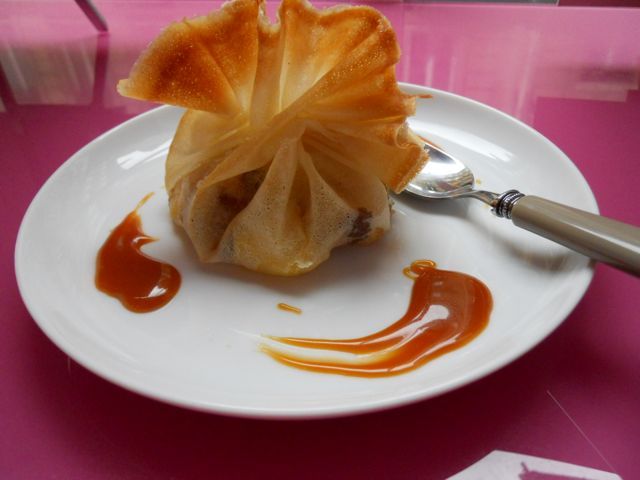
Dessert is the payoff. It’s also a great way to see how technique carries over. The chef will guide you through the process so your dessert ends up looking like something you would normally buy in a bakery, not something that came out of a home kitchen.
What you can count on is that dessert is part of the 3-course structure, so you’re not just tasting. You’re creating. And because it’s a hands-on class, you’ll likely follow along with prep, timing, and assembly steps.
One review example mentioned homemade tarts celebrated with candles. Even if your class doesn’t include a birthday moment, that tells you the chef and the setup support making something presentation-ready. That matters because dessert is often where people feel discouraged at home. This kind of class gives you a confidence boost.
Lunch Included With Wine, Coffee, and a Proper Parisian Break
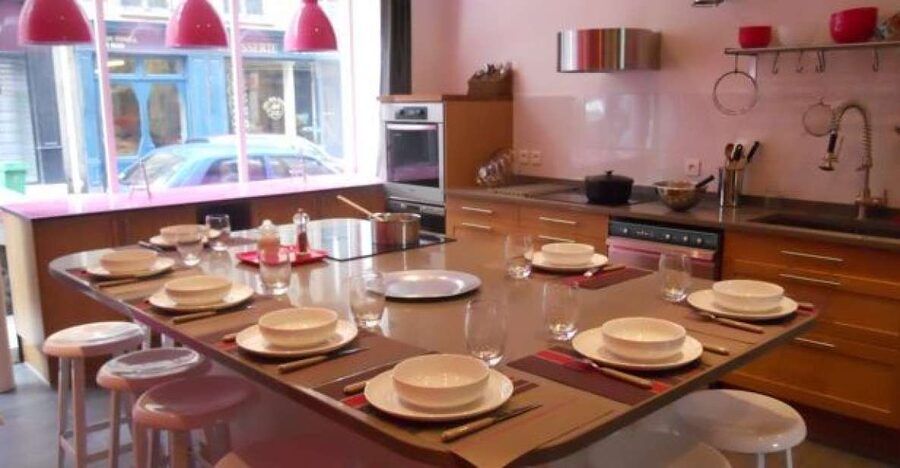
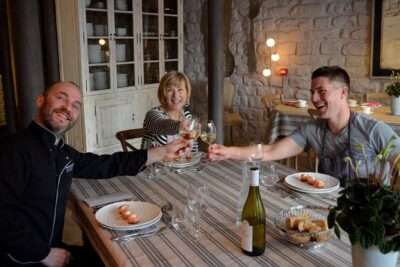
After you cook, you sit down and eat your 3-course meal. Lunch is served with mineral water, a glass of French wine, and coffee or tea. This is not a tiny sample plate either. It’s a full meal experience built around the work you just did.
The wine element is worth calling out. In one case, a participant suggested you ask the chef for a wine recommendation and bring it to share with the class when you eat. That’s not listed as a requirement, but it reflects the kind of interaction you can expect. If you are wine-curious, ask. If you already know what you like, you’ll get more enjoyment from tasting as you cook and eat.
Also, you’ll get a full set of practical recipe materials. The class includes an English-language copy of the recipes. That means you can recreate the meal without guessing.
What You Take Home: More Than Recipes on Paper
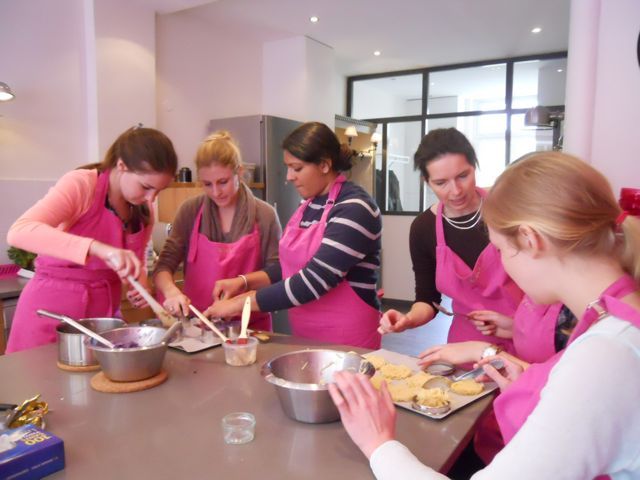
This class is about learning the art behind French cooking, not memorizing steps. Chef Noémie teaches in a way that helps you understand technique and ingredient behavior. When that clicks, you stop thinking of French food as something you can only order.
Here’s what tends to stick:
- how to prep and chop efficiently
- how to understand technique goals (texture, timing, seasoning)
- how to connect ingredients to flavor outcomes
One participant especially highlighted the way the chef explained techniques and the purpose behind them. That is the difference between repeating a dish once and being able to cook it again when you have different ingredients or a different schedule at home.
And because the class is small, you can ask questions and get real answers. That matters for your learning curve. You are not stuck with vague guidance. You get adjustments that fit your skill level.
If you want to reproduce the experience later, the English recipes plus photo and video notes are a strong combo. The goal is simple: leave with enough documentation to rebuild the meal confidently.
Price and Value in Paris: Is $182 Fair for 3.5 Hours?
At $182 per person for a 210-minute, hands-on class with a 3-course meal, the price can feel steep if you compare it to casual food tours. But compare it to what you’re actually getting: ingredients, utensils, teaching time, wine, coffee or tea, and an instructor guiding you through a full meal.
You are also paying for small-group attention, with a maximum of 8 participants. That is part of the value. In a big group, one chef simply cannot give the same level of feedback on chopping, timing, and sauce texture. Here, you get closer to real coaching.
Then there’s the recipe deliverable, the English-language copy of recipes. That turns your meal into an at-home skill-building session, not just an afternoon spent eating.
My practical take: this is good value if you want to learn, cook, and go home with a usable system. If you only want to sample French food without cooking, there are other options in Paris that are more budget-friendly.
Who This Cooking Class Suits Best
This one is a match for:
- people who want a hands-on Paris experience, not a spectator activity
- travelers who enjoy learning practical kitchen skills
- anyone who loves French food and wants to understand why it works
- couples or friends who want an intimate group setting (up to 8)
It also works for different skill levels because the chef adapts the class. That means you can join even if you consider yourself a beginner. And if you already cook, you still get technique and purpose, not just basic steps.
If you hate kitchens that feel chaotic, you will likely appreciate the loft-style setup and the structured approach. If you love exploring neighborhoods, the Batignolles area can add a pleasant extra layer, especially if you take your time before and after the class.
Should You Book This Paris Cooking Class?
Yes, I think it’s worth booking if your travel goal includes learning, not just eating. The combination of Chef Noémie teaching in English and French, a small group size, and a full 3-course lunch turns this into a half-day you’ll remember for the right reasons.
Book it if you want technique, you like fresh market ingredients, and you want an at-home takeaway via English recipes. Skip it if you are looking for a quick foodie stop, or if you truly prefer watching rather than cooking.
FAQ
Where is the meeting point for the Paris cooking class?
The meeting point is 92 rue Nollet, 75017 Paris, France.
How long is the cooking class and when does it run?
The duration is 210 minutes, and the class is scheduled from 10:30 to 14:00.
How many people are in the small group?
The group is limited to 8 participants.
What languages are used, and are recipes provided in English?
The class is hosted in English and French, and you receive an English-language copy of the recipes.
What is included with the lunch?
Lunch includes mineral water and a glass of French wine, plus coffee or tea.
Is there free cancellation?
Yes. You can cancel up to 24 hours in advance for a full refund.
Are there any restrictions for the class?
Pets are not allowed, and smoking is not allowed.
Newest write-ups from Paris


Cooking Classes, compared.
Paris Cooking Class and Lunch with Wine plus Market Visit Option
Read our review →
Paris Croissant Small-Group Baking Class with a Chef
Read our review →
Paris Cooking Class: Learn How to Make Macarons
Read our review →
Paris Culinary Tour: 11 Tastings & 2 Wines in Le Marais
Read our review →
Paris Evening Cooking Class French Dinner and Market Visit Option
Read our review →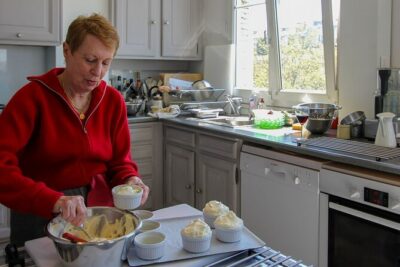
Paris French Cuisine Small Group Cooking Class with Lunch
Read our review →Browse the lists this tour appears in