Reviewed · PARIS
Paris Landmarks & Crepes
Paris is a lot to take in, fast. This half-day route is built for exactly that, stacking major landmarks with real neighborhood texture from the Bastille to the Eiffel Tower. You get a guide’s point of view, plus a simple food break that keeps the day from feeling like a checklist.
I especially like the crêpe stop in the Latin Quarter, because it turns a long sightseeing block into an actual Paris moment. I also like the way the guide ties big sights to specific places, like the Marais mansions and the Seine bridges, so you understand what you’re looking at without needing a textbook.
The main consideration is pacing. This is mostly walking in central Paris, and you finish by the Eiffel Tower without going up, so if you want lots of museum time or a summit view, this may feel a bit limited.
In This Review
- Key things that make this tour worth your time
- Why this Bastille-to-Eiffel route is a smart half-day
- Bastille and the Marais: from the July Column to Place des Vosges
- Private mansions in the Marais: Hôtel de Sully and Hôtel de Sens
- Notre-Dame, Saint-Michel, and crêpes in the Latin Quarter
- Saint-Germain-des-Prés, Pont des Arts, and the Seine walk
- Louvre, Tuileries, and Concorde, seen the efficient way
- Champ de Mars and the Eiffel Tower finish near the base
- Lunch and the crêpe stop, and how that affects value
- Who should book this tour, and who should skip it
- Should you book Paris Landmarks & Crepes?
- FAQ
- How long is the Paris Landmarks & Crepes tour?
- Is lunch included?
- Are crêpes included?
- Do we go inside the Louvre Museum?
- Do we go up the Eiffel Tower?
- What language is the tour offered in?
- Where does the tour start and end?
- Is this tour private?
- Is there mobile ticketing?
- Can I get a full refund if I cancel?
Key things that make this tour worth your time
- Bastille to Eiffel Tower in one smooth loop, mixing Right Bank and Left Bank highlights
- Latin Quarter crêpes included, so the food part is planned, not improvised
- No Louvre interior, you see it from outside, which saves time for street-level Paris
- Notre-Dame and major squares at walking speed, built for understanding, not ticket lines
- Final push to the Eiffel Tower near the base, with a quick metro ride to position you well
- Expert explanations like Simone’s style, clear, friendly, and focused on what you’re seeing in front of you
Worth a comparison before you book. Others in Paris covering the same ground:
- Paris: 1-Hour Seine Cruise departing from the Eiffel Tower
★ 4.4 · 77,472 reviews - Disneyland® Paris 1-Day Ticket
★ 4.6 · 49,412 reviews - Paris: Versailles Palace and Gardens Full Access Ticket
★ 4.6 · 41,579 reviews - Paris: Arc de Triomphe Rooftop Tickets
★ 4.6 · 34,264 reviews
Why this Bastille-to-Eiffel route is a smart half-day
At about 4 hours, this is the kind of tour that works when you want big Paris landmarks but only have one block of time. The route is also priced like a thoughtful “great sights plus guidance” deal, not like an expensive museum marathon.
You’re paying for three things: a guide who connects the dots, pre-arranged time so you are not stuck figuring out where to go next, and included food. Lunch is included, and the crêpe stop gives you a local-style break that feels earned after the walking.
One more practical upside: it’s in English and uses a mobile ticket, and you end up in a classic photo position by the Eiffel Tower without needing extra ticket purchases. The route is planned for people who can handle a steady walk.
Bastille and the Marais: from the July Column to Place des Vosges
You start at the Place de la Bastille, where the Bastille prison once stood. There is no remaining prison structure, but the square tells the story through context, including the July Column, which commemorates the 1830 July Revolution. It’s a strong opening because it frames Paris as a city that keeps transforming itself, sometimes literally overwriting the past.
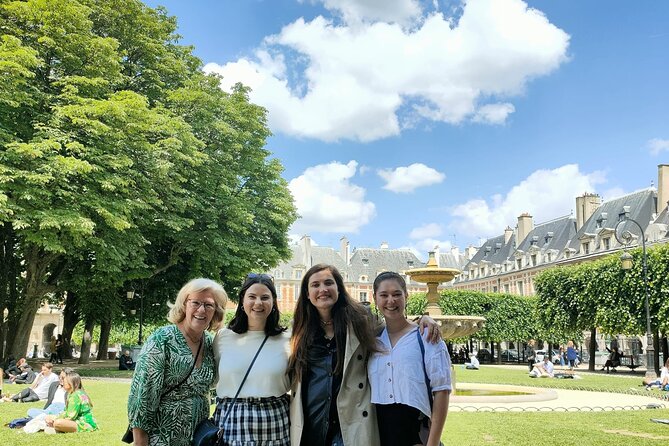
From there, you head into the Marais toward Place des Vosges, Paris’s oldest planned square. This square used to be the height of fashionable living, so even if you only glance at the buildings, you’re reading a slice of how power and taste played out in 17th and 18th century Paris. You’ll likely feel the shift from a revolutionary starting point to a more refined, architectural mood.
If you like walking that doubles as a history lesson, the Marais section is a good match. The only real downside is that the Marais can be crowded on foot, so stay close to the guide and keep moving at the group pace.
Private mansions in the Marais: Hôtel de Sully and Hôtel de Sens
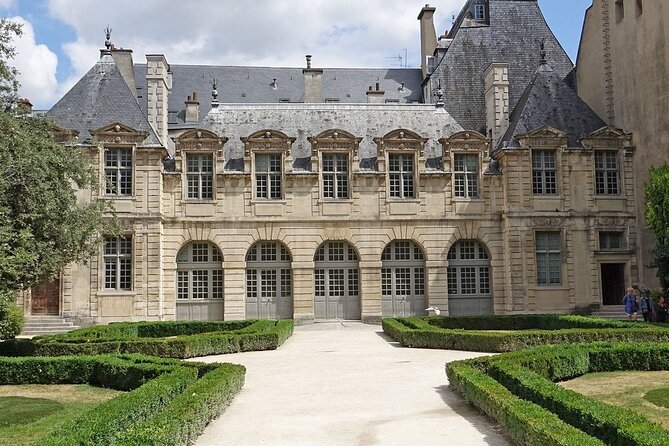
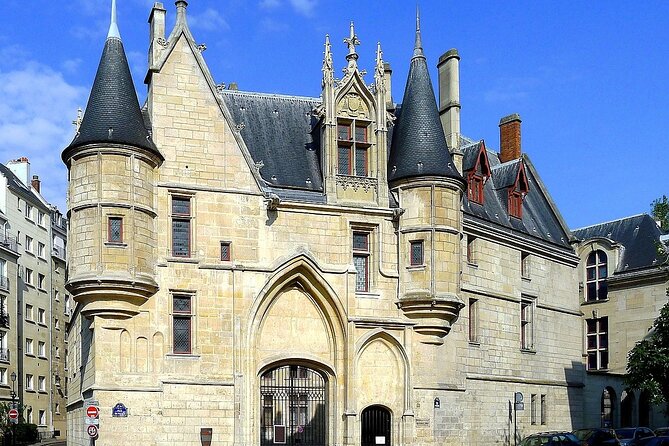
This tour spends time on hôtel particuliers, the private mansions that make the Marais such a visual treat. At the Cour et jardin de l’Hôtel de Sully, you’re looking at a Louis XIII style property built in the early 1600s. Today it belongs to the Centre des Monuments Nationaux, which manages French national heritage sites, so the stop is more than pretty facades.
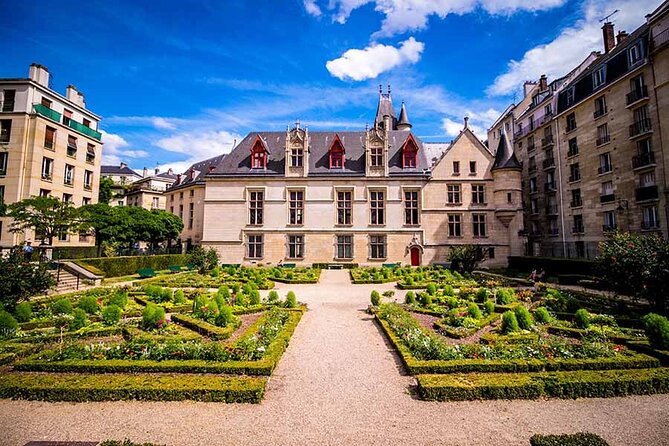
Next is Hôtel de Sens, a 16th-century mansion that now houses the Forney art library. Even if you do not go inside, the point is to help you recognize why these buildings mattered and what kind of wealth and culture lived behind their walls.
This is also a smart place to slow down and watch how people use the streets. You’re moving through a part of Paris that feels like it still has residents, not just postcard tourists. Just keep expectations realistic: you’re getting outdoor time and guiding context, not an in-depth interior tour of every mansion.
Notre-Dame, Saint-Michel, and crêpes in the Latin Quarter
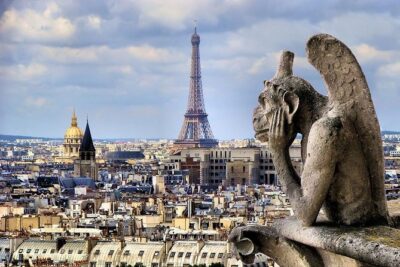
The tour then reaches Notre-Dame de Paris on the Île de la Cité. You get the exterior view and the key ideas: French Gothic design, rib vaults, flying buttresses, and those famous rose windows. The guide can also point out details like the church’s pipe organs and the presence of massive bells, which helps you understand Notre-Dame as more than a famous silhouette.
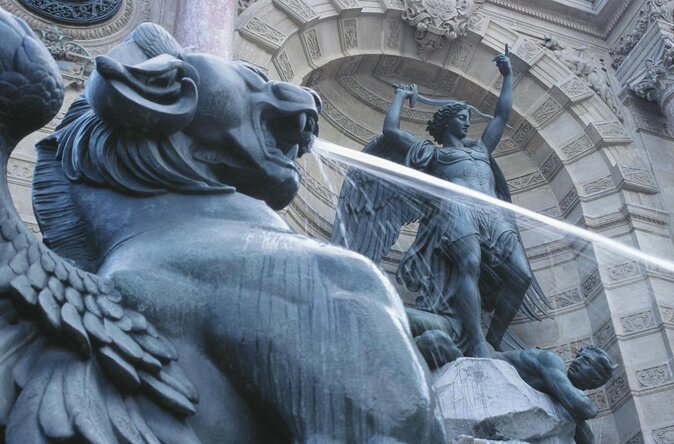
After Notre-Dame, you’ll see Fontaine Saint-Michel in Place Saint-Michel, built in the Second Empire era (1858 to 1860) by architect Gabriel Davioud. This kind of stop is useful because it breaks the heavy medieval focus, then refreshes your eyes with a different style and scale.
Then comes the planned food break: crêpes at a traditional crêperie in the Latin Quarter near Place Saint Andre des Arts. The crêpe stop is one of the most praised parts of the experience, and the logic is good. You stop for lunch or a substantial crêpe moment before the day stacks more landmarks, so you stay comfortable instead of hungry and grumpy by the time you reach the Seine.
One note: this tour includes lunch, and it also includes the crêpe stop, so you may want to think about portion size. If you choose one full meal plus a crêpe, you can easily overdo it. A lighter approach makes the afternoon more enjoyable.
If this one is booked out, Paris has these too:
- Paris: Orsay Museum Entry Ticket★ 4.7 · 25,647 reviews
- Paris: Evening River Cruise with Music★ 4.4 · 22,721 reviews
- Paris: Eiffel Tower Entry Ticket with Optional Summit Access★ 4.4 · 20,035 reviews
- Eiffel Tower Dedicated Reserved Access Summit or 2nd Floor★ 4.3 · 18,352 reviews
Saint-Germain-des-Prés, Pont des Arts, and the Seine walk
After the crêpe break, you move into Saint-Germain-des-Prés, a famous Left Bank area centered around the former abbey church. It’s also where cafés and bookish Paris energy have long mattered, and the quarter even has an official nickname for its residents, the Germanopratins. The guide can help you place what you see, from the cultural vibe to the academic institutions that still shape the area.
You also get the Church of Saint-Germain-des-Prés, described as the oldest existing church in Paris. The story here is layered: it began as a Benedictine abbey founded in the 6th century, was destroyed by Vikings, then rebuilt and renamed in the 8th century. That kind of timeline makes the stone feel alive, not static.
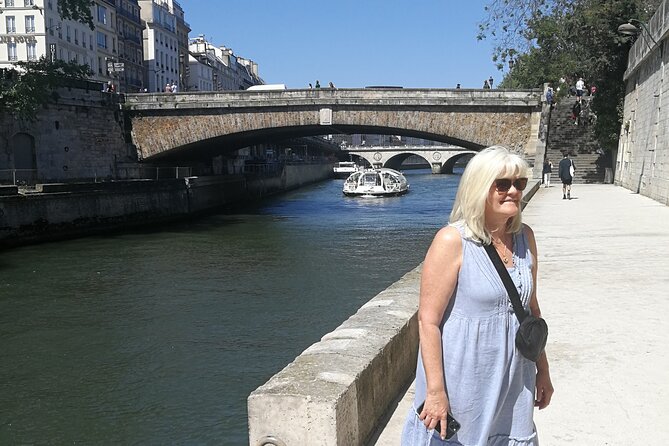
A highlight for photos and simple orientation is Pont des Arts, a pedestrian bridge crossing the Seine. You can see how it links the Institut de France and the central square of the Palais du Louvre, and you get a good feel for how this river shapes the city’s geography.
This section is a good place to take a breather, but it can also be the part where you rack up steps. If you are sensitive to walking, wear supportive shoes and plan for a steady, not sprinting pace.
Louvre, Tuileries, and Concorde, seen the efficient way
You do pass the Louvre Museum, but in a time-smart way: you view it from outside and focus on its place in the city, not on an inside museum plan. The Louvre has the kind of reputation that can swallow a day, so this approach is practical. You still get the landmark impact, including the fact that remnants of a medieval fortress are visible in the basement.
Near the Louvre, you’ll also see the Arc de Triomphe du Carrousel in Place du Carrousel. It was built between 1806 and 1808 to commemorate Napoleon’s military victories, and it’s a helpful counterpoint to the Eiffel Tower’s later icon status. You’re seeing Paris build monuments in different eras, each with a different political mood.
Then you walk through Jardin des Tuileries, created in the 1500s and opened to the public later. It’s one of those gardens that works as a breather between big sightseeing moments. The guide can also point out why it remains a social space for meeting and strolling, even when you’re just cutting through.
Finally comes Place de la Concorde, the largest square in Paris at about 7.6 hectares. This is one of the most sobering stops because it connects to public executions during the French Revolution. The square was temporarily renamed Place de la Révolution, and that detail helps you see the space as more than a wide-open photo spot.
Champ de Mars and the Eiffel Tower finish near the base
The second-to-last stretch brings you to Champ de Mars, the large green space by the Eiffel Tower. The name references Roman “Mars Field,” once tied to military drilling, which is a fun mental image as you look toward modern Paris crowds. It also matters because this is where the Eiffel Tower’s setting finally makes sense, not just as a structure but as part of a whole park and approach.
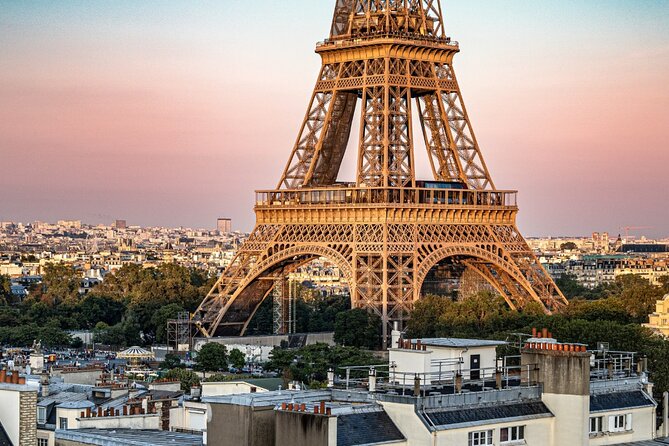
Your tour ends at the Eiffel Tower, with you finishing right next to it on the Champs de Mars. The tower was built from 1887 to 1889 as the centerpiece of the 1889 World’s Fair, nicknamed the Iron Lady. It faced early criticism, but it became a global icon and today is a UNESCO World Heritage Site part of the “Paris, Banks of the Seine” listing.
Here’s the tradeoff you should know: the tour does not include going up the Eiffel Tower. That’s not a flaw if your goal is the landmark moment plus a clear ending point, and you do not want to spend extra time in lines. If you really want the views from above, you’ll need a separate ticket plan.
Lunch and the crêpe stop, and how that affects value
This is not a bare-bones walking tour. The crêpe stop is included, and lunch is included too, which is what makes the per-person price easier to justify. In Paris, food costs add up fast, especially if you’re trying to eat close to major sights.
The smartest way to use this inclusion is to treat it as pacing. You are unlikely to enjoy the day as much if you keep skipping meals and grabbing snacks at random. The planned stop helps you keep your energy steady for the long second half of classic landmarks like Tuileries, Concorde, and the Eiffel Tower approach.
Also, the itinerary is built for efficiency: it focuses on outside viewing for the biggest museum-famous location, the Louvre. That means you get the landmark effect without eating up your half-day on interior time.
Who should book this tour, and who should skip it
This tour is a strong fit if you want a guided whirlwind of Paris landmarks without spending your time trapped in museum logistics. It also works well if you like your history explained in plain terms while you walk through real neighborhoods like the Marais and Saint-Germain-des-Prés.
If you hate walking, or you want to spend serious time inside major sites, you may be disappointed. The Louvre is only seen from outside, and you finish by the Eiffel Tower without going up.
It’s also a good choice if you’re traveling with a small group and want an experience that stays focused on your group rather than mixing into a huge public crowd. The format is described as private, so you are not constantly negotiating for space with strangers.
Should you book Paris Landmarks & Crepes?
Book it if you want a well-paced, English-guided route that strings together the big names of Paris with neighborhood stops that actually help you understand what you’re seeing. The best reasons are practical: crêpes and lunch included, plus the guide help that keeps landmarks from feeling like random icons.
Skip or consider alternatives if your dream Paris day includes going up the Eiffel Tower or doing a full museum day at the Louvre. This one gives you the outside experience, and it gives you it efficiently.
If your ideal goal is to get your bearings fast, eat well without overthinking it, and end with the Eiffel Tower right where you want it, this is a solid booking.
FAQ
How long is the Paris Landmarks & Crepes tour?
It runs for about 4 hours.
Is lunch included?
Yes, lunch is included.
Are crêpes included?
Yes. There is a crêpe stop at a traditional French crêperie, and it is included.
Do we go inside the Louvre Museum?
No. You only visit and view the Louvre from the outside.
Do we go up the Eiffel Tower?
No. You go right next to the Eiffel Tower, but you do not go up.
What language is the tour offered in?
The tour is offered in English.
Where does the tour start and end?
It starts at Opera National de Paris, Pl. de la Bastille, 75012 Paris, and it ends in front of the Eiffel Tower on the Champs de Mars (Av. Gustave Eiffel, 75007 Paris).
Is this tour private?
Yes. Only your group participates.
Is there mobile ticketing?
Yes. A mobile ticket is included.
Can I get a full refund if I cancel?
Yes. You can cancel up to 24 hours in advance for a full refund.
If you want, tell me your travel dates and walking comfort level, and I can suggest how to time this with museum days so you do not repeat the same big sights twice.