
Reviewed · LATIN QUARTER WALKING TOURS
Paris: Latin Quarter Guided Walking Tour in German
Paris has layers, and this walk shows them fast. In two relaxed hours with a German-speaking guide, you cover the Latin Quarter’s famous landmarks plus quieter squares and cafés that feel more like daily life than a checklist. It’s also a smart way to connect the Romans, the students, and the city’s calmer side.
I especially like how the route brings Roman Paris into the open at Arènes de Lutèce, then pivots to the Pantheon and the Sorbonne, two anchor points that shape the area’s identity. The pace feels paced for real conversation, not just photo stops. And you get a break in a major green space, which matters in a district where you can otherwise end up doing non-stop street-watching.
One possible drawback: 2 hours goes quickly, so if you want long museum time inside specific buildings, this walk is more for sightlines and orientation than for deep entry-level study.
In This Review
- Key highlights that make this tour worth your time
- Why This German Latin Quarter Walk Feels Like a Time Machine
- Starting at Cardinal Lemoine, and How the Route Builds Momentum
- Arènes de Lutèce: Where Roman Paris Still Shows Through
- Pantheon, Paris: The Domed Mausoleum That Defines the Area
- La Sorbonne: Understanding the Student Quarter Beyond the Postcards
- Musée National du Moyen Age, Thermes et Hôtel de Cluny: Medieval Layers You Can See
- Shakespeare & Company: A Book Lover’s Pause in Real Paris
- The Green Break in a Park: Rest for Your Eyes and Legs
- Finish at Notre-Dame de Paris: A Big Ending That Helps You Continue
- Price and Value: What $94 Buys You in Real Time
- The Tour Style You’ll Feel in the Way Stops Are Explained
- Who Should Book This German Latin Quarter Walk
- Should You Book This Latin Quarter Tour?
- FAQ
- How long is the tour?
- What language is the guide?
- Where do we meet the tour guide?
- Is pickup included?
- Are food and drinks included?
- Is the tour wheelchair accessible?
Key highlights that make this tour worth your time
- German-speaking guide who keeps the story clear and usable, not a rush of facts
- Arènes de Lutèce to see the Roman past in Paris without needing a separate plan
- Pantheon and Sorbonne to understand why the Latin Quarter feels like education and debate
- Off-the-beaten-track squares and cafés for the neighborhood texture beyond the famous streets
- A proper park break so your legs can rest while your eyes reset
- Finish at Notre-Dame to end with a big Paris landmark and an easy next step
Other walks through the Latin Quarter:
- Paris Bike Tour Hidden Secrets in the Latin Quarter & Le Marais neighborhoods
★ 5.0 · 766 reviews - Paris: Latin Quarter Guided Pub Crawl to Bars and Clubs
★ 4.3 · 532 reviews - Paris: Old Town & Latin Quarter Guided Walking Tour
★ 5.0 · 404 reviews - Paris Latin Quarter Pub Crawl Bars and Clubs
★ 4.5 · 394 reviews
Why This German Latin Quarter Walk Feels Like a Time Machine
The Latin Quarter is one of those Paris areas where the past and present keep rubbing shoulders. This German guided walking tour leans into that. You start in the south of Paris and move through places tied to Romans, universities, and everyday city routines, all within a short window.
The pitch about Paris not yet being called Paris is more than a line. When you see Roman remains and then hit university institutions that shaped centuries of scholarship, you start to feel how the neighborhood evolved instead of just memorizing dates. I like that the tour does not treat history like a lecture. It’s more like the guide points at what you can see and builds a sense of place around it.
You’ll also get the contrast element. Famous stops are there, but so are smaller cafés and squares, plus a park that gives the whole walk a breather. That blend matters because the Latin Quarter can feel busy. This route helps you slow down at the right moments.
Starting at Cardinal Lemoine, and How the Route Builds Momentum
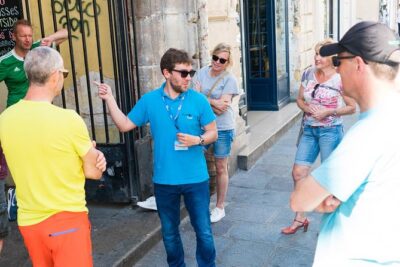
The meeting point is easy to find once you know the cue: by the entrance to Cardinal Lemoine metro station, looking for your guide with a HelpTourists bag. That’s the kind of detail that saves your brain at the start, especially on a first day in Paris.
From there, you move through a classic neighborhood layout where streets, corners, and landmarks connect in a way that feels logical. The benefit of a guided route is that you don’t just pass buildings, you learn what to notice. The guide’s job is to help you see the neighborhood instead of just walking through it.
Since it’s a private group, you’re less likely to get swallowed by crowd traffic. You can also ask follow-up questions as you go, which is especially helpful if you’re learning in German. I find that makes the whole experience more personal, and the Latin Quarter stories tend to get more fun when you can actually talk.
Practical tip for your planning: wear comfortable shoes. This is a walking tour, and the value is in the stops, not in taking long breaks.
Arènes de Lutèce: Where Roman Paris Still Shows Through
Arènes de Lutèce is your early anchor, and it’s a great choice. Roman remains can sound abstract until you stand in the right space. On this tour, you get to discover the remains of the Romans in Paris right where the Latin Quarter intersects with that older urban layer.
This stop does two things well. First, it gives you a sense of depth. Paris wasn’t born as a brand. It built on older ground, and you can physically feel that. Second, it sets the pattern for the rest of the walk. The guide can move from Roman foundations to later eras without you feeling like you’re jumping randomly.
If you care about photo moments, this is one of the better places to take them early. The look is distinctive, and it’s easier to photograph historical textures before your energy levels drop.
Pantheon, Paris: The Domed Mausoleum That Defines the Area
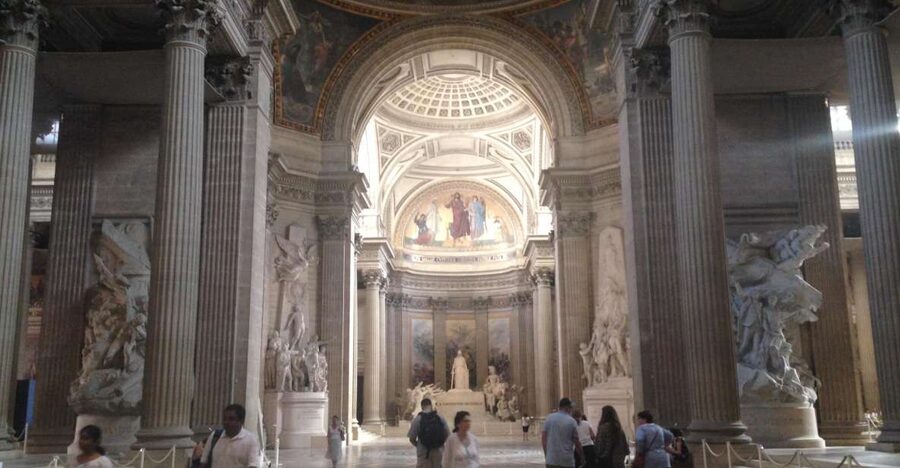
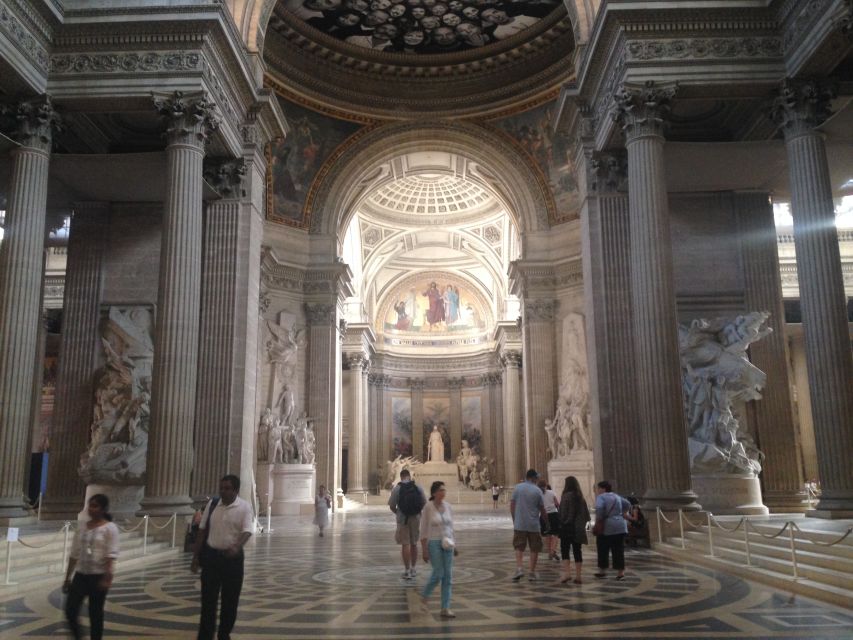
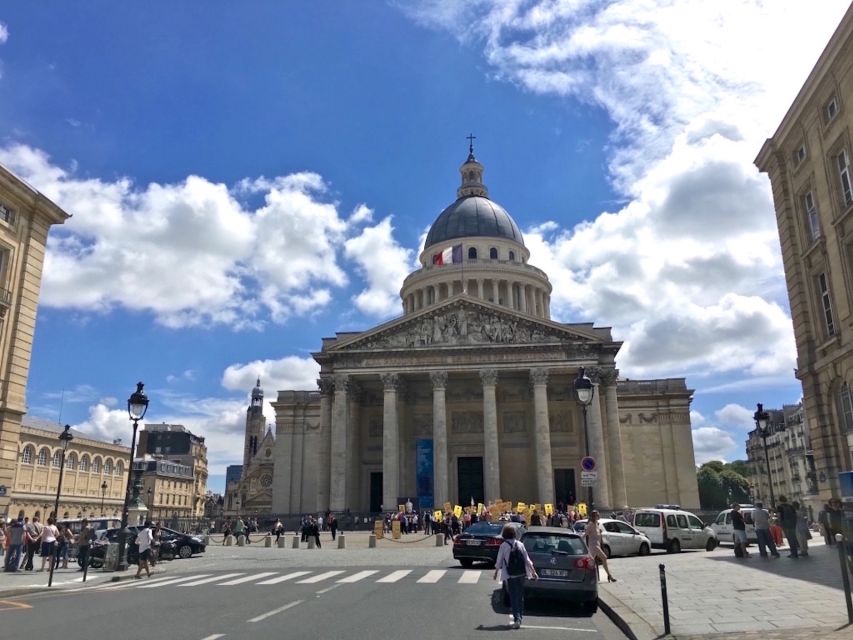
Next you reach the Pantheon, and it’s a landmark with immediate visual authority. The tour frames it as a domed neo-classic mausoleum, which helps you focus on why it’s so recognizable in the cityscape.
This is where your guide’s storytelling matters most. The Pantheon is not just a pretty building, it’s part of the Latin Quarter’s identity as a place tied to ideas, learning, and public memory. Once you understand that connection, the neighborhood stops feel more purposeful. You start to notice that the Latin Quarter has a “big brain” vibe, but it still works as a lived-in neighborhood.
In practical terms, this stop is also a good way to orient your bearings. After you’ve seen a major landmark like this, it’s easier to understand how the surrounding streets and smaller squares connect.
If you’re traveling in German, the guide can also help you with key names and what to listen for, so you’re not stuck translating in your head while everyone else moves on.
Other arrondissements taken at walking pace:
- Paris Top Sights Half Day Walking Tour with a Fun Guide★ 5.0 · 2,893 reviews
- Montmartre Hidden Gems and Scenic Highlights Walking Tour★ 5.0 · 2,684 reviews
- Montmartre Hill French Gourmet Food and Wine Tasting Walking Tour★ 5.0 · 2,588 reviews
- Paris: Montmartre Highlights Walking Tour with a Local Guide★ 4.9 · 2,318 reviews
La Sorbonne: Understanding the Student Quarter Beyond the Postcards
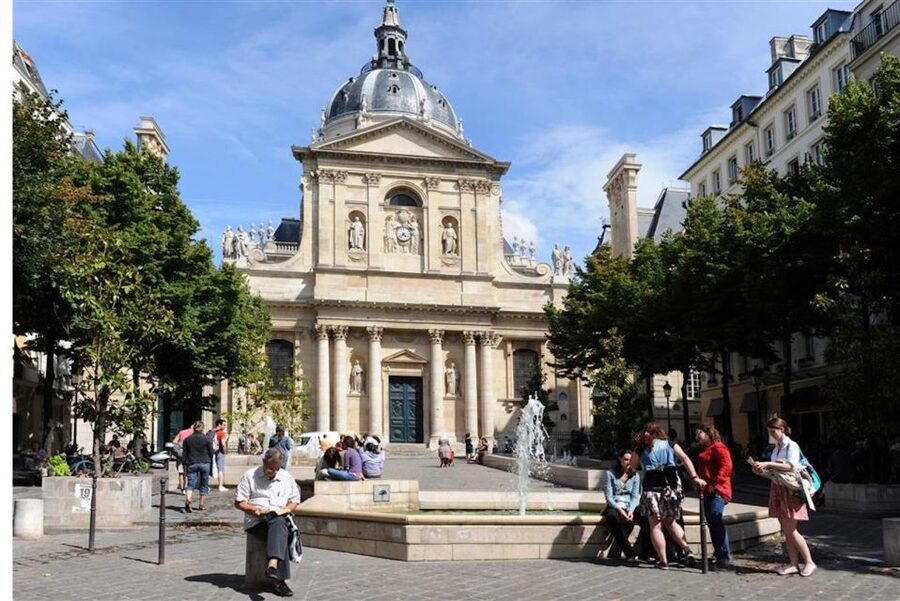
From the Pantheon, you head to La Sorbonne, the Paris University. The Latin Quarter is sometimes described as the student quarter, and this stop is the “why” behind that.
What I like here is the balanced approach. The tour does not only point to big institutions. It uses the big names as a gateway to the neighborhood’s everyday rhythm. Students, bookstores, cafés, and small squares are part of that ecosystem, even when the streets look like they’re doing their own thing.
If you’ve ever felt that Latin Quarter tours are too focused on a few headline sites, this one makes a point to keep moving between famous sights and quieter corners. The Sorbonne stop acts like a hinge. You get the weight of the institution, then you shift back toward the streets where students and locals actually spend time.
Musée National du Moyen Age, Thermes et Hôtel de Cluny: Medieval Layers You Can See
Then the route brings you to Musée National du Moyen Age, Thermes et Hôtel de Cluny. Even without going deep inside, the name alone signals what you should expect: layered time, changing uses, and a place shaped by both architecture and the city’s older structure.
This is also a smart mid-tour stop because it slows the pace again. After the monument scale of the Pantheon and the academic presence of the Sorbonne, you get something that feels more like part of a living neighborhood fabric. The Latin Quarter’s charm is not only in icons. It’s also in the way different eras show up close together.
I also appreciate that the tour’s rhythm keeps you from feeling like you’re only chasing views. You’re alternating between big statements and more grounded places, which makes the 2-hour format feel fuller.
Shakespeare & Company: A Book Lover’s Pause in Real Paris
Your walk includes Shakespeare & Company, and this stop is a nice reminder that the Latin Quarter isn’t just for tourists. It has a strong literary identity, and a guide can connect that to the neighborhood’s student and intellectual energy.
Even if you’re not the type to buy a book, you’ll enjoy the atmosphere. This is one of those “stop and reset” points where you can look around and notice how the area feels at street level. It also helps break the momentum so the later stop at Notre-Dame doesn’t feel like a sprint finish.
If you’re traveling with someone who likes books or culture, this is also a good chance to compare notes in your own language. You’ll hear the guide’s German explanations, but you can still enjoy the visual vibe without needing extra context.
The Green Break in a Park: Rest for Your Eyes and Legs
One of the tour highlights is a particularly impressive green space that gives contrast to the popular avenues and boulevards in the area. I’m glad this is included, because without it, a Latin Quarter walk can feel like it never turns off. Streets are interesting, but your body needs a pause.
This park break is valuable for two reasons. First, it reduces fatigue, which makes the final stretch more enjoyable. Second, it changes your viewpoint. Instead of always looking at facades and landmark shapes, you get a chance to watch the neighborhood as people actually use it.
Bring the same mindset you would for a casual afternoon stroll. Don’t just stand there waiting for the next stop. Sit for a minute if you can, or just take a slow lap in the direction your guide indicates. It’s one of the easiest ways to turn a short tour into a more memorable one.
Also, food and drinks are not included, so if you want a snack, plan for it. A park stop is the perfect moment to eat something small, then keep going.
Finish at Notre-Dame de Paris: A Big Ending That Helps You Continue
You end at Kathedrale Notre-Dame de Paris, which is a strong closing choice. Finishing at a major landmark gives you a clear “now what” moment. You can easily step into the next part of your day, whether that means heading to the river area, browsing nearby streets, or meeting up with friends.
Notre-Dame also works emotionally. After Roman remains, university energy, and medieval layers, ending with one of Paris’s most famous cathedral silhouettes helps everything click into place. It’s like your brain finally gets to exhale and say, yes, this is the real Paris.
If you like your sightseeing with a sense of payoff, this ending delivers. And if you’d rather keep your day flexible, it’s a helpful anchor to build the rest around.
Price and Value: What $94 Buys You in Real Time
The price is $94 per person for a 2-hour private walking tour with a German-speaking guide. That’s not the cheapest category, but it can be good value depending on your priorities.
Here’s what you’re paying for, in plain terms:
- A guide who can explain history and neighborhood life in German, which matters if you don’t want to struggle through French explanations.
- A structured route that gets you from Roman remains to the Pantheon, the Sorbonne, the museum area around Cluny, and finally Notre-Dame, all in one go.
- A private group format, which typically makes it easier to ask questions and keep a calmer pace.
You’re not paying for things like food, drinks, or pickup. That means you should plan to handle meals on your own. But for many travelers, that can actually be a plus. You get control over what you eat and where, instead of being pushed into a fixed plan.
I’d say this price makes sense if you’re:
- A first-timer who wants an efficient orientation of the Latin Quarter
- A German speaker who wants your history in your own language
- Someone who likes stories and context, not just sightseeing from the sidewalk
If you’re a confident self-guided traveler who already has strong knowledge of these specific sites, you might feel the cost more than the value. But if language and pacing are your priorities, this is the kind of guided walk that can save hours of planning.
The Tour Style You’ll Feel in the Way Stops Are Explained
The vibe here is friendly, personal, and story-focused. Based on German-language feedback that points to very helpful guidance, you can expect a guide who explains with anecdotes and keeps the experience varied rather than monotone.
It also helps that the tour includes both headline sites and lesser-known stops. That mix is often where guides separate themselves. A good guide can make the famous places feel less generic and the lesser stops feel worth your attention.
If you get a guide like Soléne (the German-guided experience with that name has been praised for being personal and informative), you’re likely to appreciate the balance between clear history and a lively street-level feel. Even if you don’t meet the same guide, the tour format is designed for exactly that kind of pace.
One more practical note: the tour is wheelchair accessible. That doesn’t change whether you need comfortable shoes, but it does suggest the route is planned with access in mind.
Who Should Book This German Latin Quarter Walk
This tour fits best if you want a structured, language-friendly introduction to the Latin Quarter in a short timeframe. I’d especially recommend it for:
- German speakers who want real explanations without doing mental translation all day
- People who like Roman history, university culture, and medieval layers
- Travelers who enjoy smaller squares and cafés, not only museum stops
- Visitors who want a relaxed stroll with a park break built in
It may be less ideal if you’re trying to maximize time in interiors. The tour is about sightseeing and stops that let you understand the neighborhood, not a plan built around long indoor museum sessions.
Also, because it ends at Notre-Dame, it works nicely as a connector tour. You can use it as an early anchor, then spend the rest of your day exploring with more confidence.
Should You Book This Latin Quarter Tour?
I’d book it if you want a German-speaking guide for one of Paris’s most layered neighborhoods, and you like the idea of mixing major landmarks with quieter corners and a park reset. The $94 price feels fair when you factor in the guide, the private group format, and the fact that the route gives you a lot of “what to notice” in just two hours.
Skip it if you already know these sights well and you don’t need German guidance, or if you’re set on long museum time. In that case, you might enjoy a self-guided day more.
If you want Paris with context, this is a strong choice.
FAQ
How long is the tour?
The tour lasts 2 hours.
What language is the guide?
The guide speaks German.
Where do we meet the tour guide?
You meet by the entrance to Cardinal Lemoine metro station. Look for your guide with a HelpTourists bag.
Is pickup included?
No pickup is included.
Are food and drinks included?
No. Food and drinks are not included.
Is the tour wheelchair accessible?
Yes, the tour is wheelchair accessible.
Newest write-ups from Paris




Latin Quarter Walking Tours, compared.
Paris Bike Tour Hidden Secrets in the Latin Quarter & Le Marais neighborhoods
Read our review →
Latin Quarter Guided Pub Crawl to Bars and Clubs
Read our review →
Paris Latin Quarter Pub Crawl Bars and Clubs
Read our review →
Latin Quarter Free Tour in English (Tip-Based)
Read our review →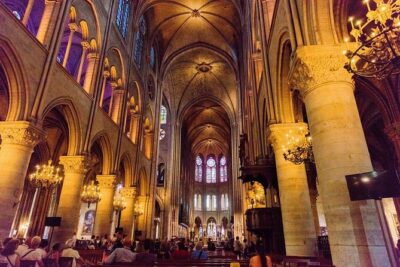
Latin Quarter Paris Guided Walking Tour Semi-Private 12ppl Max
Read our review →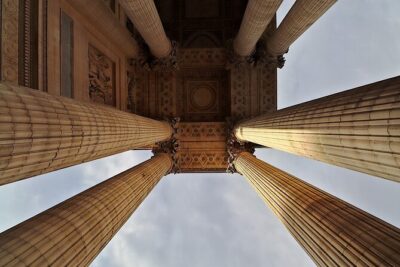
Paris Latin Quarter Walking Tour plus Seine River Cruise Option
Read our review →
Paris Latin Quarter Food Tour – Full French Meal by Do Eat Better
Read our review →Browse the lists this tour appears in