Reviewed · PARIS
Paris Left Bank: Writers, Revolution, and Black Coffee
A Latin Quarter walk can change how you see Paris. This 90-minute Left Bank stroll threads medieval lanes, big ideas, and very human caffeine, from Notre-Dame to the Panthéon. I love how the stories land in real locations, not just textbook moments, and you get an in-the-moment sense of student life and debate. I also like that it runs rain or shine and keeps things small group, so you are not stuck shouting over crowds.
One consideration: it is not set up for wheelchair users, and you should expect steady walking on older streets and lanes. Also, it is a walking tour with storytelling, not a museum visit, so bring the right expectations if you want ticketed interiors.
In This Review
- Key highlights you will actually feel
- Why this Left Bank walk feels like a living book
- Starting at Charlemagne and finding the tour’s pace
- Square René Viviani and that “student Paris” first impression
- Notre-Dame area, medieval lanes, and crowd-smart timing
- Shakespeare & Company and the bookish street-level Paris
- Sorbonne University and La Sorbonne, why one word still matters
- Musée de Cluny area, Roman bathhouse vibes, and a city with layers
- Hidden courtyards, an art-house vibe, and where the stories breathe
- Black coffee and the Latin Quarter’s rebellious energy
- Luxembourg Garden area and ending at the Panthéon
- Price and value for a 90-minute Paris walk
- What it is like in the real world: group size, language, weather
- Who should book this tour, and who might skip it
- Should you book Paris Left Bank: Writers, Revolution, and Black Coffee?
- FAQ
- Where is the meeting point?
- What if I miss the start?
- What language is the tour in?
- How long is the tour?
- What is the price?
- Are museum or monument entries included?
- Do I need to bring anything?
- Does the tour run in bad weather?
- Is this tour wheelchair accessible?
- Is tipping included in the price?
- Is free cancellation available?
Key highlights you will actually feel
- Medieval lanes from Notre-Dame toward the Panthéon, with stops you can’t easily find alone
- English storytelling that connects Cyrano, Picasso, and Hemingway to street corners and courtyards
- Sorbonne context that explains why one name still carries global weight
- Shakespeare & Company plus bookish side streets, including quieter courtyards
- Cheap black coffee energy, with student-life observations you can picture and taste
- Water and shade breaks, so the caffeine theme stays fun, not painful
Worth a comparison before you book. Others in Paris covering the same ground:
- Paris: 1-Hour Seine Cruise departing from the Eiffel Tower
★ 4.4 · 77,472 reviews - Disneyland® Paris 1-Day Ticket
★ 4.6 · 49,412 reviews - Paris: Versailles Palace and Gardens Full Access Ticket
★ 4.6 · 41,579 reviews - Paris: Arc de Triomphe Rooftop Tickets
★ 4.6 · 34,264 reviews
Why this Left Bank walk feels like a living book
The Latin Quarter is where Paris does its thinking out loud. You can feel it in the layout, too, starting near Notre-Dame and walking toward the Panthéon, as if the city is moving you from old theology to louder arguments. This tour works because it is story-led, not sightseeing-led, so you keep learning while you are walking.
I like that you hear about writers and artists in the places they relate to, including nods to Cyrano de Bergerac, Picasso, and Hemingway. The vibe is also very student-ish: sharp opinions, late-night energy, and the kind of practical black coffee many people here seem to treat like a study tool.
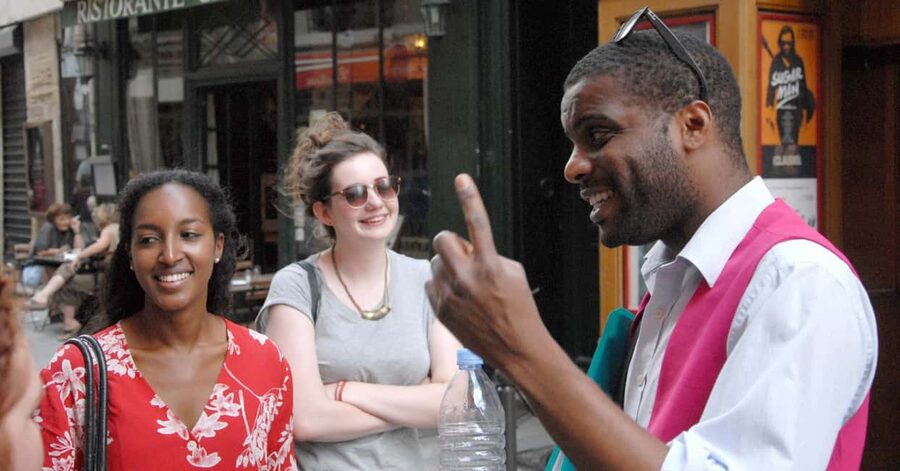
You should also expect a guide who clearly knows the neighborhood as a lived-in world, not a curated postcard loop. In past groups, guides such as Mattieu, Yago, and Floriane have shared personal angles and extra context, even bringing along supplementary photos to help you “see” what they are talking about.
Starting at Charlemagne and finding the tour’s pace
You meet under the horseman statue in front of Notre-Dame, in a pink vest. The point is simple: you start close to the action, then you move away from it, slipping into older lanes and less-obvious streets.
Because the tour starts right on time and keeps moving, you will do best if you arrive early enough to regroup and recognize the meeting spot. If you miss the start, there is a backup location at 77 rue Galande, in front of the café Odette. That safety net matters on rainy days when everyone is dressed for it and half the group is trying to text in the weather.
The good news: the route is built for a 90-minute window. The pace feels like a brisk conversation. You learn, you look, you listen, then you walk again.
Square René Viviani and that “student Paris” first impression
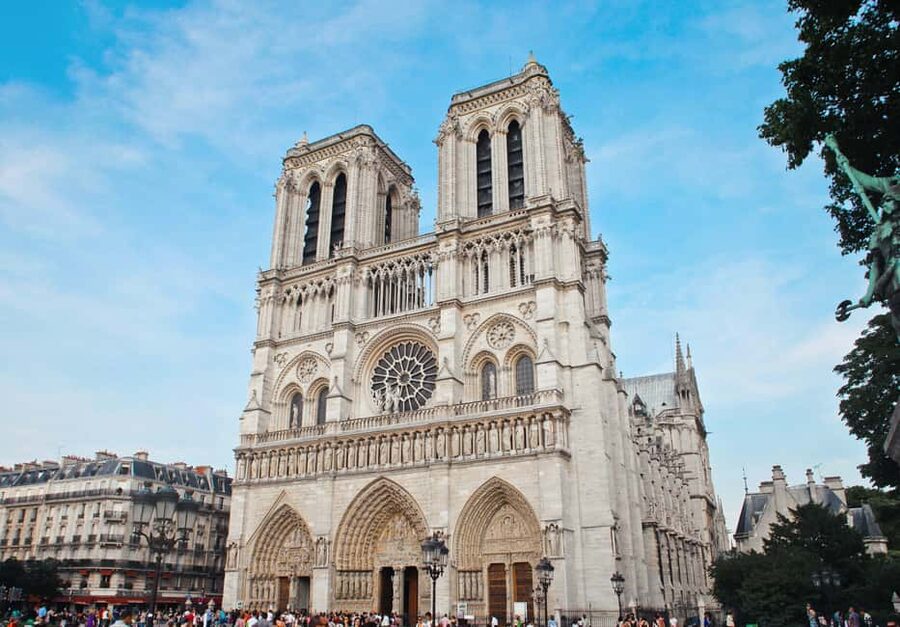
The tour typically begins with a short stop at Square René Viviani, and that little pause is more useful than it sounds. It gives you a mental map before you start turning corners. Then you roll into the medieval texture of the neighborhood, where streets look like they were laid down by people who were in a hurry to argue.
This part matters because the Latin Quarter is layered. You’re moving through eras quickly, so a guide helps you keep them straight. If you have only seen Paris from wide boulevards, this is where the city starts speaking in smaller sentences.
Notre-Dame area, medieval lanes, and crowd-smart timing
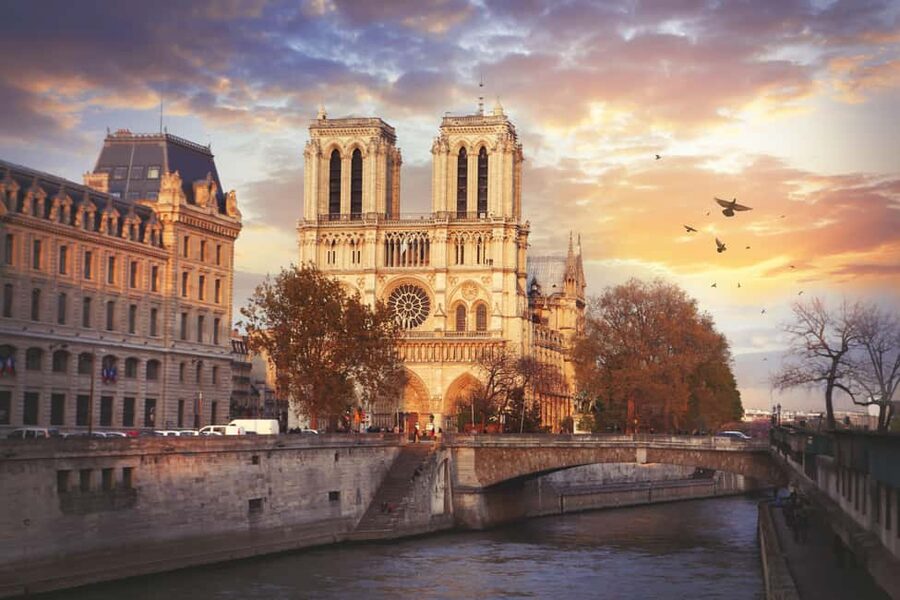
You do not just pass by Notre-Dame, you use the surrounding area as a story gateway. You get quick orientation and then you start moving into the older lanes that feel like the city’s backstage.
A practical point: the tour is rain or shine, so if the weather turns, expect umbrellas and slick sidewalks. Wear shoes that can handle uneven stone and you will enjoy the pace instead of fighting the ground.
Also, while the tour does not include entry tickets, guides often share how to approach sites like Notre-Dame with fewer headaches. One guide experience I heard involved tips for entering when there are fewer people, which is exactly the kind of helpful strategy you can use after the walk.
If this one is booked out, Paris has these too:
- Paris: Orsay Museum Entry Ticket★ 4.7 · 25,647 reviews
- Paris: Evening River Cruise with Music★ 4.4 · 22,721 reviews
- Paris: Eiffel Tower Entry Ticket with Optional Summit Access★ 4.4 · 20,035 reviews
- Eiffel Tower Dedicated Reserved Access Summit or 2nd Floor★ 4.3 · 18,352 reviews
Shakespeare & Company and the bookish street-level Paris
Shakespeare & Company is one of those places where you can’t help but slow down, even if you are the type who wants to see everything fast. Here, it’s not treated like a photo stop. It’s a bridge into why the Latin Quarter keeps pulling writers back.
You will also get the feeling of “street reading.” The guide points out nearby details and courtyards you might miss if you were only following the obvious route. The effect is that the bookshop becomes a symbol, but the real payoff is how the surrounding neighborhood supports the theme.
One thing I genuinely like about this approach is that it takes the Latin Quarter out of the abstract. Instead of just thinking writers came here, you start thinking which specific edges of the city supported that kind of work?
Sorbonne University and La Sorbonne, why one word still matters
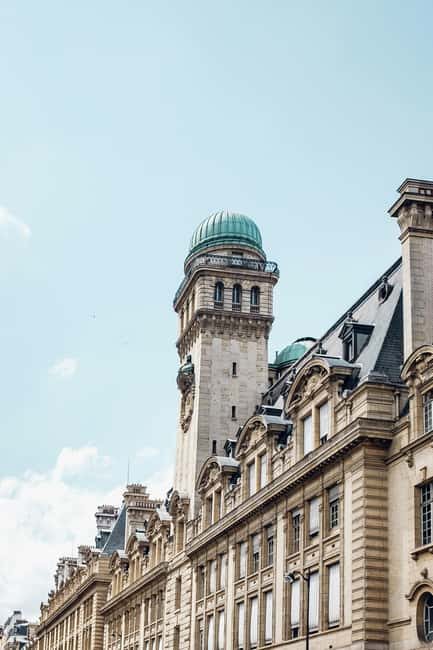
Then comes the heavy hitter: the Sorbonne University area and La Sorbonne. This is where the tour shifts from writers to institutions, and it does it in a way that makes the history feel usable.
You learn how Europe’s older university system has roots tied to the Church, then later moved into independence. Even if you are not a history buff, that arc helps you understand why students here historically mattered. When a neighborhood is built around learning, it also becomes built around disagreement.
And the guide also helps you feel the weight of the place. You will hear why the word Sorbonne still shows up globally, long after the original arguments. It is not just nostalgia. It’s the idea that education can become a political force.
Practical note: this is one of the more “visual” stretches, with architecture and stone gravity. In rain, you may spend less time staring up, but the storytelling keeps the focus.
Musée de Cluny area, Roman bathhouse vibes, and a city with layers
After the academic intensity, you move into a different kind of time travel around the Musée National du Moyen Age, Thermes et Hôtel de Cluny. Even without museum entry included, the area helps you connect medieval life to older Roman bones under the neighborhood.
That’s a key value of this tour. It shows you that the Latin Quarter does not replace older Paris with new Paris. It stacks them. Roman bathhouse references are not just trivia, they are a way to understand why the neighborhood still feels like a puzzle with pieces that don’t come from one single era.
This part is also good for breaking up the mental workload. After serious institutional history, it is easier to appreciate the physical texture: walls, street scale, and the sense of being in a place that has been walked for centuries.
Hidden courtyards, an art-house vibe, and where the stories breathe
Between the big named stops, you get the “how do I not know this place already?” moments. You will see hidden courtyards and quieter lanes where it feels like the neighborhood has internal rooms.
You also get hints of the district’s creative side, including an art-house cinema reference that helps explain why this area attracted thinkers beyond the classroom. When a neighborhood mixes scholarship, art, and debate, you end up with a cultural machine that keeps running.
This is where the rain-or-shine format really makes sense. You’re not hunting for one perfect exterior shot. The guide can keep you moving through sheltered points, including small pauses for water and shade. That’s not just comfort, it helps you stay present during storytelling.
Black coffee and the Latin Quarter’s rebellious energy

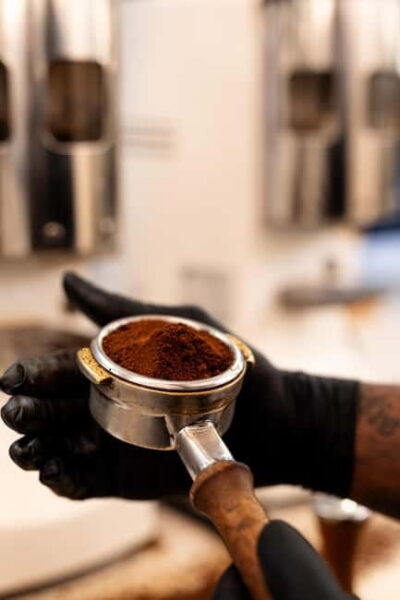
The tour leans into a specific idea: the Latin Quarter is where arguments become movement. That theme is not delivered as a lecture. You get it through how the guide describes student life, the neighborhood’s rebellious streak, and the everyday reality of cheap black coffee.
It’s a fun angle, but it also serves a purpose. When you understand the role of students and late nights in local culture, the Latin Quarter starts making sense even if you do not plan to visit every single famous landmark in the area.
In at least one experience shared from a past group, the guide’s personal connection to the neighborhood came through strongly. That matters more than people expect, because it changes the storytelling from general to grounded. You feel like you are being walked through a place someone actually cares about.
Luxembourg Garden area and ending at the Panthéon
The route also brings in the Luxembourg Garden area, which helps balance the story intensity with something calmer. Even a short look in that direction reminds you that this neighborhood’s intellectual life is not only about crowds and buildings. It also includes space to think, slow down, and watch people.
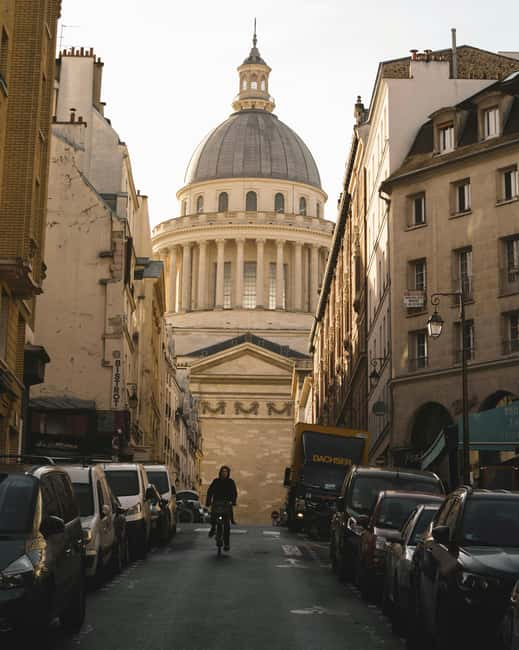
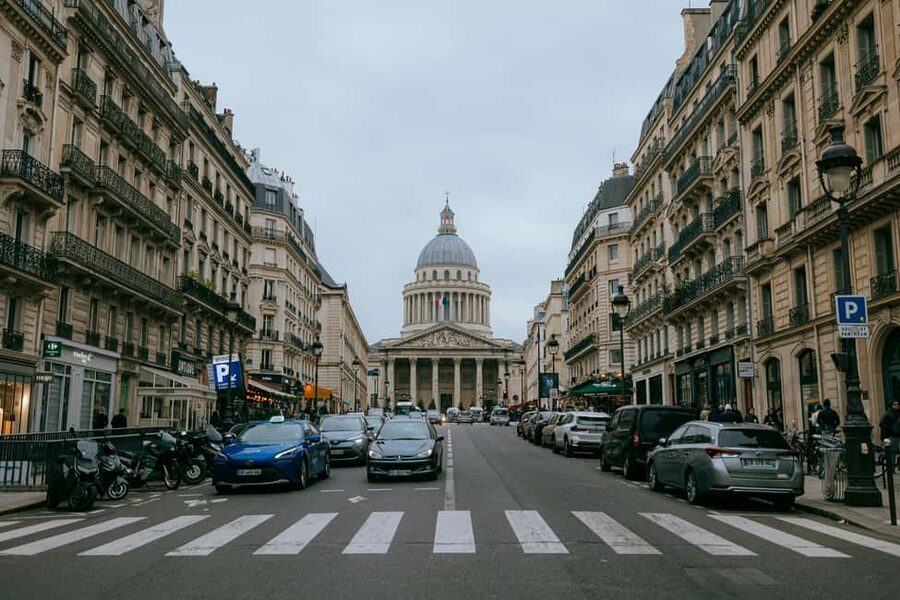
From there, you finish at the Panthéon, where the tour’s themes come full circle. If you have been hearing about writers, institutions, and revolution on the way in, you reach the Panthéon with a clearer sense of why Paris puts its “big ideas” on grand stone.
This ending works especially well because you leave with a stronger mental map. You can continue exploring on your own afterward with less wandering. You’ll know where you are in the story of the Left Bank.
Price and value for a 90-minute Paris walk
At $23 per person for about 90 minutes, this is strong value for a guided experience that includes multiple major landmarks and a lot of in-between street-level detail. You are paying for a knowledgeable local guide, English storytelling, and the time savings of having someone connect the dots for you while you walk.
A fair expectation check: there are no entry tickets included for monuments or museums. You get sights, context, and probably advice on timing for your own visits, but you will still need separate tickets if you want to go inside places.
What makes the price feel fair is the format. This is not one long museum stop plus wandering. It is a tight walking circuit where you keep getting context every few blocks, plus small water and shade breaks that help you stay comfortable.
What it is like in the real world: group size, language, weather
The tour is in English and designed as a small group. That matters because the route uses small lanes and courtyards, and you do not want a crowd-clogged bottleneck every time the guide stops.
It runs rain or shine, so plan like a Parisian: layers, waterproof outer layer if you have one, and shoes you can trust. Even if it is wet, the tour avoids the worst of the gridlock because it is built around quieter segments rather than being only a front-of-line experience.
Also, you should bring a reusable water bottle. It sounds basic, but it fits the coffee-and-ideas theme. Staying hydrated lets you keep enjoying the walk instead of getting sluggish.
Who should book this tour, and who might skip it
You should book if you like:
- Literary and art connections that explain why people mattered, not just where they posed for a photo
- History you can walk through, with stops that make sense as you move
- A guide-led experience in English that keeps the pace moving
You might skip if you:
- Want mostly museum interiors or ticketed attractions during the tour
- Need a wheelchair-friendly route, since it is not suitable for wheelchair users
- Prefer totally silent sightseeing, because storytelling is the product here
Guide experiences from past groups have highlighted enthusiasm and patience, with some guides using personal neighborhood knowledge and supplementary photos. If that style fits you, you will probably enjoy the tour more than a purely factual walk.
Should you book Paris Left Bank: Writers, Revolution, and Black Coffee?
If you want a Latin Quarter tour that feels like a conversation with Paris instead of a checklist, I think this is an easy yes. For the price, you get a tight route from Notre-Dame toward the Panthéon, strong anchors at Shakespeare & Company and the Sorbonne, and a payoff that connects writers, revolution, and everyday student life.
Book it especially if you are short on time and want maximum context without museum ticket planning. You will still be able to decide later what to go inside on your own. And if you are visiting during a weather change, the rain-or-shine format is a big practical win.
FAQ
Where is the meeting point?
Meet your guide in a pink vest under the Horseman statue located in front of Notre-Dame.
What if I miss the start?
You can locate the guide about 20 minutes after departure at 77 rue Galande, in front of the café Odette.
What language is the tour in?
The tour is offered in English.
How long is the tour?
The tour lasts about 90 minutes.
What is the price?
The price is $23 per person.
Are museum or monument entries included?
No. Entries to any museum or monument are not included.
Do I need to bring anything?
Bring a reusable water bottle.
Does the tour run in bad weather?
Yes, it runs rain or shine.
Is this tour wheelchair accessible?
No, it is not suitable for wheelchair users.
Is tipping included in the price?
Tips to the guide are not included.
Is free cancellation available?
Yes, you can cancel up to 24 hours in advance for a full refund.