

Reviewed · LOUVRE MUSEUM TICKETS
Paris: Louvre Overview, Exploration tour and Reserved Entry
The Louvre can feel like a maze, until you get in fast. I especially like the skip-the-line entry and the Mona Lisa escort, because they cut the stress and point you to the places that matter most.
One thing to keep in mind: this is built for quick orientation, so expect lots of walking and stairs inside the museum.
In This Review
- Key takeaways before you go
- Finding the Louvre in 5 minutes, not 50
- Priority entry at the Louvre, and what it really buys you
- Your orientation route, built around the Mona Lisa
- The Mona Lisa moment, and how to handle the crowd
- Medieval Louvre foundations: the palace you are really walking through
- Antiquity and Egypt: Venus, Caryatids, and the Egypt rooms that hit hard
- The Louvre’s showpiece rooms: Apollo and royal France
- Richelieu Wing and the practical art of not getting lost
- Audio guide time: how to slow down after the sprint
- Price and value: what you are paying for at about $60
- Who this tour fits best
- Should you book this Louvre skip-the-line orientation?
- FAQ
- Where do I meet the host?
- Does this include skip-the-line entry?
- Will I be guided inside the museum?
- Is the Mona Lisa included?
- What other sights does the route cover?
- Is access to temporary exhibitions included?
- Can I bring luggage or large bags?
- Is this suitable for mobility impairments?
- Can I cancel for a full refund?
Key takeaways before you go
- Priority entrance that bypasses the main queue helps you spend time looking, not waiting.
- Escort to the Mona Lisa means you reach the top highlight without getting lost.
- A guided orientation route covers major wings and collections across eras.
- Audio guide support lets you continue at your own pace after the highlights.
- The Louvre still moves fast in crowds, especially in the Mona Lisa room.
More routes through the Louvre:
- Paris: Louvre Guided Tour with Reserved Access & Boat Cruise
★ 4.3 · 16,353 reviews - Louvre Museum Masterpieces Guided Tour with Access
★ 4.5 · 12,023 reviews - Paris: Louvre Museum Entry Ticket With Host and River Cruise
★ 4.6 · 9,926 reviews - Mona Lisa & Louvre Masterpieces Tour with Reserved Access
★ 4.6 · 6,812 reviews
Finding the Louvre in 5 minutes, not 50

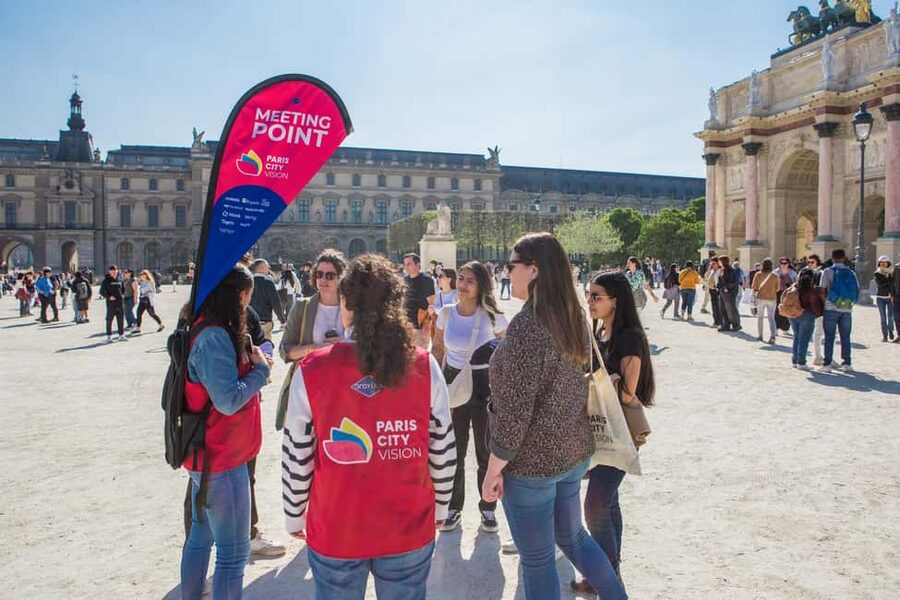
Meet your host at the Carrousel area, at the end of the gardens. The practical instruction is specific: go to the right side of the Carrousel Arch with the Louvre Pyramid behind you, and look for a Paris City Vision sign and a guide in a red jacket.
This matters more than it sounds. The Louvre is famous, which also means it is confusing. Once you start moving, you are constantly deciding where to go next. With a set meeting point, you lose less time to that first moment of panic.
Also, the tour format is designed for efficiency. You are not trying to “do the whole museum.” You are trying to get your bearings fast, see the headline works, and then break off to explore at a speed that actually fits you.
Priority entry at the Louvre, and what it really buys you
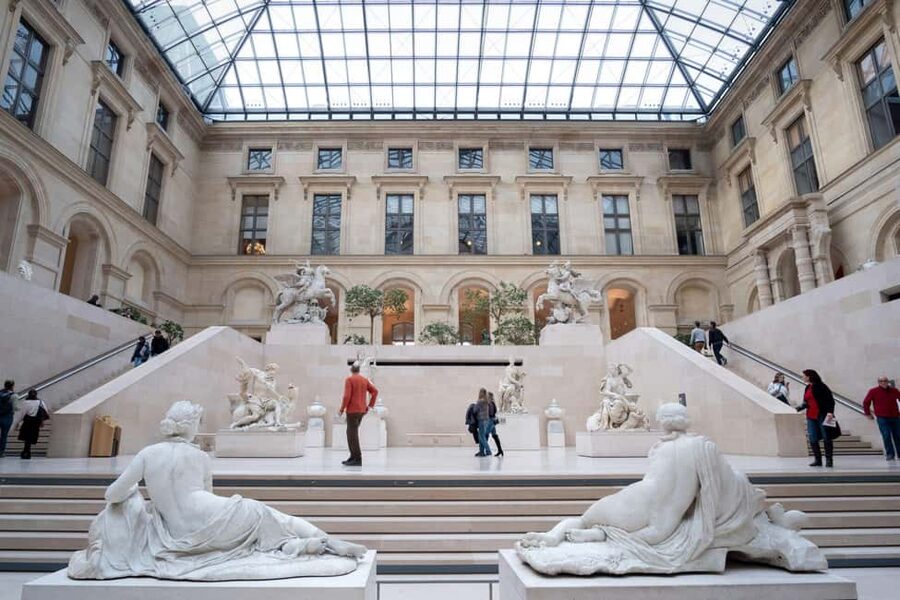
The headline promise is skip-the-line Louvre entry through a dedicated door. In real life, that usually means your group goes through a faster pathway than the main entrance crowd. You are still subject to Louvre procedures and security checks, so you can’t assume zero waiting. One of the most useful realities here is that you still get time back even if security takes a bit longer than planned.
The other practical win: because you arrive with an escort plan, you avoid the “Where do we scan?” “Which line is ours?” problems that can eat up a full hour. Several guides have been praised for keeping groups moving smoothly, and that’s exactly what you want in one of the world’s biggest museums.
One logistics point I’d take seriously: no large bags and no pets. If you show up with a suitcase or big backpack, your plans get messier. Wear comfortable shoes, and keep your load light.
Your orientation route, built around the Mona Lisa
This experience is best understood as a highlights orientation. Even though there is a live English or Spanish guide, you are not getting a slow, stop-and-explain lecture of every room. The goal is navigation plus context, then off you go.
You follow the guide through the palace spaces and collections, with major stops that typically include:
- Leonardo da Vinci’s Mona Lisa (painted in 1506)
- The medieval foundations of the Louvre palace
- Venus de Milo and the Caryatids
- Etruscan collections
- Pharaonic Egypt, including the Seated Scribe and a mummy
- Galerie d’Apollon and its decorative jewels
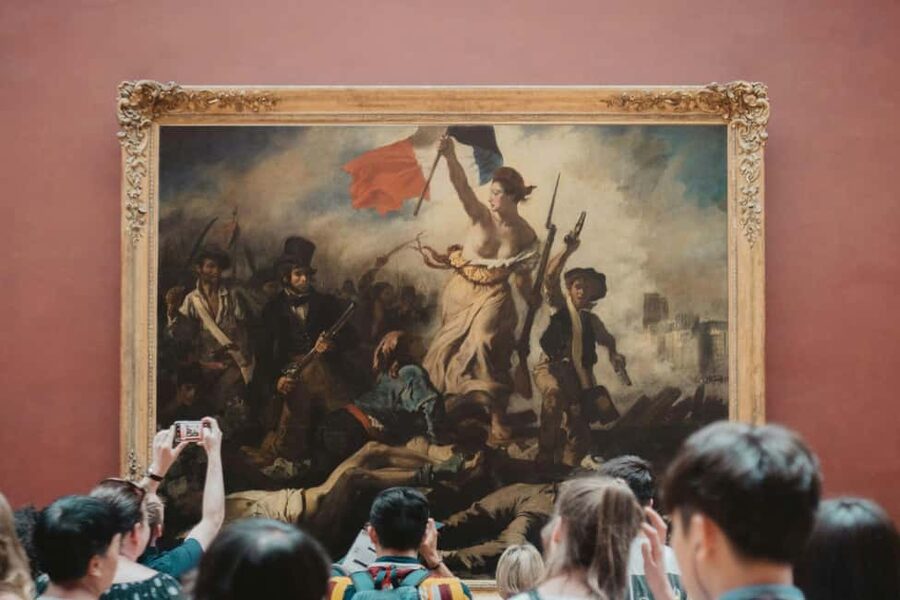
- French paintings such as Liberty Leading the People
- Royal decorative arts and the apartments of Napoleon III
- The Richelieu Wing, including French sculptures
That is a lot to fit into one day, and it is exactly why the “orientation” approach works. You leave with a mental map of where you want to spend your next hour, or next visit, instead of wandering randomly like a tourist with a marble brain overload.
The Mona Lisa moment, and how to handle the crowd
The Mona Lisa is the obvious target, and it is also the busiest room. Even with an escort, you will likely feel that crowd energy. Expect the flow to move you along efficiently, especially for photos. You may not linger forever in front of it, but you at least arrive there without wasting your time getting lost on the way.
I like this format because it sets you up for the later move: once you’ve seen the must-see, you can choose your own pace. A few visitors noted they were able to split from the guide after reaching the Mona Lisa, which is a smart way to turn a fast start into a satisfying museum day.
If this one is booked out, Paris has these too:
- Paris: 1-Hour Seine Cruise departing from the Eiffel Tower★ 4.4 · 77,472 reviews
- Disneyland® Paris 1-Day Ticket★ 4.6 · 49,412 reviews
- Paris: Versailles Palace and Gardens Full Access Ticket★ 4.6 · 41,579 reviews
- Paris: Arc de Triomphe Rooftop Tickets★ 4.6 · 34,264 reviews
Medieval Louvre foundations: the palace you are really walking through
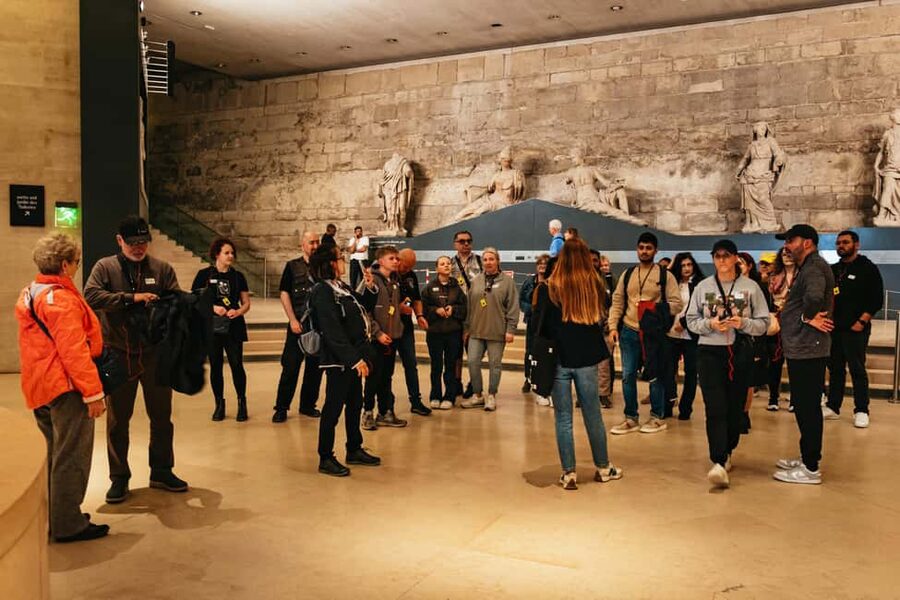
Before you hit the art galleries, you get a sense of what you are actually inside. The Louvre was not always a museum. It was one of the main residences of French kings for centuries, and the experience points you toward the medieval foundations beneath the later splendor.
Why I think this is valuable: it changes how you read the building. You stop thinking of it as a neat box full of paintings, and start thinking of it as a layered structure that grew over time. That matters because the Louvre is huge, and your brain needs anchors. Palace history gives you one.
It also makes the “orientation” route feel more than a mad dash. Even when you move quickly, you get a little story behind what you’re seeing.
Antiquity and Egypt: Venus, Caryatids, and the Egypt rooms that hit hard
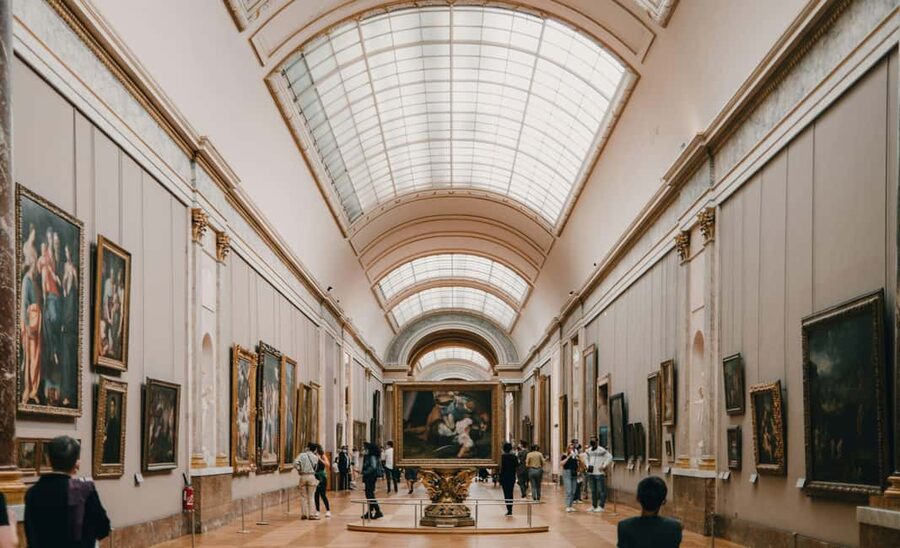
Some museums force you to pick one theme. The Louvre does the opposite. This orientation route jumps across ancient worlds, and the payoff is perspective.
You typically hit:
- The Venus de Milo and the Caryatids, which help you understand how Greek and Roman artistic ideas still shape how we view bodies, movement, and myth.
- Pharaonic Egypt, including the Seated Scribe and a mummy, which is the kind of encounter that feels direct and human even if you know very little beforehand.
Then you continue into more ancient cultures through the Ancient Near East theme, including references to Mesopotamia, Syria, Persia, and Islamic Art, with an emphasis on how writing, architecture, and culture developed.
I like that this approach doesn’t demand expertise. It gives you recognizable landmarks, then points you toward the larger connections, like how cultures preserved ideas through symbols, objects, and building styles.
The Louvre’s showpiece rooms: Apollo and royal France

After antiquity, you get pulled into the Louvre’s more theatrical side. That shows up in stops like the Galerie d’Apollon, often described in terms of its decorative jewels, and then into the French painting world with Liberty Leading the People.
You also pass through spaces connected to royal life, including royal decorative arts and the apartments of Napoleon III.
Here’s why this is a smart inclusion for first-timers. If you start the Louvre with only ancient art, your day can feel like a history lecture. If you start with only paintings, you miss how power and design shaped how art was displayed. By mixing eras, you get a museum experience that feels more like Paris: layered, political, and artistic at the same time.
Richelieu Wing and the practical art of not getting lost
The Richelieu Wing is part of what makes the Louvre feel like a small city. It’s also the reason many people end up spending half their day trying to find their next room.
This is where the orientation format shines. It gives you route logic. You see major anchors, and you learn how the museum’s wings connect. After that, you can make choices based on interest instead of pure survival.
If you want to return later for deeper study, the value is even clearer. You get a first map, and that reduces the chance you’ll waste your second visit repeating the same confusion.
Audio guide time: how to slow down after the sprint

One of the best practical add-ons in this experience is the personal audio guide for all ages. The idea is simple: you get a guided entry with highlights, then you can keep learning in your own rhythm.
Some guests also mentioned using an audio code linked to their group, working with their own headphones. If you want this to go smoothly, bring your headphones and keep your phone charged. Then you can decide, room by room, how much you want to hear.
This is also a nice fix for the biggest Louvre frustration: the museum is so large that even the best guided tour can’t possibly match everyone’s pace. Audio lets you pause when you want and skip when you don’t.
Price and value: what you are paying for at about $60

At the listed price of $60 per person, this is mostly a time-and-stress purchase. You are paying for three things:
- Priority entrance that helps you beat the main queues
- A live guide for navigation and an orientation route
- An escort to the Mona Lisa, a place where crowds make DIY routing hard
That’s good value if it prevents you from losing your day to lines and disorientation. Several guests also praised the way guides kept groups moving and provided helpful facts without overloading people.
Price gets less “no-brainer” if you end up paying more than that listed rate. One review example referenced a higher personal charge and made the point that the value depends on what you actually pay. My advice is straightforward: if you can book this near the $60 range, it tends to be a smart shortcut for first-timers.
Who this tour fits best
This experience fits you if:
- It’s your first Louvre visit and you want to see the top highlights without wasting hours
- You like a guide to help you get oriented, then you want freedom to wander
- You enjoy history and art across multiple periods, from ancient civilizations to French masterpieces
It may not fit you if:
- You have mobility needs. The experience is not suitable for people with mobility impairments and you should assume stairs and significant walking.
- You want a slow, fully guided, room-by-room explanation. The format is more orientation plus key stops than a deep lecture tour.
Should you book this Louvre skip-the-line orientation?
I think you should book it if you want a calmer Louvre start. Priority access plus an escort to the Mona Lisa is the combo that usually saves the most time and frustration. You’ll leave with your bearings, a stack of visual anchors, and the ability to choose where to spend the rest of your day.
Skip it if you already know exactly how you’ll navigate the Louvre and you are comfortable building your own route. In that case, you might not need the escort or orientation.
If you’re on your first trip to Paris and the Louvre is a big priority, this kind of reserved-entry orientation is a solid way to make the day feel doable.
FAQ
Where do I meet the host?
Meet on the right side of the Carrousel Arch with the Louvre Pyramid at your back, at the end of the gardens. Your host will be holding a Paris City Vision sign and wearing a red jacket.
Does this include skip-the-line entry?
Yes. You get skip-the-line Louvre Museum entry with priority entrance through a dedicated door.
Will I be guided inside the museum?
You will have a live tour guide for an orientation-style route and an escort to the Mona Lisa. A fully guided tour is listed as not included.
Is the Mona Lisa included?
Yes. The escort includes getting you to the Mona Lisa.
What other sights does the route cover?
The route includes major highlights such as the medieval foundations of the palace, Venus de Milo, the Caryatids, Etruscan collections, Pharaonic Egypt (including the Seated Scribe and a mummy), Galerie d’Apollon, French paintings such as Liberty Leading the People, the apartments of Napoleon III, and the Richelieu Wing with French sculptures.
Is access to temporary exhibitions included?
No. Access to temporary exhibitions is not included.
Can I bring luggage or large bags?
No. Pets are not allowed, and luggage or large bags are not allowed.
Is this suitable for mobility impairments?
No. It is listed as not suitable for people with mobility impairments.
Can I cancel for a full refund?
Yes. Free cancellation is available up to 24 hours in advance for a full refund.
Newest write-ups from Paris






Louvre Museum Tickets, compared.

Louvre Guided Tour with Reserved Access & Boat Cruise
Read our review →
Louvre Museum Masterpieces Guided Tour with Access
Read our review →
Louvre Museum Entry Ticket With Host and River Cruise
Read our review →
Mona Lisa & Louvre Masterpieces Tour with Reserved Access
Read our review →
Louvre Museum – Exclusive Guided Tour (Entry Included)
Read our review →
Louvre Museum Hosted Entry and Mona Lisa Audioguide
Read our review →
Louvre Access with Mona Lisa Escort or Guided Option
Read our review →
Louvre Museum Tour Mona Lisa & Iconic Masterpieces
Read our review →Browse the lists this tour appears in