Reviewed · TICKETS
Paris: Ménagerie Zoo of Jardin des Plantes Entrance Ticket
Old zoos can still surprise you. The Ménagerie Zoo at Jardin des Plantes, founded in 1794, turns a classic Paris outing into a living science lesson, with 150 species and a focus on breeding and conservation. It also helps you notice details people often miss, like newborn animals and how caretakers work with different kinds of species.
I love two things most. First, the conservation work feels real, with breeding and reintroduction efforts highlighted by animals like the Arabian oryx and the golden lion tamarin. Second, the walk is wrapped in 19th-century architecture, from the Rotonde to the Grande Volière, so the zoo is also a place where buildings teach.
One drawback to consider: the zoo is older and smaller in a few spots, and the experience can feel uneven depending on the season. If you are visiting in winter, you might see fewer active animals, and some enclosures may look tight if you are used to modern safari-style parks.
In This Review
- Key highlights to look for
- Entering Jardin des Plantes, a zoo with real history
- What the 1-day ticket actually buys you
- Walking route that makes the most of your time
- 1) Start with the big architectural anchors
- 2) Use the 12-step biodiversity trail as your backbone
- 3) Build in time for keeper sessions
- 4) End on the species highlights you’d hate to miss
- Springtime births and the chance to see baby animals
- Conservation efforts you can actually track, not just hear about
- Iconic animals: where to focus your attention
- Architectural heritage: Rotonde and Grande Volière as part of the story
- Getting there: Metro, RER, bus, or Batobus
- Price, value, and the reality check on season
- Who this zoo fits best
- Should you book the Ménagerie Zoo ticket?
- FAQ
- How long is the Ménagerie Zoo entrance ticket valid?
- What time should I plan to enter?
- Is the Ménagerie Zoo wheelchair accessible?
- Are there free admission options for children?
- Do disabled visitors get free admission?
- Can a full-price ticket be used elsewhere later?
- Can I cancel for a refund?
Key highlights to look for

- 1794 origins: One of the oldest zoos in the world, right in central Paris
- 150 species, many at risk: Nearly 40% of the species are facing extinction
- Conservation you can point to: Breeding and reintroduction efforts including Arabian oryx and golden lion tamarin
- Iconic species moments: Keep an eye out for Rothschild’s mynahs, golden lion tamarins, and Arabian oryx
- Historic buildings along the route: Rotonde and Grande Volière connect wildlife to Paris heritage
- Learn while you walk: A 12-step biodiversity trail, plus keeper workshops
A handful more Paris options to weigh up
- Disneyland® Paris 1-Day Ticket
★ 4.6 · 49,412 reviews - Paris: Versailles Palace and Gardens Full Access Ticket
★ 4.6 · 41,579 reviews - Paris: Arc de Triomphe Rooftop Tickets
★ 4.6 · 34,264 reviews - Paris: Orsay Museum Entry Ticket
★ 4.7 · 25,647 reviews
Entering Jardin des Plantes, a zoo with real history
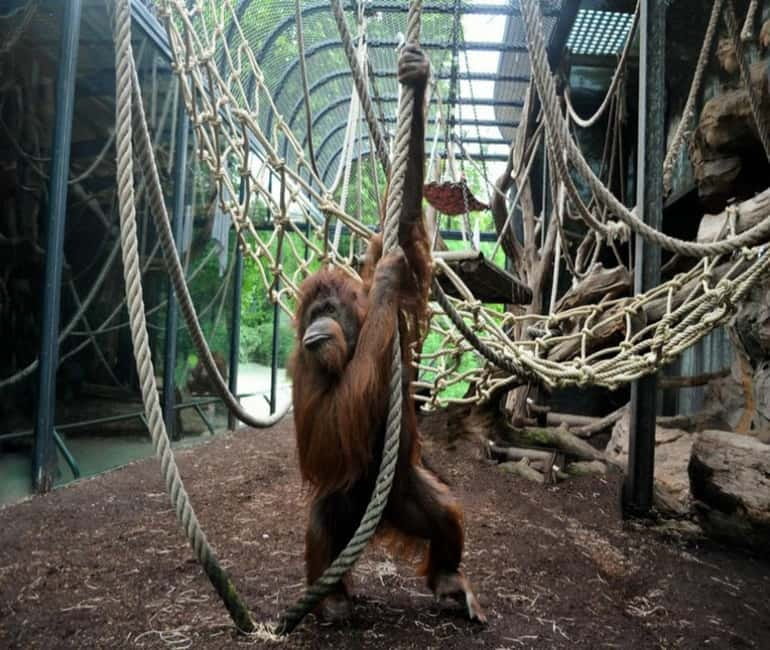
If your idea of a zoo is just animals behind glass, this one nudges you to think bigger. The Ménagerie Zoo is part of the wider Jardin des Plantes site, and it carries a long-running role in public education and animal care. Since it dates to 1794, you’re stepping into a place that has had generations to refine how it teaches people about living things.
What you’ll feel right away is that this is built for walking. You move from area to area like you’re touring a small campus, not speeding through themed photo stops. The pathways make it easy to slow down, watch behavior, and read the signage that explains how conservation priorities connect to the animals you’re seeing.
You also get a very Paris detail that’s hard to fake: the setting itself. The zoo has architectural structures from the early 19th century, including major landmarks like the Rotonde and the Grande Volière. That matters, because it changes the mood. You’re not only searching for animals, you’re also looking at design decisions that were meant to support them.
What the 1-day ticket actually buys you
This experience is straightforward. Your entrance ticket gets you access to the Ménagerie Zoo at Jardin des Plantes for a 1-day visit. It doesn’t include meals or beverages, so plan on grabbing something outside the zoo or bringing snacks if that works for your day.
Even though it is “just an entrance ticket,” it feels more structured than many add-on tours because the zoo itself provides the learning flow. You can follow the included 12-step biodiversity trail, and you can also join things like workshops and keeper meet-and-greets when they’re happening during your visit.
One small timing note that saves stress: last admission is 1 hour before closing. If you want a calm, unhurried walk, aim to arrive with enough daylight in your schedule. You’ll get more out of it when you’re not rushing between enclosures at the end.
Walking route that makes the most of your time
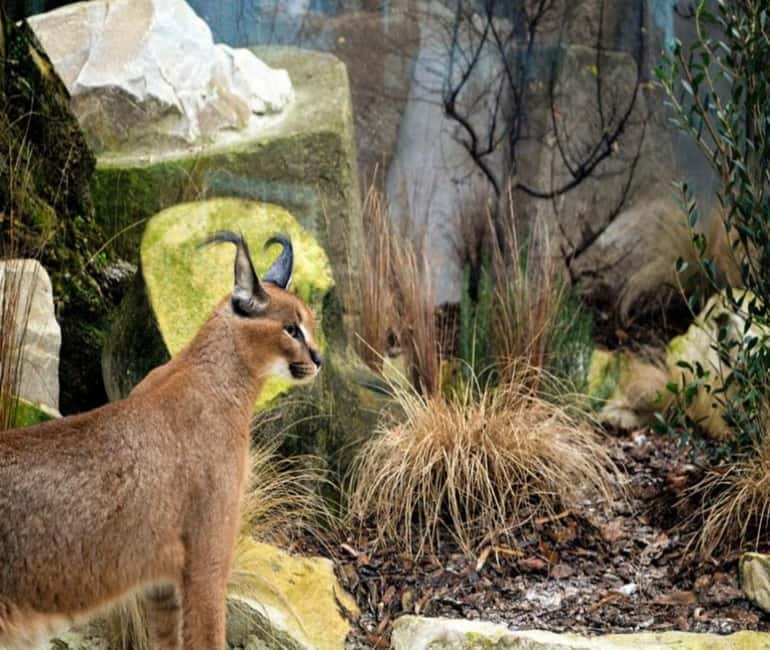
You don’t have a posted itinerary here, which I actually like. Instead, you’re free to build a route based on what you care about, and the zoo’s layout gives you enough structure to do that easily.
Here’s a practical flow you can use for a satisfying day, especially if you’re visiting for the first time:
1) Start with the big architectural anchors
Begin near the zoo’s major structures, like the Rotonde and the Grande Volière. Even if you’re not an architecture person, starting here helps you orient fast. It also sets expectations for what the zoo is: part wildlife viewing, part historical site.
This early loop is where you get those “wait, this is really old” vibes. The buildings date back to the early 1800s, and you’ll start seeing the zoo’s design logic in how different spaces handle animals and visitors.
If this one is booked out, Paris has these too:
- Paris: 1-Hour Seine Cruise departing from the Eiffel Tower★ 4.4 · 77,472 reviews
- Paris: Evening River Cruise with Music★ 4.4 · 22,721 reviews
- Paris: Eiffel Tower Entry Ticket with Optional Summit Access★ 4.4 · 20,035 reviews
- Eiffel Tower Dedicated Reserved Access Summit or 2nd Floor★ 4.3 · 18,352 reviews
2) Use the 12-step biodiversity trail as your backbone
Next, switch to the learning trail. The 12-step biodiversity path is included and designed to teach you about local wildlife and conservation practices. It’s a smart choice because it keeps you from turning the whole visit into a random animal checklist.
When you follow the trail, you notice more. You start connecting what you see in front of you to what the zoo is trying to explain behind the scenes, like why certain species are prioritized and what conservation means beyond the word.
3) Build in time for keeper sessions
Then, keep an eye out inside the zoo for workshops and meet the keepers moments. Even without a detailed schedule in advance, the concept matters. These short interactions tend to answer the questions you’re already carrying: How do they feed, handle, and monitor animals? What does day-to-day care look like?
The zoo highlights that a team of caretakers is involved, including veterinarians and ethologists. That detail is useful for you as a visitor, because it implies more than “watching.” It suggests observation, behavior study, and health planning are part of the experience, not an afterthought.
4) End on the species highlights you’d hate to miss
Finish with your top “must-see” animals so your day doesn’t collapse at the last minute. If spring is in the cards, aim to stay long enough to catch the zoo’s newborn season energy.
Springtime births and the chance to see baby animals
One of the most genuinely magical parts of this zoo is the idea of newborn animals. The zoo experience is described as especially wonderful in springtime, when births bring extra activity and curiosity into enclosures.
That’s not just emotional marketing. When baby animals appear, the whole zoo changes. You tend to notice more movement, new behaviors, and family group dynamics. Even for species you might not recognize instantly, you’ll usually spot the tiny differences that make a life stage feel special.
You might also see examples of young animals such as:
- short-tailed pademelon
- Kirk’s dik-dik
Those names aren’t filler. They’re clues that the zoo focuses on species that don’t always get seen in mainstream Europe zoos. If you’re traveling with kids or you just like the wow-factor of noticing small life changes, spring is the season to aim for.
Conservation efforts you can actually track, not just hear about
The zoo’s conservation message is a core part of the visit. This isn’t presented as a vague poster campaign. You’ll see signs and messaging tied to breeding programs and reintroduction efforts, with specific examples like the Arabian oryx and the golden lion tamarin.
Here’s how that matters for you: conservation can sound abstract until you can name the species, then imagine the steps it takes. Breeding programs mean a long timeline. Reintroductions mean more than releasing an animal, they require careful planning and follow-up.
The zoo also notes that a large share of its species face extinction, with nearly 40% facing that threat. That statistic changes how you interpret the whole day. You stop asking only, What is cute? and start asking, Why is this here, and what does it represent?
The zoo experience also mentions the caretakers’ scientific support, including veterinarians and ethologists. For visitors, that translates into credibility. You’re not only getting animal viewing, you’re seeing an approach that emphasizes health monitoring and behavior study.
Iconic animals: where to focus your attention
The Ménagerie Zoo gives you a mix of famous and more unusual species. If you only have a partial day inside, you’ll get more satisfaction by choosing a few target animals rather than trying to see everything.
Here are some of the highlights to prioritize:
- Rothschild’s mynahs: striking plumage and an attention-grabbing presence
- Golden lion tamarins: a species often linked to conservation success stories
- Arabian oryx: presented as part of reintroduction efforts
- Kirk’s dik-dik and short-tailed pademelon: especially meaningful if you’re visiting during newborn season
Also, the zoo emphasizes that it prioritizes small to medium-sized species. That’s important for your expectations. It often means enclosures can be designed to support behavior and daily routines more than you might get with massive animals that need huge spaces.
That doesn’t mean every enclosure will feel perfect to every person. But it helps explain why the zoo’s experience can feel more about observation and behavior, not just distance viewing.
Architectural heritage: Rotonde and Grande Volière as part of the story
Part of the fun here is that the zoo is also a tour of built heritage. The Rotonde and the Grande Volière are two of the main architectural landmarks mentioned, and they anchor what you’re seeing in the early 19th-century design era.
What this gives you as a visitor is a different kind of “wow.” You’re not only looking at animals. You’re also reading the zoo through its structures. You can see how space was meant to work for both animals and people.
If you like travel days where you get more than one kind of satisfaction, this is a strong match. History lovers enjoy the setting. Animal lovers enjoy the care and conservation framing. Most people leave with both.
Getting there: Metro, RER, bus, or Batobus
This is a convenient stop for Paris without needing a long cross-town trip. You have several public transport options that drop you close to Jardin des Plantes.
Practical choices:
- Batobus: Jardin des Plantes stop
- Metro and RER: Line 5 (Gare d’Austerlitz), Line 7 (Censier Daubenton), Line 10 (Jussieu or Gare d’Austerlitz), RER C (Gare d’Austerlitz)
- Buses: Lines 24, 57, 61, 63, 67, 89, 91
- Trains: Gare d’Austerlitz and Gare de Lyon
If you’re already near the Austerlitz area, that’s a big advantage. You can plan it as a daytime activity without changing hotels or building a complicated transit puzzle.
Price, value, and the reality check on season
The price is about $15 per person for a 1-day entrance ticket. Is it worth it? I think it can be, especially if you treat it like a full walk rather than a quick stop.
Here’s what you get for that cost:
- access to 150 species
- conservation education framed with real examples like breeding and reintroduction
- a self-guided learning tool (the 12-step biodiversity trail)
- opportunities to join workshops and meet keepers when available
- an added bonus value angle: full-price ticket holders can use their ticket for up to three months at Jardin des Plantes, Musée de l’Homme, or Parc Zoologique de Paris
That last point is a sneaky win for travel budgeting. If you’re planning more than one wildlife or natural history stop in the area, the ticket can reduce your overall per-attraction cost.
Now, the season reality. One concern that deserves your attention is winter. If you visit during colder months, you might find fewer animals active, and parts of the zoo can feel quiet. That can make the day feel slower than you expected, even though the zoo is still open.
Animal welfare concerns are also something to think about honestly. This zoo is historic, and that means some areas may look older than what modern travelers expect. If animal welfare is a top priority for you, go with an open, critical eye. Read the signage. Watch for caretaking cues like staff presence and enrichment-type behavior, and decide for yourself whether the experience matches what you want from your trip.
Who this zoo fits best
This experience works well if you want a mix of learning, walking, and animal observation in a central Paris setting.
You’ll likely enjoy it most if:
- you like conservation stories with specific examples, not just general slogans
- you enjoy historic places as part of the travel story
- you’re traveling with kids who respond to the idea of newborn animals
- you prefer calm, observation-based animal viewing over fast theme-park style stops
If you strongly dislike older enclosures or you expect a perfectly modern layout, you might find the experience mixed. And if your trip is in winter and you need constant action, plan for a slower day.
Should you book the Ménagerie Zoo ticket?
Book it if you want a meaningful Paris day that combines animal viewing with conservation education and historic architecture. The ticket price is reasonable for what you can do inside, and the added value option to reuse the full-price ticket at related sites over the following months can make it an easy win for your schedule.
Skip or adjust expectations if winter is your only option and you’re expecting nonstop animal activity. Also, if animal welfare concerns hit a nerve for you, be ready to assess the enclosures with care. This is a historic zoo, so the look and feel may not match every preference.
If you go in planning to walk, read, and look for newborn and conservation cues, you’ll likely leave with that rare feeling of having learned something, not just seen something.
FAQ
How long is the Ménagerie Zoo entrance ticket valid?
The ticket is valid for 1 day.
What time should I plan to enter?
Last admission is 1 hour before closing.
Is the Ménagerie Zoo wheelchair accessible?
Yes, it is wheelchair accessible.
Are there free admission options for children?
Children under 3 years old can get free admission. Tickets can be collected at the ticket desk.
Do disabled visitors get free admission?
Yes. Disabled visitors and their attendant can receive free admission with justification issued by les Maisons Départementales des Personnes Handicapées (MDPH).
Can a full-price ticket be used elsewhere later?
Yes. Full-price ticket holders can use their ticket for up to three months at Jardin des Plantes, Musée de l’Homme, or Parc Zoologique de Paris.
Can I cancel for a refund?
Yes. Free cancellation is available up to 24 hours in advance for a full refund.
Newest write-ups from Paris





Tickets, compared.

Versailles Palace and Gardens Full Access Ticket
Read our review →

Eiffel Tower Entry Ticket with Optional Summit Access
Read our review →
Moulin Rouge Cabaret Show Ticket with Champagne
Read our review →
Montparnasse Tower Observation Deck Entry Ticket
Read our review →