
Reviewed · WALKING TOURS
Paris Passageways Walking Tour: Secrets Uncovered w/ Local Guide
A Paris covered-passage tour feels like a shortcut to the past. You’ll move through narrow lanes and covered walkways that are great when the weather turns, while a local guide keeps the route simple. Two things I really like here: the small group size (up to 8) and the way the tour is built to help you see multiple famous and lesser-known passages without getting lost.
One thing to consider is that it is still a walking tour, with several short stops across central Paris. Plan for about 2 hours on your feet, and wear shoes you’re happy to walk in.
In This Review
- Key Points You’ll Appreciate
- Entering The World Of Paris Passages, From Rue Cadet To Passage du Grand Cerf
- Why Car-Free Covered Lanes Matter More Than You Think
- Stop 1: Passage Verdeau, Starting With The Smallest Passage
- Stop 2: Passage des Panoramas And Its Old-School Shops
- Stop 3: BnF Richelieu Site, The Oval Room Experience
- Stop 4: Galerie Vivienne, Built 1823 And Still Used
- Stop 5: Palais-Royal, Gardens, Columns, And Stories From The 1600s
- Stop 6: Galerie Vero-Dodat, A City-Within-A-City Feeling
- Stop 7: Passage du Grand Cerf, 12 Meters High And Artisan Shops
- Price And Value: Is $66.16 Worth It For A Passageway Tour?
- What I’d Do Before You Go (And What To Do After)
- Who This Tour Suits Best
- Should You Book This Passageways Walking Tour?
- FAQ
- How long is the Paris Passageways Walking Tour?
- What does the tour cost?
- What group size is this tour?
- Is the tour offered in English?
- Where do I meet, and where does it end?
- Is this tour good for rainy weather?
Key Points You’ll Appreciate
- Covered passageways for rainy-day comfort, plus car-free lanes you cannot easily reach on your own
- A tight group (max 8) that makes questions and photo stops easier
- One itinerary, several classics, including Passage des Panoramas, Galerie Vivienne, and Palais-Royal
- Architecture and interiors, like the oval room in the BnF Richelieu site
- Stories that connect places to the city’s past, especially around Palais-Royal and the passages
- Shopping time in the right kind of stop, with artisans and jewelry near Châtelet
Other arrondissements taken at walking pace:
- Paris Top Sights Half Day Walking Tour with a Fun Guide
★ 5.0 · 2,893 reviews - Montmartre Hidden Gems and Scenic Highlights Walking Tour
★ 5.0 · 2,684 reviews - Montmartre Hill French Gourmet Food and Wine Tasting Walking Tour
★ 5.0 · 2,588 reviews - Paris: Montmartre Highlights Walking Tour with a Local Guide
★ 4.9 · 2,318 reviews
Entering The World Of Paris Passages, From Rue Cadet To Passage du Grand Cerf
This tour is designed around a very Paris idea: the city has corridors and mini-neighborhoods inside neighborhoods. You start at 26 Rue Cadet in the 9th arrondissement, then finish around Passage du Grand Cerf in the 2nd. The end stop can shift a bit, but it stays in the same area, near the final passage you’ll reach.
The format makes a difference. You’re not trying to stitch together seven different places with a map app and hope you’re walking the right way. Instead, a local guide leads you from passage to passage, so you can focus on what you came for: atmosphere, architecture, and small-scale Paris life. The tour runs about 2 hours and keeps the stops relatively short, which makes it feel like a smart taste rather than a marathon.
For timing, note that the tour tends to sell well, with an average booking window of 39 days in advance. That tells me you should book earlier if you’re traveling in a busy season, especially if you want a specific date.
Why Car-Free Covered Lanes Matter More Than You Think
Paris passages are not just pretty streets under glass. They were built to create sheltered routes and commercial spaces when street life was louder, windier, and harder to navigate. That’s why this tour is such a practical choice: you get the pleasure of walking in narrow alleys while also staying under cover for much of the time.
You also get the psychological benefit of clarity. With a guide route, you don’t waste time second-guessing which turn is correct. You’re simply following the flow from one passage to the next, learning what makes each one distinct.
The tour is also explicitly built for rainy days, with “mostly covered walkways” as a key feature. Even if rain doesn’t fully stop you from sightseeing in Paris, it changes how you enjoy the city. Covered passageways keep your pace comfortable and help your photos look better because you’re not constantly rushing between open-air areas.
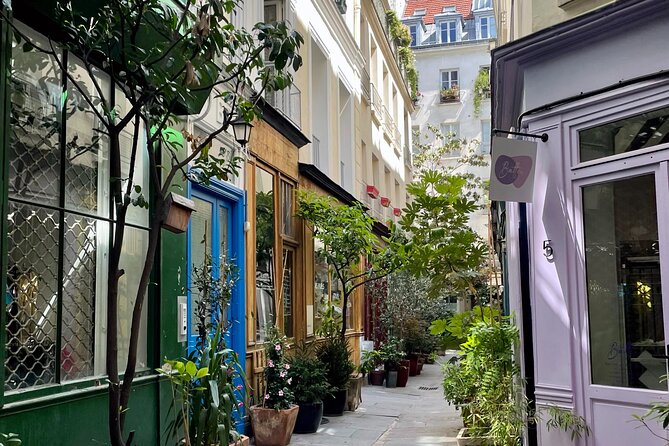
Stop 1: Passage Verdeau, Starting With The Smallest Passage
The tour begins at Passage Verdeau, and the approach is clever. Instead of starting with the most famous arcade, you begin with the smallest passage. That sets the tone, because you learn the passage pattern first: these are narrow, internal routes running parallel to the traditional streets.
This stop is short, about 10 minutes, but it’s the right kind of introduction. You get your bearings for what you’re about to see. Once you understand how these passages work, later stops like Galerie Vivienne and Passage du Grand Cerf feel more connected instead of random.
A nice practical takeaway: when you leave, you’ll be able to recognize the style of Paris passages you see on your own. That helps after the tour, when you start exploring beyond the route.
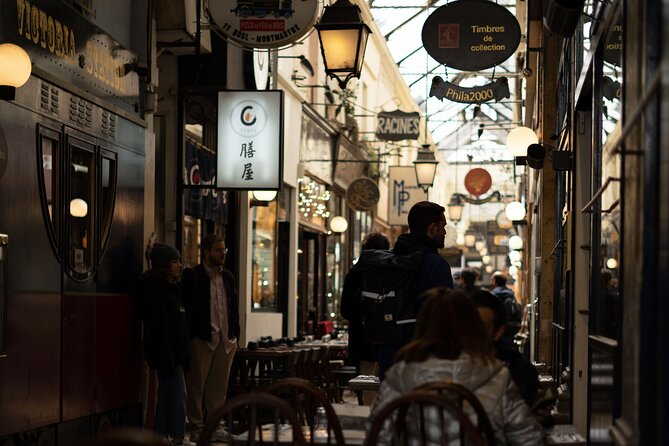
Stop 2: Passage des Panoramas And Its Old-School Shops
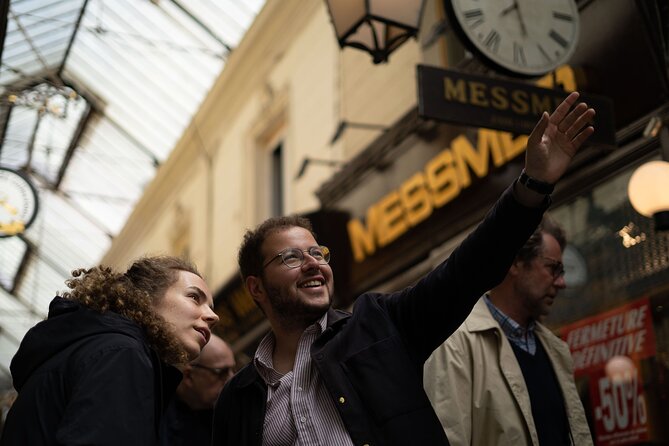
Next is Passage des Panoramas, listed as one of only 20 passages still left in the city. That detail matters. It means this is not just a charming walkway, it is part of a limited surviving network.
You’ll walk for about 20 minutes here, and the guide helps you look past the obvious. The passage is known for traditional restaurants and small boutiques tucked inside the arcade structure. Even if you’re not shopping, this is the place where you can really sense how passages functioned historically as local commercial corridors.
The other value in this stop is context. You’re not only looking at buildings, you’re hearing the history of the passage itself. That makes it easier to understand why certain passages feel more prestigious, quieter, or more “alive” in daily Paris life.
A handful more Paris options to weigh up
- Paris: Louvre Guided Tour with Reserved Access & Boat Cruise★ 4.3 · 16,353 reviews
- Louvre Museum Masterpieces Guided Tour with Access★ 4.5 · 12,023 reviews
- Louvre Museum – Exclusive Guided Tour (Entry Included)★ 5.0 · 6,296 reviews
- Versailles: Skip-the-Line Guided Palace Tour and Full Access★ 4.6 · 5,214 reviews
Stop 3: BnF Richelieu Site, The Oval Room Experience
After the passages, the tour takes you to Bibliothèque nationale de France (BnF) site François Mitterrand, specifically to see the oval room of BnF Richelieu. This is a sharp pivot from the street-level arcade vibe, and it works well.
The stop is about 15 minutes, and it’s a reminder that Paris “secrets” are not always underground. Sometimes they’re inside major institutions, in architectural spaces that most visitors never notice.
One caution: because the stop is brief, treat it as a focused stop rather than a full library visit. You’ll likely spend more time appreciating the room and its design than doing a deep tour of the building.
Stop 4: Galerie Vivienne, Built 1823 And Still Used
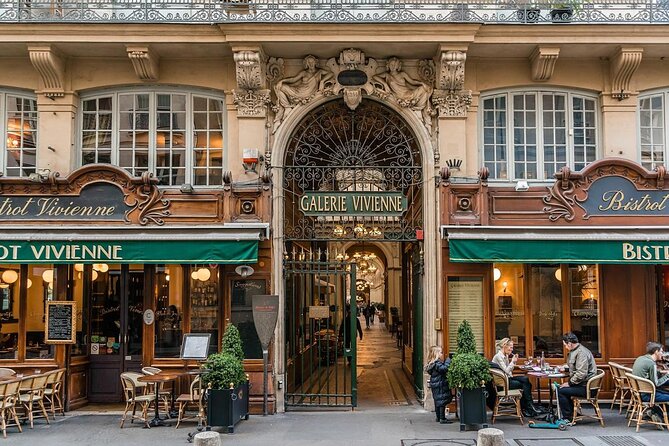
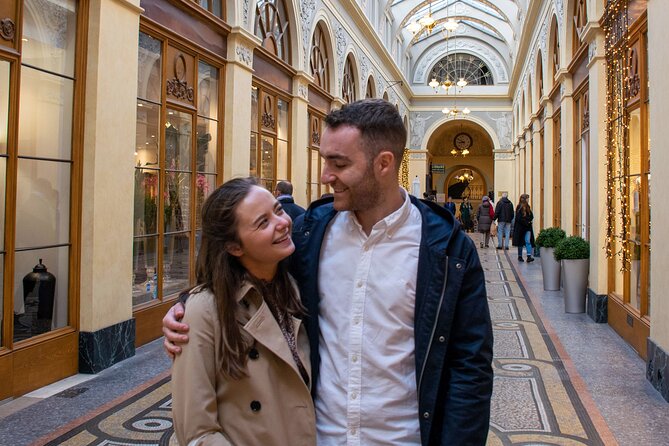
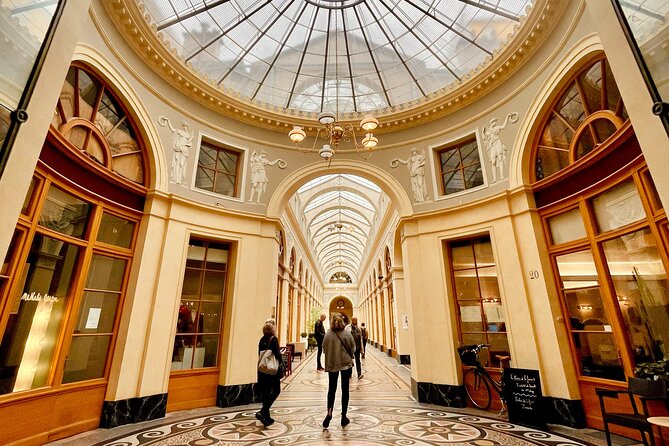
Then it’s on to Galerie Vivienne, described as the most stunning and prestigious gallery in Paris, built in 1823 and still enjoyed by Parisians. It’s about 15 minutes, but it’s the kind of stop where you’ll naturally slow down for photos.
This is a classic Paris arcade, but what makes it useful on a walking tour is timing. When you see Galerie Vivienne right after BnF, you notice contrasts in scale and purpose: one is institutional, the other is built to be a refined public interior with shops and movement.
Photo-wise, it’s a strong option. The arcade shape and long views help you frame shots. Practical tip: keep your camera ready, but also take a minute to just look. These spaces reward slow attention, even during a short stop.
Stop 5: Palais-Royal, Gardens, Columns, And Stories From The 1600s
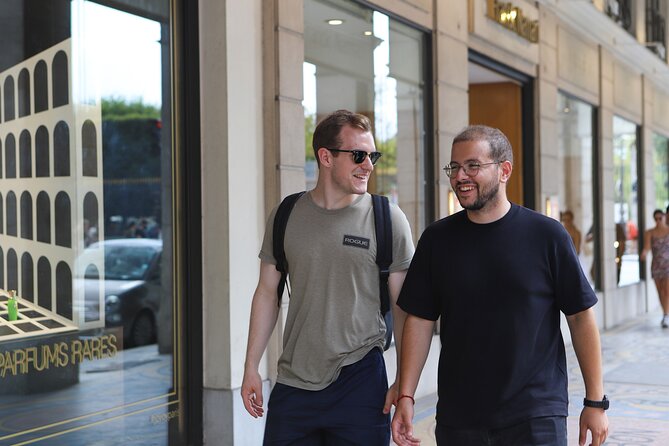
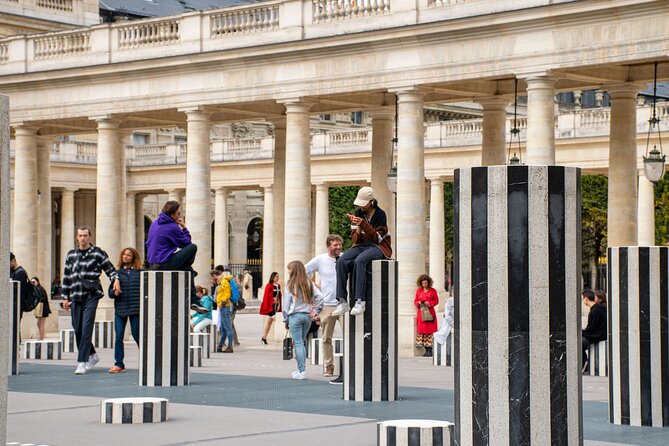
The tour continues into Palais-Royal, with about 30 minutes here. This is one of the longer stops, and it’s well placed because Palais-Royal is a mood shift. You go from narrow passage interiors to a palace complex that now feels calmer, thanks to gardens and open courtyards.
What you’re looking at comes with a narrative. Palais-Royal is known for scandals and secrets, and the tour connects those stories to what’s still visible today, including columns and the quieter garden spaces. You’ll also learn that the stories date back to the 1600s.
This stop is valuable because it helps you understand why people keep returning to this part of Paris. The history isn’t abstract. It’s tied to the physical layout. If you later want to spend more time on your own, this is the stop that usually gives you the clearest next steps.
One consideration: Palais-Royal can feel popular, so if you want a completely peaceful experience, plan to enjoy the calm moments during the guide’s timing rather than expecting solitude.
Stop 6: Galerie Vero-Dodat, A City-Within-A-City Feeling
From Palais-Royal, you head to Galerie Vero-Dodat for about 10 minutes. This passage is described as a rich space made for the bourgeoisie, and it’s still loved because it feels like a small village inside the city.
That short time might sound small, but it’s actually a good pacing tool. You just got a longer, more story-heavy stop at Palais-Royal. Galerie Vero-Dodat gives you a quick hit of another architectural mood without forcing you to spend the entire day inside passages.
If you’re the kind of traveler who enjoys micro-differences, this is a worthwhile pause. You can compare how this passage looks and feels compared to Galerie Vivienne and Passage des Panoramas. Even if you don’t buy anything, the idea of “how Paris organized daily life” becomes clearer.
Stop 7: Passage du Grand Cerf, 12 Meters High And Artisan Shops
The tour reaches Passage du Grand Cerf after a short stretch of narrow streets around Châtelet. The final passage is noted for being 12 meters high, which is part of why it feels dramatic even when you’re surrounded by small storefront spaces.
This stop is about 20 minutes, and it’s also the most practical if you like browsing. The passage is a good option if you’re looking for jewelry or artisan shops. Even if you’re not buying, you’ll see how these passages remain part of everyday Paris commerce.
Two practical points here. First, because it’s a shopping-focused stop, it helps to keep some energy. Second, because the passage height creates a strong interior view, it’s a great place to take photos before the tour ends.
Price And Value: Is $66.16 Worth It For A Passageway Tour?
At $66.16 per person for about 2 hours, you’re paying for more than sightseeing. You’re paying for guidance through a specific network of passages, plus the storytelling that makes each stop make sense.
Here’s where the value becomes clear:
- You avoid navigation stress. Passages are easy to miss without local context.
- You get a structured route through several distinct interiors in one outing.
- You receive tips to help you navigate Paris after the tour, which can stretch the usefulness of the experience beyond the two hours.
Also, you’ll likely like the group setup. The tour is described as intimate, maximum 8 people (or a private option), and it’s offered in English. A small group usually means you spend less time waiting and more time seeing.
The one drawback on value is pacing. Several stops are around 10 to 15 minutes, so this is best if you want breadth and context. If you’re hoping for long time inside each location, you might prefer a slower, more museum-style day. But for a first taste of the passages, the pace is efficient.
What I’d Do Before You Go (And What To Do After)
This tour is straightforward, but you’ll enjoy it more if you prep for walking and timing.
Before you start:
- Wear comfortable shoes. The itinerary is built on multiple passage interiors, and the tour is around two hours.
- Bring a rain plan. Even though it’s mostly covered, weather can still affect open-air segments and how you move between stops.
- Have your mobile ticket ready. The tour uses a mobile ticket, which keeps entry smooth.
After the tour:
- Use the navigation tips you’re given. The guide’s last-mile advice matters because passages often connect you to streets you might not realize are nearby.
- If you want photos, keep an eye out for arcade lighting and long interior lines during the tour, not just at the last stop. The best frames often come from angles you only notice while walking through.
This is also the kind of tour where you’ll start recognizing passages on your own later. That is part of the payoff: the outing becomes a mental map of central Paris.
Who This Tour Suits Best
This walking tour fits travelers who want Paris that feels close up, not just from big avenues.
I’d especially recommend it if you:
- Want an off-the-main-street route with a clear guide lead
- Like architectural details and interiors, not only big landmarks
- Are visiting during a rainy stretch and want to stay comfortable under cover
- Prefer small-group experiences with time for questions
- Want a manageable plan that takes about 2 hours
It may be less satisfying if you’re looking for a deep museum day or long sit-down time. The experience is intentionally composed of several shorter stops that cover a lot of ground.
Should You Book This Passageways Walking Tour?
If you’re curious about Paris beyond the classic boulevards, this is an easy yes. The combination of car-free passage interiors, mostly covered walkways, and a guide who can connect architecture to stories makes it a smart use of time. At $66.16, it also feels like good value because you’re getting both route help and context, and you’re not spending your trip wrestling with directions.
I’d book it especially when the weather is uncertain, or when you want a structured day that still feels discovery-based. Just go in expecting a walking-focused, short-stop itinerary, not a slow crawl or an all-day deep dive. If that matches your style, you’ll likely come away with a better sense of how Paris passage life works, and a list of places to revisit afterward.
FAQ
How long is the Paris Passageways Walking Tour?
The tour lasts about 2 hours.
What does the tour cost?
It costs $66.16 per person.
What group size is this tour?
It is described as an intimate group with a maximum of 8 people, and a private option is also available.
Is the tour offered in English?
Yes. The tour is offered in English, and the semi private option is only available in English.
Where do I meet, and where does it end?
You start at 26 Rue Cadet, 75009 Paris, and the tour ends in the area of Passage du Grand Cerf, specifically listed as Passage du Grand Cerf, 75002 Paris. The end stop might change but stays in the area.
Is this tour good for rainy weather?
Yes. It is ideal for rainy days because it uses mostly covered walkways.
Newest write-ups from Paris

Walking Tours, compared.

Paris Top Sights Half Day Walking Tour with a Fun Guide
Read our review →
Montmartre Hidden Gems and Scenic Highlights Walking Tour
Read our review →
Montmartre Hill French Gourmet Food and Wine Tasting Walking Tour
Read our review →
Montmartre Highlights Walking Tour with a Local Guide
Read our review →
Paris Île de la Cité and Notre-Dame Walking Tour With Crypt
Read our review →
Montmartre Cheese, Wine & Pastry Guided Walking Tour
Read our review →
Paris in a Day: Louvre or Orsay, Eiffel Tower, City Walk & Cruise
Read our review →
Paris City Center Free Walking Tour (Tip-Based)
Read our review →Browse the lists this tour appears in