Reviewed · GUIDED
Paris: Pompidou Centre Private Guided Tour
Modern art gets real fast in Paris.
On this Pompidou Centre private guided tour, you spend 90 minutes treating the building like the main exhibit, with your guide connecting 20th-century art to city change. Guides such as Milica, Boris, Bella, and Stephanie have all been praised for making the ideas clear, not stuffy, and easy to follow in English or French.
I love the way the tour builds an art timeline that you can actually see in your mind, from late 1800s roots through the late 1980s. I also like that the focus stays on the architecture itself, including why locals call it Notre Dame of Pipes and how it argued with its neighborhood. One possible drawback: during reconstruction, the museum galleries are closed, so you’re here for the building and its urban impact more than for browsing the collections.
In This Review
- Key highlights you will feel in 90 minutes
- Meeting at Stravinsky Fountain, then getting your bearings fast
- Why the tour centers on the Pompidou building, not the galleries
- The pipes, the nickname, and the point of architectural provocation
- Pairing 20th-century art movements with city change
- Urban planning in the 1970s, and why gentrification keeps showing up
- Seeing the neighborhood push back, then learning how it affects the art
- Price and value: what $176 per person is buying you
- Who should book this Pompidou private tour
- Should you book this Pompidou Centre private tour?
- FAQ
- Where is the meeting point for the Pompidou private guided tour?
- How long is the tour?
- Is the tour wheelchair accessible?
- How much does the tour cost?
- Is this a private group tour?
- What languages are available?
- What parts of the Pompidou Centre will I see during reconstruction?
- What is included in the price?
- What is not included, especially for food?
- Does the tour run in bad weather?
- What are the cancellation and payment options?
Key highlights you will feel in 90 minutes
- The building becomes the classroom when the galleries are closed during reconstruction
- 20th-century art gets practical context, not just dates and names
- Urban planning and gentrification stories help you read the area around it
- Postmodern architecture viewed from street level with new perspective
- Guides flex for different ages, including families with teens or kids
A handful more Paris options to weigh up
- Louvre Museum Paris Essential Guided Tour Semi-Private 6ppl Max
★ 5.0 · 3,807 reviews - SUV Private Transfer: Paris to Charles de Gaulle Airport (CDG)
★ 4.0 · 3,091 reviews - Paris: Private Photoshoot at the Eiffel Tower
★ 4.7 · 2,636 reviews - Top Private Cruises in Paris with French Champagne and surprises
★ 5.0 · 1,553 reviews
Meeting at Stravinsky Fountain, then getting your bearings fast
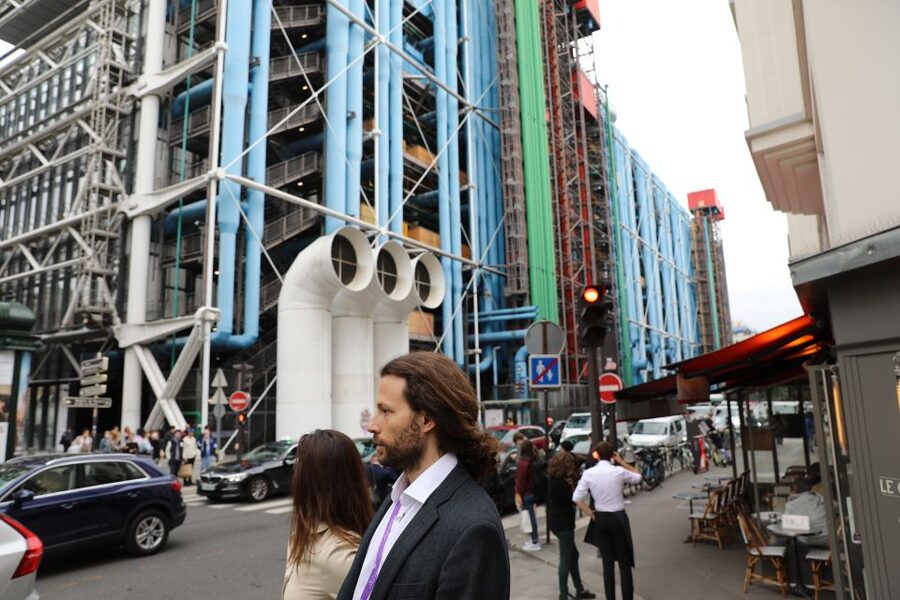
You meet at the Stravinsky Fountain on Rue Saint Merri, 75004 Paris, and your guide will be carrying a red tote canvas bag. This matters because it puts you on the right side of the city to start thinking about the Pompidou as a piece of urban design, not just a photo spot.
Once you’re together, the tone is simple and focused: you get oriented to what you’re about to see, then the guide starts linking the architecture to the art ideas of the same era. It helps that this is a private group, so you can ask questions as you go instead of waiting for a big group answer.
If it rains, it runs anyway. Bring a light rain layer so the timing stays enjoyable rather than miserable.
Why the tour centers on the Pompidou building, not the galleries
Here’s the big premise that shapes the whole experience: during reconstruction, the museum itself will be closed, so the visit focuses on the building. Most people come expecting to study masterpieces inside. On this tour, you get a different kind of payoff, one that many art fans end up loving once it clicks.
You’ll explore the history of how the Pompidou was constructed, and why so many architects and art historians treat the structure as an artifact in its own right. In other words, the building isn’t a wrapper for the art. It’s part of the argument about modern culture.
This is also where the tour’s clever title energy shows up in real life. The Pompidou is famous as an example of architectural provocation, and the guide helps you spot the “why” behind that reputation. You understand the design choices as reactions to the city, not random aesthetics.
The pipes, the nickname, and the point of architectural provocation
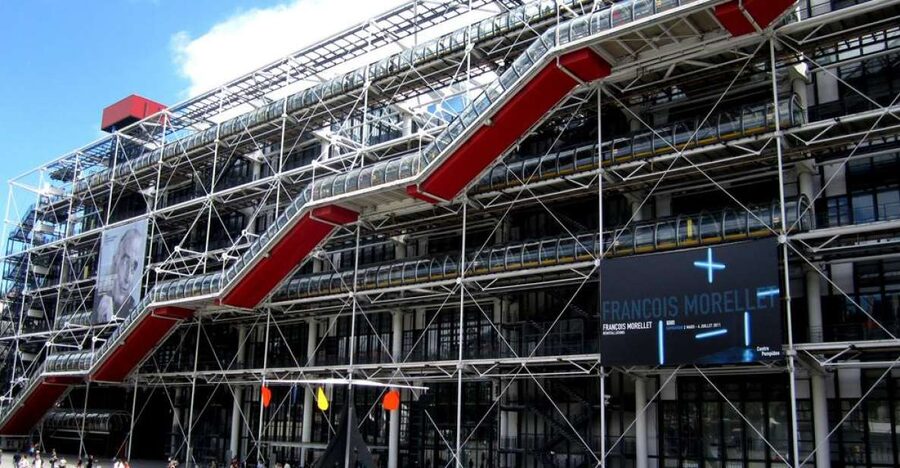
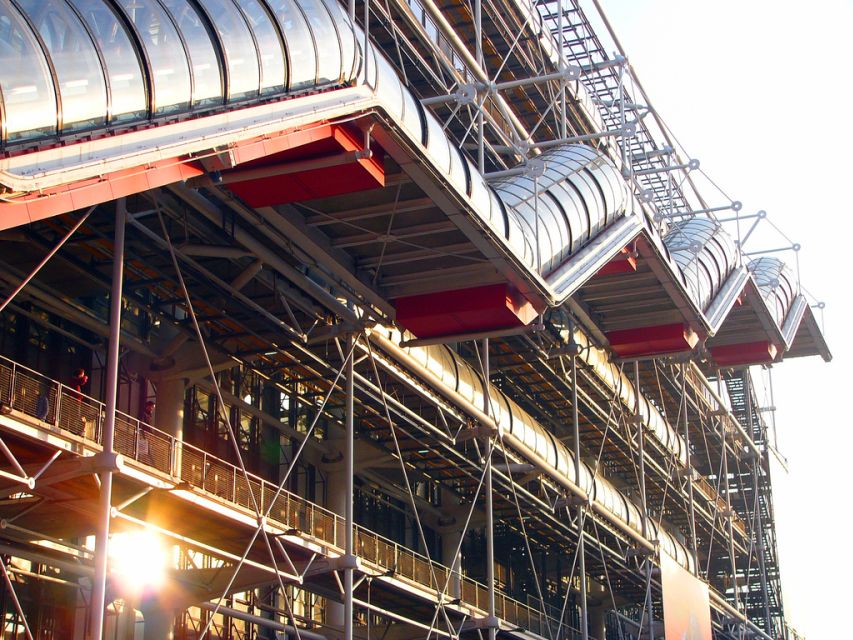
The Pompidou’s outside look is so loud that it can feel like a gimmick until you know what it’s doing. The guide brings you into that deeper reading by explaining the “Notre Dame of Pipes” nickname and what it reveals about public reaction to the building.
Once you get the design logic, the exterior stops being just metal and becomes a statement. Your guide connects that provocation to the broader question of how a big cultural institution should fit into a working neighborhood. Is it meant to blend in? Or is it meant to force people to look differently?
You’ll also learn how the Pompidou integrates in the area while still refusing to behave like everything around it. That contrast is the core idea. It’s modern art thinking applied to a city block, and you start seeing the neighborhood as an active participant in the story, not just background scenery.
Pairing 20th-century art movements with city change
Even though you are not walking through galleries on this specific visit, you still get a strong art education. One of the most praised parts of this tour is how guides deliver a lecture-style path through modern art, including coverage from late 1800s beginnings up to the end of the 1980s.
What I like about this approach is that it gives you mental handles. Instead of treating modern art like a puzzle where you’re either smart enough or not, the guide shows how the movements relate to politics, industry, and the way cities reformat themselves over time.
That’s why the architecture focus works. The Pompidou is tied to the same era when artists and thinkers were breaking rules and challenging older systems. You start to understand why a museum built in that moment would also feel like a challenge.
In some guides, like Milica and Boris, the delivery leans toward storytelling, with historical perspective and examples that help you keep track of the big shifts. Others, like Bella and Stephanie, are praised for bringing context and helping people connect what they see to the movement behind it. If you like learning without feeling lectured at, this is the style to look for.
If this one is booked out, Paris has these too:
- Paris: 1-Hour Seine Cruise departing from the Eiffel Tower★ 4.4 · 77,472 reviews
- Disneyland® Paris 1-Day Ticket★ 4.6 · 49,412 reviews
- Paris: Versailles Palace and Gardens Full Access Ticket★ 4.6 · 41,579 reviews
- Paris: Arc de Triomphe Rooftop Tickets★ 4.6 · 34,264 reviews
Urban planning in the 1970s, and why gentrification keeps showing up
One of the most useful parts of the tour is the way it connects the Pompidou to Paris in the 1970s. The guide explains how the city changed during that period and how this museum became part of that transformation.
That includes the history of gentrification and how it shaped the museum. Even if you already know the word, the tour makes it feel real by linking it to place, decisions, and who benefits from cultural investments.
This is where the tour becomes more than architecture sightseeing. You get a lens for reading what you see around you. The Pompidou isn’t isolated. It’s part of an ecosystem of roads, blocks, funding priorities, and neighborhood tensions.
If you’re the type who likes to understand why Paris looks the way it does, this section gives you a framework you can reuse later. You’ll start asking better questions of other buildings too, especially modern ones.
Seeing the neighborhood push back, then learning how it affects the art
A surprising benefit of this tour is how it teaches you to watch for tension in the city. The guide talks about how the Pompidou challenges its surroundings, and that idea gives you a way to interpret the building’s energy without just calling it strange.
You also learn how locals talk about the place, and why that matters. The nickname is more than a fun detail. It shows how people processed the building, how they felt about the cultural institution landing in their area, and how public opinion can shape the meaning of architecture over time.
This kind of context helps you with modern art specifically. Modern art is often misunderstood as random or inaccessible when it’s really responding to real-world friction. By teaching you the friction between building and neighborhood, the guide gives you a shortcut to understanding why modern design and modern art share a mindset.
And if you’re bringing younger visitors, this is also where the tour can shine. The tour has been praised for working well even with a 12-year-old when the guide explains in clear terms and adjusts the pacing. If you want art to feel like a story instead of a test, this is a strong fit.
Price and value: what $176 per person is buying you
At $176 per person for 90 minutes, this is not a budget-only activity. You are paying for a private guide, time, and the thinking behind the experience. This price makes sense if you want more than photos, and you care about understanding.
Here’s the value calculation I use: ask yourself how often you get a guide who can connect modern art, architecture, and city politics in one coherent explanation. If you’re the type who would otherwise bounce between museum rooms without knowing what to look for, this tour can save you frustration and give you a stronger return on time.
It can also be a better value than you think if your alternative is doing the museum visit with minimal guidance. Even though the galleries are closed during reconstruction, you still get a structured learning path, plus the rare chance to focus on the building itself.
If you’re already fluent in modern art and architecture history, you might feel this is pricier than you need. But if you want context without reading 20 guidebooks first, the cost is easier to justify.
Who should book this Pompidou private tour
Book it if you want:
- A focused art explanation tied to the era that created it
- Architecture as a story, especially if you like buildings with strong opinions
- A private format where you can ask follow-up questions
- A visit that still feels worthwhile during reconstruction, since it’s built around the building itself
It may not be the best fit if your main goal is browsing museum galleries. Since the museum is closed during reconstruction, you won’t get that experience here.
Should you book this Pompidou Centre private tour?
Yes, if you’re curious about how modern art and modern architecture share the same questions. The tour’s strongest advantage is that it makes ideas feel tangible by using the Pompidou as the lesson plan, not as a backdrop.
Also, you’re not stuck with a generic script. The guides are praised for clarity and good pacing, with some doing excellent work with kids and teens. In a city full of impressive sights, this one gives you a sharper way to look.
If you want a guided experience that turns the Pompidou into a real understanding moment, this is a solid booking.
FAQ
Where is the meeting point for the Pompidou private guided tour?
Meet your guide at the Stravinsky Fountain on Rue Saint Merri, 75004 Paris. The guide will be carrying a red tote canvas bag.
How long is the tour?
The tour lasts 90 minutes.
Is the tour wheelchair accessible?
Yes, this tour is listed as wheelchair accessible.
How much does the tour cost?
The price is $176 per person.
Is this a private group tour?
Yes, it is a private group.
What languages are available?
The live tour guide is available in English, French, and Serbo-Croatian.
What parts of the Pompidou Centre will I see during reconstruction?
During the reconstruction period, the museum itself will be closed, and the visit will focus on the building itself.
What is included in the price?
The included item is the guide.
What is not included, especially for food?
Food and beverages are not included.
Does the tour run in bad weather?
Yes, it operates rain or shine.
What are the cancellation and payment options?
You can cancel up to 24 hours in advance for a full refund. You can also reserve now and pay later, meaning you pay nothing today.
Newest write-ups from Paris



Guided, compared.

Louvre Guided Tour with Reserved Access & Boat Cruise
Read our review →
Louvre Museum Masterpieces Guided Tour with Access
Read our review →
Louvre Museum – Exclusive Guided Tour (Entry Included)
Read our review →
Skip-the-Line Guided Palace Tour and Full Access
Read our review →
Louvre Access with Mona Lisa Escort or Guided Option
Read our review →
Louvre Museum: Skip-the-Line Small Group Guided Tour
Read our review →
Louvre Museum Paris Essential Guided Tour Semi-Private 6ppl Max
Read our review →