
Reviewed · SEINE CRUISES
Paris Private Seine River Cruise with your Captain Guide
Private Seine time beats the crowded boats.
This private captain-led cruise gives you a calmer, personal way to see major landmarks along the water, with Captain Alexis style that mixes clear history, good humor, and lots of phone-photo help. You’re also getting smart value for a small group, since the boat and commentary are built for up to 7 people, not a mass of strangers.
One thing to plan around: the boat does not have a toilet. You’ll need to use the restaurant facilities near the departure port before you set off.
In This Review
- Key highlights you will feel right away
- Private boat, big views: what makes this Seine cruise feel different
- The main trade-off to know up front
- Starting point in Suresnes: the easy, real-world way to begin
- Saint-Germain Island to Issy-les-Moulineaux: Paris gets calmer before it gets grand
- Seine Musicale and houseboats: culture on an island, locals on the water
- Statue of Liberty on the Seine: a French twist on a famous symbol
- Eiffel Tower front row, plus Alexandre III Bridge underneath
- Musée d’Orsay to the Louvre: when stations and palaces become museums
- Pont Neuf and the padlock bridge: Paris changes, and the bridges prove it
- Île de la Cité and Île Saint-Louis: the cradle of Paris, in motion
- Pont Marie, then drop-off near the Eiffel zone: wrap-up with options
- Price and value: what $541.85 per group buys you
- Who should book this Seine cruise (and who might skip it)
- Should you book it?
- FAQ
- How long is the cruise?
- What is the maximum group size?
- What language is the cruise offered in?
- Where do I meet the guide?
- Where does the cruise end?
- Is there a toilet on the boat?
- Can I bring drinks or snacks on board?
- Does weather affect the cruise?
- Is the boat accessible for reduced mobility?
Key highlights you will feel right away
- Private boat for up to 7, so you can actually pause, angle for photos, and hear every explanation
- Captain Alexis brings the story alive, with practical landmark notes and photo guidance
- Seine timing that works, including smooth navigation near the Eiffel and bridges (weather permitting)
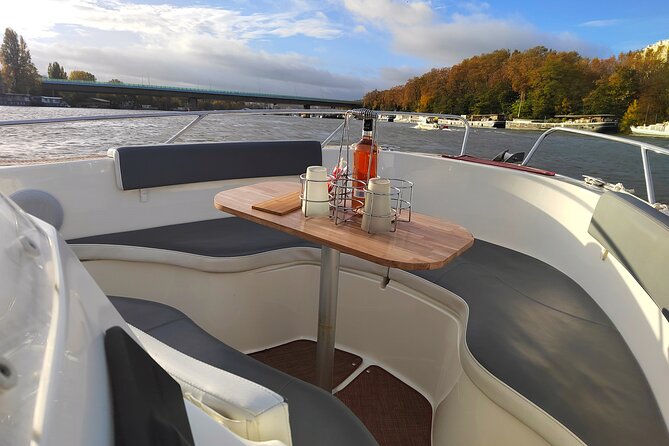
- Onboard BYO is part of the fun, since you can bring drinks and snacks, plus there’s a bottle opener and plastic cups
- Comfort help matters, with warm blankets mentioned in cold or breezy conditions
- A route built for icons, from Saint-Germain Island and Seine Musicale to Pont Neuf and the island core of Paris
More boats along the Seine:
- Paris: 1-Hour Seine Cruise departing from the Eiffel Tower
★ 4.4 · 77,472 reviews - Paris: Seine Cruise & Crepe Tasting near the Eiffel Tower
★ 4.4 · 11,231 reviews - Paris: Seine River Panoramic Views Dinner Cruise
★ 4.3 · 10,611 reviews - Paris: Eiffel Tower Access by Elevator & Seine River Cruise
★ 4.6 · 7,329 reviews
Private boat, big views: what makes this Seine cruise feel different
If your mental image of a Seine cruise is a packed dinner-boat scene, this is the opposite. You’ll be on a private craft with your own captain guide, which changes everything: you move at a pace that fits your group, you can request photo stops without feeling rushed, and you get the kind of landmark explanations that stick because you are close enough to hear them.
I also like that the experience is designed around the river, not around a show. The itinerary keeps pulling you from one recognizable sight to the next, so you’re never wondering what you’re looking at. Add in the small-group setup, and the cruise becomes a moving orientation tour for Paris, especially if it’s one of your first outings in the city.
The main trade-off to know up front
This cruise is highly dependent on weather, and the schedule is firm. If anything shifts, your on-board time shrinks, because the boat has to leave at its scheduled time. That matters most if you are traveling in a short window or you’re pinning your hopes on a specific sunset moment.
Starting point in Suresnes: the easy, real-world way to begin
You don’t start right in the tourist core. The departure is from 5 Quai Marcel Dassault, 92150 Suresnes, on the west side of the river. In practice, that can be a plus: the farther you get from the busiest docks, the more likely you are to have a calm check-in and a less chaotic morning or afternoon.
The port area also comes with a practical detail that I’m glad they spell out. There are restaurant toilets near the departure location, and you are told to check those out before you check out of the port. So yes, you should treat this like a true boat outing: go before you board.
For many visitors, this start means a short Uber or taxi ride. The cruise is described as about 35 minutes by Uber taxi from Paris district 8 (75008), so it’s not an all-day transfer. Just plan your timing like a local: aim to arrive early enough so you can settle in, not sprint.
Saint-Germain Island to Issy-les-Moulineaux: Paris gets calmer before it gets grand
Once you leave the private port area and get into the river flow, the cruise shifts into a slower rhythm. Early on, you pass along the Saint-Germain Island area, and that’s more than scenery. The route is framed around the way this part of the Seine fought off uncontrolled urbanization and industrialization, and then transitioned through agricultural land.
You also learn about how certain buildings marked turning points in the landscape, including developments connected to the Central Comptoir of Crédit Bonnard et Cie and an Agricultural Pavilion linked to the 1867 Universal Exhibition. Even if you are not a museum person, this kind of context makes the river feel less random. It stops being just a view, and becomes a timeline.
A key benefit here is mental pacing. Instead of throwing you directly into the Eiffel Tower rush, the early stretch lets you get your bearings. It’s a good moment to enjoy the “nature pocket” feel along the Seine before the big-photo section of Paris begins.
More departures from the Port de la Bourdonnais:
- Paris: Evening River Cruise with Music★ 4.4 · 22,721 reviews
- Paris: Louvre Guided Tour with Reserved Access & Boat Cruise★ 4.3 · 16,353 reviews
- Paris: Tootbus Hop-on Hop-off (Optional River Cruise)★ 4.3 · 15,279 reviews
- Paris: Big Bus Hop-On Hop-Off Tour with Optional Cruise★ 4.4 · 13,279 reviews
Seine Musicale and houseboats: culture on an island, locals on the water
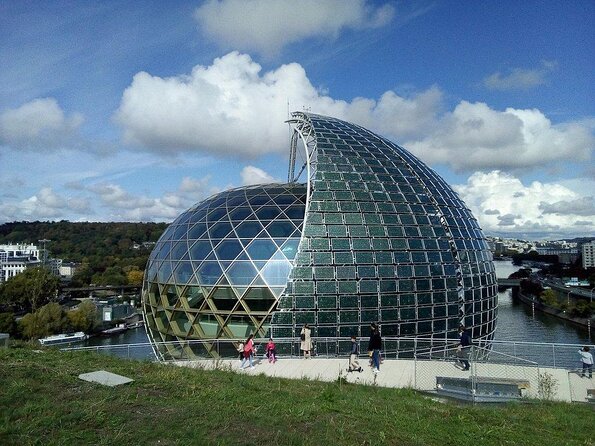
Next up is a landmark that feels almost futuristic compared to the classic Paris you expect: Seine Musicale at Seguin Island. The cruise notes tie it to history too, because this island’s story includes the former Renault factory location. That’s useful context. It explains why the architecture feels distinct, and why this is part of Paris’ ongoing shift toward modern cultural spaces.
You’ll also learn the basics of how the venue works, including that it’s preparing to open, and that its main hall is described as accommodating thousands of seats and standing space. The big idea is that this is being positioned as a long-term destination for amplified concerts, musicals, and musical theater.
Then comes a great local contrast: the cruise passes by the water-side houseboats. This is one of those “wait, we can live like this?” moments. It also reminds you that the Seine is not just a monument corridor. It’s a lived-in river.
Practical thought for you: this is a good section for phone photos, but also for just watching how the light changes on the water. In calm weather, houseboat areas often feel quieter, more intimate, and more “how do people actually spend a day here?”
Statue of Liberty on the Seine: a French twist on a famous symbol
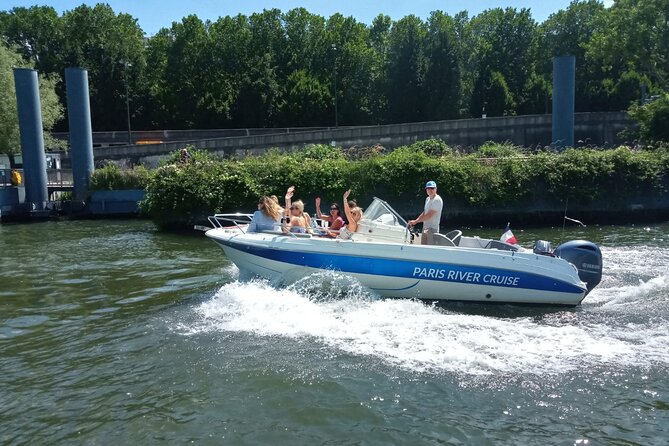
Yes, you pass by a Statue of Liberty on the Seine. It’s not the New York one, but it comes from the same 19th-century spirit. The route explains that the statue was installed and inaugurated in 1889 and first faced the Eiffel Tower direction. It later shifted location so that it faced toward the Elysée, and then again in 1937 so it pointed toward New York.
Seeing this in Paris is fun because it makes you look twice at the city’s layers. Paris loves symbolism, but it also loves adapting symbols to its own geography and politics.
For photo timing: aim to have your camera ready, because passing “in front of” means you’ll get a view, then the boat moves on. If you’re with a small group, you can usually ask the captain for a clean angle, especially if your timing is good and river traffic is light.
Eiffel Tower front row, plus Alexandre III Bridge underneath
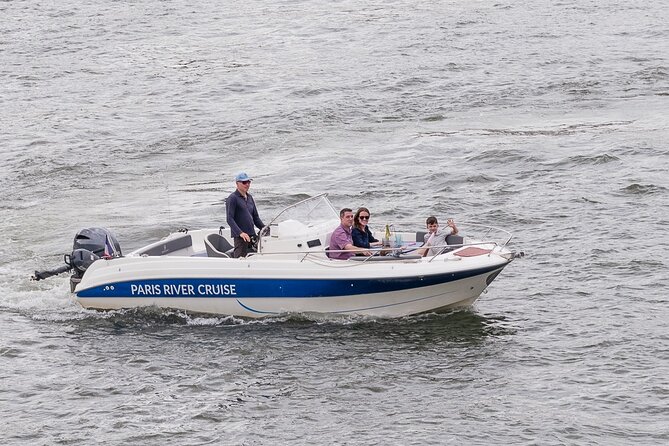
The cruise then goes straight into the core Eiffel-area sequence.
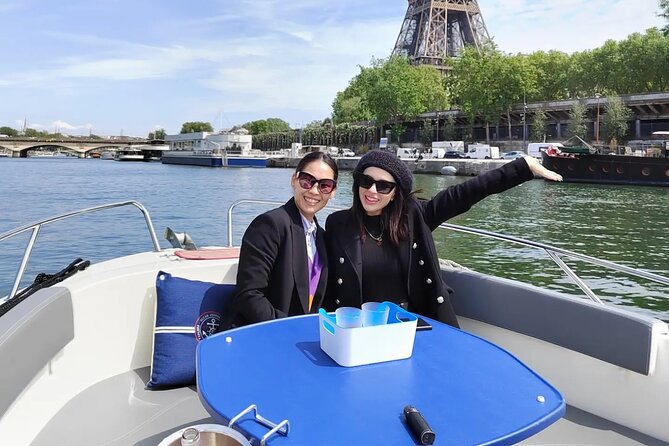
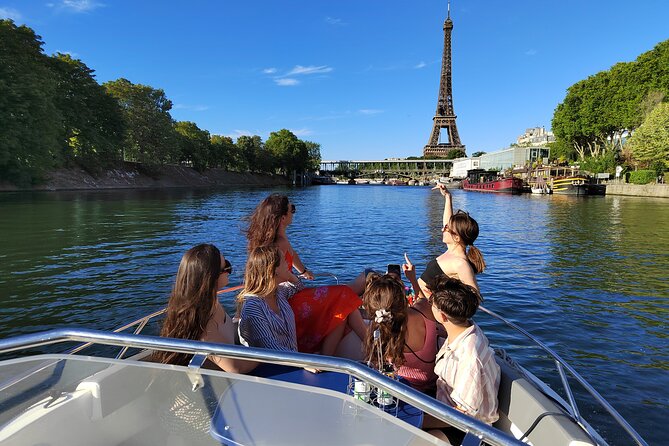
First, you’ll pass in front of the Eiffel Tower with context tied to the 1889 Universal Exhibition, where the tower was designed as a symbol of industrial progress. If you’ve seen the tower before from the street, this angle is different. From the water, the tower reads as a structure, not just a backdrop.
Right after that, you’ll reach one of Paris’ most photogenic bridges: Alexandre III Bridge. The route highlights why it’s so recognizable and why people love it from the Seine. It’s described as a cast steel bridge about 160 meters long, decorated with bronze candelabra, four tall pillars topped with golden crowns, rich Louis XIV style elements, and lion statues at each end. It’s also noted as classified as a historic monument since 1975.
The captain guide takes you under the bridge, which is a small detail with a big payoff. Up close, you see scale and craftsmanship. From street level, you often miss how dense the ornamentation is.
If you care about classic Paris photos, this is the segment to watch closely. The combination of Eiffel Tower views plus the bridge underpass is why a private cruise is worth paying for, compared with crowds that force you to take what you can get.
Musée d’Orsay to the Louvre: when stations and palaces become museums
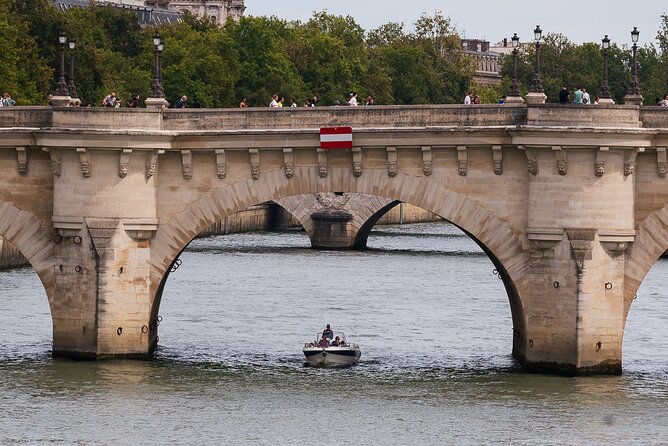
Next you pass a sight that always surprises first-time visitors: a museum in a station. The route describes the Orsay station built by Victor Laloux in 1900, with a style closer to the Second Empire than to Art Nouveau. The point of this stop is that Paris keeps reusing its major structures. This station’s transformation is part of the city’s habit of preserving big industrial bones and giving them new cultural jobs.
You’ll also get the hand-off to the next cultural heavyweight: the Louvre. The explanation ties into the shift from Versailles, where the royal court moved, to a Louvre role that housed nobles, intellectuals, and artists. Then, the French Revolution is described as the trigger that opened major gallery space to the public.
From the river, you are not walking through these places. But the value here is orientation. You see the edges of monumental buildings and can connect what you’ll later see inside, if you choose to go.
For you, that means less wandering. A Seine cruise like this can help you mentally map which museums and neighborhoods feel linked to certain eras of Paris.
Pont Neuf and the padlock bridge: Paris changes, and the bridges prove it
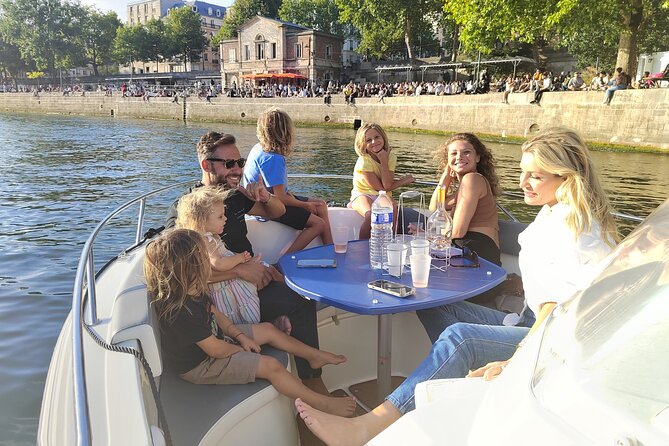
After museum territory, the cruise focuses on bridge history in a way that makes sense. Instead of treating bridges as “nice backgrounds,” it turns them into evidence of how Paris evolved.
First is Pont Neuf, described as the oldest bridge in Paris. The route explains that work was decided in 1577 by King Henry III, with a commission to manage the project. It notes the king laid the first stone in 1578, with Catherine de Medici and Louise de Lorraine present, and that construction continued until 1588.
Then comes the famous bridge connected with padlocks, built between 1801 and 1804. The route explains it was imagined as the base for a hanging garden and highlights an engineering theme: it was the first metal bridge in Paris, made of cast iron with nine arches.
This bridge sequence is a clever move. You are seeing two very different centuries at once. And because you’re on the water, you get a consistent viewpoint for comparing them.
Practical photo note: bridges are great for family shots. With a small private group, your captain can help you time moments so everyone is actually in frame, not just half cut off by someone else’s selfie stick.
Île de la Cité and Île Saint-Louis: the cradle of Paris, in motion
Now we get to the emotional core of the river story: Île de la Cité and Île Saint-Louis.
The cruise presents Île de la Cité as the cradle of Paris, connected to Lutetia and the initial settlement area. It also tracks how fortifications shaped civil, military, and religious power there, and how after the year 1000, the Capetian kings built a first royal palace (the current Palace of Justice). Then, bishops built Notre-Dame Cathedral, and that growth drove expansion beyond the island.
From there, you’ll follow the route along both islands, including Île Saint-Louis, which is described as developing alongside the left bank. You also pass the area tied to urban planning on Saint-Louis, including the detail that it used to contain two more separate islets, called Notre-Dame Island and Vaches Island, with the older name pointing to the lack of urbanization.
If you’ve ever felt lost reading about Paris history, this section helps you picture how the city built outward from its original center. It’s not just “cool views.” It’s a quick way to understand why Paris is shaped the way it is.
Pont Marie, then drop-off near the Eiffel zone: wrap-up with options
As the cruise nears its end, you pass near Pont Marie, described as a favorite walking route for Parisians. The route notes that the bridge began in the early 17th century from a royal desire to create a new traffic route between the right bank and the university area on the left bank, while exploiting land that was still considered virgin at the time.
Then you wrap toward the finish inside Paris. The route notes that drop-off happens inside the city, and the end point is described as 2 Port de Javel Haut, 75015 Paris, with the actual drop-off near Pont de Grenelle, about 950 meters from the Eiffel Tower.
This last detail matters. If you plan to walk over to see the Eiffel sparkle, you’re positioned close enough to make that part of your evening plan without a long transfer.
Price and value: what $541.85 per group buys you
This cruise costs $541.85 per group for up to 7 people. On paper, that might look steep if you’re used to per-person pricing. But with private boats, the math is different. You’re paying for exclusivity and time, meaning you’re not splitting a single captain and a single boat among dozens of strangers.
For 7 people, the per-person cost can become very reasonable compared with any big-boat alternative, especially if you care about:
- quieter conversation and better listening
- fewer compromises on photo angles
- faster “spotting” of landmarks because you get focused commentary
Also, you get small add-ons that help the experience feel complete: a bottle opener and plastic cups are included, and you can bring drinks and snacks. That turns the cruise into something closer to a moving picnic, which is especially nice for families or a group that wants to bring a personal touch.
Add in the strong review signal around Captain Alexis being friendly, funny, and photo-focused, and this becomes the kind of purchase that can feel like paying for service, not just transport.
Who should book this Seine cruise (and who might skip it)
This is a great fit if you want to see the highlights without being swallowed by crowds. It’s also ideal for families who want group unity, couples who want a calmer, romantic pace, and visitors who only have one evening or one “must-see” stretch to do from the river.
You might want to consider another plan if you have mobility concerns, because the boat is described as not accessible to people with reduced mobility. Also, if bathrooms are a priority for you, plan to use the nearby restaurant facilities at the departure area, because there is no toilet on board.
Should you book it?
Yes, I’d book this private Seine cruise if your goal is a small-group, captain-led way to connect Paris landmarks with real context. The route hits the big names you came for, but the private format is what makes it feel worth the money: you get better listening, cleaner photo moments, and a captain who can work with your group.
If you are flexible on the exact timing and you can dress for river breezes and weather swings, this is one of those experiences that helps Paris click fast.
FAQ
How long is the cruise?
The duration is about 1 hour 45 minutes, depending on navigation conditions.
What is the maximum group size?
The tour is for a private group up to 7 people.
What language is the cruise offered in?
It is offered in English.
Where do I meet the guide?
The meeting point is 5 Quai Marcel Dassault, 92150 Suresnes, France.
Where does the cruise end?
The end point is 2 Port de Javel Haut, 75015 Paris, with drop-off near Pont de Grenelle, about 950 meters from the Eiffel Tower.
Is there a toilet on the boat?
No, the boat does not have a toilet. The restaurant near the departure location has toilets.
Can I bring drinks or snacks on board?
Yes, you can bring your own drinks and snacks. Bottle opener and plastic cups are included.
Does weather affect the cruise?
Yes. The boat is highly dependent on the weather, and the experience requires good weather.
Is the boat accessible for reduced mobility?
No. The boat is not accessible for people with reduced mobility, and it is not recommended for them.
Newest write-ups from Paris
Seine Cruises, compared.
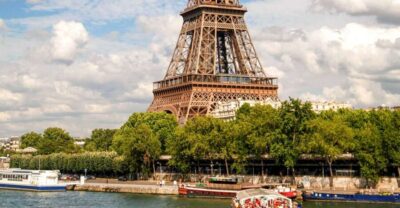
1-Hour Seine Cruise departing from the Eiffel Tower
Read our review →
Seine Cruise & Crepe Tasting near the Eiffel Tower
Read our review →
Eiffel Tower Access by Elevator & Seine River Cruise
Read our review →
3-Course-Dinner Cruise on the Seine with live music
Read our review →
Bateaux Parisiens Seine River Gourmet Dinner & Sightseeing Cruise
Read our review →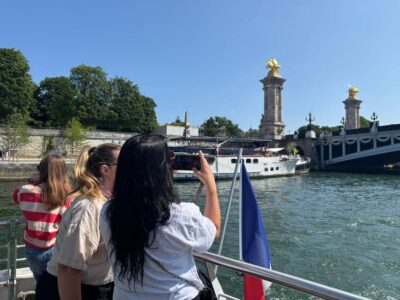
Hop-On Hop-Off Seine Cruise Pass with 9 Stops
Read our review →
Browse the lists this tour appears in