Reviewed · GUIDED
Paris Private Sightseeing Guided Tour by Electric Rickshaw
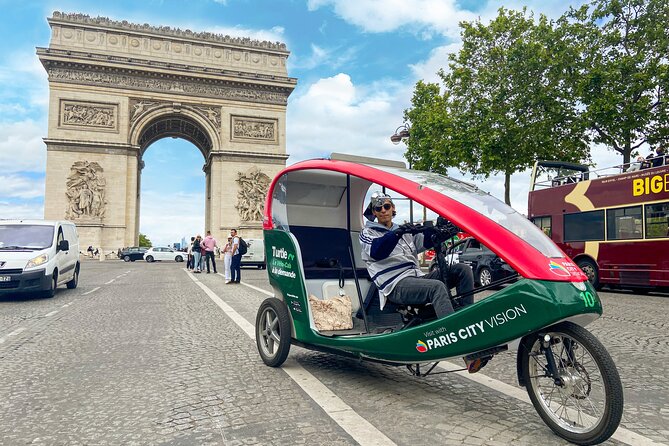
Paris in three hours, without fighting traffic. This private electric rickshaw route is a fast, relaxed way to see major sights without wasting time hailing taxis, then getting stuck in cross-town delays. I like the hotel pickup and drop-off everywhere in Paris, because it removes the usual start-and-stop friction that can eat up your day. One real consideration: the ride can be a bit bumpy at times, so if you are very sensitive to rough pavement, plan carefully.
What makes it work better than a standard hop-on, hop-off day is the mix of photo breaks on demand and guidance you can follow at your own pace. You also get audio commentary for 23 monuments via a QR code, and the rickshaw includes free onboard Wi-Fi, which is handy for jumping between stops and maps. In feedback, guides like Joao, Max, and Alexis are praised for picture planning, patience, and getting people through busy streets safely, even on cold rainy days.
Key tour highlights at a glance
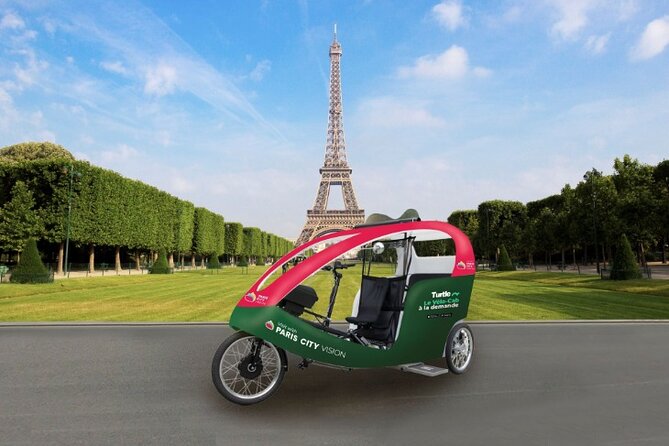
- Private electric rickshaw for up to 2 people with a driver, so you control the pace
- Pickup and drop-off everywhere in Paris, typically at your hotel
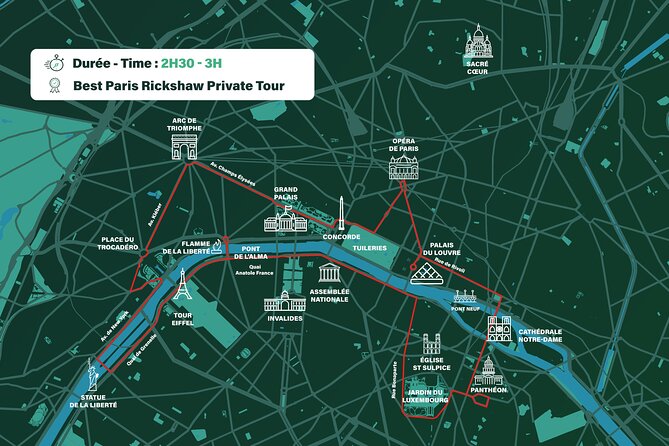
- 20+ monuments in about 2 hours of sightseeing, plus extra time for pickup and drop-off (up to 3 hours total)
- QR code audio for 23 monuments, so you can learn without crowding your schedule
- Photo breaks on demand, including flexible time for big viewpoints like Trocadéro
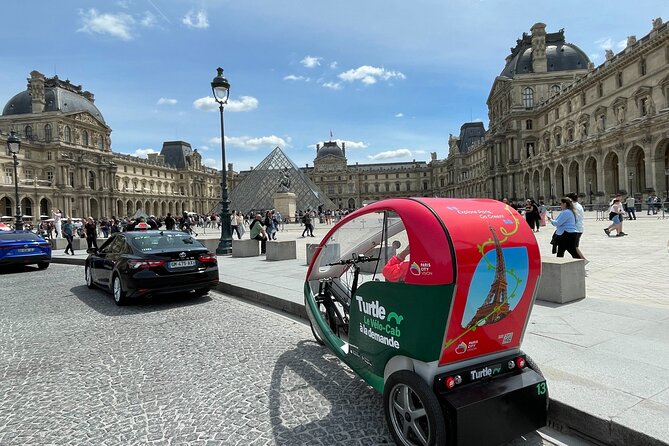
- Covered rickshaw with free Wi-Fi onboard, helpful for rainy weather and QR scanning
In This Review
- A smart way to see Paris without the taxi wait
- Price and value: when $230.80 makes sense
- Your 3-hour window: pickup time, photo pauses, and pacing
- From Notre-Dame to the Louvre and Opéra: first Paris icons in sight
- Tuileries to Champs-Élysées, Concorde, and Arc de Triomphe
- Eiffel-area views from Trocadéro, plus the Liberty replicas
- Les Invalides to the Panthéon, via gardens and the National Assembly
- What I love about the on-board extras: QR audio and Wi-Fi
- Who this private rickshaw tour fits best
- Should you book this private electric rickshaw tour?
A smart way to see Paris without the taxi wait
Paris looks compact on a map, but in real life it is a puzzle of one-way streets, traffic lights, and detours. This tour solves a big chunk of that by combining two things that matter: a driver who does the moving, and an electric rickshaw that can get around more easily than a traditional car in many areas.
From the way people describe the experience, one underrated win is the use of bike lanes and routes that vehicles do not always use. That can mean faster hops between neighborhoods and less time stuck at the edge of intersections where taxis idle. It also changes the vibe. Instead of walking for hours to get your bearings, you get a moving overview of Paris, then you stop at the right moments for photos and context.
A handful more Paris options to weigh up
- Louvre Museum Paris Essential Guided Tour Semi-Private 6ppl Max
★ 5.0 · 3,807 reviews - SUV Private Transfer: Paris to Charles de Gaulle Airport (CDG)
★ 4.0 · 3,091 reviews - Paris: Private Photoshoot at the Eiffel Tower
★ 4.7 · 2,636 reviews - Top Private Cruises in Paris with French Champagne and surprises
★ 5.0 · 1,553 reviews
Price and value: when $230.80 makes sense
The price is listed as $230.80 per group, up to 2 people in the same rickshaw. That pricing structure is the key value lever here: if you are traveling solo, the cost is higher per person, but if you are a couple (or small pair of friends), the math improves fast. You are basically paying once for a private driver and a rickshaw, then splitting it.
You also get more than a simple route. The experience includes special history and anecdotes for major stops, plus photo breaks on demand and QR audio for 23 monuments. If you have ever spent a half day running between ticket lines, finding street parking, and trying to coordinate with multiple people, you know why private transportation can feel “expensive” but also why it can be the difference between a fun day and a stressful one.
Your 3-hour window: pickup time, photo pauses, and pacing
The sightseeing portion is about 2 hours, but pickup and drop-off time is added, so the total can run up to 3 hours. That means you should treat this as a “big orientation loop,” not a museum day where you linger inside buildings.
This pacing is a good fit for jet lag, first-time visitors, and anyone who does not want to spend their whole vacation navigating trains, buses, and metro transfers. It also helps with timing choices throughout the day, because the tour runs multiple departures based on your schedule.
One practical tip: build in mental space for photo stops. The whole point is on-demand pauses, and the best moments often take an extra minute while you find the right angle. A couple of guides mentioned in feedback were especially good at timing photos in the rain and cold, which is exactly the kind of practical help you want.
From Notre-Dame to the Louvre and Opéra: first Paris icons in sight
Notre-Dame de Paris is one of the most recognizable Gothic landmarks in Europe, and seeing it early gives you instant Paris context. Even when you are not going inside, the cathedral’s setting on the Île de la Cité and the surrounding river-island atmosphere help you understand why this area is so central to Paris identity.
Next up is the Louvre. The museum is vast, but here you are using it as an anchor stop, not as a full guided gallery session. What you gain is location clarity. From the outside, you can visually connect the Louvre to nearby gardens and grand streets, which makes later wandering much easier on your own.
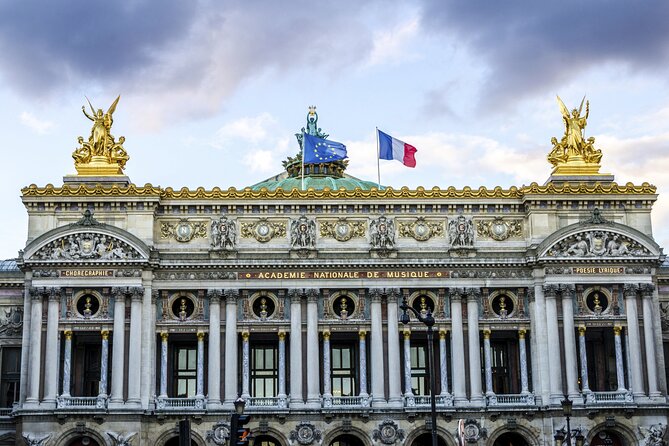
Then the route includes the Paris Opera, the long-standing heart of France’s opera and ballet world. Seeing it from the street gives you a sense of scale and architecture without committing to show times or tickets. It is also a reminder that this is not just a tourist city. Paris is a living cultural machine.
Tuileries to Champs-Élysées, Concorde, and Arc de Triomphe
If Notre-Dame and the Louvre are about iconic history, the stretch from the Tuileries Garden to Place de la Concorde is about space and ceremony. The Tuileries Garden sits between the Louvre and Place de la Concorde, so you get that smooth visual transition from art to garden to monumental square.
Place de la Concorde is one of the biggest squares in the city, and it is a great place to orient yourself. You can see how Paris balances grand open space with major transportation arteries. It also helps you understand why the Champs-Élysées feels like a processional avenue, not just a shopping street.
The route continues to the Grand Palais des Champs-Élysées, described as a historic exhibition hall and museum complex. This stop is as much about architectural presence as it is about what might be happening inside on any given day. Then comes the Avenue des Champs-Élysées itself, a wide, straight stretch that runs between Place de la Concorde and Place Charles de Gaulle.
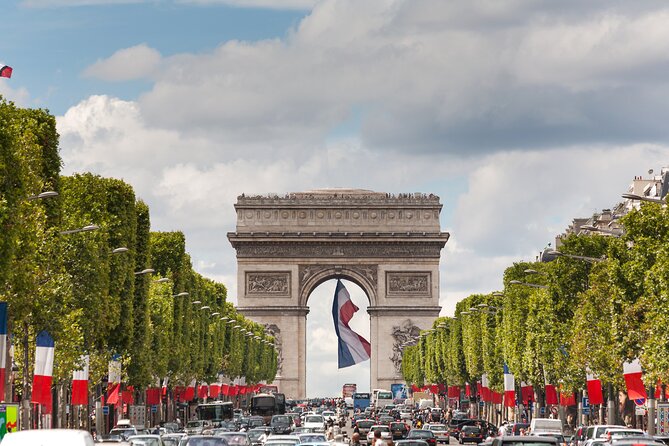
Finally, you reach the Arc de Triomphe de l’Étoile at the western end of the Champs-Élysées. The key detail here is the “star” junction idea, where twelve avenues radiate outward. That’s what makes the Arc more than a photo spot. It is a visual map of how Paris pushes movement outward from the center.
If this one is booked out, Paris has these too:
- Paris: 1-Hour Seine Cruise departing from the Eiffel Tower★ 4.4 · 77,472 reviews
- Disneyland® Paris 1-Day Ticket★ 4.6 · 49,412 reviews
- Paris: Versailles Palace and Gardens Full Access Ticket★ 4.6 · 41,579 reviews
- Paris: Arc de Triomphe Rooftop Tickets★ 4.6 · 34,264 reviews
Eiffel-area views from Trocadéro, plus the Liberty replicas
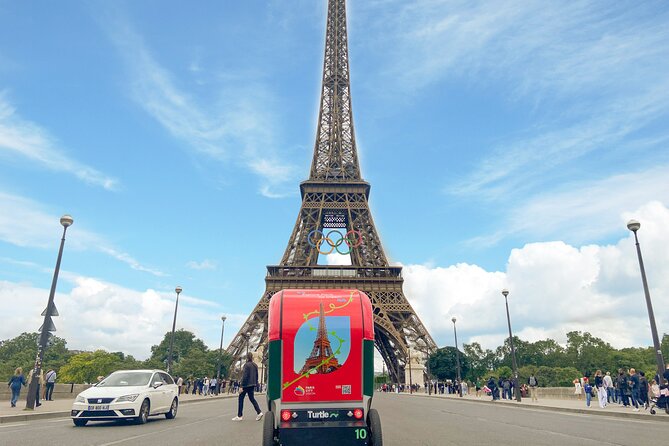
From the Trocadéro area (across the Seine), you get one of the most famous angles on the Eiffel Tower. Even if you have seen Eiffel photos before, seeing it framed from this side tends to feel different, because you get the sense of height and river geography together.
This tour also includes the Statue of Liberty replica. It is located on an artificial island between the 15th and 16th arrondissements, with its back to the Eiffel Tower. That unusual orientation makes it a fun “only in Paris” detail you might otherwise miss, and it adds variety to the Eiffel leg of the day.
A second nearby stop is the Flame of Liberty (Flamme de la Liberté), a full-sized gold-leaf-covered replica of the torch flame. The fact that it sits near the Pont de l’Alma gives you a sense of how these references connect around Paris, not just in one monument cluster. For photo time, it is a welcome change of pace from repeating the same Eiffel shot.
Les Invalides to the Panthéon, via gardens and the National Assembly
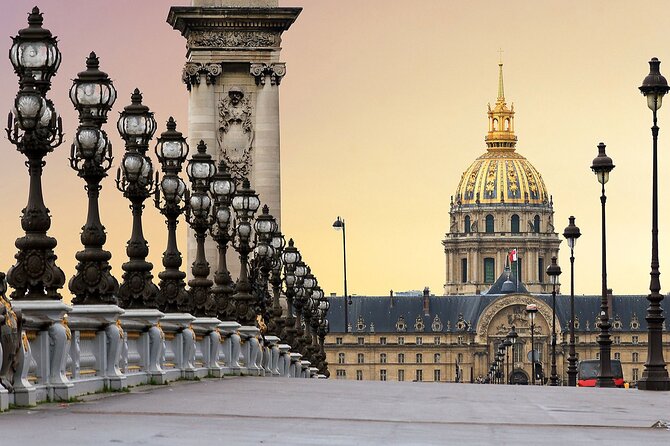
Next comes Les Invalides, a major complex tied to France’s military history. The description includes museums and monuments, and it also notes a hospital and old soldiers’ retirement home, which is a powerful combination of history and human stories. Even for visitors who do not love military topics, it is one of the most important architectural complexes in this part of the city.
The tour then passes by the National Assembly. This is less about a single monument moment and more about feeling how government buildings shape the rhythm of a neighborhood. It adds political Paris to the mix, balancing the cultural stops earlier in the loop.
You then shift to a greener, slower pace with the Jardin du Luxembourg, also known as Jardin du Sénat. This garden area is a great counterweight to the grand stone and busy avenues. In a short rickshaw format, it is one of the stops that helps the day feel like it has texture, not just speed.
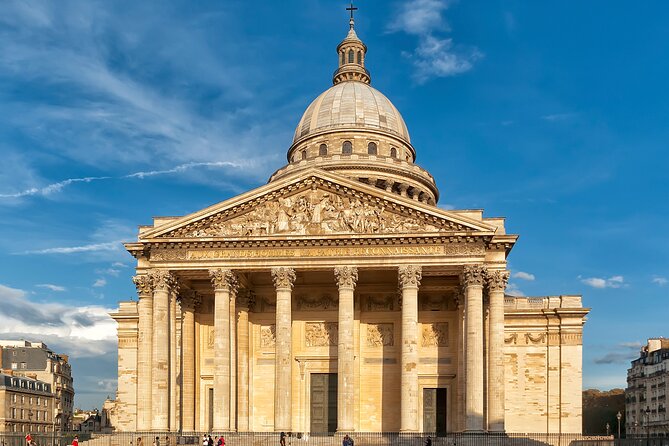
The loop closes with the Panthéon, a monument in the Latin Quarter. It sits atop Montagne Sainte-Geneviève at the center of Place du Panthéon. Even if you only see the area from the street, it signals why the Latin Quarter is tied to learning and public life, and it gives you a final “big idea” moment before you head back.
What I love about the on-board extras: QR audio and Wi-Fi
The tour includes access to audio commentary of 23 monuments with a QR code. That is useful because it keeps you from having to rely on a constant stream of guide talking. You can listen when it fits your attention and pause when you want to focus on photos or traffic flow.
On top of that, there is free Wi-Fi onboard. That may sound like a small perk, but it matters in practice for QR scanning, map checks, and sending a quick message back home without draining your phone data. It also makes it easier to stay organized, especially if you stop for photos and then need to reload the audio at the next landmark.
Who this private rickshaw tour fits best
This is a great match if you want an efficient introduction to Paris that still feels personal. The private format, with 1 to 2 people per rickshaw and a driver, makes it smoother for couples, friend pairs, and anyone who does not want to stand around waiting for a group.
It also works well for people who prefer reduced walking. You still get outside time at major landmarks, but you are not doing a full day of long-distance foot travel.
From feedback, it is adaptable for different comfort levels, including older visitors. One caution from a review: it can be a bit bumpy at times. If you have mobility challenges or sensitive joints, it is worth thinking about that before booking. The rickshaw is fully covered, which helps with weather protection.
Should you book this private electric rickshaw tour?
If your goal is to see a lot of Paris landmarks in a short window, this is an easy yes. The value is strongest for couples because the group price is the same for 1 or 2 people in the same rickshaw, and you get pickup, drop-off, photo breaks, QR audio, and a driver who can handle the moving parts of the day.
I would book it if you are planning a first visit, have limited time, or want a guided overview that still leaves you enough energy to explore on your own afterward. I would think twice if your priority is deep museum time or long guided interior visits, because this format is built for landmark stops, not ticketed gallery marathons.
One last practical note: this tour is commonly booked about 56 days in advance on average, so if your dates are fixed, it is smart to reserve early and lock in the time slot that best fits your plans.
Newest write-ups from Paris





Guided, compared.
Louvre Guided Tour with Reserved Access & Boat Cruise
Read our review →
Louvre Museum Masterpieces Guided Tour with Access
Read our review →
Louvre Museum – Exclusive Guided Tour (Entry Included)
Read our review →
Skip-the-Line Guided Palace Tour and Full Access
Read our review →
Louvre Access with Mona Lisa Escort or Guided Option
Read our review →
Louvre Museum: Skip-the-Line Small Group Guided Tour
Read our review →
Louvre Museum Paris Essential Guided Tour Semi-Private 6ppl Max
Read our review →