
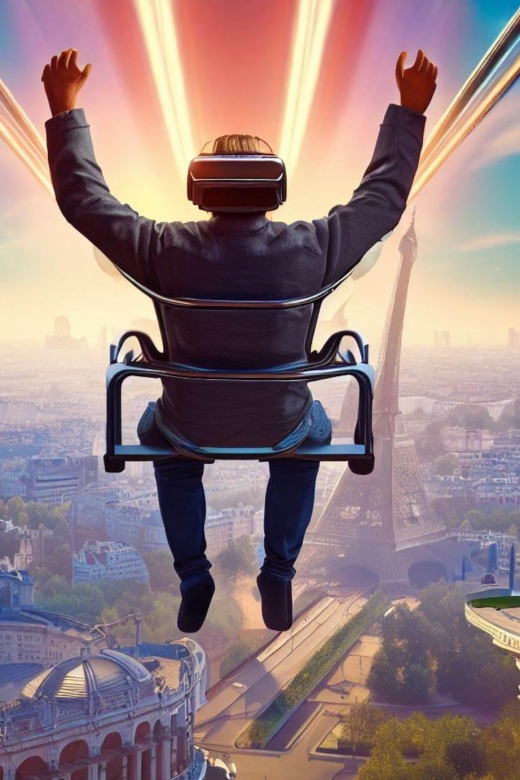
Reviewed · MUSEUMS
Paris: Ticket Entrance to Science Experiences Museum
Science here feels like play with purpose. In a 850 m2 museum at Bercy Village, you bounce between theme rooms like the edge of the universe and quantum physics, with VR and video mapping doing the heavy lifting, though some sessions may feel more like watching than hands-on testing.
The course is built around science explained through entertainment, using multisensory and emotional presentations, and it runs about 90 minutes. One thing to consider: if you rely on signage and also want to listen to an instructor, the room pacing can feel busy.
In This Review
- Key things to know before you go
- Science Expériences at Bercy Village: what this Paris ticket actually delivers
- The 90-minute room-to-room journey: universe, abyss, Earth, then quantum
- Tech in the show: VR, video mapping, and what may cost extra on site
- Quantum physics attractions: lasers, teleportation, and levitation concepts
- What feels great, and what can go sideways (based on real-world patterns)
- Price and value: how to judge $1,178 per person for 90 minutes
- Practical tips to get more out of your session
- Who should book Science Expériences, and who might prefer something else
- Should you book this Science Expériences ticket?
- FAQ
- How long is the Science Expériences ticket entry experience?
- Where is Science Expériences located?
- What is included in the ticket?
- Are VR simulators included in the ticket?
- Is the audio guide included?
- What extra options could cost money on site?
- Is the experience wheelchair accessible?
- What is the cancellation policy?
- Can I reserve now and pay later?
Key things to know before you go

- 850 m2 of science-themed rooms at Bercy Village, designed to move you from topic to topic.
- Room themes span big science, from the borders of the universe down to the center of the Earth.
- Quantum physics gets the star treatment, with laser, teleportation, and levitation concepts.
- Some tech is part of the show, but extras may cost extra, including VR simulators and audio guidance.
- You want to be ready to participate, because not every moment is hands-on for everyone.
- Group flow matters, so you may want to watch your timing and where you’re directed inside.
Other Paris galleries with a shorter queue:
- Paris: Orsay Museum Entry Ticket
★ 4.7 · 25,647 reviews - Louvre Museum Masterpieces Guided Tour with Access
★ 4.5 · 12,023 reviews - Paris: Louvre Museum Entry Ticket With Host and River Cruise
★ 4.6 · 9,926 reviews - Les Invalides: Napoleon’s Tomb & Army Museum Entry
★ 4.6 · 9,185 reviews
Science Expériences at Bercy Village: what this Paris ticket actually delivers

Science Expériences is a science museum experience set in Paris near Bercy Village. It is spread across 850 m2, so this is not a tiny gallery with a few displays. Instead, you follow a structured course that frames science as something you can feel and react to, not just read about.
The museum is designed around the idea that learning sticks better when it is fun. The format leans on multisensory and emotional presentations, and it uses tools like virtual reality and video mapping to support the story being told.
Here’s the practical upside: the setting is made for short attention spans and curiosity. You are not expected to sit still for long stretches while someone talks at you. The course is paced so you move from one theme to the next, which is ideal if you want science that feels like an adventure.
The practical downside: a science show can still vary in how interactive it feels. Some moments can lean more toward observing than testing. If you specifically want to push buttons, run experiments, and do things with your hands, I’d go with eyes open and plan to seek the interactive parts as the course moves along.
The 90-minute room-to-room journey: universe, abyss, Earth, then quantum
The experience is designed as a sequence of rooms that all connect through a science narrative. You start with themes that feel cosmic and enormous, then the journey shifts into darker, deeper ideas, and finally ends with quantum physics.
You can think of the course as four big chapters:
- the borders of the universe
- the depths of the abyss
- the center of the Earth
- quantum physics themes, including laser, teleportation, and levitation
Even if the specific order of every micro-scene is not your main concern, the overall sweep is clear. That arc matters because it keeps you oriented. You are always moving forward to the next theme, and the change of setting helps prevent “museum fatigue.”
What you should watch for during the run is your ability to keep up with the instructions. A couple of people found the room pacing demanding because reading signs, listening to audio, and following the instructor at the same time can be hard. If you need help staying focused, pick a spot that gives you the best view of the speaker and the main visual elements in the room.
Also, since it’s scheduled around a 90-minute duration, this is best treated like a focused outing, not a half-day detour. You will get the most value if you plan your day so you are not rushing in with ten minutes of stress.
Tech in the show: VR, video mapping, and what may cost extra on site
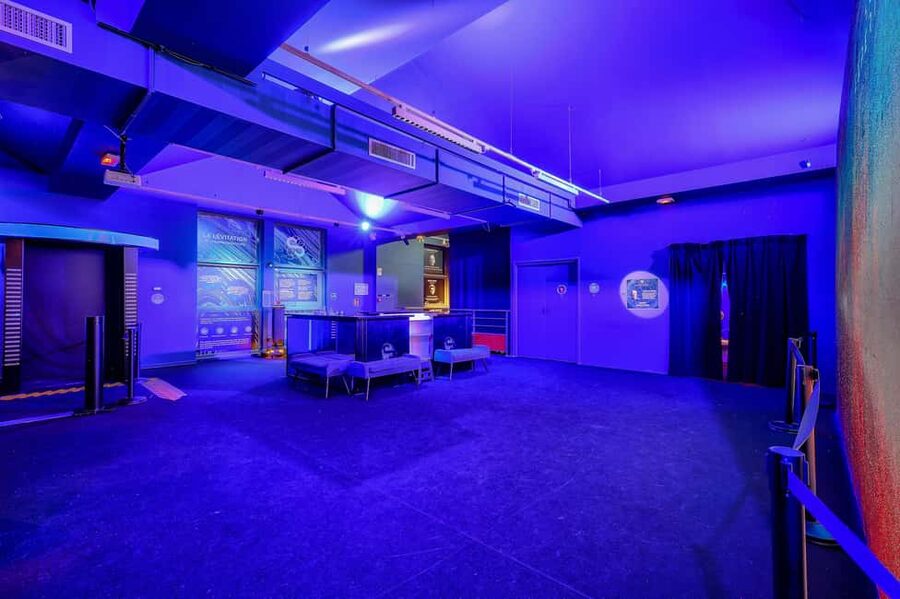
This museum is built to use modern presentation techniques, not just flat panels. The description emphasizes technologies like virtual reality and video mapping, plus multisensory experiences meant to create stronger memories than standard information boards.
One important detail for planning: not everything high-tech is automatically included. The information provided notes that VR simulators and an audio guide are not included. It also says there are “options to pay on site,” which suggests some add-ons may come with an extra price tag once you arrive.
So here is the value question you should ask yourself: are you coming mainly for the core course, or are you expecting the full VR and audio layer as part of the baseline ticket? If you love gadgets and want every extra effect, budget for the possibility of extra spending after you book.
A second practical note: when an experience includes both visual effects and spoken guidance, your personal comfort matters. If you prefer reading labels slowly, you might find some rooms feel too fast. If you prefer big visuals and movement, you’ll probably enjoy the format more, even when certain stations feel like they are more for watching than participating.
If you want a smoother time, do a quick check at the entrance area about what is included in your ticket versus what is optional. The course is designed to be entertaining, but you still need to manage your own expectations about which features are guaranteed.
Quantum physics attractions: lasers, teleportation, and levitation concepts
The ending theme is quantum physics, and it leans on three headline ideas: lasers, teleportation, and levitation. You should treat these as concept-driven attractions rather than literal sci-fi. The value is in how the museum uses staging, light effects, and interactive presentation styles to make strange physics feel more approachable.
Lasers are the most straightforward of the three, because they connect to something you can often see and understand in a everyday context. Teleportation is trickier, and it usually works best as an analogy or a visual metaphor for how information and states behave. Levitation tends to be a crowd-pleaser because it turns invisible forces into visible spectacle.
This type of ending is smart for learning. When visitors leave with a strong final impression, they remember the “big idea” even if they forget every technical detail. That is the museum’s core strategy: entertainment as a memory tool.
Still, the biggest factor is how active the stations feel during your session. If the room leans more observational, you may walk away with the story but less hands-on satisfaction. If the presentation includes interactive or try-it moments, you’ll likely feel more ownership over the science.
A handful more Paris options to weigh up
- Disneyland® Paris 1-Day Ticket★ 4.6 · 49,412 reviews
- Paris: Versailles Palace and Gardens Full Access Ticket★ 4.6 · 41,579 reviews
- Paris: Arc de Triomphe Rooftop Tickets★ 4.6 · 34,264 reviews
- Paris: Eiffel Tower Entry Ticket with Optional Summit Access★ 4.4 · 20,035 reviews
What feels great, and what can go sideways (based on real-world patterns)

The high points are easy to spot from the vibe people describe. Families especially like the variety and the playful approach. In particular, one family outing included two kids, ages 6 and 11, and both ages enjoyed the experience, which is a good sign that the content hits more than one developmental level.
The museum also aims for multiple ways to experience the material, not just lectures. That matters because science learning often lands better when you can watch, listen, and react within the same setting.
Now the reality check. Some people experienced issues like non-working attractions or screen problems. Others felt there were too few moments where they actually tested or interacted, with more of the time spent listening. There were also complaints about organization and group flow, including people ending up crossing paths with other groups and creating confusion.
Finally, some people found it hard to read signs while also trying to listen to audio and the instructor. That is a common problem in science spaces, because the best visuals are sometimes paired with smaller text or competing audio.
How do you use this information as a smart buyer? You prepare for a range of experience quality. You go in knowing it is a short 90-minute course, with tech elements that could vary by session. And you decide in advance whether you want a “watch-and-learn” kind of outing or a more hands-on science day.
If you’re the type who gets frustrated by small breakdowns, it may be worth keeping expectations lower and focusing on the main room sequence rather than hoping every single device is perfect.
Price and value: how to judge $1,178 per person for 90 minutes
Let’s talk money plainly. The listed price is about $1,178 per person, and the experience runs about 90 minutes. That is not a bargain, and you should treat it as a premium ticket.
So where is the value coming from, if you pay that amount?
- You are buying access to a large facility (850 m2) built as a structured course.
- The course includes multiple science themes that move from cosmic ideas to quantum physics.
- The presentation style uses expensive-feeling tools like VR and video mapping, even if some add-ons may cost extra.
But also ask what you might be paying for that you might not fully use.
- If VR simulators and an audio guide are not included, the baseline ticket may feel like it is missing key layers for some people.
- If certain stations do not function during your time slot, your “value per minute” drops fast in a short experience.
Here’s the decision framework I’d use: this ticket can be worth it if you and your group genuinely enjoy concept-driven science shows, you like visual effects, and you’re okay paying premium for an engineered experience.
It is less compelling if you want a long list of interactive experiments, you hate spending extra once onsite, or you are the type who needs perfect functioning across every station to enjoy yourself.
With a ticket at this level, I’d also make sure your schedule allows you to stay calm if the flow is a little chaotic. You are not paying for a quiet stroll through exhibits. You are paying for a short, tech-forward show.
Practical tips to get more out of your session
Because the course is short and room-to-room, your behavior can make a noticeable difference.
1) Arrive with a calm brain
In a 90-minute format, you cannot “catch up” later. If you arrive flustered, you’ll miss cues and instructions.
2) Prioritize one source of guidance in each room
If you find it hard to read signs while also listening to spoken guidance, pick the most important signal for you. Stand where you can see both the instructor and the main visuals.
3) Watch for included versus optional tech
VR simulators and the audio guide are noted as not included, and there are other options you may pay for on site. Before you commit to extra spending, quickly confirm what your ticket covers.
4) If group flow feels confusing, ask staff fast
When groups mix, it only takes a minute to lose your place. Ask a staff member which room you should be in next, then lock onto the correct path.
5) Go in expecting variety, not a single theme park ride
The best approach is to treat each room as a separate science chapter. If you judge the experience by one attraction alone, you might miss the overall value.
Who should book Science Expériences, and who might prefer something else
This museum is a good fit if you want science that feels playful and varied. The fact that kids around 6 and 11 can enjoy it suggests the content is accessible without being childish.
It also works well if you like presentations that use light, projection, and multisensory effects to communicate concepts. If your idea of fun includes learning in motion, you’re likely to enjoy the arc from space scale to quantum scale.
It may be a weaker match if you are mainly drawn to “hands-on experiments you control.” Some people did not feel they tested much, and some attractions can be sensitive to technical issues. If your ideal science outing is button pressing and hands-on manipulation, make sure you mentally separate the show elements from the interactive elements.
It may also be a less comfortable choice for visitors who strongly depend on reading signage while listening at the same time. If you know you struggle with multi-channel attention, plan on focusing on the instructor in each room and scanning signs only when the action pauses.
Should you book this Science Expériences ticket?
If you want a short, high-production science show in Paris, this ticket can be a strong choice. I’d especially consider it if you like themed science rooms that cover big ideas and you’re okay that the experience may lean more toward observing than running experiments.
I would hesitate if you’re expecting a long, hands-on workshop full of functioning interactives at every step. The premium price means you need to be comfortable with the possibility of session-to-session variation, including occasional tech hiccups or pacing that feels busy.
My rule for booking: if you and your group will enjoy the “science as spectacle” angle, and you’re ready to follow a room-to-room course for about 90 minutes, then book. If you’re chasing hands-on control and predictable interactivity at every stop, look for a more hands-on oriented science option instead.
FAQ
How long is the Science Expériences ticket entry experience?
The duration is listed as 90 minutes.
Where is Science Expériences located?
It is located at Bercy Village, Paris, in the Ile-de-France region of France.
What is included in the ticket?
The ticket covers entry to the Science Expériences museum course, including the science-themed rooms and presentations.
Are VR simulators included in the ticket?
No. VR simulators are listed as not included.
Is the audio guide included?
No. The audio guide is listed as not included.
What extra options could cost money on site?
The details mention other options that you may need to pay for on site.
Is the experience wheelchair accessible?
Yes, it is wheelchair accessible.
What is the cancellation policy?
Free cancellation is available up to 24 hours in advance for a full refund.
Can I reserve now and pay later?
Yes. The booking offers a reserve now & pay later option, so you can book and pay nothing today.
Newest write-ups from Paris






Museums, compared.

Louvre Museum Masterpieces Guided Tour with Access
Read our review →
Louvre Museum Entry Ticket With Host and River Cruise
Read our review →
Les Invalides: Napoleon’s Tomb & Army Museum Entry
Read our review →
Louvre Museum – Exclusive Guided Tour (Entry Included)
Read our review →
Louvre Museum Hosted Entry and Mona Lisa Audioguide
Read our review →
Louvre Museum Tour Mona Lisa & Iconic Masterpieces
Read our review →Browse the lists this tour appears in