
Reviewed · SEINE CRUISES
Paris World Fairs Walking Tour Top Sights Along the Seine River
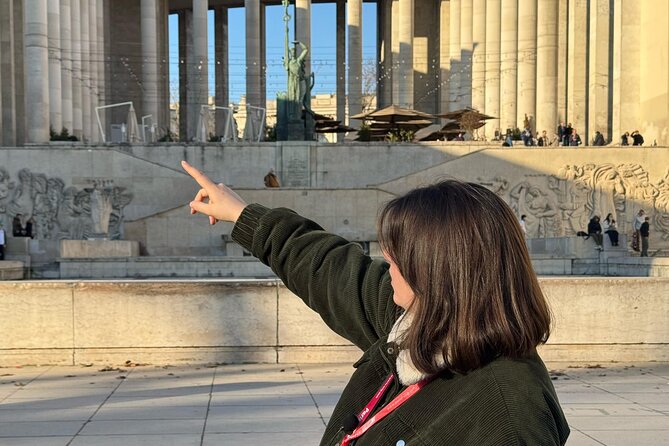
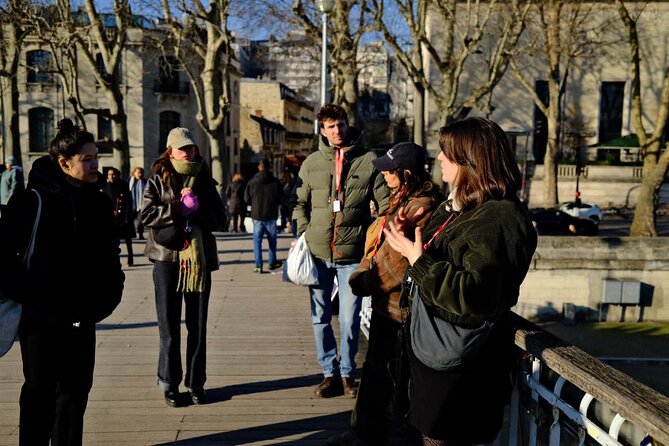
Paris can feel like a greatest-hits album, unless you pick a theme. This walk uses the Seine and the World Fairs as your storyline, so the city turns into a living timeline. You get an intimate small group (max 15) and a local guide who can answer questions, with photo-friendly viewpoints along the river.
I especially love how the tour explains why these landmarks exist, not just what they look like. The route ties the 1900 and 1937 Expositions Universelle to spots like the Grand Palais, Petit Palais, and the ornate Pont Alexandre III, so you understand the city’s big creative “why.” The one thing to consider is that it is a light walking loop with several stops in a relatively compact area, so you’ll want moderate fitness if you do not do well on steady walking.
You’ll also get that practical, friendly rhythm that reviewers called out, including stories shared with energy by guides like Olivia. Expect clear explanations, short moments to look and photograph, and a route that heads past only the most obvious postcard spots.
In This Review
- Key Highlights Worth Your Time
- Walking the Seine Through the World Fairs Story
- The Best Value: Why $43.26 Feels Reasonable Here
- Getting Oriented: Start at Place Clemenceau, End at the Eiffel Tower
- Stop-by-Stop: Champs-Élysées and the 1900 Gateway
- Champs-Élysées Quarter, Clemenceau Metro (Line 1)
- Grand Palais: The Glass-Domed Showstopper
- Petit Palais for Art and Calm Between Big Names
- Pont Alexandre III: Ornate Bridge, Franco-Russian Symbol
- The Seine as the Connecting Thread: Fairs, Ferries, and Flood Gauges
- Flamme de la Liberté: A World Fair Legacy in Liberty’s Flame
- Debilly Footbridge: A 1900 Pedestrian Link
- Palais de Tokyo and Palais de Chaillot: Modern Art Meets Fair Planning
- Palais de Tokyo, the 1937 Palace of Modern Art
- Palais de Chaillot, 1937 Triad Planning
- Trocadéro Fountain and Pont d’Iéna: Eiffel Tower Approaches
- Eiffel Tower Finale: From 1889 Progress to Today’s Big Stage
- The Real Secret Sauce: A Guide Who Keeps It Clear and Light
- Photo and Timing Tips for a Smooth 2 Hours
- Who This Tour Fits Best
- Should You Book This Tour?
- FAQ
- How long is the Paris World Fairs Walking Tour?
- What is the price per person?
- Is the tour in English?
- How big is the group?
- Do I need a ticket to visit the sights on this tour?
- Where does the tour start and end?
- Is transport included to and from the meeting point?
- What should I bring since food is not included?
- What physical condition do I need?
- What is the cancellation policy?
Key Highlights Worth Your Time
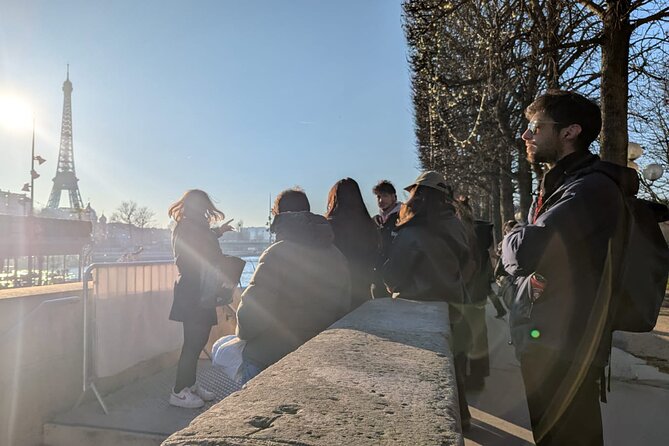
- Small group size (15 max) for questions and a calmer pace
- Seine-focused World Fair stories that connect modern Paris to 19th and 20th-century breakthroughs
- Free-to-view stops clustered from the Grand Palais area to the Eiffel Tower
- Multiple iconic bridges (Pont Alexandre III, Pont d’Iéna) with great city angles
- Easy photo moments at riverfront overlooks and terrace-style viewpoints
- English mobile ticket and a guide-led route designed for smooth wandering
More boats along the Seine:
- Paris: 1-Hour Seine Cruise departing from the Eiffel Tower
★ 4.4 · 77,472 reviews - Paris: Seine Cruise & Crepe Tasting near the Eiffel Tower
★ 4.4 · 11,231 reviews - Paris: Seine River Panoramic Views Dinner Cruise
★ 4.3 · 10,611 reviews - Paris: Eiffel Tower Access by Elevator & Seine River Cruise
★ 4.6 · 7,329 reviews
Walking the Seine Through the World Fairs Story
If you like Paris, you probably love architecture, art, and big public works. This tour gives you the glue that connects those loves, using the World Fairs as the plot. The Seine mattered then because it linked exhibition sites, moved visitors, and helped Paris sell an image of progress to the world.
What makes this route feel different is that it explains the “origin” of lots of things you already know. The Grand Palais and Petit Palais are not just pretty buildings, they were built for the 1900 Paris Exposition Universelle. The bridges you cross also carry that legacy, because they were repeatedly rebuilt, reused, and re-symbolized for new crowds.
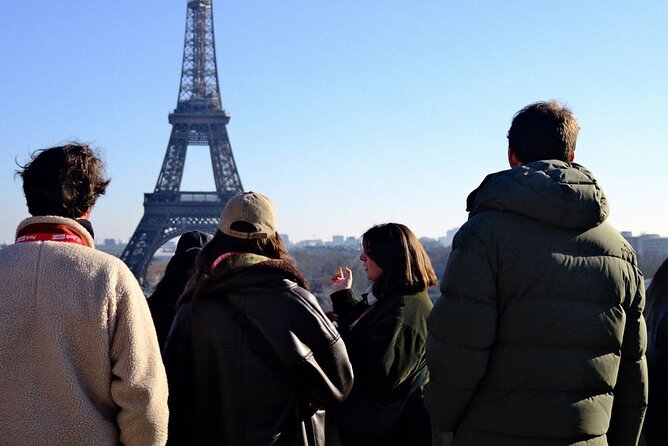
You will finish with the Eiffel Tower in sight, but you’ll be looking at it with more context. It started as a daring engineering statement for the 1889 Exposition Universelle, and that tension between criticism and acceptance is part of the story the guide brings to life.
The Best Value: Why $43.26 Feels Reasonable Here
At $43.26 per person for about 2 hours, the price feels fair for two reasons. First, this is not just a checklist of landmarks. You are paying for a guide to connect decades of World Fair planning, politics, and design into something you can actually remember.
Second, the stops are largely free to access as viewpoints. The tour highlights major sites with no ticket pressure mentioned for most of the exterior viewing and quick interior access moments. Even when the stop is near museums and galleries, the tour format keeps you focused on what you can learn fast on your feet.
If you are the type who can spend a whole day in museums but still wants the city to make sense, this is a great use of 2 hours. It is also a smart move on a first or second day in Paris, because it gives you a map of ideas, not just a map of streets.
Getting Oriented: Start at Place Clemenceau, End at the Eiffel Tower
The walk starts at Statue du Général Charles de Gaulle, Pl. Clemenceau (75008 Paris), and ends at the Eiffel Tower area (5 Av. Anatole France, 75007 Paris).
That start matters because you begin near major cultural buildings, so you do not waste time crossing the city just to begin learning. And ending near the Eiffel Tower keeps the story anchored. You get the sense that all the earlier “fairground” momentum somehow funnels into Paris’s most famous modern symbol.
You should plan for a moderate walking pace across multiple stops. It is not described as a strenuous hike, but you do want comfortable shoes and the ability to keep moving between photo moments.
Stop-by-Stop: Champs-Élysées and the 1900 Gateway
Other arrondissements taken at walking pace:
- Paris Top Sights Half Day Walking Tour with a Fun Guide★ 5.0 · 2,893 reviews
- Montmartre Hidden Gems and Scenic Highlights Walking Tour★ 5.0 · 2,684 reviews
- Montmartre Hill French Gourmet Food and Wine Tasting Walking Tour★ 5.0 · 2,588 reviews
- Paris: Montmartre Highlights Walking Tour with a Local Guide★ 4.9 · 2,318 reviews
Champs-Élysées Quarter, Clemenceau Metro (Line 1)
Your first scene is the Champs-Élysées near Clemenceau metro station. The tour frames the station as a clue to how Paris embraced modern transport around the 1900 Paris Exposition Universelle. That is a neat angle because it reminds you that world fairs were not only about buildings. They were also about systems, flow, and welcoming visitors quickly.
Even if you already ride Line 1 often, it helps to see it here as part of the city’s “future-facing” identity.
Grand Palais: The Glass-Domed Showstopper
Next is the Grand Palais, built for the 1900 fair and known for its iconic glass-domed roof. The guide explains how it blends industrial and classical styles, which is exactly the kind of design logic that makes World Fairs feel modern even today.
One drawback to keep in mind: this stop is brief. You get to register the scale and the architecture, but you are not treating it like a deep museum visit. If you love photography, though, that quick exterior moment is often plenty.
Petit Palais for Art and Calm Between Big Names
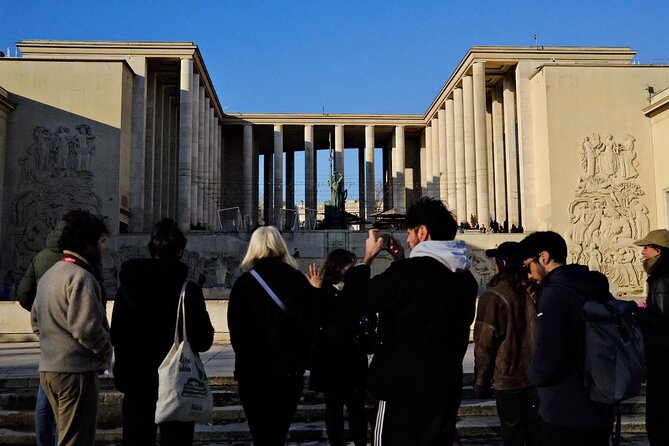
The Petit Palais is built for the 1900 fair too, and it now houses the Musée des Beaux-Arts de la Ville de Paris. The tour points you toward why it feels different from the Grand Palais: grand architecture, frescoes, and a serene courtyard vibe.
You may not spend long inside as part of a short walking tour, but this stop is perfect for resetting your attention. It is an easy way to switch from grand exhibition spectacle to a calmer art setting.
If you like art history but do not want a full museum day, this is a solid “taste” stop.
Pont Alexandre III: Ornate Bridge, Franco-Russian Symbol
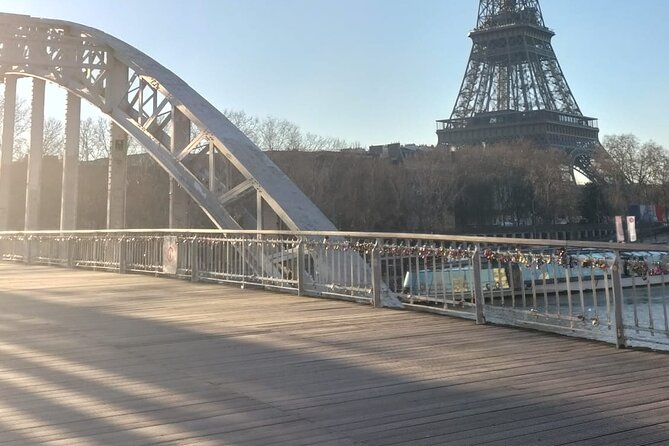
Crossing Pont Alexandre III is where the walk leans into spectacle. This bridge, also tied to the 1900 Exposition Universelle, is famous for gilded sculptures, intricate ironwork, and Art Nouveau lamps.
The guide also adds meaning: the bridge symbolizes Franco-Russian ties, which is a reminder that fairs were international diplomacy in physical form. You get great views while learning why this bridge looks so lavish.
Photo tip: if the light is decent, aim for shots that include the bridge details. The bridge is visually busy in a good way, and those details help you remember the story later.
The Seine as the Connecting Thread: Fairs, Ferries, and Flood Gauges
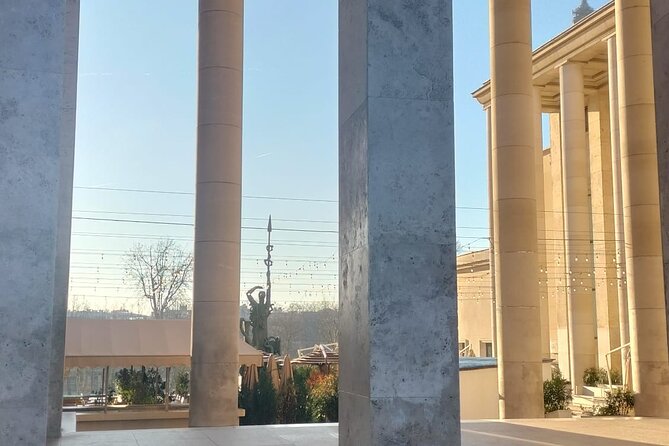
A big theme of the walk is how the Seine connects everything, and the tour keeps returning to that idea. You do not just pass landmarks, you learn how the river functioned as a route and a backdrop for major exhibitions.
You also get a fun thread about river sightseeing: Bateaux Mouches originated as visitor transport for the 1867 Exposition Universelle. It later became the brand for classic Seine cruises. Even if you never board one, you start seeing those boats as part of Paris’s long relationship with hosting crowds along the water.
Then the walk shifts to Pont de l’Alma, linked to the 1855 Exposition Universelle. The bridge was rebuilt, but it retains the Zouave statue, which once served as a flood gauge. That detail turns a bridge into a weather-and-history marker, not just a crossing.
Flamme de la Liberté: A World Fair Legacy in Liberty’s Flame
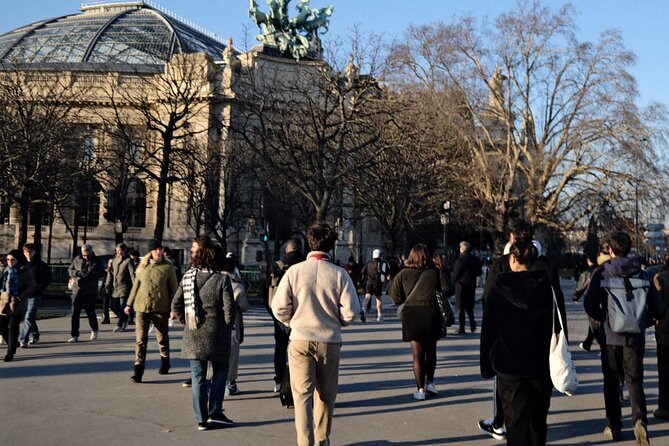
Near Pont de l’Alma is the Flamme de la Liberté, a full-scale replica of the Statue of Liberty’s flame. The tour connects it to a specific chain of history: it traces back to the 1878 Exposition Universelle, when the Statue of Liberty was first showcased before traveling to New York.
The guide also covers the later story tied to friendship and symbolism, including that it was donated by the International Herald Tribune in 1989. It is now known as an unofficial memorial to Princess Diana as well, which adds another layer of modern meaning to a World Fair artifact.
This stop is short, but it is the kind of place where you realize the city reuses symbols. World fairs do not just create buildings. They create objects that can travel through time.
Debilly Footbridge: A 1900 Pedestrian Link
The Passerelle Debilly (Debilly Footbridge) was built for the 1900 Exposition Universelle and spans 120 meters over the Seine, linking Quai Branly to Avenue de New York.
This is a good stop for stretching your legs and getting another angle on the river. It is also the moment when the tour structure starts to feel smooth, because the bridge offers an easy pause to look rather than a sprint to the next landmark.
Palais de Tokyo and Palais de Chaillot: Modern Art Meets Fair Planning
Palais de Tokyo, the 1937 Palace of Modern Art
Next is Palais de Tokyo, originally inaugurated in 1937 for the Exposition Universelle. Today it is Europe’s largest center for contemporary art, but the tour reminds you it also belongs to the fairs era.
Even if you do not go inside, you’ll appreciate the building with a different lens. It is not only an art venue, it is a designed leftover from a plan to make the future look intentional.
Palais de Chaillot, 1937 Triad Planning
Then comes Palais de Chaillot, built for the 1937 International Exposition. The tour notes the architects Léon Azéma, Jacques Carlu, and Louis-Hippolyte Boileau, and explains that Palais de Tokyo, Palais d’Iéna, and Palais de Chaillot were intended as a trio of structures to outlast the event.
That detail is one of those “aha” moments. You realize the fair organizers were thinking in long arcs, not just showtime spectacle. The buildings were meant to be used again, and that is why they still shape how Paris looks today.
Trocadéro Fountain and Pont d’Iéna: Eiffel Tower Approaches
The route includes the Trocadéro Fountain, built in 1937 in the Trocadéro Gardens. The tour explains it replaced an earlier 1878 Exposition Universelle fountain and is a major photo stop, especially for its view toward the Eiffel Tower.
Then you walk to Pont d’Iéna, tied to multiple Expositions Universelles including 1867, 1878, 1889, and 1900. The tour frames it as a historic entryway for millions of fair visitors, and notes its role again in modern events as the Eiffel area stays in the international spotlight, including the Paris 2024 Olympics.
It is a smart way to show how a landmark can keep being used for mass gatherings. The bridge becomes a ceremonial link between the past and now.
Eiffel Tower Finale: From 1889 Progress to Today’s Big Stage
Your last stop is the Eiffel Tower, built for the 1889 Exposition Universelle. The guide includes the classic arc: it was criticized at first, then accepted as a symbol of Paris and a test of engineering brilliance.
If you think of the Eiffel Tower as only a photo target, this ending helps you see it as an icon with a complicated origin. That “progress vs criticism” story is part of why the tower still feels like a statement, not just a landmark.
Also, the tour lists the tower as included in the experience without paid entry mentioned, so you mainly plan on exterior viewing and those final dramatic city angles.
The Real Secret Sauce: A Guide Who Keeps It Clear and Light
In a short walking tour, the guide can make or break it. Here, the guide format is a clear winner. The experience includes a certified local guide and a max 15 group size, which means you are not stuck behind other people or tuned out in a loud crowd.
The reviews tied real personality to the guides, including Olivia as a favorite. That matters because the World Fair content could easily turn into dry facts. Instead, the tour style is described as funny, clever, and packed with just the right amount of information.
You also get time for questions, which is ideal if you want to clarify why one bridge looks the way it does, or how one fair connects to another landmark. That direct conversation is one reason this feels more useful than a generic audio walk.
Photo and Timing Tips for a Smooth 2 Hours
This walk is only about 2 hours, so you should treat it like a curated route with quick pauses. Your best strategy is to prepare for short bursts of photography.
A few practical pointers:
- Wear comfortable shoes. You will be on your feet through multiple bridges and landmarks.
- Keep your camera handy for the bridge stops. Pont Alexandre III and Pont d’Iéna offer the richest detail angles.
- If you want the best Eiffel Tower views, pay attention at the Trocadéro fountain and Pont d’Iéna moments. Those are built into the flow for a reason.
- Bring a light layer. Spring and early fall can switch quickly, especially near the river.
Because there is no food included, you might want to eat before or after. This is about sightlines, stories, and walking, not meals.
Who This Tour Fits Best
This is a strong choice if:
- you want history that actually explains the city’s shape,
- you like photography along the Seine,
- you prefer small groups and a guide who can answer questions,
- you are new to Paris and want to build connections fast.
It is also a good fit if you live in Paris or know the big monuments already. The angle of World Fairs and the attention to lesser-known details can change how you read familiar neighborhoods, especially around the Champs-Élysées and river crossings.
Should You Book This Tour?
Book it if you want a 2-hour, guide-led Seine walk that turns well-known landmarks into a coherent story. The price is reasonable for the amount of context you get, and the route stays focused on major sites tied directly to World Fairs, from the 1850s to the late 1930s.
Skip it only if you want a long museum day, since this experience is built for a quick rhythm of stops and views rather than deep interior study. If your goal is understanding Paris through its big international “showcase” era, this tour is one of the best ways to do it without getting lost in a pile of random facts.
FAQ
How long is the Paris World Fairs Walking Tour?
It is about 2 hours.
What is the price per person?
The price is $43.26 per person.
Is the tour in English?
Yes, it is offered in English.
How big is the group?
The maximum group size is 15 people.
Do I need a ticket to visit the sights on this tour?
The tour lists admission as free for the stops described, and it also includes a mobile ticket for the experience. No specific paid entries are mentioned in the tour details.
Where does the tour start and end?
It starts at Statue du Général Charles de Gaulle, Pl. Clemenceau, 75008 Paris, and ends at the Eiffel Tower area, Tour Eiffel, 5 Av. Anatole France, 75007 Paris.
Is transport included to and from the meeting point?
No, transport to and from the meeting point is not included.
What should I bring since food is not included?
Food and drinks are not included, so plan to have a snack or meal before or after the tour.
What physical condition do I need?
The tour notes a moderate physical fitness level.
What is the cancellation policy?
You can cancel for a full refund if you cancel at least 24 hours in advance of the start time. If you cancel less than 24 hours before, the amount paid is not refunded.
Newest write-ups from Paris


Seine Cruises, compared.
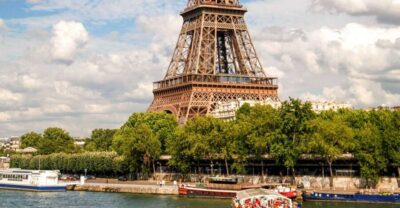
1-Hour Seine Cruise departing from the Eiffel Tower
Read our review →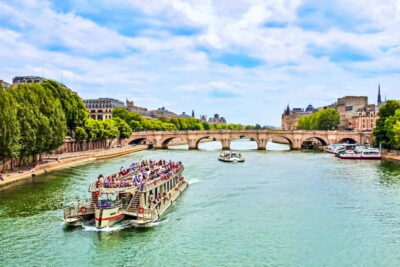
Seine Cruise & Crepe Tasting near the Eiffel Tower
Read our review →
Eiffel Tower Access by Elevator & Seine River Cruise
Read our review →
3-Course-Dinner Cruise on the Seine with live music
Read our review →
Bateaux Parisiens Seine River Gourmet Dinner & Sightseeing Cruise
Read our review →
Hop-On Hop-Off Seine Cruise Pass with 9 Stops
Read our review →
Browse the lists this tour appears in