
Reviewed · CRUISES & BOAT TOURS
Private cruise with Paris water way
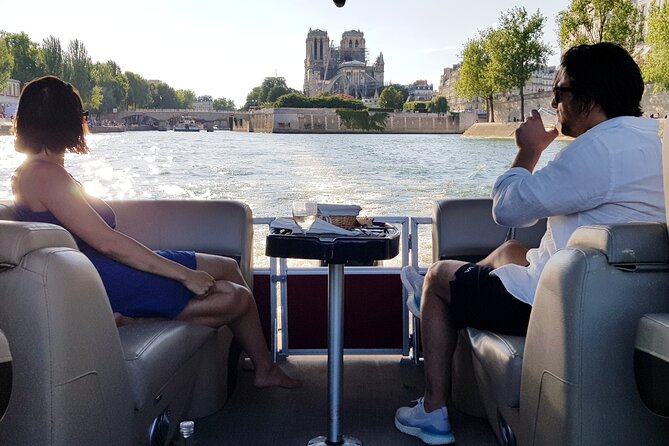
Seine views are better when you control the crowd. This private cruise (about 1 hour 30 minutes) gives you a clear, calm way to take in the big landmarks in an English-guided route, and the onboard explanations can work well even for kids, like the family experience led by guide Diego in the feedback. The tradeoff is simple: you mainly see sights from the boat, so it is not a ticket to go inside museums or monuments.
I also like the small, practical touches built into the trip, like a mobile ticket and confirmation at booking, plus the route is planned so you get one continuous story along the water. One possible consideration to keep in mind is that the experience requires good weather, so plan for flexibility if skies turn gray.
In This Review
- Key things to know before you go
- Why a private Seine cruise feels like a shortcut to real Paris
- Price and timing: does $94.63 per person feel fair?
- Getting started at 14 Quai François Mitterrand (and what that means)
- The itinerary: what you see passing Île Saint-Louis, Île de la Cité, and the bridges
- Île Saint-Louis: the smaller island with big names behind it
- Île de la Cité: the Seine’s historic cradle of Paris
- The courthouse and Conciergerie area: Palais de Justice from the water
- Under Pont Neuf: Paris’s oldest surviving bridge
- Pont des Arts and the love-lock era that ended
- Passing the Louvre: the museum as a landmark, not just an indoor plan
- Orsay Museum: the old train station that became art space
- The National Assembly: a building with political symbolism
- Alexandre III bridge: a perfect photo angle with a friendship story
- Eiffel Tower: the finish line for most Seine cruises
- Who should book this private Seine cruise?
- Small practical tips to make the most of the ride
- Should you book this Private Cruise with Paris Water Way?
Key things to know before you go
- Private boat, only your group for a more relaxed pace and fewer interruptions
- About 90 minutes that still hits a long stretch of central Paris
- A logical sightseeing chain from Île Saint-Louis and Île de la Cité to the Seine’s landmark bridges
- English narration that can stay engaging even for children, with guide Diego called out in feedback
- Pont des Arts without the love-lock fences, since the practice ended and panels replaced the hardware
- Good weather matters, because this is all about being on the water
More departures from the Port de la Bourdonnais:
- Paris: 1-Hour Seine Cruise departing from the Eiffel Tower
★ 4.4 · 77,472 reviews - Paris: Evening River Cruise with Music
★ 4.4 · 22,721 reviews - Paris: Louvre Guided Tour with Reserved Access & Boat Cruise
★ 4.3 · 16,353 reviews - Paris: Tootbus Hop-on Hop-off (Optional River Cruise)
★ 4.3 · 15,279 reviews
Why a private Seine cruise feels like a shortcut to real Paris
If you only have a day in Paris, the Seine can do a lot of work for you. A boat ride turns major sights into a single line of “Oh, that’s where it is” moments, and you do not have to hop across the city with transit and long walks.
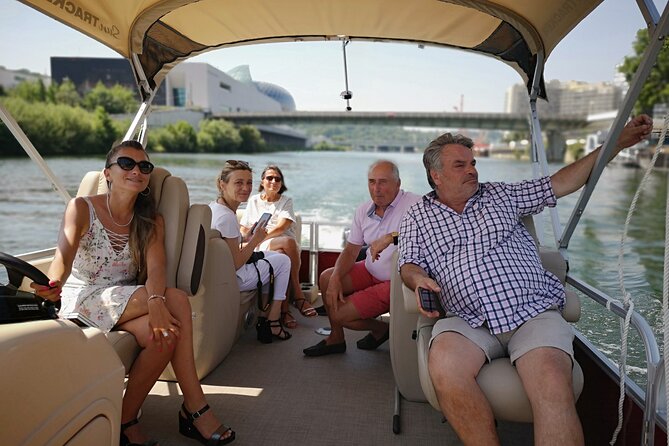
What I like about a private format is how much calmer it can be. Instead of trying to hear over other groups, you get a more conversational rhythm, especially when the guide is explaining what you are passing.
Price and timing: does $94.63 per person feel fair?
At $94.63 per person for about 1 hour 30 minutes, you are paying for three things that are hard to replace on your own: time efficiency, a guided route in English, and the ability to see key sights from the water.
You are not buying access to inside attractions here, because the itinerary is built around passing by major landmarks. So the value is strongest when you want orientation and views, not museum entry.
Getting started at 14 Quai François Mitterrand (and what that means)
Your starting point is 14 Quai François Mitterrand, 75001 Paris, and the activity ends back there. That matters because you avoid the stress of figuring out a second meeting location after the cruise.
Also, the tour is listed as being near public transportation and service animals are allowed, which can make planning easier if you are balancing a full day of sightseeing.
The itinerary: what you see passing Île Saint-Louis, Île de la Cité, and the bridges
This route is a classic “center of Paris” loop. You start upstream with Île Saint-Louis, slide into the historic heart on Île de la Cité, then keep moving through the bridges that connect the city’s neighborhoods while revealing major institutions along both banks.
A handful more Paris options to weigh up
- Louvre Museum Paris Essential Guided Tour Semi-Private 6ppl Max★ 5.0 · 3,807 reviews
- SUV Private Transfer: Paris to Charles de Gaulle Airport (CDG)★ 4.0 · 3,091 reviews
- Paris: Private Photoshoot at the Eiffel Tower★ 4.7 · 2,636 reviews
- Top Private Cruises in Paris with French Champagne and surprises★ 5.0 · 1,553 reviews
Île Saint-Louis: the smaller island with big names behind it
Your first stop is the passage in front of Île Saint-Louis. It is one of the two natural islands of the Seine that still exist today in Paris, and it sits immediately upstream from Île de la Cité.
What I find interesting here is how the island’s scale makes the views feel intimate. It is the smaller of the two islands, about 11 hectares, and it is named since 1725 after King Louis IX, known as Saint Louis. The legend included in the route notes ties Saint Louis to a prayer stop and the 1269 crusade story, which gives a myth-and-monuments vibe as you glide past.
There is also a notable property detail: the Lambert hotel on the island was bought by Abdallah Ben Abdallah-Al-Thani from the princely family of Qatar, and the route notes mention a major fire in July 2013. Even from the water, this kind of context helps you look past just the postcard scenery.
Île de la Cité: the Seine’s historic cradle of Paris
Next you pass in front of Île de la Cité, the island at the heart of Paris. This is considered the ancient cradle of the city, formerly known as Lutèce.
The route notes also point out how the island belongs to the 1st and 4th arrondissements and how a chronicler, Gui de Bazoches, described it as the head, heart, and marrow of Paris. You can feel that meaning in the way the boat ride lines up with major power-era buildings clustered around the island.
A detail I appreciate is the explanation of what the name “city” used to mean. It referred to the fortified limits of Paris at the end of Antiquity, reduced to this one island, and that was the medieval urban core.
The courthouse and Conciergerie area: Palais de Justice from the water
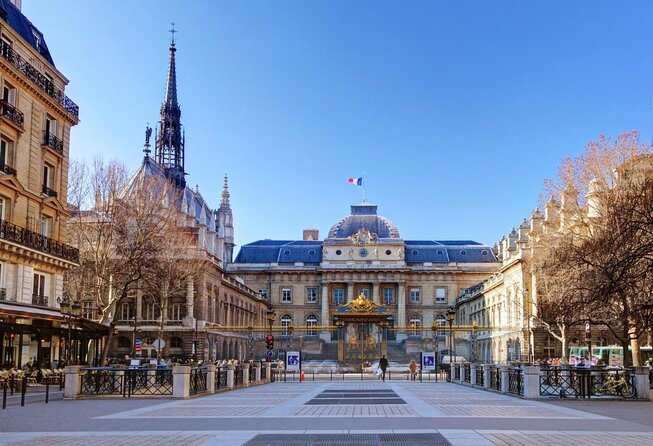
From here, the route brings you past the concierge at the courthouse. This is tied to the Palais de Justice, described in the route notes as the former Curia Regis, the base from which Parliament of Paris and other sovereign jurisdictions developed.
Even if you are not stepping inside, this part helps you understand what you are looking at. The Palais de Justice’s location traces back to the Palais de la Cité, the seat of royal power from the 10th to the 14th century, with key vestiges mentioned such as the great room with its kitchen and the Conciergerie. The notes also flag Sainte Chapelle and several towers as part of the broader power complex.
Practical takeaway: if you like architecture and institutions, this section gives you names to attach to silhouettes. If you want only photos, it still works, but you might enjoy the ride more if you keep one ear on the narration.
Under Pont Neuf: Paris’s oldest surviving bridge
Then you pass under Pont Neuf, the oldest existing bridge in Paris. Despite the name, it is centuries old, built at the end of the 16th century and completed at the beginning of the 17th.
The story in the route notes is the best part. Pont Neuf earned its name because it was newly built at a time when earlier bridges often had houses. It also had sidewalks designed to protect pedestrians from mud and horses, and it is cited as the first stone bridge in Paris to cross the Seine entirely.
This bridge is classified as a historical monument, and the route notes mention its UNESCO listing in 1991 as part of the Seine quays. When you are under it, you are seeing a structure that links medieval city life to modern Paris tourism.
Pont des Arts and the love-lock era that ended
Next, you move under Pont des Arts. The route notes explain that from 2008 to 2015, the wire mesh parapets became the support for love padlocks hung by couples, and the practice spread to other bridges too.
There was controversy about both heritage damage and appearance, and the city decided to end it in September 2014. The notes also state that the fences were removed on June 1, 2015. After that came a temporary stage with street art panels and then glass panels from autumn 2015.
What that means for you: you will pass this bridge at a moment where the famous padlock look is no longer the main feature. If you like knowing the backstory of what changes over time in Paris, this stop gives you a clear cause-and-effect example, not just a romantic legend.
Passing the Louvre: the museum as a landmark, not just an indoor plan
You then pass in front of the Louvre. The route notes give a timeline that helps you understand why it is such a magnet. A foreshadowing for a museum began in 1775 to 1776, and the Louvre was inaugurated in 1793 under a different name, as Muséum central des arts de la République.
What I like about seeing the Louvre from the Seine is that it reminds you the “museum visit” is just one layer of the building. The route notes describe it as the largest museum for art and antiques in the world by exhibition area, 72,735 square meters. They also mention large collection counts, with Western art from the Middle Ages to 1848, plus ancient civilizations and more.
Even if you do not plan to tour the interior today, the exterior pass helps you place the Louvre geographically and visually. It is also a great mental reference point for later.
Orsay Museum: the old train station that became art space
After the Louvre, the route continues past the Musée d’Orsay on the left bank. The notes highlight something that makes Orsay so different: it is housed in the former Orsay station built from 1898 to 1900 by Victor Laloux and later converted into a museum.
The collections span Western art from 1848 to 1914, including painting, sculpture, decorative arts, graphic art, and photography. The route notes also call out the museum’s strength in Impressionist and Post-Impressionist works, with nearly 1,100 canvases out of more than 3,650 total.
If you are building a travel day, this part is useful. You get two major institutions in sequence, Louvre and Orsay, which helps you decide whether you want an indoor follow-up later.
The National Assembly: a building with political symbolism
Next you pass in front of the National Assembly. The route notes focus on the idea that national representation in France has changed shape over two centuries, with the democratic principle tied to public freedoms.
They also mention that even the name National Assembly was chosen in the fervor of 1789 and that it reappeared later after long gaps, with a brief 1848 parenthesis. For you on a boat, that might sound like classroom history, but it does something practical: it gives meaning to why this building feels like more than an office block.
When you connect a place to a process, you often remember it longer.
Alexandre III bridge: a perfect photo angle with a friendship story
Then you pass under Alexandre III bridge. The route notes describe it as inaugurated for the Universal Exhibition of Paris in 1900 and built to symbolize Franco-Russian friendship.
This is not just symbolism in the abstract. The notes include the alliance signing in 1891, involvement of Tsar Nicolas II and Empress Alexandra Fedorovna, and that the first stone was laid on October 7, 1896. Architects and engineers are named too, including Jean Résal and Amédée Alby, plus architects Cassien-Bernard and Gaston Cousin.
As you approach this part of the ride, look at how the bridge lines up with the Esplanade des Invalides and with the path toward the Petit and Grand Palais. The bridge is also described as having an engraved inscription about Émile Loubet opening the Universal Exhibition and inaugurating the bridge on April 14, 1900.
Eiffel Tower: the finish line for most Seine cruises
Finally, you pass in front of the Eiffel Tower. The route notes spell out the essentials: the iron tower is 324 meters high, built in two years by Gustave Eiffel and collaborators for the 1889 Universal Exhibition, celebrating the centenary of the French Revolution.
They also note the tower’s original name, tower of 300 meters, and that it became a symbol of Paris. The notes cite major tourism numbers, including being the third most visited French cultural site in 2015 and listing visitor counts like 5.9 million in 2016. They also mention that since opening, more than 300 million visitors have been welcomed, per the route notes.
For you, the practical value is how it closes the loop. By the time the tower appears, you have already seen the medieval island, the art corridor, the political building, and the big ceremonial bridges. Eiffel Tower feels earned, not random.
Who should book this private Seine cruise?
I think this cruise fits best when you want a short, high-yield way to see central Paris from the water. It is especially good for families, because the onboard narration can stay interesting for kids, with the feedback mentioning guide Diego doing exactly that.
It also makes sense if you have mobility limits that make long walking days harder. You still need good weather, but the ride gives you a seated viewpoint of the major sights without the physical grind.
If you are a museum planner, this tour works as a primer. You will get visual placement for Louvre and Orsay, and that can make later decisions easier.
Small practical tips to make the most of the ride
Because the itinerary is mostly passing monuments, your goal is to enjoy sightlines. Keep your camera ready when you approach bridges and major facades, since those are the moments where the view feels most framed.
Also, since the experience requires good weather, think of this as a plan that lives in the same bucket as your outdoor dinner. If the forecast is iffy, build in patience and flexibility.
Finally, if you care about understanding what you are seeing, listen early. The route moves in a pattern from islands to institutions to bridges, and the guide’s explanations help you read each area faster.
Should you book this Private Cruise with Paris Water Way?
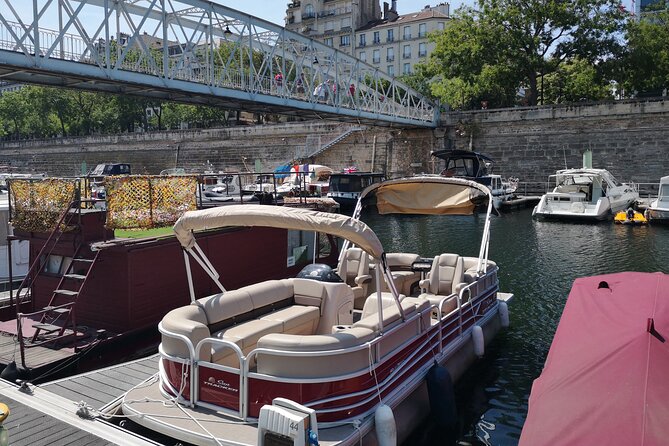
If you want a private 90-minute English cruise that strings together the best-known Seine sights in the middle of Paris, this is a strong choice. The price feels more reasonable when you value the private format, guided narration, and the time saved by seeing multiple landmarks in one go.
I would skip it only if you specifically want museum entry or extended time at a single site on land. This is a “from the water” experience, so it rewards people who like views and context more than inside access.
If you can line up a day with good weather and you want an easy, guided highlights pass, I would book it.
Newest write-ups from Paris

Cruises & Boat Tours, compared.
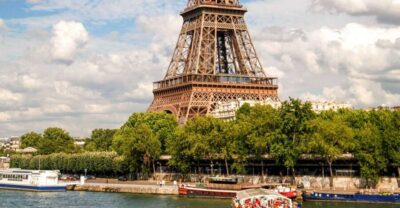
1-Hour Seine Cruise departing from the Eiffel Tower
Read our review →
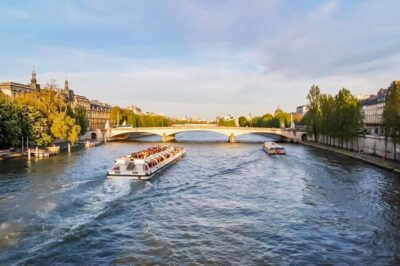
Louvre Guided Tour with Reserved Access & Boat Cruise
Read our review →
Tootbus Hop-on Hop-off (Optional River Cruise)
Read our review →
Big Bus Hop-On Hop-Off Tour with Optional Cruise
Read our review →
Illuminations River Cruise with Audio Commentary
Read our review →
Seine Cruise & Crepe Tasting near the Eiffel Tower
Read our review →
Browse the lists this tour appears in