
Reviewed · EVENING EXPERIENCES
Private Paris City Night Sightseeing Tour
Night in Paris feels magical and efficient. This private, 3-hour tour strings together major sights after dark, with the bonus of hotel pickup and an air-conditioned vehicle so you spend less time walking and more time looking. It also lets you set the pace, so you can linger where you actually care.
I also like that the route covers big landmarks across multiple neighborhoods without turning into a frantic sprint. One drawback to plan for: Eiffel Tower entry tickets are not included, and you should double-check your pickup timing so you are not left waiting outside (one no-show case was tied to a timing mix-up).
In This Review
- Key reasons this night tour is worth your time
- Why a private night route beats “wing it”
- Price and what you’re actually paying for (up to 2)
- Hotel pickup and the comfort details you should care about
- Champs-Élysées after dark: postcard avenue, real traffic reality
- Arc de Triomphe: the monument with a built-in story
- Place de la Concorde: from grand intentions to darker turns
- The Temple of Glory style landmark: Napoleon’s grand plan in stone form
- Moulin Rouge: cabaret fame, explained in context
- Sacré-Cœur and the panoramic payoff from Butte Montmartre
- Louvre and the art-museum magnet effect
- Île de la Cité: where Paris starts and keeps reinventing itself
- Notre-Dame: Gothic scale and the fact of restoration
- Panthéon and revolution-era rebranding of sacred space
- Luxembourg Gardens: slow green time in the middle of an energetic day
- Saint-Germain-des-Prés and the Left Bank mood
- Hôtel des Invalides area: Louis XIV’s practical compassion
- Pont Alexandre III: gilded bridge energy
- Grand Palais and Petit Palais: 1900 Universal Exhibition elegance
- Trocadéro and Eiffel Tower: the night payoff
- Who this tour suits best
- Should you book this Private Paris City Night Sightseeing Tour?
- FAQ
- How long is the Private Paris City Night Sightseeing Tour?
- How many people is this tour for?
- What languages is the tour offered in?
- Is hotel pickup included?
- What is included in the price?
- Are Eiffel Tower tickets included?
- What meeting details do I need before the tour?
- Is there a mobile ticket?
- Can I cancel for a full refund?
- Is the tour confirmed at booking?
Key reasons this night tour is worth your time
- Hotel lobby pickup means fewer taxis, fewer directions, less pre-dinner stress
- A/C + WiFi on board helps when the weather swings or you want to keep your maps handy
- Private pacing so you can spend more time at, say, the views and less at the things you can read about later
- Photo-friendly route that hits major Paris icons in one compact evening
- Expert English guiding, highlighted by praise for guides like Nataly being adaptable and engaging
- A perfect night landing spot near Trocadéro and the Eiffel Tower for your final views
More of Paris after the streetlights come on:
- Paris: Evening River Cruise with Music
★ 4.4 · 22,721 reviews - Paris: Day or Sunset Cruise with Drink, Ice Cream or Dessert
★ 4.4 · 4,225 reviews - Paris: Big Bus Panoramic Night Tour by Open-Top Bus
★ 4.4 · 4,168 reviews - Paris: Illuminated Evening River Cruise & Waffle Tasting
★ 4.1 · 2,697 reviews
Why a private night route beats “wing it”
Paris at night has a different rhythm. The streets feel calmer, the buildings look softer, and the lights do the storytelling for you. On a private tour like this, you are not stuck doing a straight checklist. You get to set the pace, which matters because Paris icons do not all want the same amount of time.
The vehicle is the big advantage. You cover a lot of ground across boulevards and banks while staying comfortable, and the driver keeps things moving. If you prefer photos over museum mode, this is a very good fit. If you want to sprint between monuments, that can still happen, but you are choosing it, not being forced into it.
Price and what you’re actually paying for (up to 2)
The price is $540.69 per group (up to 2) for about 3 hours. That sounds steep until you break down what is included. You are paying for private transportation, WiFi on board, air-conditioned comfort, and all fees and taxes, plus bottled water. For a couple or a small group, private transport in a city like Paris often works out better than you expect once you factor in time, convenience, and reduced hassle.
What is not included is important: Eiffel Tower tickets and tips for the guide and driver. Also, keep in mind this is still a short evening. You get a lot of sights, but it is not the same as spending hours inside every building.
My practical advice: if you are arriving with jet lag, traveling with someone who hates long walking, or you want a first-night orientation, the value is strongest. If you already know exactly what you want to do and you like building your own route, you might prefer a cheaper DIY plan.
Hotel pickup and the comfort details you should care about
The meeting point is hotel lobby pickup, and you coordinate directly with the operator to set it up. That sounds simple, but do yourself a favor: confirm the pickup instructions and the time carefully, especially if your hotel has multiple entrances. One bad experience in the reviews involved a missed guide arrival tied to a booking timing mismatch, so treat the start time like it is part of the itinerary, not paperwork.
Once you are in the car, you get WiFi on board and bottled water, plus A/C. Those are not glamorous, but at night they matter. It is easier to focus on the views when you are not sweating, squinting at your phone, or fighting heat and glare.
Champs-Élysées after dark: postcard avenue, real traffic reality
The Champs-Élysées is often described like a movie scene, and in this format it delivers. This boulevard runs from Place de la Concorde to the Arc de Triomphe, nearly 2 kilometers. At night, the avenue feels long and elegant, with storefront light and street illumination turning the whole area into a bright corridor.
What I like about seeing it on a night tour is how fast you get your bearings. You learn where the major axes are in Paris, and that helps for the rest of your trip. Even if you do not hop out for long, you still get the big-picture orientation.
Possible drawback: the Champs-Élysées is busy. Even with private transport, it can be slow at peak times, so keep your expectations flexible. In a well-run private tour, the guide will steer the timing and stop points to keep it enjoyable.
A handful more Paris options to weigh up
- Louvre Museum Paris Essential Guided Tour Semi-Private 6ppl Max★ 5.0 · 3,807 reviews
- SUV Private Transfer: Paris to Charles de Gaulle Airport (CDG)★ 4.0 · 3,091 reviews
- Paris: Private Photoshoot at the Eiffel Tower★ 4.7 · 2,636 reviews
- Top Private Cruises in Paris with French Champagne and surprises★ 5.0 · 1,553 reviews
Arc de Triomphe: the monument with a built-in story
The Arc de Triomphe honors those who fought and died for France during the French Revolution and the Napoleonic Wars. It also carries the names of French victories and generals on its inner and outer surfaces. The vault above you leads into the Tomb of the Unknown Soldier from the First World War, which is one of those moments that makes a landmark feel human.
On a night drive, you often see the Arc as a glowing silhouette rather than a building you can study in detail. That is okay. The power here is in the scale and the symbolism. When you see it illuminated against the sky, you understand why it anchors so many Paris memories.
If you are someone who loves taking photos from the street, this is a strong stop. If you want to go inside or climb up, you would need extra time beyond a 3-hour route, since this tour focuses on covering multiple sights in a compact evening.
Place de la Concorde: from grand intentions to darker turns
Place de la Concorde is the largest square in Paris, about 18.8 acres (7.6 hectares). The space is huge, and that size shows at night when the light spreads across the open area. The story behind it adds depth: it was intended to glorify King Louis XV, but during the French Revolution, royals including Louis XVI were executed there.
What makes this stop meaningful is how it frames Paris as more than scenic streets. You are looking at a place that holds both spectacle and trauma. On a night tour, the contrast can be striking, because lighting turns the square into something beautiful even while the past is heavy.
The Temple of Glory style landmark: Napoleon’s grand plan in stone form
Next comes the idea that Napoleon wanted a Temple of Glory built for his Grande Armée. Plans were authorized by Pierre-Alexandre Vignon, and construction began after earlier efforts. The result was intended as a Greek temple style monument.
Seeing it as a drive-by stop is useful because it breaks the usual “one landmark per neighborhood” rhythm. You are getting a sense of how power wants to look: classic lines, monumental scale, and a design language that says permanence.
If you care about architecture, you will probably find yourself zooming in with your camera. If you do not, it still gives you a nice variety from the more ornate religious buildings later in the route.
Moulin Rouge: cabaret fame, explained in context
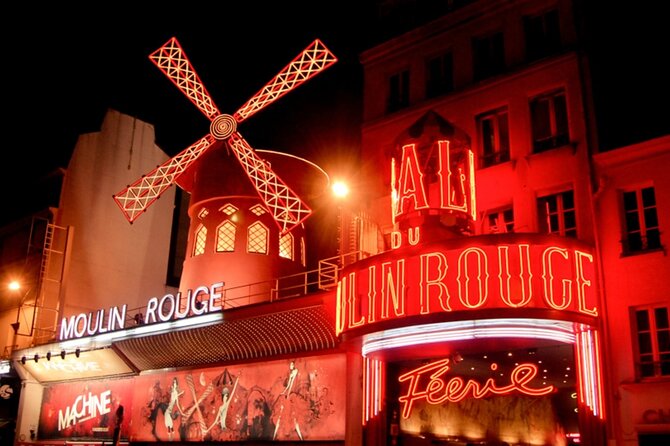
Moulin Rouge is one of the world’s most famous cabarets, and the story is part of why it is so recognizable. It opened October 6, 1889, founded by Charles Zidler and Joseph Oller, and the founders aimed to create something daring and extravagant. That ambition is why the place became a global symbol rather than just a local venue.
On a night tour, Moulin Rouge works well because it is already made for nighttime. The lighting and energy are part of the experience, even when you are only stopping briefly.
Practical note: this area can feel touristy and loud. If you prefer quiet sightseeing, treat it as a quick look and move on with your evening rather than trying to fully absorb it like a daytime museum visit.
Sacré-Cœur and the panoramic payoff from Butte Montmartre
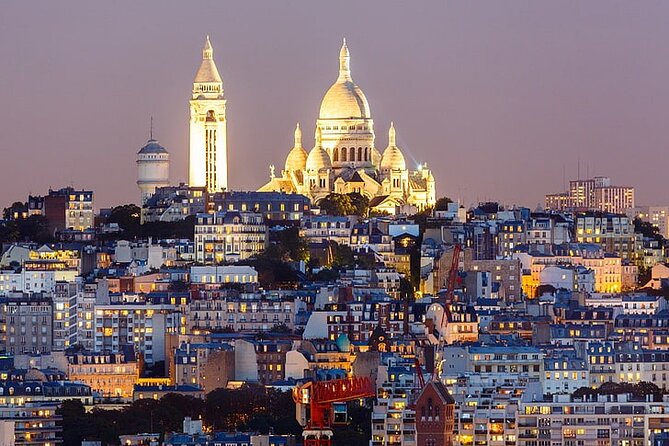
Then you climb to Montmartre for one of the city’s strongest night view moments. At the top of Butte Montmarte, Sacré-Cœur sits about 130 meters above ground and offers beautiful panoramic views of Paris.
Sacré-Cœur is Roman-Byzantine in style, recognizable by its white color. Inside, the ceiling is decorated with the largest mosaic in France, roughly 480 m². Even if you only catch part of the view from outside, the white facade against dark skies can make the whole area feel cinematic.
This stop is also a good reminder of why night tours can be better than daytime ones. Many people spend all day touring museums, then miss the chance to see Paris as a city of lights. Here, you get that payoff without having to plan a separate outing.
Louvre and the art-museum magnet effect
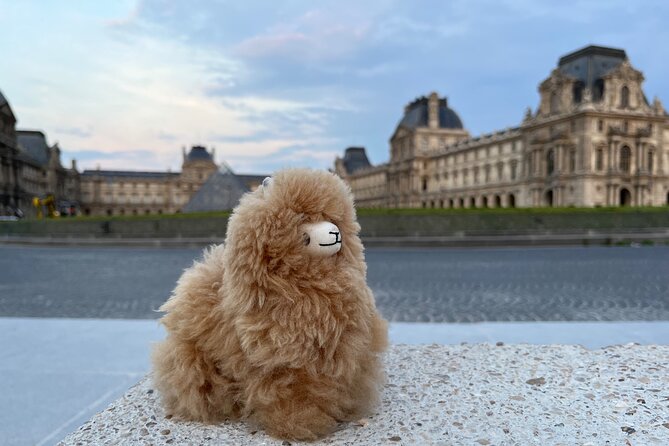
The Louvre is the world’s most visited art museum, with a collection spanning work from ancient civilizations to the mid-19th century. On a night tour, you may not be doing a full interior visit, but you still get the emotional hit of seeing the museum as the centerpiece it is.
What is valuable here is the sense of scale. The Louvre is not just one building, it is a whole gravitational field of culture. Even from the outside, you understand why so many first-timers want to commit a whole day to it later.
If you want to go inside, plan that as a separate day trip or a longer visit. A 3-hour night tour is built for orientation and highlights, not for museum depth.
Île de la Cité: where Paris starts and keeps reinventing itself
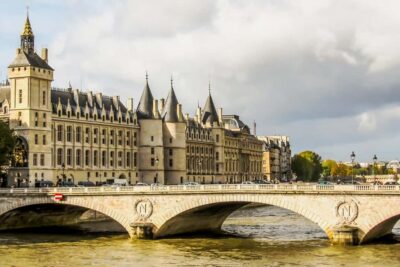
The route then shifts to Île de la Cité, the island heart of Paris. In 508, Clovis I, the first King of the Franks, established his palace here. By the 12th century, it became an important religious center and home to Notre-Dame cathedral, the royal chapel of Sainte-Chapelle, and the city’s first hospital, Hôtel-Dieu. It also includes Pont Neuf, the city’s oldest surviving bridge.
This stop is less about one single view and more about understanding how layers build over time. Paris keeps rewriting the same space, from early royal power to religious centrality to modern urban identity.
At night, the island often feels more contained than the grand avenues. That can make the story feel tighter, like you are seeing the origin point of the city rather than just passing through another neighborhood.
Notre-Dame: Gothic scale and the fact of restoration
Notre-Dame de Paris is a Gothic masterpiece, built at the far end of Île de la Cité. Construction started in the 13th century and finished in the 15th century. It was badly damaged during the French Revolution and later restored in the 19th century by the architect Viollet-le-Duc.
Even if your visit is mostly from outside, this is one of the stops where you can feel the importance of the building. The shape and scale are so specific that they stick in your head, especially when lit against the night sky.
A balanced expectation: a short tour gives you the monument feeling, not the full architectural walkthrough. If Notre-Dame is a priority for you, you will probably want a separate time slot to see more closely.
Panthéon and revolution-era rebranding of sacred space
After Notre-Dame, the tour touches the story of repurposing sacred space. Once construction finished, the French Revolution had started. In 1791, the National Constituent Assembly voted to transform the Church of Saint Genevieve into a mausoleum for the remains of distinguished French citizens, modeled on the Pantheon in Rome.
This is one of those Paris lessons that changes how you see the city. Buildings can be ideologies, not just architecture. Watching this idea unfold across your stops makes the night route feel like more than a drive-by parade.
Luxembourg Gardens: slow green time in the middle of an energetic day
The tour then goes to Luxembourg Gardens, created starting in 1612 when Marie de’ Medici built the Luxembourg Palace as her residence. Today, the garden is owned by the French Senate, which meets in the Palace.
The garden covers 23 hectares (56.8 acres) and is known for lawns, tree-lined promenades, tennis courts, and flowerbeds. You can also see model sailboats on the Grand Bassin, plus the Medici Fountain built in 1620.
At night, you might not get to enjoy everything at a walking pace, depending on how the tour timing flows. Still, the stop gives you the sense of a slower Paris rhythm, which balances the grand avenues and major monuments.
If you are the type who loves a quiet pause, plan to circle back to the Luxembourg area on another evening when you have more time to wander.
Saint-Germain-des-Prés and the Left Bank mood
Next up is the Left Bank, associated with intellectuals, historic monuments, and beautiful boutiques, with Saint-Germain-des-Prés as a long-running anchor. Even if this tour keeps it to viewpoints and passing stops, the area is worth understanding.
Why? Because it gives you a Paris that is not only about landmarks. The Left Bank is about atmosphere, street energy, and the idea that the city runs on ideas as much as it runs on tourism photos.
Hôtel des Invalides area: Louis XIV’s practical compassion
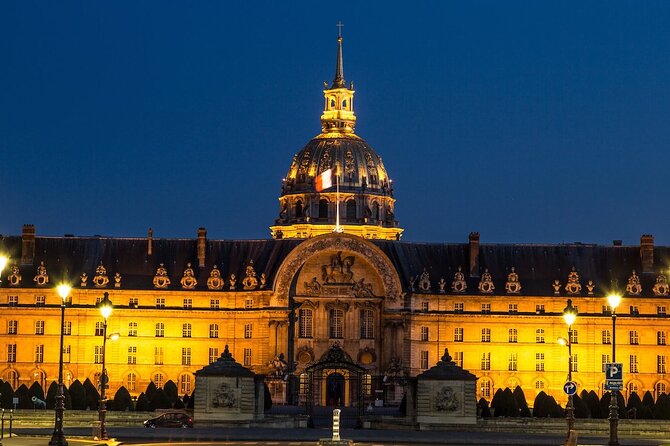
The route includes the Hôtel Royal des Invalides, built under Louis XIV. He wanted a place for wounded and homeless veterans from France’s campaigns. The tour also references it being inaugurated for the 1900 Universal Exhibition and classified as a historic monument.
This is a different kind of monument. It is not designed mainly for spectacle. It is designed for care, which makes it memorable in a night tour where most stops lean toward grandeur.
If you enjoy the human side of France’s story, this one tends to land well.
Pont Alexandre III: gilded bridge energy
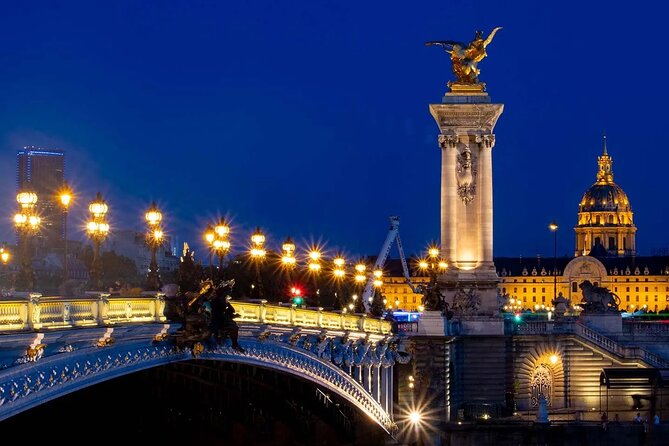
Pont Alexandre III is one of the most emblematic bridges in Paris, known for its architecture and location. It sits in the Grand scale of the city’s axis and gives you those “Paris really is Paris” photo moments.
Night views on bridges are special because the reflections add depth. Even when you are seeing it briefly, it helps connect the landmarks into a single mental map.
Grand Palais and Petit Palais: 1900 Universal Exhibition elegance
The tour then looks at two major exhibition era buildings. The Grand Palais was built for the Universal Exhibition in 1900 and dedicated by the French Republic to the glory of French art. It was designated as a historic monument in 2000.
The Petit Palais was built to become a permanent fine arts museum after the exhibition.
These two stops are helpful because they show a Paris that is not only medieval and revolutionary. They add a more modern, cultural Paris layer. At night, the facades often feel extra dramatic due to lighting on stonework and arches.
Trocadéro and Eiffel Tower: the night payoff
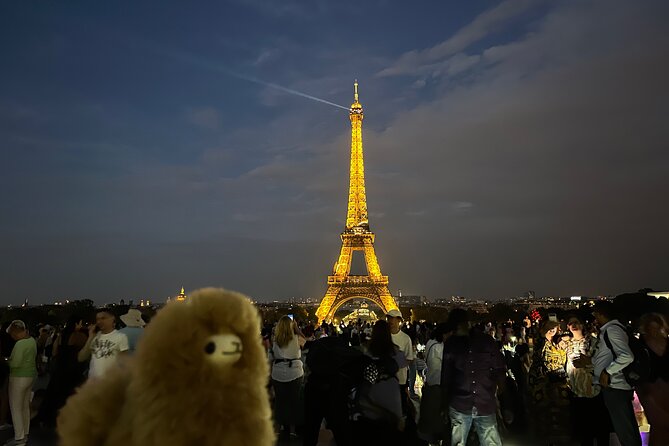
A key highlight comes at the Palais du Trocadéro, located on a slope on the northern bank of the Seine, directly across from the Eiffel Tower. It is famous for strong city views and for angles that help you capture the Eiffel Tower.
The tour notes an admission ticket free visit time of about 20 minutes at Trocadéro. Then you finish near the Eiffel Tower.
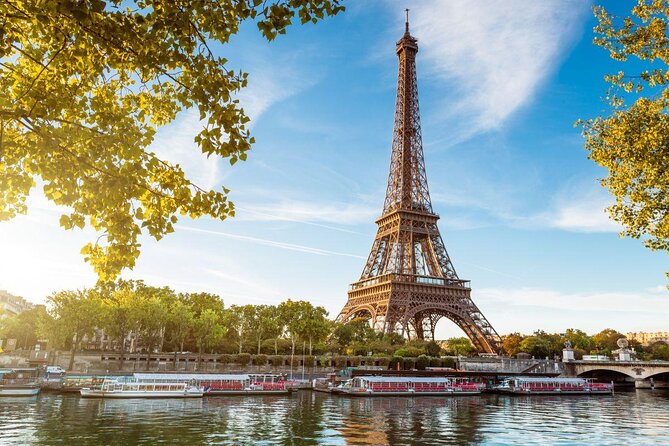
The Eiffel Tower is the world’s most visited monument with an entrance fee, and over 7 million people ascended it in 2022. The big planning catch: tickets to the Eiffel Tower are not included. That means you need to decide in advance if you want to go up. If you do, you should factor in the additional time and plan for purchasing entry separately.
My practical take: if your night priorities are views and photos, Trocadéro can be the best value even if you skip the climb. If you want the full vertical perspective, buy tickets and treat it as your final act.
Who this tour suits best
This private tour is built for people who want Paris highlights without the strain of hopping between far-flung points. It suits you if you:
- want a first-night orientation
- prefer night views over daytime museum marathons
- like having a guide who can tailor the pace
- travel as a couple (it is designed for up to 2 people per group)
Guiding in English is offered, and the tour supports service animals. Most people can participate, and it is private, so it is just your group.
If you want the evening to feel personal rather than scripted, look for the kind of guiding praised in the reviews. Guides like Nataly are described as personal and adaptable, which is exactly what you want when the route is tight and you want your time to feel like yours.
Should you book this Private Paris City Night Sightseeing Tour?
I think you should book this tour if you value efficiency with comfort. A private, air-conditioned vehicle plus hotel pickup is a strong combo when you only have a few hours and want the biggest landmarks strung together smoothly. The route also ends at Trocadéro and the Eiffel Tower area, which is where the night usually clicks into focus.
Skip it or rethink it if you only care about one or two sights and you already know how you want to plan your evenings. Also, since Eiffel Tower tickets are not included, make sure that matches your plan. And do not treat pickup timing lightly, confirm it clearly before you head out.
If you want a night that feels like Paris, not like logistics, this is a solid choice.
FAQ
How long is the Private Paris City Night Sightseeing Tour?
It runs for about 3 hours.
How many people is this tour for?
It is a private tour, with only your group participating. The group size is up to 2.
What languages is the tour offered in?
The tour is offered in English.
Is hotel pickup included?
Yes, pickup is offered at the hotel lobby, and you coordinate the pickup directly.
What is included in the price?
Included features are private transportation, WiFi on board, an air-conditioned vehicle, all fees and taxes, and bottled water.
Are Eiffel Tower tickets included?
No, tickets to the Eiffel Tower are not included.
What meeting details do I need before the tour?
You need to arrange hotel lobby pickup by contacting the operator directly to coordinate.
Is there a mobile ticket?
Yes, the tour includes a mobile ticket.
Can I cancel for a full refund?
Yes, you can cancel up to 24 hours in advance for a full refund. If you cancel less than 24 hours before the start time, the amount you paid will not be refunded.
Is the tour confirmed at booking?
Confirmation is received at the time of booking.
Newest write-ups from Paris

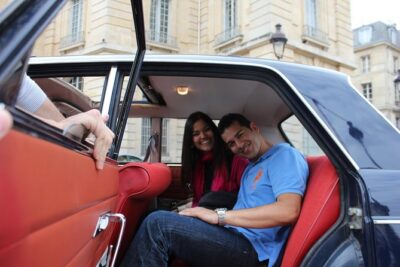
Evening Experiences, compared.
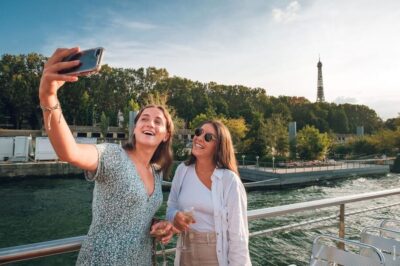
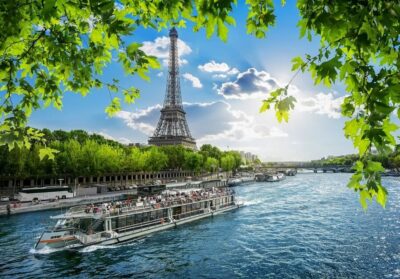
Day or Sunset Cruise with Drink, Ice Cream or Dessert
Read our review →
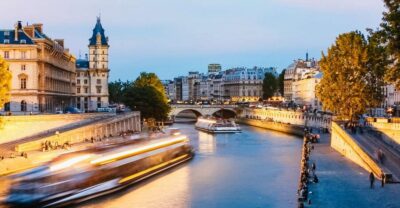
Illuminated Evening River Cruise & Waffle Tasting
Read our review →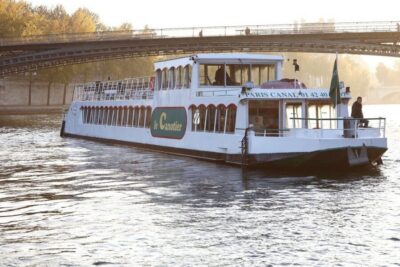
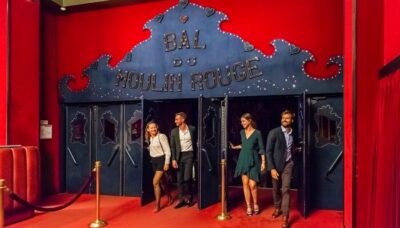
Evening Sightseeing Tour and Moulin Rouge Show
Read our review →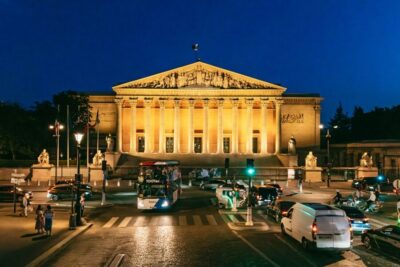
Tootbus Panoramic by Night Bus Tour with Audioguide
Read our review →
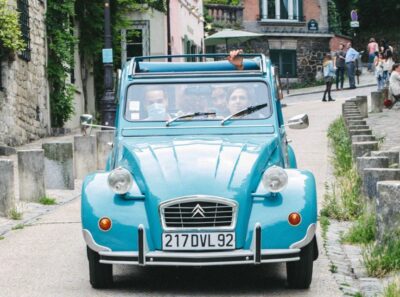
Discover Paris by Night in a Vintage Car with a Local
Read our review →Browse the lists this tour appears in