Reviewed · PRIVATE
Private tour of the battlefields of Verdun from Paris in Van (2/7 travelers)
Verdun hits hard, and this tour explains why. I love the early Paris pickup and the air-conditioned minivan, because a 13 to 14 hour day stays comfortable. I also love that you get Régis, a lively WW1 guide, who makes the route feel clear instead of random. The only real drawback is it is a long day with no lunch included, so bring a plan for food.
This is a small private group, kept to a maximum of 7 people, which matters when you are spending hours on serious, moving ground. You will use a mobile ticket, and you’ll have admissions covered for key stops like the Verdun Memorial Museum and Fort de Douaumont.
One more thing to consider: many stops are outdoors and some involve underground spaces at the fort, so wear good shoes and expect real walking time, even if each stop is fairly short.
In This Review
- Key things to know before you go
- A 6:00 am Verdun road trip that actually works
- Private group size, mobile ticket, and why you will appreciate the pace
- Memorial de la Voie Sacrée: the Sacred Way in real measurement
- Douaumont Ossuary and the National Necropolis: windows, names, and scale
- Fort de Douaumont: the 155mm retractable cannon and the underground walk
- Fleury-devant-Douaumont: a village erased, and a battlefield that kept changing hands
- Verdun Cathedral and the monuments of the town: memory beyond the trenches
- Porte Chaussee and Tranchée des Baionnettes: gates, prisons, and the bayonet legend
- Museum of the Battle of Verdun, Fleury-devant-Douaumont: interactive, structured, and practical
- Price, value, and what you really pay for
- Who this tour suits best, and who should think twice
- Should you book this private Verdun WW1 tour from Paris?
- FAQ
- How long is the Verdun battlefield tour?
- What is the group size for this private tour?
- What time does the tour start and do you offer pickup?
- Is lunch included in the price?
- Which admissions are included?
- What language is the driver or guide?
- Do I get a mobile ticket?
- What if weather is bad or there are not enough participants?
- Is there free cancellation?
Key things to know before you go
- Private van from Paris, maximum 7, so you are not fighting crowds on the highway to Verdun.
- Régis as your WW1 guide, with an entertaining, story-driven way of explaining what you see.
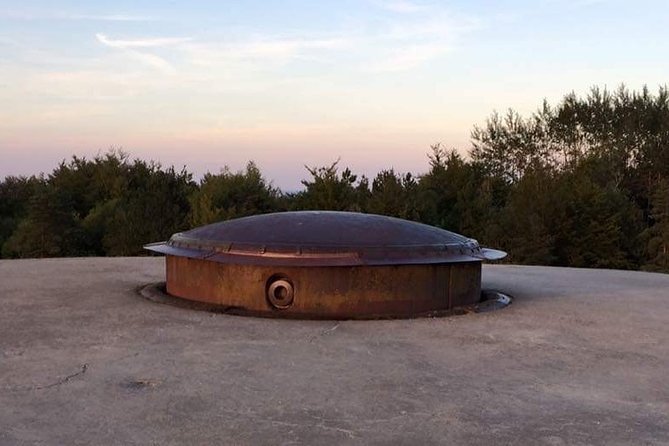
- Fort de Douaumont and the underground galleries, including the famous 155mm retractable cannon inside an armored dome.
- Douaumont Ossuary + National Necropolis, focused on names, remains, and the scale of loss.
- A mix of battle sites and local landmarks, like Verdun Cathedral and Porte Chaussee.
- Memorial Museum of Verdun reborn in 2016, with an interactive battlefield experience layout.
A handful more Paris options to weigh up
- Louvre Museum Paris Essential Guided Tour Semi-Private 6ppl Max
★ 5.0 · 3,807 reviews - SUV Private Transfer: Paris to Charles de Gaulle Airport (CDG)
★ 4.0 · 3,091 reviews - Paris: Private Photoshoot at the Eiffel Tower
★ 4.7 · 2,636 reviews - Top Private Cruises in Paris with French Champagne and surprises
★ 5.0 · 1,553 reviews
A 6:00 am Verdun road trip that actually works
Your day begins early, with a 6:00 am start from Paris. That timing is not just a schedule trick. It is how you reach the Verdun area in the morning and still fit the major sites into one day without rushing like you are trying to win a race.
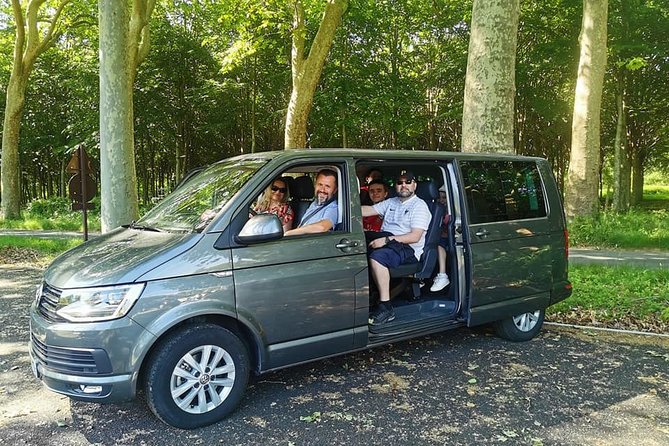
You ride in a comfortable, air-conditioned Minivan, and it is designed for a small group. That kind of setup is a practical win on this route, because the countryside drive takes time and the battlefield sites are spread out enough that you want a driver who knows the best sequence.
Also keep in mind the overall length, about 13 to 14 hours. Short stops add up, and you will be standing, walking, and looking around more than you might think. If you get tired easily, plan a slow recovery after you get back to Paris.
Private group size, mobile ticket, and why you will appreciate the pace
This is a private tour, so your group stays together and the pacing is easier to manage than a bus tour. With up to 7 participants, it is small enough that Régis can adjust the rhythm if you want more context or need a quick reset.
You’ll also have a mobile ticket, which reduces hassle on-site. Many of the stops list free admission on arrival, so the day runs smoothly once you are there, with only the featured sites requiring the right entry timing.
One practical note: the guide and driver operate in French. If you do not speak French, you might still get plenty from the visuals, but this experience will be strongest if you are comfortable with at least some basic language or you enjoy listening even when details are harder to catch.
Memorial de la Voie Sacrée: the Sacred Way in real measurement
The first stop is the Memorial de la Voie Sacrée, a stone monument tied directly to the lifeline that kept the front supplied. It honors the workers who ensured the road between Bar-le-Duc and Verdun functioned, moving food and ammunition forward and helping evacuate wounded soldiers.
I like this start because it sets the frame before you get to the horror. The Sacred Way was not just heroics, it was logistics, constant movement, and an artery that had to work every day.
The monument itself has two parts, including a wall shaped like an arc of a circle with bas-relief soldiers of the Sacred Way. You will also see helmeted markers that outline each kilometer. The road was even baptized at the end of the war by Maurice Barrès as the Sacred Way, which gives you a sense of how quickly people tried to name and remember what happened.
Douaumont Ossuary and the National Necropolis: windows, names, and scale
Next comes the L’Ossuaire de Douaumont, and it is the kind of stop that hits you in waves. This ossuary memorial holds the remains of French and German soldiers who died on the battlefield around Verdun. Through small exterior windows, you can see skeletal remains of at least 130,000 unidentified fighters placed in alcoves along the bottom.
Inside, the ceiling and walls carry plaques with the names of French soldiers. It was built on the initiative of Charles Ginisty, bishop of Verdun, and it is designated as a national necropolis.
What I find powerful here is the combination of anonymity and identity. You get the vast number of the unknown, then you move to the names that were recorded and carried forward. It is not a museum-style story. It is a physical reminder of the cost that can be measured, but never fully understood.
Time is also realistic. You get around 1 hour, which feels long enough to take it in, but short enough that you do not feel trapped.
If this one is booked out, Paris has these too:
- Paris: 1-Hour Seine Cruise departing from the Eiffel Tower★ 4.4 · 77,472 reviews
- Disneyland® Paris 1-Day Ticket★ 4.6 · 49,412 reviews
- Paris: Versailles Palace and Gardens Full Access Ticket★ 4.6 · 41,579 reviews
- Paris: Arc de Triomphe Rooftop Tickets★ 4.6 · 34,264 reviews
Fort de Douaumont: the 155mm retractable cannon and the underground walk
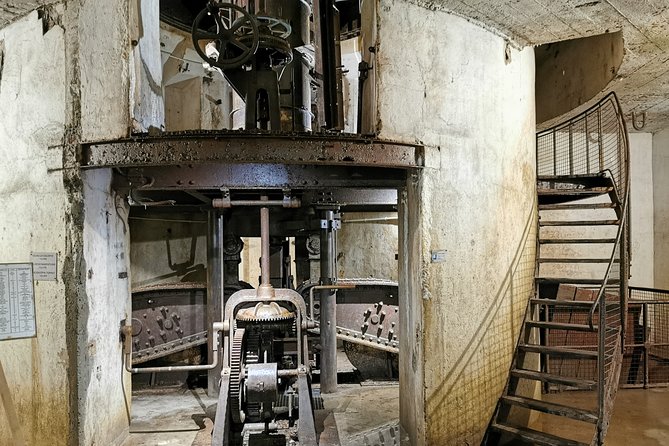
Fort Douaumont is one of the anchors of the whole day. This was the largest and tallest fort among 19 defensive works built in the 1890s to protect Verdun. The situation changed when German forces used extremely heavy artillery, and the French general staff concluded that even the best-protected forts could not withstand bombardment from German 420 mm guns.
The fort was taken without a fight by the Germans on February 25, 1916, just four days after the Battle of Verdun began. It then stayed occupied for about 8 months, serving as shelter and a key support point on the right bank of the Meuse.
This is also where the tour’s fort details feel specific and worth it. You get to see a 155mm retractable cannon inside an armored dome, and you walk through the fort’s underground galleries. Even if you are not a technical history fan, it is the kind of place where the walls and engineering do the storytelling.
The admission for the fort is included, and the stop runs about 1 hour, which is usually perfect for seeing the main features without feeling like you must master WW1 engineering to appreciate it.
Fleury-devant-Douaumont: a village erased, and a battlefield that kept changing hands
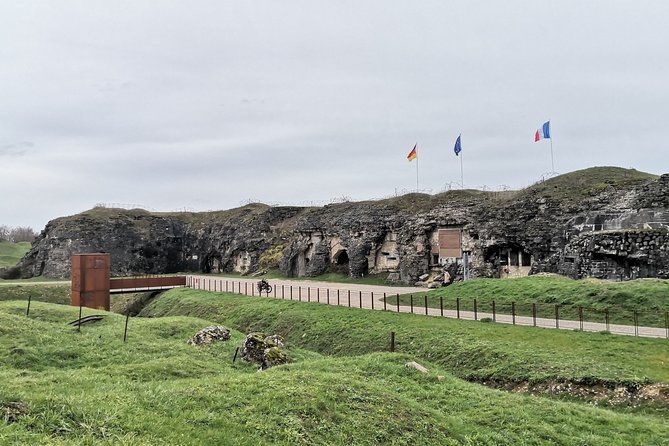
After the fort, you shift to a very different kind of site: Fleury-Devant-Douaumont. The village was destroyed in 1916 and was not rebuilt, so what you see today is essentially a place of remembrance where a community once stood.
This area saw repeated offensives. From June to August 1916, German command launched multiple assaults, and in two months the village changed hands 16 times between French and German forces. From July 13 to August 5, intense fighting took place around the ruined village, and on the night of August 17 to 18, colonial infantry from Morocco launched an assault and took over the village definitively.
A short stop here matters. When the place is quiet and empty, it forces you to imagine the motion and the churn of the front line. You are not seeing grand buildings or monuments. You are seeing the absence of a normal life, produced by shelling and control.
Plan for the emotional weight and keep your shoes on. The ground may be uneven, and this is a better stop if you are ready to slow down and look.
Verdun Cathedral and the monuments of the town: memory beyond the trenches
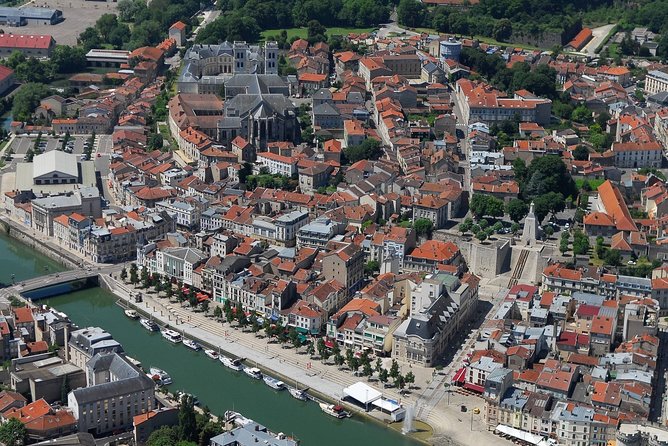
Back in Verdun city, the day adds architecture and civic memory, which helps prevent battlefield fatigue from taking over your brain.
Verdun Cathedral is the oldest in Lorraine and one of the oldest in Europe, built starting around 990 on a Romanesque-Rhenish plan. It suffered ravages in the 11th and 12th centuries, then saw Gothic modifications from the 14th to 16th centuries. A fire in 1755 caused it to lose two of its four bell towers, and afterward it was redesigned with baroque and rockery styles. It was severely damaged by bombing during the First World War and has been restored again.
Next is the Monument de la Victoire, inaugurated in 1929. It has 73 steps leading to a crypt listing repertoires of names of soldiers who received the Verdun medal. At the top of its 30 meter tower is a warrior leaning on his sword, looking east. Every year on November 1, a ceremony welcomes the Sacred Flame that burns under the Arc de Triomphe in Paris.
Even if you only do quick photo stops, these monuments change how you read the whole day. The battle sites explain what happened. These places show how people tried to keep meaning alive afterward.
Porte Chaussee and Tranchée des Baionnettes: gates, prisons, and the bayonet legend
Porte Chaussee is a quick, interesting break. Built in 1380 along the Meuse, it was one of the three monumental gates of the Grand Rempart de Verdun. It was redesigned in 1690, then served as a military prison for the State from 1755 to 1860 before the city bought it in 1889. It is classified as a historic monument since March 21, 1881.
This is not a long stop, about 10 minutes, but it gives you a sense of the city’s layered military role before and after WW1. Verdun is not only a 1916 story. It has always been strategically placed.
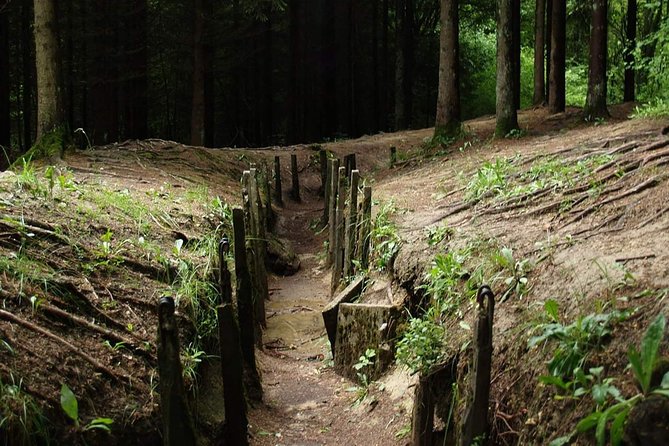
Then you get to the Tranchée des Baionnettes, a monument commemorating the Battle of Verdun in 1916. It is also a historic monument since 1922 and recognized as a center of national memory in March 2014. The story is that in June 1916, soldiers preparing for an offensive were covered by earth waves from shell impacts. Bayonet rifles protruding from the ground symbolize men buried with weapons in hand.
The memorial was inaugurated in December 1920 by President Alexandre Millerand at Bois Morchée, on the territory of the commune of Douaumont, when it became known as the Bayonet Trench.
This stop is brief, around 15 minutes, but it is memorable because it compresses a battlefield event into a single striking image.
Museum of the Battle of Verdun, Fleury-devant-Douaumont: interactive, structured, and practical
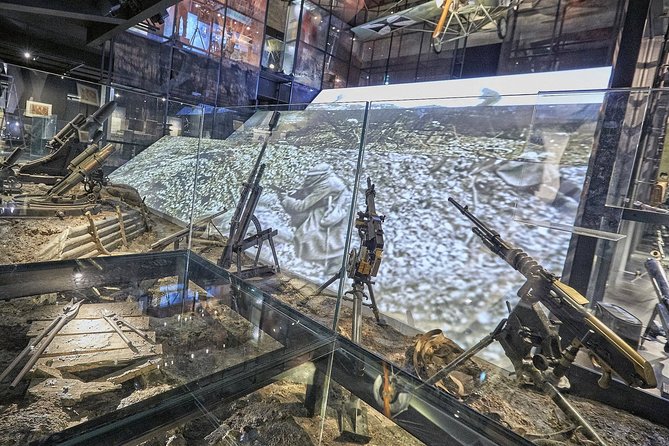
To finish, you visit the Memorial Museum of Verdun in Fleury-devant-Douaumont. This is where the tour’s emotional day gets organized into a guided understanding of context.
The route of the new Memorial places you at the heart of the battlefield. The ground floor focuses on the experience of combatants on the front line, and the first floor places visitors into broader contexts of countries at war. The Memorial was reborn in February 2016 after more than two years of work, adding a new floor of more than 600 m² and an interactive area of about 175 m² for temporary exhibitions.
I like finishing here because museums help you connect the dots between what you saw outdoors and what you learn about why it mattered. The design is meant to be followed, not just glanced at, and 1 hour is a good chunk of time without turning the day into a half-day project.
Admission for the Memorial Museum Battlefield is included, which is a smart value piece if you are comparing costs against buying tickets separately.
Price, value, and what you really pay for
The price is $465.43 per person, and it is booked about 107 days in advance on average. On paper, that is a lot. In real-world terms, you are paying for three things that are hard to replace easily.
First, you are paying for private transportation. A van that picks you up in Paris and carries you across the Verdun region takes time, fuel, and driver labor. Second, you are paying for the guide time, in French, across a day full of stops where context matters. Third, you get admissions bundled for key experiences, including the Verdun Memorial Museum Battlefield and Fort de Douamont.
Lunch is not included. That is the one cost gap you should expect. If you are budgeting, plan for a quick meal on your own during the long day. This is also why I would pack small backup snacks, so you do not end up hungry while you are trying to absorb serious information.
Given the private setup and the included entrance to the biggest-ticket site moments, I think it is fair value, especially for couples or small friend groups who want a guided day without navigating trains, changing buses, and ticket lines.
Who this tour suits best, and who should think twice
This fits best if you:
- care deeply about WW1 and the Battle of Verdun
- want a small group day trip with context instead of a self-drive checklist
- like guides who can keep people engaged and moving calmly through difficult topics, like Régis
It may not fit if you want a very relaxed day with long breaks, or if you need food included. The day is long, and many stops are short and structured.
Also keep in mind the sites include underground fort spaces. Even if the walking is manageable, you should wear shoes you trust on uneven ground and bring a layer if the weather turns.
Should you book this private Verdun WW1 tour from Paris?
I would book this tour if you want one high-quality day that connects the battle story from the Sacred Way through Douaumont and into the Memorial Museum. The private van from Paris, the Régis factor, and the included admissions for Fort de Douaumont and the Memorial make it feel efficient and focused, not like a travel chore.
I would think twice if you are trying to do Verdun on a tight schedule, because the day is long. If you are also not comfortable with French guidance, you might prefer a different format. But for most WW1-minded visitors, this is an effective way to see the key sites without losing time figuring out logistics.
FAQ
How long is the Verdun battlefield tour?
It runs about 13 to 14 hours.
What is the group size for this private tour?
It is a private tour for your group, with a maximum of 7 travelers.
What time does the tour start and do you offer pickup?
The start time is 6:00 am, and pickup is offered.
Is lunch included in the price?
No, lunch is not included.
Which admissions are included?
Admission tickets are included for the Verdun Memorial Museum Battlefield and Fort de Douamont.
What language is the driver or guide?
The driver/guide is in French for this tour.
Do I get a mobile ticket?
Yes, mobile ticket is listed as a feature.
What if weather is bad or there are not enough participants?
The experience requires good weather, and if it is canceled for poor weather you will be offered a different date or a full refund. It also requires a minimum number of travelers, and if that minimum is not met you will be offered a different experience or a full refund.
Is there free cancellation?
Yes, you can cancel for a full refund up to 24 hours before the experience’s start time.
Newest write-ups from Paris




Private, compared.
Louvre Museum Paris Essential Guided Tour Semi-Private 6ppl Max
Read our review →
SUV Private Transfer: Paris to Charles de Gaulle Airport (CDG)
Read our review →

Top Private Cruises in Paris with French Champagne and surprises
Read our review →
Golf Cart in Paris – Private Guided City Tour – Pickup Included
Read our review →
Private Paris Airport Arrival Transfer – CDG & ORLY Airports
Read our review →
Paris Private Arrival Transfer from Charles de Gaulle (CDG) or Orly (ORY)
Read our review →