
Reviewed · CITROëN 2CV TOURS
Private tour Paris Sightseeing 2 hours in Citroën 2CV
Paris, but in a tiny convertible.
This private Citroën 2CV sightseeing tour turns the usual checklist into a close-up, street-level ride, with a driver-guide chatting as you cruise past icons like the Eiffel Tower and Arc de Triomphe. I love two things in particular: the hotel pickup and drop-off option, and the fact that the 2CV itself feels like part of the show, with locals reacting and you snapping photos from a truly vintage viewpoint. The only real thing to weigh is comfort, because the car is small and the ride can be bumpy and noisy, so it is not for everyone.
The big plus is the flexibility of timing and the private attention.
You can choose day or night departures, and small-group limits mean you can actually ask questions instead of yelling over a bus. The one possible drawback: English quality can vary by driver, so if clear communication matters a lot to you, it is smart to set expectations ahead of time.
In This Review
- Key highlights to know before you go
- Why the Citroën 2CV makes Paris feel personal
- Meet-up, timing, and the three-seat reality
- The Grand Palais to Musée d’Orsay stretch, built for quick orientation
- Invalides, the Eiffel Tower, and the Trocadéro viewpoints
- Arc de Triomphe, Saint-Germain, and the Paris you cannot see from a bus
- Montmartre with included admission, and how to make it count
- Guide quality, English clarity, and what to do about it
- Price and value: what $120.38 buys you in Paris time
- Should you book the 2CV Paris highlights tour?
- FAQ
- How long is the private Paris 2CV sightseeing tour?
- Is this tour private or shared?
- How many people can ride in each 2CV?
- Do you offer pickup and drop-off?
- What sights are included?
- Is free cancellation available?
Key highlights to know before you go
- A vintage 2CV ride that feels like a time machine: you get big Paris views from a car that is unmistakably French.
- Major sights in about 2 hours: quick, efficient stops at places like Musée d’Orsay and the Eiffel Tower area.
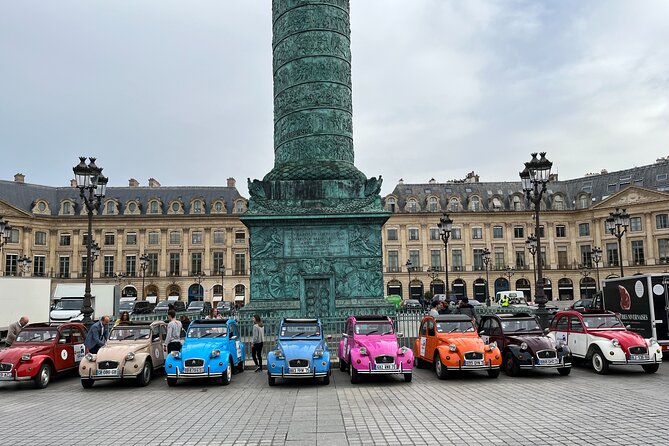
- Small-group format: up to three passengers per car, or a convoy setup for larger groups.
- Photo-focused, not a full museum day: you see exteriors and viewpoints, with one Montmartre stop that includes admission.
- Guide energy matters: the best experiences tend to come from drivers who make you feel at ease and keep the commentary flowing.
Other rides in a vintage 2CV:
- Paris: Discover Paris by Night in a Vintage Car with a Local
★ 4.6 · 1,058 reviews - Paris Private Flexible Duration Guided Tour on a Vintage Sidecar
★ 5.0 · 776 reviews - Vintage 2CV Adventure: 2 -Hour Paris Secrets Tour
★ 4.5 · 488 reviews - Paris: Discover Paris 2CV
★ 4.9 · 472 reviews
Why the Citroën 2CV makes Paris feel personal
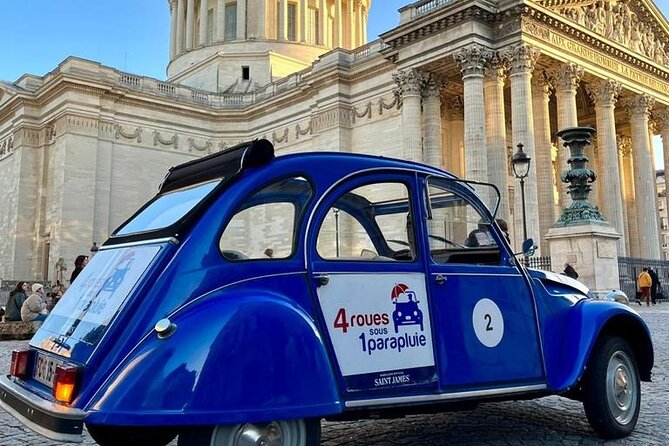
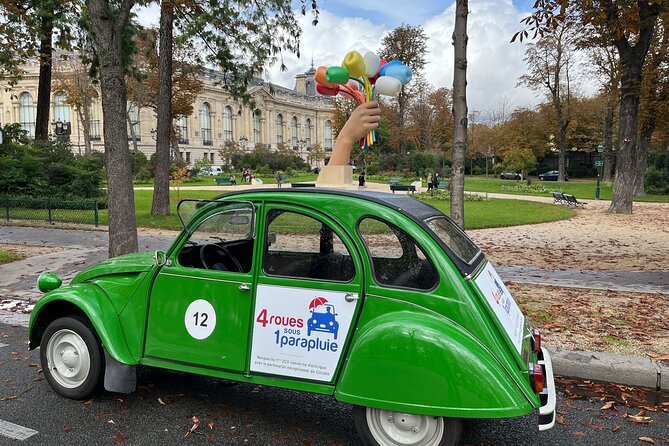
A lot of Paris tours start and stop at the curb. This one starts in the passenger seat of a Citroën 2CV, a car that is basically famous in its own right. The 2CV debuted in France in the mid-1940s as a practical work vehicle for farmers, and it has kept that underdog charm. In Paris, that translates into instant attention. People see you coming, and it is common to get waves and smiles along the route.
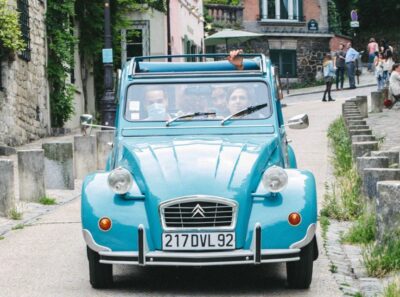
I like that the 2CV changes the rhythm of your trip. You are lower than most traffic, closer to buildings, and you notice details from the street that you would miss from a high coach window. It also makes the tour feel more conversational. Instead of being packed into rows, you sit with your guide and can ask questions as you go.
One more thing: the ride can be part of the memory. A few guides have even worked with weather on the fly, opening and closing the roof when rain hits. That is not a small detail. When you are chasing photos of the Eiffel Tower or gliding toward Arc de Triomphe, the difference between drizzle and open skies matters.
Meet-up, timing, and the three-seat reality
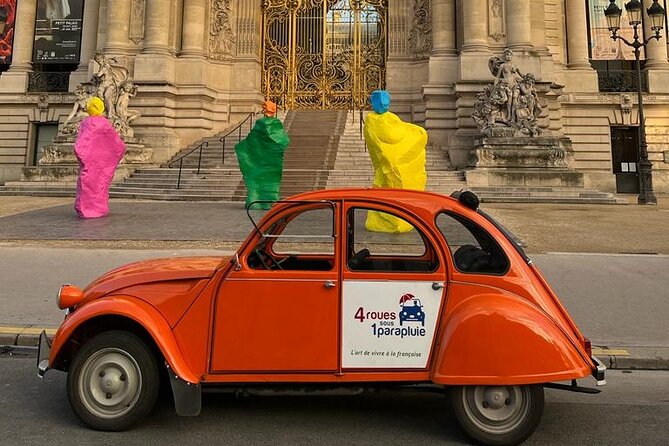
The tour meets around Petit Palais on Av. Winston Churchill in the 8th arrondissement. Pickup is offered, and the experience is designed to be easy on your day, especially if you are fresh off a train or long flight. In practice, many people arrange for the guide to pick up near where they are staying, then return you near your hotel or close to your original area at the end.
Duration is about 2 hours, so think of this as a fast, high-impact orientation ride. It is not meant to replace timed museum tickets and long walking plans. It is meant to give you the big map in your head, with landmark moments you can return to later.
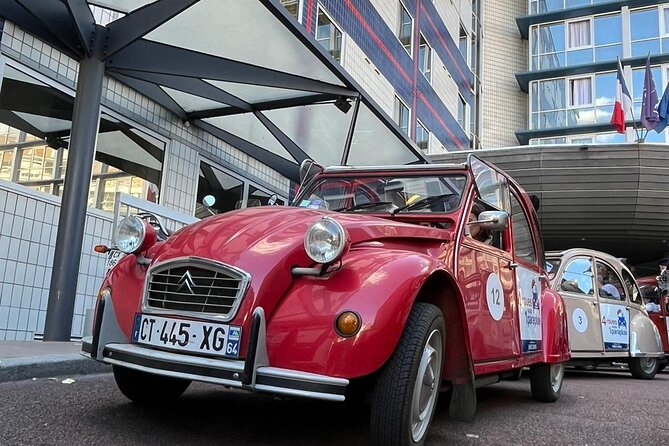
Here is the key logistics point that really affects comfort: the 2CV is limited to three passengers per car (not counting the driver). If you are traveling with more than three people, you can still do it. Larger groups can book up to nine people with multiple cars traveling together in a convoy.
That small seating setup is also why this tour works well for private discussion. You are not fighting for space. You are not listening to half a group’s questions. But you should expect a tighter ride than a modern car, and a few people have mentioned the car can be loud and bumpy depending on road conditions and driving style.
The Grand Palais to Musée d’Orsay stretch, built for quick orientation
This first part of the drive is where you get your bearings fast. You start with Grand Palais, and then move into the central historic core with short photo stops. The timing is tight, so the goal is not lingering. The goal is seeing the big forms, getting the right angles, and hearing how the pieces connect.
Here is how it tends to play on the ground:
- Grand Palais: quick exterior views, a nice warm-up moment because you immediately see the scale of Paris architecture.
- Cathédrale Notre Dame: you get the iconic look from the street and understand why this whole area matters in the city’s story.
- Panthéon: a classic landmark sighting that helps you start placing left-bank neighborhoods mentally.
- Musée d’Orsay: this stop is special because you are not just staring at a pretty building. The guide explains that it was once a train station and now houses a major Impressionist collection. Even if you are not spending hours inside, you come away with the context.
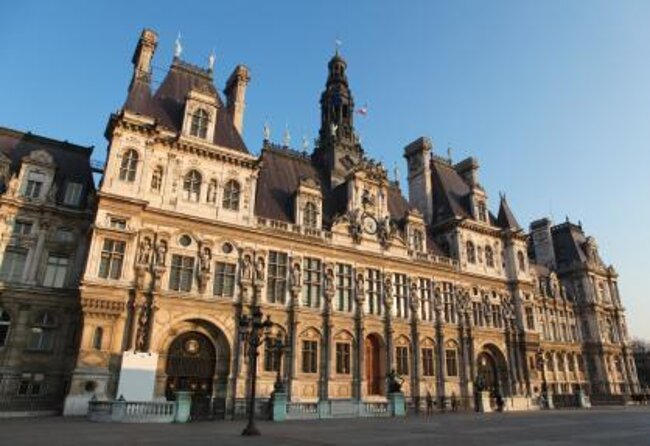
- Assemblée Nationale: another quick exterior moment that adds a political dimension to your sightseeing loop.
Because stops here are short, I recommend treating this like a “see it once, then decide what to explore later” section of your trip. If you know you want to go inside Musée d’Orsay or spend serious time near Notre Dame afterward, you will be able to plan better because you will already have the geography in your head.
Invalides, the Eiffel Tower, and the Trocadéro viewpoints
Then the route shifts into classic Paris postcard territory. You pass Les Invalides, a major landmark complex, and then you head toward the Eiffel Tower zone. In about a couple of hours total, you do not get long stops everywhere, but the timing is enough for a few key photo moments if you communicate what you want from the guide.
The Eiffel Tower is the centerpiece here, but the real photographer’s move is the Trocadéro area. The Place du Trocadéro-et-du-11-Novembre viewpoint is where you can line up the tower with a strong foreground and background. If you are taking pictures for later, this is often where your images will look most “Paris.”
This is also where choosing a night departure can pay off. Reviews highlight night tours as especially fun, because the big landmarks look different after dark. If you go at night, bring the expectation that street driving can get chaotic, and your guide may be working hard to keep the tour moving. That does not mean you will feel rushed, but you should know the stops are still brief.
If weather is an issue, this part of the route is a good time to use the flexible roof situation and ask the guide what is safest for photos. You want your best light and the fewest frustrating delays.
A handful more Paris options to weigh up
- Louvre Museum Paris Essential Guided Tour Semi-Private 6ppl Max★ 5.0 · 3,807 reviews
- SUV Private Transfer: Paris to Charles de Gaulle Airport (CDG)★ 4.0 · 3,091 reviews
- Paris: Private Photoshoot at the Eiffel Tower★ 4.7 · 2,636 reviews
- Top Private Cruises in Paris with French Champagne and surprises★ 5.0 · 1,553 reviews
Arc de Triomphe, Saint-Germain, and the Paris you cannot see from a bus
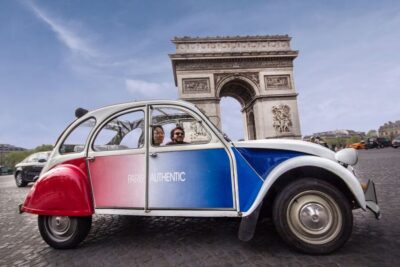
After you catch the Eiffel Tower and the Trocadéro angle, you continue toward Arc de Triomphe. It is one of those sights that feels bigger in real life than it does in photos, and seeing it from the approach road helps you understand the traffic patterns and why the monument sits where it does.
From there, the tour weaves through central neighborhoods like Quartier Saint-Germain and Quartier Latin, then lines you up for Champs-Élysées. This is a nice stretch because you start to feel the variety of Paris even without walking. You experience the city at street level instead of from behind glass.
Two practical benefits of riding in a 2CV during this part:
- You often pass through narrower lanes and streets where big vehicles feel awkward. That makes your route feel more “local.”
- You can react to what you see. If you notice a street, a square, or a building style you want to revisit, you can ask your guide to point it out.
One word of advice from what people report doing well: ask for photo priorities early. A few experiences have been described as too rushed, with only one photo stop. If photos matter to you, say so at the start. If you have a must-do shot, like a specific angle of Arc de Triomphe or Eiffel Tower, tell the guide right away so the plan reflects your priorities.
Montmartre with included admission, and how to make it count
The tour ends with a stop in Montmartre, and this is the one place where the tour includes admission. The exact site is not specified in the details you have, so treat it as a real entry moment, not just a curbside look. That matters because Montmartre is all about viewpoints and atmosphere, and you likely will get more than a quick photo roll-by.
This is also where you should plan for steps and uneven ground. Even if the stop is short, Montmartre is not a flat stroll. Comfortable shoes are a smart move, especially if it has rained. If you are coming from the car ride, you might feel ready to sprint around. Keep your pace human. You have only so much time before you head back.
I also like using the Montmartre moment to ask questions that go beyond monuments. This is where your guide can connect architecture, neighborhood character, and how Parisian culture lives in everyday streets. Some guides have a knack for adding the small details you would never catch on your own.
Guide quality, English clarity, and what to do about it
Your driver-guide is the heart of the tour. When it goes well, it is lively and friendly, with commentary that mixes architecture with how Paris works. Names that have shown up in glowing accounts include Marvin, Dove, Renaud, Jean-François, Abi, Kevin, and Arjan. The pattern is clear: the best tours are the ones where the guide makes you feel comfortable and keeps explaining what you are seeing in a way that actually sticks.
But here is the fair warning. One experience noted that the guide’s English was very hard to understand. Another mentioned a strong accent that made comprehension tricky. Driving style also varies, and a couple of people described the ride as fast or the car as loud enough to make it difficult to hear.
So what should you do? Keep it simple:
- If English clarity is crucial, confirm that with the operator when you book.
- Bring one or two question themes, like history, architecture, or how neighborhoods differ. That way, even if the pace is quick, you still get your main answers.
- If you struggle with listening, ask for key points to be repeated or said more slowly, and focus on what you can see plus the driver’s short explanations.
On the plus side, the same kind of adaptability shows up in other stories. One night tour included an issue where the battery drained due to headlights, and the guide handled it quickly so the trip could continue. That is reassuring when you are relying on one compact vehicle for the whole experience.
Price and value: what $120.38 buys you in Paris time
The price is about $120.38 per person for roughly 2 hours. That sounds steep until you compare what you actually get: a private guide, a vintage car ride, and quick landmark coverage without spending your day trying to arrange transport or find the best street-by-street routes.
Here is the value math that made sense for many people:
- If you arrive tired, jet lagged, or just done with long walks, this gives you a big overview without exhausting legs.
- If you have limited time, you get a “greatest hits” map fast, so the rest of your trip becomes easier planning.
- If you are traveling as a small group, the private attention feels worth it because you are not sharing commentary with strangers.
Is it more expensive than a bus? Yes. But it is also more personal. And the 2CV factor is not just decoration. It changes how you move through the city, how close you get to sights, and how fun the ride feels.
If you want museums and deep time inside every landmark, you will still need walking and timed entry elsewhere. This tour is the opener, not the whole book.
Should you book the 2CV Paris highlights tour?
Book it if you want:
- A first-day or first-night orientation that helps you understand where everything sits
- A fun, photo-friendly way to see the Eiffel Tower, Arc de Triomphe, Musée d’Orsay area, and more without a lot of walking
- A private vibe where you can ask questions and get personal attention
- The charm of riding in a real Citroën 2CV, the French icon that people actually love
Skip it if you:
- Hate small spaces or do not handle bumpy rides well
- Need a long stop at major sites, because this is built for quick sightings
- Are very strict about smooth, easy-to-understand English, since a few accounts have complained about clarity
One last tip: if you care about photos, tell your guide your must-have shots at the start. That one change can turn a solid tour into a great one.
FAQ
How long is the private Paris 2CV sightseeing tour?
It runs for about 2 hours.
Is this tour private or shared?
It is private. Only your group participates.
How many people can ride in each 2CV?
The 2CV is limited to three people per car (not including the driver). If your group is larger, up to nine people can book, with each trio getting its own car and driver while traveling together in a convoy.
Do you offer pickup and drop-off?
Pickup is offered, and the experience notes hassle-free hotel pickup and drop-off. The tour also ends back at the meeting point around Petit Palais.
What sights are included?
You pass major attractions such as Grand Palais, Cathédrale Notre Dame, Panthéon, Musée d’Orsay, Assemblée Nationale, Invalides, the Eiffel Tower, Place du Trocadéro, Arc de Triomphe, Quartier Saint Germain, Quartier Latin, Champs-Élysées, and Montmartre.
Is free cancellation available?
Yes. You can cancel for a full refund up to 24 hours in advance of the experience start time, based on local time.
Newest write-ups from Paris

Citroën 2CV Tours, compared.
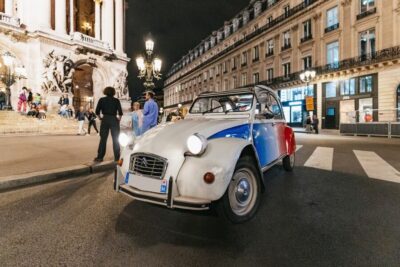
Discover Paris by Night in a Vintage Car with a Local
Read our review →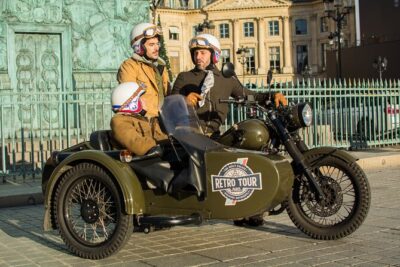
Paris Private Flexible Duration Guided Tour on a Vintage Sidecar
Read our review →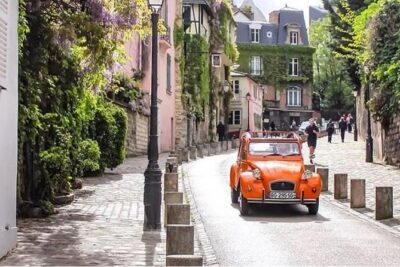
Vintage 2CV Adventure: 2 -Hour Paris Secrets Tour
Read our review →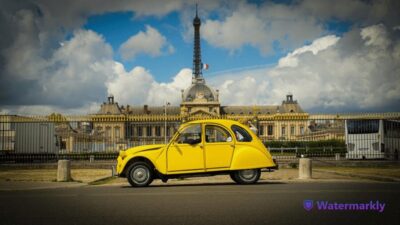
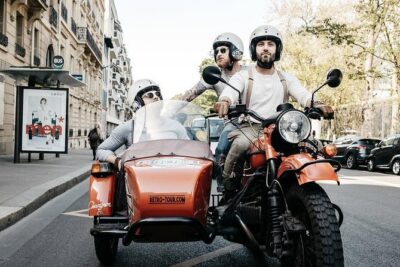
Paris Vintage Private City Tour on a Sidecar Motorcycle
Read our review →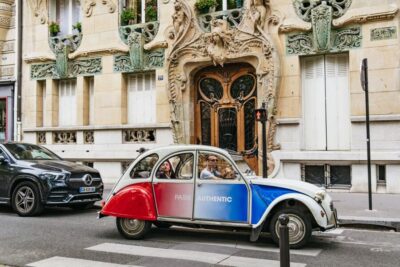
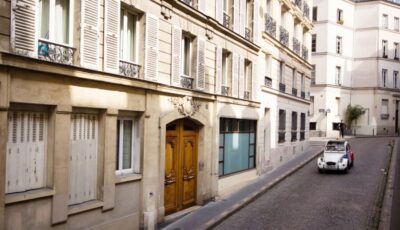
Off-the-Beaten Track in Paris: 2-Hour Vintage 2CV Tour
Read our review →Browse the lists this tour appears in