

Reviewed · D-DAY LANDING BEACH DAY TRIPS
Private Trip from Paris to Normandy
A Normandy day can feel huge. This one stays human, with a private driver and a focused route through major World War II sites. I love how the plan is flexible enough to fit your pace, and I love that your driver handles the Paris traffic so you can stay relaxed. One thing to consider is the early 7:00 am start and a long day that runs about 10 to 12 hours.
Because it is private, the experience is built around your group, up to 3 people. You get pickup options in Paris, and you will have a mobile ticket, in English, which makes the whole day feel simpler. Most of the key stops have free admission, but Pointe du Hoc has a ticket cost that is not included, so plan for that small extra.
If you are a WWII buff, this route makes a lot of sense. You see the story in layers, from the cemetery and memorial details to the beaches and the fortifications that shaped D-Day. If you only want a quick photo loop, the time commitment may feel like too much.
In This Review
- Key things I’d put on your radar
- A 7:00 am Normandy day with your own driver
- Meeting at the Arc de Triomphe, pickup anywhere in Paris
- Stop 1, Normandy American Cemetery in Colleville-sur-Mer
- Stop 2, Omaha Beach and the logic of the landings
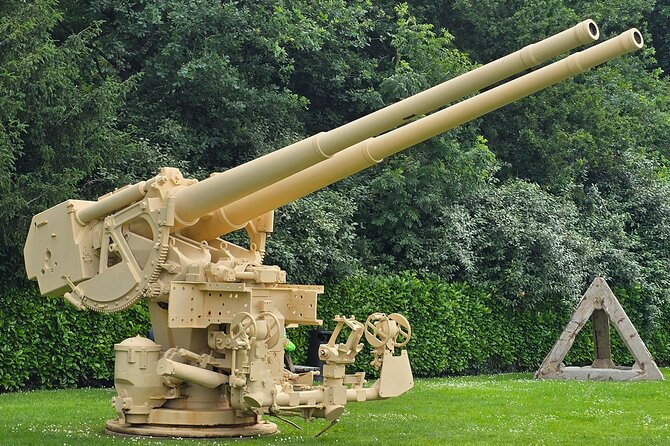
- Stop 3, Longues-sur-Mer German battery with guns still in place
- Stop 4, Pointe du Hoc and the cliff-scale Ranger mission
- How to pace the day so it stays enjoyable
- Price and value for a group of up to 3
- Who should book this private Paris to Normandy transfer?
- Should you book this Paris to Normandy private trip?
- FAQ
- Where is the meeting point, and where do we end?
- What time does the tour start, and how long is it?
- Is this a private experience, and what group size does it allow?
- What stops are included on the route?
- Is admission included at each stop?
- Can pickup be arranged from hotels or the airport?
Key things I’d put on your radar
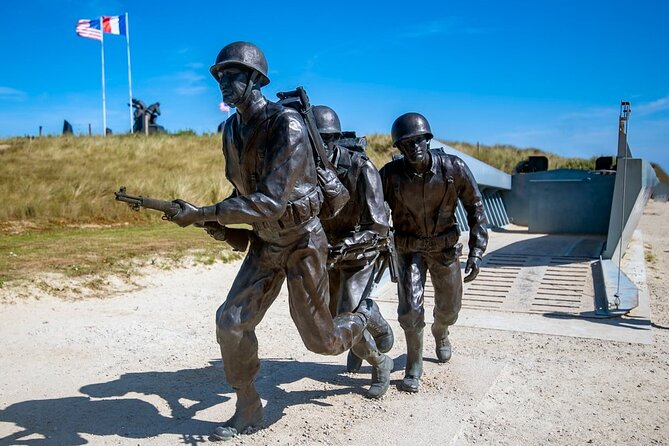
- Private Paris pickup, then direct driving to save you time and stress
- Three core WWII viewpoints plus one “cliff-and-bunkers” finale on the same day
- One-hour stop windows that keep the route moving but still allow quiet looking
- Free entry at three stops (and one stop where admission is not included)
- A service built for small groups up to 3, so you do not feel lost in crowds
Other long days to the Normandy beaches:
- Normandy D-Day Sites & Cemetery Day Trip from Paris with Lunch
★ 5.0 · 6,877 reviews - Normandy D-Day Small-Group Day Trip with Omaha Beach, Cemetery & Cider Tasting
★ 5.0 · 2,786 reviews - Normandy D-Day Beaches and American Cemetery Day Trip from Paris
★ 4.5 · 2,673 reviews - Paris: Normandy D-Day Sites Guided Day Trip with Lunch
★ 4.7 · 1,082 reviews
A 7:00 am Normandy day with your own driver
The biggest practical win here is simple: you get a private transfer from Paris to Normandy, not a bus shuffle. With a small group and a driver focused on your schedule, you spend less time negotiating transit and more time at the sites themselves. The day runs about 10 to 12 hours, and it starts at 7:00 am from the Arc de Triomphe area, so yes, it is an early one. But that early start is what helps you see four major places without rushing through them at the end.
This is also a good format if you want Normandy to feel personal. The route is packed with powerful moments, yet it is still manageable because each stop is given about an hour. That hour can be used for reading memorial details, taking in the coastline views, or stepping back and just letting the place do its work.
Meeting at the Arc de Triomphe, pickup anywhere in Paris

You start at Arc de Triomphe, Place Charles de Gaulle, 75008 Paris, and the tour ends back at the same meeting point. Pickup is offered, and you can typically provide any Paris address you want. There is also a common pickup reference near 47 Avenue de Friedland, about 10 minutes from the Arc de Triomphe area.
If you are arriving by air, pickup can also work from the airport terminal, just in front of the exit after luggage claiming areas. One exit per terminal makes it easier to find your driver.
A private pickup matters more than it sounds. Paris traffic can be chaotic, and getting to the right starting point on a tight schedule can be stressful. Here, the driver handles the driving part, so you can focus on the day.
Stop 1, Normandy American Cemetery in Colleville-sur-Mer
Your first major stop is Normandy American Cemetery and Memorial in Colleville-sur-Mer. This is one of the places where you quickly understand why Normandy hits so hard. The cemetery covers 172.5 acres and holds 9,388 gravesites for American troops who died in Europe during World War II.
You get about 1 hour, and admission here is listed as free. The memorial includes maps and details of the Normandy landings and the military operations that followed. That means you are not only looking at graves, you are also seeing the broader picture tied to the locations you will visit later the same day.
At the center, there is the bronze statue Spirit of American Youth Rising from the Waves. It is the kind of landmark you will want to stop at longer than a casual glance, especially when you are absorbing the scale of the site. There are also two flag poles, where people gather at different times to watch the American flags being lowered and folded. Even if you are not there at a flag moment, knowing it exists helps you understand the rhythm of the place.
Practical tip: give yourself room in your head to slow down here. A cemetery is not a checklist stop. Use the hour to read the memorial details and orient yourself to what you will see next.
What could feel challenging: this is an emotional site. If your group prefers strictly practical sightseeing, you might find it heavier than the beaches or artillery ruins. Still, it is a strong start, because it grounds everything that comes after.
Stop 2, Omaha Beach and the logic of the landings

Next up is Omaha Beach, one of five landing sectors for the amphibious assault component of Operation Overlord. On June 6, 1944, the Allies invaded German-occupied France. Omaha refers to an 8-kilometer stretch of coastline facing the English Channel, between Sainte-Honorine-des-Pertes and Vierville-sur-Mer.
This stop is especially valuable because it explains why this part of the coast mattered. The landings here were necessary to connect the British landings to the east at Gold with the American landing to the west at Utah. That created a continuous foothold along the Normandy coast of the Bay of the Seine area.
You get about 1 hour, and admission is free. Omaha Beach is not just a viewpoint. It is a geographic explanation in real space. As you stand there, you can visualize how the coastline shape and the required connection between sectors affected the plan.
You might also appreciate the operational context built into the site story: the attack was assigned to United States Army troops, supported by sea transport and naval bombardment, with contributions from multiple Allied forces including the British, Canadian, and Free French navies. Even if you are not a military planner, this helps you read the beach as part of a system, not a single moment in isolation.
Possible drawback to keep in mind: Omaha is a coastline and that means weather matters. Wind and glare can affect how comfortable it is to linger. Still, the hour window is enough for looking and reflecting without turning the day into an exhausting slog.
A handful more Paris options to weigh up
- Louvre Museum Paris Essential Guided Tour Semi-Private 6ppl Max★ 5.0 · 3,807 reviews
- SUV Private Transfer: Paris to Charles de Gaulle Airport (CDG)★ 4.0 · 3,091 reviews
- Paris: Private Photoshoot at the Eiffel Tower★ 4.7 · 2,636 reviews
- Top Private Cruises in Paris with French Champagne and surprises★ 5.0 · 1,553 reviews
Stop 3, Longues-sur-Mer German battery with guns still in place
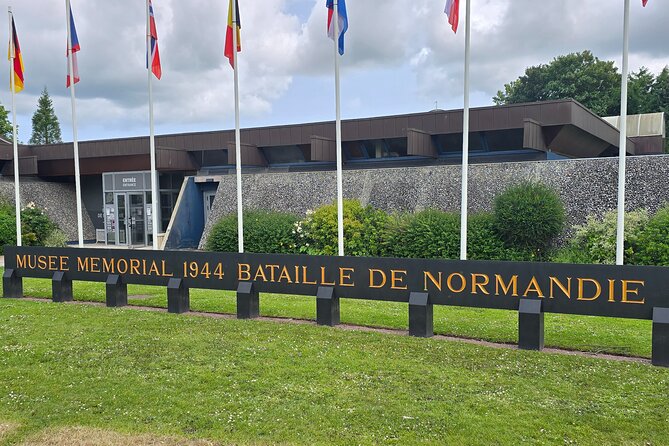
After the beach, you shift from coastline to fortification with Batterie Allemande de Longues-sur-Mer (Longues-sur-Mer battery). This is a German coastal artillery battery about 1 km north of the village of Longues-sur-Mer, sited on a 60 m cliff overlooking the Baie de Seine.
This stop is a real highlight for anyone who likes history you can see. On D-Day, the battery shelled Allied naval forces off both beaches, then it was damaged by Allied shore bombardment the same day. It was captured on June 7, 1944 by British ground forces and then played no further part in the Normandy campaign.
What makes this battery stand out is that it is the only one in Normandy to retain several of its original guns in situ. It is also listed as a historical monument in October 2001 and remains in good conservation.
You get about 1 hour, with free admission. That is just the right amount of time to walk the site, take in the clifftop positioning, and connect it to what you saw at Omaha. You are literally seeing why the artillery location mattered: elevation, line of sight, and control of the surrounding water routes.
A consideration: coastal artillery sites can feel more technical than the beaches, especially if you want a purely emotional narrative. But if you like the story of how the Atlantic Wall defenses operated, this stop gives you a strong physical anchor.
Stop 4, Pointe du Hoc and the cliff-scale Ranger mission
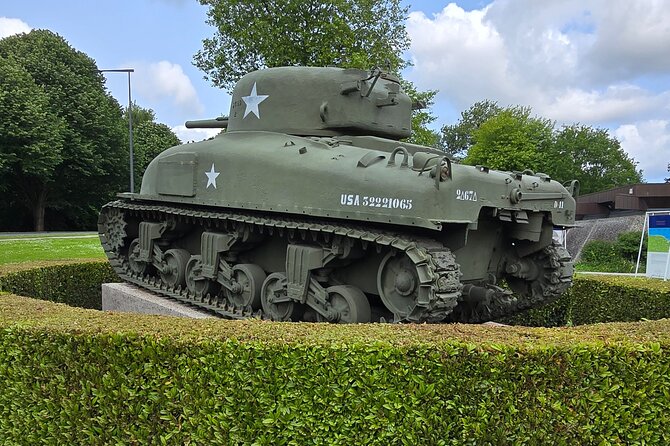
Your final stop is Pointe du Hoc, a promontory with a 35 m cliff overlooking the English Channel on Normandy’s northwestern coast. This location is known for German bunkers and machine gun posts. Before the invasion, the German army fortified the area with concrete casemates and gun pits.
On D-Day, the United States Army Provisional Ranger Group attacked and captured Pointe du Hoc by scaling the cliffs. Generals including Dwight D. Eisenhower had determined that this site housed artillery that could slow down nearby beach attacks, which is why it was so important to take quickly.
This stop runs about 1 hour, but admission is not included. That is the one pricing wrinkle for the day, so if you budget for it now, it will not distract you later. Keep in mind that the ticket might be a small cost compared with the overall transfer price, but it is still worth planning for.
Why this stop works as a finale: you finish with a place that combines dramatic terrain with the idea of direct, high-risk assault. The cliff height and the fortified layout help you understand why scaling it was a big deal.
What to consider: if you are sensitive to heights or strong winds, Pointe du Hoc may feel challenging. Dress for the weather and take your time around the viewpoints.
How to pace the day so it stays enjoyable
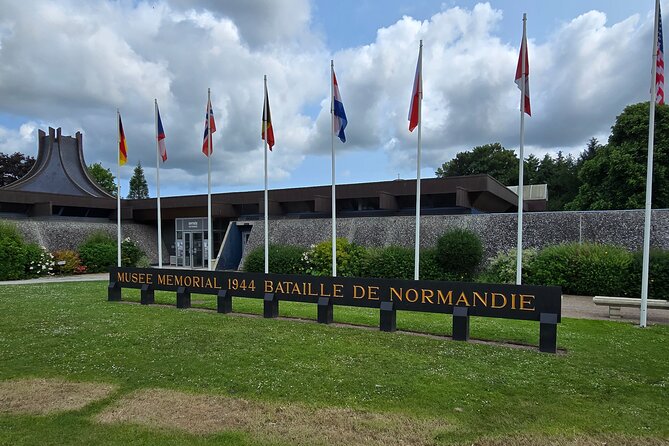
A private transfer plus four WWII sites can sound intense, but the structure here helps. Each stop gets about an hour, which means you are not spending all day locked in a vehicle without any payoff. You also avoid the worst kind of museum fatigue, the kind where you rush through because you have no time left.
Here is how I would pace it as the day unfolds:
- At the cemetery, plan to read and look longer than you think, then stop when you still have energy.
- At Omaha and Pointe du Hoc, spend time on the viewpoints but keep breaks in mind, especially with weather.
- At the German battery site, do a slow walk first, then go back for the details you care about most, like the original guns in place.
What to bring matters, and the itinerary does not mention it, so I’ll keep it practical: wear comfortable shoes for uneven outdoor ground, bring a layer for coastal wind, and bring something simple for hydration. This is Normandy, and the weather can change how long you want to stand outside.
Also, use the private aspect to your advantage. If your group has questions and wants to linger at a specific point, it is easier to do that with a driver and a private schedule than with a strict group bus rhythm.
Price and value for a group of up to 3
The price is $1,425.76 per group for up to 3 people. That is not cheap at first glance, but it is easier to judge once you do a quick reality check based on how pricing works for private transport.
If you have:
- 1 person, you are paying for the car and driver alone.
- 2 people, the cost becomes shared and feels more reasonable.
- 3 people, the per-person cost becomes the most sensible scenario.
So this is best value when you are traveling with at least one other person who genuinely wants this exact route. The biggest “value” here is not just the vehicle, it is time and stress reduction. You are getting a same-day plan with a driver, without needing to manage train schedules, car rentals, or complicated directions across the Normandy countryside.
One more value factor: the stops are high-impact and geographically connected. You are not buying a generic Normandy day. You are buying a sequence that moves from memorial context to coastline landings to coastal defense to cliff assault.
Who should book this private Paris to Normandy transfer?
I think this trip makes the most sense for:
- WWII buffs who want a focused, well-known route
- Small groups who prefer a quieter day over crowded tour bus logistics
- People who want a relaxed ride with someone else handling Paris traffic and the driving
It may be less ideal if you:
- Want a longer list of stops beyond four
- Prefer fully independent travel with DIY pacing and no driver
- Hate early starts and long days
If your group likes the idea of seeing multiple major sites in one structured day, while still keeping the freedom of a private transfer, this hits that sweet spot.
Should you book this Paris to Normandy private trip?
Yes, if you want a small-group, private way to experience four major Normandy WWII sites in one day, with pickup from central Paris and a driver handling the traffic. Start with the cemetery, then move to Omaha, then the Longues-sur-Mer battery, and end at Pointe du Hoc. That order helps the story make sense in your head as you go.
Book it with extra care if you know you will be sensitive to weather or heights, since two stops are coastal and Pointe du Hoc is a cliff setting. And if Pointe du Hoc admission is something you do not want to think about at the last minute, just remember it is the one stop on the route where admission is not included.
FAQ
Where is the meeting point, and where do we end?
You meet at Arc de Triomphe, Place Charles de Gaulle, 75008 Paris, France. The activity ends back at the same meeting point.
What time does the tour start, and how long is it?
The start time is 7:00 am. The duration is about 10 to 12 hours.
Is this a private experience, and what group size does it allow?
Yes. It is a private tour/activity, and only your group will participate. The price is per group, up to 3.
What stops are included on the route?
The itinerary includes:
Cimetiere Americain de Colleville-sur-Mer, Omaha Beach, Batterie Allemande de Longues-sur-Mer, and Pointe du Hoc.
Is admission included at each stop?
Admission is listed as free for Cimetiere Americain de Colleville-sur-Mer, Omaha Beach, and Batterie Allemande de Longues-sur-Mer. Admission for Pointe du Hoc is not included.
Can pickup be arranged from hotels or the airport?
Pickup is offered from any address you provide in Paris. There is also a general pickup area near 47 Avenue de Friedland. If you are at an airport, pickup can be arranged from the terminal just in front of the exit after luggage claiming areas.
Newest write-ups from Paris






D-Day Landing Beach Day Trips, compared.

Normandy D-Day Sites & Cemetery Day Trip from Paris with Lunch
Read our review →
Normandy D-Day Small-Group Day Trip with Omaha Beach, Cemetery & Cider Tasting
Read our review →
Normandy D-Day Beaches and American Cemetery Day Trip from Paris
Read our review →
Normandy D-Day Sites Guided Day Trip with Lunch
Read our review →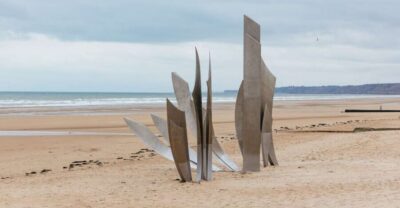
Normandy D-Day Beaches with Juno Beach, bunkers & Canadian Cemetery from Paris
Read our review →
Normandy D-Day Landing Beaches Small-Group Day Trip from Paris
Read our review →
Normandy 2Days Trip Landing Beaches and Mont St Michel from Paris
Read our review →Browse the lists this tour appears in