
Reviewed · MUSEUMS
Rigoletto at the Jacquemart-André Museum
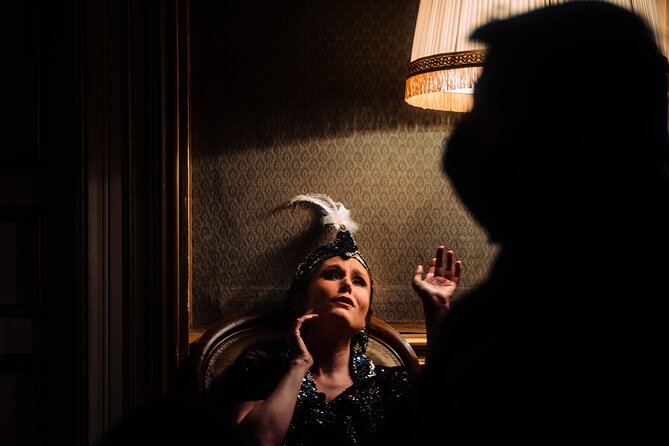
Opera in a private mansion feels different. In this Rigoletto performance at the Musée Jacquemart-André, the story unfolds right in the museum’s salons, with the music delivered up close and a glass of champagne during intermission. It is the kind of setting that makes a familiar opera feel newly personal.
What I really like is the two-part magic: you do not just sit for an opera, you also get time in the 19th-century home of Édouard André and Nélie Jacquemart. The experience includes a private tour of the first-floor salons, where you see the museum’s permanent collection in furniture-and-art context, not behind glass and crowd noise.
One possible drawback to plan for: the format is not a strict, traditional opera house routine. Seating is limited, you may be on your feet at times, and if you prefer continuous, well-known set pieces from start to finish, this salon-style approach can feel a bit less like a classic night at the opera.
In This Review
- Key things I’d mark on your Paris to-do list
- Jacquemart-André after dark: a mansion built for drama
- The first-floor private tour, and how it adds real value
- Rigoletto, staged through the museum salons
- The sound and the scale: piano, violin, and cello
- Champagne intermission, timed for the story
- Staging choices: why some people love it, and why others might not
- Who the production is built for
- Dress code, photos, and the practical stuff you should actually plan
- Price and value: what $353 gets you in this small-group format
- Final verdict: should you book Rigoletto at Jacquemart-André?
- FAQ
- How long is the Rigoletto experience at Musée Jacquemart-André?
- What is included in the ticket?
- Where do I meet for the experience?
- Is this experience in a small group?
- Are photos or video allowed during the performance?
- What should I wear?
Key things I’d mark on your Paris to-do list
- Salon-to-salon storytelling: the plot moves through the museum spaces instead of staying in one fixed auditorium spot.
- Champagne intermission: a small, classy perk that keeps you in the mood without derailing the evening.
- A focused cast for the main roles: Rigoletto, Gilda, the Duke, Sparafucile, and Maddalena are front and center.
- Small group scale: limited to 10 participants, which helps the whole experience feel close and controlled.
- Museum first-floor private tour: you get access to the permanent collection spaces right in the mansion setting.
Other Paris galleries with a shorter queue:
- Paris: Orsay Museum Entry Ticket
★ 4.7 · 25,647 reviews - Louvre Museum Masterpieces Guided Tour with Access
★ 4.5 · 12,023 reviews - Paris: Louvre Museum Entry Ticket With Host and River Cruise
★ 4.6 · 9,926 reviews - Les Invalides: Napoleon’s Tomb & Army Museum Entry
★ 4.6 · 9,185 reviews
Jacquemart-André after dark: a mansion built for drama
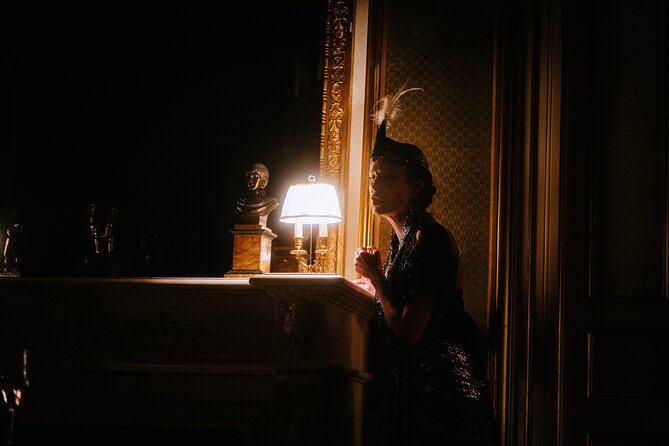
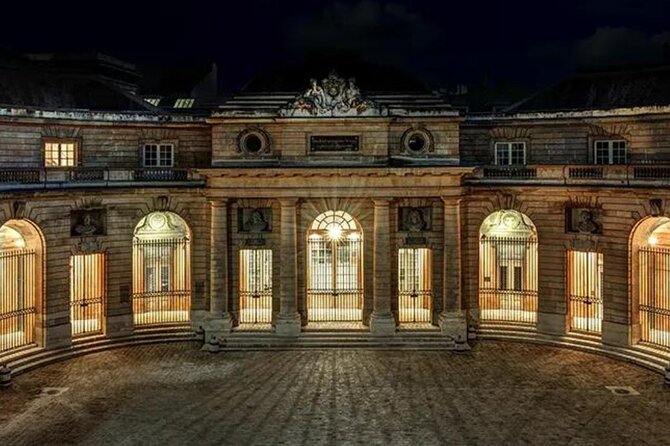
Jacquemart-André sits just a stone’s throw from the Champs-Élysées, but inside it feels like you stepped away from Paris traffic and into a 19th-century world that was meant for evenings like this. The setting matters here because Verd’s story already runs on intensity, misunderstandings, and emotional pressure. Put that in elegant salons, with the art and décor doing their job in the background, and the opera stops feeling like a distant performance and starts feeling like something you are living through.
The venue itself is a big part of the “why.” This is not a generic museum room with chairs lined up in rows. It is the home environment of the André and Jacquemart collections, with salons that hold both decorative objects and major paintings by artists like Uccello, Mantegna, Botticelli, Van Dyck, Rembrandt, Fragonard, and Reynolds. That blend of art forms changes how you experience the music. You are constantly looking at something beautiful, but never losing sight of the people performing nearby.
The first-floor private tour, and how it adds real value
This experience includes a private tour of the museum’s prestigious permanent collection, specifically in the first-floor salons. That detail is not just “nice extra.” It changes the whole night.
Rigoletto is a story about family, deception, and revenge, and knowing the museum’s art context ahead of the performance helps your brain lock onto themes instead of just tracking the plot mechanically. When you move through the salons as part of the evening, the setting feels integrated, like the opera and the mansion are talking to each other.
Also, the museum’s strength is the combination: it is both a collection and a house. You see the furniture and the master paintings in the kind of environment they were designed to belong to. If you have only done standard museum routes, this is a different way to “read” the place. You are not just collecting highlights, you are getting a guided, paced look that gives you time to actually notice what makes the mansion feel luxurious and personal.
Rigoletto, staged through the museum salons
Instead of a single fixed stage, Rigoletto unfolds as the story plays out in the museum’s salons. That means you experience the opera in a way that feels closer to theatre and less like a traditional opera house night.
This adaptation focuses on the main roles: Rigoletto (baritone), Gilda (soprano), Duca di Mantova (tenor), Sparafucile (bass), and Maddalena (mezzo-soprano). Those choices shape the evening. You spend the time where the emotional pressure lives: Gilda and Rigoletto’s bond, the Duke’s charm turning dangerous, and the revenge plot tightening around people who think they can control outcomes.
If you know the opera well, you will recognize the skeleton of the drama. If you do not, you still have an easy path through the narrative because the focus is concentrated on the characters that carry the story forward. And because the performers are presented in an intimate setting, the emotional beats come across with less distance. In plain terms: softer moments feel softer, and tense moments land harder.
The sound and the scale: piano, violin, and cello
The musical team is a trio of musicians: piano, violin, and cello. That chamber-style setup is a big reason this production works in a mansion setting. It keeps the sound vivid without filling every corner with orchestral mass.
What you get is a kind of clarity that lets you follow the singers’ phrasing and the emotional shifts in the music. In a venue like this, where audiences are physically closer to the performers, musical detail becomes part of the storytelling. You feel more like you are in the middle of the scene, rather than watching from the edges of a large theatre.
If this one is booked out, Paris has these too:
- Paris: 1-Hour Seine Cruise departing from the Eiffel Tower★ 4.4 · 77,472 reviews
- Disneyland® Paris 1-Day Ticket★ 4.6 · 49,412 reviews
- Paris: Versailles Palace and Gardens Full Access Ticket★ 4.6 · 41,579 reviews
- Paris: Arc de Triomphe Rooftop Tickets★ 4.6 · 34,264 reviews
Champagne intermission, timed for the story
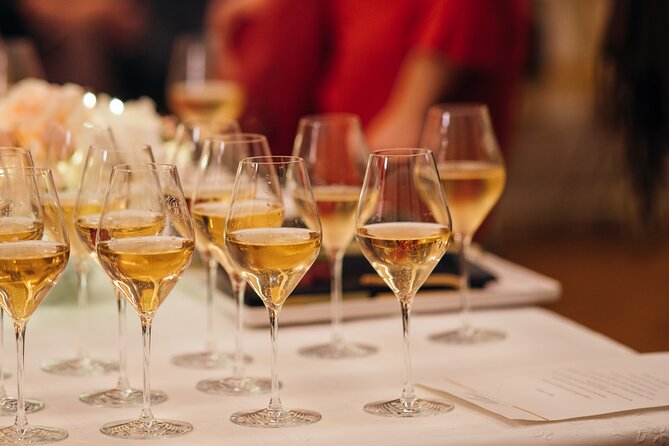
Intermission comes with a glass of champagne. This might sound like a simple perk, but it does something practical: it marks the evening’s rhythm without turning the show into a long break with wandering and noise.
You also get a chance to reset your posture and your attention. Because the venue is intimate and seating is limited, it is smart to treat intermission as your moment to recharge your comfort so you can fully enjoy the second half.
Staging choices: why some people love it, and why others might not
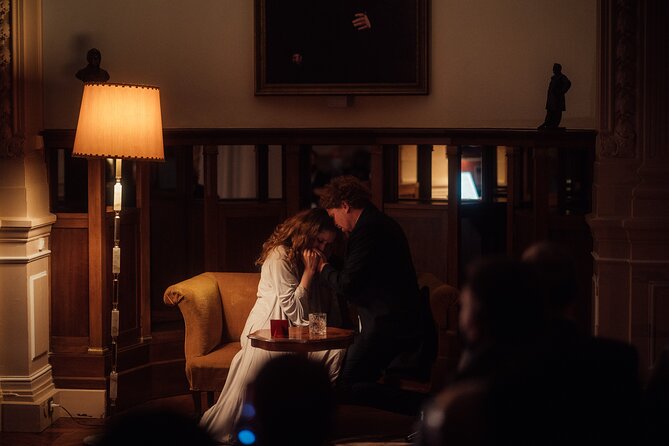
The staging is imagined by Patrizia di Paolo, with costumes by Venice’s Atelier Nicolao, and the direction leans on the finesse of talented French artists. That creative team background matters because it helps explain the production style: the focus is on expression and character closeness, not on big opera-house scale.
Here is the balanced truth: salon-style staging changes how you experience a full opera. One review specifically questioned the flow, saying the staging felt a bit disconnected and that a more standard approach with a variety of well-known arias might have made it easier to stay locked into the intrigue while remaining seated or standing. That is a fair consideration for you if your personal preference is a traditional uninterrupted opera format.
If you are flexible and you enjoy character-driven theatre, you will likely find the close-up approach energizing. If you want the uninterrupted, concert-hall style continuity, this may not match your ideal. I would think of it like this: you are booking both opera and museum experience. If you go in expecting museum-grade theatre, you will probably have a better night.
Who the production is built for
This is especially good for you if:
- You love opera but also like your culture experiences to feel personal and well paced.
- You want a setting that pairs art and music, not just one or the other.
- You like smaller groups, where the energy is calmer and the experience feels controlled.
It is also a great choice if you are with someone who appreciates design, costumes, and staging details, because the production leans into those elements. The opera roles are clearly defined, and the cast is meant to carry the evening through those emotions: passion, betrayal, filial love, and revenge.
Dress code, photos, and the practical stuff you should actually plan
Evening wear is required. That is not just a rule for formality. In an intimate mansion setting, clothing cues help everyone match the mood, and it tends to reduce distractions during the performance.
Seat and movement reality check: seating is limited to ensure an intimate and exclusive experience, and the venue setup is designed for closeness rather than maximum comfort for everyone. If you are sensitive to being seated for long periods or you prefer fully fixed, comfortable theatre seating, consider that the format may involve changes in posture and visibility.
Photography rules are strict: flash photography is not allowed, and video recording is not allowed. Plan to enjoy the moment with your eyes and your memory instead of your phone.
Price and value: what $353 gets you in this small-group format
At $353 per person for a 2-hour experience, this is not a budget opera. But the value is not only the singing. You are paying for a package that includes:
- An intimate opera performance with a chamber trio (piano, violin, cello).
- A private tour of the museum’s permanent collection in the first-floor salons.
- A glass of champagne during intermission.
- A small group limit of 10 participants, which supports the “close proximity” concept that the production is built around.
If you have ever tried to do a museum visit and a separate opera plan on the same trip, you know how quickly costs stack up. Here, the ticket is doing double duty. For many visitors, that makes the price feel less like a single-ticket premium and more like a curated evening with multiple paid components packed into one controlled experience.
Final verdict: should you book Rigoletto at Jacquemart-André?
If you want Rigoletto but also want the night to feel like Paris luxury with a focused audience, I think this is a strong pick. The mansion setting, the private first-floor tour, the champagne intermission, and the small-group intimacy are the ingredients that make the experience feel special.
My main caution is about format. This is salon-style opera, not a standard continuous opera-house performance. If you strongly prefer the classic sit-and-stay rhythm and the idea of uninterrupted, familiar arias, you may find the staging approach less comfortable to follow.
Still, if you love getting close to performers, enjoy museum nights, and can roll with a more theatre-like structure, booking is an easy yes.
FAQ
How long is the Rigoletto experience at Musée Jacquemart-André?
The duration is 2 hours.
What is included in the ticket?
You get a private tour of the 19th-century private residences and permanent collection, a glass of champagne at intermission, and an intimate opera performance of Rigoletto.
Where do I meet for the experience?
The meeting point is Musée Jacquemart-André.
Is this experience in a small group?
Yes. It is limited to 10 participants, and seating is limited to 80 people to keep the experience intimate.
Are photos or video allowed during the performance?
Flash photography is not allowed, and video recording is not allowed.
What should I wear?
Evening wear is required.
Newest write-ups from Paris


Museums, compared.
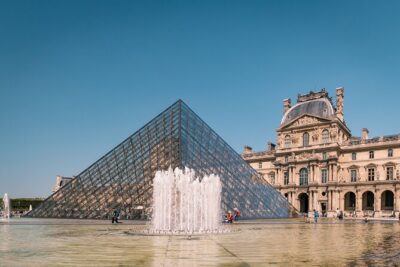
Louvre Museum Masterpieces Guided Tour with Access
Read our review →
Louvre Museum Entry Ticket With Host and River Cruise
Read our review →
Les Invalides: Napoleon’s Tomb & Army Museum Entry
Read our review →
Louvre Museum – Exclusive Guided Tour (Entry Included)
Read our review →
Louvre Museum Hosted Entry and Mona Lisa Audioguide
Read our review →
Louvre Museum Tour Mona Lisa & Iconic Masterpieces
Read our review →Browse the lists this tour appears in