Reviewed · PRIVATE
Semi-Private French Revolution and Conciergerie tour
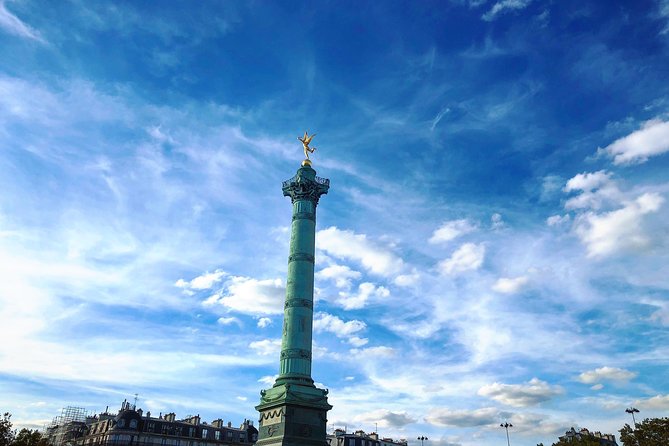
Paris is best when you walk it. This semi-private French Revolution and Conciergerie route strings together major sights like the Opera Bastille and the Hotel de Ville, with stops that explain what changed and what survived. I especially like that you move on foot, so you notice the “why” behind the streets and buildings, and that the guide’s storytelling comes with practical context for modern Paris. One drawback to plan for: it is a moderate-walking tour and runs in all weather, so you’ll want good shoes and rain gear.
You’re also paying for a guide-led experience, not just for moving from point A to point B. The group size caps at 15, which usually means fewer bottlenecks and more time for questions. Still, if you’re looking for a sit-down, museum-style pace the whole time, the outdoor walking format may feel a bit brisk.
In This Review
- Key things to know before you go
- Why this Revolution walk feels personal, not touristy
- Starting at Place de la Bastille and using Opera Bastille as your first clue
- Le Marais: where the Revolution’s shadow shows up in urban change
- Hotel de Ville: government power, plus a history-facing lesson
- Tour Saint-Jacques: the Gothic tower that survived the Revolution
- The walk’s arc: from big landmarks to the Conciergerie finish
- Guides make the difference: stories, city context, and practical tips
- Price and value: what you pay for in a 2.5-hour route
- What to wear, bring, and plan so the walk stays enjoyable
- Where the meeting point helps you, and how to not waste time
- Should you book this Semi-Private French Revolution and Conciergerie tour?
- FAQ
- How long is the Semi-Private French Revolution and Conciergerie tour?
- Where does the tour start and end?
- Is the tour offered in English?
- How many people are on the tour?
- Is food or drinks included?
- Are admission tickets included for the stops?
- Does the tour include transportation or hotel pickup?
- Does the tour run in bad weather?
- Are service animals allowed?
- What is the cancellation policy?
Key things to know before you go
- Small group, up to 15 people, which makes the walk feel more personal than big-bus touring
- Free entry at multiple stops, so you can spend time looking instead of handling ticket surprises
- A route built for on-foot noticing, from dramatic architecture to the quieter corners of Le Marais
- Revolution-to-street context, with guide stories that connect events to what you see now
- A 2.5-hour time window, ideal for fitting into a busy Paris day
- Weather-ready planning, since it operates in all conditions
A handful more Paris options to weigh up
- Louvre Museum Paris Essential Guided Tour Semi-Private 6ppl Max
★ 5.0 · 3,807 reviews - SUV Private Transfer: Paris to Charles de Gaulle Airport (CDG)
★ 4.0 · 3,091 reviews - Paris: Private Photoshoot at the Eiffel Tower
★ 4.7 · 2,636 reviews - Top Private Cruises in Paris with French Champagne and surprises
★ 5.0 · 1,553 reviews
Why this Revolution walk feels personal, not touristy
This is the kind of Paris tour I like: you spend most of the time outside, close enough to read details, and you get a guide to translate what you’re seeing. The French Revolution is big, complicated, and easy to reduce to names and dates. Here, it gets tied to real places, so the story lands where you stand.
Two things make the experience work well for you. First, the walking format forces attention. You look up at façades. You notice changes in neighborhood mood. You catch contrasts between a grand civic building and a surviving tower fragment. Second, the tour is designed as semi-private, with a maximum of 15 travelers, which keeps questions from getting lost.
The other factor is pacing. At about 2 hours 30 minutes, you get a satisfying arc without feeling trapped. Just remember it is still a walk. If your body is not into steady walking outdoors, plan for breaks and wear supportive shoes.
Starting at Place de la Bastille and using Opera Bastille as your first clue
You begin near the Banque de France at Place de la Bastille. That matters because it sets the tone immediately: this is a part of Paris where history and modern city life share the same real estate. You’ll head to Opera Bastille, a sleek auditorium opened in 1989 that hosts ballet and opera.
Why this stop is more than a photo op: it gives you a “present-day Paris” anchor early. You’re not only looking backward. You’re also watching how the city uses its landmarks and institutions to define culture now, even while you’re learning about upheaval and transformation.
Practical detail: admission here is free as part of the experience. That reduces friction, and it also helps keep your time focused on the explanation rather than planning around an entry line.
Le Marais: where the Revolution’s shadow shows up in urban change
Next you move through Le Marais, a neighborhood with a layered origin story. The area was built on land that used to be swampy, then it became a center of high culture. After the French Revolution, it fell into disrepair. Later, it regained prominence.
That sequence is exactly why this stop works. The Revolution is often taught as a sudden rupture. Le Marais shows a longer arc. Something can change, deteriorate, and then come back with a new identity. When you walk here with a guide, you can start to see that neighborhood history is written in the built environment, not only in books.
Also, this is one of those spots where you’ll feel the contrast fast. The streets and building textures in Le Marais can shift from quiet and tucked away to lively, and the guide stories help you connect those impressions to the historical “rise, fall, return” cycle.
A small consideration: Le Marais can feel crowded on foot at certain times. With a semi-private group and a walking route, you’ll still have room to move, but you may want to keep your pace steady and let the guide lead you through the tighter sections.
Hotel de Ville: government power, plus a history-facing lesson
From the neighborhood textures, the tour swings to civic drama at Hotel de Ville. This is the kind of building you can’t miss: a 19th-century landmark that is now the seat of the French government and includes displays on French history.
The best part here is how the setting explains the stakes. In Revolution-era storytelling, power is the whole plot. Standing in front of a building that is both historic and actively tied to government creates a clear mental link between past governance and present authority.
You also get a helpful framing tool: because there are displays on French history, the stop works like a checkpoint. You can absorb information, then carry that forward to the next places where the Revolution’s effects become visible in architecture and what remains.
Again, admission is free for this stop within the experience. That makes it easier to keep your plan simple and your schedule intact.
If this one is booked out, Paris has these too:
- Paris: 1-Hour Seine Cruise departing from the Eiffel Tower★ 4.4 · 77,472 reviews
- Disneyland® Paris 1-Day Ticket★ 4.6 · 49,412 reviews
- Paris: Versailles Palace and Gardens Full Access Ticket★ 4.6 · 41,579 reviews
- Paris: Arc de Triomphe Rooftop Tickets★ 4.6 · 34,264 reviews
Tour Saint-Jacques: the Gothic tower that survived the Revolution
Then you head to Tour Saint-Jacques, a flamboyant Gothic tower from the 16th century. This tower is especially important because it is the only remaining part of the church of St Jacques de la Boucherie, which was demolished during the French Revolution.
This is where the tour’s title starts to feel real. The French Revolution wasn’t only about politics and documents. It changed streets, churches, and the physical landmarks that anchored everyday life. When you see a lone tower standing where something larger once existed, it stops being abstract.
If you like “spot the evidence” travel, you’ll enjoy this moment. It’s a small, very specific piece of architecture, but it carries a big story: destruction on one side, survival on the other.
Practical note: admission is free here too, and since the tower is the main focus, you can spend time looking at details without needing to budget extra entry time.
The walk’s arc: from big landmarks to the Conciergerie finish
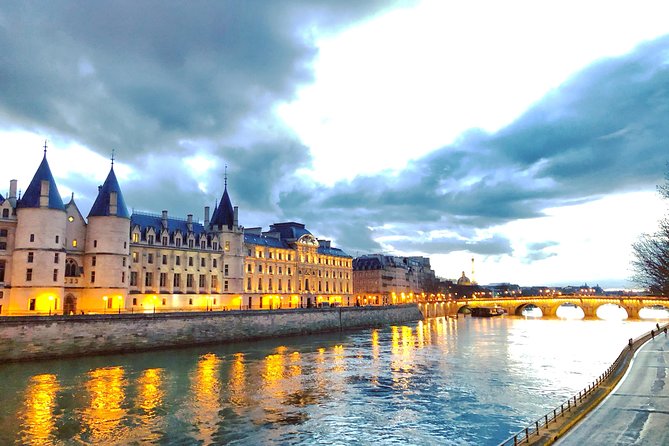
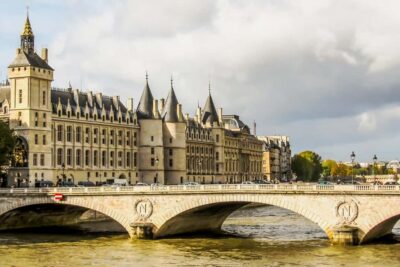
The experience ends at the Conciergerie, located at 2 Bd du Palais, 75001 Paris. Even without getting stuck in a museum format, the ending location helps you feel the shape of the narrative. You start near major cultural life, pass through neighborhood transformation, then move into government symbolism, and finally land at a site tied to the Revolution era.
That sequencing matters. A lot of Revolution content can feel like a list of events. Here, the route turns it into a physical journey across Paris, where each stop adds a new angle: cultural institutions, neighborhood change, government focus, architectural survival, and then the Revolution-era finale.
If you want to keep the momentum going after the tour, this is also a great finish point for your own wandering in the nearby area, because you end in a part of central Paris where it’s easy to continue walking on your terms.
Guides make the difference: stories, city context, and practical tips
The tour is led by a professional English-speaking guide, and that’s a big part of the value. The point is not just to know where the buildings are. It’s to learn how to read them.
The strongest praise connected to guides centers on two things. First, the guide stories bring the French Revolution to life, so you’re not memorizing dates. Second, the guide often adds helpful real-world pointers, including restaurant recommendations that can genuinely improve your evening plans.
I also like that the tour seems to work for more than one type of traveler. One of the guides highlighted in past groups, Benoit, was described as connecting history with present-day Paris. Other guides, William and Adam, were praised for keeping things fun and engaging, including for younger people. That combination tells you this is not just a lecture.
Price and value: what you pay for in a 2.5-hour route
At $179.03 per person for about 2 hours 30 minutes, this is not a cheap “walk and go” option. But it can still be good value because you are paying for guided interpretation plus a small-group size that caps at 15 travelers.
Here’s what you get that helps justify the cost:
- A professional English guide who tells the story as you walk
- Semi-private group feel that supports questions and attention
- Multiple free-entry stops, including Opera Bastille, Le Marais, Hotel de Ville, and Tour Saint-Jacques
- A route that links several major sights and one very meaningful survival landmark
What you should compare in your head is opportunity cost. If you tried to DIY this in one afternoon, you’d spend more time figuring out logistics and less time understanding what each place is saying. The guide acts like a translator. That makes the Revolution story click faster and stay with you longer.
What to wear, bring, and plan so the walk stays enjoyable
This tour runs in all weather, so plan like Paris weather has its own schedule. Bring a small umbrella or light rain jacket, and wear shoes you trust on uneven sidewalks.
Because the experience suggests moderate physical fitness, treat it as an active city walk, not a slow stroll. You’ll be better off if you can stand and walk for extended stretches. If you’re traveling with kids or teens, this format can work well since it moves and keeps attention on the next clue.
Also keep it practical: the tour includes a mobile ticket and is near public transportation, but it does not include food, hotel pickup, or transport between sights. Build your day around that. If you want snacks, plan to grab them before or after the tour.
Where the meeting point helps you, and how to not waste time
The start point is at Banque de France, 3 bis Pl. de la Bastille CS 41834, 75183 Paris. That’s a specific anchor, and it’s helpful because it reduces the common Paris problem of vague “meet by the landmark” instructions.
To make your life easier:
- Arrive a few minutes early so you can find the exact spot without stress
- Have your phone ready for the mobile ticket
- Use nearby transit options to cut down on last-minute walking
The tour ends at Conciergerie, so once you finish, you can decide whether you want to linger nearby or head onward.
Should you book this Semi-Private French Revolution and Conciergerie tour?
If you want a Revolution experience that connects story to street-level reality, I think this is a strong pick. The combination of a small group, a professional English guide, and a route that includes both major Paris landmarks and a “survival” tower makes it feel more meaningful than a standard highlights walk.
Book it if:
- You like walking tours and want to notice details
- You want Revolution history tied to what you actually see
- You prefer a guide who adds practical city context, not just facts
Skip it or think twice if:
- You need a mostly indoor, slow-paced tour
- Your schedule or energy level makes weather and steady walking hard
If you’re doing Paris for the first time or you want a smart way to understand the city’s political and cultural backbone, this is the kind of outing that can make later sightseeing feel easier, and history feel less like a textbook.
FAQ
How long is the Semi-Private French Revolution and Conciergerie tour?
It is approximately 2 hours 30 minutes.
Where does the tour start and end?
It starts at Banque de France, 3 bis Pl. de la Bastille CS 41834, 75183 Paris, France, and it ends at Conciergerie, 2 Bd du Palais, 75001 Paris, France.
Is the tour offered in English?
Yes, it is offered in English.
How many people are on the tour?
The tour has a maximum of 15 travelers.
Is food or drinks included?
No, food and drinks are not included.
Are admission tickets included for the stops?
Free admission is listed for the stops at Opera Bastille, Le Marais, Hotel de Ville, and Tour Saint-Jacques.
Does the tour include transportation or hotel pickup?
No. Hotel pickup and drop-off, and transportation to and from attractions, are not included.
Does the tour run in bad weather?
Yes, it operates in all weather conditions, so dress appropriately.
Are service animals allowed?
Yes, service animals are allowed.
What is the cancellation policy?
You can cancel for a full refund if you cancel up to 24 hours in advance of the experience’s start time. If you cancel less than 24 hours before, the amount paid is not refunded.
Newest write-ups from Paris


Private, compared.
Louvre Museum Paris Essential Guided Tour Semi-Private 6ppl Max
Read our review →
SUV Private Transfer: Paris to Charles de Gaulle Airport (CDG)
Read our review →

Top Private Cruises in Paris with French Champagne and surprises
Read our review →
Golf Cart in Paris – Private Guided City Tour – Pickup Included
Read our review →
Private Paris Airport Arrival Transfer – CDG & ORLY Airports
Read our review →
Paris Private Arrival Transfer from Charles de Gaulle (CDG) or Orly (ORY)
Read our review →