
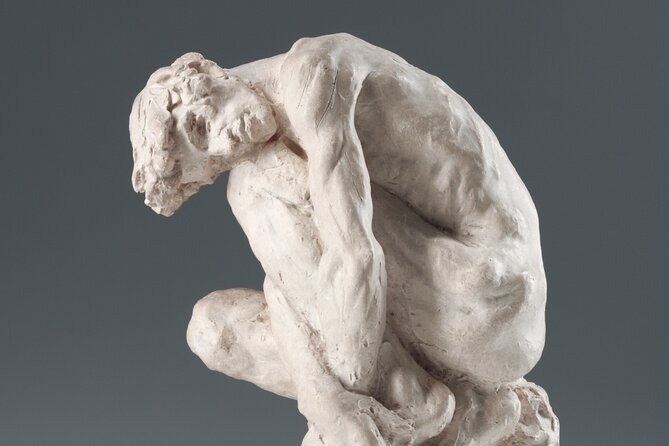
Reviewed · RODIN MUSEUM TICKETS
Skip-the-line Rodin Museum Tour with Artist
Rodin deserves more than a quick photo stop. This 2-hour skip-the-line visit pairs you with an artist-guide so the sculptures make sense, not just look pretty. It’s a smart way to see Rodin’s works, his methods, and the museum setting without wasting time in crowds.
What I like most is the human angle. An artist-guide, like Blerta in the standout experiences, explains how Rodin built volume, surfaces, and motion so you can actually read a sculpture like a picture.
One thing to consider is the price. At $234 per person for a short outing, it’s best if you’ll really use the guided, technique-based approach and the included entry tickets and iPad support.
In This Review
- Key things to know before you go
- Why an artist-guide turns Rodin into more than famous names
- Skip-the-line entry, separate entrance, and how to spend your time well
- The rococo mansion galleries: your guided path through Rodin’s “studio mind”
- iPad help that actually supports what you see
- Rodin’s technique, explained through a working artist’s lens
- Sculpture Garden time: views, pacing, and why The Thinker lands harder outside
- The flow of the 2-hour schedule, and how to make it feel effortless
- Price and value: $234 per person, and what you’re really paying for
- Who this tour suits best (and who should choose another option)
- Quick practical notes to plan smoothly
- Should you book the Rodin Museum skip-the-line artist tour?
- FAQ
- How long is the Rodin Museum skip-the-line tour with an artist-guide?
- Where do I meet the guide?
- What’s included in the tour price?
- Is food included?
- What languages is the tour offered in?
- Is the tour wheelchair accessible?
Key things to know before you go
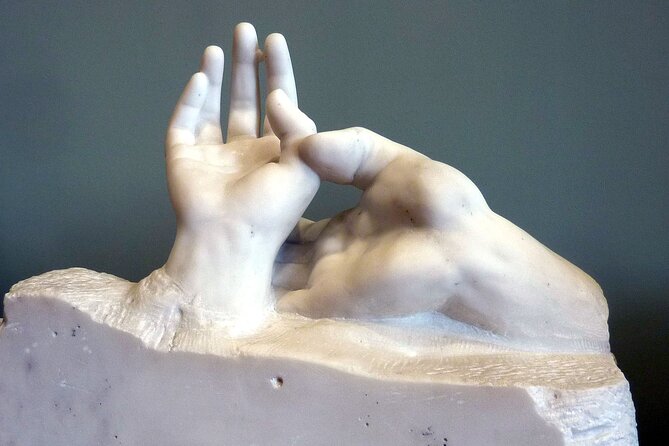
- Artist-guide perspective: you’re not just hearing facts, you’re learning how an artist thinks about form and surface.
- Skip-the-line access: you enter through a separate entrance, so you spend more time inside.
- iPad visual support: a curated iPad collection helps you imagine Rodin’s life and the works as you walk.
- Rococo mansion setting: the building itself feels like part of the exhibit, not a neutral container.
- Antique fragments + evolution story: you get Rodin’s arc from classical beginnings to his unfinished ideas.
- Sculpture Garden time: you finish outdoors with big views and iconic bronzes like The Thinker.
More time in the Rodin garden:
- Paris: Orsay Museum and Rodin Museum Combo Entry Ticket
★ 4.4 · 470 reviews - Paris: Rodin Museum Entry Ticket
★ 4.5 · 220 reviews - Paris: Rodin Museum Skip-the-line Entry Ticket with Audio
★ 4.0 · 102 reviews - Paris: Rodin Museum Ticket & Optional Digital AudioGuide App
★ 4.7 · 56 reviews
Why an artist-guide turns Rodin into more than famous names
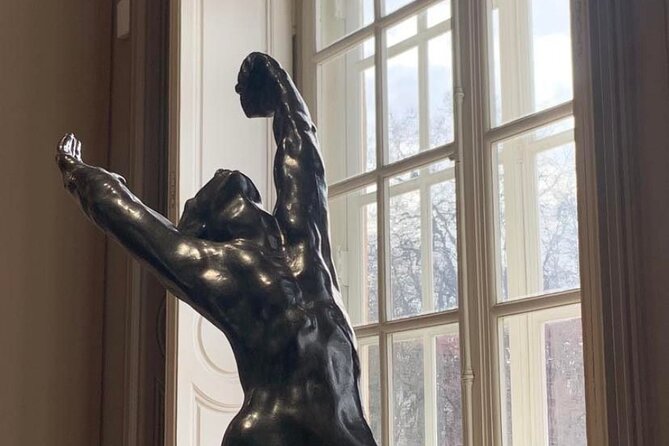
Rodin is often introduced like a headline. Michelangelo of modern sculpture, iconic bronzes, genius at work. That’s all true, but the magic happens when you learn why his forms look alive.
An artist-guide brings that “why” into focus. Instead of simply pointing out masterpieces, they explain what you’re seeing: how twisted limbs can still feel balanced, how a rough block can suddenly read as skin, and how unfinished surfaces can feel intentional rather than incomplete. This is the kind of perspective that changes how you walk through sculpture rooms.
I also like that the tour is built around technique and evolution, not just display labels. You’ll trace Rodin’s growth from classical beginnings toward bolder approaches, including his unfinished masterpieces. That storyline helps you spot patterns across works, even when you only have about two hours.
Skip-the-line entry, separate entrance, and how to spend your time well
The tour includes skip-the-line entry tickets to the Rodin Museum and gardens. That matters here because the museum can be busy, and waiting in a queue steals time from both the galleries and the outdoor Sculpture Garden.
With skip-the-line access through a separate entrance, you start sooner and keep momentum. You’re not spending your best light and your best attention span standing still before you can begin interpreting what you came to see.
This also shapes the experience style. Since the schedule is tight, the guide can focus on meaning rather than logistics. You’ll spend your time looking, comparing, and learning, instead of rushing past the works.
The rococo mansion galleries: your guided path through Rodin’s “studio mind”
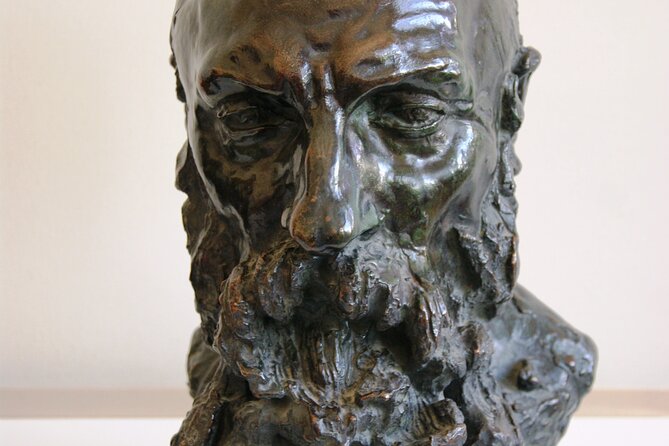
You’ll meet in front of the entrance of the Rodin Museum and then start with a guided visit (about 1 hour). From the beginning, the setting works in your favor. Rodin’s museum is housed in a rococo-style mansion, and it carries atmosphere that makes the sculptures feel like they belong to a workshop world.
Here’s what to pay attention to in this first stage. You’ll move through the greatest masterpieces and also a special area tied to Rodin’s antique fragments collection. Those fragments are more than collectibles. They show how Rodin studied the past and pulled forms, textures, and proportions into his own new language.
You also get an evolution arc you can hold onto as you look. Rodin starts with classical foundations, then pushes further toward ideas that feel unfinished, raw, and alive. When the guide connects those dots, you’ll see the works as chapters of a single creative journey, not as random stops on a greatest-hits list.
iPad help that actually supports what you see
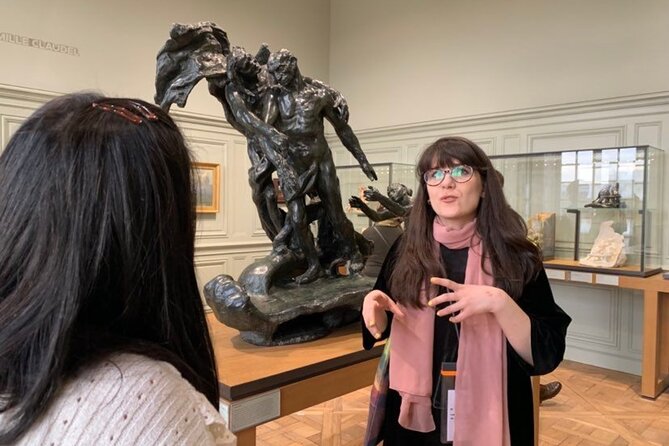
A standout inclusion is the curated iPad collection. This is not just for convenience. It’s there to help you imagine Rodin’s life and understand the work in context while you’re standing in front of it.
The smartest part of this setup is timing. You’re looking at sculpture that may not behave like painting. Details can be hard to read from one angle, and some works can feel more “emotional” than descriptive. Visual support helps you connect what you’re seeing to what the guide is explaining, so the tour feels like it’s building a single coherent picture in your head.
If you like museum experiences that give you a framework, the iPad component is likely to work well for you. It also helps you stay engaged during transitions, when you’re moving from one room or display to the next.
Other Paris galleries with a shorter queue:
- Paris: Orsay Museum Entry Ticket★ 4.7 · 25,647 reviews
- Louvre Museum Masterpieces Guided Tour with Access★ 4.5 · 12,023 reviews
- Paris: Louvre Museum Entry Ticket With Host and River Cruise★ 4.6 · 9,926 reviews
- Les Invalides: Napoleon’s Tomb & Army Museum Entry★ 4.6 · 9,185 reviews
Rodin’s technique, explained through a working artist’s lens
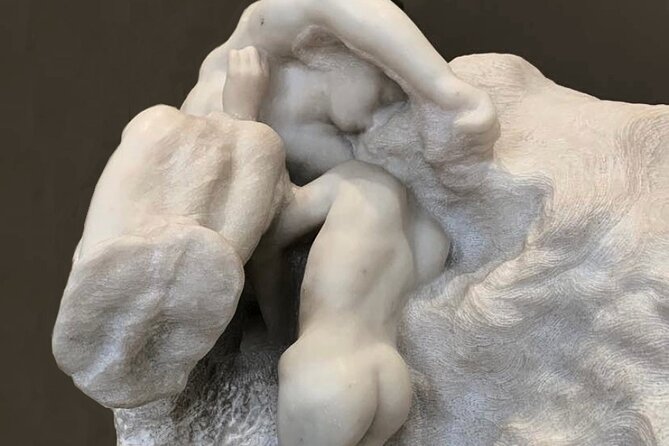
Rodin is famous for making bodies look like they’re moving even when they’re still. But that effect comes from specific choices. An artist-guide focuses on those choices: twisted limbs, entangled figures, surfaces that shift between raw stone and polished skin-like effects, and the way blocks can feel both monumental and intimate.
In the best versions of this tour, the guide also brings historical context into the conversation without turning it into a lecture. The guide voice is interactive, and you get a sense that the explanation is meant to help you see better right now, not just learn trivia.
Blerta is specifically praised for being personable and bringing in-depth insight about Rodin that goes beyond basic museum commentary. In these kinds of tours, that difference matters. You’re not just hearing what to think. You’re being taught how to look.
Sculpture Garden time: views, pacing, and why The Thinker lands harder outside

After the museum portion, there’s a short break at Café – Restaurant L’Augustine for coffee (about 10 minutes). This is a practical pause in a 2-hour plan. It also gives you a mental reset before you move into the outdoor Sculpture Garden.
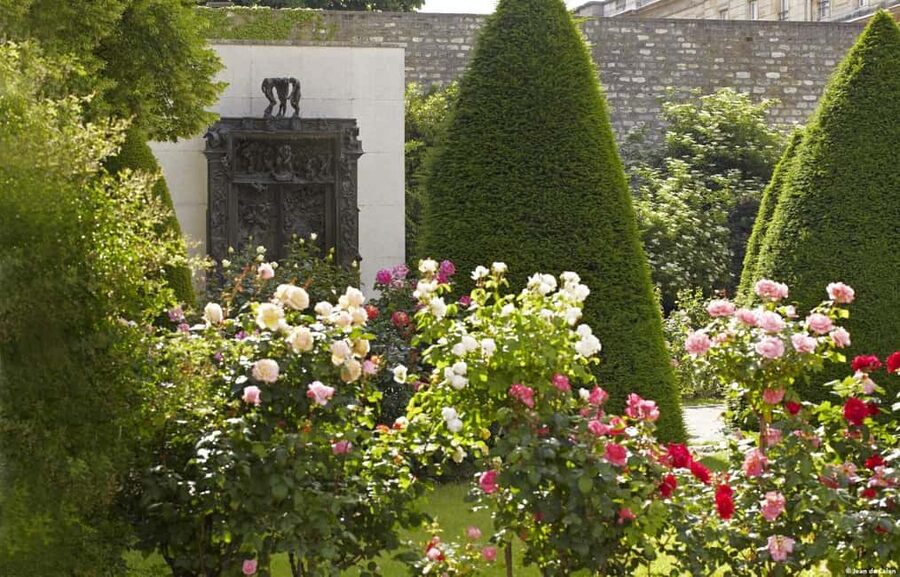
Then you spend about 50 minutes walking and taking in scenic views on the way. This is where Rodin changes again. Indoors, you can study the details and surfaces. Outdoors, you start reading the overall composition in space: how bronze sits in relation to paths, light, and sightlines.
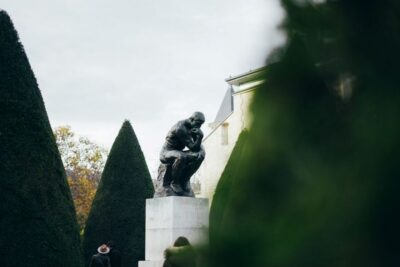
The Sculpture Garden is also where iconic works like The Thinker hit differently. Outdoors, the scale feels immediate, and your body understands the pose in a way that can be harder inside. Even if you know the sculpture by name, you’ll likely come away with a new sense of how it was meant to be experienced.
If you care about composition and sightlines, don’t rush this part. The value is not only the bronzes you recognize. It’s the way the garden shapes the mood and lets you see Rodin’s work as spatial art.
The flow of the 2-hour schedule, and how to make it feel effortless
This tour is built for focus. It runs about 2 hours total, and the structure is simple: guided museum time, a brief coffee break, then a longer walk for garden views.
That timing is a plus if you want a concentrated experience with real guidance. A 2-hour tour can feel short, but here it’s not padded. You’re given enough museum time to get the main masterpieces and antique fragments context, and then enough outdoor time to let the sculptures breathe in the garden environment.
The tradeoff is also clear. If you want to linger in front of one piece for a long, self-guided deep stare, you might feel constrained. This is a guided interpretation format, not a free-roam marathon.
Price and value: $234 per person, and what you’re really paying for

At $234 per person, this is not a budget tour. You’re paying for several things that add value when they work: skip-the-line entry, a live artist-guide, and extra learning support through the iPad collection.
Think of it like this. The museum tickets plus garden access are part of the cost. The guide is the main differentiator because the tour is teaching technique and artistic evolution, not just pointing at famous works. For many people, that’s the difference between seeing Rodin as a name and understanding him as a sculptor with a method.
If your travel style is hands-on, art-focused, and you like learning from someone who can explain how things are made, the price starts to look more reasonable. If you prefer quiet wandering with minimal structure, you might prefer a standard ticket and self-guided museum plan.
For me, the best-fit buyer is someone who wants a guided lens for a short timeframe, especially because Rodin’s work rewards looking slowly even when you only have a couple of hours.
Who this tour suits best (and who should choose another option)
This works especially well if you want:
- A guide who can connect sculpture to technique and creative evolution
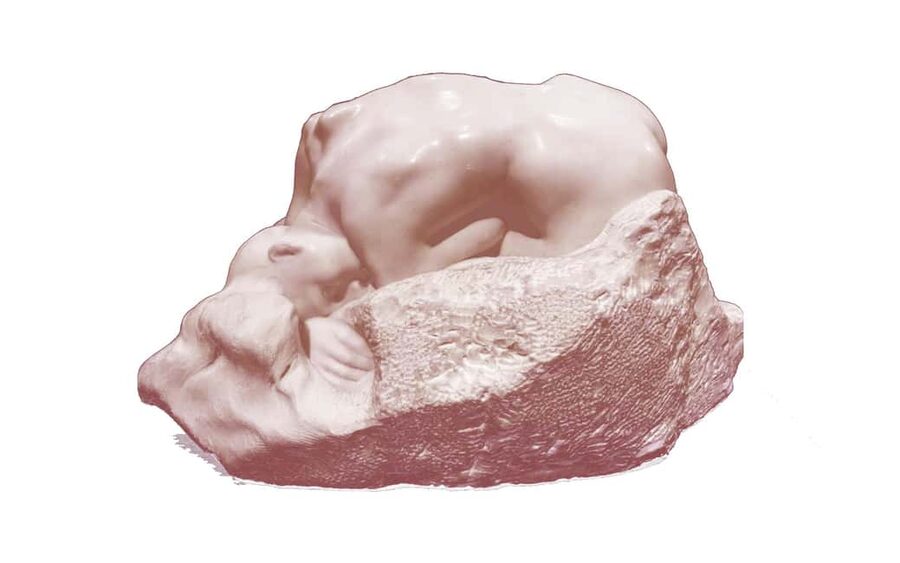
- Help understanding why surfaces and unfinished forms can still feel powerful
- A guided path that includes both indoor masterpieces and outdoor garden bronzes
- Support while looking, through the iPad collection
It may not be the best match if you:
- Want maximum time in the museum with zero structure
- Prefer only general overview commentary rather than a technique-centered approach
- Are traveling as a very large group without the private group option (the tour does note private group availability, so check what setting you book)
If you’re an art lover who enjoys “how it’s made” explanations, you’ll likely leave with a stronger sense of Rodin as a working artist, not just a legend.
Quick practical notes to plan smoothly
The meeting point is in front of the entrance of the Rodin Museum. Your drop-off is listed as the Rodin Museum and Musée Rodin, which suggests you’ll finish back near where you started.
The tour runs in English and French. It’s also wheelchair accessible, and private group options are available if you want a smaller, more tailored setting.
You should also plan for no hotel pickup and no included food beyond the brief coffee stop. If you need a fuller meal, you’ll want to handle that on your own before or after.
Should you book the Rodin Museum skip-the-line artist tour?
Book it if you want a short, high-impact Rodin visit with a guide who can explain form, technique, and the logic behind unfinished and raw-feeling works. The combination of skip-the-line entry, live artist-guide interpretation, and the iPad support is a strong value for art-focused travelers who want to leave understanding more than they arrived with.
Skip it or consider an alternative if you mainly want leisurely self-guided wandering, or if you’re not interested in how an artist reads sculpture. In that case, the $234 price might feel steep compared to a standard ticket day.
If you’re the kind of traveler who looks twice at details, this tour is a very good bet.
FAQ
How long is the Rodin Museum skip-the-line tour with an artist-guide?
The tour duration is listed as 2 hours.
Where do I meet the guide?
You meet in front of the entrance of the Rodin Museum.
What’s included in the tour price?
Included are the guided tour of the Rodin Museum and gardens, a unique artist-guide, a curated iPad collection, and skip-the-line entry tickets for the museum and gardens.
Is food included?
Food and drinks are not included. There is a short break at Café – Restaurant L’Augustine with coffee included for about 10 minutes.
What languages is the tour offered in?
The tour is available in English and French.
Is the tour wheelchair accessible?
Yes, the tour is listed as wheelchair accessible.
Newest write-ups from Paris








Rodin Museum Tickets, compared.
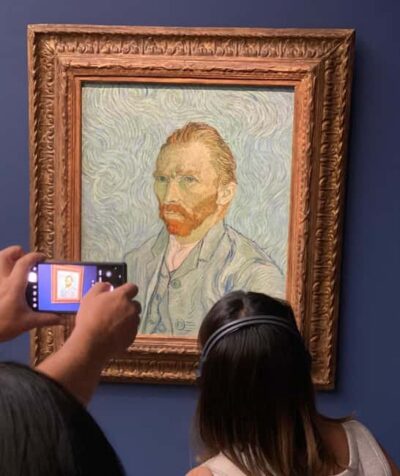
Orsay Museum and Rodin Museum Combo Entry Ticket
Read our review →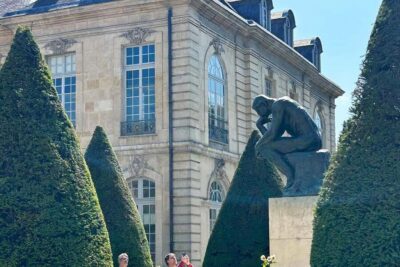

Rodin Museum Skip-the-line Entry Ticket with Audio
Read our review →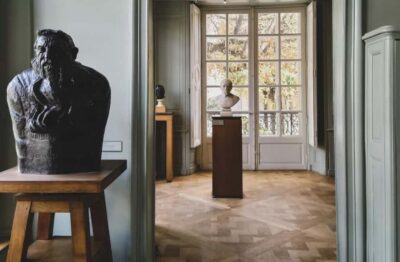
Rodin Museum Ticket & Optional Digital AudioGuide App
Read our review →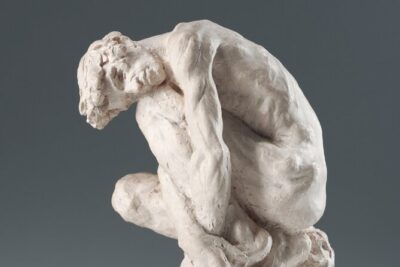

Skip-the-line Rodin Museum – Exclusive Guided Tour
Read our review →
Paris Orsay Museum and Rodin Museum Daily Combo Ticket
Read our review →Browse the lists this tour appears in