

Reviewed · D-DAY LANDING BEACH DAY TRIPS
Small-Group Canadian Normandy D-Day Juno Beach from Paris
A day that hits hard, in good ways. What makes this tour special is the focused Canadian lens on D-Day, plus a small-group pace that keeps the story clear from start to finish. I like the English-speaking guide model, because you are not just looking at sites, you are hearing how each place connects to June 6, 1944 and the days right after. You get time at Juno Beach Center, a walk along the shore the Canadian troops came ashore on, and a visit to the Canadian Cemetery in Beny-sur-Mer.
One consideration is that it is a long day. You leave Paris at 7:00 AM and return around 8:00 PM, food is not included, and the beach can feel cold or windy even outside peak summer.
In This Review
- Quick hits before you go
- Paris to Normandy by minibus: the 13-hour reality check
- Meeting at Café Dada Ternes: start sharp and settle in
- The English-speaking guide role: what to listen for
- Juno Beach Center: get the story before the sand walk
- Walking Juno Beach shore: seeing the beach like June 1944
- Beny-sur-Mer Canadian Cemetery: a respectful place to slow down
- Hell’s Corner and Abbey d’Ardenne: why “five miles” feels huge
- Lunch and timing: how to handle the food gap
- Price and value: what 283 gets you, and what it does not
- Who should book this Canadian Normandy D-Day day?
- Should you book this Juno Beach Canadian D-Day tour?
- FAQ
- What time does the tour depart from Paris?
- How long is the day trip?
- What is the meeting point in Paris?
- How big is the group?
- What language is the guide?
- Is food included?
- Will the tour run in rain?
- Where do the main stops include?
Quick hits before you go
- Max 8 people means more questions, more group attention, and less time stuck waiting around.
- Juno Beach Center first gives you the facts and context before you step onto the sand.
- Juno Beach shoreline walk lets you see what the land looked like to the troops in 1944.
- Canadian Cemetery in Beny-sur-Mer gives you a calm place to pause and remember.
- Hell’s Corner and Abbey d’Ardenne show how far inland the Canadians pushed, and where German command was based.
Other long days to the Normandy beaches:
- Normandy D-Day Sites & Cemetery Day Trip from Paris with Lunch
★ 5.0 · 6,877 reviews - Normandy D-Day Small-Group Day Trip with Omaha Beach, Cemetery & Cider Tasting
★ 5.0 · 2,786 reviews - Normandy D-Day Beaches and American Cemetery Day Trip from Paris
★ 4.5 · 2,673 reviews - Paris: Normandy D-Day Sites Guided Day Trip with Lunch
★ 4.7 · 1,082 reviews
Paris to Normandy by minibus: the 13-hour reality check
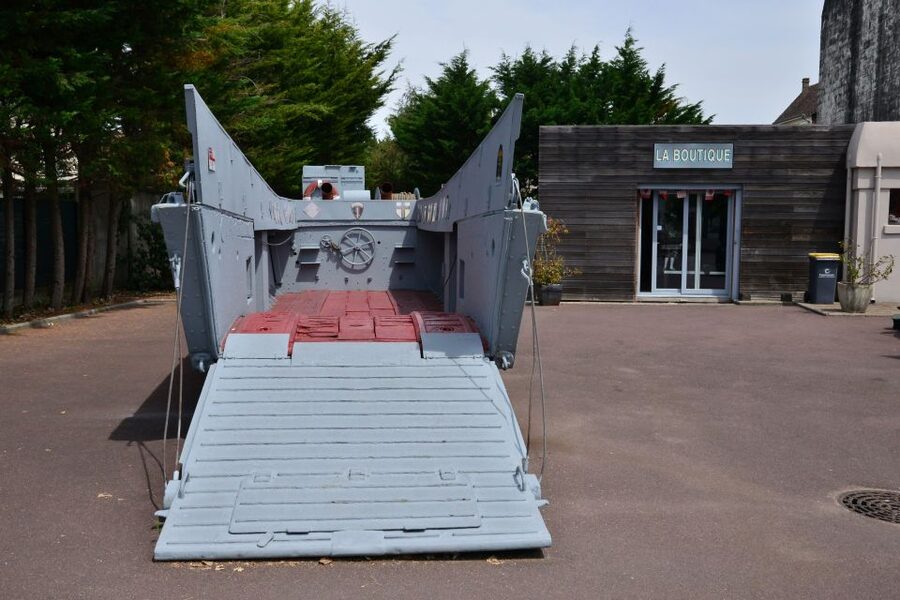
This is a 13-hour day trip, built around an early start. Tours depart all year round, every day at 7:00 AM, with a return to Paris around 8:00 PM, depending on traffic.
The drive from Paris to the Juno Beach area is long enough that you will want to think of it as part of the experience, not a commute punishment. On past departures, the route has included scenic stretches through smaller towns and countryside roads, which helps you feel like you are actually moving through Normandy, not just transferring from one stop to the next.
Bring what you need for comfort. You will spend time seated on the way out and back, and the day includes walking on uneven ground at the beach and in cemetery areas. If you are the type who gets stiff on long drives, plan to move a bit when you stop, even if the break is short.
Meeting at Café Dada Ternes: start sharp and settle in
The meeting point in Paris is Café Dada Ternes. Be there at least 15 minutes before the official departure time. Tours start sharp, and your driver-guide arrives about 10 minutes before scheduled departure with a grey minibus.
This matters more than it sounds. When you are heading out at 7:00 AM, missing the start means you may lose your place in the day flow, and latecomers cannot be accommodated. The upside is that once you are on board, the day moves with purpose.
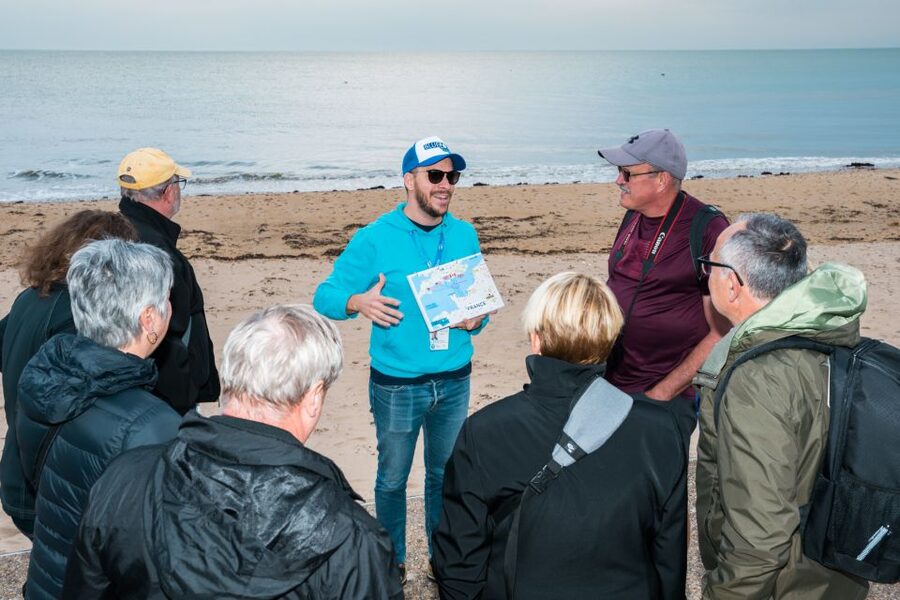
Because the group is capped at 8, you usually get a calmer vibe than you would on larger buses. You can see and hear what is happening in a closer circle, and that makes the guide’s narration feel more like a conversation than a lecture.
The English-speaking guide role: what to listen for
The biggest value here is not the map stops alone. It is the way the guide connects those stops into one understandable story.
You will be driving through key points linked to the Allied effort, the German coastal defenses, and the Canadian units that landed or parachuted into France on D-Day. Guides for this tour are often praised for clear English, and for explaining both the big picture and the small details that make June 6 feel real instead of abstract. In particular, you might hear statistics and operational context while you’re in the minibus, which helps you get your bearings fast before you reach the coast.
There is also a practical timing benefit. When someone is guiding the day, you do not have to puzzle out which area matters most. Instead, you can focus on what the site is trying to teach you. That is especially important at places where the terrain is the evidence, like bunkers and beach approaches.
If you prefer to ask questions and steer the conversation, this size helps. A small group makes it more realistic for the guide to pause and respond, rather than rushing everyone along.
Juno Beach Center: get the story before the sand walk
Your first major historical stop is Juno Beach Center, described as the most comprehensive museum about the Canadian landings in Normandy. The tour includes entrance fees, and it also notes a skip-the-line option through a separate entrance, which can save time on busy days.
If you only have one instruction for this part, it is simple: focus on what the museum explains before you step outside. The center sets up why Canadians were there, what happened as landing waves hit the coast, and how the battle unfolded along this part of Normandy.
Because the day is long, this museum time is more valuable than you might expect. Without it, a shoreline walk can feel like scenery. With it, you are walking through a battlefield timeline. Even when you already know D-Day basics, the museum can help you picture the specific Canadian experience rather than treating the landing as a single Allied event.
Tip: take a slow lap first. Then, pick one or two areas that explain the “why” and “how” of the fighting. Leave the rest for a second pass if you still have energy.
If this one is booked out, Paris has these too:
- Paris: 1-Hour Seine Cruise departing from the Eiffel Tower★ 4.4 · 77,472 reviews
- Disneyland® Paris 1-Day Ticket★ 4.6 · 49,412 reviews
- Paris: Versailles Palace and Gardens Full Access Ticket★ 4.6 · 41,579 reviews
- Paris: Arc de Triomphe Rooftop Tickets★ 4.6 · 34,264 reviews
Walking Juno Beach shore: seeing the beach like June 1944
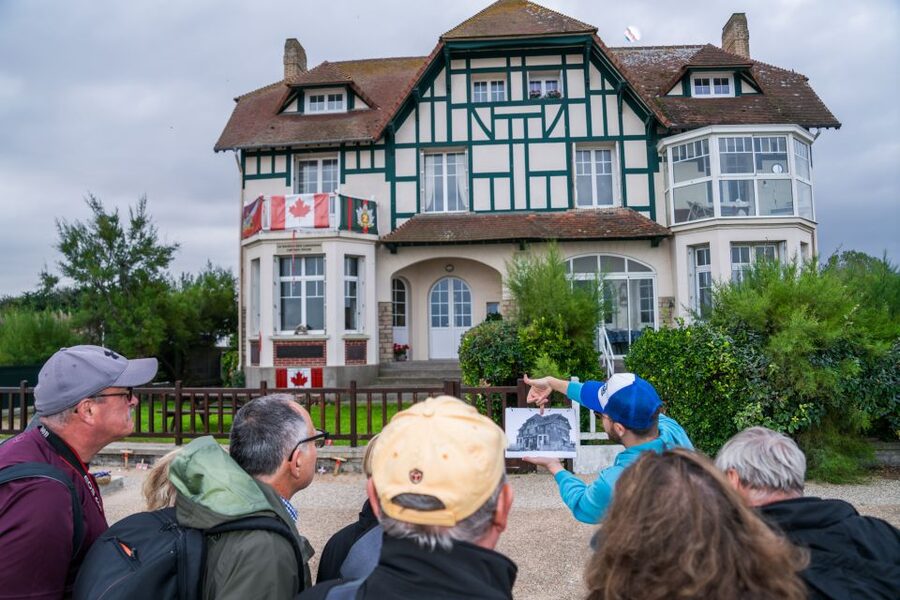
The signature moment is the shore walk at Juno Beach. This is where you get to walk on the sand the Canadian troops walked on in 1944.
There is no way to make this part feel casual. The combination of the setting and the history creates a built-in pause. You are not viewing a reenactment. You are standing in the same coastal geography where the battle took place, and that physical closeness is what makes it so moving for many people.
Dress for weather and walking. Tours operate rain or shine, and beach conditions can be cold and windy depending on the season. If you tend to run chilly, bring layers. A warm jacket and hat have come up as smart advice on colder months, especially when the wind cuts across open sand.
Also, plan for a bit of exposure time. Even if you are only walking for a limited stretch, it is still outdoors on a wind-prone coast. If you want to take photos, do it with your breathing and comfort in mind, not just your camera.
Beny-sur-Mer Canadian Cemetery: a respectful place to slow down
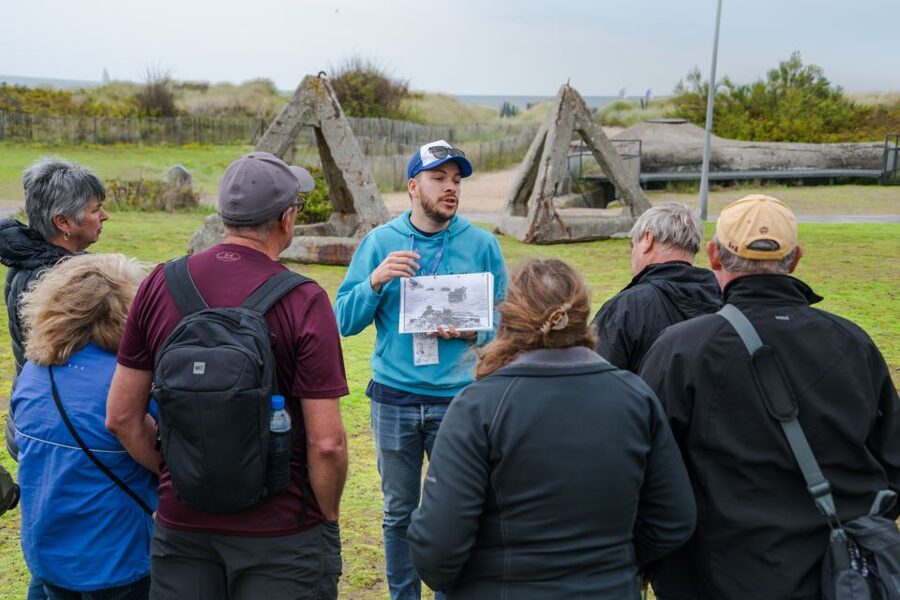
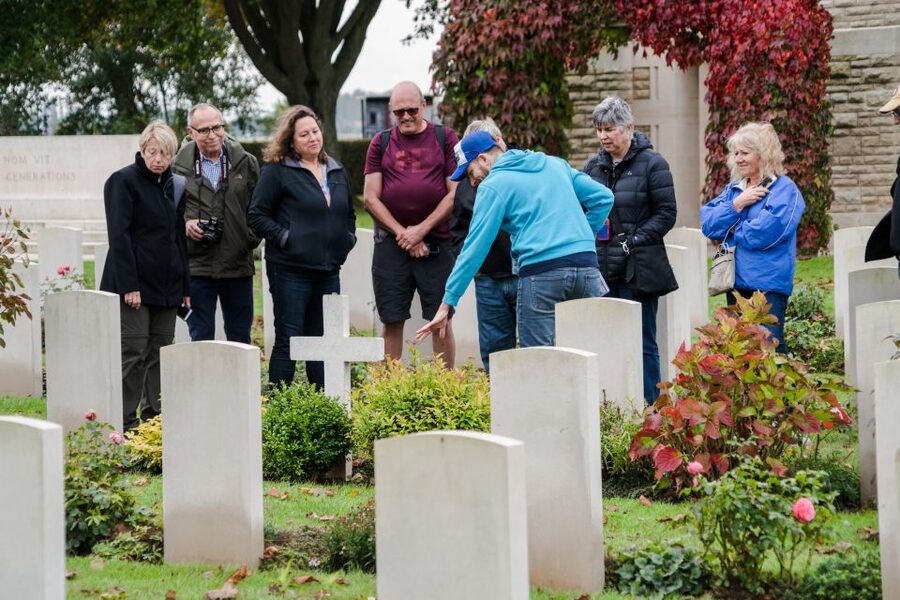
Next up is the Canadian Cemetery in Beny-sur-Mer, where you stroll through the grounds and pay your respects to the fallen Canadian soldiers.
Cemeteries are best visited with a lighter, quieter mind. The value here is not “checking the site off.” It is the way the space helps you absorb the scale and sacrifice, especially after the museum and beach walk.
Pacing helps. Give yourself time to wander, even if it is just a few minutes longer than you think you need. You might want to stop at the most prominent sections first, then circle back. That pattern tends to work well because it lets you orient yourself quickly, then linger without feeling rushed.
If you are visiting with family members or friends, this is also a great part of the day for a shared moment. The story you heard earlier can settle here, and the cemetery grounds make it easier to reflect without needing to talk nonstop.
Hell’s Corner and Abbey d’Ardenne: why “five miles” feels huge
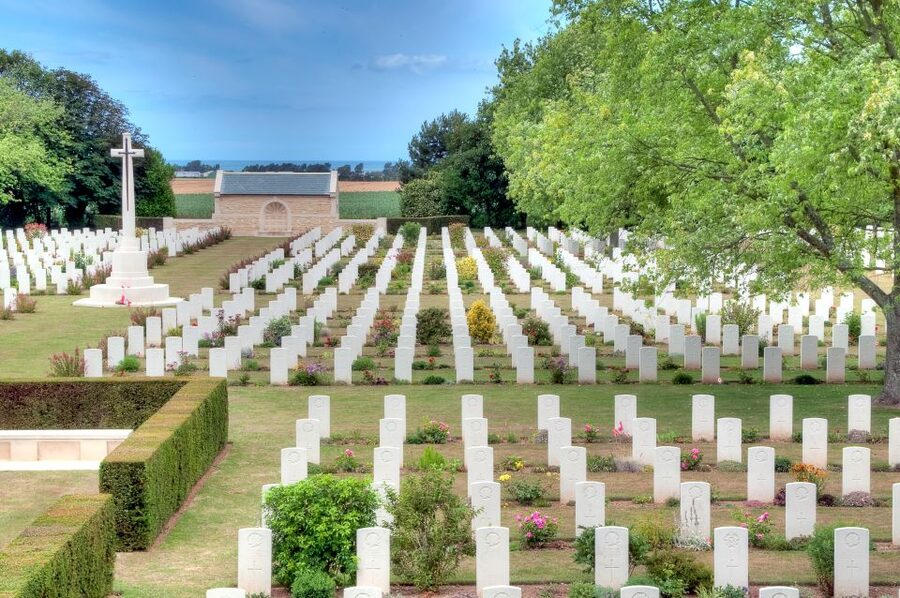
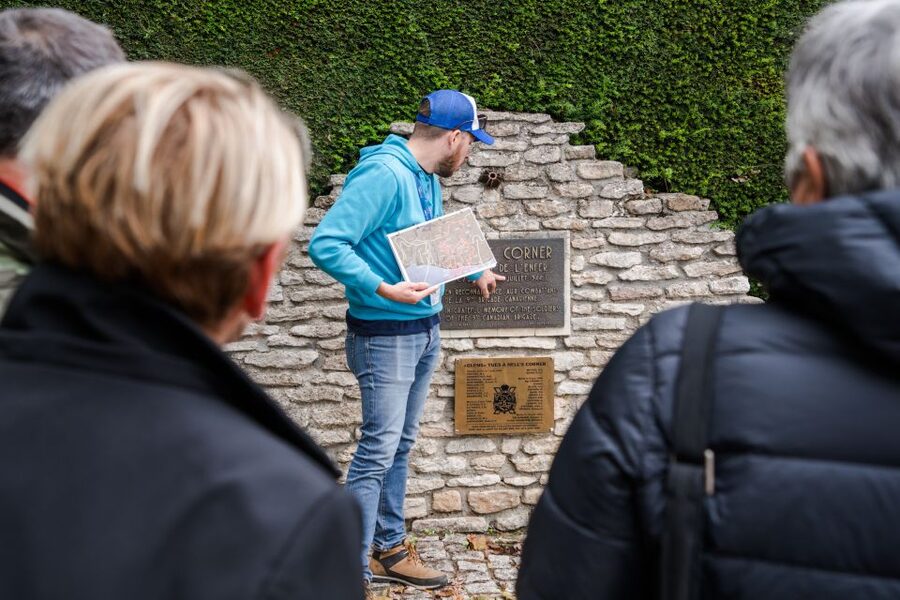
The tour also includes Hell’s Corner, described as the furthest advance inland taken by Canadian troops on D-Day, at about 5 miles from the city of Caen. You will also see Abbey d’Ardenne, noted as a Nazi HQ point.
This pairing is powerful because it turns a vague “advance inland” into something you can visualize. When you are at Hell’s Corner, you are not just picturing movement. You are seeing the terrain where that inland push faced reality: defenses, distance, and the limits of what an infantry advance could sustain.
The Abbey d’Ardenne stop adds another layer. Knowing that this area served as a Nazi command point helps you understand why battles were fought where they were, and why the Germans dug in so hard along key routes and locations. It makes the geography feel less random.
Practical note: these stops can involve short walks and time outdoors. Wear comfortable shoes. If you are sensitive to heat or cold, plan layers accordingly since you may not get much shelter depending on the exact timing.
Lunch and timing: how to handle the food gap
Food is not included, so plan for it. You leave at 7:00 AM and you are back near 8:00 PM, which means you will feel hungry at some point.
On past days, guides have been able to suggest or arrange lunch stops, including quick bites at local places and meals near memorial areas. You should still assume food is your responsibility unless you are told otherwise on your departure.
My advice: keep your expectations simple. Pack a snack for the drive, then treat lunch as a chance to reset. If your tour schedule gives you time near the beach area, you might find convenient spots, but the day is designed around history stops first, not long restaurant lunches.
Also, bring water if you are able. The day includes standing and walking, and the coastline air can still leave you thirsty even when it feels cool.
Price and value: what 283 gets you, and what it does not
At $283 per person, this is not a budget excursion, but it is also not an inflated “just transportation” day. You are paying for a full guided day that includes:
- Transportation by minibus
- English-speaking guide
- Entrance fees
Those three items matter because they remove planning stress. You do not need to rent a car for a multi-stop route. You also do not need to figure out which museums and memorial sites to prioritize in limited time.
The skip-the-line note for separate entrance also supports the value. When you are in a tight schedule, saved entry time can become extra time for meaning, not waiting.
What you should budget separately is food. Since meals are not included, the total cost of the day depends on your lunch choices. Factor in snacks plus lunch so the final bill does not surprise you.
For many people, the real value is the small group size. Max 8 participants means the guide can focus, and you can feel the day as a shared learning experience rather than a fast bus circuit.
Who should book this Canadian Normandy D-Day day?
Book this tour if you want a Canada-centered D-Day day trip with real structure. It fits especially well for Canadians visiting Paris who want to understand the specific Canadian contribution, and for anyone who likes military history but wants it explained in plain English tied to the terrain.
It also suits you if you do not want to manage logistics across multiple sites. The guided approach helps you connect Juno Beach Center, the shoreline walk, the Canadian Cemetery, Hell’s Corner, and Abbey d’Ardenne into one coherent narrative.
You might want to rethink if you dislike long days. This is a 7:00 AM departure with an evening return, and you will be out on foot at multiple points. If you want a slower pace with more free time for browsing, you may feel the schedule is tight.
One more consideration: on at least one departure, some people found it harder to hear the guide through a microphone at moments. If you know you have hearing sensitivity in group settings, consider choosing seating where you can face the guide when narration starts.
Should you book this Juno Beach Canadian D-Day tour?
Yes, if your goal is a guided, small-group Canadian D-Day day that gives you context before you walk the sand. I think the combination of Juno Beach Center, the shore walk, and the Canadian Cemetery creates the right emotional and educational rhythm. The added stops at Hell’s Corner and Abbey d’Ardenne make the story stretch beyond the beach, into the inland fight and command geography.
If you book, show up early at Café Dada Ternes, wear sturdy shoes, and plan for weather. And because food is not included, bring a snack and keep lunch flexible. Do those things, and you will get a day that feels focused, respectful, and worth the long drive.
FAQ
What time does the tour depart from Paris?
The tour departs all year round every day at 7:00 AM.
How long is the day trip?
The duration is 13 hours.
What is the meeting point in Paris?
You meet at Café Dada Ternes. Arrive at least 15 minutes before the official departure time.
How big is the group?
This is a small-group tour with a maximum of 8 participants.
What language is the guide?
The tour has a live English-speaking guide.
Is food included?
No. Food is not included.
Will the tour run in rain?
Yes. Tours operate rain or shine.
Where do the main stops include?
You visit Juno Beach Center, walk the shore at Juno Beach, and tour the Canadian Cemetery in Beny-sur-Mer, plus Hell’s Corner and Abbey d’Ardenne.
Newest write-ups from Paris





D-Day Landing Beach Day Trips, compared.

Normandy D-Day Sites & Cemetery Day Trip from Paris with Lunch
Read our review →
Normandy D-Day Small-Group Day Trip with Omaha Beach, Cemetery & Cider Tasting
Read our review →
Normandy D-Day Beaches and American Cemetery Day Trip from Paris
Read our review →
Normandy D-Day Sites Guided Day Trip with Lunch
Read our review →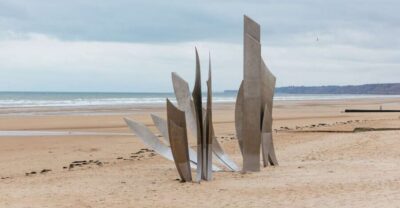
Normandy D-Day Beaches with Juno Beach, bunkers & Canadian Cemetery from Paris
Read our review →
Normandy D-Day Landing Beaches Small-Group Day Trip from Paris
Read our review →
Normandy 2Days Trip Landing Beaches and Mont St Michel from Paris
Read our review →Browse the lists this tour appears in