Reviewed · PARIS
Somme Battlefields from Paris with Australian memorial & Amiens Cathedral
Somme battlefields hit hard, fast. In a small group of up to 8, I love how this Paris day trip pairs WWI trenches and memorials with the Australian remembrance at Villers-Bretonneux and a stop at the Sir John Monash Centre. You also get air-conditioned minivan transport and guaranteed line-skipping at the big stops. The one drawback to plan for: it is a long day, and northern France weather can turn nasty, even when you think you are prepared.
You start early, 7:00am from Dada12 on Avenue des Ternes, then spend about 11 hours on the move. The stops are short on purpose, so you keep moving from one place of sacrifice to the next without losing the day. If you want WWI history that feels personal and concrete, this is built for that.
In This Review
- Key takeaways before you go
- Leaving Paris for the Somme: the comfort and the early start
- Thiepval Memorial of the Missing: 72,000 names and no known grave
- Lochnagar Crater: Day One of the Battle of the Somme, in one physical hole
- Beaumont-Hamel at the Newfoundland Memorial: preserved trenches you can walk
- Pozieres Memorial and the quick stops that still matter
- Villers-Bretonneux Military Cemetery: Australia’s 10,738 names
- Sir John Monash Centre: interactive stories that put faces to the war
- Lunch at Le Tommy with Dominique’s artifact collection
- Amiens Cathedral at the end: a 13th-century pause after the trenches
- Price and logistics: what your $278.26 is really buying
- Should you book this Somme day tour from Paris?
- FAQ
- How long is the Somme Battlefields tour from Paris?
- What time does the tour start, and where do I meet?
- How many people are in the group?
- Is lunch included in the price?
- Are admission tickets included for the sites?
- What languages is the tour offered in?
- What is the cancellation policy?
Key takeaways before you go
- Up to 8 people in an air-conditioned minivan, so the guide can actually work with your group size.
- Free admission at every scheduled stop, including Thiepval, Lochnagar Crater, Beaumont-Hamel, Monash Centre, and Amiens Cathedral.
- Australian WWI focus, anchored at Villers-Bretonneux Military Cemetery and supported by the wider Somme story.
- Preserved trenches and the crater of Day One, including walking around areas tied to July 1, 1916.
- Guided pacing, with multiple short visits so you keep momentum without rushing your viewing.
- Lunch at Le Tommy is your main food break, but it is not included in the ticket price.
Worth a comparison before you book. Others in Paris covering the same ground:
- Paris: 1-Hour Seine Cruise departing from the Eiffel Tower
★ 4.4 · 77,472 reviews - Disneyland® Paris 1-Day Ticket
★ 4.6 · 49,412 reviews - Paris: Versailles Palace and Gardens Full Access Ticket
★ 4.6 · 41,579 reviews - Paris: Arc de Triomphe Rooftop Tickets
★ 4.6 · 34,264 reviews
Leaving Paris for the Somme: the comfort and the early start
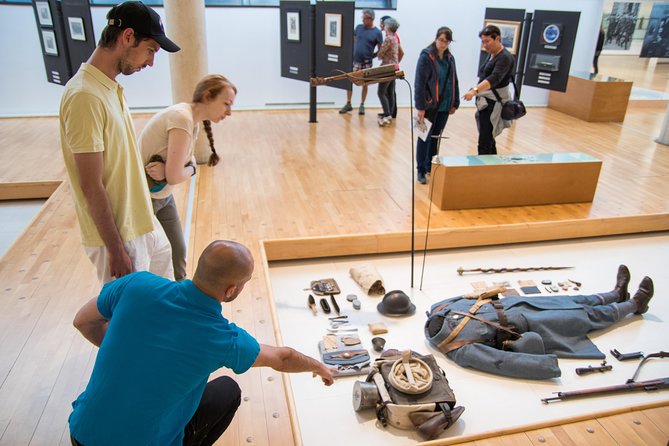
This tour is the classic kind of Paris-to-Europe day trip that actually works, because it does not waste your morning. You meet at 7:00am at Dada12 (Av. des Ternes), then you are on an air-conditioned minivan for the long drive north. The operator lists a maximum of 8 travelers, and that size matters more than you might think. In this part of France, the places can be emotionally intense, and a cramped group setup can make it harder to absorb what you are seeing.
The route is designed around a sequence of WWI memorial sites, so you are not bouncing between random landmarks. Instead, you travel from one key location to the next, usually with about 20 to 30 minutes per stop. That is enough time to walk the grounds, read what is there, and hear the guide’s context without feeling trapped in one spot for hours.
One practical note: the tour runs in all weather, and the memorial sites are outside. Even if the weather looks fine when you leave Paris, it can shift. I strongly suggest packing like you are visiting a damp coastal region in winter, not like a sunny day in the city. Waterproof shoes with tread are worth it, and a rain jacket that you can actually move in will save your day.
Thiepval Memorial of the Missing: 72,000 names and no known grave
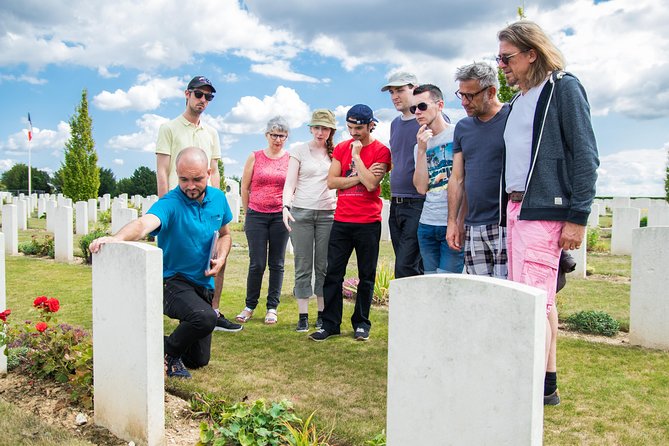
Thiepval Memorial of the Missing is the kind of place where you understand what the word memorial really means. This site records more than 72,000 United Kingdom and South African men who died and have no known grave. The scale can feel overwhelming, but the guide helps you connect the names to the reality of families who never received a body, a grave marker, or closure in the usual sense.
You have about 30 minutes here. That timing is useful. You can start by walking the memorial area, then slow down for the parts that pull you in, and finish with whatever questions you still have after the initial shock. Because admission is free and the tour includes guaranteed skipping of long lines, you spend your time on the memorial rather than waiting outside.
If you are visiting as a family, this stop is often the most challenging, but it can also be the most important. For kids and teens, I like the idea of hearing the guide explain how WWI casualty records worked, why some soldiers were never identified, and how these memorials became a way to keep their names from disappearing.
Possible drawback: Thiepval is outside and exposed. If you are sensitive to cold wind or driving rain, it will feel sharper here than later stops where buildings offer shelter.
Lochnagar Crater: Day One of the Battle of the Somme, in one physical hole
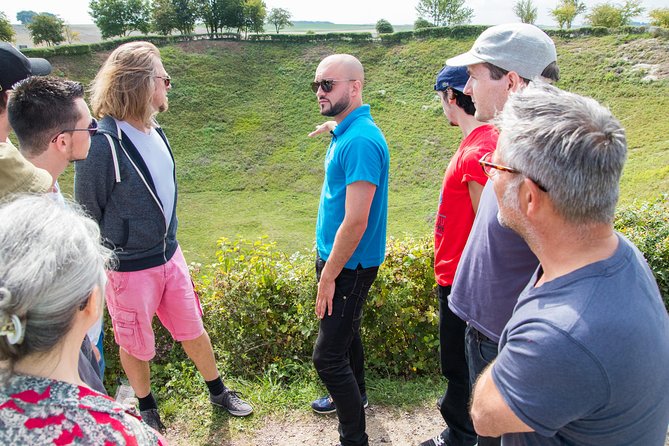
From Thiepval, the day shifts into something you can see instantly: Lochnagar Crater. This crater was created on July 1, 1916, the first day of the Battle of the Somme. The site is 30 meters deep and about 100 meters wide, and those numbers help you picture the scale of the blast before you even try to look around.
This stop is about 30 minutes. Because the feature is one main visual point, that time works well. You can step back, take in the crater’s shape, then come closer and read the surrounding context. You are not asked to complete a long hike, which keeps this part accessible for most people at the minimum age of 7.
One thing I appreciate about including a crater in the middle of a memorial tour is how it breaks up the emotional reading. Names and loss are essential, but a crater gives you another angle on what battle conditions meant in practice. It is not just a story from a textbook, it is a scar in the ground that still exists.
If it is raining, the path surfaces can get slick. Give yourself the extra caution time you would use at a coastal viewpoint in bad weather, and do not rush this stop.
Beaumont-Hamel at the Newfoundland Memorial: preserved trenches you can walk
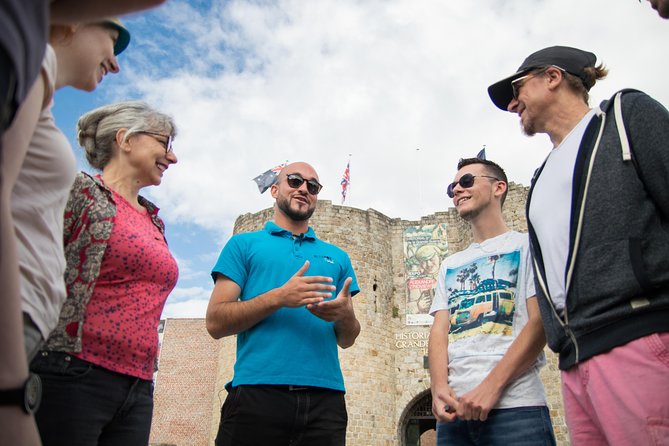
Beaumont-Hamel is one of the most powerful stops on the itinerary because it includes preserved trenches around the Newfoundland Memorial. The tour focuses on the idea that this is the largest Somme battlefield site that has been preserved, and you can still see and walk in the trenches.
Your time here is about 30 minutes. That is just enough to do two things well: first, look carefully at the trench lines and terrain, and second, let the guide’s stories turn those lines into something more than geography. When you walk in trench remains, the ground makes the war feel mechanical and close. You are not imagining it, you are experiencing the constraints.
This is also where the broader WWI narrative connects neatly to the Australian part of the story. Even if your main interest is Australian sacrifice, the Somme was a connected front. The preserved trench sections help you understand what later operations meant, why timing mattered, and why “small” distances could decide survival.
Practical tip: because trenches and preserved grounds are outside, you will likely want layers and a rain layer you can keep on. I would also plan that you may end up photographing with wet gloves, so bring something that keeps your hands usable.
If this one is booked out, Paris has these too:
- Paris: Orsay Museum Entry Ticket★ 4.7 · 25,647 reviews
- Paris: Evening River Cruise with Music★ 4.4 · 22,721 reviews
- Paris: Eiffel Tower Entry Ticket with Optional Summit Access★ 4.4 · 20,035 reviews
- Eiffel Tower Dedicated Reserved Access Summit or 2nd Floor★ 4.3 · 18,352 reviews
Pozieres Memorial and the quick stops that still matter
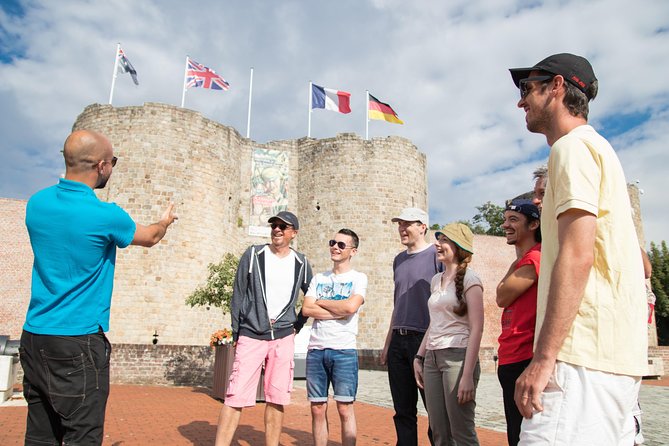
Next comes Pozieres Memorial, with about a 10-minute stop. Short stops can feel like filler, but in a properly paced battlefield day they actually do a job. Pozieres helps fill in the timeline and geography of where fighting concentrated, and it keeps you moving toward the Australian remembrance sites without draining your energy.
Ten minutes is brief, so make it count. If you are the type who reads everything slowly, skim first, then return to one section that grabs you. If you are with kids, this is the moment to point out how memorials work like maps for history, not just walls of text.
Even with a short visit, the value is that the day stays coherent. The Somme was not one event; it was a sequence, and Pozieres keeps the sequence from turning into a scatter of unrelated sites.
Villers-Bretonneux Military Cemetery: Australia’s 10,738 names
Then you reach Villers-Bretonneux Military Cemetery, the emotional center for Australians on this route. This cemetery memorializes 10,738 Australian servicemen with no known grave who died on the Western Front. That combination, no known grave plus the scale of names, is exactly why this site lands so deeply.
You also get a special connection to Anzac Day. The tour notes that Anzac Day celebrations take place at the memorial every April 25. Even if you are not there on that date, knowing the memorial still functions as a living place of remembrance adds extra meaning to your visit.
You have about 30 minutes here. This is a good length for reading and reflection. I like that you can spend time looking, then hear the guide’s framing on why this town mattered, how it became symbolic, and why Australian WWI remembrance tied itself to this area.
If you are visiting with anyone who has a strong interest in Australian military history, this stop is the reason to pick a Somme tour with an Australian memorial focus rather than a generic Western Front itinerary.
Sir John Monash Centre: interactive stories that put faces to the war
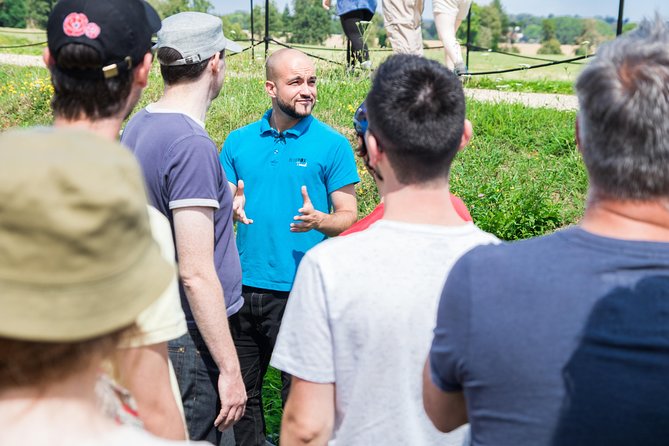
After the cemetery, you go to the Sir John Monash Centre for about 1 hour. This is where the day shifts from outside remains to inside storytelling. The centre uses video testimonials and interactive displays to present personal stories of men who lived through the hardships and horrors of the Great War.
This matters for two reasons. First, it helps you absorb what you just saw in the fields and trenches. Second, it gives you a structured way to understand Australian involvement beyond the memorial names. When you return to the outside sites, you often notice more, because your head has a timeline and a context now.
The tour lists admission as free for this stop and includes guided interpretation. I also like that the centre is a natural weather buffer. After hours outside, having a place to warm up, sit for a moment, and listen to the story can make the rest of the day feel manageable.
You will likely leave feeling like you understand the war as lived experience, not just battlefield statistics.
Lunch at Le Tommy with Dominique’s artifact collection
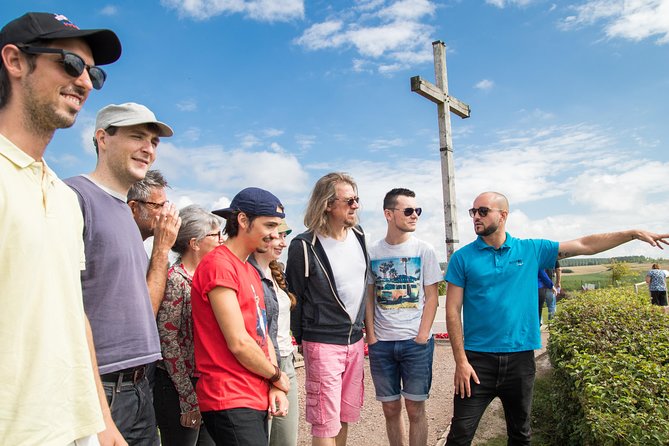
You get about one hour for lunch at Le Tommy. Lunch is not included, so you pay for your meal, but this is also one of the most memorable practical breaks of the day.
The tour info says the restaurant is owned and operated by Dominique, described as a local legend with a strong passion for the history of the Somme. You can also explore his private collection of artifacts from the Battle of the Somme while you eat or after.
From a traveler viewpoint, this can be a win-win. You sit down, you warm up a bit if the weather is cold, and you also get a more personal connection to everyday war history through physical items. If you care about authentic local storytelling, this stop feels less like a commercial lunch break and more like a community anchor.
One consideration: food options may be limited depending on your dietary needs. If you are vegetarian or vegan, plan ahead and ask what is available that day rather than assuming you will get a choice as broad as you might in Paris.
Amiens Cathedral at the end: a 13th-century pause after the trenches
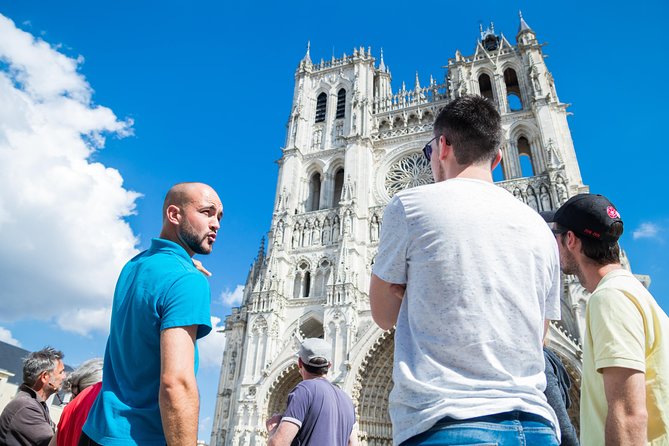
To close the day, you visit Cathedrale Notre-Dame d’Amiens, spending about 20 minutes. It is a 13th-century cathedral and the largest cathedral in France. It is also a strong emotional counterpoint to the battlefield sites, because it is about endurance and craftsmanship, not destruction.
You get free admission and a quick, focused visit. This is not the moment for a long art-history tour. Think of it as a breather: step inside, let your senses reset, and then carry that contrast with you on the ride back to Paris.
A bit of extra context helps. One review noted the cathedral was damaged by German bombings in 1918. That kind of historical detail, paired with the cathedral visit after Somme sites, makes the Great War feel larger than the trench lines. It reaches into cities, buildings, and everyday life.
If you are tired, that is fine. 20 minutes is plenty time for a quiet look around, a few photos, and one last moment to absorb what you have been learning.
Price and logistics: what your $278.26 is really buying
At $278.26 per person, this is not a cheap add-on from Paris. So you should ask what you are actually paying for.
Here is the practical value case:
- Round-trip transport by air-conditioned minivan from Paris. That is a major cost and a major time saver.
- Guaranteed skipping of long lines at the included major sites.
- A small group cap of 8, which improves your ability to hear explanations and keep the day feeling humane.
- Guided interpretation by a driver/guide in English.
- Free admission at every scheduled stop, including Thiepval, Lochnagar Crater, Beaumont-Hamel, Monash Centre, and Amiens Cathedral.
Food is not included, but lunch is planned with a dedicated hour at Le Tommy, so you are not scrambling for a restaurant while everyone is tired and cold.
The only real reason you might feel the price is high is if you are the kind of person who wants lots of free time at each memorial. This itinerary is structured. It covers a lot of ground and moves on. If that pacing works for you, the value feels fair.
If you want one day that gives you a complete Somme snapshot with a strong Australian emphasis, this price buys efficiency plus meaningful guidance, not just transportation.
Should you book this Somme day tour from Paris?
Book it if you want:
- WWI sites that connect directly to Australian remembrance, especially Villers-Bretonneux and the Sir John Monash Centre.
- A small-group format where the guide can manage timing and explanations.
- A single day that gives you major Somme stops, including preserved trench areas and Lochnagar Crater.
Consider skipping or switching tours if:
- You need lots of downtime and long stays at each site. This one is paced, with short visits that keep the full circuit moving.
- You are not comfortable with emotionally heavy places. Thiepval and the Australian memorials are solemn by nature.
- You have trouble with cold, wet outdoor walking. The tour operates in all weather, so plan for real conditions.
My bottom line: if your goal is a guided Somme day that is organized, line-friendly, and Australia-centered, this is a strong choice, especially with the Monash Centre and the Villers-Bretonneux memorial anchoring the day. Just pack like you are visiting the outdoors first, and bring patience for the fact that it is a full itinerary.
FAQ
How long is the Somme Battlefields tour from Paris?
The tour lasts about 11 hours.
What time does the tour start, and where do I meet?
You start at 7:00am at Dada12, Av. des Ternes, 75017 Paris, France.
How many people are in the group?
This tour has a maximum of 8 travelers.
Is lunch included in the price?
No. Food is not included. You have about one hour for lunch at Le Tommy, and you pay for your meal there.
Are admission tickets included for the sites?
Yes. The tour lists admission tickets as free for the scheduled stops.
What languages is the tour offered in?
The tour is offered in English.
What is the cancellation policy?
You can cancel for a full refund up to 24 hours before the experience starts. If you cancel less than 24 hours before, the amount paid is not refunded.