
Reviewed · CITROëN 2CV TOURS
The Essentials of Paris in a Classic Open Top Car Citroën DS
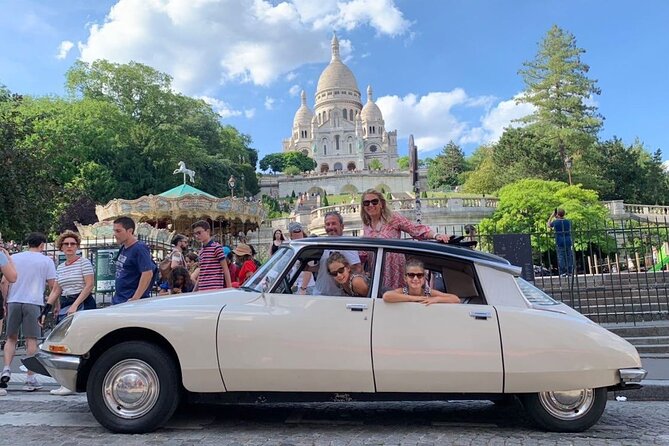
Paris looks different from a classic open-top car.
I love the big-sight overview you get in just about 3 hours, and I also like that you can ask Benjamin anything as you go, from practical “what’s worth your time” to street-level tips. You’ll also enjoy the open-roof viewing that makes photo stops feel effortless. The main thing to consider is that Paris traffic can slow the route, and open-top sightseeing means city noise can make listening harder if you are sensitive to hearing.
This is a private tour for up to 4 people, so you do not get shuffled into a big group. You’re in a heated, comfortable Citroën DS with plenty of legroom, a professional licensed driver, bottled water, and hotel pickup options that help you avoid the “where are we meeting?” stress. If you want to get your bearings fast, while still getting real explanations, this is a solid way to start.
In This Review
- Key highlights to focus on
- Riding a classic open-top Citroën DS through Paris
- Benjamin the guide, and why the Q&A makes it worth it
- Price for up to 4: value math that actually matters
- Pickup boundaries and the easiest meeting options
- How the 3-hour plan works when you’re trying to see everything
- From La Madeleine to the Tuileries: a clean line through central Paris
- Place de la Concorde, the Luxor Obelisk, and the power sites by the Seine
- Champs-Élysées to Arc de Triomphe: symbols you will recognize later
- Eiffel Tower area plus Pont Alexandre III: the bridge views are the flex
- Les Invalides, Musée d’Orsay, and the Louvre zone without the museum crunch
- Place Vendôme and Opéra Garnier: luxury streets and theatrical scale
- Pigalle and Montmartre: nightlife icons plus the view from Sacré-Cœur
- Île de la Cité and Notre-Dame: Gothic landmarks in the historic heart
- Latin Quarter to Saint-Germain-des-Prés: bookshops, thinkers, and café classics
- Other Paris icons you pick up along the way: bridges, arcades, and public culture
- Traffic and sound: the main practical risk for a short open-top tour
- What you should ask Benjamin before you head out
- Who should book this tour, and who should reconsider
- Should you book this private Citroën DS Paris tour?
- FAQ
- How long is the Classic Open Top Car Citroën DS tour?
- Is this tour private, and how many people can join?
- Do you offer hotel pickup, and where does pickup work in Paris?
- What is included in the tour price?
- What language is the tour offered in?
- Are children allowed?
- What happens if weather is poor or I need to cancel?
Key highlights to focus on
- Benjamin as your private guide: friendly, quick with explanations, and happy to answer questions
- Citroën DS comfort: heated car, comfortable seating, open roof for great sightlines
- Real time management: major stops with short breaks so you still see a lot
- Private transportation with drop-off flexibility: you can be taken back to your choice of location (with city-area limits)
- Photogenic route: landmarks that line up nicely for quick photos and scenic bridge moments
Other rides in a vintage 2CV:
- Paris: Discover Paris by Night in a Vintage Car with a Local
★ 4.6 · 1,058 reviews - Paris Private Flexible Duration Guided Tour on a Vintage Sidecar
★ 5.0 · 776 reviews - Vintage 2CV Adventure: 2 -Hour Paris Secrets Tour
★ 4.5 · 488 reviews - Paris: Discover Paris 2CV
★ 4.9 · 472 reviews
Riding a classic open-top Citroën DS through Paris
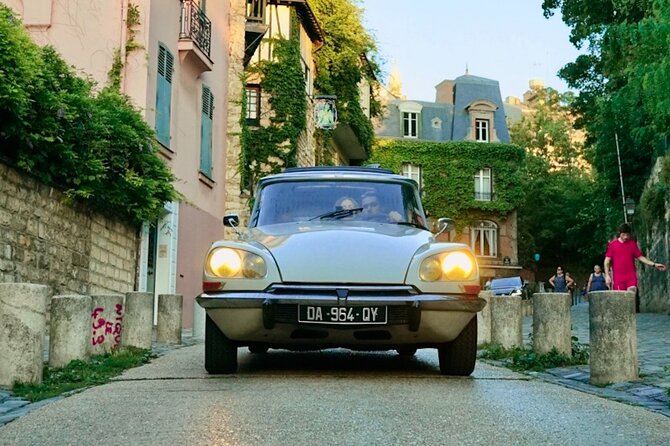
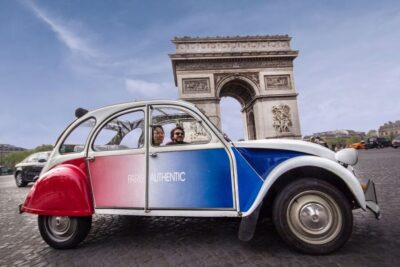
The car is not just a cute detail. It changes how the city feels. In an open-top Citroën DS, you get that “you can see everything” perspective, especially around the major boulevards, bridges, and viewpoints near the Eiffel Tower. On a clear day, it’s ideal for pictures because you are not fighting reflections through glass.
Comfort matters too. This tour uses a heated car with comfortable seats and plenty of legroom, so you are not stuck hunched over while you cover distance. In practice, that means you can pay attention to the guide’s narration without your body begging for a break.
One more practical point: because the roof is open, you’ll hear more street noise. If you are the type who needs clear audio, plan to sit where you can hear best and be ready to ask for louder speaking if needed.
Benjamin the guide, and why the Q&A makes it worth it
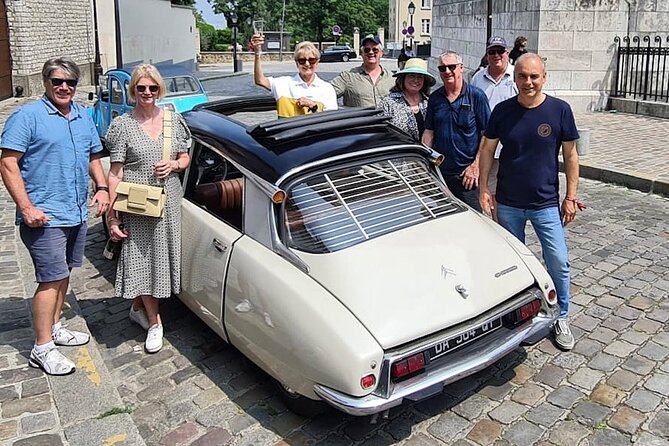
Benjamin is the local guide listed for this experience, and the tone comes through in the way the tour is described. The structure is built for questions. You are not on rails with a script that never changes. When you ask about what you’re seeing, you get context you can actually use later in your trip.
What stands out is that Benjamin mixes big landmark facts with the kind of street knowledge that helps you navigate Paris day-to-day. Think: where to linger, what to pair together, and what patterns you’re looking at when you stand at a monument or cross a bridge.
I also like that the tour is private. You can ask your questions without worrying you’ll slow down a schedule meant for a larger group. For first-time visitors, that flexibility can turn a “quick photo stop” into something that sticks in your memory.
Price for up to 4: value math that actually matters
The price is $480.44 per group for up to 4 people, with a duration of about 3 hours. If you fill the car with 4 people, that works out to about $120 per person. Even with fewer people, you’re still paying for privacy and direct hotel-area pickup flexibility.
What you’re really buying is time and access. A classic car tour that covers central icons is a time-saver on a first visit, because you avoid lots of figuring-out. You also get guide-led context while you’re moving, not just a list of places.
Is it worth it? It tends to be when you want:
- a curated overview to plan the rest of your days
- a comfortable ride with minimal stress getting around
- someone who can answer your questions in real time
If you mainly want to wander slowly and go inside multiple museums, you might prefer a museum-focused day. But for an overview with landmark-to-landmark flow, this is priced in a way that makes sense for small groups.
Pickup boundaries and the easiest meeting options
This tour offers pickup, but Paris has a lot of road rules. Pickup and drop-off are available inside the city except in these arrondissements: 3rd, 4th, 10th, 11th, 12th, 19th, and 20th. The tour also states it does not pick up or drop off at Le Marais, Bastille, République, or Gare du Nord.
If you are staying outside a listed area, you can choose a meeting point. The meeting points provided are:
- in front of Hôtel Crillon, 10 place de la Concorde, 75008
- in front of The Panthéon, Place du Panthéon, 75005
The good news: the car ride plus pickup options mean you spend less time stuck with transit maps and fewer minutes late to your own plans. The key is to confirm that your exact hotel or pickup spot is eligible.
If this one is booked out, Paris has these too:
- Paris: 1-Hour Seine Cruise departing from the Eiffel Tower★ 4.4 · 77,472 reviews
- Disneyland® Paris 1-Day Ticket★ 4.6 · 49,412 reviews
- Paris: Versailles Palace and Gardens Full Access Ticket★ 4.6 · 41,579 reviews
- Paris: Arc de Triomphe Rooftop Tickets★ 4.6 · 34,264 reviews
How the 3-hour plan works when you’re trying to see everything

You’re given an itinerary full of major landmarks, but you are not living there for hours. This tour is designed like a “greatest hits” drive, with short photo stops at major points and guided narration while you roll between areas.
Some stops are explicitly listed as about 15 minutes, such as Place de la Concorde, Champs-Elysées, Arc de Triomphe, and several others. For the rest, you should expect quick looks, photo moments, and explanations tied to what you can see from the street.
That style is perfect when you want:
- a sense of where major neighborhoods start and end
- landmark recognition so later walks feel easier
- a guide who can interpret what you’re seeing without making you do homework
The tradeoff is simple: you will not get a slow, detailed museum day in 3 hours. This tour is about orientation and momentum.
From La Madeleine to the Tuileries: a clean line through central Paris
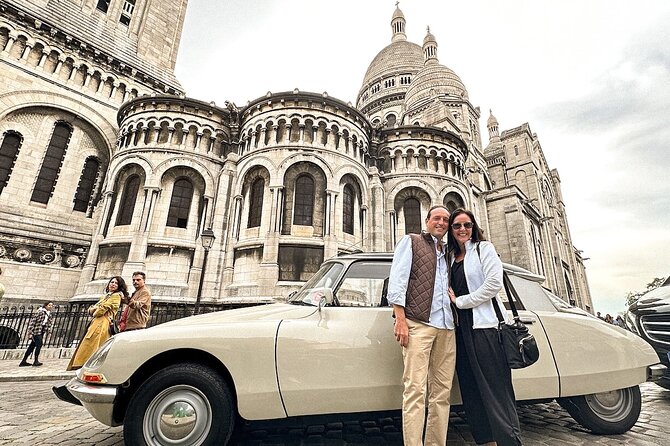
The tour starts with Church of La Madeleine, known for its grand neoclassical façade in central Paris. It’s a strong opening because it’s visually striking and easy to locate in the city, so you immediately understand you are in the middle of things.
From there, you head into the Tuileries Gardens area. These gardens are a classic connector between major sites like the Louvre area and Place de la Concorde. Even if your time is tight, this is one of the best “reset” spaces in central Paris. You get a break from traffic energy while staying near the heart of the city.
This early segment sets the tone for the whole tour: big architecture, quick orientation, and stops that give you iconic framing for later self-guided sightseeing.
Place de la Concorde, the Luxor Obelisk, and the power sites by the Seine
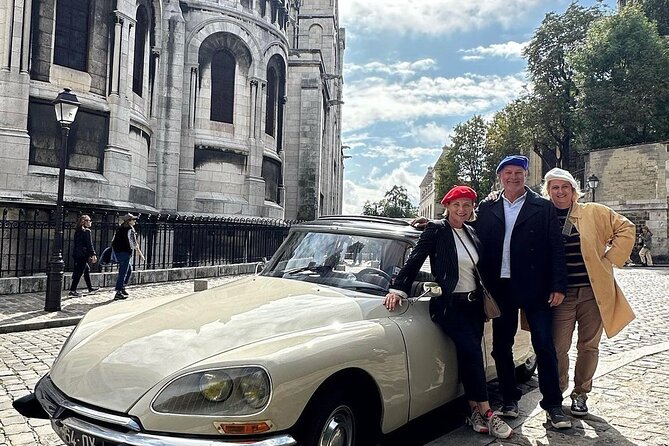
One of the standout anchor points is Place de la Concorde. You get a mix of symmetry, fountains, and the Luxor Obelisk rising in the middle of a space that feels built for ceremonies. It’s one of those places where the architecture and the scale make you instantly understand why it became a central showpiece.
From there, the route includes the French National Assembly at Palais Bourbon and then the Champs-Élysées area. You also pass the Élysée Palace, the official residence of the French President. These are not just government buildings, they are key pieces of Paris’s political geography.
You also get a look at Grand Palais and Petit Palais, both known for their impressive architecture. Petit Palais is often the quieter-feeling one, so if your time is limited, I like pairing it with a quick stroll mindset rather than thinking of it as another “must-do museum.”
And yes, you’re on the Seine corridor, where Paris feels like a city of sightlines. Watching the river-facing views from the road is a real advantage of this format.
Champs-Élysées to Arc de Triomphe: symbols you will recognize later
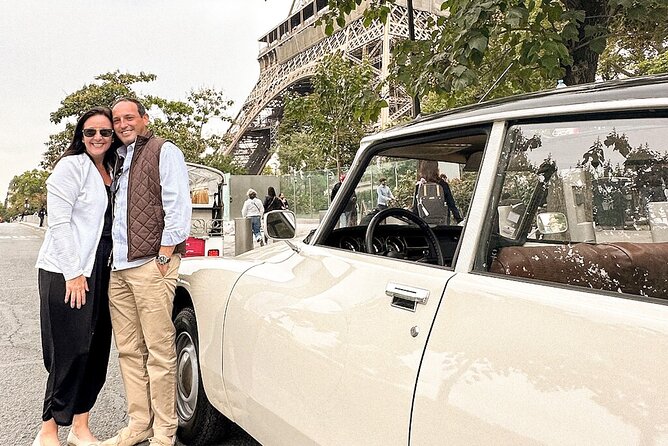
The Champs-Élysées is billed as iconic, and it’s iconic for a reason. Even with only a short window, it helps you “place” the avenue in your mind so later evening walks or Metro transfers make sense.
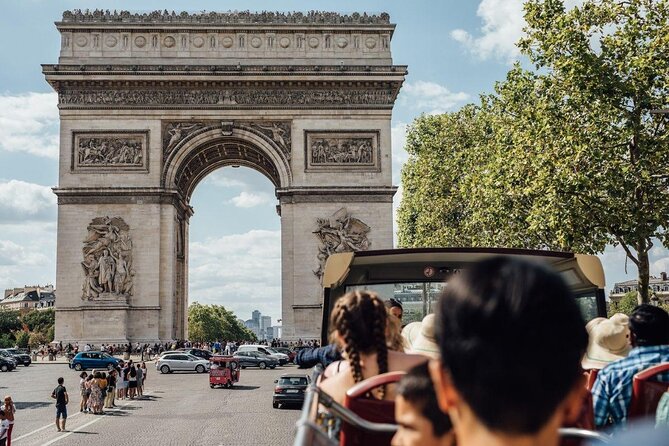
Then comes the Arc de Triomphe. This is a serious landmark, and you can tell from the way the city organizes traffic and views around it. The experience gives you a quick period to admire it, and you leave better equipped to understand why this area matters historically and visually.
If you do not plan carefully in Paris, these two landmarks can become blur. A guide-led stop helps you notice what you might otherwise miss, like how the city’s major axes line up around them.
Eiffel Tower area plus Pont Alexandre III: the bridge views are the flex
This is where the tour starts delivering that postcard feeling. You go past the Rue de l’Université area, then reach the Eiffel Tower area for a stop that’s designed for photos and viewing.
Near the tower you also have École Militaire as another 18th-century landmark that helps round out the area beyond just the Eiffel Tower itself.
Then, the itinerary shifts toward Pont Alexandre III. This bridge is described as opulent, and it really does feel like Paris showing off. The gold sculptures and sweeping views create a strong “Paris in one scene” moment. This is the kind of stop where quick viewing still feels satisfying, because the bridge’s design does the work for you.
Les Invalides, Musée d’Orsay, and the Louvre zone without the museum crunch
Les Invalides is next, with its golden dome and the association with Napoleon Bonaparte. Even if you do not go inside, you get a clear visual of why this complex is such a landmark on the military and national memory side of Paris.
The tour then includes Pont de la Concorde, which connects Place de la Concorde to the Tuileries Gardens. It’s a great reminder that Paris’s best city views often come from crossing points, not only from monuments.
After that, you reach Musée d’Orsay, known for Impressionist and Post-Impressionist masterpieces. Then it moves to the Louvre, the world’s largest art museum and one of Paris’s most recognizable façades thanks to the glass pyramid.
Here’s how I’d think about this segment: it’s a visual primer. You get landmark context and exterior comprehension, then you can choose later if you want to commit time to one museum. Trying to do everything inside in one day is where Paris trips people up. This tour helps you avoid that trap by giving you the map of what matters.
Place Vendôme and Opéra Garnier: luxury streets and theatrical scale
Place Vendôme is part of the route, with its luxury-focused atmosphere and the iconic Vendôme Column. This is one of those Paris scenes that feels more refined and scripted than some of the grittier neighborhood streets. Even a short look helps you understand the city’s variety, and why different areas have different “rules” of style.
Then Opéra Garnier comes in. The exterior architecture alone is dramatic, and the tour includes the chance to see it as a cultural landmark. If you are a fan of music, theater, or classic European ornamentation, this stop is likely to feel like one of the highlights.
Also included nearby is the Church of La Sainte-Trinité, plus other central viewpoints. The overall effect is a Paris that moves from government symbols to art and performance without you needing to manage the logistics.
Pigalle and Montmartre: nightlife icons plus the view from Sacré-Cœur
The route shifts into Pigalle, known for cabarets and nightlife, then includes the Moulin Rouge. After that, the itinerary references Le Chat Noir, Rue de l’Abreuvoir, and Clos Montmartre. It also includes Saint-Pierre de Montmartre, which adds a quieter, medieval contrast to the busier entertainment zones.
Then you reach Montmartre’s signature: Sacré-Cœur Basilica. This is listed as a Free admission stop with a dedicated 15 minutes. If you want the panoramic Paris view, this is the moment. The basilica’s gleaming white domes and the outlook help you see how the city rises and layers.
Montmartre also includes several specific streets and corners that help you understand why artists were drawn here: Rue Lepic, Place du Tertre, and the Montmartre stairs. The tour even includes the Wall of I Love You, with the “Je t’aime” message in multiple languages.
If you like art history but do not want a heavy museum day, Montmartre is a strong payoff. It’s also one of the best neighborhoods for quick wandering after the tour ends, because you already know where everything is.
Île de la Cité and Notre-Dame: Gothic landmarks in the historic heart
Then the tour moves to Île de la Cité. This is the historic core of Paris, and the itinerary includes Notre-Dame Cathedral and Sainte-Chapelle. Notre-Dame is a major Gothic icon that you can admire quickly from the outside, and Sainte-Chapelle is listed for stained-glass impact.
This area is also where walking can be a lot easier after you’ve seen the “shape” of the island. The tour includes short windows to orient you to the street layout along the Seine.
You’ll also see references to Île Saint-Louis and Place Dauphine, plus scenic river framing. This matters because many first-time visitors underestimate how much the river shapes Paris life. A short guided loop gives you that mental model.
Latin Quarter to Saint-Germain-des-Prés: bookshops, thinkers, and café classics
Next comes the Latin Quarter focus, including the Panthéon and landmarks like the Sorbonne area. You also get a stop near Ernest Hemingway’s Paris apartment, plus Sainte-Étienne-du-Mont.
Then the tour includes Luxembourg and the Jardin du Luxembourg, which is described as a peaceful oasis with fountains and places to relax. You also get the French Senate at Palais du Luxembourg, plus Saint-Sulpice Church nearby. Baroque architecture shows up here in a way that feels different from the neoclassical and Gothic you saw earlier.
From there you shift to Saint-Germain-des-Prés. The itinerary specifically includes Les Deux Magots and Le Café de Flore, which are famous café addresses tied to writers and artists. You also get references to the Abbey of Saint-Germain-des-Prés and Rue de Buci, a pedestrian street with cafés and gourmet stops.
If you care about Paris as a literary and intellectual city, this section helps you feel the neighborhood’s personality. It’s not just monuments, it’s the pace and the vibe of cafés and book corners.
Other Paris icons you pick up along the way: bridges, arcades, and public culture
Even beyond the big “must-see” sites, the tour includes a lot of smaller anchor points that help you connect the city together. The itinerary references Pont Neuf and Quai de Seine for river views. It also includes Palais Royal and the Colonnades de Buren, which gives you a memorable modern design within an elegant historic space.
Galerie Vivienne is included as a covered 19th-century arcade, great for spotting how Paris protects charm and foot traffic from the elements. Place des Victoires and the Bourse de Commerce also show up as architecture stops.
This is another reason I like this format. In many classic overview tours, you only see the headline names. Here, you get extra recognition points so your later walks feel like you’re returning to places, not discovering them from scratch.
Traffic and sound: the main practical risk for a short open-top tour
The one thing that can derail any fast-paced city loop is traffic, and Paris traffic is real. The tour’s design includes time to reach major sights, but a slow day can still cut into how much you can enjoy each stop.
Also, open-top cars mean you’re exposed to street noise. The itinerary doesn’t mention any special audio system. So if you rely on hearing details, I’d recommend choosing the seat position that gives you the best line to the guide and being ready to ask questions as you pause.
If the weather is great, the open top adds a lot. If it’s not, your priority becomes comfort and timing, and the car being heated helps.
What you should ask Benjamin before you head out
To get the most out of a guided loop, I’d go in with questions ready. You’ll get better answers if you ask about how you travel, not just what you see.
Here are practical topics worth asking:
- Which sights here need tickets, and which are fine to view from the street
- Where to go next after the tour for a simple first meal or café stop
- Which neighborhoods are best for walking later, based on where you are staying
- If you have one museum goal, which one matches your interests best
This tour is built for conversation, so treat it like a planning session while you’re moving through Paris.
Who should book this tour, and who should reconsider
This tour is ideal if you:
- want a private overview in a small group (up to 4)
- are visiting for the first time and want landmark orientation
- like classic sightseeing with a personal guide who answers questions
- value a comfortable ride with open-air photo viewing
It may not be the best fit if you have little interest in major landmarks and want a slow deep museum day instead. Also, children under 10 are not allowed because the back seats do not have seat belts, so families with younger kids should plan differently.
Should you book this private Citroën DS Paris tour?
If your goal is a high-impact Paris overview, in a classic open-top car with a private English guide, I think this is a strong choice. The car comfort, the guide-led questions, and the mix of iconic landmarks plus practical orientation make it feel like a smart first move.
I’d book it when you want:
- to see a lot without getting lost
- to understand what you are looking at as you pass it
- to leave Paris with a clearer plan for the rest of your trip
If you are very sensitive to noise or you hate the idea of being slowed by traffic, you can still do it, just go in with realistic expectations about timing and listening.
FAQ
How long is the Classic Open Top Car Citroën DS tour?
The tour lasts about 3 hours.
Is this tour private, and how many people can join?
Yes, it is private. Only your group participates, with availability for up to 4 people per group.
Do you offer hotel pickup, and where does pickup work in Paris?
Pickup is offered inside the city of Paris except in the 3rd, 4th, 10th, 11th, 12th, 19th, and 20th arrondissements. It also does not pick up or drop off at Le Marais, Bastille, République, or Gare du Nord. The tour provides meeting points in front of Hôtel Crillon (10 place de la Concorde) and in front of The Panthéon (Place du Panthéon) if you prefer.
What is included in the tour price?
Included items are a local guide (Benjamin), private transportation, a professional licensed driver with passenger insurance, private transportation with drop-off options, bottled water, a mobile ticket, and a car with heating and comfortable seats.
What language is the tour offered in?
The tour is offered in English.
Are children allowed?
Children under 10 are not allowed because the back seats do not have seat belts.
What happens if weather is poor or I need to cancel?
The experience requires good weather. If it is canceled due to poor weather, you are offered a different date or a full refund. The tour also allows free cancellation up to 24 hours in advance for a full refund.
Newest write-ups from Paris



Citroën 2CV Tours, compared.
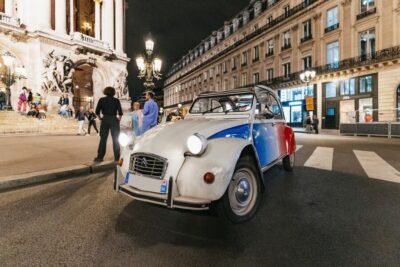
Discover Paris by Night in a Vintage Car with a Local
Read our review →
Paris Private Flexible Duration Guided Tour on a Vintage Sidecar
Read our review →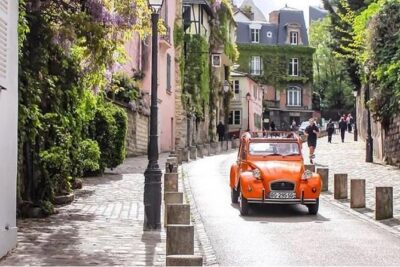
Vintage 2CV Adventure: 2 -Hour Paris Secrets Tour
Read our review →

Paris Vintage Private City Tour on a Sidecar Motorcycle
Read our review →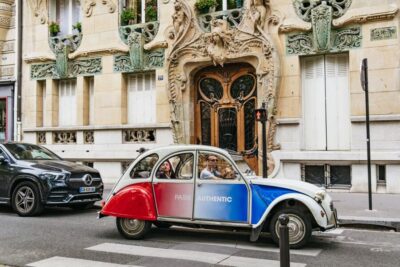
Off-the-Beaten Track in Paris: 2-Hour Vintage 2CV Tour
Read our review →Browse the lists this tour appears in