Reviewed · GUIDED
Tour of medieval Paris with a specialist guide
Medieval Paris comes with a guide who actually digs into details. You’ll walk from Saint-Germain-des-Prés to Notre-Dame with a specialist tied to the scientific restoration team for the cathedral, in a small group small enough to ask real questions.
What I like most is the way this tour teaches you to read the city. You spend real time with places that explain how Paris grew in the Middle Ages, and you end with a practical guide to the Notre-Dame facade, including the sculpted lessons often called the Bible of the Illiterate.
One possible drawback to plan for: the tour runs in French only, and it is not suitable for hearing-impaired people. So if you need another language or specific hearing support, you may want a different option.
In This Review
- Key points to look for before you go
- Walking from Saint-Germain-des-Prés, the Left Bank starts to talk
- Saint-Germain-des-Prés Church: where the 6th century still matters
- The Latin Quarter, monks and students: Paris built its brains here
- Couvent des Cordeliers refectory: a 14th-century lesson in daily rhythm
- Hôtel de Cluny and the Order of Cluny: power in the Latin Quarter
- Collège des Bernardins: the building that treats education as architecture
- Saint-Julien-le-Pauvre: an old church that still tells you where you are
- Parvis de Notre-Dame: from 6th-century beginnings to the 12th-century facade Bible
- What makes the guide different: expert restoration thinking meets street-level clarity
- Timing, walking, and who this tour fits best
- Should you book this medieval Paris medieval guide walk?
- FAQ
- Where is the meeting point?
- How long is the tour?
- How big is the group?
- What language is the tour in?
- Is it wheelchair accessible?
- What should I bring?
Key points to look for before you go
- Notre-Dame restoration specialist guide focused on how monuments were built and preserved
- Small group up to 8 people, so questions stay part of the walk
- Left Bank “university” theme, with monks, students, and medieval learning culture
- 14th-century Couvent des Cordeliers refectory and the Franciscans’ Paris story
- Hôtel de Cluny and the Order of Cluny, plus flamboyant Gothic style you can spot on the street
- Notre-Dame facade decoded, from the site’s early cathedrals to the 12th-century Gothic building
A handful more Paris options to weigh up
- Paris: Louvre Guided Tour with Reserved Access & Boat Cruise
★ 4.3 · 16,353 reviews - Louvre Museum Masterpieces Guided Tour with Access
★ 4.5 · 12,023 reviews - Louvre Museum – Exclusive Guided Tour (Entry Included)
★ 5.0 · 6,296 reviews - Versailles: Skip-the-Line Guided Palace Tour and Full Access
★ 4.6 · 5,214 reviews
Walking from Saint-Germain-des-Prés, the Left Bank starts to talk
This is a 2-hour tour built around a simple idea: medieval Paris makes more sense when you follow the Left Bank first, then cross to the Île de la Cité. You meet at Église de Saint-Germain-des-Prés, right in the heart of a neighborhood that still carries the mood of scholarship and culture.
The group stays tight, limited to 8 participants, which changes the feel fast. Instead of watching a screen of facts, you end up doing what medieval studies really rewards, looking closely at structures and asking why they’re there.
Because you finish at Cathédrale Notre-Dame de Paris, it’s a great way to “prime” your Notre-Dame day without getting stuck in a huge crowd right at the start. If you only have a short window in Paris, this hits a lot of meaning in a little time.
Saint-Germain-des-Prés Church: where the 6th century still matters
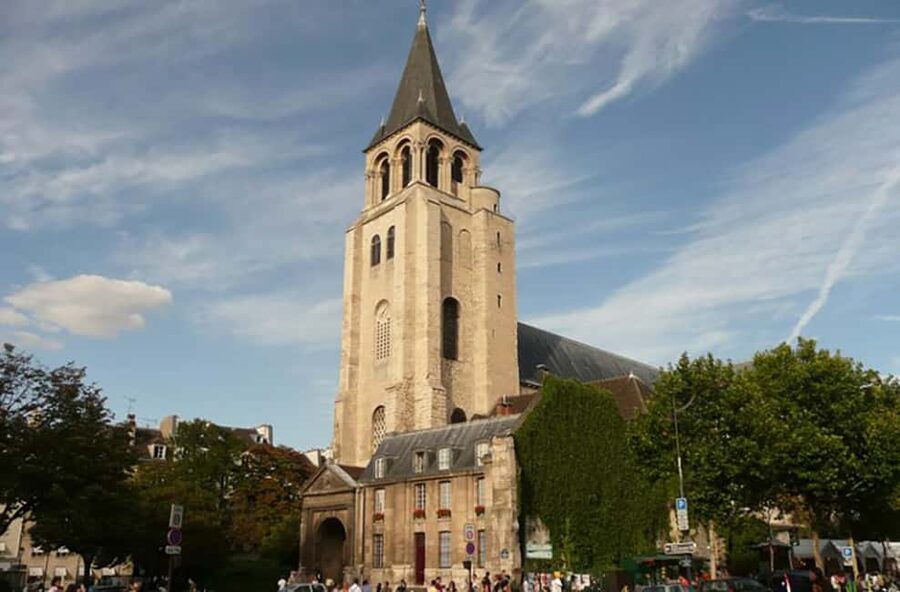
Your first stop is the Church of Saint Germain des Prés, with a guided visit of about 25 minutes. This is where the tour sets its tone: medieval Paris is not one story, it is layered time. The guide frames the abbey’s beginnings and the early medieval world that surrounded it, so later stops feel connected instead of random.
You’ll also hear how this area ties to big shifts in European history, including the Vikings in the wider regional context. The point is not to turn it into a battle replay. It’s to show how Paris survived, reorganized, and then grew into an intellectual center.
If you like “why this building looks like this,” the Saint-Germain-des-Prés start helps. The abbey’s long life means you can talk about architecture as change over time, including early experiments that point toward Gothic forms.
Practical note: you’re on foot the whole time, so wear comfortable shoes. You’ll be standing to look, not just walking through.
The Latin Quarter, monks and students: Paris built its brains here
After Saint-Germain-des-Prés, you move into the Latin Quarter, with a first guided segment of about 15 minutes and another longer walk later. The tour’s specialty is the idea of a medieval university world, the system of monks, students, teaching spaces, and the way knowledge shaped the city’s streets.
This is where you learn to connect buildings to roles. Medieval Paris was not only nobles and kings. It was also teachers, copyists, scholars, and religious orders, all of them shaping the urban fabric.
You’ll pick up how the Left Bank’s learning culture influenced where institutions could grow, and why certain religious communities took root where they did. The result is a tour that makes the phrase medieval university feel real, not like a museum label.
And yes, this is the part that makes the tour feel different from the usual “Paris in 60 seconds” walks. The guide focuses on the small shifts, the hidden logic of place, and the kind of everyday movement that medieval students would recognize.
Couvent des Cordeliers refectory: a 14th-century lesson in daily rhythm
One of the most striking pauses is the Couvent des Cordeliers. The refectory dates to the 14th century, and that date matters because it places you in a mature medieval university moment, not the earliest phase of learning.
You’ll also get the reason the Franciscans, known as the Cordeliers, were part of Paris life. The tour explains their arrival in the 13th century thanks to the generosity of Saint Louis and the support linked to Saint-Germain-des-Prés.
This stop works because you’re not just admiring a wall. You’re being guided to imagine routines: how meals and study intersected, how religious orders created spaces for teaching and community, and how those spaces reinforced their influence.
If you enjoy architecture explained through human habits, this is a top moment. The “why” is front and center.
If this one is booked out, Paris has these too:
- Paris: 1-Hour Seine Cruise departing from the Eiffel Tower★ 4.4 · 77,472 reviews
- Disneyland® Paris 1-Day Ticket★ 4.6 · 49,412 reviews
- Paris: Versailles Palace and Gardens Full Access Ticket★ 4.6 · 41,579 reviews
- Paris: Arc de Triomphe Rooftop Tickets★ 4.6 · 34,264 reviews
Hôtel de Cluny and the Order of Cluny: power in the Latin Quarter
Next comes the Musée National du Moyen Age, Thermes et Hôtel de Cluny, including the private mansion of the abbots of the Order of Cluny. Here the story shifts from learning to authority, because Cluny was a major spiritual and political force.
This area is also a shortcut to understanding why the Left Bank felt ancient even as it kept evolving. You’re shown the connection between the abbots’ presence and the older layers of the city around them.
Then the guide brings you back to Paris style itself, especially the flamboyant Gothic look of the 15th century. You’ll notice this kind of decorative energy again and again while walking, so the lesson sticks: Gothic in Paris is not a single look, it’s a whole range of moods.
If you’re trying to build a mental map of medieval Paris, Hôtel de Cluny is the anchor point. It helps you see how wealth and religious organization shaped what you see on the street.
Collège des Bernardins: the building that treats education as architecture
Near the Cluny material, you’ll reach the Bernardines and the Collège des Bernardins. The guide points out that it was founded in 1245 by Étienne de Lexington, an abbot of Clairvaux.
That detail is more than a name drop. It explains why this is part of the university theme. A medieval learning institution needed space, and the city had to make room for it, physically and socially.
You’ll get a clear sense of the educational world the building represents. Even if you do not know much about medieval theology, the tour frames education as a real civic engine, not background noise.
This stop is also a good reality check for modern visitors. Medieval scholarship was housed in places built to last, not just in manuscripts and lectures. The stones carried the message.
Saint-Julien-le-Pauvre: an old church that still tells you where you are
You’ll also pause at Saint-Julien-le-Pauvre, a small church described as one of the oldest in Paris. It’s one of those places that can feel quiet from the outside, but the guide treats it as a witness.
This is where the tour’s tone turns from grand institutions to continuity. The goal is to show that medieval Paris was not only cathedrals and universities. It was parish life too, the kind that continued even when political power changed.
The church becomes a historical marker while you’re walking toward the Île de la Cité. When you hear its story in sequence with the university sites, the city feels less like a list of monuments and more like a living system.
If you like “small stops with big meaning,” this is one to pay attention to. Look slowly at what you can see, then let the guide connect it to centuries you cannot see anymore.
Parvis de Notre-Dame: from 6th-century beginnings to the 12th-century facade Bible
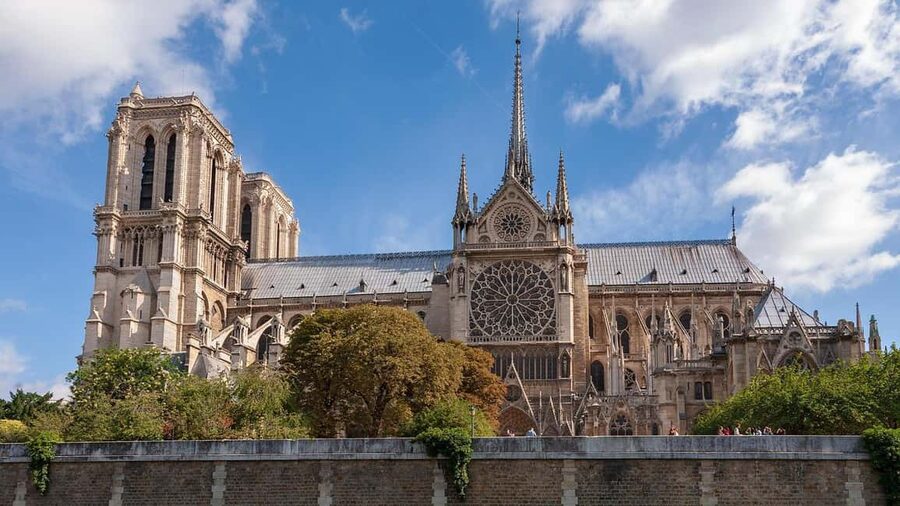
The final stretch leads you to the Parvis de Notre-Dame de Paris. The guide uses this moment to walk you through the site’s cathedral history, from descriptions of the 6th century to the 12th-century Gothic cathedral you see today.
This is valuable because it changes how you look at Notre-Dame. Instead of treating it like one building, you start thinking in generations: rebuilding, redesign, and the way religious architecture becomes a long-term project.
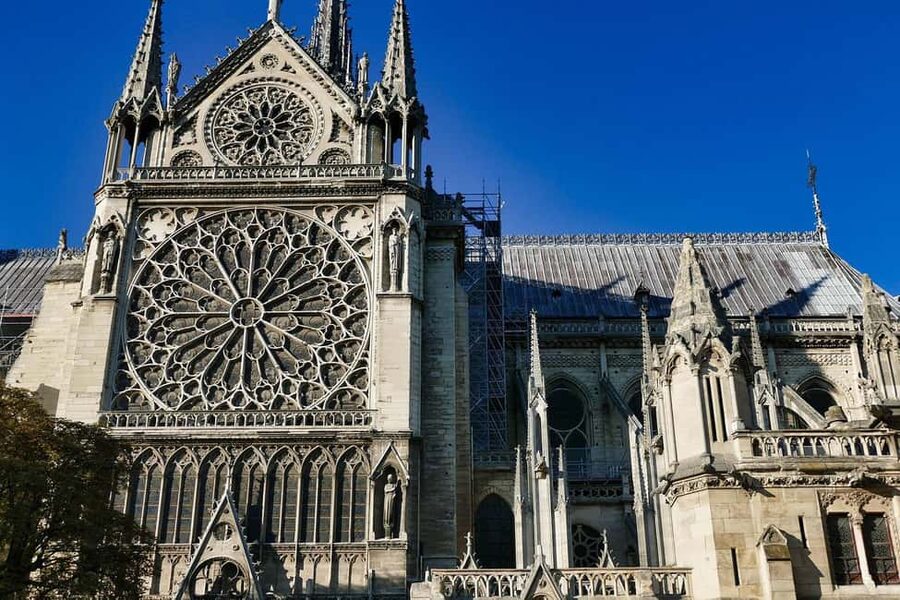
Then comes the signature explanation, the sculptural teaching program on the facade often called the Bible of the Illiterate. The guide helps you decode what you’re seeing, so the exterior becomes a readable lesson instead of just impressive stonework.
Even if you plan to enter Notre-Dame later, you’ll appreciate this framing outside first. It gives context that makes interior details easier to understand once you’re standing inside.
What makes the guide different: expert restoration thinking meets street-level clarity
This tour is led in French by a specialist connected to the scientific restoration team for Notre-Dame. That kind of background matters because restoration work tends to reward precise looking.
In practice, it means you get explanations that balance big ideas and smaller architectural clues. You hear about medieval Paris development, then you get anecdote style stories that explain why certain features exist.
The tone also seems designed to answer questions, not just talk at you. People enjoy that it feels lively and clear, with humor that keeps the pacing human.
And a fun practical angle: the guide is associated with the Whart app, so the teaching style tends to be usable and route-friendly. You leave with mental hooks you can carry into your own exploration.
Timing, walking, and who this tour fits best
This is built for an active 2 hours. There’s no long museum detour implied here, so it works well if you want medieval Paris in one focused window.
Small-group format is part of the value. With only up to 8 participants, you’re more likely to get direct answers when you ask why something matters, not just what it is.
Who it suits best:
- You like medieval architecture and urban history, especially the Left Bank
- You want more than a basic Notre-Dame orientation
- You prefer guided walking where you can stop and look
Who might struggle:
- The tour is not suitable for children under 8
- It is not suitable for hearing-impaired people
- It is French only, so if you’re not comfortable with spoken French, your experience may be limited even if you can follow the visual side
Wheelchair accessibility is listed, which is good to know for planning. Still, the walk involves time outdoors and standing to view details.
Should you book this medieval Paris medieval guide walk?
I’d book this if you want medieval Paris to make sense as a connected story, not a scattered set of famous sights. The blend of Saint-Germain-des-Prés, the Left Bank university theme, and a guided decoding of the Notre-Dame facade is a strong combo for a short trip.
Skip it if you need English instruction, or if hearing limitations make French audio difficult for you. Also skip it if you want a purely sightseeing tour with minimal theory. This one explains, and it expects you to look.
For most visitors who care about architecture and history, this is a high value use of 2 hours. You’ll finish with a better mental map of how medieval Paris grew, and with Notre-Dame that reads like a book cover you finally understand.
FAQ
Where is the meeting point?
You meet at Église de Saint-Germain-des-Prés. The guide is in front of the church entrance with a walking tour sign. Coordinates: 48.85398864746094, 2.3344943523406982.
How long is the tour?
The tour lasts 2 hours.
How big is the group?
The group is small, limited to 8 participants.
What language is the tour in?
The live guide speaks French.
Is it wheelchair accessible?
Yes, the tour is listed as wheelchair accessible.
What should I bring?
Bring comfortable shoes. The tour is a walking experience with multiple stops.
If you want, tell me your travel dates and whether you prefer more architecture focus or more story focus, and I’ll suggest how to pair this with other Notre-Dame and Latin Quarter plans.
Newest write-ups from Paris






Guided, compared.

Louvre Guided Tour with Reserved Access & Boat Cruise
Read our review →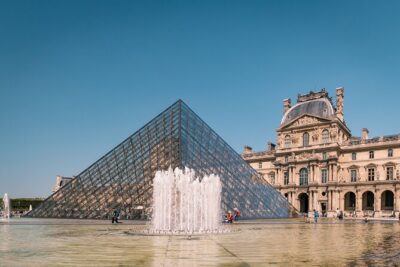
Louvre Museum Masterpieces Guided Tour with Access
Read our review →
Louvre Museum – Exclusive Guided Tour (Entry Included)
Read our review →
Skip-the-Line Guided Palace Tour and Full Access
Read our review →
Louvre Access with Mona Lisa Escort or Guided Option
Read our review →
Louvre Museum: Skip-the-Line Small Group Guided Tour
Read our review →
Louvre Museum Paris Essential Guided Tour Semi-Private 6ppl Max
Read our review →