Reviewed · PARIS
US and French revolution with General Lafayette
Paris has a way of hiding its darkest chapters.
This tour connects the French Revolution to the American Revolution through General Lafayette, with stops tied to the guillotine and the men and women swept up in the Grand Terror. I love that it is built around places most visitors miss, not a cookie-cutter sightseeing loop. I also like the pace and scale, because the group stays small and the guide can actually explain what you are seeing.
One thing to consider: you will do a walking tour, and even if it is mostly flat with limited distances, you still need comfortable shoes and patience for some heavy subject matter.
In This Review
- Key highlights to know before you go
- Why linking the American Revolution to Paris matters
- Meeting at Place de la Nation and how the tour feels on the ground
- Stop 1: the guillotine trail and the weight of the Grand Terror
- The private cemetery estate where Lafayette is remembered
- Our Lady of Peace church and the beheading list detail
- The War of Independence connection you can actually track
- Following stories, not just sights, with Milan
- Price and value: what $77.23 really buys you
- Who this Paris Revolution walk is best for
- Should you book this Lafayette and Terror tour?
- FAQ
- How long is the tour?
- Where does the tour start and end?
- What is the group size limit?
- Do I get a mobile ticket?
- What is included in the price?
- What is not included?
- Does the tour run in bad weather?
- When will I get confirmation after booking?
- Are service animals allowed?
- Can I get a refund if I cancel?
Key highlights to know before you go
- Lafayette in Paris, linked to both revolutions, not treated like a random cameo
- Guillotine and burial sites, including a quiet cemetery setting where victims are still resting
- A guide named Milan, praised for clear English and for explaining the period without easy answers
- Revolution-era references you can track on foot, including a beheading list tied to the Our Lady of Peace church
- Small group size (max 10), so questions feel welcome
- Includes entrance fee, plus small surprises along the way
Worth a comparison before you book. Others in Paris covering the same ground:
- Paris: 1-Hour Seine Cruise departing from the Eiffel Tower
★ 4.4 · 77,472 reviews - Disneyland® Paris 1-Day Ticket
★ 4.6 · 49,412 reviews - Paris: Versailles Palace and Gardens Full Access Ticket
★ 4.6 · 41,579 reviews - Paris: Arc de Triomphe Rooftop Tickets
★ 4.6 · 34,264 reviews
Why linking the American Revolution to Paris matters
A lot of Paris history tours show you dates and dates again. This one aims at something more useful: how revolutionary ideas travel across oceans, and how messy change can be on the ground.
I like that the tour treats General Lafayette as a thread that connects two stories. You get help seeing why an American figure would matter during the French Revolution, and how people in Paris were thinking about freedom, legitimacy, and violence at the same time. It is not just trivia. It is context you can carry home and share.
If you care about cause and effect, this tour is a good match. You are not only watching history, you are learning how different sides reasoned, justified, and responded when events turned brutal.
Meeting at Place de la Nation and how the tour feels on the ground
You start at Place de la Nation and the experience ends back there. The duration is about 2 to 3 hours, and the day works with multiple convenient start times, so you can usually fit it without wrecking your whole schedule.
The tour is designed as a walking experience. The reviews I read point out that the terrain is mostly flat and the distances are not huge. Still, you should plan like it is real walking time. Bring comfortable shoes. Wear weather-appropriate layers, because it runs rain or shine.
There is also a practical piece to this: it is capped at 10 travelers, so you are not stuck listening to the guide from the back while people bunch up in doorways. You will have a better chance to hear the details, especially when the guide points out small features you might otherwise miss.
Stop 1: the guillotine trail and the weight of the Grand Terror
The first part sets your historical lens fast. You meet at the location where the guillotine took its toll with thousands of victims. That is a lot to absorb, so the guide’s job is crucial here, and the way people describe the experience makes it clear he does not treat it like a spooky photo stop.
You take a short, informative walk that follows the bloody trail of the guillotine in that area. The focus is the period often called the Grand Terror, when the Revolution’s ideas were being enforced with extreme violence. This is not presented as distant horror. The guide frames it so you understand why people on different sides behaved the way they did, and why the situation became so complicated so quickly.
One practical note: this stop can feel intense. If you know you get emotionally overloaded by stories of execution and mass death, you might want to pace yourself, especially if you are visiting with kids or anyone who dislikes grim history. The upside is that the tour does not just sensationalize it. It gives you structure, so the story makes more sense as you move.
The private cemetery estate where Lafayette is remembered
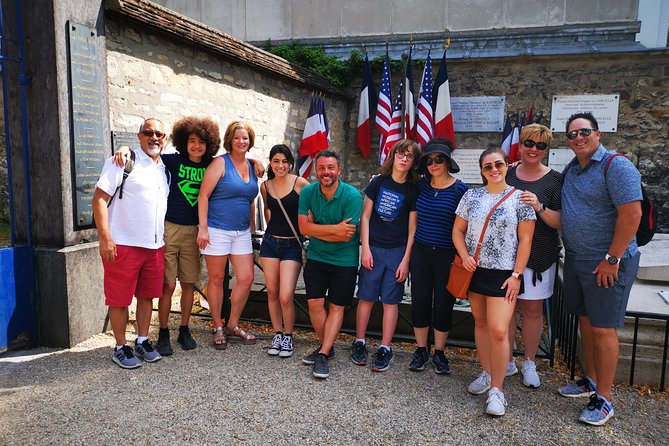
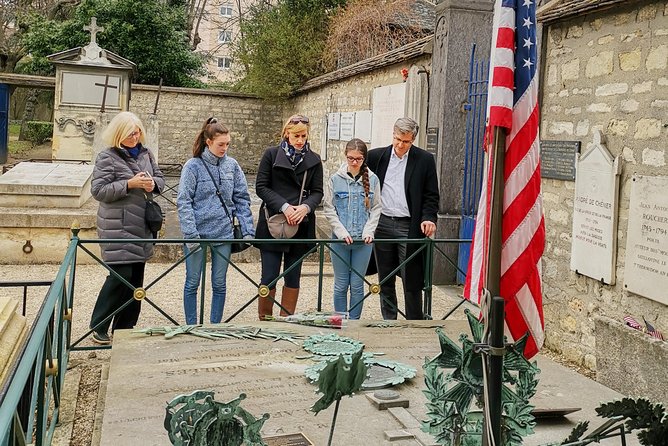
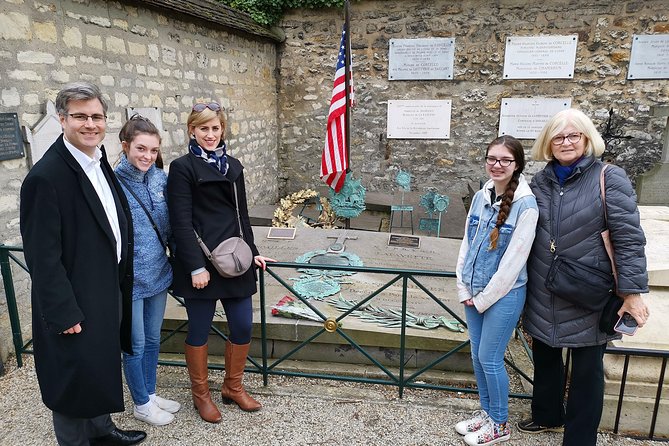
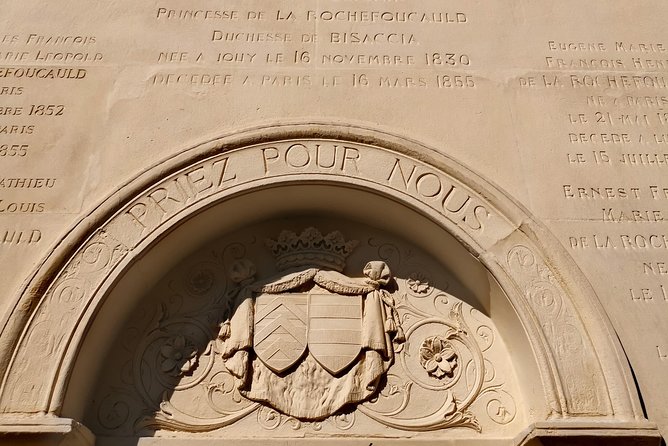
After the guillotine history, the tour shifts to a different kind of eeriness. You walk to a cemetery space where victims are still buried, described as a fairly sized private estate with a countryside feel. Inside, there is an old cemetery with graves linked to wealthy, long-established nobility.
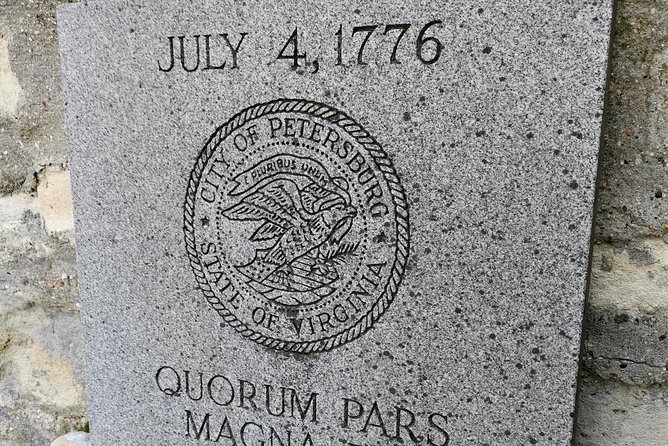
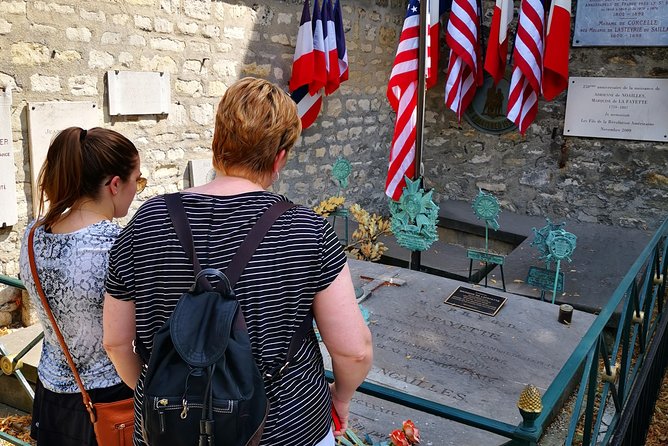
This is where the tour gets particularly interesting for American history fans. You are not just learning that Lafayette existed. You are shown where he rests in Paris, tied to the revolutionary era he helped shape. Seeing the memorial context in a real cemetery setting adds gravity that a museum label never quite matches.
What I like about this stop is the contrast. You go from the machinery of execution to a quiet landscape of remembrance. It forces you to think about how quickly public events can become private loss, and how the winners and survivors still leave traces in stone.
Also, because the setting is a cemetery estate, expect a calmer rhythm. That helps your brain process the heavy material from earlier, instead of turning the day into a nonstop parade of scary sights.
If this one is booked out, Paris has these too:
- Paris: Orsay Museum Entry Ticket★ 4.7 · 25,647 reviews
- Paris: Evening River Cruise with Music★ 4.4 · 22,721 reviews
- Paris: Eiffel Tower Entry Ticket with Optional Summit Access★ 4.4 · 20,035 reviews
- Eiffel Tower Dedicated Reserved Access Summit or 2nd Floor★ 4.3 · 18,352 reviews
Our Lady of Peace church and the beheading list detail
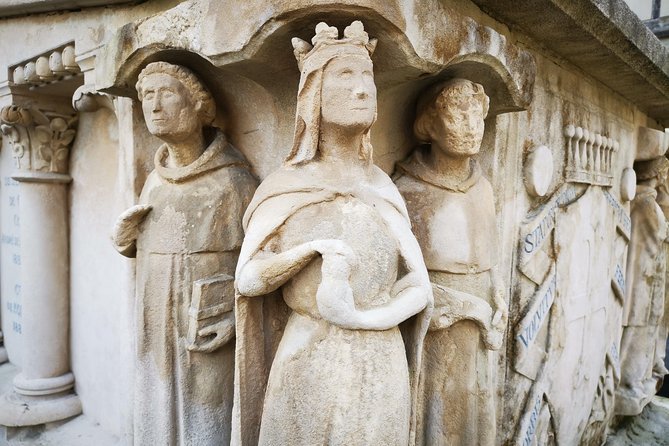
One of the most specific pieces of content mentioned in reviews involves the Our Lady of Peace church and its list of those beheaded. That detail matters because it turns a headline topic into names and recordkeeping.
On a practical level, a list like that helps you understand scale without abstract math. A guide can point out patterns, explain how records were used, and clarify what the church community represented during and after the worst years. You get a stronger sense of who was singled out, who was associated with certain factions, and how the events were documented.
This stop is also a reminder that Paris revolution history is not only in grand monuments. Smaller, quieter landmarks can preserve proof, even when the main streets move on and forget.
The War of Independence connection you can actually track
The tour does more than say Lafayette mattered. It links the French Revolution to the War of Independence through objects and stories along the way. In the reviews, people specifically mention that the guide covered both revolutions with explanations that avoided easy moral shortcuts.
I appreciate that approach. Revolution stories can turn into two extremes: either everything is noble and clean, or everything is chaos with no logic. The best guides show the gray area, the competing pressures, and the way fear and politics can merge.
According to the feedback, Milan does that. One highlight that stands out is that his English is described as excellent, and his style is engaging and enthusiastic. People also liked that he did not oversimplify. Instead, he gave you the sense that circumstances were complicated, and that many people were responding under intense pressure.
You also get a sense that the guide is not just reciting facts. He is explaining why these Paris sites connect to bigger events across the Atlantic.
Following stories, not just sights, with Milan
The guide, Milan, comes up again and again in the strongest reviews. People describe him as engaging and excited about the subject, and they praise his ability to connect the dots for Americans.
Here is what that means for you, day to day: you will likely spend less time trying to figure out what you are looking at, because the guide gives you a storyline you can hold onto. And when he points out something small, like a reference tied to executions or a cemetery detail, you are more likely to remember it afterward.
One reviewer also noted the tour avoided simplistic explanations and gave a feel for how complicated circumstances were. That is exactly what I would want from a Revolution tour. If you only get dates, you forget them. If you get the human logic, you keep it.
If you enjoy asking questions, a small group helps. With max 10 travelers, you are less likely to be shut out when something sparks curiosity.
Price and value: what $77.23 really buys you

At $77.23 per person, this is not the cheapest way to spend a couple hours in Paris, but it is also not an inflated price for a basic walk-by tour. The value comes from a few clear items:
- Entrance fee included. That matters when a route includes specific cemetery or site access.
- Small group (max 10). You are paying partly for the guide attention, not just for walking legs.
- 2 to 3 hours of guided interpretation, with a guide who people singled out by name, Milan.
- Surprises along the way, which likely means small additions to the route or artifacts discussed during the story.
What you should plan to pay separately is also simple. Your transportation to the meeting point is not included, and optional gratuities for your guide are not included. Those are normal add-ons for a guided experience, but they affect your total budget.
My take: for history lovers who want interpretation, not just location names, this price looks fair. If you are only looking for quick photos and you do not want heavy subject matter, you might feel it is more than you need.
Who this Paris Revolution walk is best for
This tour fits well if you are the type who:
- reads background before you go, or likes to learn as you walk
- wants links between American history and French history, not just one country at a time
- enjoys cemetery and memorial settings as part of understanding the past
- prefers a small group over crowded big-bus energy
You might want to think twice if:
- you are sensitive to stories about executions and mass death
- you hate walking tours, even if the route is mostly flat
- you want a purely lighthearted morning, because the theme is intense
It is also a solid choice if you travel with someone who loves stories and explanations. The guide style is repeatedly described as engaging, and the English is called out as especially strong.
Should you book this Lafayette and Terror tour?
Book it if your idea of a great Paris day is history with context, guided by someone who can connect the French Revolution to the American Revolution in a clear way. The small group size, the included entrance fee, and the specific sites tied to Lafayette and the Grand Terror make it feel like more than a generic “Revolution” walk.
Skip it if you want a relaxed, upbeat history stroll with minimal dark material. This one goes straight to the machinery of terror and the burial aftermath, then uses those places to explain bigger revolutionary forces.
If you are on the fence, choose the start time that keeps your energy steady. Plan for comfortable shoes, a weather plan, and the emotional reality that execution sites and beheading records are part of the curriculum.
FAQ
How long is the tour?
It runs for about 2 to 3 hours.
Where does the tour start and end?
It starts at Place de la Nation, 75011 Paris, and ends back at the same meeting point.
What is the group size limit?
The tour has a maximum of 10 travelers.
Do I get a mobile ticket?
Yes, the tour uses a mobile ticket.
What is included in the price?
The entrance fee is included, and there are surprises along the way.
What is not included?
Your transportation to the meeting point is not included, and the guide’s optional gratuities are not included.
Does the tour run in bad weather?
Yes, it runs rain or shine.
When will I get confirmation after booking?
You should receive confirmation within 48 hours of booking, subject to availability.
Are service animals allowed?
Yes, service animals are allowed.
Can I get a refund if I cancel?
Yes. Free cancellation is available if you cancel at least 24 hours in advance for a full refund.