
Reviewed · WALKING TOURS
Worktown Games: Private Self-Guided Walking Tours in Paris
A Paris walk with points, photos, and surprises. This private self-guided walking game turns familiar landmarks into a scavenger-style route you can do at your pace. You pick between the Latin Quarter or Right Bank route, then follow a digital map and hunt for answers and off-piste details.
I like the way the game keeps your eyes busy. You are not just sightseeing, you are solving trivia, spotting visual clues, and earning or losing points based on what you notice along the way. I also like that it is practical for small groups and even solo plans, because you are competing within your own party while still getting a straightforward walking loop that comes back to where you started.
One thing to consider: since there is no in-person guide, you need a working phone and enough battery life to use the digital maps and photo clues. If your data signal is spotty, plan to download the route file or map view ahead of time, so you do not slow down.
In This Review
- Key things to know before you go
- A low-cost Paris walk that feels like a game
- Choosing your route: Latin Quarter vs Right Bank
- Price and timing: what 1 hour 20 minutes really buys you
- Starting at Jardin des Tuileries: the perfect warm-up
- Stop 1: Louvre Museum area, where you start seeing the city differently
- Stop 2: Palais-Royal, turning a pretty place into a puzzle
- Stop 3: Pantheon, using trivia to force good sightlines
- Stop 4: Luxembourg Gardens, where the route slows down on purpose
- Stop 5: Galerie Vivienne, a treasure hunt vibe in the arcade
- Stop 6: Arenes de Lutece, a Roman note that rewards curiosity
- How the point system changes the way you walk
- Mobile ticket and the digital tour file: the workflow that keeps it easy
- Who this suits best, and who should skip it
- Practical tips to make the route feel fun, not stressful
- Should you book Worktown Games in Paris?
- FAQ
- What is the price for Worktown Games in Paris?
- How long does the walking game last?
- Is this tour guided by a person?
- Where do you start and where does it end?
- Are there different routes to choose from?
- What do I receive after booking?
- Will I need to confirm anything after I book?
- When is it open?
- Is it suitable for people with accessibility needs?
- What is the cancellation policy?
Key things to know before you go

- Two route options in Paris: choose Latin Quarter or Right Bank when you book
- Game-style walking: trivia plus photo clues, with a point system that reacts to what you see
- Digital tour file: includes maps, history, photographs, and tricky questions
- Start and end at Tuileries area: the trail begins at Jardin des Tuileries and loops back
- Great for groups up to 15: one low price per group, only your party joins in
Other arrondissements taken at walking pace:
- Paris Top Sights Half Day Walking Tour with a Fun Guide
★ 5.0 · 2,893 reviews - Montmartre Hidden Gems and Scenic Highlights Walking Tour
★ 5.0 · 2,684 reviews - Montmartre Hill French Gourmet Food and Wine Tasting Walking Tour
★ 5.0 · 2,588 reviews - Paris: Montmartre Highlights Walking Tour with a Local Guide
★ 4.9 · 2,318 reviews
A low-cost Paris walk that feels like a game
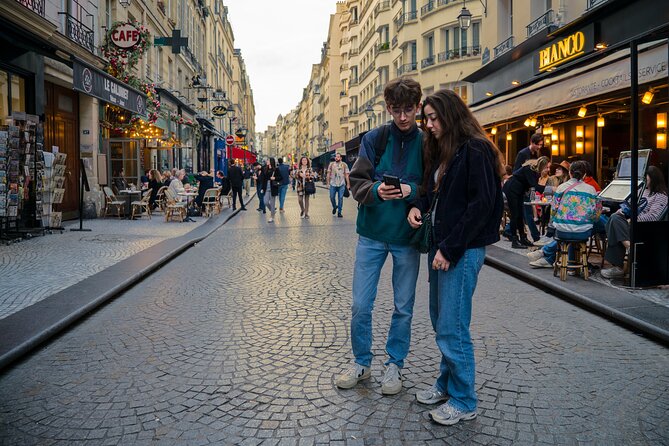
At $10.84 per group (up to 15), this is one of the cheaper ways to add structure to a Paris day without hiring a guide for the whole time. The math is simple: if you are walking with family or friends, that group price can beat per-person tours fast, especially for a short 1 hour 20 minutes loop.
The big value is how the format changes the way you see the city. You start paying attention to details, not just outlines. Instead of passively moving from one photo spot to the next, you are looking for the next answer, the next surprise, and the next place where you can earn bonus points.
And yes, it is fun. The “spot it and answer it” style can make even a repeat neighborhood feel fresh. That is exactly the kind of energy you want on a first trip, or when you have already seen the postcard version and want the human-scale Paris version.
Choosing your route: Latin Quarter vs Right Bank
You get two unique choices, and that matters because Paris can feel different on each side of the river. The Latin Quarter option tends to lean into classic “old Paris” atmosphere, with major landmarks and long, leafy walks. The Right Bank option is a different vibe, closer to some of the city’s more formal and central sights.
When you book, you will be asked to confirm which route you want. After that, you receive a digital file for the specific trail you chose. So you are not picking random stops and hoping they match your interests. You get a planned flow, with photo clues that fit the route.
If you are traveling with mixed ages, the route choice can also help. Choose the side that matches your group’s comfort level with walking and the kind of scenery you like, because you will be moving continually for the full game.
Price and timing: what 1 hour 20 minutes really buys you
This experience runs about 1 hour 20 minutes. That is short enough to fit between bigger ticket attractions, but long enough to feel like you got something beyond a quick stroll.
Because it is self-guided, the timing can flex a little. If your team is fighting over trivia answers, you will slow down. If you are fast at spotting photo clues, you can finish earlier. Either way, you should still expect a solid walk in central Paris.
For budgeting, also think about your “opportunity cost.” If you are already near the start, you are not losing time to commuting. Since the trail starts at Jardin des Tuileries and loops back, you can tack it onto a morning or afternoon plan without turning it into a half-day project.
Starting at Jardin des Tuileries: the perfect warm-up
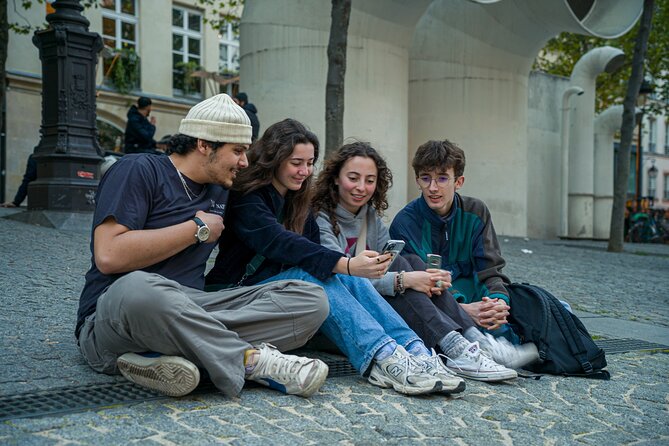
The meeting point is Jardin des Tuileries, near the 75001 area, and the activity ends back at the start. That loop structure is smart. It keeps logistics simple, and it also gives you a clean starting moment where the game can “grab” your attention right away.
One of the bonus points examples you get is delightfully specific: you can look for remains of the demolished Tuileries Palace inside the Jardin des Tuileries area. It is the kind of detail you would walk past without a prompt, but the game encourages you to slow down and notice what’s already there, including in parts of the gardens that feel like a maze.
Wear comfortable shoes here. Gardens and nearby corridors can be uneven, and you will be stopping for trivia and photo checks. If your group tends to wander, the garden start is a great place for the game to re-focus everyone quickly.
More of Paris walked without a guide waiting:
- Paris: Illuminations River Cruise with Audio Commentary★ 4.3 · 12,340 reviews
- Paris: Orsay Museum Entry Ticket and Digital Audio Guide App★ 4.4 · 3,170 reviews
- From Paris: Giverny Day Trip with Audio Guide or Live Guide★ 4.3 · 2,372 reviews
- Giverny and Monet’s House Half Day Trip from Paris Guide or Audio★ 4.0 · 1,319 reviews
Stop 1: Louvre Museum area, where you start seeing the city differently
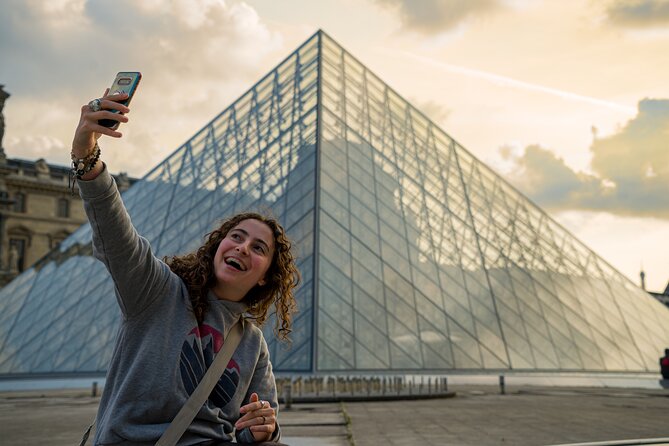
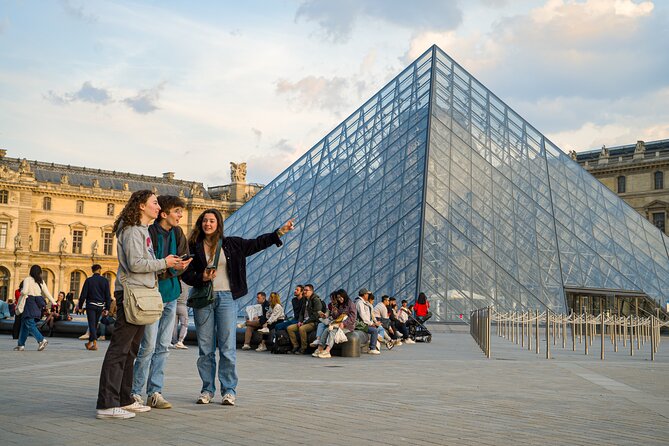
The first stop ties the game to the Louvre Museum area. Even if you are not going inside, this is an ideal “launch point” because the surroundings are packed with architectural features and photo-friendly angles.
What makes this stop useful for the game is the way it sets your mindset. You get prompts that push you to look closely, so the Louvre area becomes less about one iconic building and more about the layers around it. That is a good trick early in a route, because it trains your team to spot what the game wants you to notice.
Possible drawback: if you are expecting a detailed tour inside a major museum, this is not that. It is a walking game tied to the stop areas and nearby details. You will get prompts and questions, but you should plan to treat the Louvre as a landmark context, not a full museum visit.
Stop 2: Palais-Royal, turning a pretty place into a puzzle
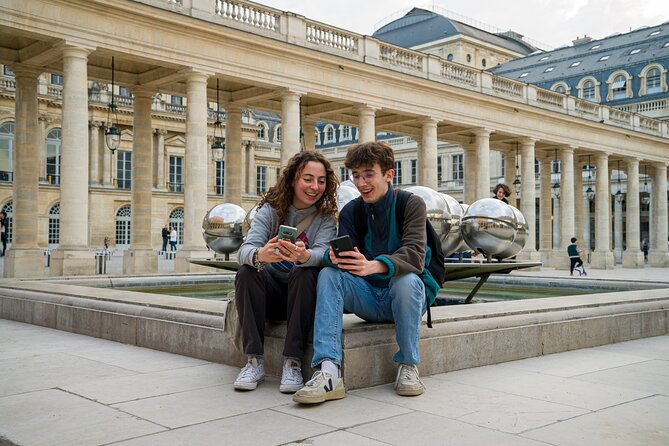
Next comes Palais-Royal. This stop works well for a self-guided format because there is a lot to see in small spaces. Arcades, walls, corners, and visual rhythms are perfect for photo clues and quick trivia challenges.
In practice, this is where your team starts collaborating more. One person notices a detail, another person compares the photo clue, and someone else answers the question. That group dynamic is the whole point of the competition element, and it tends to make the walk feel lighter.
One consideration: Palais-Royal areas can be busy depending on the time of day. Since you are moving at your own pace, you will not be stopped by a schedule, but you might have to wait for a clear view to confirm a clue.
Stop 3: Pantheon, using trivia to force good sightlines
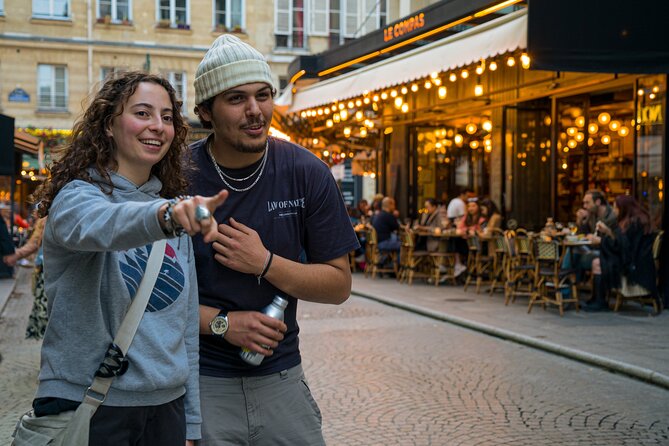
The Pantheon stop is your third big landmark. This is a strong choice for a game because the building is instantly recognizable, which makes the photo clue and trivia format easier to follow.
The benefit for you is focus. Instead of walking past the Pantheon as a background icon, the game nudges you to check specific views and answer questions connected to what you see. That kind of “look then answer” approach helps your brain store more than just an exterior silhouette.
A small practical note: since you are working through questions in a public area, you might want to form a quick team habit. For example, have one person keep the phone steady for photo clues while the others scan. It keeps everyone from walking in circles when visibility is limited.
Stop 4: Luxembourg Gardens, where the route slows down on purpose
Then you reach Luxembourg Gardens. This is a great stop for a self-guided game because gardens naturally give you spaces to pause. You can take a breather without losing momentum, and the game can use that pause to ask questions that reward patience.
Even without any museum tickets or guided commentary, a park stop is valuable on a short walking route. It balances the harder city edges with calm paths, and it helps the whole experience feel more like Paris life than a checklist.
Possible drawback: if your group is in “all photos, no reading” mode, you may miss some of the history and tricky questions that are part of the digital file. The game works best when you read the question prompts and use them to look closely.
Stop 5: Galerie Vivienne, a treasure hunt vibe in the arcade
Next is Galerie Vivienne, a classic Paris arcade that feels made for clue-based sightseeing. Arcades have repeating shapes, glass, and details that a game can map into photo cues and trivia answers without needing an indoor guide.
This stop is often where people start enjoying the route more than expected. When the environment naturally invites looking up and around, the game turns that behavior into points and answers. It is also a nice contrast after larger landmark stops, because it feels more intimate and hands-on.
Quick practical tip: if you are prone to getting turned around, keep your group tight at this stop. Arcades can fork into multiple passageways, and your phone clue will matter most when you have a clear, shared view.
Stop 6: Arenes de Lutece, a Roman note that rewards curiosity
The last named stop is Arenes de Lutece. This is a particularly fun ending because it adds a layer of time depth. You are not ending with another modern-looking square, you are ending near an ancient reference point that feels like a “wait, Paris is older than this” moment.
For a game, that matters. The point system depends on noticing surprises nearby, and a Roman site like this tends to provide exactly that kind of visual and contextual payoff. You end the route with a feeling of discovering something you might have missed.
Consideration: since this is a self-guided trail, you control how long you linger. If you end up racing through the final stop to beat your team’s score, you might miss the details the game is pushing you to find.
How the point system changes the way you walk
The experience is built around competition. You earn points by answering questions and by spotting surprises and bonus locations. There are also bonus ways of earning or losing points depending on who or what you see during the tour.
That means the game is not just “walk to landmark, read fact.” It is more like a live puzzle. You might need to pay attention to small changes in your surroundings, not just big monuments. In a city as dense as Paris, that makes a big difference. You feel present, not just scheduled.
This is also why the experience works for groups of different energy levels. If someone is more competitive, they will drive the scoring. If someone is more relaxed, they can still enjoy the walk while following the prompts and taking in the details.
Mobile ticket and the digital tour file: the workflow that keeps it easy
Included in the experience are a map (digital copy) and the game or walking trail (digital copy), delivered after booking by email. You will receive your digital materials, and you use them on your phone during the walk.
Because the provider does not automatically receive your email address from Viator, you may need to confirm it with them after booking. If you need the hunt immediately, they mention using their Etsy account for faster access. In other words, you should not book at the last minute and assume the file will show up instantly.
For a smooth walk, do this before you step outside:
- make sure your phone is charged
- have the digital file open before you start
- confirm you know which route you selected
- if you are traveling with a group, decide who holds the phone
You will enjoy the game more when you are not troubleshooting during the walk.
Who this suits best, and who should skip it
This is a great fit if you want:
- a self-guided Paris walking tour with built-in motivation to look closely
- something you can do with friends or family without splitting up
- a short plan that fits between bigger attractions
- an easy way to explore areas like the Latin Quarter or Right Bank when you want structure
It is also a good choice for solo travelers because you are not waiting on a guide schedule. You still get a start-to-finish route, but you can play at your own speed and focus.
You might prefer a different style if:
- you hate using your phone while walking
- you want a traditional guided talk with museum-like explanations
- you are hoping for a full museum visit experience
Practical tips to make the route feel fun, not stressful
A game is only fun if it runs smoothly. Since you are self-guided, these little habits help a lot.
First, manage pace with purpose. Build in quick stops for photo clues, then move on. If you linger too long at one clue, the rest of the route can feel rushed later.
Second, keep your team aligned. Before you start, agree on a simple routine: one person reads the question, one person checks the photo clue, and everyone else scans the area. It avoids the classic problem of everyone walking in different directions.
Third, plan your order with your other day ideas. This route is about 1 hour 20 minutes, and it ends where it starts, so you can naturally slot it near a bigger attraction. If you are already doing Louvre or garden time, pairing them works well because you are in central 1st and nearby corridors.
Should you book Worktown Games in Paris?
If you want a structured, low-cost way to explore Paris on foot, this is an easy yes. The short duration, the private group setup, and the game format give you a lot of value for the money. You also get meaningful landmark variety, including major stops like the Louvre and Pantheon, plus atmospheric walking through places like Galerie Vivienne and Arenes de Lutece.
Book it especially if you like interactive challenges or traveling with people who get a little restless on standard sightseeing. The game nudges everyone to notice details, and that usually makes the whole walk more memorable.
Skip it if you need a spoken guide to keep you oriented, or if you cannot rely on your phone during the walk. Otherwise, this is a smart way to turn Paris sightseeing into a playful points hunt, without blowing your budget.
FAQ
What is the price for Worktown Games in Paris?
It costs $10.84 per group, up to 15 people.
How long does the walking game last?
The experience takes about 1 hour 20 minutes.
Is this tour guided by a person?
No. It is self-guided, so you will not meet a guide in person.
Where do you start and where does it end?
It starts at Jardin des Tuileries (75001 Paris) and ends back at the same meeting point.
Are there different routes to choose from?
Yes. You choose between two route options, the Latin Quarter route or the Right Bank route.
What do I receive after booking?
You receive a mobile ticket and digital copies of the map and the walking game/trail.
Will I need to confirm anything after I book?
After booking, you are asked to confirm which route you are booking. The provider also notes they do not receive your email address from Viator, so they will need to confirm it with you.
When is it open?
Opening hours are listed as Monday to Sunday from 9:00 AM to 8:00 PM for the dates shown.
Is it suitable for people with accessibility needs?
Service animals are allowed. The provider says you should contact them if you have accessibility requirements, and they will try to make changes to the route or material format.
What is the cancellation policy?
Free cancellation is available. You can cancel up to 24 hours in advance for a full refund. If you cancel less than 24 hours before the start time, the amount paid is not refunded.
Newest write-ups from Paris








Walking Tours, compared.

Paris Top Sights Half Day Walking Tour with a Fun Guide
Read our review →
Montmartre Hidden Gems and Scenic Highlights Walking Tour
Read our review →
Montmartre Hill French Gourmet Food and Wine Tasting Walking Tour
Read our review →
Montmartre Highlights Walking Tour with a Local Guide
Read our review →
Paris Île de la Cité and Notre-Dame Walking Tour With Crypt
Read our review →
Montmartre Cheese, Wine & Pastry Guided Walking Tour
Read our review →
Paris in a Day: Louvre or Orsay, Eiffel Tower, City Walk & Cruise
Read our review →
Paris City Center Free Walking Tour (Tip-Based)
Read our review →Browse the lists this tour appears in