
Reviewed · MONTMARTRE HILL TOURS
ESSENTIAL MONTMARTRE Walking Tour: the essential highlights+MORE!
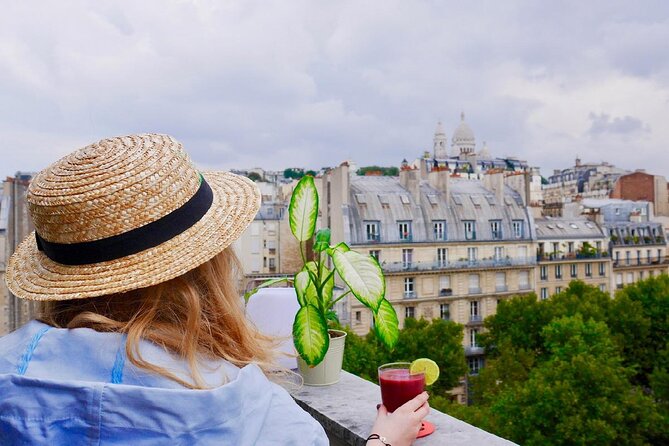
Montmartre feels like Paris in miniature. This 3-hour walk strings together the neighborhood’s top art stops, with stories that make the streets make sense fast. You get great orientation, plus those postcard moments you actually want to linger for. Sacre-Coeur views are a big part of it.
I really like two things about this tour: first, the way it mixes famous landmarks with artist-linked corners of Montmartre. Second, you get a guided narrative that stays clear and easy to follow, even when you’re climbing. Place du Tertre and the modern-art sites are especially memorable.
The main downside is physical. Montmartre has hills and lots of stairs, and the walking plus waiting at stops can wear you out if you are not used to uphill legs.
In This Review
- Key Highlights That Make This Walk Worth It
- Picking Up Your Bearings in Anvers (and Why the Route Works)
- Rue de Steinkerque to Sacre-Coeur: The Climb, the Funiculaire, and the Big Reveal
- Inside Sacre-Coeur: A Serenity Break With Real Paris Views
- Place du Tertre: Where Artists Work and You Watch Paris in Process
- The Vineyard, Windmill, and Bateau-Lavoir: Montmartre’s Creative Core
- Moulin Rouge, Passe-Muraille, and Le Lapin Agile: Oddball Paris Stories
- Dalida, Van Gogh’s House, and the Amélie Film Trail
- Price, Timing, and What $59.13 Really Buys You
- Comfort, Footwear, and How to Enjoy This in Real Weather
- Should You Book This Montmartre Highlights Walk?
- FAQ
- How long is the Montmartre walking tour?
- What times can I start the tour?
- Where do I meet and where does the tour end?
- Is the tour offered in English?
- What is included during the walk?
- Are the entrance fees included for the stops?
- What is not included in the price?
- Can I cancel for a full refund?
- Is the group small?
Key Highlights That Make This Walk Worth It
- Three start times help you pick the part of the day that fits your schedule.
- Small groups up to 20 people keep it more personal and easier to manage on narrow streets.
- Start in Anvers and finish at Moulin Rouge so you can keep exploring without backtracking.
- Free entry for many stops means you spend on the experience, not surprise tickets.
- Coffee break included keeps the tour comfortable, especially on cold or windy days.
- Ends with big-name Paris energy near Moulin Rouge, even if you do not catch the show.
Other climbs up the Butte:
- Montmartre Hidden Gems and Scenic Highlights Walking Tour
★ 5.0 · 2,684 reviews - Montmartre Hill French Gourmet Food and Wine Tasting Walking Tour
★ 5.0 · 2,588 reviews - Paris: Montmartre Highlights Walking Tour with a Local Guide
★ 4.9 · 2,318 reviews - Paris: Montmartre Cheese, Wine & Pastry Guided Walking Tour
★ 4.8 · 2,255 reviews
Picking Up Your Bearings in Anvers (and Why the Route Works)
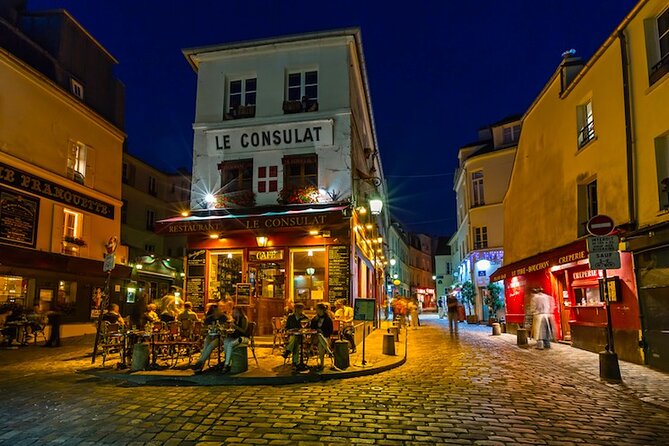
The tour begins at Anvers, 75018 Paris, with your guide leading you from the practical side of Montmartre into the views and art sites people come for. You end at Moulin Rouge, 82 Bd de Clichy, 75018. That matters because Montmartre’s top spots are uphill, and going “up and then back down” is not as fun when you are tired. Ending at Moulin Rouge also gives you options after the tour, whether you want a late snack nearby or to hop on public transit.
This is run by Black Cat Tours, in English, and you’ll get a mobile ticket. With a cap of 20 travelers, it generally stays manageable for photo stops and quick regrouping on side streets. Most people can participate, and service animals are allowed, which helps if you need that support while you move through the neighborhood.
One practical note I appreciate: the tour includes a stop for coffee, but it does not include drinks beyond that. So plan like a local. Bring a water bottle if it is hot, or something warm to sip if it is cold. Wear shoes you trust on uneven pavement and steep grades.
Rue de Steinkerque to Sacre-Coeur: The Climb, the Funiculaire, and the Big Reveal
Early on, you walk from Rue de Steinkerque toward the Sacre-Coeur area, moving from Anvers toward the gardens and then up to the basilica using the funiculaire. That is a smart sequence because it lets you get the geography without spending your whole afternoon grinding uphill the slow way.
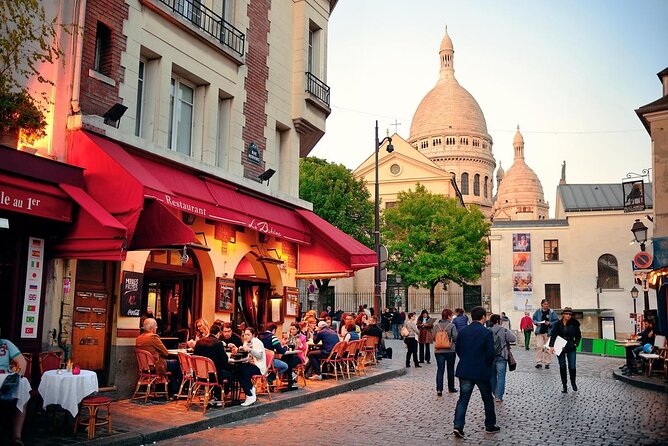
Stop one includes about 20 minutes in the area, and admission there is listed as free. Even if you have seen Sacre-Coeur from far away, walking up toward it changes everything. The streets tighten. The sightlines widen. And suddenly the basilica feels less like a single building and more like a centerpiece of Montmartre’s “look down on Paris” role.
What to expect here is simple: movement, stairs or slopes at multiple points, and moments where you might just want to pause and take photos. If your goal is to understand Montmartre instead of only collecting pictures, this opening section does that well. You start connecting the neighborhood’s layers, from hillside streets to the cultural stage at the top.
Inside Sacre-Coeur: A Serenity Break With Real Paris Views
At the Basilique du Sacre-Coeur de Montmartre, you get time for a quieter reset. The schedule calls for about 20 minutes, and admission is free. This is the part where the neighborhood noise drops, at least for a moment, and you can appreciate the basilica as a space rather than a selfie platform.
From inside, you also get that “how can a city feel this far away?” effect. Sacre-Coeur sits high enough that it overlooks much of Paris, and the guide’s stories help you understand why Montmartre became such a magnet for artists and dreamers. It is not just a building. It is a view-making machine.
A drawback to consider: if you are sensitive to crowds, basilica interiors can still be busy depending on the time of day. Go in with a plan for a calm pace. Use the 20 minutes to look, breathe, and then take your photos from where you can move without blocking others.
Place du Tertre: Where Artists Work and You Watch Paris in Process
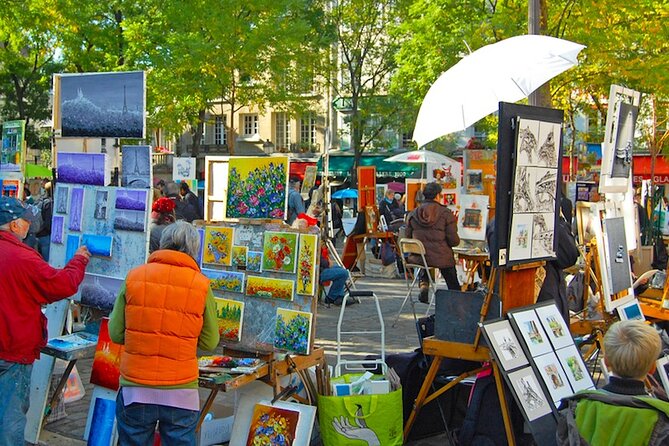
Next you reach Place du Tertre, where the energy shifts to open-air creativity. You’ll have around 15 minutes here, and admission is free. This square is famous for a reason: artists set up right in public view, and you can watch portraits, caricatures, and scenes get created in real time.
This is the kind of stop that works for families because it is visual and interactive without needing you to “sit through” anything. Even if you are not buying art, it helps you see Montmartre the way artists saw it. The square is basically a living stage, and your guide’s framing makes it more than a tourist backdrop.
Two practical tips for this stop:
- Keep your expectations flexible. If the weather is windy or rainy, artists and visitors may shift around.
- If you do want to buy, treat it like shopping. Compare prices and consider what you truly like, not just what is easiest to grab.
Other arrondissements taken at walking pace:
- Paris Top Sights Half Day Walking Tour with a Fun Guide★ 5.0 · 2,893 reviews
- Paris Île de la Cité and Notre-Dame Walking Tour With Crypt★ 5.0 · 2,272 reviews
- Paris in a Day: Louvre or Orsay, Eiffel Tower, City Walk & Cruise★ 5.0 · 1,956 reviews
- Paris City Center Free Walking Tour (Tip-Based)★ 5.0 · 1,340 reviews
The Vineyard, Windmill, and Bateau-Lavoir: Montmartre’s Creative Core
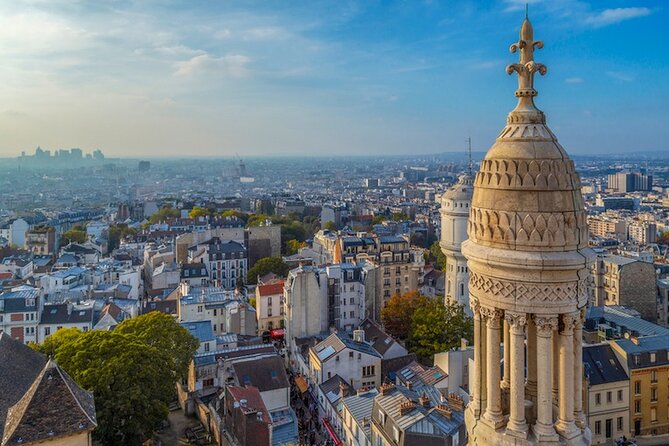
One of the best parts of this tour is that it does not treat Montmartre like one big “museum.” It shows you the neighborhood’s creative engine, stop by stop.
First comes the Vigne du Clos Montmartre, a small historic vineyard with about 10 minutes and free admission. It is easy to overlook if you only think of Montmartre as stone buildings and art crowds, but this tiny vineyard is a reminder that the hillside was once practical farmland too. It adds texture to the stories you hear later.
Then the walk goes to Le Moulin de la Galette, about 10 minutes with free admission. This is the last remaining windmill in Montmartre, and it connects to the famous Bal du Moulin de la Galette imagery tied to artists like Renoir and Picasso. Even if you know the name, seeing the windmill in its neighborhood context helps you understand why it became an artistic symbol.
Immediately after that, you reach Le Bateau-Lavoir for around 15 minutes. Admission is free. This is the modern-art linked stop, associated with names like Pablo Picasso, Henri Matisse, Amedeo Modigliani, Georges Braque, and Jean Cocteau, among others. Your guide frames it as an epicenter of modern art, and that framing matters because it links streets you are walking on to real artistic networks.
If you love art history, this section is where the tour earns its keep. It turns “famous names” into place-based context, so the neighborhood feels less like a checklist and more like a story you can walk through.
Moulin Rouge, Passe-Muraille, and Le Lapin Agile: Oddball Paris Stories
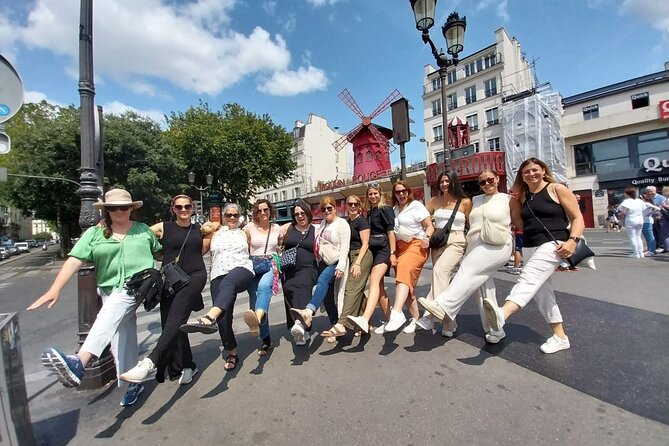
You will then move toward Moulin Rouge, about 10 minutes. Moulin Rouge is explicitly noted as not included for admission, which is good to know. In practice, this usually means you are experiencing the site as part of the walk, not paying for a show. That is fine, because the tour already gives you a bigger, guided understanding of Montmartre’s show-business role.
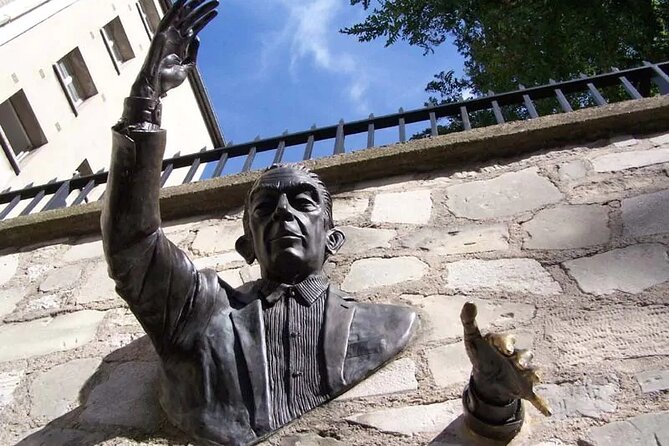
Then you stop at Le Passe-Muraille for about 5 minutes. Admission is free. This sculpture of a man passing through a wall ties to a French novelist’s story, and it is the kind of playful detail that makes your walk feel less mechanical. It also gives you a break from “big buildings, big photos” mode.
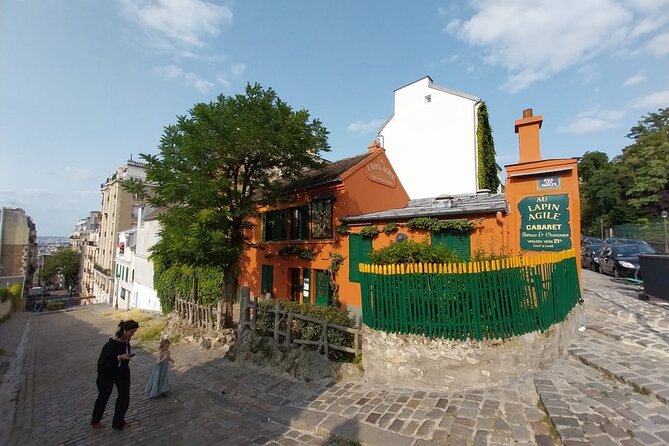
The walk also includes Le Lapin Agile, a historic cabaret venue. The tour description calls it a quaint building once frequented by famous characters including Pablo Picasso and Max Jacob, among others. Even if you just glance in and move on, you get a sense of Montmartre’s older entertainment tradition, not only the modern marketing version.
One realistic consideration here: the tour ends at Moulin Rouge, and that area can feel busier and more chaotic later in the day. Keep your belongings secure, watch where you step, and do not let the lights distract you from your footing on crowded sidewalks.
Dalida, Van Gogh’s House, and the Amélie Film Trail
Montmartre keeps doubling down on creative identity, and the middle-to-late part of the route leans into artists and pop culture.
You’ll see Dalida Statue (about 5 minutes, free admission) and then La Maison de Dalida (about 10 minutes, free). That pairing is useful. One stop gives you recognition, the next gives you the “where exactly” feeling, so the story sticks.
Then it goes to Van Gogh’s House, about 5 minutes with free admission. This is tied to where Van Gogh lived with his brother Theo. In a short time window, it can still land because the guide helps you connect the neighborhood’s creative pull with the artists who actually worked and lived there.
After that, you reach Café des Deux Moulins, about 10 minutes, again free. This is the café tied to the film Amélie (as the description notes). If you are a movie fan, this stop turns Montmartre into a “you are standing inside the story” moment. Even if you are not, it is a recognizable Paris café stop for taking a quick breath and watching street life.
The final stroll includes Rue des Abbesses, around 15 minutes, admission free. The description notes it was featured in the Guardian as one of the most beautiful streets in Paris. You also get a chance to walk that charming stretch at a slower pace before the tour wraps.
Price, Timing, and What $59.13 Really Buys You
At $59.13 per person for about 3 hours, this tour is priced like a “high value orientation” experience. You are not just paying for walking. You are paying for a guide who connects the sites into a coherent Montmartre story.
Here is why it feels like good value based on what you actually get:
- Many stops list free admission, so you avoid ticket costs popping up all afternoon.
- A coffee stop is included, and drinks are otherwise not included, meaning you can budget calmly.
- The group size limit of up to 20 people keeps the pace realistic on hilly streets.
What can affect your value, though, is your expectations around Moulin Rouge. The description says a Moulin Rouge show is not included, and Moulin Rouge admission is not included. If you are hoping to turn the tour into a full evening plan with a can-can show, you will need to add that separately.
Timing matters too. The tour offers three start times, and the tour is typically booked about 46 days in advance on average. If you are traveling in peak season or on a weekend, booking earlier helps you get the slot you want.
Comfort, Footwear, and How to Enjoy This in Real Weather
Montmartre is famous for views, but it is also famous for effort. Expect uphill walking, steps, and short segments where the ground feels uneven. One review note specifically warned about a lot of walking up and down stairs, and I think that matches reality enough that you should plan for it.
What I recommend:
- Wear shoes with grip. Flat sandals are a bad idea on steep, crowded streets.
- Bring a light layer for wind. Even on sunny days, Montmartre can feel colder higher up.
- If your group has mixed mobility, do not treat the tour like a strict race. Pause for photos when the guide stops, not in the middle of narrow stairs.
Also, remember this tour is designed as a highlight walk, not an all-day Montmartre wandering pass. You will see a lot in three hours, but you still need to choose one or two “come back later” spots if you want deeper time.
Should You Book This Montmartre Highlights Walk?
I think this tour is a smart booking choice if you want three things: a clear overview, iconic Montmartre landmarks, and art-focused context that makes the neighborhood feel real. If you are traveling with kids or just prefer a structured walk, it fits well because the stops are varied and visual.
Book it if:
- You want Sacre-Coeur plus artist-linked sites in a single afternoon.
- You like learning in small, stop-by-stop chunks rather than long museum hours.
- You would rather pay for guidance than spend your time trying to connect the dots alone.
Skip or rethink it if:
- You have limited mobility and hills and stairs are a major issue.
- You want a timed entry to Moulin Rouge or a full show included, because that part is not included.
If you go in wearing good shoes, staying flexible with weather, and taking your time at the artist square and modern-art stops, this is one of the more efficient ways to get your bearings in Montmartre and leave with stories that actually stick.
FAQ
How long is the Montmartre walking tour?
The tour runs for about 3 hours.
What times can I start the tour?
You can choose from three convenient start times.
Where do I meet and where does the tour end?
You start in Anvers, 75018 Paris, and the tour ends at Moulin Rouge on Bd de Clichy, 75018 Paris.
Is the tour offered in English?
Yes, it is offered in English.
What is included during the walk?
The tour includes a walking experience with a coffee stop. Drinks are not included.
Are the entrance fees included for the stops?
Admission tickets are listed as free for many stops. Moulin Rouge admission is not included.
What is not included in the price?
Snacks are not included, and a Moulin Rouge show is not included.
Can I cancel for a full refund?
Yes, you can cancel for a full refund up to 24 hours before the experience starts.
Is the group small?
The tour has a maximum of 20 travelers.
Newest write-ups from Paris



Montmartre Hill Tours, compared.

Montmartre Hidden Gems and Scenic Highlights Walking Tour
Read our review →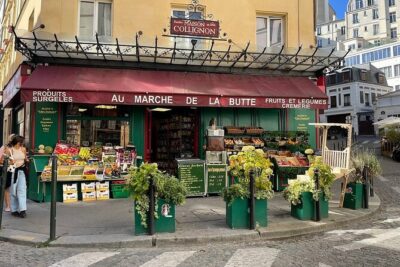
Montmartre Hill French Gourmet Food and Wine Tasting Walking Tour
Read our review →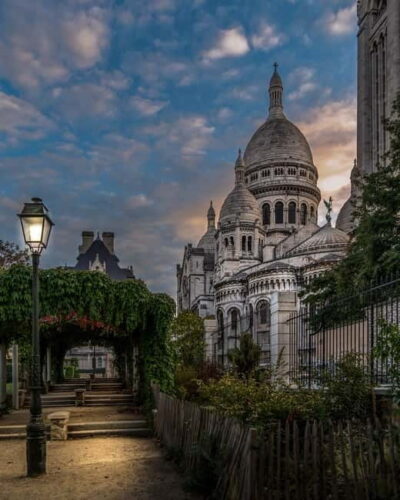
Montmartre Highlights Walking Tour with a Local Guide
Read our review →
Montmartre Cheese, Wine & Pastry Guided Walking Tour
Read our review →
Private Montmartre Food Tour with Wine, Cheese & Pastries
Read our review →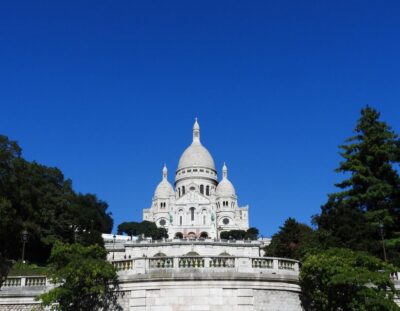
Sacré-Coeur and Montmartre Tour with Expert Guide
Read our review →
Paris Montmartre Food Tour – A Full French Meal by Do Eat Better
Read our review →Browse the lists this tour appears in