Reviewed · TOURS
French Revolution Tour. Relive the 14th July 1789
Bastille Day starts in ordinary streets. This English French Revolution walk stitches together three stops tied to 14 July 1789, so you get the story from Rue du Faubourg Saint-Antoine to the Column of July in about 90 minutes. I love the small-group feel with a cap of 15, and I love how the guide can handle questions along the way. The only real consideration is that the pace keeps moving, so if you want to stop for lots of photos, you may feel a little rushed.
You start at 186 Rue du Faubourg Saint-Antoine in the 12th arrondissement and finish right by Bastille square. I also like that you end where public transport is easy to grab, since metro lines 1, 5, and 8 are nearby.
All three stops are marked as free admission, which is a nice value boost. Service animals are allowed, and most people can participate, but this is still a walk through older streets, so comfy shoes matter.
In This Review
- Key points to know before you go
- Why This 1.5-Hour Bastille Day Route Is Good Value
- Starting at Rue du Faubourg Saint-Antoine, Where Pressure Builds
- Sainte-Marguerite Church and the Streets Where Deputies Stayed
- Place de la Bastille, From Narrow Passages to the Day It Happened
- What You Will Learn, and Why It Sticks
- Pace, Group Size, and Practical Tips That Actually Help
- Lunch, Snacks, and the Added Comfort of a Full Experience
- Should You Book This French Revolution Tour?
- FAQ
- How long is the French Revolution Tour?
- What language is the tour offered in?
- Where does the tour start?
- Where does the tour end?
- Is the tour group size limited?
- Do I need to buy admission tickets for the stops?
- Is a mobile ticket provided?
- Can I get a full refund if I cancel?
Key points to know before you go
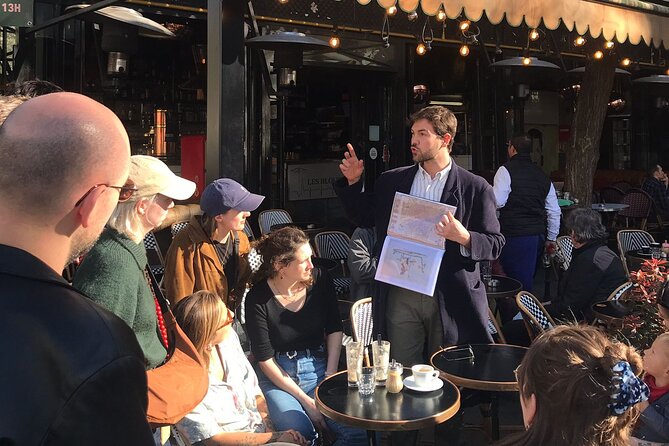
- A tight route timed for attention: about 1 hour 30 minutes with three main stops.
- Four words matter, 14 July 1789: you follow the revolution’s momentum toward the Bastille.
- Free admission at the stops: each listed stop is marked free.
- Small group size: up to 15 people means fewer distractions and more Q and A time.
- Ends at the Column of July: a simple finish point with multiple metro lines close by.
Worth a comparison before you book. Others in Paris covering the same ground:
- Paris: 1-Hour Seine Cruise departing from the Eiffel Tower
★ 4.4 · 77,472 reviews - Disneyland® Paris 1-Day Ticket
★ 4.6 · 49,412 reviews - Paris: Versailles Palace and Gardens Full Access Ticket
★ 4.6 · 41,579 reviews - Paris: Arc de Triomphe Rooftop Tickets
★ 4.6 · 34,264 reviews
Why This 1.5-Hour Bastille Day Route Is Good Value
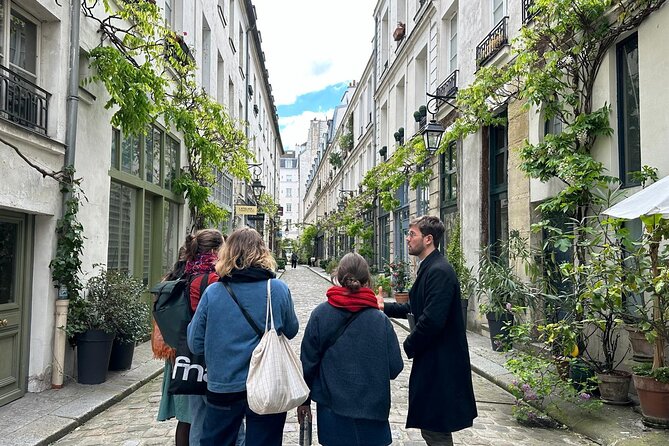
At $42.14 per person for roughly 90 minutes, this is priced like a focused guided walk, not a half-day tour. What makes it feel like value is the way it stays structured: you are not bouncing around the whole city, you are moving through a clear line of places tied to the same turning point.
I also like that the stops are marked as free admission, so you are not paying extra just to access the spaces where the story happened. That helps you keep control of your total day cost, which matters in Paris when other tours can quietly add in paid entries.
One more practical plus: the tour is offered in English and limited to a maximum of 15 people. Smaller groups tend to work better for history, because you can ask questions without waiting for the whole crowd to catch up. If you want a guided explanation that answers real doubts, this format fits.
Finally, it is built around a theme you can actually anchor in your mind: the march from street-level tension to the Bastille Day moment. That theme-based approach is usually the difference between a tour that feels like facts, and one that feels like a story you can remember.
Starting at Rue du Faubourg Saint-Antoine, Where Pressure Builds
The experience begins at 186 Rue du Faubourg Saint-Antoine, in a part of Paris strongly associated with the lead-up to the storming of the Bastille. This neighborhood is not treated like a random starting point. You get the sense that the revolution did not arrive from nowhere, it grew out of specific streets, local life, and public anger.
The focus here is the Faubourg Saint-Antoine and the Bastille as connected ideas. You will be shown why this area matters as a starting point for the French Revolution, and why the chain of events matters all the way to Bastille Day on 14 July 1789. You are looking at Paris as cause and effect, not just as scenery.
I like this opening stop because it gives you bearings early. Even if you are not a history buff, the street-by-street explanation helps you understand what you are actually seeing. And if you are a history buff, the neighborhood context gives you more to hang details on later, especially when you reach Place de la Bastille.
Time-wise, this first stop is about 30 minutes. That is long enough to make the connections, but not so long that the group gets cold or restless. If you are prone to drifting during walking tours, this structure helps you stay with the story.
Sainte-Marguerite Church and the Streets Where Deputies Stayed
Next, you head to Sainte-Marguerite. This stop shifts the tone. Instead of only focusing on crowds and confrontation, you spend time on the church and the little streets tied to revolutionary deputies.
Here, the key point is that deputies stayed nearby while drafting a new French constitution. That detail changes how you think about the revolution. It is not only street drama. It is also rooms, pens, debates, and the hard work of turning anger into a political plan.
The setting matters. A church and quiet side streets can make the conversation feel more grounded, like you are seeing history in the everyday spaces people used. That is exactly why I enjoy this sort of stop: it adds texture to the big headline events.
You get about 30 minutes at this location too. That keeps the tour balanced between mood shifts. You go from pressure and uprising energy, into the quieter work of writing and governance, then you come back out into the dramatic Bastille setting.
As with any church or historic area, it can help to arrive ready for walking on older streets. Wear shoes that handle uneven ground, and keep water handy if you tend to get thirsty while moving.
Place de la Bastille, From Narrow Passages to the Day It Happened
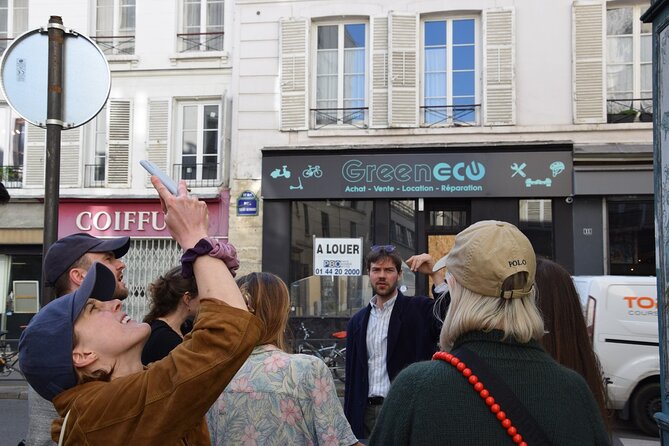
The tour’s final stop is Place de la Bastille. This is where the story turns toward the passages and narrow streets from the 18th century, and where you connect the revolutionaries’ movement to the storming of the Bastille.
You are not just standing at a monument and hearing a speech. You are guided through how people moved through tight spaces, and how those routes shape events. That kind of navigation by explanation is one of the best ways to understand why the storming happened where it did and how quickly it could spread.
You also finish in front of the Column of July in Bastille square, and metro access is easy here. Lines 1, 5, and 8 make it simple to continue your day without hunting for a bus or planning a complicated route.
I like a finish point like this, because it lets you close the loop. You start with the link between Faubourg Saint-Antoine and the Bastille, then you end with the Bastille Day symbol in the modern city. The space ties together old streets and present-day Paris in a way that feels logical.
If you have limited time in Paris, the end location makes it easier to pair with lunch, museums, or just wandering the area on your own.
If this one is booked out, Paris has these too:
- Paris: Orsay Museum Entry Ticket★ 4.7 · 25,647 reviews
- Paris: Evening River Cruise with Music★ 4.4 · 22,721 reviews
- Paris: Eiffel Tower Entry Ticket with Optional Summit Access★ 4.4 · 20,035 reviews
- Eiffel Tower Dedicated Reserved Access Summit or 2nd Floor★ 4.3 · 18,352 reviews
What You Will Learn, and Why It Sticks
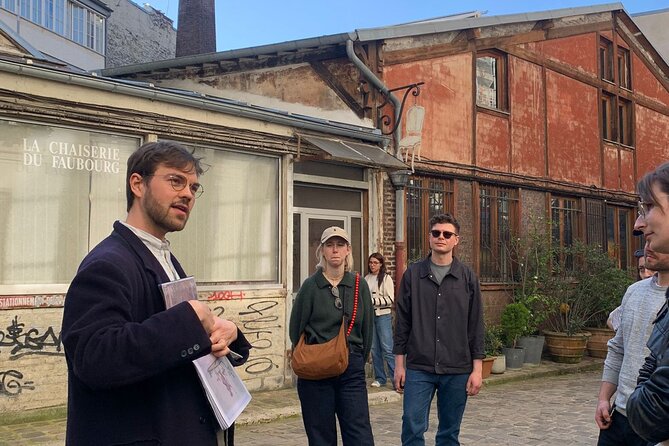
The most praised part of this kind of tour is how it helps you connect the revolution to the France you see today. One highlight that comes through is the focus on understanding how the spirit of people from earlier events still shapes modern France.
That does not mean this turns into a dry lecture. It means you get explanations that answer the question you probably have in the back of your mind: so what did it change, and how does that show up now?
Another strong value point is the guide’s ability to handle questions. The tour format gives you time to ask and get direct answers, which is what makes history tours feel personal rather than scripted. When you can ask follow-ups, you also notice that you understand more than you expected to.
This is also the kind of tour that uses local history knowledge to point out details you might otherwise miss. You are led through parts of the city that feel less like a postcard and more like lived-in Paris, which helps the story feel believable.
And if you care about off-the-beaten-path feel, this route is a good fit. It is still in central Paris, but the stops steer you away from the most generic sightseeing loops.
Pace, Group Size, and Practical Tips That Actually Help
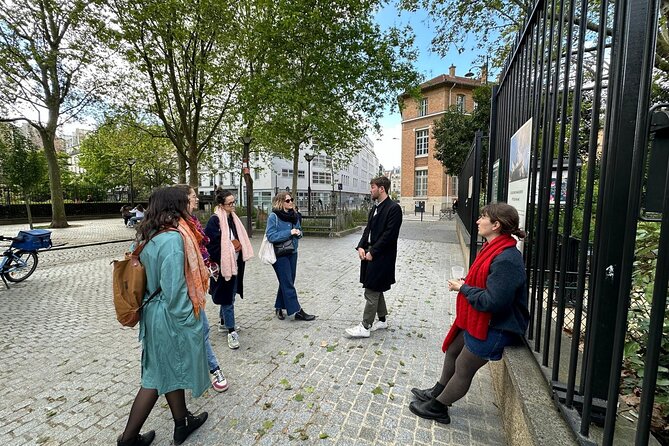
This is an English walking tour with a maximum group size of 15. That matters because history tours can easily become crowded and slow, where you miss what the guide is saying. Here, the group size tends to keep the conversation moving.
The structure is also simple: roughly 30 minutes per main stop, over about 1 hour 30 minutes total. That timeline is a sweet spot for many people. You get meaningful context without turning the day into a marathon.
You will use a mobile ticket, which is convenient. You just need to have your phone charged enough for the moment you show it. It is also helpful to check your internet situation ahead of time.
The start and end points are clearly defined. You begin at 186 Rue du Faubourg Saint-Antoine and finish at Place de la Bastille, in front of the Column of July. Having those fixed anchors makes it easier to get oriented, especially if you are hopping between neighborhoods.
Since this is near public transportation and the ending metro lines are clearly accessible, it is easy to slot into a busy itinerary. If you want to reduce transit stress, you can plan to pair it with a nearby meal after you finish in Bastille square.
Lunch, Snacks, and the Added Comfort of a Full Experience
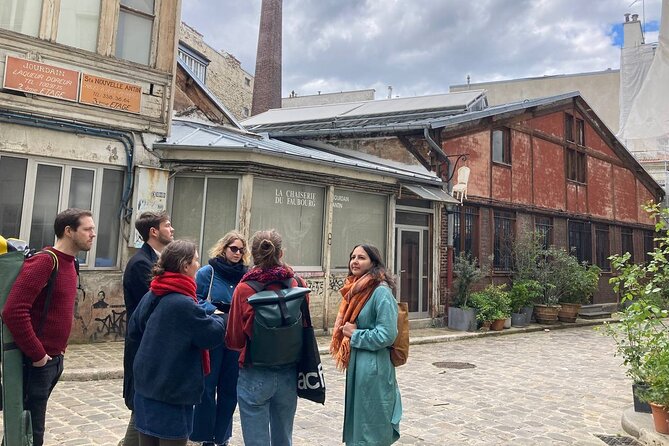
One thing that can make this tour feel better than just a history walk is food. A strong highlight noted alongside the story was lunch and snacks, which turned it into a more complete experience rather than only a guided stroll.
The tour description you receive when you book should spell out what is included for your date. If food is part of your ticket, it is worth planning around timing so you do not eat too early and miss the momentum of the walk. If food is not included for your version of the tour, you can still plan to have a light snack before you go.
Either way, I recommend bringing a small bottle of water. Even on a short tour, walking through Paris streets can add up, especially in warm weather.
Should You Book This French Revolution Tour?
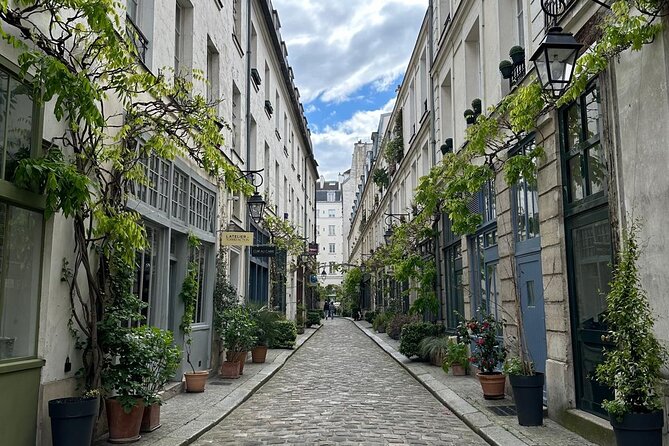
Book it if you want a focused, small-group way to understand the road to Bastille Day, without trying to master Paris history on your own. The route is short enough to fit into a tight schedule, and the free admission at the stops keeps your costs tidy.
Skip it, or at least adjust expectations, if you prefer very slow sightseeing. This tour keeps moving, and each stop is about 30 minutes. If you like to linger for photos and quiet contemplation, you may need to be selective with where you stop extra long.
You will likely enjoy it most if you like your history with a narrative thread, and if you value Q and A time. It is a smart choice for first-time visitors to Paris who want more meaning than just monuments.
In short: if you want the French Revolution story mapped onto real streets and finished at a landmark you can find easily, this is an easy yes.
FAQ
How long is the French Revolution Tour?
The tour lasts about 1 hour 30 minutes.
What language is the tour offered in?
The tour is offered in English.
Where does the tour start?
It starts at 186 Rue du Faubourg Saint-Antoine, 75012 Paris, France.
Where does the tour end?
It ends at Place de la Bastille, in front of the Column of July.
Is the tour group size limited?
Yes. The tour has a maximum of 15 travelers.
Do I need to buy admission tickets for the stops?
The stops are marked as admission ticket free.
Is a mobile ticket provided?
Yes, the tour includes a mobile ticket.
Can I get a full refund if I cancel?
Yes. Free cancellation is available up to 24 hours in advance for a full refund. If you cancel less than 24 hours before the start time, you will not receive a refund.
Newest write-ups from Paris



Tours, compared.
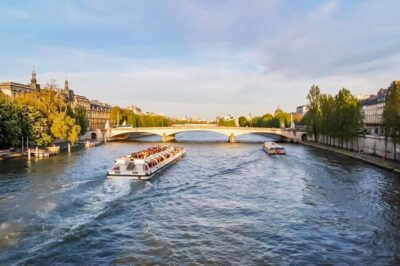
Louvre Guided Tour with Reserved Access & Boat Cruise
Read our review →
Big Bus Hop-On Hop-Off Tour with Optional Cruise
Read our review →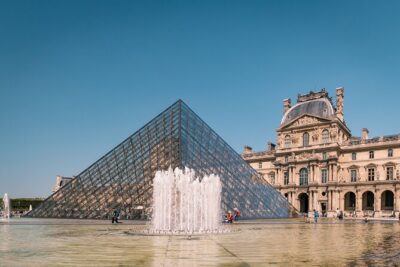
Louvre Museum Masterpieces Guided Tour with Access
Read our review →
Skip-the-Line Tour of Palace and Gardens Access
Read our review →
Louvre Overview, Exploration tour and Reserved Entry
Read our review →
Mona Lisa & Louvre Masterpieces Tour with Reserved Access
Read our review →
Paris Big Bus Hop-On Hop-Off Tour with Optional River Cruise
Read our review →